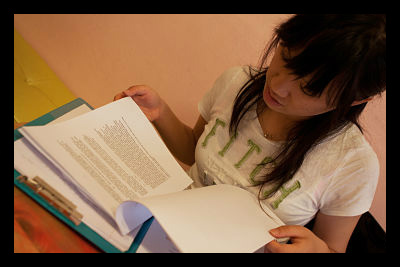
With thousands of students vying for acceptance into top colleges, adolescent suicide rates in South Korea increasingly mirror rising scholastic pressure. These uncompromising education standards, as many suggest, continue to compromise happiness nationwide.
The bodies of two 16-year-old girls were found on a cement sidewalk in early March. A note reading, “We hate school,” was found following their jump from the multistory Daejeon hospital building.
Less recently, at the Korea Advanced Institute of Science and Technology (KAIST), students grappled with the loss of four peers and one professor to suicide. As the region’s most prestigious institution, test anxiety and copious amounts of schoolwork are part of the daily routine.
“Day after day we are cornered into an unrelenting competition that smothers and suffocates us. We couldn’t even spare 30 minutes for our troubled classmates because of all our homework,” the KAIST student council said. “We no longer have the ability to laugh freely.”
These grim narratives dominate headlines in South Korea – a country where the number of teen suicides has increased by 57 percent since 2001.
While secondary schools hold candlelight vigils and Seoul subway stations install barriers to prevent commuters from jumping, some are questioning the actual education system itself and its effects on adolescent suicide rates in South Korea.
For a typical high school student, class begins at eight in the morning and finishes at four in the afternoon. From there, however, military-style cram sessions at private institutions can last until 11 at night.
This pressure hits its peak in November, when students from around South Korea gather to take a single college entrance exam – the “suneung.” While mothers pray at churches or temples and the South Korean Air Force lands all planes, adolescents hunker over booklets and answer sheets for the nine hour test.
The “suneung” determines which university, if any, the student will attend. Most strive for the so-called SKY schools – Seoul National, Korea or Yonsei universities.
“To get admitted there decides what you can do in life and who you can marry. It determines your future,” Young Hwan Kim, a 17-year-old at Shinil High School said.
This race to success contrasts sharply with pre-World War II conditions. Though now an economic powerhouse, South Korea was once one of the poorest countries in the world, with only $64 per capita income.
Severely undereducated, only five percent of the population had attended secondary school or pursued advanced degrees.
Investment in infrastructure and human capital, in addition to foreign aid from both Japan and the U.S., pushed the country to its contemporary state. An unyielding focus was also placed on education, perhaps to make up for South Korea’s lack of tangible resources.
“We don’t have enough natural resources; the only resources we have [are] human resources,” said Kim Mee Suk, a researcher at the Korea Institute for Health and Social Affairs.
Now, in response to this mindset, roughly 75 percent of students attend a university – something many call the “Korean education miracle.”
This blessing, however, has also been a curse.
While overall suicide rates in developed countries are falling, adolescent suicide rates in South Korea continue to climb. A February survey released by the Korea Health Promotion Foundation even found that just over half of the country’s teens had suicidal thoughts this year.
Inchae Ryu, a 17-year-old student also at Shinil High School, spends 12 hours per day studying. Hunkered down in the library, clad in a navy uniform and green tie, he looks over notes for an extra English class he attends twice a week.
“I have no time to think about my future or my dreams,” Ryu said.
While attempting to stimulate the economy today, South Korean officials have blatantly disregarded what may happen in the future. In addition to overall drops in mental health, many parents are choosing not to have children because private tutors and lessons cost too much.
If this pattern continues, both in terms of diminished family size and augmented suicide rates, the country may face a deficit in that highly valued human capital. Numbers aside, South Korea may be facing an entire generation of unhappy citizens as well.
“It’s kind of alarming actually. If young students [are] not happy, we cannot guarantee their happiness when they grow up, so our future will be really dark,” Kim said.
– Lauren Stepp
Sources: Aljazeera, NPR, The New York Times, The Wall Street Journal
Photo: Flickr

Poverty-Induced Self-Medication
The connection between health and poverty is not a new one. The lack of access to healthcare, overcrowded healthcare facilities and the sometimes high costs of medications are major barriers for the poor to take appropriate steps to treat any health problems. Often, people turn to self-medication as an alternative to the expense of consulting a physician.
Paul J. Gertler, professor at the University of California Berkeley’s School of Public Health, said for the Washington Post, “Delaying medical care is a characteristic of poverty. For people living close to the edge, taking off a day to visit a doctor or staying home sick is literally taking food out of their mouths.”
It is no wonder that people facing such circumstances seek healthcare where they can get it cheaply. Sometimes this means going to a spiritual or traditional healer or taking the advice of family or friends. However, it can mean sharing medication, self-medicating or not completing a full-dose of a prescription so that it can be saved for another rainy day. These practices can be more dangerous than they seem.
Self-medicating can of course lead to using an incorrect medication, unsuitable for the medical condition, but it can also lead to overuse or underuse of the correct medication. A study based in a Nigerian community hospital concludes that a whopping 85 percent of the patients practiced self-medication and used an array of analgesics and anti-malarials either alone or in combination. According to Leadership, a local Nigerian newspaper, 75 percent of the populace rely on self-medication. This allows the market to flood with counterfeit drugs, low quality alternatives and charlatans selling ineffective herbal remedies.
From a public health point of view, incorrect usage of medication is a major cause of the rise in drug resistant infections. When patients do not complete a full dosage of antibiotics or use anti-malarials to treat unrelated infections, the disease-causing organisms have the chance to evolve to become resistant to these medications. Such resistant organisms then become untreatable and the resistant infection spreads among the population. Furthermore, the longer it takes to cure an infection due to use of incorrect medication, the higher the chances of an infection spreading.
The incorrect use of anti-malarials led to treatment failure and resistance to mainstay drugs like Chloroquine. This led to a shift in treatment policies worldwide and treatment with Artemisin Combination Therapy (ACT) began. Now, malarial infections resistant to ACT are spreading across Southeast Asia much faster than expected and can soon spread rapidly across the world if not contained. This story is frighteningly similar for a whole range of infections.
As science struggles to keep up with the evolution of drug resistance, policy can do its part. Increasing awareness and education about the disease causing organisms and the dangers of self-medicating is one approach. Improving infrastructure, the accessibility of healthcare facilities, resources at existing healthcare facilities and subsidies for medications will go a long way toward weaning the population away from self-medication.
There is another angle to this problem. In a survey in a district of Bangladesh, 100,000 doses of antibiotics were dispensed without a prescription. In Manila, Philippines, 66 percent of antibiotics were dispensed without a prescription. Heavily regulating pharmacies and preventing the sale of medication without a prescription can cut off one of the sources of self-medication.
More avenues will have to be explored to provide adequate healthcare and make good health a fulfilled right for each individual person so that the global population benefits.
– Mithila Rajagopal
Sources: Annals of Ibadan Post-Graduate Medicine, Devex, Journal of the American Board of Family Medicine, Leadership, Malaria Journal, Washington Post
Photo: Flickr
South Korea Sets Education Standards High
With thousands of students vying for acceptance into top colleges, adolescent suicide rates in South Korea increasingly mirror rising scholastic pressure. These uncompromising education standards, as many suggest, continue to compromise happiness nationwide.
The bodies of two 16-year-old girls were found on a cement sidewalk in early March. A note reading, “We hate school,” was found following their jump from the multistory Daejeon hospital building.
Less recently, at the Korea Advanced Institute of Science and Technology (KAIST), students grappled with the loss of four peers and one professor to suicide. As the region’s most prestigious institution, test anxiety and copious amounts of schoolwork are part of the daily routine.
“Day after day we are cornered into an unrelenting competition that smothers and suffocates us. We couldn’t even spare 30 minutes for our troubled classmates because of all our homework,” the KAIST student council said. “We no longer have the ability to laugh freely.”
These grim narratives dominate headlines in South Korea – a country where the number of teen suicides has increased by 57 percent since 2001.
While secondary schools hold candlelight vigils and Seoul subway stations install barriers to prevent commuters from jumping, some are questioning the actual education system itself and its effects on adolescent suicide rates in South Korea.
For a typical high school student, class begins at eight in the morning and finishes at four in the afternoon. From there, however, military-style cram sessions at private institutions can last until 11 at night.
This pressure hits its peak in November, when students from around South Korea gather to take a single college entrance exam – the “suneung.” While mothers pray at churches or temples and the South Korean Air Force lands all planes, adolescents hunker over booklets and answer sheets for the nine hour test.
The “suneung” determines which university, if any, the student will attend. Most strive for the so-called SKY schools – Seoul National, Korea or Yonsei universities.
“To get admitted there decides what you can do in life and who you can marry. It determines your future,” Young Hwan Kim, a 17-year-old at Shinil High School said.
This race to success contrasts sharply with pre-World War II conditions. Though now an economic powerhouse, South Korea was once one of the poorest countries in the world, with only $64 per capita income.
Severely undereducated, only five percent of the population had attended secondary school or pursued advanced degrees.
Investment in infrastructure and human capital, in addition to foreign aid from both Japan and the U.S., pushed the country to its contemporary state. An unyielding focus was also placed on education, perhaps to make up for South Korea’s lack of tangible resources.
“We don’t have enough natural resources; the only resources we have [are] human resources,” said Kim Mee Suk, a researcher at the Korea Institute for Health and Social Affairs.
Now, in response to this mindset, roughly 75 percent of students attend a university – something many call the “Korean education miracle.”
This blessing, however, has also been a curse.
While overall suicide rates in developed countries are falling, adolescent suicide rates in South Korea continue to climb. A February survey released by the Korea Health Promotion Foundation even found that just over half of the country’s teens had suicidal thoughts this year.
Inchae Ryu, a 17-year-old student also at Shinil High School, spends 12 hours per day studying. Hunkered down in the library, clad in a navy uniform and green tie, he looks over notes for an extra English class he attends twice a week.
“I have no time to think about my future or my dreams,” Ryu said.
While attempting to stimulate the economy today, South Korean officials have blatantly disregarded what may happen in the future. In addition to overall drops in mental health, many parents are choosing not to have children because private tutors and lessons cost too much.
If this pattern continues, both in terms of diminished family size and augmented suicide rates, the country may face a deficit in that highly valued human capital. Numbers aside, South Korea may be facing an entire generation of unhappy citizens as well.
“It’s kind of alarming actually. If young students [are] not happy, we cannot guarantee their happiness when they grow up, so our future will be really dark,” Kim said.
– Lauren Stepp
Sources: Aljazeera, NPR, The New York Times, The Wall Street Journal
Photo: Flickr
Mobile Financing
It can get hard to save for the future, plan and invest in a business and survive economic reversals if one lacks access to finances or bank accounts. This is a reality for many individuals who live in poverty.
When the concept of microfinance was developed, people with extremely low incomes had the opportunity to acquire small loans with which they could start businesses and generate income. A revolution at the time, microfinance gave the poor a chance to get loans without a credit history and large collateral needed by the traditional banking sector. However, these kind of loans are still hampered by access and the need to handle finances which can drive up costs and interest rates. This hole is now being filled by mobile finance.
Electronic solutions are making banking options much more accessible across the world. They reduce the cost of infrastructure needed, and the administrative costs associated with maintaining financial accounts. Such remittances can be much more secure than traveling long distances to deposit cash in a bank. Government disbursement programs can also use mobile financing to directly remit payments to the welfare dependents. This cuts out the intermediaries, reduces opportunities for corruption and allows the beneficiary to get their monies quicker. Worldwide, 170 million people who receive payments directly from their governments stand to benefit from this approach.
M-Pesa, launched in Kenya by Safaricom, is one of the most wide-reaching mobile financing solutions. Over 17 million people in Kenya now use this product and over 25 percent of their GDP is moved through this system. Originally designed to facilitate microfinance loan repayments, M-Pesa allows cash deposits, withdrawals and cash transfers between people in the same way you would credit a phone with talk time. It has now expanded to Tanzania and Afghanistan.
Some of these initiatives are supported by development organizations. For instance, Bangladesh based Bkash is supported by BRAC Bank, IMF and The Gates Foundation among others. The Gates Foundation and other such organizations are closely involved in the process of making these solutions hit their stride.
The Gates Foundation assists in finding innovative new solutions and researches factors that would encourage their adoption. The foundation also works with governments to develop and implement policies that would stimulate this sector and develop suitable methods for oversight and accountability among the providers. As the technology slowly becomes mainstream and more competitors enter the market, governmental regulations will start to become more and more important.
In the words of Jim Kim, President of the World Bank, “More than one in three people on earth now lacks access to basic bank accounts or any kind of credit. Our goal is to bring that number to zero in just five years. Doing so will be an incredible challenge, but the reward will set us on a path to end extreme poverty by 2030.” Mobile financing is going a long way to bridge this gap and help achieve this goal.
– Mithila Rajagopal
Sources: Bkash, Economist, The Gates Foundation, LinkedIn Pulse, World Economic Forum
Photo: flickr
Ebola Survivors Fight Stigma
The stigma of having contracted the Ebola virus has created public health and development issues for regions most deeply stricken by the virus. Doctors and patients alike who fought the virus have now become public educators to doubly continue the fight against Ebola and the accompanying stigma.
In the media, those who contracted Ebola have been portrayed as guilty of the disease, as if it were their decision. Guilt and blame have surrounded the mass fear of Ebola.
It takes an immense amount of strength to survive Ebola and to move back into a life that has drastically changed. For some survivors, this means returning to an empty home or even discovering that they are homeless. The stigma of surviving Ebola comes at a cost. This cost is termed “Post-Ebola Syndrome.” This syndrome is the mental and physical effect of surviving the disease and returning to society. In many cases, this has developed into Post-Traumatic Stress Disorder.
Some survivors have been removed from their homes because of the fear that they are not fully cleared of the virus. Certificates are issued to patients in clinics and hospitals who survive the disease, but these certificates are not enough for some fearful community members. There have been reports where those who are known to have contracted Ebola have been removed from buses. Also, communities have ostracized health workers who treat Ebola victims.
Doctors and patients who survive play a critical role in treatment, clinical assistance and public awareness. Survivors are able to provide their antibodies to help other patients fight the disease. Also, doctors who return to the field are able to provide their insight on treating the disease. Doctors and patients alike show to the public and other patients that while Ebola is deadly, it is not a guaranteed death sentence. Survivors represent the importance of seeking clinical treatment and monitoring.
In order to fight the stigma, some medical organizations, such as Doctors Without Borders, accompany survivors when they return home. Doctors Without Borders volunteers educate the community on Ebola and explain that those who survive have a very low chance of transmitting the disease to others. They answer any questions that the community has in hopes of encouraging others to spread awareness and accept members of their community. In addition, a Doctors Without Borders treatment center in Monrovia, Liberia, is run by seven doctors who all once had Ebola. This makes patients hopeful for themselves and encourages a greater understanding of the disease.
The Ebola virus cases have significantly decreased from 600 weekly cases in November, to 30 weekly cases in April. While even one case is a critical concern, public efforts to re-integrate those formerly living with the disease are also important for communities.
– Courteney Leinonen
Sources: Action Aid, BBC, Doctors without Borders 1, Doctors Without Borders 2, Doctors Without Borders 3, Doctors Without Borders 4
Photo: Flickr
Attacks on Immigrants in South Africa
Ever since the fall of apartheid, South Africa has been a popular destination for immigrants from the rest of Sub-Saharan Africa and, to a lesser extent, South Asia and the Middle East. Immigrants seeking job opportunities have settled in townships and many have opened shops and businesses.
There are an estimated two to five million immigrants and foreign migrant workers living in South Africa. The most common countries of origin are Zambia, Zimbabwe, Malawi, Mozambique, Tanzania, Ethiopia, Somalia and Nigeria. Many also come from Pakistan, Bangladesh and Egypt.
But all of this immigration has fueled racial tensions within South Africa. Many South Africans still live in poverty and the official unemployment rate is 25 percent, but many think the real number is higher due to the large informal economy. In poor townships, where the majority of immigrants have settled, unemployment is often near 50 percent.
The high levels of immigration have led to accusations of foreigners taking jobs from locals and of foreign businesses out-competing local ones. Violence against immigrants has become a common occurrence and foreign businesses are often targeted. Most recently, this month has seen a massive wave of anti-immigrant violence in townships in Durban and Johannesburg.
Six people have been killed and thousands of immigrants have been forced from their homes and had their businesses destroyed by mobs. Many are now being housed in refugee camps and several foreign governments have sent buses to evacuate their citizens. The South African government has vowed a swift response and over 300 people have been arrested in connection to the attacks.
Many point to a quote by Zulu King Goodwill Zwelithini as the instigator of the recent violence. The king was quoted as saying that immigrants taking away jobs from South Africans “should pack their belongings and go home.” The attacks began soon afterwards, starting in the townships of Durban that are part of the Zulu homeland. Some think he may be charged with inciting hatred. The king has claimed his quote was misinterpreted in the media.
This is not the first case of violence against immigrants. Earlier in January several people were killed and hundreds injured in mob violence against foreign owned businesses. Such incidents have become increasingly recurring and smaller scale attacks on specific shops or individuals are very common. In some cases South African police have been implicated or directly involved.
The worst wave of violence was in May 2008 when riots and mob attacks killed 62 people, most of them foreign immigrants. The incident shocked South Africa and drew attention to the issue of xenophobia for the first time. Since then it has become a major issue, but many accuse President Zuma of not doing enough to address it. Many South Africans have mobilized to fight against xenophobia and feel such attacks are undermining the country’s long struggle for racial equality. These attacks serve as an important reminder of the role poverty plays in creating racial tensions.
– Matt Lesso
Sources: Al Jazeera, BBC 1, BBC 2, BBC 3, Washington Post
Photo: Flickr
Education Schools in Brunei
Education is an important part of a nation’s development and is a crucial key to unlocking an economy’s success. Quality education provides a bright future for a country and its citizens; a future above poverty lines, hunger and food insecurities. The education system in Brunei focuses on just that—ensuring quality education for all in hopes of achieving a better tomorrow for its citizens and the country as a whole.
What makes the education system different and possibly successful? It provides free education to children in not only primary levels, but secondary levels as well. As a result, more and more children are being educated. According to the World Bank Group, an estimated 94 percent of children are enrolled in school. There also seems to be a correlation between education and economy; Brunei also happens to be a high income country with one of the most developed economies in Asia.
Brunei is located in the southern region of Malaysia and has created a government that highly values education and places the responsibility of education upon its shoulders. The education system aims to develop its citizens’ knowledge, and by doing so, develop the country as a whole as well.
Schools in Brunei
Education in Brunei has previously been established to emulate Islamic forms of eduction. These Islamic schools, also known as Madrassas, serve as an important part of education in Brunei; however, in more recent years, the education system has slightly shifted to recognize western education as well. Although in recent years the education in Brunei has begun to encompass western learning, the education system remains closely rooted to the religious values of the region.
There are schools all over the country that provide free primary and secondary education to children. As more schools were being built, the country saw a substantial increase in not only the quantity of children attending, but the quality of education as well. Schools in Brunei provide comprehensive lessons in subjects involving history, language and geography, as well as the study of technology, mainly computers.
Brunei Ministry of Education
Brunei established a ministry of education that led the education sector with a key goal in mind: a proper development of the school system and of education. A five year plan was then implemented in 1954 in order to ensure this principal aim was reached. Additionally, the Brunei ministry of education formed and implemented several educational reforms such as the National Education Policy of 1962 and the National Education System (1985) that ensured quality education free of charge at every grade level. To do so successfully, the ministry governed the schools, funded the education programs and determined the curriculum. As a result, Brunei saw a substantial rise in literacy rates.
Following the establishment of Brunei’s ministry of education, the literacy rate improved from 69 percent to 92 percent. The implementation of the Brunei ministry of education has proven to be successful. As of 2012, 92 percent of children were enrolled in primary education, with an even higher 94 percent enrolled in secondary education.
Ultimately, education in Brunei has been established with a major purpose: to create quality education, free for all citizens, to be used by citizens as a means of achieving and living to their fullest potential. The education system in Brunei seeks to prepare citizens for the future and help them possess the skills and knowledge necessary to be able to excel in society and the changing demands society has on one’s livelihood.
There’s a known correlation between education and a nation’s success; more often than not, highly educated countries have a more stable economy and way of life than countries with limited education. Free education for all seems to also be a key component to Brunei’s successful and continual development.
– Nada Sewidan
Sources: APEC, Maps of World, World Bank
Photo: Flickr
Giving Client Power to the Poor
As paying customers, what do people do when dissatisfied with a service? They register a complaint with the company, and then perhaps try another service. This is the essence of a competitive market. Quality of service is forced to remain high when clients have this power. Is it possible to generate this power when the customer is dependent on public service? In other words, how can development and public projects be made more accountable and transparent with better service provided?
Greater vigilance by government authorities, higher monetary incentives to employees and increased funding for diverse projects can go toward improving service provisions. However, client power can be crucial in making strides toward this goal as well.
When consumers have a strong voice, more can be achieved. A 2004 World Bank development report describes the example of Kerala, an Indian state, where significant success has been achieved in major social sectors like literacy and health care. A part of this success is attributed to informed citizen action and political activism.
Community advocacy groups are indispensable in providing a voice for the poor. In 1994, a civil society organization, or CSO, in Bangalore, India introduced the idea of report cards for public services. Results of these reports revealed corruption, lack of access and other flaws that were actively publicized by the press. These results led managers of public agencies to take measures to improve their services, leading other cities and countries to adopt similar approaches.
In Uganda, CSOs trained community monitors to check the quality of service delivery in order to reduce corruption. In Mexico, groups found ways to access and understand information on public program budgets so as to enable lobbying for budget policy changes. These contributions to public health programs and health equity have been valuable in several places across the globe.
It is remarkable how purchasing power can affect a consumer’s ability to demand better service. The ability to choose and purchase one’s own welfare instills a new level of accountability in the provider.
When Zambian truck drivers contributed to a road fund, they took turns to ensure that no overloaded trucks passed the road and that their contributions maintained this road. In Andhra Pradesh, an Indian state, farmers who paid for their water supply felt that they could hold the irrigation department more accountable.
One way to increase this purchasing power is to provide government subsidies with cash transfers, which goes directly to the families as vouchers. Allowing subsidies or vouchers in public and private arenas will increase competition, thereby creating a natural pressure to provide better quality service. In addition, it gives people the right to choose what is best for them, which can be invaluable in increasing self-confidence. For example, Qatar charities provided families in war-torn Gaza with shopping vouchers, which they could use on food items. This measure preserved the dignity of the beneficiary.
Measures like these could return the power to the consumer, demanding accountability for public service. In the future, it will play a valuable part in implementing pro-poor policies.
– Mithila Rajagopal
Sources: Capacity, Relief Web, World Bank, World Health Organization
Photo: Flickr
Poverty and Mental Health
The connection between poverty and mental health is not surprising. The severe emotional strain and stresses associated with making ends meet, poor nutrition and unfavorable living conditions can be extremely high. Depression can be up to two times more prevalent among low-income groups and people with the lowest socioeconomic status are eight times more at risk for schizophrenia.
Yet this problem does not receive adequate attention in many places, partly due to the societal stigmas sometimes associated with mental health issues. Only two percent of national health budgets is dedicated to mental health and up to 31 percent of countries do not have a mental health budget at all.
In India, a string of farmer suicides have been making headlines. Driven to depression by rising debt, small farmers who are unable to make a profit with the scarcity of rainfall and falling prices of crops commit suicide. According to a CNN report, in 2013, 11,722 farmers killed themselves across India. The suicides plunge families further into financial insecurity and hopelessness. Government interventions are crucial to curb these disturbing losses of life. Policies pertaining to land reform, industrialization, agriculture, poverty alleviation, availability of financing and compensation to farmers are all going to be needed to alleviate the burdens on small farmers.
Stigma and isolation complicate matters in treating mental health issues. People who suffer from mental health issues are often discriminated against or are discouraged from seeking treatment.
In some parts of the world, mental problems can be regarded as a sign of an evil spirit. Sufferers are seen by traditional or spiritual healers and are not treated by counselors or psychiatrists. Decades of superstitions and beliefs are hard to overcome, particularly when dealing with a delicate problem.
Many organizations and projects are trying out methods to provide mental healthcare to affected populations, including projects like the Zimbabwe based Friendship Bench Project, which provides counseling sessions, the international Programme for Improving Mental Health Care, which researches on methods to scale up delivery of mental healthcare and India based Sangath, which trains lay people in counseling and works with other nongovernmental and governmental organizations to evaluate and launch models for mental healthcare. Dr. Vikram Patel, co-founder of Sangath, was recently named one of TIME’s 100 most influential people. This might aid in bringing more attention to this urgent issue.
While the Millennium Development Goals can go a long way towards alleviating poverty, which will reduce many of the stressors, mental health issues need to be given importance as a public health issue and duly addressed.
– Mithila Rajagopal
Sources: CNN, Prime, Sangath, SciDev, Times of India, World Health Organization
Photo: Flickr
Poverty in Khartoum, Sudan
Sudan is one of the most ethnically diverse countries in the world, but poverty desperately affects the population of 44 million.
The city of Khartoum is notorious for its destitution. The population has tripled over the past 20 years; however, the government has not implemented any formal accommodation for this influx. The current government is not a sufficient resource to address poverty in Khartoum as it lacks information and the capacity to combat the issue.
It is recorded that 180,000 people died of poverty before 2004 when the conflict finally gained international attention, with the U.N. warning on “atrocities” and Powell declaring it a genocide. Poverty linked with conflict has killed several million people in Sudan and South Sudan.
The conflict between Sudan and South Sudan is a significant source of poverty for the area. The tension over oil fields has created an unequal wealth distribution between the north and the south.
According to Poverties.org, “Even Khartoum remains pretty opaque regarding its resource management and never appeared ready to give up its oil revenues that easily. Injustices, grudges and protests are likely to keep on fueling armed conflicts, thus threatening the stability of the two countries and throwing countless more people into poverty in Sudan (North and South). Little effort has been made to stop the growing, oil-induced social turmoil and corruption that affect the whole region…The most simple thing to do would be to fund some social assistance to overcome land issues and poverty in Sudan and thus the extent of social unrest.”
Poverty is an undeniable threat to the existence of humanity in the 21st century. The global commitment to promoting adequate standards of living for all people is emphasized in the Millennium Development Goals, which sought to reduce poverty by half by 2015. Poverty cannot be overcome with a singular solution as it is very multidimensional. Poverty is experienced differently across time, space, culture and even gender. For example, poverty is most severe during specific weather seasons, while other times poverty is more static.
According to research conducted at The University of Khartoum, a “serious campaign against poverty necessitates opening up the issues to public debate, raising people’s awareness of them and directing the media to that end.” The overwhelming axiom is that South Sudan suffers from chronic underdevelopment and lacks the administrative capacity to address local and domestic needs. A lack of secure funding for the country, accompanied by failures of governance, have led to local level tensions and competition for limited resources (including but not limited to water, land, cattle, food and education.)
There are multiple actors required to adequately address destitution in Khartoum including governmental and non-governmental groups, private actors, communities and the youth. Existing institutions require additional funds, freedom and credibility. While the situation in Khartoum is stark, the space for improvement is vast.
–Neti Gupta
Sources: Poverties.org, The Guardian, SagePub
Photo: Post Conflict
Bono Fights Poverty
Bono, lead performer of the band U2, is as much of an activist as he is a rockstar.
Bono has drawn attention to the global poverty endemic, enacting a call to action. He claims he is a “factivist,” for he believes in evidence-based activism. In a recent interview with CNN, Bono explained that factivism is a virtuous, data-based virus. He said, “spread it, share it, pass it on … by doing so, you will join us and countless others in what I truly believe is the greatest journey ever taken — the ever-demanding journey of equality.”
According to The Guardian, Bono states, “The rate [of poverty] is still too high … there’s still work to do. But it’s mind-blowing stuff.” He continued to state that the rate could hit zero by 2030. “For number crunchers like us, that’s the erogenous zone. It’s fair to say I’m sexually aroused by the collating of data.”
Bono’s Impressive Record Against Global Poverty
The Irish front man of U2 began his work with poverty after viewing a series of performances called “The Secret Policeman’s Ball.” He then collaborated with Amnesty International to launch the “Conspiracy of Hope” tour with Sting. As a result of his work, Bono was invited to Ethiopia by World Vision, where he developed an education program with his wife, Ali, addressing health, hygiene and music. Inspired by his work in Ethiopia, Bono pursued his activism in Nicaragua and El Salvador to work with children and draw attention to world conflicts.
Bono utilizes his passion for music to aid his passion for equality. He wrote a song called “Silver and Gold” for Artists Against Apartheid and participated in Van Zandt’s anti-apartheid single “Sun City.” In addition, Bono attended the Festival Against Racism in Hamburg, Germany with The Edge. The event consisted of a concert, a press conference, a theatrical event and a debate on the subject of anti-racism.
Bono has been a leader in the fight against poverty, making significant contributions to the ONE Campaign, RED, EDUN and DATA.
Making outstanding donations to charity, he has received three nominations for the Nobel Peace Prize, and was knighted by the Queen of England in 2007.
– Neti Gupta
Sources: CNN, Look To The Stars, New York Post, The Guardian
Photo: AP