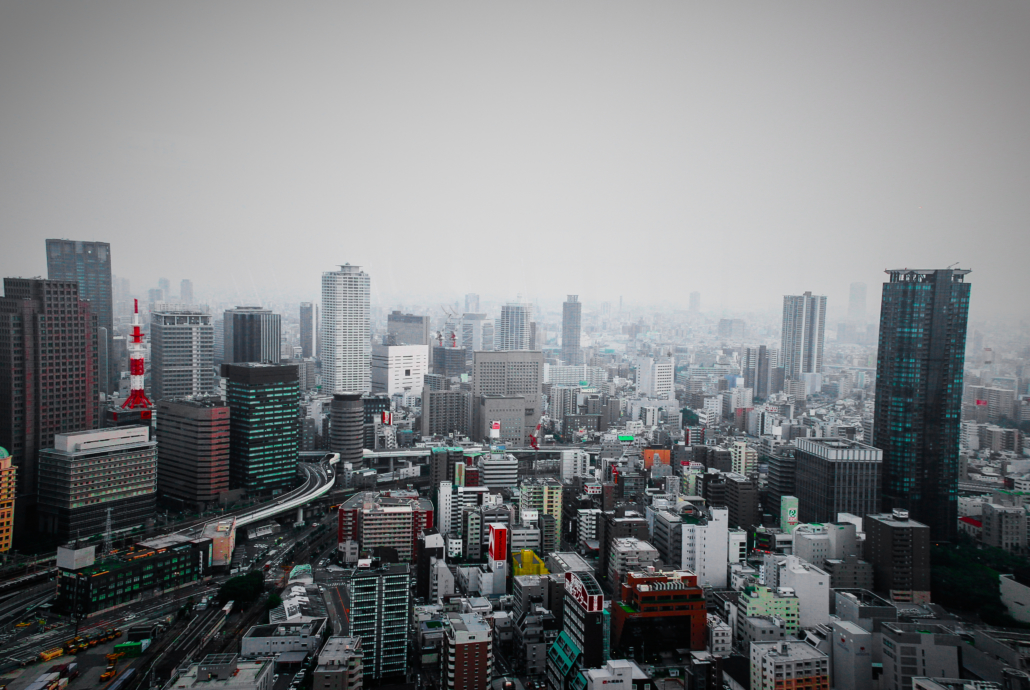
Mumbai, like Jakarta, Dhaka, Kinshasa and many others, is facing a population explosion of unprecedented size. These rapidly expanding ‘megacities’ are raising concerns from economists, urban planners and other experts.
A ‘megacity’ is any city with a population greater than 10 million. In 1990, there were only 10 megacities in the world, and combined, they housed about seven percent of the global population.
By 2014, the number of megacities had grown to 28, and 12 percent of the global population lives in one.
It is projected that by 2030, there will be 41 megacities. Today, just over half of the world’s population lives in cities or urban areas, but by 2050, that proportion is expected to swell to 66 percent. Most of that growth is expected to happen in Asia and Africa, specifically in lower-income countries. India, China and Nigeria will together account for 37 percent of all urbanization growth.
John Wilmoth, director of U.N. DESA’s Population Division, stated that “Managing urban areas has become one of the most important development challenges of the 21st century. Our success or failure in building sustainable cities will be a major factor in the success of the post-2015 UN development agenda.”
The recent increase in the rate of urbanization is unprecedented, but the causes are fairly clear. People flock to cities for jobs, amenities, healthcare, education and security. Cities often have better public transportation, better-paying jobs and a more resilient job market than rural areas. In some countries, cities are more likely to have a working sanitation system, electricity and Internet access.
Unfortunately, not all who move into megacities find what they are looking for. Many megacities are in developing countries, and their governments have been unwilling or unable to match the expansion of public services to the expansion of population these megacities have faced.
The result is living conditions that might politely be called ‘Dickensian.’ Currently, one in every thirty city dwellers lacks clean water. One in fifteen lack adequate sanitation, and one in six lives in a city with unhealthy air quality. Sexually transmitted diseases like AIDs are an ever-present threat, as is urban violence and theft. Many areas in megacities are structurally unsound, having been built quickly and sloppily, or having been assembled out of refuse by its inhabitants.
Megacities are also facing an ‘invisible epidemic’ of road-related injuries. As the number of cars and drivers grows faster than the infrastructure can support, more and more people are suffering from serious accidents. By one estimate, developing countries account for 85 percent of the world’s traffic fatalities.
Residents of the megacities themselves are not the only ones suffering negative consequences for their inefficiencies. Most megacities are growing so fast that infrastructure, when it is considered, must take precedence over the environment. This means that megacities usually have enormous carbon footprints. Traffic congestion, inadequate waste management and poor regulation make megacities huge sources of greenhouse gases, toxic chemicals and garbage.
Megacities will not stop growing, but perhaps if people invested more in infrastructure and services, they could grow into places that are pleasant to live in.
– Marina Middleton
Sources: National Academy of Engineering, Forbes, Utne, U.N., The Moscow Times, City Mayors
Photo: Flickr

Poverty in Bangkok
As of 2013, there are an estimated 7.3 million people that are considered to be in poverty in Thailand, according to the World Bank.
Lack of opportunities, education and income inequality have been major contributors to the cause of such high poverty numbers. Although it is claimed the number of the poor has decreased in recent years, the rate overall remains consistently high.
Basic needs are not the biggest problem that families face. It is that the difference between the income of the lower and upper classes is increasing. Thirty percent of the population possess the wealth, most of which was obtained in the 1980s and 1990s. However, the earning capacity of the remaining 70 percent remains relatively low.
Beginning in 1997 and lasting throughout 1998, what is commonly referred to as the “Asian Crisis” took place. Prior to this, Thailand was experiencing an abundance of economic growth. In 2011, a flood occurred just after the global financial crisis of 2008. From 2013 to 2015, political turmoil further contributed to the problem. Since then there has been less and less global demand for Thailand’s chief exports, such as shrimp. Currently, growth is predicted to increase this year at 3.5 percent.
The Millennium Developmental Goals can be reached in Thailand on an aggregate basis. The rates of maternal and under-five mortality rates have decreased. Efforts have also been made to increase access to clean water and sanitation in urban and rural areas alike. The biggest concern is environmental sustainability. There is a need to make more employment opportunities available to those in rural areas. In addition, educational resources for parents to assist their children or micro-enterprise business opportunities need to be made available.
At its worst, the top 20 percent earned 15.8 times more in contrast to the lowest 20 percent. At times, the average income is found in the most impoverished region in the northeast; it has been recorded as being 11.9 times lower than Bangkok. This has driven rural workers to seek work in urban areas like Bangkok. It is a contributing factor to the slum areas in cities. Bangkok is considered a concentration of economic activity, services and goods. This is evident given that 50 percent of Thailand’s GDP is from Bangkok.
An additional reason for poverty is the government’s lack of responsibility during its financial and industrial reforms. During these times there has been a lack of social services implemented. Another reason stems from the failure of the Thai government to provide social safety nets amid the country’s rapid growth and industrialization.
Since the 1990s the government in Thailand has embraced the MDGs. It has adopted more aggressive methods in confronting the root problems of poverty and income gaps. In addition, programs to utilize rural workers have been developed. As the Sustainable Development Goals and the Post-2015 development agenda near, and will eventually replace and advance the progress of the MDGs, Thailand and other countries will have the opportunity for renewed efforts to combat poverty and inequality.
– Erika Wright
Sources: Nations Encyclopedia, World Bank
Photo: Flickr
Malnutrition in Djibouti
Throughout its long history, Djibouti has served as an important part of international exchange. Located in the center of the Horn of Africa, Djibouti has been a principal port of trade, exchange and shipping for nations like Saudi Arabia, France and China.
Yet, in spite of its historical significance, Djibouti’s small population of 886,000 people, most of whom are urban residents, cannot afford food or proper dietary provisions. This number includes children, approximately 109,000 under the age of five, who are at risk of stunted growth, improper mental development and death due to malnourishment. It is estimated that 29.8 percent of children under the age of five in Djibouti are underweight.
In recent years, severe drought has caused the traditionally pastoral society of Djibouti to lose up to 70 percent of its livestock. With less than .10 percent of Djibouti’s land considered arable, it is difficult to maintain sustainable agriculture or for families to feed themselves. Due to a combination of high communicable disease infection, low crop production and extreme poverty, child mortality rates are increasingly high, with 81 of every 1,000 live births resulting in death. Though child mortality has declined considerably in the last 24 years, children continue to suffer greatly in the region.
Djibouti has one of the world’s highest rates of chronic child malnourishment. The latest statistics provided by WHO show that 18 percent of children suffer from malnutrition and 5.6 percent face severe acute malnutrition. Djibouti currently ranks at 165 of 187 countries in the United Nations Development Program’s Human Development Index, indicating poor development and improper nutrition throughout the average Djiboutian’s lifetime.
In an effort to combat malnutrition and child mortality rates in Djibouti, a number of international organizations have developed programs and assistance intended for the ‘under-five population’ and mothers. In June of 2014, the World Bank announced a $5 million dollar credit to the Social Safety Net Program, which provides food assistance and cash-for-work incentives to mothers with young children. It emphasizes the ‘first 1000 days’ of a child’s life as being critical to developing proper nutrition and health.
In 2011, UNICEF installed a therapeutic feeding center in the Balbala community in Djibouti, offering treatment and nutritional supplements to malnourished children. The feeding center also offers resources to mothers in order to prevent future cases of malnutrition. The World Food Programme has also been a leading contributor to food and health assistance in Djibouti. Its assistance in Djibouti has helped over 90,000 people in Djibouti, especially children.
The WFP said, “WFP also helps fight against malnutrition by providing fortified food to children under five, as well as to pregnant and nursing mothers at health centers in both urban and rural parts of the country.”
Additionally, The World Bank, WFP, UNICEF and other organizations have helped Djibouti become self-sufficient by aiding in efforts focused on education, environmental sustainability and useful crop production. These efforts have contributed to the ongoing decline of malnutrition throughout Djibouti.
– Candice Hughes
Sources: The World Bank, UNICEF 1, UNICEF 2, WHO 1, WHO 2, World Food Programme
Photo: Flickr
How Many People Live in Poverty?
According to the World Bank, “in 2011, 17 percent of people in the developing world lived at or below $1.25 a day.” However, there is speculation about whether or not these numbers are valid. Measuring household income can be a reasonable approach when determining how many people live in poverty. But there are also other factors to consider when calculating the number of inadequate living conditions.
The Oxford Poverty and Human Development Initiative has released The Global Multidimensional Poverty Index of 2014. This new way to measure poverty focuses on individuals in poverty rather than families. It also narrows its search to different countries and regions across the globe. The importance of this poverty measurement strategy is to understand which regions really need the most help.
While this new way to measure poverty is more effective, other organizations are recognizing important factors that are being missed. The International Women’s Development Agency has introduced the Individual Deprivation Measure, or IDM. While calculations are being made on individual income, the IDM focuses on what people are deprived of. Whether it is equality or education, the IDM stresses the importance of recognizing aspects that have placed people in poverty.
The Overseas Development Institute has released “The Data Revolution: Finding the Missing Millions,” a report that also focuses on what is still unknown in the developing world. According to The Guardian, “The report also says that, globally, we do not accurately know how many people live in cities.” Without this knowledge, proper resources are not equally being distributed.
It is difficult to measure how educated a country is and what its citizens need to survive. However, as technology advances and as more people join the fight to end global poverty, these new procedures can help end this global issue.
– Kimberly Quitzon
Sources: The Guardian, OPHI, The World Bank
Photo: Independent UK
Helping Poor Countries Deal with Climate Change
It is unfortunate for a family to go without food or water for extensive periods of time. However, the real disaster is climate change. In the world’s poorest countries, where carbon emissions are at their lowest, people experience the worst natural disasters. Droughts affect the production of crops and storms destroy developing regions.
According to Oxfam, “In the next 40 years, climate-related disasters are projected to displace between 150 million and one billion people.”
People living in poverty will experience the greatest loss when natural disasters occur, increasing their risk of starvation and lack of clean water. However, natural disasters will put all people, rich and poor, out of homes and ultimately make climate change one of the main barriers to ending world poverty.
“Just about everything we do has to be focused on tackling climate change, both in terms of mitigation and adaptation,” says World Bank Group President Jim Yong Kim.
During his lecture at Georgetown University, Kim addressed the importance of tackling climate change in order to help the world’s poor and shared his five-point plan that will reduce carbon emissions.
The leading countries in carbon emissions are China and the U.S., therefore these nations are the most responsible for the ongoing production of greenhouse gases. However, these nations are taking action to reduce their carbon footprint. In 2014, the U.S. and China set a goal to reduce emissions by 2025.
“The announcement was a historic step for climate change action and for the U.S.-China relationship, as the world’s two largest economies, energy consumers, and carbon emitters came together to demonstrate leadership on an issue that affects the entire world,” said the White House.
Since climate change affects electricity in some regions, technology is being built to accommodate these issues. The Gates Foundation has invested in the Omniprocessor that not only produces clean water from human waste but also generates electricity without exerting carbon emissions. Additionally, 3D printers have become a potential resource to help developing regions. Given the versatility of 3D printers, they can be used, for example, to create tools to monitor the weather so that people can better prepare for storms or heat waves.
Although technology is being produced and people are fighting for laws that recognize and halt climate change, individuals can help. Saving energy, water and recycling are all steps that can be taken to help the environment and, ultimately, the nations being affected.
– Kimberly Quitzon
Sources: Georgetown University, Oxfam America, The White House
Photo: Flickr
Advocacy 101
Advocacy is an effective tool for social change. Advocacy is the act of holding elected officials accountable for their action or inaction. Advocacy has many forms, including letter-writing, calling or e-mailing elected officials, call-in days, social media campaigns, direct lobbying and many others.
Who should advocate? The answer is anyone and everyone! When one engages in advocacy, he or she is attempting to convey a message he or she feels strongly about with the purpose of encouraging action from the official. Elected officials are more likely to take action when there is pressure, specifically from their constituents.
From global poverty to education, there are numerous ways to advocate one’s message. Advocating in person, or in groups, is extremely effective. This can be done through lobbying Congress and elected officials, administrators, policymakers or any other positions of power. One is able to advocate individually and remotely by sending emails, making calls to officials or sending letters. Ad-hoc situations of advocacy are very diverse and are often resurrected around a specific issue or cause.
Ad-hoc advocacy has infinite room for creativity and can be enacted through art installations, social media/photo campaigns, call-in days and a multitude of other options.
For best results, focus on one issue at a time. Be able to deliver the message in a succinct fashion, as people like short summaries for big pictures. While being specific, be sure to include personal experiences and why it is important to you. This is a great way to be remembered by the people (or person) you are lobbying. Beware of your audience while you are speaking from your heart, as you want to stay relatable while not appearing cliche.
To be an effective advocate, one ought to take advantage of technology, embrace available resources and personal skills, and most importantly, immerse oneself. Know the cause inside and out, therefore acting as a resource to others while being able to eloquently spread your passion! When delivering the message, be sure to identify yourself, explain why you are the best spokesperson for the issue and be prepared for questions.
The final step of advocacy is follow up, follow up, follow up! Persuade others to support the causes you support.
There are many issues one can advocate for; however, the most important factor is to advocate for something one is extremely passionate about.
At The Borgen Project, we are most passionate about global development and poverty alleviation. According to The Borgen Project, “Congressional staffers keep a tally of every issue that voters call, write and email the leader about. This information goes into a weekly report that is viewed by the Congressional leader. Your one email will get the issue or bill on the leader’s radar.”
To call or email Congressional leaders regarding issues of global poverty, check out https://borgenproject.org/get-
“If you believe in great things, you may be able to make other people believe in them, too.” – Oliver Wendell Holmes.
– Neti Gupta
Sources: Bonner Network, TIME, Delaware Division of the Arts
Photo: Flickr
Improvements in Health and Hygiene
A detrimental aspect of living in poverty is the issue of health and hygiene. Without access to clean water and food, people living in poverty run the risk of attaining serious diseases.
“Forty percent of the world’s population—2.5 billion people—practice open defecation or lack adequate sanitation facilities, and the consequences can be devastating for human health as well as the environment,” says The Bill and Melinda Gates Foundation website. Organizations such as The Gates Foundation are trying their best to resolve this ongoing issue.
As a result of these inadequate living conditions, children suffer from chronic diarrhea causing them to lose vital nutrients. The Gates Foundation is approaching the problem with a focus on traditional plumbing systems implemented in rural areas. It has invested in developing a new-age toilet that requires no water or electricity, offering a way for developing nations to improve hygiene and expand the lifespan of people living in these areas.
Along with creating new ways to improve sanitation, Bill and Melinda Gates have partnered with USAID to develop the WASH for Life initiative. Inventors are invited to apply for the Development Innovation Ventures (DIV) and share their technological ideas on how to improve sanitary conditions in developing countries. “USAID launched Development Innovation Ventures (DIV) in October 2010 to find, test, and scale ideas that could radically improve global prosperity,” said USAID.
While USAID and The Gates Foundation are making a difference in health, progress has been made in the developing world. According to the World Health Organization (WHO), “2.3 billion people gained access to improved drinking-water between 1990–2012.” In the same time span, the number of children dying has also been drastically reduced in half.
Two of the U.N. Millennium Development Goals, or MDGs, focus on reducing child mortality and improving maternal health. These goals go hand in hand since healthier mothers will create healthier children. “The number of deaths in children under five worldwide declined from 12.7 million in 1990 to 6.3 million in 2013,” according to the U.N.
Although there is still much to be done to improve health and hygiene worldwide, education is an important aspect of sustaining health in these developing countries.
– Kimberly Quitzon
Sources: The Bill & Melinda Gates Foundation, U.N. News Center, USAID, WHO
Photo: Flickr
Creativity for Social Change
Creativity for social change includes non-linear thought processes when rigidity is not conducive to resolution, change or positivity. Creativity also broadens one’s audience and allows one’s message to further spread across time, space and culture.
There has long been a connection to creativity and social change, for artists and creative thinkers have employed countless songs, paintings and other visual arts in the name of activism in order to raise awareness of oppression, inequalities and injustice. Technology has furthered the prominence of creativity in social activism, through video installations, movies, short video clips and the infinite possibility to share links.
Creativity allows for a proliferation of education. Audiences affected by poverty, narcotics and violence are able to be accessed through creative avenues. Engaging the youth in the arts can both transform individual lives while creating a new generation who may go on to produce important works that raise awareness of the issues they feel passionate about. Art is able to act as a tool for therapy, for reconciliation is vital for social change, conflict prevention and fomenting a positive future. Creativity encourages communication and self-expression, and these factors are invaluable in an attempt to foster social change.
Creativity acts as a natural conduit to create interest, and creative thinkers and artists have power in organizing civic engagement and activists for a common cause. Creative leaders are able to inspire the people, particularly the youth, and are able to mobilize communities. Creative leaders are necessary for social change, for they are able to challenge the status quo while engaged in productive dialogue. Creative leaders articulate clear ideas, take courageous risks, focus on a positive future, generate alternative solutions and most importantly, are adaptable to changing environments.
Organizations, such as ArtCorp, believe that every person has the capacity for creativity. It adheres to the idea that a message is much more effective if the audience is involved; it believes in the power of human beings to overcome problems through communication and collaboration; that art is a crucial leverage tool for creative thinking, critical analysis and generative solutions; and that art and culture affect change by accessing all of the senses and speaking to multiple types of intelligence.
The act of art and creativity ultimately inspires action and reaction. The Art of Dismantling offers, “Visual art forms can transcend all barriers and stimulate a lasting emotional response. As long as oppression, inequalities and injustice exist in the world, art and artists will have a role, even a responsibility, to make a positive change to people’s lives; whether on a global or individual level.”
– Neti Gupta
Sources: ArtCorp, Creative Social Change, The Heart of Dismantling
Photo: Flickr
How Megacities Can Hurt Development
Mumbai, like Jakarta, Dhaka, Kinshasa and many others, is facing a population explosion of unprecedented size. These rapidly expanding ‘megacities’ are raising concerns from economists, urban planners and other experts.
A ‘megacity’ is any city with a population greater than 10 million. In 1990, there were only 10 megacities in the world, and combined, they housed about seven percent of the global population.
By 2014, the number of megacities had grown to 28, and 12 percent of the global population lives in one.
It is projected that by 2030, there will be 41 megacities. Today, just over half of the world’s population lives in cities or urban areas, but by 2050, that proportion is expected to swell to 66 percent. Most of that growth is expected to happen in Asia and Africa, specifically in lower-income countries. India, China and Nigeria will together account for 37 percent of all urbanization growth.
John Wilmoth, director of U.N. DESA’s Population Division, stated that “Managing urban areas has become one of the most important development challenges of the 21st century. Our success or failure in building sustainable cities will be a major factor in the success of the post-2015 UN development agenda.”
The recent increase in the rate of urbanization is unprecedented, but the causes are fairly clear. People flock to cities for jobs, amenities, healthcare, education and security. Cities often have better public transportation, better-paying jobs and a more resilient job market than rural areas. In some countries, cities are more likely to have a working sanitation system, electricity and Internet access.
Unfortunately, not all who move into megacities find what they are looking for. Many megacities are in developing countries, and their governments have been unwilling or unable to match the expansion of public services to the expansion of population these megacities have faced.
The result is living conditions that might politely be called ‘Dickensian.’ Currently, one in every thirty city dwellers lacks clean water. One in fifteen lack adequate sanitation, and one in six lives in a city with unhealthy air quality. Sexually transmitted diseases like AIDs are an ever-present threat, as is urban violence and theft. Many areas in megacities are structurally unsound, having been built quickly and sloppily, or having been assembled out of refuse by its inhabitants.
Megacities are also facing an ‘invisible epidemic’ of road-related injuries. As the number of cars and drivers grows faster than the infrastructure can support, more and more people are suffering from serious accidents. By one estimate, developing countries account for 85 percent of the world’s traffic fatalities.
Residents of the megacities themselves are not the only ones suffering negative consequences for their inefficiencies. Most megacities are growing so fast that infrastructure, when it is considered, must take precedence over the environment. This means that megacities usually have enormous carbon footprints. Traffic congestion, inadequate waste management and poor regulation make megacities huge sources of greenhouse gases, toxic chemicals and garbage.
Megacities will not stop growing, but perhaps if people invested more in infrastructure and services, they could grow into places that are pleasant to live in.
– Marina Middleton
Sources: National Academy of Engineering, Forbes, Utne, U.N., The Moscow Times, City Mayors
Photo: Flickr
Gaza: Sewage System in Crisis
Gaza’s sewage system is in crisis.
According to The Independent, “War has stopped the plant doing the job it was built for: limiting the pollution of the Mediterranean by semi-treating the 40 million litres a day it pumps into the sea.” Sewage leakage goes directly into the sea and dirty water seeps into the ground and groundwater. The sewage system has been rendered ineffective due to Israeli restrictions on imports, infrastructure errors, continuing violence and increases in population.
Hamas’s takeover of the enclave last year was met with an Israeli embargo, limiting imports to mostly food and medicines. According to the U.N. Office for the Coordination of Humanitarian Affairs, this has affected the ability of aid groups (including the United Nations, the International Committee of the Red Cross and CARE International) to import equipment like pipes in sufficient quantities on a regular basis.
The sewage crisis is not only a result of poor maintenance, for the population of Gaza has increased from 380,000 in 1967 to nearly 1.5 million, therefore adding pressure to an already insufficient sewage system. The ongoing violence and security situation has been an ongoing threat and hindrance to the sewage crisis as well, for resources are being directed elsewhere.
The Israeli embargo limits the amount of aid and supplies that can be imported, therefore acting as a significant prevention to resolving the issue. The humanitarian situation in Gaza is exacerbated by the sewage crisis, for it has fomented issues with clean water and sanitation.
There are three treatment plants in Gaza: one in the north, Beit Lahiya, one near Gaza City and one near Rafah. The treatment plan in the south, near Rafah, is the primary treatment lagoon; however, it lacks the capacity to treat a majority of the sewage it receives. Citizens near Khan Younis are still using septic tanks, and the overload on the Beit Lahiya plant led to the creation of a “great lake” of waste water that multilateral bodies and nongovernmental organizations are attempting to slowly drain. Five people have died in a torrent of filth from a smaller lake in 2006.
According to the ICRC, “The environmental situation in Gaza is bad and getting worse…While exact statistics are unavailable, 30,000-50,000 cubic meters of partially treated waste water and 20,000 cubic meters of raw sewage end up in rivers and the Mediterranean Sea. Some 10,000-30,000 cubic meters of partially treated sewage end up in the ground, in some cases reaching the aquifer, polluting Gaza’s already poor drinking water supply.”
While there have been plans to build new plants or fix existing ones, the problem of sewage is critical. Most of the financing is currently coming from donors, though the medium and short term goals are to continue to drain the Beit Lahiya basins and work to at least partially treat all waste water. This approach, however, depends on the borders opening up and full donor cooperation, along with the willingness of companies to bid on tenders.
– Neti Gupta
Sources: Electronic Intifada, The Independent
Photo: Flickr
Malnutrition in Myanmar
Myanmar, formerly known as Burma, has an estimated population of 53 million people. Of this population, 2.5 million children in Myanmar suffer from stunted growth as a result of being malnourished over an extended period of time. Malnourished children often experience long term debilitating mental and psychical effects. These effects also impact the community and health resources available.
Currently, the rate of malnutrition in Myanmar is staggeringly high. The western area of the country, where 1.3 million Rohingya Muslims live, has unprecedented levels. More than 140,000 people are subjected to living in filthy, overcrowded camps. Others face restricted movement from villages and a lack of access to basic needs, such as clean water, food, education and healthcare. Political issues and ethnically motivated crimes have caused over 200,000 people to flee to neighboring areas such as Bangladesh to save their lives.
Human Rights Watch reports have indicated that ethnic cleansing and crimes against humanity have occurred in Myanmar as a result of the atrocities faced by the Rohingya people. However, this minority is not recognized by the government, and the term Rohingya is prohibited from being used by the government in Myanmar.
In accordance with Millennium Development Goal One, to end hunger and extreme poverty, Myanmar has attempted to make progress. As of 2013, it has been collaborating with UNICEF in order to help combat child malnutrition. Myanmar has joined other countries in the global ‘scaling up nutrition’ movement.
The United States and other countries need to work with the government of Myanmar to help it create reform programs that provide equality to all its people, including equal rights protection and access to food, clean water and sanitation. Progress has been made, but the potential for more is great.
– Erika Wright
Sources: The Parliament Magazine, UNICEF
Photo: Flickr