In the poverty discussion, it is easy to forget Mexico. Although less than two percent of the country lives below the international poverty line set by the World Bank, poverty and lack of economic and educational opportunity is very prevalent throughout the country. It is estimated that 42 percent of the population lives in some degree of poverty in Mexico.
Under President Enrique Peña Nieto’s administration, efforts to provide economic and educational opportunities have been made and the country has also instituted universal healthcare during his time in office.
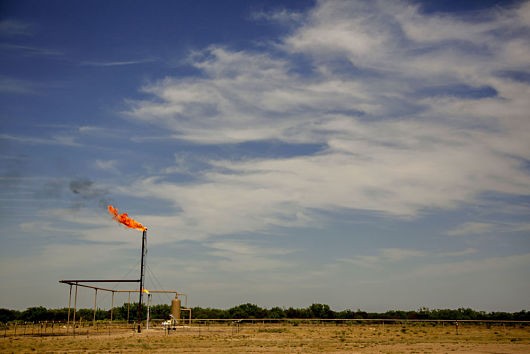
One of Mexico’s newest ambitions is to extract the oil and gas reserves in the Eagle Shale Ford. The massive shale field starts in Texas and runs south along Mexico’s eastern corridor into Veracruz.
According to the Mexican government, the Eagle Shale Ford holds approximately 90 billion barrels of untapped oil and natural gas reserves. This makes Mexico one of the biggest hydrocarbon controlling countries in the world.
Officials believe that the rise of hydraulic fracturing in the United States can be applied in Mexico. Hydraulic fracturing, or “fracking,” involves drilling into shale and blasting a mixture of water, sand and a litany of chemicals against the rock. This fractures the rock, allowing the gas or oil to be extracted.
This method has recently enabled Texas to ramp up oil operations. The state now produces as much oil annually as Mexico does.
President Nieto passed legislation last year that ended Pemex, the state-owned energy monopoly, and opened up foreign investment to private energy companies.
The difference between oil exploitation in Texas and Mexico is striking. Texas has over 8,000 wells operating in the shale field. In northern Mexico, there were only 25 by the end of 2014.
Mexico believes it is in their best economic interest to exploit the rest of their reserves. In an interview with Dallas Morning News, Mexican Ambassador Medina Mora said that the development of wells is key to limiting the influence of cartels. “The best way to counteract organized crime is to develop jobs in poor areas, that’s why investment by foreign energy companies is key to our future,” Mora said.
However Mexico’s ambition to exploit these reserves have many barriers. Some areas in the Eagle Shale Ford are controlled by various drug cartels. Foreign companies performing preliminary drilling have been known to pay cartels for access to prospective well sites.
Those same cartels also illegally extract oil from pipelines. Pemex asserts it has lost over a billion dollars in revenue over the past few years due to this.
For some foreign energy companies, this lack of security has kept them away from Mexico. Federal Congressman Javier Travińo of Nuevo León said that states must “get their house in order” if they want international investment.
Despite the day and night differences in security and infrastructure in Texas and Mexico, fracking still raises the same health and environmental concerns.
Fracking is banned in New York, Maryland and various counties and municipalities across the US. It is prohibited in Scotland and Wales as well. These bans were enacted due to the proven environmental and health concerns surrounding the process.
There are 250 chemicals commonly used in fracking. Many are detrimental to mammals, aquatic life and human health. The water and chemical mixture, or slurry, that is left in the ground has been linked to contaminated groundwater. Some chemicals have unknown effects.
The amount of water used for fracking also raises concern. In 2011, the Environmental Protection Agency estimated that 70 to 140 billion gallons of water were used in the U.S. for fracking. For water deprived Mexico, this will be an issue if necessary infrastructure and security materialize.
Mexico has much more lax environmental regulations than the United States. For companies that have made investments, there isn’t much transparency required with the public.
Gabino Vicente, a delegate from a small town at the southern edge of the Eagle Shale Ford, says companies are leasing land by deceiving owners in Mexico. “They take advantage of the poverty and low education levels to gain access to the land. Many citizens don’t even know what fracking is.”
Mexico is faced with a tough choice. There are direct economic incentives to exploit their natural resources. However, the environmental and social costs, which are obscure and delayed, could negate the monetary gains.
Whichever option is pursued, the citizens of Mexico have the right to be educated about this issue.
– Kevin Meyers
Sources: Global Issues, HSPH, Keep Tap Water Safe, Poverty Data, Dallas News, Roar Mag
Photo: Dallas News

Child Poverty in Wales Remains Highest in the UK
Child poverty in Wales is currently one of the largest issues facing the United Kingdom.
Under the U.K. government’s Child Poverty Act, which was recently scrapped due to poverty levels across the U.K. remaining high, a child is defined as living in poverty when they are “living in a household with an income below 60 percent of the UK average of £453 a week.”
Based on these guidelines, over 2.3 million children across the U.K. are currently living in poverty, or about one in six. With one-third of children living in poverty, Wales currently has the highest child poverty rate in the U.K. outside of the city of London.
In response to these recent figures, Work and Pensions Secretary Iain Duncan Smith stated that poverty issues in Wales are “deep rooted,” while a severe lack of public transportation has left communities without access to better jobs.
Wales’ Children’s Commissioner, Professor Sandy Holland, has been an open advocate for reform of the Welsh government’s child poverty programs. Speaking to ITV.com, she lamented that child poverty statistics in Wales are “unacceptably high.”
“The different life chances for children, whether you’re living in the poorest fifth of society or the richest fifth, they’re really stark and we’ve done nothing in the last eight years to reduce that inequality,” Holland said.
Despite a rise in employment across the U.K. since 2010, poverty in Wales has remained unaffected. Speaking to the BBC, Dr. Sarah Lloyd-Jones, director of Cardiff’s education charity People and Work Unity, says that policy reform is the first big step Wales needs to take to start improving its statistics.
“We have an approach that says we’ll look at basic skills and structures to help people survive in poverty but we need to be more ambitious,” she said. “We need to be saying, ‘Why aren’t we getting engineers out of this community, why aren’t we getting doctors or chemists?’”
– Alexander Jones
Sources: BBC 1, BBC 2, ITV
Photo: BBC
Is Hosting the Olympics a Good Investment for the Host Population’s Welfare?
The purported benefits of hosting mega-events such as the Olympics have been increasingly criticized by economists and journalists, and questions are being raised. Are the host nations for the Olympics or similar events making a good investment? Could the money be better leveraged to help the poor via other means? What makes hosting mega-events beneficial or not?
The costs of hosting the Olympics used to be small, in the millions of dollars. In the past few decades, this has not been the case. Billions of dollars are poured into infrastructure projects and other related costs in order to create the environment for hosting the Olympic Games.
The huge investment and sunk costs put into hosting the Olympics are not always returning the same value. The stadiums built for the events are often left unused and in a state of decay within only a few years of the events. With little demand for such a large amount of new sports infrastructure, the huge construction costs rarely pay for themselves in the long run.
On the other hand, there is such a thing as the “Olympic Effect”—trade openness and overall transactions tend to increase for the host country following the Olympics. Prestige and attention is also granted to the host country, as the Olympics are a chance to showcase the host’s best qualities and cultural attractions. This is important—but is it worth the cost? Many would say it probably is not.
The Sochi Winter Games cost Russia $50 billion, the highest costs of all time for an Olympics Game. The national economy benefited negligibly from the Games but the regional effect may have indeed had some positive impact. Because of the expected increase in tourism and guests in the region, infrastructure of all kinds had to be upgraded to be able to accommodate the flash flood of spectators and athletes. This could mean a long-lasting positive impact on certain regions of the country, even if the new infrastructure is underused afterwards.
The more recent Olympic Games have been held in emerging economies such as Russia and China, with Brazil upcoming. This trend away from more developed nations such as the United States and European countries is important to recognize. Government spending is particularly important for these developing nations. Investing wisely is the name of the game for economic development, and the Olympics net return on investment is questionable at best. This is not a good sign for these countries. For example, Brazil built massive stadiums in small cities for the World Cup that had no use for them past the mega-events for which they would be used. The government even cleared out favelas (slums) in order to build new infrastructure and gentrify city outskirts. It begs the question, is it possible that Brazil should be using the billions of dollars to help those in the favelas and others like them, rather than build massive stadiums? These are the questions that emerging economies must consider carefully when they make the investment that most economists consider an economic net loss.
Norway recently withdrew its bid for the 2022 Winter Games due to concerns that the cost would be too large and a lack of public support. The lack of evidence that the Olympics produce the economic benefits advertised is a message that must be heeded. The hidden costs of hosting mega-events such as the Olympics and the World Cup are especially prominent to a developing economy like Brazil. First, they might end up losing money and, secondly, that money could have been leveraged to a much greater degree. Just imagine if instead of hosting the Sochi Games, Russia had the same enthusiasm for spending $50 billion—but on social and job-training programs designed to reduce poverty within their own borders. These are the hidden costs of hosting mega-events.
– Martin Yim
Sources: NBER, The Economist, International Business Times, Reuters
Photo: NPR
Fracking and Poverty in Mexico
In the poverty discussion, it is easy to forget Mexico. Although less than two percent of the country lives below the international poverty line set by the World Bank, poverty and lack of economic and educational opportunity is very prevalent throughout the country. It is estimated that 42 percent of the population lives in some degree of poverty in Mexico.
Under President Enrique Peña Nieto’s administration, efforts to provide economic and educational opportunities have been made and the country has also instituted universal healthcare during his time in office.
One of Mexico’s newest ambitions is to extract the oil and gas reserves in the Eagle Shale Ford. The massive shale field starts in Texas and runs south along Mexico’s eastern corridor into Veracruz.
According to the Mexican government, the Eagle Shale Ford holds approximately 90 billion barrels of untapped oil and natural gas reserves. This makes Mexico one of the biggest hydrocarbon controlling countries in the world.
Officials believe that the rise of hydraulic fracturing in the United States can be applied in Mexico. Hydraulic fracturing, or “fracking,” involves drilling into shale and blasting a mixture of water, sand and a litany of chemicals against the rock. This fractures the rock, allowing the gas or oil to be extracted.
This method has recently enabled Texas to ramp up oil operations. The state now produces as much oil annually as Mexico does.
President Nieto passed legislation last year that ended Pemex, the state-owned energy monopoly, and opened up foreign investment to private energy companies.
The difference between oil exploitation in Texas and Mexico is striking. Texas has over 8,000 wells operating in the shale field. In northern Mexico, there were only 25 by the end of 2014.
Mexico believes it is in their best economic interest to exploit the rest of their reserves. In an interview with Dallas Morning News, Mexican Ambassador Medina Mora said that the development of wells is key to limiting the influence of cartels. “The best way to counteract organized crime is to develop jobs in poor areas, that’s why investment by foreign energy companies is key to our future,” Mora said.
However Mexico’s ambition to exploit these reserves have many barriers. Some areas in the Eagle Shale Ford are controlled by various drug cartels. Foreign companies performing preliminary drilling have been known to pay cartels for access to prospective well sites.
Those same cartels also illegally extract oil from pipelines. Pemex asserts it has lost over a billion dollars in revenue over the past few years due to this.
For some foreign energy companies, this lack of security has kept them away from Mexico. Federal Congressman Javier Travińo of Nuevo León said that states must “get their house in order” if they want international investment.
Despite the day and night differences in security and infrastructure in Texas and Mexico, fracking still raises the same health and environmental concerns.
Fracking is banned in New York, Maryland and various counties and municipalities across the US. It is prohibited in Scotland and Wales as well. These bans were enacted due to the proven environmental and health concerns surrounding the process.
There are 250 chemicals commonly used in fracking. Many are detrimental to mammals, aquatic life and human health. The water and chemical mixture, or slurry, that is left in the ground has been linked to contaminated groundwater. Some chemicals have unknown effects.
The amount of water used for fracking also raises concern. In 2011, the Environmental Protection Agency estimated that 70 to 140 billion gallons of water were used in the U.S. for fracking. For water deprived Mexico, this will be an issue if necessary infrastructure and security materialize.
Mexico has much more lax environmental regulations than the United States. For companies that have made investments, there isn’t much transparency required with the public.
Gabino Vicente, a delegate from a small town at the southern edge of the Eagle Shale Ford, says companies are leasing land by deceiving owners in Mexico. “They take advantage of the poverty and low education levels to gain access to the land. Many citizens don’t even know what fracking is.”
Mexico is faced with a tough choice. There are direct economic incentives to exploit their natural resources. However, the environmental and social costs, which are obscure and delayed, could negate the monetary gains.
Whichever option is pursued, the citizens of Mexico have the right to be educated about this issue.
– Kevin Meyers
Sources: Global Issues, HSPH, Keep Tap Water Safe, Poverty Data, Dallas News, Roar Mag
Photo: Dallas News
Contraceptive Vaginal Ring Helps Mothers Around the World
Developed by the Population Council, this contraception method is unique because it is safe and effective for lactating women after they have given birth. It can be used as early as four weeks after childbirth for up to one year in order to space out potential future births.
Birth spacing is important for the health of mother and child. Maternal death and other health complications are more likely to arise with short intervals between births. In addition, family planning can help parents to plan finances related to family expansion. Family planning is critical to poverty reduction. When families do not have the knowledge or ability to space births, particularly in developing countries, they may also lack the resources to support these children.
The vaginal ring is 98.5 percent effective in preventing pregnancy with proper use. The ring can be inserted and removed by the mother. This translates to less doctor visits, which are known to strain family resources, such as time and money, in developing countries.
The ring releases progesterone, but does not interfere with breast milk production. In this way, it is unlike oral contraceptives, which contain estrogen and cannot be used by lactating women.
This method is currently used in Bolivia, Chile, Dominican Republic, Ecuador, El Salvador, Guatemala, Panama, and Peru. Currently, studies in India and Sub-Saharan Africa are underway in order to determine if it could be effective in these regions as well.
The inclusion of this method on the list from the World Health Organization’s list suggests that it is likely to be more accessible to communities in the near future. The CVR is effective, safe, and inexpensive. Medical services can be difficult to reach in developing countries, but the CVR places very few demands on doctors.
The Population Council is currently developing another vaginal ring that will not have to be replaced every 3 months. It would last for one year. This would make this contraceptive method even more appropriate for the developing world.
In the future, we may even see vaginal rings that can protect against HIV and other sexually transmitted diseases, in addition to its contraceptive function. This exciting new technology has the potential to address many of the global health problems our world faces today.
– Iliana Lang
Sources: WHO, Population Council, Impatient Optimists
Photo: Impatient Optimists
Global Development Lab Brings Silicon Valley to Washington
USAID’s mission to fight global poverty has just received significant support with the recent addition of the Global Development Lab. USAID has long been the leading government agency seeking to alleviate poverty, yet their mission has primarily been that of implementation. The agency is now not only committed to the physical deployment of aid, but also the development of future relief systems.
Founded in April of 2014, the new subdivision seeks to change the ways in which aid is delivered and developed. According to the official website, “The U.S. Global Development Lab is a new entity within USAID that brings together a diverse set of partners to discover, test, and scale breakthrough solutions to achieve what human progress has only now made possible—the end of extreme poverty by 2030.”
The Global Development Lab is bringing the fight against extreme poverty into the 21st century information age. Its aim is to use strategies that top technology companies have used, such as crowd sourcing, big data collection, and constant research and development to find the best solutions in terms of ending extreme poverty.
USAID has appointed Ann Mei Chang as Executive Director for the Global Development Lab. Chang worked for twenty years in Silicon Valley, spending eight of them working for Google as lead engineer of its mobile division. With both experience in the technology and nonprofit sectors, Chang brings a fresh outlook on new ways to implement global development.
The lab is revolutionary in its mission to use resources and partners from both the public and private sectors. The Global Development Lab is partnered with technology companies that are synonymous with innovation. Microsoft, Intel and Nike are listed as cornerstone sponsors. Many of the nation’s top universities, including the University of California, Duke and the Massachusetts Institute of Technology, have also partnered with the lab. USAID hopes that these partnerships will “leverage the combined skills, assets, technologies, and resources of the public, private, and nonprofit sectors to deliver sustainable development impact.”
USAID and its new Global Development Lab are not only attempting to alleviate extreme poverty through donations and other tried methods, but the agency is now attempting to end the suffering of millions around the globe by seeking cutting edge solutions through science, innovation, and collaboration.
– Joe Kitaj
Sources: USAID, The White House
Photo: USAID Blog
Bernie Sanders: A Champion for American Poverty
Sanders uses the increasing disparity between the wealth classes in America to illustrate his point on the problem of American poverty. Continuing to hammer his point home, Sanders then puts the blame on Wall Street’s influence over economic poverty, unfairly favoring those with more income. Sanders is directly quoted as saying, “There are a lot of great public servants out there, great economists who for years have been standing up for the middle class and the working families of this country, who know that it is an international embarrassment that we have the highest rate of childhood poverty of any major country on Earth.” Sanders makes a bold claim with this statement, but one that is shockingly valid.
Sanders’ campaign website lists some alarming figures about overall U.S. poverty as well as child poverty on an international scale. According to the site, 46.5 million Americans live below the poverty line making that figure the largest in U.S. history. In addition to this number, Sanders’ website cites a 21.8 percent child poverty rate, the “highest of any major country on earth.” It is important to distinguish here that by “major country,” he is referring to all countries part of the Organization for Economic Co-operation and Development (OCED).
In March of 2014 Sanders organized a subcommittee to examine in depth the differences in life expectancy across the United Sates as a direct result of varying poverty levels. Some of the findings reported that almost as many people die from poverty as from lung cancer. Life expectancy was also shown to have decreased over the past 20 years in 313 U.S. counties, and the United States has 6 million more people in poverty today than it did in 2004.
Poverty is as crucial an issue as any from presidential hopefuls this elections. Senator Bernie Sanders has made it one of his top campaign priorities to reduce this number drastically if elected, by working vigorously to improve the system of the American economy and reduce the vast gap between wealth classes in America.
– Diego Catala
Sources: PolitiFact, Senate
Photo: Bernie Sanders
Pollution-Sensing Technology a Game Changer
Malaria, HIV/AIDS, Tuberculosis. One of these must be the biggest cause of deaths in the developing world, right?
Wrong. It is pollution, not diseases, that causes the most deaths in developing countries. Around 8.4 million lives are claimed each year by various kinds of pollution. That is three times more deaths than those caused by malaria, and four times as many as caused by HIV/AIDS.
India and Africa are areas where there are particularly serious problems. India, not China, is home to the world’s most polluted city: Delhi. The number of PM 2.5 particles, the world’s most dangerous, capable of penetrating the lung and therefore entering straight into the bloodstreams of millions, reached 21 times the recommended limit recently.
These levels are twice as toxic as those in Beijing, the accepted pollution capital of the world. The pollution in India causes 1.3 million deaths a year. It also cuts 660 million lives short by three years. Three years off a life simply because of where a person is born or happens to live.
Pollution is also a danger in Africa, where malaria and HIV/AIDS often take the headlines as the leading killers on the continent. Gaborone, Botswana, ranks eighth in particulate pollution among cities that provided information about their pollution levels.
Besides outdoor pollution being an issue, there is also the problem of indoor pollution in both Africa and India. This is generated mostly from cooking with wood and other sooty fuels that clog up the air. Regulations are lax, toward both indoor pollutants and corporate ones.
Never fear, however. New wearable pollution-sensing technology is on the way to save the day, or at least improve the situation. TZOA is producing a small gadget capable of informing wearers about the air they breathe by using “internal sensors to measure your air quality, temperature, humidity, atmospheric pressure, ambient light and UV (sun) exposure all in one wearable device.”
The device can hook up to an app on a phone to give air readings. It is not alone in the small pollution-sensing gadget department. A device that doubles for a key-chain called Clarity can perform a similar task. Clarity tracks “personal exposure to air pollution via a smartphone app,” just like TZOA.
While these technologically advanced gizmos cannot reduce the drastic levels of pollution around the globe that are killing millions, what they can do is help provide data where it is lacking in areas where pollution is prevalent. Data is often not available or not provided in some of the areas with the worst pollution.
These gadgets also have the potential to raise awareness for the severity of the issue. Empowering those in the thick of the worst conditions has the potential to make the severity of the situation clearer to governments as well as ordinary people. Armed with this information, both could take action because of the data provided by devices like TZOA and Clarity.
– Greg Baker
Sources: Tech Times, Inter Press Service, Huffington Post, BBC, Wired, New York Times
Photo:Flickr
How USAID Is Falling Apart
The United States Agency for International Development, USAID, is the United States’ lead agency for international development and poverty reduction. The organization is credited with a multitude of successes, but in recent years it has faced organizational problems that have for the most part gone unnoticed by governmental higher-ups.
These organizational pitfalls threaten the agency’s ability to combat poverty and promote development worldwide. Recently, USAID has come under attack in the news for providing the wrong geographical coordinates for health centers that the agency funded in Afghanistan. A further look into the organization to find what internal problems are facilitating such mistakes revealed administrative and staffing discrepancies.
The USAID staff has become a major debilitating problem for the agency. There seems to be a rift between new and established staff members when there needs to be collaboration and unity among them. The veterans of the agency should be advising and teaching the newer members so that when they move on or retire, the staff remains steady and prepared. According to the U.S. Global Leadership Coalition, two-thirds of USAID’s professional staff has left. Over 50% of professionals still with the organization are over retirement age. As these older employees are gearing up to leave, the agency is left with a young, new workforce. Over 70% of USAID’s younger employees have less than five years of work experience.
Another problem USAID is facing is the lack of support from Obama’s administration. The slip up in Afghanistan was acknowledged but underscored by USAID, who defended the error with the fact that knowing the geographical coordinates for the center is not the first priority. However, the mistake undermines international credibility and domestic trust in the agency. USAID officials are also claiming that as the United States continues to prepare to fully leave Afghanistan, their own on-the-ground operations are threatened by a lack of firsthand protection. However, the avoidance and negation of blame that such statements allude to may come from a larger internal frustration with a lack of attention from the government and a lack of experienced staff.
Continued increases in spending on military and defense, despite widespread support of development as a better investment for long-term national security measures, undermines the work that USAID can do. Military-led humanitarian efforts rarely focus on the real core issues contributing to the problems and instead expend energy on the symptoms, which makes it unsustainable and often ineffective in the long-term.
The development sector of the government receives only a fraction of what the military receives. Development needs to be made a priority in order for it to receive the recognition and funding that it deserves so it can not only improve countries around the world, but our own country as well.
– Emma Dowd
Sources: Foreign Policy, Huffington Post, U.S. Global Leadership Coalition
Photo: Washington Post
How Poverty Affects Children’s Language Skills
Decades worth of research has shown that children from low-income families are at a higher risk of entering school with poor language skills compared to more privileged students. On average, they score two years behind on standardized language development tests.
New research has shown that this achievement gap could begin at as early as 18 months, and by the age of two, children from low-income families show a six-month gap in language proficiency. By the age of three, the difference in vocabulary can be so large that children would have to attend additional schooling to catch up. Furthermore, poor children have more difficulty understanding abstract language and possess lower reading and writing skills, which increases the odds that the child will drop out of school in the future. They often struggle with phonological awareness skills: the ability to consciously manipulate a language’s sound system.
There are many factors that contribute to this trend. Birth to the age of three is a critical period for language development, as the brain is rapidly growing and developing. Parents who are less educated may not know the importance of consistently using language with their baby, which can cause a delay in early language skills. Parental engagement from birth can help bridge this gap, regardless of income level.
Parents who are struggling financially may not have the time or resources to devote to reading to their children. This affects a child’s emerging literacy skills. Building a foundation for strong literacy skills must begin early, and the process of acquiring these skills begins at birth, so it is imperative that parents make an active effort to read to their children.
The vast difference in vocabulary between children of different income levels relates to their exposure to varied vocabulary at home. In the span of one year, children from poor families are exposed to 250,000 utterances at home, while children from wealthy families hear four million. Discussion in low-income households is often focused on daily living concerns, such as what to eat, what to do and other practical topics. Therefore, children may be unprepared for a different type of discussion in a school setting.
There are various strategies that educators and parents can use to close the achievement gap. Early education and intervention are extremely important. High-quality preschool programs produce the best results, particularly when children begin such programs during infancy. Equally important is educating and empowering families. Teaching parents the importance of reading to children, talking with their children as much as possible and building vocabulary by giving words meaningful context can lead to positive outcomes. Working with multiple generations of the family is the best way to promote literacy and language skills at home.
Language connects us all; therefore, it is necessary to foster children’s communications skills from a very young age. With the appropriate combination of early intervention and parental engagement, it is entirely possible for children from low-income families to overcome the language achievement gap.
– Jane Harkness
Sources: American Speech-Language-Hearing Association, Global Post, Stanford News
Photo: Flickr
Gentlemen, Here’s Your Summer 2015 Guide to Ethical Beachwear
Warby Parker Sunglasses: Abbot Jet Silver
Warby Parker’s Abbot Sunglasses have a rounded shape and metallic glow which encapsulates the aesthetic of the rock stars of old while still feeling fresh and new. With their great style, these sunglasses are a must in any activist’s summer wardrobe.
Along with looking great, Warby Parker trains nonprofit partners to sell glasses at affordable prices in the developing world for every pair sold. And with company that engages in social enterprise and looks great, these are truly some sweet shades.
Wear if you like: John Lennon, long discussions about philosophy, talking to friends about how awesome Woodstock would have been.
Riz Boardshorts-Burgh-Endangered Garden/Bolt
Sustainability is a major element in the war on global poverty, since so much of global poverty is based on a lack of resources, and with climate change being a major contributor to conditions of global hunger.
English swimwear brand Riz engages in a clothing recycling program in which customers are rewarded 25% off their next purchase after returning bathing suits to the site. In addition, Riz boardshorts are made from fully recycled and recylable fabrics.
These colorful shorts are a great and sustainable way to enjoy the ocean while keeping things sustainable. Between the exciting floral print and the oceanic blue background, these are a must wear for any surfing activist.
Wear if you like: The ocean, quoting “Pulp Fiction,” calling people “dude.”
soleRebels Sandals: Sushi Cross
soleRebels is a fair trade, non-GMO, vegan footwear brand.
Made in Addis Abba, the brand is bringing jobs to Ethiopia through the sustainable production of shoes. soleRebels pays its workers triple the industry average, embraces traditionally zero carbon methods of production and uses recycled car tires to make soles for its shoes. The result is a brand which is environmentally sustainable and economically working toward breaking the cycle of generational poverty.
The Sushi Cross sandals are themselves well-designed, replicating the image of sushi above the soles while the soles have an attractive, mat-based design.
Wear if you like: Traveling one mile or one million, sleeping under the stars, knowing that the journey is more important than the destination.
– Andrew Michaels
Sources: Boardshorts, soleRebels 1, soleRebels 2, Warby Parker 1, Warby Parker 2
Photo: Nonfashionista