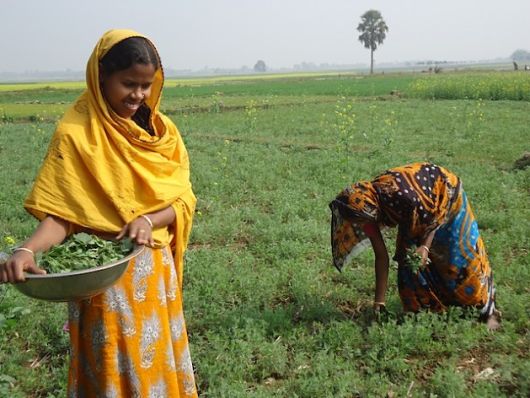
 Bangladesh Rural Advancement Committee (BRAC) leader Sir Fazle Hasan Abed won the World Food Prize in 2015 for his achievements in promoting global food security. The primary objective of BRAC is to alleviate global poverty through methods that reduce maternal mortality and invest in maternal health, family planning, services to women, empowerment to women, agriculture and other livelihoods. Bangladesh achieved the Millennium Development Goal of halving hunger by 2015, according to recognition by the United Nations.
Outreach has reached 11 other nations making BRAC the leading anti-poverty advocate and activist in the world. BRAC has given 150 million people an opportunity to improve. Abed has lead BRAC for 43 years, starting in 1972 when the committee focused on helping Bangladesh recover from war with Pakistan. It now has a large staff of about 110 thousand people in the countries of Bangladesh, Afghanistan, Pakistan, Philippines, Sir Lanka, Liberia, Sierra Leone, South Sudan, Tanzania, Uganda and Haiti.
Many success stories stem from BRAC, such as the increase in the rate of immunized Bangladeshi children from 2 percent in 1986, to 70 percent in 1990. BRAC gives those in poverty microfinance, health, education, agriculture and livestock services.
The committee gave $1.5 billion small loans to those in need with $100 to $150 per person. The organization nurtures the eight percent of Bangladesh’s poorest in two-year programs created to lift them out of poverty and receive loans. BRAC uses grants, monthly salaries and health services benefiting families, as they are educated about budgeting in and out of the country. Their methods such as this have assisted 180 thousand people out of poverty.
According to statistics last year, Bangladesh is a leader amongst least developed countries (LDC) fighting for gender equality. The amount of women in parliament has increased, rising from only 10 percent in 1991, to 20 percent in 2011.
The key to success in Bangladesh has been women’s labor in agricultural and exporting positions. There were two million women working in ready-made garment (RMG) factories, which is the top export sector, reeling in a profit of $2 billion a year.
The life expectancy of women increased from 54.3 years in the 1980s, to 69.3 years in 2010. Secondary school enrollment for girls has increased, rising from 1.1 million in 1991, to 3.9 million in 2005. Today, girls are less likely to be married at a young age and fertility rates have fallen. An increase in nutritional intake and higher incomes are another result of benefiting women.
Bangladesh is ranked 100 out of 128 when it comes to gender equality. There is still some work to be done, and Abed knows this. He received the Trust Women 2014 Hero award for promoting women’s rights, becoming the first man to receive this award.
Abed was selected among 160 nominations from 45 countries. The award is given to an innovator whose activity has aided women to learn and sustain their rights. After receiving the World Food Prize in 2015, Abed upholds his goal in helping women when he stated in an article by Environmental News Service, “the real heroes in our story are the poor themselves and, in particular, women struggling with poverty.”
A work in progress within BRAC is teaching mothers in Bangladesh how to make oral rehydration fluid in order to fight diarrohoeal deaths. BRAC is particularly proud of halving the number of child mortality since the 1980s. The organization has been working on training midwives in order to reduce mortality rates of both mother and child.
BRAC’s microfinance has been especially empowering women. Microfinance is essential in rural and social development. Of the borrowers in Bangladesh, 92 percent are women and 90 percent live in a rural area.
Bangladesh has increased gender equality in two particular educational levels. Youth literacy and secondary schooling has improved greatly with higher girl to boy ratios. The country has reduced the gender gap faster than the global average and hopes are high to reserve one third of Bangladesh’s parliament for women by 2020.
However, women will continue have challenges to come. The employment rate of women in 2010 was 58 percent, which is ranked 30 percent lower than men. Women are also still unable to own land, and lack necessary tools to perform productively on the agricultural scale. They also face early and forced marriage, maternal deaths, abandonment, and hold a small amount of job opportunities.
Even so, BRAC has successfully impacted the country and Africa. Its microfinance and two-year nurturing programs have generated success. The fertility rate and child survival has improved in Bangladesh and it’s still reaching to further help women. Results for women’s equality in Bangladesh are expanding beyond borders as people leave poverty with the support of BRAC.
– Katie Groe
Sources: The Daily Star, IRIN, Harvard University SAI, The Guardian, Environment News Service
Photo: IPS News

India: Still The Most Insanitary Place on Earth?
According to the latest World Health Organization (WHO) data report, India is the number one country in terms of having the most catastrophic levels of outdoor air pollution. This is an issue that has not been met with proper treatment. What’s more, 13 out of the 20 most polluted cities in the world are located in India.
For decades, the issue has reportedly derived from a culmination of treacherous chemical particles; “smog” is included among them as the leading pollutant. However, a 2014 BBC News report by Shannti Dinnoo argues that the issue of unsanitary conditions probably stems from cultural causes.
As noted in Dinnoo’s findings, open defecation is a socially accepted daily ritual. When children learn how to walk and talk for the first time, their parents also teach them how to defecate out in the open, and that doing so is acceptable.
The normalized practice most frequently happens among financially-deprived families: toilets are luxuries usually only available to wealthy people. However, as was unearthed in an accompanying BBC News reading, it was found that these people fail to properly sanitize their toilets.
Last year, UNICEF used the phenomenon of public defecation to structure a theory in which the organization correlated the insanitary issue with the prevalence of malnutrition, which alters growth and immunity in children under the age of five.
Children are not the only sufferers of the extreme consequences caused by the horrendous air and hygiene issue.
As documented in Dinnoo’s BBC report, outdoor defecation places women at risk, because they are more likely to be in a susceptible state of sexual assault. This is especially concerning when one considers the rapid rate of rape crimes within the country.
Additionally, the lack of sanitation has potentially inflicted adverse effects among pregnant Indian women, where premature births and low birth weight are more likely to occur.
At the time, with minimal assistance in aiding India’s pollution issue, various individuals have spoken out to produce public awareness in encouraging Indian governmental powers to sustain quality air control. Mohammed Kamal Professor of Public Policy Rohini Pande, alongside University of Chicago collaborators, addressed the public a few months ago and strongly recommended the Indian government to enforce stricter regulations.
Other individuals stepping up to promote awareness include economist Michael Greenstone, who shared suggestions with Internet website vox.com on tactics India should follow, such as the proposal of an effective emission trading system alongside the idea of penalizing citizens who purposely pollute (a factor that is rarely enforced, let alone rarely considered).
On February 21, 2015, United States Secretary of State John Kerry confirmed the launch of a program called AirNow. This would monitor foreign countries’s air quality, specifically that of India, to assist foreign service officers and U.S. military personnel by providing them with information about the air they’re breathing in efforts to “mitigate some of the harmful impacts,” according to The Indian Express.
Already, a small form of action has made a difference for children between the ages of 11 and 15. On July 7, 2015, The Indian Express revealed that UN efforts in alleviating India’s climatic disaster have reduced open defecation by 25 percent.
This reduction has been attributed to the enforcement of stricter regulations and federal emission standards. Overall, people hope to improve respiratory functions for adolescents and young teenagers because that general age is considered the “critical period” of vital lung development.
– Jeff Varner
Sources: The Indian Express 1, BBC News 1, The Indian Express 2, Harvard Kennedy School, VOX, The New York Times, BBC News 2
Photo: Global Press Journal
Celebrities High-Five For UNICEF
According to UNICEF, almost one thousand children die every day worldwide because of the lack of clean water. Conditions are worsened for those without proper nutrition, immunizations, safety and infant health.
The #HighFiveIt campaign raises money to develop strategies to solve these issues as well as implement the plans created. UNICEF will also help to educate the areas that suffer from these problems with techniques that continue to improve upon the tactics that UNICEF will put in place.
In Canada, Karina LeBlanc, the Canadian Women’s National Team goalkeeper and UNICEF ambassador, helped start the campaign by high-fiving Christine Sinclair, the captain of Canada’s team.
UNICEF asks that supporters take part in #HighFiveIt by posting a photo or video of a high-five during a sporting match, tagging five friends in the post and donating to UNICEF.
Among the supporters are many celebrities who have pledged to help save lives of children in poor areas. Disney Channel stars Calum Worthy, Raini Rodriguez and Laura Marano are giving their high-fives for UNICEF, and so are Rico Rodriguez from “Modern Family” and Peter Mooney, Missy Peregrym, Priscilla Faia and Erin Karpluck from “Rookie Blue.”
In addition, several other Canadian and American politicians, athletes and celebrities are pledging to #HighFiveIt to save citizens in poor areas.
UNICEF Canada’s Chief Development Officer, Sharon Avery, said that she is very pleased with the support from these celebrities as their backing will draw a lot of attention to the cause.
“It’s wonderful to see our homegrown talent, along with several American celebrities, taking part in this campaign to save lives,” Avery said. “I’ve seen the impact of UNICEF’s work with children in Honduras and Dominica and am excited to have my passions — soccer and reaching children through UNICEF — come together with #HighFiveIt.”
Though their involvement was very important, celebrities were not the only people taking part in #HighFiveIt. 7,238 UNICEF fans took part in the Guinness World Record for the greatest number of people simultaneously giving a high-five. This event broke the previous record by 2,542 people.
With such a large number of supporters giving high-fives, UNICEF hopes to reach their goals. The organization’s website offers five different life-saving options to donate to, the first being “greatest gift.” If the donator chooses to give to “greatest gift,” the money will be presented to areas that need change the most.
“Children living in conflict and vulnerable situations will benefit from your generosity,” UNICEF said.
By selecting “infant health,” the donator will fund the implementation of baby-friendly hospitals, training of health-care workers and breastfeeding education for mothers. If the supporter chooses “vaccines,” the donation will be used to provide vital vaccinations for tetanus, polio, measles and other life-threatening diseases. By clicking on “nutrition,” the funding will go to efforts to end starvation and malnutrition, and with the selection of “water,” the donation will be used to create water-catchment devices for a better opportunity to provide clean water to developing areas.
Because UNICEF presents the chance of choosing to give directly to causes that the supporter prefers, the organization has created a more personal donation experience. That being said, each dollar the supporter gives to their choice source will be matched by UNICEF, up to two million dollars.
Celebrities and fans of UNICEF can potentially raise more than four million dollars with this promise. To join the cause and help save the lives of people in need, go to unicef.ca or search #HighFiveIt.
– Fallon Lineberger
Sources: Look to the Stars, UNICEF 1, UNICEF 2, UNICEF 3
Photo: Newswire
How Cell Phones are Helping Us Fight Ebola
Africa has experienced a boom in cell phone ownership in recent years, which has extended to West Africa. As a result, cell phones are providing patients and families of patients with services such as ebola hotlines. Cell phones also allow health workers to be paid electronically, allow clinics to flag when they’re low on supplies and allow individuals to resolve rumors of ebola by texting local radio stations.
Eric King, an innovation specialist who worked with USAID’s Disaster Assistance Response Team in Liberia, said, “among the technological tools that have amplified the Ebola response, arguably none has been more helpful than the mobile phone.”
And it’s not just helpful for individuals. Cell phone companies collect “call data records,” which manage caller identity and the time of the call, along with being able to identify the customer’s location. These records, held by CDRs, are highly valuable to epidemiologists.
But cell phones have been most valuable in fighting Ebola in the hands of health care workers. The mHero program uses information to bring together people making a difference in coordinating a response to this crisis.
The mHero program brings cell phones together with many services. These services include the iHRIS program, a human resource tracking service used within the health sector of 19 countries, along with UNICEF’s SMS platform and information sharing systems such as OpenHIE and DHIS 2.
The mHero programs bring all of this together to allow key text messages to be sent to heath workers internationally, even in remote areas where there is traditionally less access to cell phone service. Having access to this large database of information allows for messages to be targeted to health workers in relevant locations.
According to intrahealth, mHero is also useful to government officials, who can use it to conduct monitoring processes along with data analysis and surveys. The service, which launched in Liberia in September, represents perhaps a major victory in the fight against Ebola.
Information is power. Cell phones are an accessible technology which provide people worldwide with information. It should be no surprise, then, that cell phones are an incredible source of power in responding to the Ebola crisis.
– Andrew Michaels
Sources: Intrahealth, Harvard, The Economist, USAID
Photo: Empower Magazine
Beyoncé, Pearl Jam, More Set to Play MSNBC’s Global Citizen Festival
The concert, which will be held Saturday, September 6th in New York City’s Central Park, is a six-hour long show that will air for free on MSNBC’s website. MSNBC is estimating that over 60,000 people alone will visit the website on the day of the show.
“The Global Citizen Festival will channel the power of hundreds of thousands of global citizens, lending their voices to achieve policy and financial commitments that will shape the future,” Hugh Evans, CEO of the Global Poverty Project, told MSNBC.”
Attending the event in person is going to require a bit more participation than simply opening a website, however. Those interested in acquiring tickets to the show must complete five “Action Journeys,” which include calling the State Department and telling them to “commit 50 percent of the U.S foreign aid budget to the world’s poorest countries,” amongst other tasks.
The Global Citizen Festival is coinciding with the announcement of the UN’s new Global Goals program, which is seeking to eliminate global poverty by 2030. According to MSNBC, these goals “carry the promise of equal rights and opportunity for women and men: the promise to live a healthy and dignified life, the promise for every child to survive and thrive.”
Past incarnations of the Global Citizen Festival have proven to be successful. The Global Citizen Organization boasts over $18.3 million in cash donations since 2012.
“By making this call, we will show the U.S. administration that the world is watching and demand concrete solutions that will lead to the end of extreme poverty by 2030,” Evans added.
– Alexander Jones
Sources: Huffington Post, Newsbusters, MSNBC
Photo: Entertainment Weekly
One Direction Launches Anti-Poverty Campaign
They have named the initiative the Action/1D manifesto, and have asked their millions and millions of fans across the globe to contribute. Fans are encouraged to share powerful, creative pieces that will help raise awareness of our world’s most pressing issues.
The band’s initiative is part of the wider action/2015 campaign. This larger campaign is a global citizens movement founded on the idea that 2015 can be the pivotal year when the world finally sets out to tackle persisting global issues like poverty.
The boys stress that their initiative—and the campaign as a whole—will not see success unless World Leaders are successfully swayed. Change can only happen if the harnessed power of everyday people compels leaders to make long-term commitments.
Although they are speaking out to a primarily younger fan base, they still wholeheartedly believe in the power of everyday citizens. The band released a statement explaining, “Young people really do have the power to help end poverty, tackle inequality and to stop the dangerous climate change.”
In fact, the band believes that now is the time for members of the younger generation to take action, and create a united voice that is loud enough to reach the ears of leaders worldwide.
The band has released a collaborative video asking fans to get involved by posting videos and pictures depicting how they would “celebrate” the campaign’s victory. Another option for fans is to answer the question, “What would your ideal future look like?”
The plan is for fan-sourced content to be delivered in a single video depicting one strong, unified, socially driven message. Each band member will also release his own individual video in the months to come. Louis will reportedly be the first to do this, with plans to release his personalized video on July 13.
One Direction is the most recent high-profile group to join many other famous personalities in supporting the 2015 campaign. Emeritus Archbishop Desmond Tutu, Malala Yousafzai, Sir Richard Branson, Shakira, Ben Affleck, Bill and Melinda Gates, and Bono have already issued their campaign support.
When people in the global limelight choose to utilize their power to harness support for important issues like poverty, significant changes can be made. According to Declan Fahy, an associate professor at American University’s School of Communication, celebrities have the ability to “personify ideas and social issues.”
By showing the world how important issues like poverty, inequality, and climate change are to them, One Direction is encouraging their fans to adopt similar perspectives. By putting a face on these complex issues, famous people can make their audience feel more connected to the problem, and even mobilize them to take action.
As one of the biggest bands in the world, One Direction has the power to bring the most important global issues to the forefront. Especially by encouraging a younger generation to care about these issues, the band could help make huge strides in the worldwide fight against poverty.
– Sarah Bernard
Sources: Daily Star (UK), Think Progress
Photo: Cambio
Newly Formed “Sports & Rights Alliance” Advocacy Group
The Sports & Rights Alliance (SRA) is a newly formed coalition of NGO’s focused around preserving human rights in relation to global sporting events. The list of issues the SRA advocates for includes, but is not limited to: ending citizen displacement from sport infrastructure, imprisoning protesters, exploitation of workers, unethical bidding practices and environmental destruction.
The SRA is composed of various international NGO’s such as Amnesty International, FIFPro – World Players’ Union, Football Supporters Europe, Human Rights Watch, the International Trade Union Confederation, Supporters Direct Europe, Greenpeace, Transparency International Germany and Terre des Hommes.
This past February, the SRA penned a letter to the President of the International Olympic Committee (IOC) stressing an adherence to the principles regarding the 2020 and 2024 games. The approved standards mandated by the International Labor Organization was a point of emphasis in addition to increased oversight and inspections for human rights conditions. For the bidding process, the letter requested robust efforts to maintain and enforce ethical business and anti-corruption in choosing a host city.
The IOC met this past February in Brazil to discuss “Agenda 2020,” the strategic outline for the future of the Olympics, which was passed by the committee in December of 2014. The closing of bid registration for the 2024 Olympic games is set for September of 2015 so the timing is most appropriate.
Many recent international games have come under intense scrutiny for similar violations. Free speech issues and poor treatment of their LGBT community has cast many questions and doubts regarding Russia’s selection as 2018 World Cup host. The 2008 Beijing Olympics and the 2014 Sochi Winter Olympics were tarnished due exploitation of workers, suppression of free speech and corruption. The SRA cites these as examples of a divergence from what international sport and competition should stand for and symbolize.
Additionally, the inaugural European Games are currently being held in Baku, Azerbaijan causing concern and objection throughout the continent. The country has a questionable human rights record and in recent months, government protesters, human rights advocates and international journalists have been detained and imprisoned on inflated charges. This causes great concern for the international community and for Europe in particular.
Another letter written to the President of the European Olympic Committee stressed the immediate and unconditional release of all current activists and journalists who are imprisoned. Furthermore, the letter called for an end to ongoing intimidations, detainments and persecutions of the aforementioned individuals.
FIFA’s selection of Qatar as the 2022 World Cup host has also been met with serious concern and criticism. In lieu of a pre-existing Football infrastructure, the country has relied upon migrant laborers to build multiple stadiums to host the Cup. This arrangement of labor is common throughout the Arabic Peninsula and known as the “kafala” system and is likened to modern day slavery.
FIFA has been inconsistent in their actions to condemn working conditions. The organization has stated their concern for the workers welfare, but also deny responsibility for their treatment. Referring to the government contractors, FIFA President Sepp Blatter, is quoted as saying “they are responsible for their workers.”
Before the FIFA Presidency election, the SRA wrote to President Sepp Blatter and his three opponents citing their grave concern for the condition of the workers. The letter included a questionnaire about their views on the current state of human rights in their sport. It also called for the victor in the election to take action to rectify any violations in the first 100 days of their presidency.
The SRA has proven to quickly become a powerful voice in international sports relations and gathered a following through their advocate efforts. Regarding the allegiance to human rights principles, the SRA have consistently ended their letters by saying, “All these standards should not be based on goodwill, but must be non-negotiable and absolutely binding for all stakeholders.”
– The Borgen Project
Sources: The Globe And Mail, Human Rights Watch 1, Human Rights Watch 2, The Guardian
Photo: The Guardian
Bangladesh Rural Advancement Committee
Outreach has reached 11 other nations making BRAC the leading anti-poverty advocate and activist in the world. BRAC has given 150 million people an opportunity to improve. Abed has lead BRAC for 43 years, starting in 1972 when the committee focused on helping Bangladesh recover from war with Pakistan. It now has a large staff of about 110 thousand people in the countries of Bangladesh, Afghanistan, Pakistan, Philippines, Sir Lanka, Liberia, Sierra Leone, South Sudan, Tanzania, Uganda and Haiti.
Many success stories stem from BRAC, such as the increase in the rate of immunized Bangladeshi children from 2 percent in 1986, to 70 percent in 1990. BRAC gives those in poverty microfinance, health, education, agriculture and livestock services.
The committee gave $1.5 billion small loans to those in need with $100 to $150 per person. The organization nurtures the eight percent of Bangladesh’s poorest in two-year programs created to lift them out of poverty and receive loans. BRAC uses grants, monthly salaries and health services benefiting families, as they are educated about budgeting in and out of the country. Their methods such as this have assisted 180 thousand people out of poverty.
According to statistics last year, Bangladesh is a leader amongst least developed countries (LDC) fighting for gender equality. The amount of women in parliament has increased, rising from only 10 percent in 1991, to 20 percent in 2011.
The key to success in Bangladesh has been women’s labor in agricultural and exporting positions. There were two million women working in ready-made garment (RMG) factories, which is the top export sector, reeling in a profit of $2 billion a year.
The life expectancy of women increased from 54.3 years in the 1980s, to 69.3 years in 2010. Secondary school enrollment for girls has increased, rising from 1.1 million in 1991, to 3.9 million in 2005. Today, girls are less likely to be married at a young age and fertility rates have fallen. An increase in nutritional intake and higher incomes are another result of benefiting women.
Bangladesh is ranked 100 out of 128 when it comes to gender equality. There is still some work to be done, and Abed knows this. He received the Trust Women 2014 Hero award for promoting women’s rights, becoming the first man to receive this award.
Abed was selected among 160 nominations from 45 countries. The award is given to an innovator whose activity has aided women to learn and sustain their rights. After receiving the World Food Prize in 2015, Abed upholds his goal in helping women when he stated in an article by Environmental News Service, “the real heroes in our story are the poor themselves and, in particular, women struggling with poverty.”
A work in progress within BRAC is teaching mothers in Bangladesh how to make oral rehydration fluid in order to fight diarrohoeal deaths. BRAC is particularly proud of halving the number of child mortality since the 1980s. The organization has been working on training midwives in order to reduce mortality rates of both mother and child.
BRAC’s microfinance has been especially empowering women. Microfinance is essential in rural and social development. Of the borrowers in Bangladesh, 92 percent are women and 90 percent live in a rural area.
Bangladesh has increased gender equality in two particular educational levels. Youth literacy and secondary schooling has improved greatly with higher girl to boy ratios. The country has reduced the gender gap faster than the global average and hopes are high to reserve one third of Bangladesh’s parliament for women by 2020.
However, women will continue have challenges to come. The employment rate of women in 2010 was 58 percent, which is ranked 30 percent lower than men. Women are also still unable to own land, and lack necessary tools to perform productively on the agricultural scale. They also face early and forced marriage, maternal deaths, abandonment, and hold a small amount of job opportunities.
Even so, BRAC has successfully impacted the country and Africa. Its microfinance and two-year nurturing programs have generated success. The fertility rate and child survival has improved in Bangladesh and it’s still reaching to further help women. Results for women’s equality in Bangladesh are expanding beyond borders as people leave poverty with the support of BRAC.
– Katie Groe
Sources: The Daily Star, IRIN, Harvard University SAI, The Guardian, Environment News Service
Photo: IPS News
Schools in Nairobi are Getting Free Internet
That’s why it’s great news that over 2,000 schools in Nairobi will be getting free internet.
This innovative solution comes from a project called WazED, through a partnership of telecommunications company Wananchi Group, the Kenya Education Network and the County Government of Nairobi.
WazED will put a total of 2,715 schools across Nairobi county online.
The program is a natural step for the nation Wananchi Group non-executive chairman Richard Bell calls, “the fastest growing ICT hub in the region.” Kenya has continued to be one of the most innovative nations in terms of helping people with technology, with services ranging from mobile finance platform mPesa to mobile education projects such as Eneza Education.
WazED is connected to Kenya’s “Vision 2030” goals, which seek to build a more politically just, economically thriving, and socially equitable Kenya by 2030. The Vision 2030 goals recognize the importance of all sectors of life in their achievement and particularly embraces technology as an important means of social change. And because of the educational potential that improving internet access in schools brings, this makes sense.
Connecting people to the internet is one of the most effective ways of empowering them. Online, not only can one find the most extensive collection of data and news imaginable, but an incredibly wide spectrum of ideas are also present. Connecting Kenyan schools to the internet is an incredibly important step in empowering the next generation and fighting against digital resource inequality.
– Andrew Michaels
Sources: CIO, IT Web Africa, allAfrica, IT News Africa, Kenya Vision 2030
Photo: CIO
Pope Francis Links Environmental Degradation to Poverty
One focal point of the Pope’s speech regarded Ecuador’s rich natural resources being the target of impending oil drilling. According to CBS, “Containing both the Galapagos Islands and Amazon rainforest, Ecuador has more biodiversity than any other country on earth. At the same time, it is heavily reliant on revenues from its oil reserves.” The South American nation boasts a rich oil reserve underneath its historically pure environmental ecosystems. The Pope strongly advocated for Ecuadorians to protect their oil reserves and to come together to preserve their natural resources.
Pope Francis’ message to Ecuador made impressions throughout the world, especially with Catholic investors. Since the Pope began publicly condemning environmental degradation, investors from all over began pulling out of fossil fuels and reinvesting their finances into more environmentally conscience resources. The driving force behind this change in investment comes at the Pope’s urging to think long-term. Pope Francis compelled not just Ecuador, but the rest of the plant to “consider the long-term consequences of harvesting the planet’s natural resources over its immediate payoff.” A strong message by the Pope for every one, of all beliefs, to think about the wellbeing of our planet.
While the Pope made his address at a Catholic mass with religion at its core, his words must resonate outside of a particular faith. His urgency to think long-term is critical in preventing the spread of poverty. More deforestation, mining, and oil drilling would displace millions more each year, leaving them homeless and their lives in ruins. Pope Francis makes a strong case for re-evaluating the way we approach our planet’s resources; it is up to us to listen and follow through.
– Diego Catala
Sources: Ring Of Fire Radio, CBS News
Photo: Huffington Post
Recent Trends in Global Public Health Funding
While aid for global public health programs skyrocketed just after the Millennium Development Goals (MDGs) were announced 15 years ago, aid has stalled in the past few years, according to a recent report by the University of Washington’s Institute for Health Metrics and Evaluation (IHME).
The MDGs, a set of eight anti-poverty goals with broad international backing, expire this year. Because of them, there have been significant reductions in child mortality and broad treatment of HIV/AIDS, malaria and tuberculosis in the developing world. However, donors must realize that continued funding is necessary to sustain the progress already achieved and make further improvements in public health internationally.
The report from the IHME found that there was an incredible surge in funding after the MDGs were announced, jumping from 5.4% prior to 2000 up to 11.4%. In the past 15 years, this growth in funding amounted to a total of around $228 billion invested in health-related causes. However, that growth has essentially stalled and, in some cases, reversed—from 2013 to 2014, total spending on health even decreased by 1.6%.
This trend can probably be attributed to waning enthusiasm for health-related aid once the initial excitement of the MDGs died down and their 2015 deadline draws to a close. Additionally, it could be a symptom of more cash-strapped governments seeking to trim their budgets after the 2008 global financial crisis.
While overall funding for health went down between 2013 and 2014, a few national donors did manage to increase their contributions, including the United Kingdom, Australia and Japan. Nongovernmental organizations also modestly increased their funding, including UNICEF, the Bill and Melinda Gates Foundation, and the African Development Bank.
Even modest changes in health aid funding would have a disproportionate impact on certain populations who have differing disease burdens. For example, 84% of funding for the treatment and prevention of HIV/AIDS comes from the United States. A small percentage decrease in funding for HIV/AIDS relief from the United States would have a much greater negative impact than a small percentage decrease from a smaller donor.
The IHME report, by describing flows of global health financing, reveals the need not only to maintain or increase aid but to diversify it also. Katie Leach-Kemon, a co-author of the study, said of HIV/AIDS funding that “diversifying the portfolio of financing sources for this area is crucial for safeguarding the progress made in combating the HIV epidemic.” Vulnerable populations would have access to more consistent aid if funding sources were spread more evenly across a wider variety of donors. That way, if funding trends continue to fluctuate, as they do in the report, those who typically rely on robust health aid programs, such as Ethiopia, Haiti and Kenya, will not find themselves cut off.
Health funding studies like the IHME report serve as excellent roadmaps that describe successes in global public health programs and reveal their shortcomings as well. Clearly, international initiatives with broad support, such as the MDGs, serve to jump start health aid. On the other hand, in the past five years, the incidence of tuberculosis was as high as 13% in some areas, HIV/AIDS as high as 20% and under-5 child mortality as high as 18%. Health aid has made huge strides in the past 15 years, but in order to continue reducing the global disease burden and improve the lives of people all over the world, funding has to be maintained.
– Derek Marion
Sources: Humanosphere, NPR, IHME, World Bank
Photo: Flickr