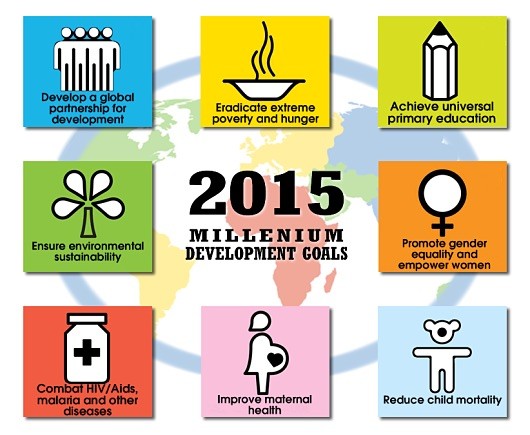
What Have the Millennium Development Goals Achieved? In 2000, the United Nations set out on a clearly defined mission to end global poverty by means of tackling eight core areas of need. Now we are looking back, 15 years later, and seeing how successful the UN was in meeting their goals-and where the new Sustainability Goals will need to take up the slack.
The Millennium Development Goals were designed as a framework for developing impoverished nations by addressing the most critical needs of the society, like reliable food sources, access to education, and adequate health care.
Each goal had specific targets which the United Nations hoped they would meet by 2015. Some goals had more success than others.
The UN’s goal of halving global poverty was met with resounding success, as the number of people living on less than one dollar and 25 cents a day dropped from one point nine billion in 1990, to 836 million in 2015. An estimated 14 percent of the global population are living in extreme poverty today, down from nearly half in 1990.
The reduction in the proportion of undernourished people globally narrowly missed its target, coming within two percent of the 50 percent reduction goal. Though narrowly missing their target, given the exponential human population growth over the last three two decades, it is still a considerable success.
The goals suffered two more near misses in their attempts to increase educational opportunities for all, including establishing gender equality in schools. An estimated 10 percent of children are not receiving any formal education, and only about two -thirds of developing countries have achieved gender equality in the classroom.
Goals four and five of the Millennium Goals, which addressed child and maternal mortality, respectively, both failed to meet their targets. While both the mortality rate of children under five and maternal deaths were reduced by over half, both failed to reach the two-thirds reduction target.
Goal six, stop and reverse the spread of HIV/AIDs, malaria, and other diseases was similarly not met in the given 15 year time frame. Although the rate of new HIV/AIDS infections has fallen by around 40 percent, an estimated two point one million people are still being infected annually. The fight against malaria and other diseases prevalent in developing areas has seen more success however, with an estimated six point two million malaria deaths averted between 2000 and 2015.
The final two goals of the 2000 Millennium Development Goals tackled strengthening infrastructure, sustainable development, and international partnership. While both goals are still on-going endeavors, over the last decade, two point six billion people have gained access to improved drinking water and official development assistance to developing nations has risen by nearly seven percent.
Overall, the United Nations has experienced great success in their struggle to address the needs of the poor around the world, but they are the first to admit that more work is needed. In the official Millennium Development Goals report, released earlier this month, Wu Hongbo Under-Secretary-General for Economic and Social Affairs admitted that success has been uneven across developing nations. “Millions of people are being left behind, especially the poorest and those disadvantaged because of their sex, age, disability, ethnicity or geographic location. Targeted efforts will be needed to reach the most vulnerable people,” said Hongbo.
The Quick and Dirty of Hits and Misses:
Goal #1: Target goal met and exceeded
Goal #2: Target goal nearly achieved
Goal #3: Not met
Goal #4: Not met
Goal #5: Not met
Goal #6: Not met
Goal #7: Target achieved ahead of schedule
Goal #8: No target specified, on-going action
The Sustainable Development Goals of 2015 will pick up where the Millennium Goals left off and continue to guide the United Nations as they work to eradicate global poverty.
– Gina Lehner
Sources: The Guardian, UN
Photo: Global Classrooms

Schools in Nairobi to Get Free Internet from the Wananchi Group
Continuing a partnership with the Kenya Education Network (KENET) and the County Government of Nairobi, over 150 schools have been connected to fixed high-speed internet since the initial piloting trial in April 2014.
As this project supplements a recent government initiative to provide free laptops to schools across the country of Kenya, students will now be able to perform research with a broader collection of knowledge and information from different parts of the world. This will not only open up a previous barrier, but also increase the students’ awareness of global society.
The Wananchi Group is a part of the Zuku Fibre project, a private-public partnership that uses the Wananchi Group’s fiber infrastructure to provide these services. The partnership was created for the betterment of the country of Kenya as a whole.
In fact, this achievement is along the lines of the Vision 2030 initiative. Vision 2030 is Kenya’s development blueprint to transform Kenya into a “newly industrializing, middle income country providing a high quality life to all its citizens” by 2030. By making progress toward this step, Kenya can now continue to focus its efforts on other areas.
Perhaps they will focus next on the health sector to improve community health centers, or the environmental sector to improve waste disposal and sanitation measures, or the manufacturing sector to help revitalize industry. Regardless, within the Vision 2030 initiative, Kenyans will continue to make strides within economic, social and political spheres to improve Kenya as a country for its current and future generations. Providing free internet to schools is a monumental milestone toward these efforts.
– Alysha Biemolt
Sources: IT News Africa, Vision 2030
Photo: Computer Aid International
New Rice Flour Key to Food Security
Food insecurity is defined by Oxford Dictionaries as “the state of being without reliable access to a sufficient quantity of affordable, nutritious food.”
Rice flour is a kind of flour made from finely milled rice. It can be a good substitute for wheat flour because it does not cause digestive system irritation. It is used in many of the foods eaten across South Asia, and although wheat flour is slightly higher in nutrition than rice flour, rice is grown in abundance compared to wheat across Asia.
The problem with “normal” rice flour is that it is typically not as efficient at making bread as wheat flour, due to the presence of a particular protein called PDIL1. Researchers studying protein compounds in rice flour at Yamagata University in Japan have discovered that rice flour deficient in the PDIL1 protein active during seed development can produce dough far superior to normal rice flour.
A type of rice flour better suited to make bread could be an incredible leap forward in the fight to end global poverty because more food could be made in a better way across the developing world where rice is widely grown, thus improving food security in poverty-stricken areas.
According to the World Food Programme, hunger kills more people every year than HIV/AIDS, malaria and tuberculosis combined.
Some 795 million people in the world do not have enough food to lead a healthy, active life. That’s about one in nine people on Earth.
The vast majority of the world’s hungry people live in developing countries, where 13.5% of the population is undernourished.
Asia is the continent with the most starving people—two-thirds of its total population. The percentage in southern Asia has fallen in recent years but in west Asia it has increased slightly.
Sub-Saharan Africa is the region with the highest prevalence (percentage of population) of hunger. One person in four there is undernourished.
Poor nutrition causes nearly half (45%) of deaths in children under five—3.1 million children each year.
One out of six children, roughly 100 million, in developing countries is underweight. One in four of the world’s children are stunted. In developing countries, the proportion can rise to one in three.
If women farmers had the same access to resources as men, the number of hungry in the world could be reduced by up to 150 million.
66 million primary school-age children attend classes hungry across the developing world, with 23 million in Africa alone.
The World Food Programme calculates that $3.2 billion is needed per year to reach all 66 million hungry school-age children.
With the new improved rice flour, dough becomes easily stretched and less sticky. It also holds bubbles better during fermentation and baking, and holds its shape and texture after baking. Researchers are already experimenting with PDIL1-deficient rice plants that can be grown in varying climates to improve food security and nutrition globally.
– Jason Zimmerman
Sources: Economic Times, SciDev, Phys
Photo: Brittany Angell
Water Energy: Where We Are Heading
Over the last 10 years, the quality of renewable energy has steadily increased. According to the European Commission, between 2003 and 2013, the quality increased by 83.4% – an average of 6.3% per year. Throughout 2013, the European Union (EU) produced 192 million tons of oil – about 24.3% of all energy used.
Biomass and renewable waste are the primary clean energy sources in the EU. Hydropower, which uses water as a renewable energy source, closely follows.
Hydropower is a clean energy source that has yet to be used to its full potential. It “captures electricity by using water that flows through a pipe to turn micro turbines in a line, or by harvesting energy from stream flows in irrigation canals and streams,” as explained in a CNBC report.
At Columbia University, researchers looked at water energy in a different way – they used evaporated water as the source. The researchers took bacterial spores that contract and expand based on the humidity of the environment and placed them in rows on tape that were then put together. This created a mass of rows that contracted and expanded together based on the environment. The bacterial spores had enough power from the air to move a toy car.
The technology is not yet powerful enough to work in a real life scenario and cannot compete with solar energy in efficiency. However, researchers believe it could harness enough energy to power a phone, even if it will not change the transportation industry.
Over in the Pacific Ocean, the U.S. Navy is sponsoring another way to use hydropower – using waves and ocean currents. This is exactly what the Azura Wave Energy Device is testing in Hawaii. Azura is a 63-foot-long, 10-foot-wide, 45-ton device that rotates as the incoming wave approach to extract energy.
CEO and co-founder Steve Koft explains, “the wave energy is much more predictable than solar or wind.” They are hoping this is the future of clean energy, but Azura is still a prototype. By harnessing the energy of waves, they have potentially found a way to capture predictable, consistent and clean energy to use.
Water energy is being explored more in depth everyday, and has huge potential to reduce the use of nonrenewable energy sources.
– Hannah Resnick
Sources: CNBC, European Commission, KITV, Quartz
Photo: Institution of Chemical Engineers
Substandard Medications Threaten the Eradication of Malaria
Health professionals attempting to treat patients with malaria are currently facing another complex obstacle in the developing world: the distribution of substandard, falsified and degraded antimalarial medications.
Drugs classified as substandard are medicines that have insufficient amounts of the necessary active ingredient. In order to effectively kill the bacteria and other harmful organisms thriving inside a malaria patient, the full, prescribed dose of the drug needs to be ingested.
When anything less than the full dose is ingested, these organisms not only continue to survive, but also develop a resistance to the drug entirely. This renders current anti-malaria drugs completely ineffective.
“Poor quality antimalarial drugs are very likely to jeopardize the unprecedented progress and investments in control and elimination of malaria made in the past decade,” according to Fogarty scientist, Gaurvika M.L. Nayyar.
Since the early 2000s, the World Health Organization has recommended artemisinin as the first line of treatment for malaria patients, since “artemisinin and its derivatives are powerful medicines known for their ability to swiftly reduce the number of Plasmodium parasites in the blood of patients with malaria.”
Artemisinin is combined with other supplementary drugs in Artemisinin Combination Therapy treatments in order to effectively assist those diagnosed with malaria. However, these substandard drugs are causing an increase in bacterial resistance to artemisinin treatments, rendering the first line of malaria defense utterly useless.
According to a study done by National Public Radio in 2012, “a third of all anti-malarial drugs taken off the shelf in nonrandom surveys in Africa and Asia were absolutely fake. In about 4,000 samples, there was not a drop of active ingredient there.”
The distribution of these partially active medications has recently been classified as a “global pandemic” affecting the poorest parts of the world, specifically West Africa and Southeast Asia, where drug regulatory systems are weak.
The Centers for Disease Control and Prevention said, “Counterfeiting occurs throughout the world, but it is most common in countries where there are few or no rules about making drugs. An estimated 10 percent to 30 percent of medicines sold in developing countries are counterfeit. In the industrialized world (countries such as the United States, Australia, Japan, Canada, New Zealand, and those in the European Union), estimates suggest that less than one percent of medicines sold are counterfeit.”
On April 20, The American Journal of Tropical Medicine and Hygiene released a special issue, titled “The Global Pandemic of Falsified Medicines: Laboratory and Field Innovations and Policy Perspectives,” which contained a series of 17 papers. Each is written by a different author from a different university or institution, yet all cover the implications surrounding the distribution of substandard medicines throughout the developing world.
According to one of the studies, over 122,350 child deaths were caused by insufficient or partially-active anti-malaria drugs in 2013 alone. This figure represents one-fifth of all deaths caused by malaria.
“These findings are a wake-up call demanding a series of interventions to better define and eliminate both criminal production and poor manufacturing of antimalarial drugs,” Nayyar said.
– Hanna Darroll
Sources: NPR, FIC, ASTMH, WHO
Photo: TheraBreath
United Nations Sets Sustainable Development Goals to End Global Poverty
The United Nations released the first draft of their Sustainable Development Goals this month in preparation for the expiration of the Millennium Development Goals, which were established in 2000.
In 17 simple steps, the Sustainable Development Goals (SDGs) aim to eliminate poverty, grow economies, increase equality and promote sustainable industry.
The overall goals, as defined in the official draft of the United Nations Development Agenda, are:
1) End poverty and hunger
This specifically aims to “end poverty in all forms everywhere.” According to an article published by The Guardian, Goal 1 seeks to reduce global poverty by at least half by 2030. The drafted plan calls for establishing equal access to economic resources, equal rights of ownership, and the creation of a firm policy framework at all levels in order to promote sustainable and accelerated economic growth.
2) Secure education, health and basic services for all
Goal 2 seeks to eliminate global food insecurity and promote sustainable agriculture. Again by 2030, the United Nations hopes to establish sustainable and year-round access to nutritious food, especially for the most poor and vulnerable. The goal is to establish sustainable agriculture and encourage investment in rural areas. The details of Goal 2 also include measures to address inequality among markets and trade restrictions, and to ensure the proper operation of food markets.
3) Achieve gender equality and empower all women and girls
This goal is to “ensure healthy lives and promote well-being for all at all ages.” This goal broadly encompasses many aspects of health and well-being across society. These aspects include reducing maternal mortality and the preventable deaths of newborns and infants, ending epidemics caused by communicable diseases, achieving universal healthcare coverage and more.
4) Combat inequalities within and between countries
5) Foster inclusive economic growth, shared prosperity and sustainable lifestyles for all
Goal 4 and 5 address access to education and gender equality. These goals include guaranteeing free and quality primary and secondary education for all children, providing equal educational opportunities to both boys and girls, eliminating violence against women and undertaking reform to ensure equal economic opportunity for women. The fifth goal goes further and calls for the creation of enforceable policies to protect the rights of women.
6) Promote safe and inclusive cities and human settlements
7) Protect the planet, fight climate change, use natural resources sustainably and safeguard our ocean
The remaining goals outline plans to create and maintain sustainability in multiple sectors. These goals include sustainable energy, sustainable agriculture and industry, sustainable use of the environment and sustainable economic structures. Some of the goals also specifically address the idea of “sustainable societies” and outline measures to reduce violence, increase equality between nations and promote global connections.
Although the initial response to the United Nations’ plan has been mixed, and some, according to another article by The Guardian, have warned that the plan has some serious holes, the ambitious set of goals sets a precedent for efforts to end global poverty and will serve as a benchmark for future endeavors.
– Gina Lecher
Sources: Sustainable Development, The Guardian 1, The Guardian 2
Photo: Flickr
Child Marriage in India
Each year, approximately 15 million girls under the age of 18 are forced into marriage. These child brides normally have their husbands selected for them by their fathers, and they are not given any power or choice when it comes to their marriage. Many of them are forced to marry men much older than they are.
Child marriage is most prevalent in Sub-Saharan Africa and South Asia. India accounts for one-third of the total child brides worldwide, even though the legal marrying age in India is 21 for men and 18 for women, as established by the 2006 Prohibition of Child Marriage Act.
The Prohibition of Child Marriage Act did not cause a significant decrease in the amount of child marriages that take place in India, where 47% of girls marry before the age of 18. Child marriage in India is more common in rural areas, where 56% of girls marry before the age of 18, than they are in urban areas, where 29% of girls marry before 18.
Societal traditions and norms allow child marriage to persist despite its illegality. Many brides are forced to marry early because the later they are married, the larger their dowry will have to be. It is still common in India to give a dowry or a present from the bride’s family to the groom’s at the time of marriage, although the practice was banned in 1961.
As The Guardian states, another reason why some parents marry their daughter at a young age is because they fear that their daughter might have sexual relations when she is a teenager, therefore shaming her family and lowering her chances of getting married later on. Child marriage is also widespread because poor families realize that marrying their daughter means that they have one less child to feed, since brides tend to go live with their husband’s family.
Since child marriage is illegal, weddings normally take place in the evening or at night. Police officers are bribed to not report the marriage.
The consequences of child marriage are devastating. Girls who marry young are not able to complete their education and are therefore forced to rely on their husband and his family. Even on the rare occasion that they have the chance to end the marriage, they are often not able to because they have nowhere to go and no way to support themselves. Girls under the age of 15 are also five times more likely to die in childbirth than those over the age of 20. Young brides are also more likely to contract HIV because they are forced to marry older men.
The International Center for Research on Women reports that girls in India who marry under the age of 18 are twice as likely to experience domestic violence. Child brides also experience sexual abuse, and many suffer from PTSD and severe depression.
Some girls are forced to enter a marriage agreement at an extremely young age and then go to live with their husbands when they reach puberty. This was supposed to be the case for Santa Devi Maghwal, an Indian girl from Rajasthan who was married at 11 months old and told that she would have to live with her husband when she turned 16. Maghwal is currently working with child right’s campaigner Kriti Bharti to annul the marriage. Luckily, Maghwal is not the only one who has turned to the law in order to end her marriage. Bharti made history in 2012 when she obtained India’s first annulment of a child marriage for sixteen year old Laxmi Sagara. Since then, Bharti has won 27 more annulments. While divorce is hard to come by in India, since courts are overburdened and take a long time to rule, annulments can be achieved as long as there is some proof — such as a birth or school certificate — that the bride was married before the age of 18.
Bharti has made progress, but India still has a way to go before it can truly end child marriage. For child marriages to end, societal norms and patriarchal customs need to end as well.
– Ashrita Rau
Sources: ICRW, CBN, National Geographic 1, National Geographic 2, UNICEF, Girls not Brides, The Guardian
Photo: Huffington Post
The Importance of Data Collection in Global Health
Data collection is essential to address public health concerns in the developing world. If a nonprofit or government institution cannot identify risk factors, outbreaks, health trends and vulnerable populations, aid cannot be targeted effectively at the people who need it the most. As Margaret Chan, director-general of the World Health Organization puts it, “without these data, countries and their development partners are working in the dark – throwing money into a black hole.”
That is why the World Bank, the U.S. Agency for International Development (USAID) and the World Health Organization (WHO) recently announced the Roadmap for Health Measurement and Accountability and a Five-Point Call to Action. These initiatives are meant to encourage the governments of developing countries to strengthen their public health registration systems, with the goal of making health aid more effective while avoiding some of the data-collection pitfalls of the past.
While previous data-collection initiatives, many motivated by the Millennium Development Goals, led to dramatic improvements in public health knowledge gaps, they also had some negative consequences. These were mainly a result of the programs’ tendencies to fragment as well as detract from country-led approaches to data collection.
Jimmy Kolker, assistant secretary for global health in the U.S. Department of Health and Human Services, points out that data collection should not be an “end in itself.” To be effective, governments need to have the political capacity to support, and act on, the data that they collect. In contrast to previous initiatives, the Roadmap and Call to Action are intended to empower countries to develop their own integrated health systems, which should be more sustainable and robust in the long-term.
The Five-Point Call to Action includes some very specific public health monitoring goals. For example, the third point emphasizes a need for adequate civil registration systems, with the goal of registering all births by 2030, as well as registering 80% of deaths and their causes. The reasoning behind being so specific in establishing broad standards is that in the past, data collection efforts were hampered by a lack of coordination; a poor focus on specific health issues also failed to reveal broad trends and strengthen public health systems. Thus, these initiatives emphasize establishing accurate measurements of a few basic indicators, such as births and deaths, as well as having basic reporting and public access mechanisms in place.
The Call to Action calls for adequate data collection and interpretation through modern technology, not just traditional registration systems. Point four emphasizes that by 2020 all countries should have “real-time disease surveillance systems in place, including the capacity to analyze and link data using interoperable, interconnected electronic reporting systems within the country.”
As technology has developed, aid agencies and governments have an ever-growing list of resources that can help them monitor, collect, and interpret health-related data. Up to two-thirds of the world’s population in 100 countries is absent from public registration systems, a gap that must be filled by modern data-gathering and reporting solutions. Mobile technology is an enormous boon to governments trying to build data collection and dissemination systems.
For example, since 2008 Bangladesh, with relatively little funding and prior to the aforementioned initiatives, has managed to strengthen programs for establishing electronic medical records, centralized databases, accessible online resources for data-entry and reporting, and citizen feedback mechanisms. Bangladesh is a great example of how a low-income country can rapidly modernize its public health data resources cheaply and efficiently, a model from which other developing countries might learn, spurred on by the recent initiatives by USAID, the WHO, and the World Bank. Perhaps, with some financial and technical support from these institutions, developing nations can create their own path toward improved public health.
– Derek Marion
Sources: MA4Health, World Bank, Devex
Photo: Leaning Forward
Education and Healthcare Access in Kenya
I will never forget hearing the story about the woman in Kenya who ran away when a soldier pulled out a condom. She had heard a rumor that if someone tried to use a condom, it meant that they had HIV.
In Kenya, healthcare and education about sex and general health is limited. Moreover, the small amount of health and sex education that does exist is often misguided.
In the past ten years, three people that my family and I were close to died of HIV. All three of them were parents and the breadwinners of the family. On Monday, my mother called to inform me that yet another person that we know is ill, and may be dying of HIV.
According to USAID, around 1.6 million people are living with HIV/AIDS in Kenya. In addition, about 1.1 million children in Kenya are orphans because of AIDS.
People in Kenya with HIV/AIDS, and those at risk, often lack access to healthcare.
In Kenya, healthcare is a constitutional right, but the cost is too high for a majority of Kenyans. In addition to the cost, the closest healthcare facility is often way too far away for poor Kenyans to reach.
According to the World Bank, “only 20 percent of Kenyans have access to some sort of medical coverage.” In April 2014, the Kenyan government launched the Health Insurance Subsidy Program in order to make healthcare more affordable for people in Kenya. While this is a good first step, it does not help the many people who are unable to reach a healthcare facility.
An article by Allianz states that if poor Kenyans living in rural areas are able to seek healthcare, they are often only able to find treatment at a primary care facility. These facilities are often under-staffed and under-equipped, and have limited medicines. One of the three people in my life who died of HIV/AIDs died in a hospital due to HIV-related dehydration. It is possible that he could have been saved by something as simple as an IV if the doctors had known what to do.
Luckily, organizations like USAID and the World Bank are working on treating and preventing HIV/AIDS and giving Kenyans greater access to healthcare.
In 2003, USAID launched the President’s Emergency Plan for AIDS Relief. The program is focused on prevention, treatment and care. These programs have made steps in the past 12 years. For instance, mother-to-child transmission rates have dropped from 28.3% to 8.5%.
However, transmission rates are not the only numbers that have been dropping. Between 2010 and 2013, USAID’s funding to Kenya was cut in half.
HIV/AIDS is continuing to spread in Kenya, and the people who need aid the most are not receiving it. The United States could be doing much more to aid the poor in Kenya. So why is the government decreasing funding, rather than continuing the work that has just begun?
– Clare Holtzman
Sources: Allianz Worldwide Care, USAID, The World Bank
Photo: Zakat
What Have the Millennium Development Goals Achieved?
What Have the Millennium Development Goals Achieved? In 2000, the United Nations set out on a clearly defined mission to end global poverty by means of tackling eight core areas of need. Now we are looking back, 15 years later, and seeing how successful the UN was in meeting their goals-and where the new Sustainability Goals will need to take up the slack.
The Millennium Development Goals were designed as a framework for developing impoverished nations by addressing the most critical needs of the society, like reliable food sources, access to education, and adequate health care.
Each goal had specific targets which the United Nations hoped they would meet by 2015. Some goals had more success than others.
The UN’s goal of halving global poverty was met with resounding success, as the number of people living on less than one dollar and 25 cents a day dropped from one point nine billion in 1990, to 836 million in 2015. An estimated 14 percent of the global population are living in extreme poverty today, down from nearly half in 1990.
The reduction in the proportion of undernourished people globally narrowly missed its target, coming within two percent of the 50 percent reduction goal. Though narrowly missing their target, given the exponential human population growth over the last three two decades, it is still a considerable success.
The goals suffered two more near misses in their attempts to increase educational opportunities for all, including establishing gender equality in schools. An estimated 10 percent of children are not receiving any formal education, and only about two -thirds of developing countries have achieved gender equality in the classroom.
Goals four and five of the Millennium Goals, which addressed child and maternal mortality, respectively, both failed to meet their targets. While both the mortality rate of children under five and maternal deaths were reduced by over half, both failed to reach the two-thirds reduction target.
Goal six, stop and reverse the spread of HIV/AIDs, malaria, and other diseases was similarly not met in the given 15 year time frame. Although the rate of new HIV/AIDS infections has fallen by around 40 percent, an estimated two point one million people are still being infected annually. The fight against malaria and other diseases prevalent in developing areas has seen more success however, with an estimated six point two million malaria deaths averted between 2000 and 2015.
The final two goals of the 2000 Millennium Development Goals tackled strengthening infrastructure, sustainable development, and international partnership. While both goals are still on-going endeavors, over the last decade, two point six billion people have gained access to improved drinking water and official development assistance to developing nations has risen by nearly seven percent.
Overall, the United Nations has experienced great success in their struggle to address the needs of the poor around the world, but they are the first to admit that more work is needed. In the official Millennium Development Goals report, released earlier this month, Wu Hongbo Under-Secretary-General for Economic and Social Affairs admitted that success has been uneven across developing nations. “Millions of people are being left behind, especially the poorest and those disadvantaged because of their sex, age, disability, ethnicity or geographic location. Targeted efforts will be needed to reach the most vulnerable people,” said Hongbo.
The Quick and Dirty of Hits and Misses:
Goal #1: Target goal met and exceeded
Goal #2: Target goal nearly achieved
Goal #3: Not met
Goal #4: Not met
Goal #5: Not met
Goal #6: Not met
Goal #7: Target achieved ahead of schedule
Goal #8: No target specified, on-going action
The Sustainable Development Goals of 2015 will pick up where the Millennium Goals left off and continue to guide the United Nations as they work to eradicate global poverty.
– Gina Lehner
Sources: The Guardian, UN
Photo: Global Classrooms
How Coca-Cola Is Helping Deliver Medicines
Coca-Cola products reach every corner of the world while essential medicines do not. ColaLife, a UK charity, noticed this and decided to make a change. ColaLife uses Coca-Cola to open up the private sector supply chain to deliver affordable and effective medicines.
ColaLife produced the Kit Yamoyo, an anti-diarrhea kit. Diarrheal diseases cause life-threatening dehydration, which is the second leading cause of death in children under the age of 5 in developing nations. Each year, it takes the lives of 760,000 children, even though it’s curable.
The problem is that these children do not have access to the cure, which is what ColaLife sought to solve. The Kit Yamoyo contains Oral Rehydration Salts (ORS), soap, and zinc, which act as a cure. The package itself acts as a measuring device for water needed to mix up the ORS and zinc, and can also be used as a storage device as well as a cup.
The Kit Yamoyo has a v-shaped cup to easily fit into the Coca-Cola delivery crates. As a compact, low-cost product, the Kit Yamoyo piggybacks Coca-Cola’s supply chain to reach remote areas. It is a symbiotic relationship: Coca-Cola products continue to reach and get sold in remote areas, while the consumers gain access to more medicines than ever before.
The kits themselves are sold with Coca-Cola products. As the kits make their way out to the remote areas, the demand for them becomes greater. It’s a positive situation for everyone involved: Coca-Cola products are sold, the retailer makes a profit, and the consumer gets the medicine they need to help their children.
With enough funding, the Kit Yamoyo will have a big impact. It will widen vaccine coverage in remote areas and reduce death rates caused by dehydration and malnutrition. It will also encourage an increased investment in training and help health workers reduce child mortality rates. ColaLife has proven that the supply chain is just as important as the medicine itself.
– Hannah Resnick
Sources: ColaLife, University of Delaware, WHO, Zambia Daily Mail
Photo: Just Giving