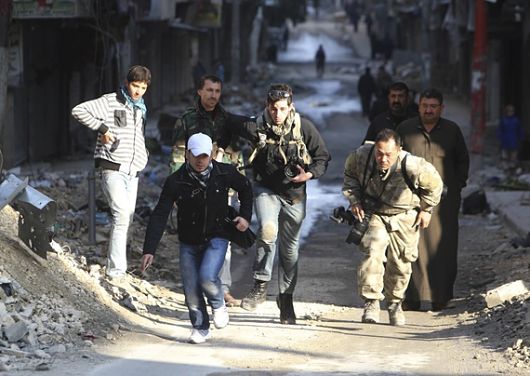
Journalist kidnappings, an issue which has been associated with terrorism, has grown on a global scale. With a total of 720 kidnapped reporters being murdered in the past decade, examiners are trying to fully understand these incidents, while educating the public of its many complications.
In 1994, a debate emerged when an Associated Press writer, Tina Susman, had gone missing after she was snatched off reporting grounds by Somalian thugs. The journalist would later be held for ransom for a near-20 day count while being stored in a cramped room.
Controversially, in the wake of her disappearance, Susman’s story never broke the air until she was rescued, initiating concern from the public over “double standard[s]” and “injustice.”
Fellow peers from her reporting unit at the Associated Press addressed the public, saying that they, alongside other news reporting teams, did not want to report on the story as a means to prevent “periling” Susman’s life. However, political officials noted that sources like the Associated Press were being “peculiar” and “overcautious” and loosely implied that such reporting would not have fazed the Somalian terrorists due to the lack of media presence in the developing region.
Congressional officials further argued that if government officials were to keep the story quiet themselves, journalists like those from The Associated Press would be all over them.
Susman herself proclaimed that in the end, it was good that the media kept her story confidential, partly because media acknowledgment of the Somalian robbers would have made things more problematic for Susman’s survival, adding to the thugs’ arrogance.
Although Tina Susman’s case met a moderately relieving outcome, hundreds of other kidnapping cases have not seen a safe close, considering their involvement with terrorist-induced conflicts.
2002 would mark the year when journalist kidnappings became a global concern, as reporters became potential victims in treacherous power-fueled schemes used by terrorist groups to seek money and attention from the masses. Following the murder of reporter Daniel Pearl, several terrorist groups like Al-Qaeda have used homicide as the key component in seeking ransom negotiations and for “propaganda purposes” at a highly effective level; both elements were once controversially debated in the 1994 kidnapping case of Tina Susman.
In 2003, The New Yorker presented several points on the harrowing scenarios, highlighting that if bargains are offered to terrorist groups at a low rate, only amputations of the kidnapped are likely to be sent; with intricate negotiations set at an expensive price, many remain unsure the kidnapped will be returned safely in one piece.
Today, the stakes of ransom negotiations remain uncertain and have ignited a firestorm of controversy from the public, especially those bearing kidnapped loved ones who served in a range of posts from military personnel to communication officials.
The disappearance of Austin Tice, who has been missing since mid-August 2012, has raised many questions concerning congressional powers’ consideration in establishing a new U.S. policy that assures the return of hostages and enhances the informational exchange of loved one’s whereabouts between government agencies and families.
The case has since not seen positive news coverage. Recently, a report that confirmed that Tice was not being held captive by once-presumed Syrian powers, leaving his whereabouts unknown.
The episodes of journalist kidnapping have caused extreme pandemonium this past year. Notably, the global coverage of the terrorist group ISIS, murdering hostages in the most brutal fashion and capturing the footage on video-camera, only to be uploaded on the Internet for the public to see, has garnered much attention. This is the same strategy those in the discussion of the 1994 case of Tina Susman feared would propel terrorist pacts to conjure controversy in order to attain media attention.
Last year, it was reported by the advocacy group known as Reporters Without Borders that a total of 119 journalists were captured in 2014, with 66 murdered—a 35% increase compared to the previous year.
– Jeff Varner
Sources: American Journalism Review, The New Yorker, CBS News, Poynter, McClatchy DC
Photo: The Atlantic

How Theranos Has Simplified Blood Testing
Getting a blood test is never pleasant. But what if I told you there is a new way of getting blood tests that does not involve big needles, just a prick on your finger? Well, that is exactly what Theranos has done.
Theranos is a private health-technology and medical-laboratory services company in Palo Alto California, founded in 2003 by Elizabeth Holmes. Earlier this year, Elizabeth Holmes was inducted into the newest class of Presidential Ambassadors for Global Entrepreneurship. She is the youngest female self-made billionaire.
Holmes and her team have reduced blood tests from many vials of blood to just a few drops. Theranos focused on reducing the blood sample size, making it inexpensive, and transparent about its prices.
Why is so much blood drawn? Holmes explains, “The entire system was designed around that, when clinical lab infrastructure began to develop similar to mainframe computing, where you have large highly centralized systems that require that much blood.”
The company’s goal is to have patients test their blood more often so doctors will be able to see any indicators for a condition, disease or something much earlier than when the physical symptoms appear. According to Holmes, “40-60 percent of Americans do not go get their lab test when their doctor has told them to.”
Holmes also adds that “doctors do not usually order lab tests unless patients report systems for a given condition because, in order for them to have the insurance pay for it, they have to justify it on the lab form with a code that describes a patient’s symptoms. By the time a test is ordered, you are probably at risk.” Holmes seeks to make the process better, to engage people, so that data can be used as a preventative measure as opposed to a reactive measure.
Holmes argues that these small samples are more accurate than the larger ones. Theranos has worked in eliminating the error in variability that is associated with the human processing of samples, which according to Holmes is the cause of 93 percent of the errors in today’s lab industry. Theranos has used advances in technology to automate many of the processes and decentralize and distribute the infrastructure to reduce the errors of human processing.
Theranos has also made the tests cheaper through advancements in technology, by redeveloping the chemistry, hardware and software that is used in the traditional infrastructure. The prices compared to medical reimbursement rates start at 50 percent off Medicare reimbursement rates and go to 90 percent off Medicare reimbursement rates.
Some are skeptical about Theranos’ technology and wonder how it is able to offer tests for less with a faster turnaround time than lab giants such as Laboratory Corp. of America and Quest Diagnostics.
Theranos’ partners include Walgreens, Capital Blue Cross Pennsylvania, the Carlos Slim Foundation and AmeriHealth Caritas.
Capital Blue Cross Pennsylvania has been very thorough in vetting the Theranos technology. The Senior Vice-President of the company, Aji Abraham, had his blood tested with Theranos and then compared the results to a recent traditional blood test, and no significant differences were discovered.
The Carlos Slim Foundation is using Theranos technology in clinics across Mexico, in an attempt to provide blood tests for cholesterol, kidney proteins and other lab results to 1 million people to fight health problems caused by obesity.
To date, Theranos has raised $92 million in VC funding from investors such as Draper Fisher Jurvetson and Larry Ellison. Its locations include Theranos wellness centers in Walgreens and other locations in Arizona and California with new locations coming soon.
– Paula Acevedo
Sources: Business Insider, CNN Videos, Forbes.com
Photo: USA Today
UNICEF’s U-Report Makes Strides in Media
This has allowed many young people in developing countries, who would otherwise not have a voice, to share opinions on everything from skills they think would be the most beneficial in the working world to the best way to deal with country policy.
This information is recorded as documentation of the real-time insights of people living with the current problems of the world. Local governments of these developing countries can view U-Report statistics and information to ascertain the perspective of future generations.
Once a person joins U-Report, they can receive weekly SMS messages and polls to and from a growing community of U-Reporters, regular radio programs that will broadcast relevant stories, and newspaper articles that will publish news from the local community.
“U-Report is an entirely new model for engaging young people, empowering communities, and holding governments more accountable,” said Jean Gough, UNICEF Representative in Nigeria, where the platform is helping UNICEF workers share critical information about Ebola, polio, and newborn care with families living in remote areas that health workers cannot easily reach.
U-Report has become so popular and influential within Africa that Airtel Nigeria, a telecommunications company, has partnered with UNICEF to make U-Report more accessible. Through this improved connectivity, more Nigerians will have free access to the mobile applications and services developed by UNICEF. The partnership increases the information and provides more opportunities for participation by allowing UNICEF to tap into Airtel’s mobile services to make health, education, child protection and community-focused content readily available to all Airtel Nigeria customers.
These strides by UNICEF to make global awareness readily accessible to young people have improved the chances in the future for a better, more connected global society.
– Alysha Biemolt
Sources: UNICEF, Ureport, Telecom Paper, Airtel
Photo: Wikimedia Commons
Solar Power Kits Shine Light On Entrepreneurial Opportunity
When a bike accident left Pascal Kassongo injured, out of a courier job, and nearly destitute, his prospects looked grim. But thanks to the Amandala Project, Kassongo has found a new source of income with the Ecoboxx.
Lightweight and portable, each Ecoboxx can supply up to 50 hours of power and comes with a fan, hair clippers and charging ports for cell phones and other devices. Since launching in January of 2015, the Amandala Project, whose name means “power” in Zulu, has distributed 300 solar power kits to South Africans in need, with plans to distribute almost 600 more kits in the near future.
The goal of the project is to supply the unemployed, and particularly the migrant, residents of South Africa with the means to start their own small businesses, free of any charge past the initial investment. An individual can make up to 1,600 rand (about $128) cutting hair each week, and another thousand charging phones and other devices. The average income in South Africa for unskilled workers is around $500 per month.
While some choose to stick with running a barbershop with their Ecoboxx, others have come up with creative alternative uses. Janet Bete, who came to South Africa from Zimbabwe, rents out her kit for lights to local businesses and churches operating when it is dark. The enterprising woman also takes time to give back to her community. “Whenever there is a funeral in my community and there is no power, I donate my lights—it’s my way of paying [people] back for living well together,” said Bete.
Kassongo has also opted to put his solar kit to an alternative use. Rather than run a barbershop himself, Kassongo, a father of four, rents his kit out to neighbors who do own barbershops, sharing the proceeds with them. “It helps put something on the table,” said Kassongo.
The Ecoboxx, which retails at around 4000 rand, is being distributed by the Amandla Project, a subsidiary of the South African organization Community Chest, for a nominal fee of 200 rand. Community Chest CEO Lorenzo Davids said he hopes the kits will “electrify” rural South Africa, and when combined with creative entrepreneurialism, help generate income in the regions that so desperately need it.
– Gina Lehner
Sources: All About Africa, EcoBoxx
Photo: EcoBoxx
Sustainable Development and Poverty in Hispaniola
Haiti and the Dominican Republic share the island of Hispaniola. Despite the proximity, the two countries are worlds apart.
Haiti is the poorest country in the Western hemisphere. Eighty percent of the population lives in some degree of poverty. According to the U.N. Human Development Index, Haiti ranks 149th out of 182 countries.
About a third of the Dominican Republic’s citizens live in poverty. Not an ideal rate by any means, but markedly better than Haiti’s. If you live in the Dominican Republic, you can expect to live 74 years and there is a 90% chance you are literate. In Haiti, those numbers drop to 61 years and 50%, respectively. Child mortality rates are three times higher in Haiti.
Dominican Republic citizens also enjoy infrastructure such as roads and reliable electricity. In Haiti, that is a dream.
How did two countries that share an island become so different? The answer is rooted in their histories and geography, and how both of those shaped their use of the rainforest that once covered most of Hispaniola.
Haiti has a larger coastline than its neighbor, making it more susceptible to hurricanes. Since its biggest cities are on the coast, they are adversely impacted by flooding.
During colonial times, Haiti was a colony of France. The economic driver was forestry and sugar-related agriculture, which caused considerable environmental degradation. The French owners also imported a lot of slaves for labor. Due to the mixing of so many cultures, there has been much political instability since Haiti’s independence in 1804.
The Dominican Republic was ruled by Spain until 1844. Although Spain did exploit the island’s resources for monetary gain, it imported far fewer slaves, leading to a more homogenous culture when they ceded control. Its primary economic driver was livestock farming.
Although the Dominican Republic has endured its fair share of political strife, the country has been politically and economically stable since the institution of a democratic system. The stability has played a role in the preservation of their rainforest. This has had many economic benefits, as tourism is the biggest cog in the country’s economy. There are also many residual effects. The rainforest inhibits mudslides from occurring during rainstorms, preventing millions of dollars of damage to infrastructure. The rainforest also keeps the soil intact for substance farming, which provides a source of livelihood for many people.
In Haiti, 98% of the rainforest has been removed. This process started under French rule and continues to this day. Haiti’s lack of reliable electricity makes wood burning the island’s primary source of power. It is estimated that 15 thousand acres of topsoil are washed away annually. This lowers the monetary and crop productivity of the land, which causes more poverty, which leads to more deforestation.
To break this vicious poverty cycle, the Haitian government has pledged to prevent the complete deforestation of Haiti. President Michel Martelly launched a campaign in 2013 to plant 50 million trees a year. Reforestation is considered essential to raise living standards. The goal is to have forest cover 29% of the country by 2060.
The campaign has slowed deforestation through educational outreach to farmers, and by promoting non-wood burning stoves. Apparel company Timberland and its partner, Smallholder Farmers Alliance, have assisted with the process by planting over five million trees.
The link between poverty and excessive resource exploitation is clear in Haiti. Long-term planning about ecosystem viability is essential, not just for the environment, but also for the people who live there. That’s something every country should notice.
– Kevin Meyers
Sources: Time, Deutsche Welle, Food Tank, Heritage.org, Index Mundi, The Guardian
Photo: UNEP
Surge of Journalist Kidnappings
Journalist kidnappings, an issue which has been associated with terrorism, has grown on a global scale. With a total of 720 kidnapped reporters being murdered in the past decade, examiners are trying to fully understand these incidents, while educating the public of its many complications.
In 1994, a debate emerged when an Associated Press writer, Tina Susman, had gone missing after she was snatched off reporting grounds by Somalian thugs. The journalist would later be held for ransom for a near-20 day count while being stored in a cramped room.
Controversially, in the wake of her disappearance, Susman’s story never broke the air until she was rescued, initiating concern from the public over “double standard[s]” and “injustice.”
Fellow peers from her reporting unit at the Associated Press addressed the public, saying that they, alongside other news reporting teams, did not want to report on the story as a means to prevent “periling” Susman’s life. However, political officials noted that sources like the Associated Press were being “peculiar” and “overcautious” and loosely implied that such reporting would not have fazed the Somalian terrorists due to the lack of media presence in the developing region.
Congressional officials further argued that if government officials were to keep the story quiet themselves, journalists like those from The Associated Press would be all over them.
Susman herself proclaimed that in the end, it was good that the media kept her story confidential, partly because media acknowledgment of the Somalian robbers would have made things more problematic for Susman’s survival, adding to the thugs’ arrogance.
Although Tina Susman’s case met a moderately relieving outcome, hundreds of other kidnapping cases have not seen a safe close, considering their involvement with terrorist-induced conflicts.
2002 would mark the year when journalist kidnappings became a global concern, as reporters became potential victims in treacherous power-fueled schemes used by terrorist groups to seek money and attention from the masses. Following the murder of reporter Daniel Pearl, several terrorist groups like Al-Qaeda have used homicide as the key component in seeking ransom negotiations and for “propaganda purposes” at a highly effective level; both elements were once controversially debated in the 1994 kidnapping case of Tina Susman.
In 2003, The New Yorker presented several points on the harrowing scenarios, highlighting that if bargains are offered to terrorist groups at a low rate, only amputations of the kidnapped are likely to be sent; with intricate negotiations set at an expensive price, many remain unsure the kidnapped will be returned safely in one piece.
Today, the stakes of ransom negotiations remain uncertain and have ignited a firestorm of controversy from the public, especially those bearing kidnapped loved ones who served in a range of posts from military personnel to communication officials.
The disappearance of Austin Tice, who has been missing since mid-August 2012, has raised many questions concerning congressional powers’ consideration in establishing a new U.S. policy that assures the return of hostages and enhances the informational exchange of loved one’s whereabouts between government agencies and families.
The case has since not seen positive news coverage. Recently, a report that confirmed that Tice was not being held captive by once-presumed Syrian powers, leaving his whereabouts unknown.
The episodes of journalist kidnapping have caused extreme pandemonium this past year. Notably, the global coverage of the terrorist group ISIS, murdering hostages in the most brutal fashion and capturing the footage on video-camera, only to be uploaded on the Internet for the public to see, has garnered much attention. This is the same strategy those in the discussion of the 1994 case of Tina Susman feared would propel terrorist pacts to conjure controversy in order to attain media attention.
Last year, it was reported by the advocacy group known as Reporters Without Borders that a total of 119 journalists were captured in 2014, with 66 murdered—a 35% increase compared to the previous year.
– Jeff Varner
Sources: American Journalism Review, The New Yorker, CBS News, Poynter, McClatchy DC
Photo: The Atlantic
How to Pay for Healthcare When You Have No Money
If you are already poor and lacking cash, how do you pay for medical treatment? The answer is that there is a sizable chance that you cannot. In the United States, the biggest cause of bankruptcy is healthcare expenditures; in other words, people cannot pay their medical bills. What does this mean for countries who are not as well off as the United States?
In a country such as the United States, which is a rich, industrialized nation, a large number of people cannot afford medical treatments in part because of the soaring medical care costs and in part due to the system in place. Part of the problem, both in America and abroad, is that without insurance the out-of-pocket costs for healthcare can be huge. Being confronted with a huge lump sum to be paid after a medical service or good is received is often incredibly stressful and hard for many people. It strains the financial resources of the immediate family and leaves them having to decide between basic necessities and medical care–a choice no one should ever need to make. This effect is inevitable for the impoverished. It is already hard enough to save any money at all, let alone have an emergency fund for medical expenditures.
Novartis attempted to launch a new model of distributing and financing business with poorer families in India to address many of the concerns with existing healthcare distribution and payment systems. For example, to decrease the burden of out-of-pocket healthcare costs, Novartis began to distribute over-the-counter drugs in daily or multi-day packs rather than in larger quantities. This may seem trivial, but it actually began to work and eventually even turned a profit for the company–proving it to be a sustainable model. It worked because it allowed the out-of-pocket costs to be spread over a longer period of time for those who needed the drugs over multiple days or weeks while allowing those who only had a temporary need to get a quantity that fit their need most directly (one or two pills versus a large pack that cost much more). This benefits the people not only financially, but also physically. By distributing in smaller amounts and for proportionately smaller costs, this increases the likelihood that a sick person would seek to obtain medical care, knowing that the costs would be lower for sicknesses requiring only one or two pills to treat.
The Novartis example still doesn’t quite answer the question of how the poor pay for the healthcare costs they incur. The answer is that in many cases the poor will pay costs out-of-pocket, and endure financial hardships to do so. Another, possibly even worse method is to sell assets or borrow money to pay for the costs of healthcare. A study that looked at low- and middle-income countries that accounted for over 3 billion people found that approximately 25% of households borrowed money or sold assets to cover healthcare costs. While paying out-of-pocket is bad, needing to sell household items or borrow money can lead to even greater financial hardships over a longer period, in many situations.
Many developing countries lack the proper health infrastructure to provide for their populations at a reasonable cost that the local populace can afford. Even some developed countries such as the United States have trouble with these issues. The industry of healthcare is a complicated problem that involves a twisted entanglement of economics and human well-being in its most literal form.
– Martin Yim
Sources: CNBC, Reuters, Health Affairs
Photo: Marketing and Women
Initiatives to Improve Lives in South Sudan
Organizations and governments initiated different forms of help for the situation in South Sudan. Some of the main strategies have been promoting peace, increasing access to food and sanitation, and encouraging foreign investment.
Oxfam America, a nonprofit organization aiming to “fix the injustice of poverty,” has initiatives to combat multiple issues caused by poverty and conflict: improve access to clean water, food and sanitation, and promote peace. Some of the response includes rebuilding wells and sanitation facilities for hospitals. In order to further people’s self-sustainability, Oxfam also gives materials to help communities get food, such as seeds and fishing equipment. For Oxfam, initiatives to fix issues caused by poverty is the focus, while for others, the encouragement of international investment is the way to help South Sudan.
South Sudan has mineral deposits and oil reserves. The South Sudanese government is encouraging foreign investors to invest in this sector of the economy. They formed the Investment Protection Act of South Sudan in 2011 to protect the land and intellectual property rights of national and foreign investors.
The African Centre for the Constructive Resolution of Disputes, or ACCORD, is a South African organization aiming to relieve conflict in Africa. ACCORD has a South Sudan Initiative, or SSI, which focuses on building and maintaining peace between Sudan and South Sudan, as well as among the South Sudanese citizens. Some of the conflict identification and resolution efforts include “coordinating the efforts to develop a standardized conflict management training toolkit,” and “providing conflict management, mediation, and negotiation trainings for South Sudanese, officials, diplomats” and “United Nations Mission in South Sudan civil affairs officers.”
Some see bolstering the economy as the solution that will better the lives of those in South Sudan, some view access to sanitation and food as the place to start, and some believe peacebuilding techniques will help end the conflict and give way to a healthier, more efficient society. While separately, these initiatives may not combat every issue that exists within the complicated and historical conflict in South Sudan, with all of these initiatives acting simultaneously, a better future for the South Sudanese seems possible.
– Rachelle Kredentser
Sources: Accord 1, Accord 2, About, Oxfam America, Oxfam America 2, Goss-Online
Photo: Flickr
Talking to a Member of Engineers Without Borders
A year after the project is complete, volunteers evaluate the impact of the project on the community. Years after that, a final team travels to the community to learn from their successes and see how they can improve.
The members of EWB are varied, and their volunteers include everyone from first-year engineering students to professionals. In order to learn more about EWB, I interviewed Anushka Rau, the President Elect of the EWB chapter at the California Institute of Technology:
1. What is Engineers Without Borders?
“As the EWB mission statement says, Engineers without Borders USA is an organization whose main goal is to partner with communities around the world and enable them to meet their basic human needs, as well as equipping project leaders to solve the world’s most pressing challenges.”
2. What is the impact of Engineers Without Borders?
“They build sustainable projects in developing communities. Right now, there are about 600 Engineers Without Borders projects around the world.”
3. Where does Engineers Without Borders work?
“We work in more than 40 countries. Some of the countries where EWB is working include Peru, Moldova, Macedonia, India, Nepal, Senegal and Rwanda.”
4. What is your chapter of Engineers Without Borders currently working on?
“My chapter of Engineers Without Borders is about to go to Ilam, Nepal to implement our design for a spring source protection system. Infant mortality is a huge problem in the region, and it’s often due to diarrheal diseases caused by poor water quality and sanitation. We surveyed the region and took water quality samples to determine which spring to protect, then made a design and a set of governing principles for it, working closely with the community on the latter. All EWB chapters partner with an NGO in the area, which lets them complete projects that actually fulfill a community’s most pressing needs.”
5. Why do you think Engineers Without Borders is not as well-known as its counterpart, Doctors Without Borders?
“Medicine has a more obvious impact for humanitarian organizations—many people wouldn’t consider engineering to directly help communities, but it’s actually very important.”
6. What do the global poor need the most in terms of engineering?
“I think the global poor need to be listened to by the engineers helping them and they need a sustainable solution to problems associated with their most basic needs. One of the best things about EWB is the partnership with local NGOs—this ensures that chapters can communicate with the community and build a project that matters to them and will have impact for years after the engineers leave.”
7. How can we help with Engineers Without Borders?
“You can donate to the organization EWB on their website. Most chapters also take donations on their personal websites. If you’re a professional engineer, you could look for a college chapter in your area to mentor, or a professional one to join.”
– Ashrita Rau
Sources: Engineers without Borders, CalTech
Photo: Elsevier
The Sebastian Foundation Fights Poverty in Australia and Globally
Guy Sebastian and his wife Jules have started a foundation to directly combat poverty in their native Australia as well as branch out and help others living in poverty abroad.
In the United States, Guy Sebastian is best known for the song “Battle Scars,” released in 2012 with Lupe Fiasco, but his musical career began when he won the first Australian Idol title in 2003. His wife Jules is a celebrity stylist and a copartner in The Sebastian Foundation.
Sebastian’s humanitarian work started very early in his musical career when he took a tour of Africa, specifically Uganda, as an ambassador for World Vision. During his time there, he saw the debilitating effects that poverty can have on a person, and he has worked for awareness surrounding poverty from that time on.
When the Sebastian’s family started to grow, they became even more involved with helping children and families in Australia and the world. Through this desire, The Sebastian Foundation was formed.
The Sebastian Foundation states, “Our focus is people. Our love is people. We want to see the need and meet the need. We want to help in any way we can and we hope you join us in our mission.” With this thought in mind, they form collaborations with like-minded organizations to work with as partners.
Recently, much of their work has centered on local initiatives such as Big Brothers and Big Sisters, dance programs for youth with Downs Syndrome and children’s hospitals. They have also partnered with Sam Moran, the Yellow Wiggle as of 2006 and a UNICEF Goodwill ambassador; Sam works to help “Australian children who are sick, disadvantaged or have special needs.”
The foundation has global poverty in mind as well. Especially because of Sebastian’s time as a World Vision ambassador, The Sebastian Foundation focuses on families in regards of “poverty, poor health and disease, empowering women, educating children and giving them a chance at a better future [and] community.”
One way to be involved with this great foundation is to donate and, in return, one can receive a gift heart bracelet with the word “joy” on it. Or they have a shop where one can purchase a beautiful print of a photo taken by Sebastian, and all proceeds are a donation for the foundation.
Overall, the Sebastian family has used their celebrity status in Australia to help those who need it most in their home country. But through their global work, and Sebastian’s breakthrough on the U.S. music market, their reach can spread even farther than before, helping so many people in need around the world.
– Megan Ivy
Sources: Guy Sebastian, The Sebastian Foundation, The Sebastian Foundation Facebook Page, The World Bank, YouTube
Photo: Jules Sebastian
Study Finds Inhalation of New Ebola Vaccine Kills Virus in Monkeys
The study, led by Dr. Michelle Myer and conducted collaboratively by the National Institutes of Health and the University of Texas Medical Branch in Galveston, determined that the experimental vaccine activated immune cells within the respiratory system that subsequently provided full protection against the virus. The study also notes that this is the first time researchers have attempted to use an aerosol vaccine within monkeys to fight a hemorrhagic viral fever such as Ebola.
Co-author of the study Dr. Alexander Bukreyev, a medical virologist from the University of Texas Medical Branch in Galveston, recently stated, “This is one of the few vaccines that works. The initial several decades of attempts to develop a vaccine against the Ebola virus were unsuccessful.”
Vaccination researchers within the medical community have become familiar with the notion of failure, as an experimental drug designed to treat Ebola patients proved ineffective in fighting the virus. The experimental drug, known as TKM-Ebola-Guinea, was designed by Tekmira Pharmaceuticals and reportedly was, “Not likely to demonstrate an overall therapeutic benefit,” for patients infected with Ebola.
The drug was designed to utilize RNA interference, a process in which the functions of certain genes within the Ebola virus are disrupted and subsequently renders the virus incapable of attacking human cells. Prior to the failure of the trials within human subjects, many researchers considered the experiment the single most promising lead in the race to stop Ebola, as the drug had proved effective in stopping the virus in monkeys during clinical test trials
Since the unprecedented outbreak of the disease in West Africa last year, the virus is estimated to have killed over 11,000 people and infected an additional 27,000 people in the nations of Sierra Leone, Liberia and Guinea, according to the World Health Organization.
As the aerosol vaccine does not require the assistance of trained medical professionals, the distribution of the vaccine within developing regions that lack adequate health infrastructures and large personnel staffing will prove to be notably less challenging. Dr. Igor Lukashevich, a medical virologist from the University of Louisville, recently argued that “This aerosolized form of the vaccine is really what the field needs right now. The discussion […] right now is if this Ebola outbreak will be some kind of game-changer for vaccine development, or will it only be one more scare that will be forgotten.”
Dr. Meyer explained in a recent interview that human cells “in the lungs are acting as the first barrier for protection. That’s ideal to combat the virus at the site of the infection.”
Four of the monkeys used for the study were given a single dose of the vaccine, while an additional four were given two doses of the vaccine. Two other monkeys were given a liquid form of the vaccine, while two more monkeys were not vaccinated in order to serve as controlled variables for the study. Four weeks after the administration of the vaccines, all 12 of the monkeys were administered 1,000 times the fatal dose of the Ebola virus.
Two weeks after the injection of the Ebola virus into the test monkeys, all of the vaccinated monkeys had remained healthy while the two unvaccinated monkeys became infected with the disease and were euthanized.
Dr. Daniel Bausch, a medical virologist of Tulane University, noted that the study was “a positive step forward,” but cautioned that “it’s not a breakthrough or ‘Eureka!’”
The success of the aerosol vaccine during the clinical trials on the monkeys indicates the next step will now be for testing to begin on humans in the coming months.
– James Thornton
Sources: New York Times 1, New York Times 2, MB
Photo: Red Orbit