10. Vladimir Putin
Putin is the current president of Russia and has been in power since 1999. He spent four years as Prime Minister from 2008 to 2012, though most experts believe he was still calling the shots. Putin is a strong man and one of the cruelest dictators, ruling Russia with a fierce grip. His presidency has been lamented by human rights groups and Western governments. Putin maintains a terrible domestic civil rights policy and viciously puts down political dissent and free speech. Not to mention, under his command Russia has engaged in military action in Georgia, Chechnya, and most notably the invasion and annexation of Crimea, thus violating Ukrainian sovereignty.
9. Robert Mugabe
Now in his seventh term of office as president of Zimbabwe is Robert Mugabe. Many political scientists and experts have cited massive electoral fraud and rigging in Mugabe’s favor during the 2013 election. According to both Amnesty International and Human Rights Watch, Mugabe’s government systematically violates the right to shelter, food, freedom of movement and political expression. In addition, Mugabe made all acts of homosexuality illegal in Zimbabwe.
8. Muammar Gaddafi
Self-proclaimed “Brotherly Leader and Guide of the Revolution” of Libya for more than 50 years, Gaddafi was, at first, a widely supported leader after he led the September Revolution in 1969. However, as he consolidated power his regime became more authoritarian. His calls for Pan-Africanism were greatly overshadowed by his pitiful human rights record. During the Arab Spring, Gaddafi ordered his forces to fire on unarmed protesters calling for his resignation. The UN Human Rights Council called for an investigation into war crimes. Gaddafi was deposed and killed at the end of the Libyan Civil War.
7. Idi Amin
Amin’s paranoid administration was marred by rampant violence to his political enemies. UN observers estimate that 100,000 to 500,000 were persecuted and killed in Uganda under his reign. Amin’s victims were originally his direct political opponents and those who supported the regime that he fought to overtake. However, extrajudicial killings began to include academics, lawyers, foreign nationals and minority ethnic groups within the country.
6. Kim Jong Il
Kim Jong Il continued his father’s fearsome policy of official party indoctrination. North Korea currently ranks as one of the poorest nations on the planet, with millions facing starvation, disease and lack of basic human needs. Under Kim’s reign, North Korean military spending quadrupled, yet he refused foreign aid and did not invest in his country’s farms, thereby indirectly killing millions. Kim’s policy of mass internment through the use of labor camps and virtually no political debate makes him on of history’s worst despots.
5. Pol Pot
Pot was the dictator of Cambodia for 20 years from 1961 to 1983 as the leader of the Khmer Rouge government. His regime is characterized by the Cambodian genocide and the infamous “killing fields.” Pol Pot began a program of severe nationalization whereby he forced millions from urban areas into the countryside to farm and work on forced labor projects. Due to the forced labor, poor food and medical conditions, and the addition of massive amounts of state-sponsored killings, nearly 25 percent of Cambodia’s population died under Pol Pot’s rule.
4. Bashar al-Assad
As the current president of Syria, Assad’s authoritarian regime was called into question during the Arab Spring and cited for numerous civil rights violations including suppression of free speech, corruption and political freedom. Assad ordered massive crackdowns and thus triggered the ongoing Syrian Civil War. Government forces only grew more violent toward protesting Syrian citizens, and there have been allegations of chemical warfare. Assad has been accused of numerous human rights violations, war crimes and crimes against humanity.
3. Joseph Stalin
Stalin was the second leader of the Soviet Union. Though part of the original seven Bolshevik leaders, Stalin quickly consolidated sole power and became a tyrant. In the 1930s he pursued a policy of political upheaval known as “the Great Purge.” From 1930 to 1934, millions of Soviet citizens were imprisoned, exiled or killed. Stalin also pursued a policy of massive economic reforms that led to the deaths of millions due to famine and forced labor in Gulag camps.
2. Mao Zedong
Zedong was the first chairman of the Communist Party of China, and in terms of numbers of deaths during his reign, he tops the list. Nearly 70 million Chinese died during his rule. Zedong systematically broke down Ancient Chinese culture and nearly ended political dissent and freedom in China. His revolutionary economic policies during “the Great Leap Forward” resulted in one of the worst famines in modern history. In addition, Mao also implemented forced labor and public executions.
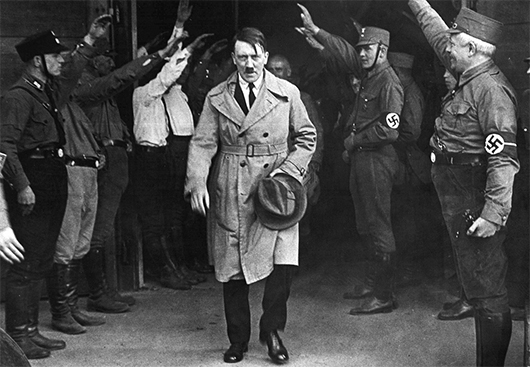
1. Adolf Hitler
Hitler was the Fuhrer of Nazi Germany from 1934 to 1945. Hitler tops the list of cruelest dictators because of his disturbingly systematic genocidal policies. A total of 5.5 million Jews and other “unwanteds” were deliberately targeted and executed in sanctioned ghettos, work camps and extermination camps. Hilter’s foreign policy and unrelenting desire to give the German people “room to live” was the major cause of World War II. Hitler also put down political dissenters and enemies as well as banning non-government sanctioned art, film, literature and teaching methods.
– Joe Kitaj
Sources: Forbes, List 25, The Atlantic
Photo: Flickr

Potential to Cure Parkinson’s Disease Found in Existing Drug
In a recent report, researchers found that the current drugs Chloroquine and Amodiaquine, two common anti-malaria drugs, could also provide treatment for Parkinson’s disease.
Parkinson’s disease itself is a disease caused by a loss of cells in a part of the brain called the subtantia nigra. This loss of cells causes the reduction of the neurotransmitter called dopamine, or the chemical in the brain that regulates movement and mood.
One of the study’s authors, Dr. Yoon Ho Sup, stated, “Our discovery brings hope for the millions of people suffering from Parkinson’s disease, as the drugs that we have found to have worked in the laboratory tests have already been used to treat malaria in patients for decades.”
Dr. Sup continued, “Our research also shows that existing drugs can be repurposed to treat other diseases and once several potential drugs are found, we can redesign them to be more effective in combating their targeted diseases while reducing the side effects.”
This monumental breakthrough could lead to an inexpensive alternative treatment to many individuals who suffer from Parkinson’s on a daily basis. Creating the new treatment would be beneficial not only from a financial standpoint but also because many of the current treatments involve a varied concoction of many drugs and surgery.
Another of the study’s authors, Professor Kwang-Soo Kim stated, “…[existing] pharmacological and surgical treatments address the patient’s symptoms, such as to improve mobility functions in the early stages of the disease, but the treatments cannot slow down or stop the disease process.”
With the current research and backing of scientific evidence, these drugs are seen to be a potential drug target to treat Parkinson’s itself.
The researchers hope that the drugs can be further modified to continue to better treat Parkinson’s and hopefully slow and stop the process.
– Alysha Biemolt
Sources: Spring, WHO, PNAS
Photo: Medical Press
Olive Oil Without Borders Uses Cooperation for Reconciliation
Olive oil: in a salad, it brings together flavors and nutrients with healthy and delicious results. In the Middle East, it brings together farmers in Israel and Palestine to change a narrative typically consumed by violence and hatred.
Olive Oil Without Borders is a project of the Near East Foundation, which has spent the past 100 years promoting reconciliation and development in the region. So far the project, which ended its first iteration in 2014, has brought more than $20 million into the Palestinian economy and involved more than 3,000 Palestinian farmers.
The project, which is also supported by USAID, was started due to production surpluses in Palestinian olive oil and production deficits in Israeli olive oil. This means that Palestinian producers were creating more oil than they could sell, while Israeli producers were having trouble meeting a heavy demand. Through this problem, a solution was born—something that could unite those pitted against each other by a troubling political situation.
Thus, in 2005, Olive Oil Without Borders was founded. Objectives of the project include economic empowerment and cooperation, as well as cooperation to promote reconciliation in an area torn apart by conflict and blame.
This is done through mutual training and education, with the knowledge and techniques of farmers of both nations being used to support advancement in the industry. According to olive farmer Muhammad Hamudi, the program brings about cooperation simply through the fact that it is mutually beneficial. “We have things to teach, they have things to teach. They use modern techniques, we have experience and knowledge.” Often times, working together can be brought about not by desire, but by necessity.
The second edition of the project launched in January. This project has the potential to bring more money into the Palestinian economy, advance production techniques in the olive oil industry and bring about lasting reconciliation to a long-lasting conflict, one olive at a time.
– Andrew Michaels
Sources: Global Citizen, Good Magazine, Olive Oil Without Borders, Olive Oil Times
Photo: Good Magazine
Wireless and Emergency Communications Tech in Disaster Relief
When disaster strikes, as it did in April 2015 in Nepal, there is an immediate need for life-saving aid; the distribution of food, water and shelter becomes paramount to relief efforts. However, in the 21st century, technology is becoming an increasingly necessary facet of day-to-day functionality. As the world’s rural regions develop and technology becomes cheaper and more efficient, the more people rely on that technology to function. Today, even in the world’s most remote and impoverished regions, things like Internet access and mobile phone service are just as important to survival and well-being.
In addition to providing life-sustaining resources, aid workers are now being called upon to provide things like Wi-Fi access and cellular support. The leading provider of emergency communications is the United Nation’s Information and Communication Technologies Task Force (ICT). Within 48 hours of a disaster, ICT deploys its Emergency Telecommunications Cluster, or ETC.
The ETC is a series of connected balloons that act like cell phone towers and routers that can be set up to provide wireless Internet and cellular service in disaster zones. These services enable survivors to contact family or other outside assistance, find routes out of the disaster zone, or transfer vital funds. Those providing assistance benefit from these services as well, for they can receive vital information from the survivors themselves on the exact situation on the ground.
Today’s digital world makes it nearly impossible to do any work without staying connected. By repairing or installing communication networks, aid workers help themselves as much as they help survivors. With Wi-Fi and cell service, workers can more effectively communicate and coordinate their efforts, and thus deliver crucial assistance quicker.
Wi-Fi is not the only advanced technology being utilized in disaster relief. Drones have recently been implemented to aid humanitarian missions. Drones can access remote areas quickly and survey locations with cameras, which would otherwise be dangerously inaccessible. In fact, the ongoing relief efforts in Nepal have seen the largest deployment of drones in the history of disaster relief. The devices are currently being used to survey the damage, search for signs of survivors, and help relief organizers further coordinate their efforts. Drones, when used in a humanitarian capacity, have the potential to produce a significant impact. Perhaps in the not-so-distant future, autonomous drones will be able to drop food, medicine and water far more quickly than actual aid workers.
– Joe Kitaj
Sources: ICT, ATISW, Direct Relief
Photo: ICT
The BOMA Project Mentors Kenyans in Running Successful Businesses
The BOMA Project works with women living in Kenya and other arid and drought-prone regions in helping them receive the resources, training and funds they need to start up their own businesses. Another aspect of the BOMA Project also helps Kenyan women pay for school, food and healthcare. Since 2009, 8,481 women have enrolled with the BOMA Project to successfully launch 2,651 businesses. In total, women who have enrolled with the BOMA Project have been able to provide care for over 42,250 dependent children.
The BOMA Project was started by Kathleen Colson after she was invited by a local elected official, with whom she attended Saint Lawrence University, to visit Northern Kenya. After many years of working as president of African Safari Planners and leading many excursions through Africa, she came to the conclusion something needed to be done to help those affected by drought.
When drought strikes, livestock die in herds, leaving families with no source of income, which in turn hinders them from being able to buy the food and supplies that they need to survive. After drought occurs, the men of the family leave the women and children at home to go find suitable grazing land. Oftentimes, women are left with no means for food or aid for up to six months. The BOMA Project works to train these women to find other sources of income from starting up their own businesses.
During her many trips to Northern Kenya, Colson met with village elders, faith leaders, local residents and community development workers to gain a true understanding of life in Kenya. While she spent lots of her time there listening to these people, she also focused on hearing what the women of Kenya had to say about life there. Her compassion was piqued by the struggles, challenges and failing solutions about which the Kenyan women spoke.
Colson and Kura Omar, her guide and translator, concluded training women to start and maintain their own businesses would help best alleviate poverty during droughts. Through the BOMA Project, they enacted the Rural Entrepreneur Aspect Project (REAP), which provides women with a two-year poverty graduation program that gives them a cash grant, training in the business and sustainability field and training from local mentors.
Once the businesses are earning profits, usually after six months, members of REAP work with BOMA representatives in establishing savings accounts to prepare for droughts in the future. The BOMA Project has successfully helped over 50,000 women and children in surviving drought season. By 2018, the BOMA Project hopes to double that to over 100,000.
– Julia Hettiger
Sources: BOMA Project, Aid for Africa, Dining for Women
Photo: BOMANomad
New Smartphone App Allows You to Share Your Leftovers
Of the challenges of the 21st century, one of the largest in terms of magnitude and prevalence is food insecurity. The term food insecurity is used loosely to define inconsistent access to food, due to limitations of resources.
The issue is unfortunately highly prevalent in not only the developing world but in the United States as well. According to the United States Department of Agriculture, 1 in 6 Americans faces food insecurity. This translates to roughly 50 million Americans in total.
These staggering numbers are indicative of what most of us are already quite familiar with: the issue of global hunger. However, the interpretation of its causes, and consequently the approach to its solutions, has been controversial. Many scientists, particularly biotechnologists, regard higher food production as the solution; and in many instances, it is effective.
As a result of agronomical developments, the world today is producing more food per inhabitant than ever before. However, the strides made in scientific innovation have not paralleled the alleviation of global hunger.
In fact, the implications of these discrepancies lie in the inequality of food distribution. For many people, food remains unavailable despite the copious amounts of food that go to waste each day. According to the Environmental Protection Agency, almost 35 million tons of food were wasted in the United States in 2013. Estimates by the National Resource Defense Council have estimated that 40% of all food produced in America is wasted.
To tackle the issue of wasted food, a Seattle-based startup has come up with a creative solution based on smartphone technology: Leftover Swap. Leftover Swap is a smartphone app that allows users to share their leftover food with others before it goes to waste. The users can snap a photo of their leftovers, and upload it on the app with a location tag. Anyone looking for food can then find all the shared food in their location. To make the app safer for users, it allows for instant messaging within the app where users can agree on a location to pick up food. The app also does not allow any user to charge for their leftover food.
The benefits and the range of applications for the app remain dubious: people who own smartphones are not necessarily the ones in dire need of free food provision. However, as smartphones become cheaper, it may be possible to reach marginalized populations. Moreover, it can be a way for food recovery networks to salvage more food that would have otherwise gone to a landfill.
Many people are also concerned about the degree of safety of food. The Health Department does not evaluate this food, as it is not technically being sold. In spite of the app’s continual reminders to only share food one would eat itself, the hygienic status of the food cannot be positively reaffirmed. The co-founder of the app, Dan Newman, contends that there is a certain degree of faith that needs to be put into this effort, as would be the case if one was being given food as a guest.
The app is to date the only app of its kind and faces some hurdles before it can reach the objectives of sustainability and food equality that it intends. However, it is a step in the right direction, and as interest in the app increases, it is more than likely that we will see improvements both from this app and potential competitors.
– Atifah Safi
Sources: Washington Post, NPR, , NRDC, Feeding America, USDA, Leftover Swap
Photo: Newsana
Alwaleed Philanthropies to Support Childhood Immunization
On July 13, 2015, Alwaleed Philanthropies announced their commitment to protecting the lives of children through immunization programs. They have signed an agreement with Gavi, the Vaccine Alliance, worth $1 million.
According to its website, “Alwaleed Philanthropies supports and initiates projects around the world, regardless of gender, race, or religion. [They] collaborate with a range of philanthropic, governmental and educational organizations to combat poverty, empower women and the youth, develop communities, provide disaster relief and create cultural understanding through education.”
Alwaleed Philanthropies has supported thousands of projects in over 90 countries and served millions of people across the globe for over 35 years.
The agreement with Gavi, the Vaccine Alliance was negotiated in January at the Gavi Pledging Conference. This is the first time Alwaleed Philanthropies has provided support to Gavi.
The contribution from Alwaleed Philanthropies is multiple projects to support the vaccine needs in Timor Leste, Kiribati, Armenia, Azerbaijan, Moldova and Guyana for the 2016 to 2020 period.
Gavi’s Resource Mobilization and Private Sector Partnerships Managing Director Marie-Ange Sarakao-Yao say, “We are very pleased that His Royal Highness Prince Alwaleed Bin Talal has decided to support Gavi through Alwaleed Philanthropies. Immunization is one of the most effective ways of reducing preventable deaths in the poorest countries and thanks to this contribution, Gavi will be able to support developing countries with vaccines that protect children against preventable diseases.”
Every year, nearly 22 million children do not receive a full course of even the most basic vaccines. These children are mainly in poor countries. More than one in five of all children who die before the age of five lose their lives to vaccine-preventable diseases.
Since 2000, Gavi has invested more than $3.8 billion to introduce vaccines to the members of the Organization of Islamic Cooperation (OIC). For the 2016 to 2020 period, Gavi predicts that 60% of its funding will support immunization programs in OIC who are eligible for Gavi support.
Since its introduction in 2000, Gavi has helped developing countries immunize over a billion children, saving seven million lives. World leaders joined German Chancellor Angela Merkel in January to raise $7.5 billion to ensure Gavi supported programs anticipated for the 2016 to 2020 time period
With this contribution, Gavi will be able to support an additional 300 million children with vaccines. Because of the funding it is receiving, Gavi is taking the steps to ensure all children will survive vaccine-preventable diseases. Because not all families can afford vaccines, Gavi is the bridge between healthy children and the future of vaccinated children.
– Kerri Szulak
Sources: Alwaleed Bin Talal Bin Abdulazaz Al Saud, Gavi, the Vaccine Alliance
Photo: Alwaleed Philanthropies
Water Crisis Continues in Eastern Ukraine
Unrest in Ukraine began in the fall of 2013, when Ukraine did not sign an agreement with the European Union. Students and other young people began engaging in demonstrations and protests in the capital city, Kiev, with the objective of fighting corruption in their country. The situation became more unstable with Russian invasions of the Crimea region and violence against pro-Russian rebels in the Debaltseve region of eastern Ukraine, which continue despite ceasefire agreements. The Donetsk and Luhansk regions of eastern Ukraine were hit particularly hard by the conflicts.
Over the past two years, approximately 6,000 lives have been lost due to fighting, and a further 13,961 have been wounded. 5.2 million are currently living in conflict areas. 978,482 have been internally displaced, including 119,832 children. 600,000 Ukrainian citizens have fled to neighboring countries, with 400,000 escaping to Russia.
While many have left conflict zones, others have stayed for various reasons. They may have feared facing worse dangers if they tried to leave, wanted to protect their family or property or been physically unable to move. Those trapped in conflict zones are often forced to hide away in basements with little food and no heat or electricity. Many are also lacking one very important resource: water.
There is currently a water crisis in Eastern Ukraine that could easily become worse. 1.3 million have been affected, especially in Donetsk and Luhansk. Damaged and destroyed water lines and water shortages have caused suffering for many. In non-government controlled areas of Luhansk, citizens rely on trucks bringing supplies or must travel to neighboring villages for safe drinking water. The city of Mariupol, located in Donsetsk, is relying on a depleting water storage reservoir.
The situation has worsened over the past month due to little rainfall and hot summer temperatures. The risk of waterborne disease will increase if people are unable to properly store and transport water. It is difficult to move supplies across borders between government and non-government controlled areas, which could be due to rebel forces directly preventing the delivery of aid to certain cities. The need is more urgent than ever.
UNICEF is currently helping those in Donetsk and Luhansk access safe water and has assisted 550,000 people since January 2015. 54,000 have also received additional hygiene supplies. However, UNICEF will need to raise significant funds to continue providing these services. Another organization providing aid to Ukraine is United Helping Ukraine. This 100 percent volunteer-based group works on fundraising, raising awareness of the crisis and holding rallies in support of Ukraine’s independence. They also have been distributing food, medical supplies and other donations to families affected by the conflict.
– Jane Harkness
Sources: BBC, CNN, Harvard University, Reuters, UNICEF, United Help Ukraine, Voice of America
Photo: Flickr
Groups Speak Out Against Helms Amendment
Many organizations and individuals are becoming more vocal against the Helms Amendment. Passed by a conservative Congress in 1973 as a reactionary measure against the landmark court case, Roe v. Wade, the Helms Amendment denies women in countries receiving American aid the ability to get abortions with government money.
This amendment has received flack from both liberals and conservatives due to the denial of safe abortion options for women who are victims of rape during war. The opposition has grown a lot of steam world wide.
Before President Obama touched down in Kenya last week, the Kenyan government tore down a billboard that seemed to be politically motivated. According to reports, the billboard implored President Obama to utilize his executive action to help women who are victims of rape in developing countries.
After the Kenyan government took the billboard down, many were upset. Perhaps the government wanted Obama’s trip to his father’s country to be pleasurable and void of political dissonance.
Obama is not just receiving pressure to revoke the amendment abroad, but also at home.
Before his trip to Kenya, 70 U.S. non-government organizations called for Obama to visit health clinics in Kenya that attend to women’s’ health so that he can see for himself what the amendment is causing.
At the “Religious Coalition for Reproductive Choice” in June, religious leaders requested that Obama use swift action to revoke the amendment. The support to revoke the amendment is not just from leaders, but from the majority of the American public.
BuzzFeed reported that 81 percent of people support a woman’s right to have access to an abortion in the case of rape or for the safety of the mother. Although this poll shows people’s views domestically, they can translate to the global stage.
Women living in countries rampant with a gang and terrorist violence are subject to rape. Because of the lack of protection the perpetrators have, the victims are oftentimes subject to sexually transmitted infections and pregnancy.
Due to rape being a tool of war, many from both sides express their disdain for the harsh bill. Perhaps the president will one day voice his opposition.
– Erin Logan
Sources: The Daily Beast, Buzzfeed 1, Gender Health, Buzzfeed 2
Photo: Woman Under Seige Project
The #MakeTechHuman Campaign: Technology to Serve All
Technology has the power to save millions, yet it also poses serious risks. In order to discuss and mitigate that risk, mobile tech giant Nokia and technology magazine WIRED have teamed up to launch the #MakeTechHuman campaign: a proposed debate on the future of technology and its potential for aiding the human race. “The #MakeTechHuman debate that Nokia has enabled is all about ensuring that technology serves humanity, in the right way,” says Nokia’s Chief Marketing Officer, Barry French. At the core of the debate is the issue of artificial intelligence (AI).
An open letter signed by innovators such as Bill Gates, Tesla Motors’ CEO Elon Musk and Stephen Hawking is part of the joint endeavor, and it lays out specific ways in which AI can be used in the fight against disease and global poverty. The letter states that AI “has the potential to bring unprecedented benefits to humanity.” Experts agree that AI can, quite possibly in the near future, do great things for society. One example that the letter cites is the eradication of global hunger through optimized farming practices. AI also has the potential to revolutionize the medical field by providing diagnoses and treatment far quicker than a human can.
It is ideal for technology to serve all, however, technology comes at a price. The purpose of #makeithuman is to ensure that the technology designed to save the suffering does not turn on them. To encourage a discussion on possible solutions and ways to mitigate risk, Stephen Hawking has joined #makeithuman with his first Reddit “Ask Me Anything” session. The renowned physicist is encouraging all to join the conversation about AI and the countless and revolutionary methods of aid it can provide.
– Joe Kitaj
Sources: Nokia, Wired, Reddit, Future of Life, PR Newswire
Photo: Flickr
10 of the Cruelest Dictators Who Ignored the Impoverished
10. Vladimir Putin
Putin is the current president of Russia and has been in power since 1999. He spent four years as Prime Minister from 2008 to 2012, though most experts believe he was still calling the shots. Putin is a strong man and one of the cruelest dictators, ruling Russia with a fierce grip. His presidency has been lamented by human rights groups and Western governments. Putin maintains a terrible domestic civil rights policy and viciously puts down political dissent and free speech. Not to mention, under his command Russia has engaged in military action in Georgia, Chechnya, and most notably the invasion and annexation of Crimea, thus violating Ukrainian sovereignty.
9. Robert Mugabe
Now in his seventh term of office as president of Zimbabwe is Robert Mugabe. Many political scientists and experts have cited massive electoral fraud and rigging in Mugabe’s favor during the 2013 election. According to both Amnesty International and Human Rights Watch, Mugabe’s government systematically violates the right to shelter, food, freedom of movement and political expression. In addition, Mugabe made all acts of homosexuality illegal in Zimbabwe.
8. Muammar Gaddafi
Self-proclaimed “Brotherly Leader and Guide of the Revolution” of Libya for more than 50 years, Gaddafi was, at first, a widely supported leader after he led the September Revolution in 1969. However, as he consolidated power his regime became more authoritarian. His calls for Pan-Africanism were greatly overshadowed by his pitiful human rights record. During the Arab Spring, Gaddafi ordered his forces to fire on unarmed protesters calling for his resignation. The UN Human Rights Council called for an investigation into war crimes. Gaddafi was deposed and killed at the end of the Libyan Civil War.
7. Idi Amin
Amin’s paranoid administration was marred by rampant violence to his political enemies. UN observers estimate that 100,000 to 500,000 were persecuted and killed in Uganda under his reign. Amin’s victims were originally his direct political opponents and those who supported the regime that he fought to overtake. However, extrajudicial killings began to include academics, lawyers, foreign nationals and minority ethnic groups within the country.
6. Kim Jong Il
Kim Jong Il continued his father’s fearsome policy of official party indoctrination. North Korea currently ranks as one of the poorest nations on the planet, with millions facing starvation, disease and lack of basic human needs. Under Kim’s reign, North Korean military spending quadrupled, yet he refused foreign aid and did not invest in his country’s farms, thereby indirectly killing millions. Kim’s policy of mass internment through the use of labor camps and virtually no political debate makes him on of history’s worst despots.
5. Pol Pot
Pot was the dictator of Cambodia for 20 years from 1961 to 1983 as the leader of the Khmer Rouge government. His regime is characterized by the Cambodian genocide and the infamous “killing fields.” Pol Pot began a program of severe nationalization whereby he forced millions from urban areas into the countryside to farm and work on forced labor projects. Due to the forced labor, poor food and medical conditions, and the addition of massive amounts of state-sponsored killings, nearly 25 percent of Cambodia’s population died under Pol Pot’s rule.
4. Bashar al-Assad
As the current president of Syria, Assad’s authoritarian regime was called into question during the Arab Spring and cited for numerous civil rights violations including suppression of free speech, corruption and political freedom. Assad ordered massive crackdowns and thus triggered the ongoing Syrian Civil War. Government forces only grew more violent toward protesting Syrian citizens, and there have been allegations of chemical warfare. Assad has been accused of numerous human rights violations, war crimes and crimes against humanity.
3. Joseph Stalin
Stalin was the second leader of the Soviet Union. Though part of the original seven Bolshevik leaders, Stalin quickly consolidated sole power and became a tyrant. In the 1930s he pursued a policy of political upheaval known as “the Great Purge.” From 1930 to 1934, millions of Soviet citizens were imprisoned, exiled or killed. Stalin also pursued a policy of massive economic reforms that led to the deaths of millions due to famine and forced labor in Gulag camps.
2. Mao Zedong
Zedong was the first chairman of the Communist Party of China, and in terms of numbers of deaths during his reign, he tops the list. Nearly 70 million Chinese died during his rule. Zedong systematically broke down Ancient Chinese culture and nearly ended political dissent and freedom in China. His revolutionary economic policies during “the Great Leap Forward” resulted in one of the worst famines in modern history. In addition, Mao also implemented forced labor and public executions.
1. Adolf Hitler
Hitler was the Fuhrer of Nazi Germany from 1934 to 1945. Hitler tops the list of cruelest dictators because of his disturbingly systematic genocidal policies. A total of 5.5 million Jews and other “unwanteds” were deliberately targeted and executed in sanctioned ghettos, work camps and extermination camps. Hilter’s foreign policy and unrelenting desire to give the German people “room to live” was the major cause of World War II. Hitler also put down political dissenters and enemies as well as banning non-government sanctioned art, film, literature and teaching methods.
– Joe Kitaj
Sources: Forbes, List 25, The Atlantic
Photo: Flickr