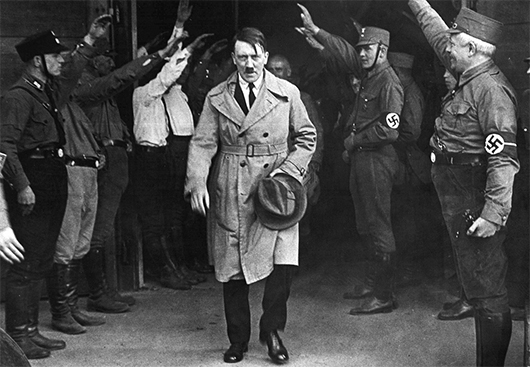
 Here is a list of the top 10 cruelest dictators.
10. Vladimir Putin is the current president of Russia and has been in power since 1999. He spent four years as the Russian Prime Minister from 2008 to 2012, though most experts believe he was still calling the shots. Putin is a strong man who rules Russia with a fierce grip. His presidency has been lamented by human rights groups and Western governments. Putin maintains a terrible domestic civil rights policy, and viciously puts down political dissension and free speech. Moreover, under his command, Russia has engaged in military action in Georgia, Chechnya and most notably, Crimea, the invasion and annexation of which violated Ukrainian sovereignty.
9. Robert Mugabe is now in his seventh term of office as the President of Zimbabwe. Many political scientists and experts have cited massive electoral fraud and rigging in Mugabe’s favor during the 2013 election as the reasons behind his victory. According to both Amnesty International and Human Rights Watch, Mugabe’s government systematically violates the right to shelter, food, freedom of movement and political expression. In addition, Mugabe made all acts of homosexuality illegal in Zimbabwe.
8. Muammar Gaddafi was the self-proclaimed “Brotherly Leader and Guide of the Revolution” of Libya for more than 50 years. Gaddafi was, at first, a widely supported leader after he led the September Revolution in 1969. However, as he consolidated power, his regime became more authoritarian. His calls for Pan-Africanism were greatly overshadowed by his pitiful human rights record. During the Arab Spring, Gaddafi ordered his forces to fire on unarmed protesters calling for his resignation. The United Nations Human Rights Council called for an investigation into war crimes. Gaddafi was deposed and killed at the end of the Libyan Civil War.
7. Idi Amin’s paranoid administration was marred by rampant violence toward his political enemies. U.N. observers estimate that 100,000 to 500,000 were persecuted and killed in Uganda under his reign. Amin’s victims were originally his direct political opponents and those who supported the regime he fought to overtake. However, extrajudicial killings began to include academics, lawyers, foreign nationals and minority ethnic groups within the country.
6. Kim Jong Il continued his father’s fearsome policy of official party indoctrination. North Korea currently ranks as one of the poorest nations on the planet, with millions facing starvation, disease and lack of basic human needs. Under Kim’s reign, North Korean military spending quadrupled, yet he refused foreign aid and did not invest in his country’s farms, thereby indirectly killing millions. Kim’s policy of mass internment through the use of labor camps and virtually no political debate makes him one of history’s worst despots.
5. Pol Pot was the dictator of Cambodia for 20 years, from 1961 to 1983, as the leader of the Khmer Rouge government. His regime is characterized by the Cambodian genocide and the infamous “killing fields.” Pol Pot began a program of severe nationalization whereby he forced millions of people out of urban areas into the countryside to farm and work on forced labor projects. Due to the forced labor, poor food and medical conditions, as well as the addition of massive amounts of state-sponsored killings, nearly 25% of Cambodia’s population died under Pol Pot’s rule.
4. Bashar al-Assad is the current President of Syria. Assad’s authoritarian regime was called into question during the Arab Spring and was cited for numerous civil rights violations, including suppression of free speech, corruption and political freedom. Assad ordered massive crackdowns and thus triggered the ongoing Syrian Civil War. Government forces only grew more violent towards protesting Syrian citizens, and there have been allegations of chemical warfare. Assad has been accused of numerous human rights violations, war crimes and crimes against humanity.
3. Joseph Stalin was the second leader of the Soviet Union. Though part of the original seven Bolshevik leaders, Stalin quickly consolidated sole power and became a tyrant. In the 1930s, he pursued a policy of political upheaval known as “the Great Purge.” From 1930 to 1934, millions of Soviet citizens were imprisoned, exiled or killed. Stalin also pursued a policy of massive economic reforms that led to the deaths of millions due to famine and forced labor in Gulag camps.
2. Mao Zedong was the first Chairman of the Communist Party of China, and in terms of numbers of deaths during his reign, he tops the list. Nearly 70 million Chinese died during his rule. Mao systematically broke down ancient Chinese culture and nearly ended political dissent and freedom in China. His revolutionary economic policies during “the Great Leap Forward” resulted in one of the worst famines in modern history. In addition, Mao also implemented forced labor and public executions.
1. Adolf Hitler was the Führer of Nazi Germany from 1934 to 1945. Hitler tops the list because of his disturbingly systematic genocidal policies. 5.5 million Jews and other “unwanteds” were deliberately targeted and executed in sanctioned ghettos, work camps and extermination camps. Hitler’s foreign policy and unrelenting desire to give the German people “room to live” were the major causes of World War II. Hitler also put down political dissenters and enemies and banned art, film, literature and teaching methods not sanctioned by the state.
– Joe Kitaj
Sources: Forbes, List25, The Atlantic
Photo: Flickr

New Coat of Paint Rids Disease Carrying Insects
Chagas disease is a disease caused by the bite of triatomines. These are large, beetle-like bugs known to locals as vinchucas, or “kissing bugs,” that reside in the thatched roofs and mud walls used in traditional Latin American homes. Families who live in such homes are often forced to sleep outside to escape being bitten, and potentially infected, at night. Chagas disease has become endemic throughout Latin America; however, more than 1 million of those infected live in the United States, many of them immigrants.
If the infection is caught early it can be cured, but Chagas disease often goes undetected because those most vulnerable to infection lack access to adequate health care. Left untreated, the disease can become chronic and is often fatal.
The recent rising rates and spread of Chagas disease have been compared to the early years of the AIDS pandemic. It is one of the major health problems in South America, but because this is a disease of the poor, little money is being spent on treating, curing or preventing it. There are shortages of drugs that help those who have been infected and barely any research on exploring a cure. This is why prevention needs to be the solution.
Pilar Mateo is a Spanish chemist who has engineered a paint formula that eliminates infestations of bugs, including vinchucas, mosquitos, spiders, ticks, bedbugs, fleas and ants. Her idea to vaccinate homes instead of people led to the creation of her company, Inesfly Corp. One coat of Inesfly paint almost entirely eliminates the presence of creepy crawlers, reducing the rate of vinchucas infestations in many Bolivian villages from 90 percent to virtually zero.
The way Inesfly paint works is simple. Within the water-based paint are “microcapsules” of vinchucas-killing pesticides that are slowly released. The paint — and its pesticide — remains effective for several years. Moreover, the microcapsules have insect growth regulators; they not only kill full-grown insects but also eliminate eggs and newly-hatched insects that are resistant to pesticides. As if that isn’t enough, because Inesfly paint releases bug-killing chemicals in such small doses, it is safer than fumigation for both people’s health and the environment.
Mateo’s solution to disease-spreading bugs stemmed from her experience in Bolivia, where she first tested her new paint mixture in 1998. She contends that poverty, instead of insects, is the real source of disease. After building relationships with the indigenous women in Bolivia and witnessing the difference her paint made on their lives and the lives of their children, Mateo realized that a new coat of paint could mean a renewed chance at a better, longer life. Eradicating deadly diseases takes more than pest control; there is a strong link between poverty and disease and in order to eliminate diseases like Chagas disease, there needs to be a continued effort to eradicate poverty.
– Brittney Dimond
Sources: MNN, NYT 1, NYT 2
Photo: MNN
World Bank, Oxfam Reject “Coal is Cure for Poverty”
“Coal is a cure for poverty.” In a rejection of a popular argument on the part of the energy industry, World Bank climate change envoy Rachel Kyte has said that the continued extraction of coal has imposed heavy costs on civilians living in the world’s poorest communities.
At an event hosted by The New Republic magazine and the Center for American Progress, Kyte argued that while over a billion people worldwide lack reliable access to energy, coal extraction carries heavy social costs, among which is the loss of breathable air.
“If [poor communities] all had access to coal-fired power tomorrow their respiratory illness rates would go up, etc., etc.,” she said. “We need to extend access to energy to the poor and we need to do it the cleanest way possible because the social costs of coal are uncounted and damaging, just as the global emissions count is damaging as well.”
Such arguments come in response both to the increasing effects of global climate change on impoverished communities and to energy sector arguments that fossil fuel extraction can help alleviate global poverty. In its Advanced Energy for Life campaign, led by the world’s largest private-sector coal company Peabody Energy, the coal industry has argued that “coal is critically required to reduce energy poverty and to help achieve the U.N. development goals.”
But Oxfam International has refuted those claims, arguing that in addition to the more immediate implications of polluted local air and dirty extraction methods, the burning of coal is largely responsible for the acceleration of climate change that is primarily affecting poor, rural communities. In a statement directed at the Australian government – which, under Tony Abbott’s leadership, has abandoned its emissions targets and in 2014 became the first nation to repeal its carbon tax – Oxfam Australia argued that the proliferation of coal extraction runs contrary to the interests of civilians living in poor and developing countries.
“Even for rapidly growing urban populations, the past advantages of coal are diminishing as the cost of renewable energy falls and the harmful effects of coal become more and more evident,” reads the report, entitled Powering Up Against Poverty: Why Renewable Energy is the Future. “Burning coal poses significant health risks through air pollution – a major driver of China’s shift away from coal – and is leading to hundreds of thousands of premature deaths around the world.”
The report notes that the construction of coal mines is displacing many in the world’s poor communities and that extraction often leaves rural civilians without access to clean water and affordable land. Most importantly, the report notes, burning coal is the largest contributor to climate change, and “as such, it is creating havoc for many of the world’s poorest people, who are already feeling the impacts of climate change through decreased crop yields, increased risk of disasters and loss of land.”
Though the mining industry has channeled a huge amount of effort into convincing governments of the benefits of coal mining for poor communities, organizations in such communities have refuted those claims. In response to a claim made by conservative think tank the Institute of Public Affairs that increasing the supply of Australian coal to India would provide access to energy for 82 million people, Sirinivas Krishnaswamy, CEO of the Vasudha Foundation, said that those arguments “simply do not stand up to even the most basic scrutiny.”
In order to relieve poor communities around the world of the troubles perpetuated by the burning of fossil fuels, governments will need to resist the convenience and influence of already-established industries like coal. Moreover, they ought to embrace projects like the Lake Turkana Wind Farm, which, with subsidies from the Kenyan government, is set to provide the Kenyan people with energy at two-thirds the cost of electricity in the United States. However, until governments like Australia’s resist the influence of vested interests, they will continue to be working against the safety of their own environments, as well as the interests of poor people in developing countries.
– Zach VeShancey
Sources: The Guardian, Think Progress, Advanced Energy for Life, OXFAM
Photo: Free Stock Photos, Wikipedia
The Social Progress Index: Measuring What Matters
Almost everyone is familiar with the term “Gross Domestic Product,” or “GDP,” a yardstick against which the progress and development of nations is measured. It is defined as the monetary value of all goods and services created within a country in a time period.
But, as Robert F. Kennedy once pointed out, “it does not allow for the health of our families, the quality of their education… it measures everything, in short, except that which makes life worthwhile.”
Stanley Kuznets, the economist who created the GDP measurement, said that “the welfare of a nation can scarcely be inferred from a measure of national income.”
So why is the GDP consistently considered the most important indicator of a country’s success level?
In 2009, The New York Bureau Chief of The Economist rephrased the question: “What if countries competed with each other to become the most socially innovative in the world?” After all, the world that matters on a most visceral level is not made up of dollar signs and algorithms. Rather, it is a living, breathing planet full of people who live and die and face challenges ranging from survival to social injustice.
Consideration of this simple fact led to the birth of the Social Progress Imperative, a movement to measure the success of countries, companies and organizations in a new way, but also in tandem with economic measurements such as GDP.
Current CEO of the Imperative, Michael Green, demonstrated that the two are positively correlated, but not inextricably so. For example, in the 2015 ranking, New Zealand and Norway achieved similar Social Progress Index (SPI) scores, even though New Zealand’s GDP is about 50 percent of Norway’s.
There have been previous efforts to measure national progress beyond the scope of the GDP, such as the Human Development Index (HDI), the Your Better Life Index, and the Legatum Prosperity Index. The primary feature that sets SPI apart from these indexes is that it focuses solely on social outcomes rather than economic ones. With this focus, it tries to take the scope of these previous initiatives to a new level. The Social Progress Index measures the success of a country in three core areas: basic human needs, foundations of wellbeing, and opportunity. And, it measures the outcomes occurring in a country, such as actual availability and accessibility of goods and services, not laws passed with the intention of providing them.
The possibilities of looking at success through this new lens are practically endless. Once there is a better understanding of which countries have the highest overall success, economists, politicians, nonprofits and members from every sector can start to examine what works and what doesn’t work. Goals can be created and prioritized, and opportunity and wellbeing can be increased, which will likely drive economic progress and increase GDP. With more GDP, more resources can be created and provided that will increase SPI.
And, it’s not only countries that can be measured using SPI. Smaller governments, such as cities and states, can view the effect of policies and shape new ones.
Charitable organizations could be ranked so that they can understand their own success levels. Potential patrons can be aware of how effectively their donations are being utilized.
Companies could understand their effect on the world beyond the economic sphere.
Understanding what leads to overall success can help shape initiatives that will create more success, no matter the organization or venue. The Social Progress Index is an exciting way to foster progress on a very human level.
– Emily Dieckman
Sources: TED, OECD Better Life Index, Social Progress Imperative 1, Social Progress Imperative 2
Photo: TED
Women’s Empowerment in Agriculture Index
With so many important social justice issues to be aware of, it is extremely helpful when the progress of several areas at once can be monitored with only one tool.
The Women’s Empowerment in Agriculture Index (WEAI) ties together the importance of advancement in the agriculture sector and the involvement and empowerment of women in the same area.
The Index was developed jointly by Feed the Future, USAID, IFPRI (International Food Policy Research Institute) and OPHI (Oxford Poverty and Human Development Initiative) as a way of monitoring the success of the Feed the Future Initiative, and that is what makes it unique: The empowerment of women was not tacked on as a side note or as a positive subsidiary effect of the larger goal. Rather, the success of the Feed the Future programs depend on the equitable treatment and fair status of women.
The index debuted in Bangladesh, Guatemala and Uganda in 2012, with the intent to use it for further tracking of the influence of programs. While the tool itself is designed primarily to monitor and evaluate women’s empowerment levels, it is the crucial first step toward making a difference. Once data is generated about a problem, it can be approached with a better understanding of how to solve it, as well as increase awareness and support for fixing it.
So how is “empowerment” defined and measured?
Clearly, the concept is extremely personal. It is something that can be discussed in a very inspired but unspecific way. One Guatemalan woman, for example, said, “Being empowered means that the woman can do things too, not just the man.” To others, it is more about their position within a community. There are a lot of factors that affect what “empowerment” means to a person.
Do empowered actions count if they’re being encouraged, or even enforced, by an outside force? Is empowerment more of an individual or a collective concept? How can such a flexible idea be measured and expanded upon across such a vast range of cultures, ideologies and physical circumstances?
Answering this question is made easier by considering women’s empowerment in the specific context of agriculture. The Index is comprised of two parts: The 5 Domains of Women’s Empowerment (5DE) and the Gender Parity Index (GPI).
The 5 Domains of Women’s Empowerment are the following: role in the production of crops, access to resources, level of income, role in leadership positions and availability of time. Women are considered “empowered” if they meet particular thresholds in four out of five of these areas.
The Gender Parity Index measures the success and empowerment of women in agriculture relative to men living in the same households. A woman who is relatively empowered when compared to women in other countries, but not compared to her husband, will not rank highly on the Gender Parity Index.
The idea of using one index to measure progress in two separate areas might seem unusual, almost non sequitur. But research done by the UN’s Food and Agricultural Association (FAO) has shown that agricultural productivity increased by 20 to 30 percent when access to agricultural resources was equalized between men and women.
By tying important goals together and creating a way to monitor their progress, the WEAI is helping the movement towards shaping a better world.
– Emily Dieckman
Sources: Indiana University Bloomington, IFPRI, Feed the Future, USAID
Photo: IFAD
New UN Initiative Aims to End Global Poverty by 2030
UN negotiators have recently agreed to extend a 15-year series of agreements known as the Sustainable Development Goals, giving way to an initiative to end global poverty by 2030. The agreement outlines 17 specific goals and 169 targets that are intended to build upon the Millennium Development Goals, which were passed in 2000. Action towards these goals will begin on January 1, 2016.
The agreement outlines aspirations of reducing the world’s poor population by half and eliminating extreme poverty entirely, which is defined as living on less than USD $1.25 per day. Further goals including doubling the incomes of small-scale agricultural producers and lowering the rate of newborn deaths to one percent of births.
“We can be the first generation that ends global poverty…The international community took a major step toward achieving this shared goal with this weekend’s agreement. Now we must sustain that momentum,” said UN Secretary-General Ban-Ki-Moon.
These new initiatives have a wider scope than previous agreements as there are more concerted efforts at promoting universal energy access and encouraging global opportunities for women and girls. Increasing sanitation and water access are also some goals highlighted in the initiative. Additionally, reducing consumption and food waste by half in unison with efforts to phase out subsidies to fossil fuel industries are examples of climate-oriented initiatives. The agreement also calls for nations to pledge USD $100 billion annually for helping developing countries combat climate change by 2020.
Measures of implementation were discussed at the Third International Conference on Financing for Development, which was held this past July in Addis Ababa, Ethiopia. An important aspect of the agreement is that each member is expected to uphold the goals of the agreement on good faith and that the UN must respect each state’s political independence and territorial boundaries. While agreements were made that countries held the right to concentrate on their own societal and economic in-state development, the UN’s High-Level Political Forum reserves the right to monitor and review their contributions from a global level.
These lofty goals and expectations will be implemented by various methods through multitudes of governmental and non-governmental forces. The official agreement says, “Our journey will involve Governments as well as Parliaments, the UN system and other international institutions, local authorities, indigenous peoples, civil society, business and the private sector, the scientific and academic community and all people. Millions have already engaged with and will own this Agenda. It is an Agenda of the people, by the people and for the people and this, we believe, will ensure its success.”
– The Borgen Project
Sources: Vice, Sustainable Development
Photo: The Guardian
Turkish Court Stops School Closings Amid Political Conflict
Political conflicts within countries are common. In the U.S., they are sometimes hard to avoid – Obamacare, LGBT rights and everyday disagreements over policy decisions are always being reported on. However, in Turkey this week, a different political conflict is taking place that is affecting the education system there – school closings.
This conflict is taking place over a number of schools founded by Fethullah Gülen, a Muslim cleric and rival of the current president, Recep Tayyip Erdogan. Erdogan passed legislation banning the schools back in 2014 when he was prime minister and his party had a majority in parliament. The legislation was reversed on Monday when the Turkish Supreme Court ruled that it “violated the freedom of education enshrined in the Turkish Constitution.” The legislation passed had ordered the closing of the schools by September 1.
The schools are known as dershanes and are extremely popular within the country. Interestingly, the schools are the main source of money for Gülen’s movement, perhaps pointing to why President Erdogan was interested in banning them. If the legislation had not been struck down by the courts, it surely would have crippled the group financially.
There are about 1.2 million students going to 3,800 dershanes around the country. Most who attend are working towards passing national high school and university exams. Opponents of the original law banning the schools protested that, without them, some of the most disadvantaged children in Turkey would not get the opportunity to prepare for these entrance exams for some of the best and most prestigious universities in the country.
Education has been an issue in Turkey for a while now, especially under President Erdogan who has overseen the conversion of many secular schools into more religion-centered institutions. Some of these schools are being converted into imam-hatips, religious schools. Anywhere between 20 percent to one-third of class hours is devoted to Sunni Islamic study at these schools. President Erdogan has stated that the conversion of schools is a defense against moral decay.
Because of this, the banning of the schools has become both a political issue as well as an equality one. Bahçeşehir University’s Center for Economic and Social Research has found that according to European Union standards, two in three Turkish children live in poverty. The material deprivation rate was recently recorded at 63.5 percent for children between the ages of an infant and 15.
The European Union defines severe material deprivation as a circumstance when a family or household cannot afford to pay their rent and utilities, as well as for food and unexpected expenses. Material deprivation in Turkey varies from region to region, with eastern areas seeing higher rates than those in the west.
The closing of the schools would have only meant that these already deprived children across Turkey would not have enjoyed the same potential access to dershanes that could in turn prepare them for the university entrance exams, only holding them back further. Time will tell whether the reversal of the legislation banning the dershanes will pay off for those children, but perhaps hope has been kindled again.
– Gregory Baker
Sources: News Week, The Guardian, New York Times, Hürriyet Daily News
Photo: DW
Celebrities Team Up with Feeding America
As part of a series by the organization Feeding America, “Say No to Summer Hunger” is teaming up with local food banks to serve much-needed summer meals to kids facing hunger.
In an event that was in partnership with the Los Angeles Regional Food Bank, Jennie Garth famous from the television show 90210 and actress Samantha Harris served free and nutritious lunches to dozens of kids and teens.
The event was located in a library is located in Los Angeles County, where the number of children living in food-insecure households ranks highest in the nation, with 591,000 children who may not know where they will find their next meal.
“Child hunger exists in communities all across America,” said Garth. “There should be no reason that a child in this country is allowed to go hungry.”
Nationally, upwards of 22 million children rely on free or reduced-priced meals to nourish them during the school year. However, during the summer months, only 2.7 million children have access to free or reduced-price meals through summer feeding programs. This creates a huge deficit in the amount of nutrition these children are receiving during a crucial period of their development.
As Samantha Harris said during the event, “Summer should be spent outside playing with friends, not worrying where or if you will eat lunch that day. Kids need energy, and food is fuel!”
This is why organizations like Feeding America exist: to feed America’s hungry through a nationwide network. Having celebrity members spread awareness by using their name, real change can be made, along with hopefully inspiring a call to action from other members of the community.
Feeding America’s “Say No to Summer Hunger” has and will hold events across the country for the duration of the summer months.
– Alysha Biemolt
Sources: Look to the Stars, Feeding America, Think Progress
Photo: Look to the Stars
Clean the World Collects Toiletries for Impoverished Communities
On average, 1.8 million people per year die from diarrhea-related diseases. Diarrhea ranks third as the leading cause of death among infection-related diseases just after respiratory infections and HIV/AIDS. Fifteen countries make up 70% of this number: India, Nigeria, the Democratic Republic of the Congo (DRC), Afghanistan, Ethiopia, Pakistan, Bangladesh, China, Uganda and Kenya. Approximately 2.5 million children around the world become sick because of diarrhea-related infections, with many of these children being younger than 5-years-old.
Many of these victims reside in Sub-Saharan Africa, where diarrhea-related deaths rank higher than deaths due to malaria, HIV/AIDS and measles combined. Along with death, diarrheal diseases contribute to stunted growth, malnutrition, increased healthcare costs and the inability to work or attend school.
Clean the World was created to help decrease the number of deaths caused by diarrheal diseases by collecting toiletries and other supplies for communities whose residents fall victim to poor hygiene. Clean the World was founded by Shawn Seipler, who seeks to revolutionize hygiene all over the world. The organization collects unused hotel soaps, discarded plastic bottles and other toiletries for communities living in poverty globally.
The collection process operates in three steps: hotels and other hospitality units register their hotel, Clean the World sends them collection bins so the hotels can begin collecting unused soap and plastic bottles and lastly, the hotels ship their collections when the bins are halfway full.
Staff and volunteers sort through discarded toiletries received through donations to decide which are viable to send to communities. They also request donations from manufacturers who send the donation to their facilities in Orlando, Las Vegas or Hong Kong. At these facilities, the outer layers of bars of soap are scraped off and what is remaining is grounded down to small bits and power-washed. The bits are then mixed with glycerin and other substances to form a new bar of soap.
The donations are then distributed to regions all over the world including Africa, Eastern Europe, Asia, South America, the Middle East, and at-risk communities in North America.
In an article by The Huffington Post, “Buy One, Give One” companies are on the rise, including Clean the World. Like Clean the World, these organizations work with other organizations and corporations to provide donations to a cause. Clean the World has recently merged with the Global Soap Project to increase the number of communities to which they distribute donations.
– Julia Hettiger
Sources: Huffington Post, Recycle Nation, Clean the World
Photo: Vegas Magazine
Health-E-Net: Connecting Rural African Patients to Global Network of Medical Specialists
When a person is diagnosed with a serious illness, he or she must make a series of difficult medical decisions. What will I pay for? Where will I go? What type of treatment should I get?
In the United States, a patient receives multiple opinions on what he or she should do next; but in Africa, there is a shortage of specialist doctors, and patients rarely receive second opinions. The few specialty doctors in Africa are located in large metropolitan areas, hindering rural patients’ access.
Health-E-Net aims to fix this problem. The startup provides rural impoverished patients with affordable, high-quality second opinions so they can understand the complexities of their illnesses and make informed decisions about their futures.
The enterprise is based in Kenya. It relies on a global network of volunteer doctors, who analyze a patient’s data, and then give a second opinion.
“All patients have this desire to get the best possible treatment and it starts with a second opinion consultation. It gives patients information about their condition, about options available, and space to think and make the best decision. The demand for second opinion consultation is universal, and possibly even more in a developing country context,” said Dr. Pratap Kumar, founder and CEO of Health-E-Net, according to How We Made it in Africa.
Pratap Kumar was born in India and moved to Europe to study neuroscience and health economics. In Europe, many patients from back home continued to contact him with questions, looking for second opinions.
“It was very difficult to do this because one needs the patient’s history, the scans, the detailed blood work investigations… which is not easy to get access to when you are in a different country. A lot of doctors in the diaspora want to help patients back at home, but the networks don’t exist to harness these skills,” explained Kumar.
E-Health-Network began with Kumar’s desire to help patients back home in India. He realized that many other doctors in the diaspora, as well as retired doctors, also wanted to do something meaningful for the communities that they left behind without having to travel thousands of miles.
Health-E-Net costs only $30 and enables patients to have access to the world’s leading medical specialists.
Health-E-Net first assembles patients’ medical records. The company then shares these records with the relevant medical specialists and offers counseling and support services.
In rural areas, the majority of people cannot afford the $30 fee. Community clinics often subsidize the price, so in many cases, rural patients pay as little as $3.
Due to Kumar’s roots in India, he initially began Health-E-Net there. India has a larger population, but Kenya enables Kumar to be more adaptive and innovative.
“In India, you very quickly go into the numbers game. Even if your solution is not completely optimized you can scale across the country and make the numbers work for you. In Kenya and across Africa you really need a well-designed product and you must make it work for the low-cost market. The markets here won’t grow exponentially like in India or China, but your product has to be attuned to the challenges of the consumer, so innovation has to be at its best,” Kumar said.
Kumar hopes to expand Health-E-Net throughout the African continent, and eventually the world. “It works in Kenya, but it is also workable in India, Papua New Guinea or Ethiopia,” says Kumar. “Any place where there is inequality in access to healthcare, [and] where there are large populations that are rural, poor and don’t have access to the next level of care, Health-E-Net will be very useful to such settings.”
– Aaron Andree
Sources: Health-E-Net, How We Made It in Africa
Photo: How We Made It in Africa
10 Cruelest Dictators
10. Vladimir Putin is the current president of Russia and has been in power since 1999. He spent four years as the Russian Prime Minister from 2008 to 2012, though most experts believe he was still calling the shots. Putin is a strong man who rules Russia with a fierce grip. His presidency has been lamented by human rights groups and Western governments. Putin maintains a terrible domestic civil rights policy, and viciously puts down political dissension and free speech. Moreover, under his command, Russia has engaged in military action in Georgia, Chechnya and most notably, Crimea, the invasion and annexation of which violated Ukrainian sovereignty.
9. Robert Mugabe is now in his seventh term of office as the President of Zimbabwe. Many political scientists and experts have cited massive electoral fraud and rigging in Mugabe’s favor during the 2013 election as the reasons behind his victory. According to both Amnesty International and Human Rights Watch, Mugabe’s government systematically violates the right to shelter, food, freedom of movement and political expression. In addition, Mugabe made all acts of homosexuality illegal in Zimbabwe.
8. Muammar Gaddafi was the self-proclaimed “Brotherly Leader and Guide of the Revolution” of Libya for more than 50 years. Gaddafi was, at first, a widely supported leader after he led the September Revolution in 1969. However, as he consolidated power, his regime became more authoritarian. His calls for Pan-Africanism were greatly overshadowed by his pitiful human rights record. During the Arab Spring, Gaddafi ordered his forces to fire on unarmed protesters calling for his resignation. The United Nations Human Rights Council called for an investigation into war crimes. Gaddafi was deposed and killed at the end of the Libyan Civil War.
7. Idi Amin’s paranoid administration was marred by rampant violence toward his political enemies. U.N. observers estimate that 100,000 to 500,000 were persecuted and killed in Uganda under his reign. Amin’s victims were originally his direct political opponents and those who supported the regime he fought to overtake. However, extrajudicial killings began to include academics, lawyers, foreign nationals and minority ethnic groups within the country.
6. Kim Jong Il continued his father’s fearsome policy of official party indoctrination. North Korea currently ranks as one of the poorest nations on the planet, with millions facing starvation, disease and lack of basic human needs. Under Kim’s reign, North Korean military spending quadrupled, yet he refused foreign aid and did not invest in his country’s farms, thereby indirectly killing millions. Kim’s policy of mass internment through the use of labor camps and virtually no political debate makes him one of history’s worst despots.
5. Pol Pot was the dictator of Cambodia for 20 years, from 1961 to 1983, as the leader of the Khmer Rouge government. His regime is characterized by the Cambodian genocide and the infamous “killing fields.” Pol Pot began a program of severe nationalization whereby he forced millions of people out of urban areas into the countryside to farm and work on forced labor projects. Due to the forced labor, poor food and medical conditions, as well as the addition of massive amounts of state-sponsored killings, nearly 25% of Cambodia’s population died under Pol Pot’s rule.
4. Bashar al-Assad is the current President of Syria. Assad’s authoritarian regime was called into question during the Arab Spring and was cited for numerous civil rights violations, including suppression of free speech, corruption and political freedom. Assad ordered massive crackdowns and thus triggered the ongoing Syrian Civil War. Government forces only grew more violent towards protesting Syrian citizens, and there have been allegations of chemical warfare. Assad has been accused of numerous human rights violations, war crimes and crimes against humanity.
3. Joseph Stalin was the second leader of the Soviet Union. Though part of the original seven Bolshevik leaders, Stalin quickly consolidated sole power and became a tyrant. In the 1930s, he pursued a policy of political upheaval known as “the Great Purge.” From 1930 to 1934, millions of Soviet citizens were imprisoned, exiled or killed. Stalin also pursued a policy of massive economic reforms that led to the deaths of millions due to famine and forced labor in Gulag camps.
2. Mao Zedong was the first Chairman of the Communist Party of China, and in terms of numbers of deaths during his reign, he tops the list. Nearly 70 million Chinese died during his rule. Mao systematically broke down ancient Chinese culture and nearly ended political dissent and freedom in China. His revolutionary economic policies during “the Great Leap Forward” resulted in one of the worst famines in modern history. In addition, Mao also implemented forced labor and public executions.
1. Adolf Hitler was the Führer of Nazi Germany from 1934 to 1945. Hitler tops the list because of his disturbingly systematic genocidal policies. 5.5 million Jews and other “unwanteds” were deliberately targeted and executed in sanctioned ghettos, work camps and extermination camps. Hitler’s foreign policy and unrelenting desire to give the German people “room to live” were the major causes of World War II. Hitler also put down political dissenters and enemies and banned art, film, literature and teaching methods not sanctioned by the state.
– Joe Kitaj
Sources: Forbes, List25, The Atlantic
Photo: Flickr