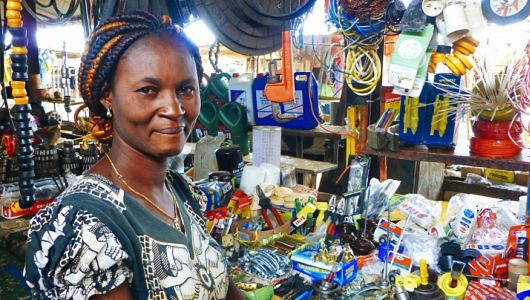
Poverty alleviation through microcredit is the Whole Planet Foundation’s mission. This foundation was created by the Whole Foods Market chain. It provides microcredit to different organizations in areas of Asia, Africa, the Americas and the Middle East. These organizations, in turn, offer loan programs, training and financial services that provide help to self-employed people living under poor conditions.
According to the Whole Planet Foundation’s website, they are currently supporting more than 1,000,000 micro-entrepreneurs in around 60 countries throughout the world.
Partnerships are an important pillar of the foundation because they help support these micro-entrepreneurs. The foundation has microfinance partners, supplier partners, collaborating partners, custom contributions and musicians for microcredit.
The foundation’s microfinance partners are the ones in the field. These foundations are located across the globe in places such as Honduras and China.
The Adelante Foundation in Honduras, Aga Khan Foundation in Ivory Coast, Association Costa Rica Grameen in Costa Rica, Banco do Povo Credito Solidario in Brazil, Banigualdad in Chile, CASHPOR in India, CAURIE in Senegal, Chamroeun Microfinance Limited in Cambodia, Entrepreneurs du Monde in Togo, INMAA in Morocco, KOMIDA in Israel, Pro Mujer in Argentina, Bolivia, Mexico, Nicaragua and Peru and the Women and Family Development Fund in Laos are some of the microfinance partners that the Whole Planet Foundation works with.
On the other side, the foundation’s supplier partners have donated millions in order to advocate for the Whole Planet Foundation’s mission. These partners support the foundation’s mission through different fund programs: the $100,000 Fund, the Supplier Alliance, the Poverty is Unnecessary Fund, the Ten Thousand Dollar Fund and the Microloan a Month Fund.
The partners supporting the $100,000 Fund are Frontier Co-op, Living On One, Papyrus-Recycled Greeting and Whole Foods Market.
The Supplier Alliance, the Poverty is Unnecessary Fund, the Ten Thousand Dollar Fund and the Microloan a Month Fund are supported by different organizations like Alaffia, Allegro Coffee, Amazing Grass, Blue Avocado, Garden of Life, Hain Celestial, Organic India, Suja Juice, Greyston Bakery, Rainbow Light, Chavez for Charity, Teatulia and Gourmet Guru, among others.
The foundation also has a scan-back program in which Whole Foods Market supplier partners can donate a part of their sales to the Whole Planet Foundation. According to the foundation’s website, they have more than 600 suppliers in this program.
The Whole Planet Foundation’s collaborating partners are organizations that help to increase the foundation’s reach, potency and success. A Glimmer of Hope, Aldea Artisans, My Social Canvas, The Rainforest Alliance and Valley Credit Union are some of the collaborating organizations of the foundation.
The custom contributors collect sources that help the Whole Planet Foundation support poverty alleviation. Some of their contributors are Aurora University, Hand in Hand Soap, Pura Vida Bracelets, Barefoot Wine, Crafted Peru and FedEx Office, among others.
Another way for the Whole Planet Foundation to support poverty alleviation is through the use of music. The foundation partners with musicians that are advocating for poverty alleviation and empowering entrepreneurship around the world.
Musicians like Rocky Dawuni, Aziza & the Cure, Patrick Bradley and Tiffany Parker are donating part of their album sales to the foundation.
If the general public wants to get involved and support the Whole Planet Foundation mission, they should know that fundraising is an option. People can create a fundraising campaign page in order to support entrepreneur communities around the world, and spread the word to their family, friends and colleagues.
Partnerships are an important aspect and pillar of the Whole Planet Foundation. These partnerships have helped the organization to support poverty alleviation throughout the world and use entrepreneurship as a crucial way to target poverty.
– Diana Fernanda Leon
Sources: Whole Planet Foundation 1, Whole Planet Foundation 2, Whole Planet Foundation 3, Whole Planet Foundation 4, Whole Planet Foundation 5, Whole Planet Foundation 6, Whole Planet Foundation 7, Whole Planet Foundation 8, Whole Planet Foundation 9
Photo: Whole Planet Foundation

Better Mental Health Services Needed for Developing World
While huge strides in improving global health have been made in the last few decades, access to treatment for mental health services remains an elusive goal in the developing world.
Oft-cited statistics for global health progress include a halving of undernourishment in the last 20 years, a halving of child mortality in the past 50 years and global eradication of smallpox. These victories should be celebrated as an affirmation that public health interventions in the developing world work.
Epidemics and hunger tend to be the focus of aid and development goals. And they should be, as these issues continue to disproportionately impact millions of people in poverty-stricken countries. However, almost 1 in 10 people across the world suffer from some kind of mental health disorder, while only one percent of global health workers are mental health specialists.
The difference in access to mental services between poor and rich countries is striking: according to the World Health Organization’s Mental Health Atlas 2014, rich countries enjoy about 52.3 mental health workers per 100,000 people. In poor countries, there is an average of less than one mental health worker per 100,000 people.
The director of the WHO’s department of mental health and substance abuse, Dr. Shekhar Saxena, has described this lack of mental health workers as “one of the most significant barriers against the provision of care for the majority of people.”
This inequality in access to care applies not only to the availability of mental health workers but to spending. About $58 are spent per person on mental health services in wealthy countries, and only about $1 per person in low-income countries.
Saxena points out that what little services are available may be overburdened by humanitarian crises, which tend to place a great deal of stress on local populations. The extended conflict in Syria, Typhoon Haiyan in the Philippines and instability in Iraq are all examples of crises that may increase the incidence of mental health issues for countries that are already ill-equipped to treat them.
As if these limitations to access weren’t enough, those with mental health disorders may face a stigma that Saxena says has kept mental health from being a high priority in global health policy. Fearing discrimination or judgment, those with disorders may forgo seeking treatment altogether.
Fortunately, global health goals might be shifting focus to include mental health standards. The most prominent example of this is the WHO’s comprehensive mental health action plan 2013-2020, which is designed to apply all the reforms and improvements in other global health metrics to mental health. The plan is supported broadly by 135 states, as well as many other institutions and NGOs, and contains very concrete objectives such as a 20 percent increase in service coverage by 2020.
Furthermore, in contrast to the now-expiring Millennium Development Goals, the Sustainable Development Goals (SDGs) include a specific provision to promote mental health. Hopefully, the WHO action plan, as well as the SDGs that are set to go into effect early next year, will make mental health an important part of the larger global health agenda among international policy-makers.
– Derek Marion
Sources: WHO 1, The Guardian, WHO 2, USAID
Photo: Telegraph
5 Ways to Ensure Effective Health Aid Dispersal
During the second High-Level Forum on Aid Effectiveness in Paris in 2005, the Organization for Economic Cooperation and Development (OECD) countries formulated the Paris Declaration. This declaration was meant to set benchmarks for how to measure the five key categories of effective aid: ownership, alignment, harmonization, results and mutual accountability.
While these five categories are intended to measure the effectiveness of all kinds of aid, they are particularly pertinent to health aid. Developing public health infrastructure in poorer countries is the “gift that keeps on giving,” ideally continuing to serve local populations well after aid has ceased. Thus, a robust public health outcome is an ideal metric to judge the quality of aid using the five categories of the Paris Declaration.
1. Ownership
Ownership, according to the Paris Declaration, involves partner countries exercising “effective leadership over their development policies and strategies.” This category is a measurement of how much aid recipients are involved in developing and executing programs that actually take advantage of the aid they are receiving. Aid strategies have traditionally assumed that once a country reaches middle-income status, it will have sufficient resources and self-interest to invest in public health, but unfortunately, this is not always the case.
For example, Nigeria is technically a middle-income country, but it spends less on public health than Rwanda, which a low-income country. Health aid can really only be considered effective if countries take ownership of health programs that outlive donor support as the country transitions into middle-income status.
Ownership is especially important given a recent estimate by the World Health Organization that predicts that in the next few decades, there will be a global health workforce shortage of up to 12.9 million. Aid programs need to ensure that recipients are developing adequate long-term strategies, especially when it comes to investing in health training and education.
2. Alignment
The dimension of alignment measures how well aid matches up with recipient strategies for dispersal and development. Development experts often criticize “tied” aid. This is aid that is contingent on the recipient procuring health products from the donor country, using their distribution infrastructure, employing foreign personnel or involving some other condition which is often not the most cost-effective or desirable for the recipient. Alignment essentially means “untying” aid to make sure that it aligns closely with the national development strategy of the recipient country.
A topical example of the alignment of health aid in the Global Food Security Act of 2015. This bill, currently introduced to the House and awaiting consideration, encourages local procurement of food aid for U.S. aid programs (among other things). Traditionally, food aid dispersal from the U.S. has been tied, requiring that a certain percentage of that aid be procured from the U.S. and dispersed using the U.S. merchant marine.
However, this bill seeks to do away with those requirements and favors recipient-country producers. This encourages the growth of local agriculture and health aid infrastructure, rather than out-competing them. Additionally, local procurement is faster, and in the event of a humanitarian emergency, recipient populations would not have to wait as long for foreign aid to reach them.
3. Harmonization
Harmonization involves cutting down on the plurality of programs that may have the same goal yet interfere and undermine each other. An aid recipient country may be host to dozens of organizations or programs that target public health outcomes yet do not communicate with each other, thus creating redundancies or inefficiency.
Harmonization is especially critical to public health, more so in emergencies. Currently, there is no standard system whereby donors can track and share how much and to where health aid is going, making it difficult to determine where it is most needed. The recent Ebola epidemic was a particularly disastrous indication of the need for better logistics and donor coordination; it is difficult to tell if health aid has even reached a recipient population, much less if it is redundant, or necessary.
4. Results
Just as it is important to harmonize aid efforts, tracking the progress of health programs has also been an ongoing challenge for donors and recipients. Health aid, despite good intentions, can be totally ineffective when it isn’t results-oriented. Tracking public health outcomes generally involves better data collection and census practices, which can be incredibly difficult to implement in developing countries that lack basic infrastructure.
Very recently, the Girls Count Act passed the U.S. House of Representatives. This act directs the Secretary of State as well as the United States Agency for International Aid and Development (USAID) to work with developing countries to build adequate civil registration systems as well as create economic and social policies that are deliberately inclusive of women and girls. The idea is that better demographic data and inclusive policy can help traditionally marginalized populations (such as women) take advantage of existing social safety nets. Additionally, better demographic data would lead to more effective health aid, as donors often lack access to accurate census information and thus may be unaware of vulnerable populations, or unable to determine the impact of aid.
5. Mutual Accountability
The final category calls for recipients and donors to exercise “mutual accountability and transparency in the use of development resources.” This emphasis on accountability stems from a history of aid inefficiencies due to a lack of transparency, or even outright corruption in recipient countries. For example, millions of dollars in aid money were simply pocketed by corrupt dictator Mobutu Sese Seko of the Republic of Zaire (now the Democratic Republic of Congo) during the ’70s and ’80s.
Conversely, donor countries must be transparent about where aid flows are going in order to provide recipient countries (as well as other donors) with accurate information they can present to their citizens. In general, developing genuine partnerships between donors and recipients is crucial in ensuring that resulting health and development programs are effective and long-lasting.
– Derek Marion
Sources: Reuters, Devex, Partners in Health, OECD
Photo: OECD
Freedom From Hunger Tackles Poverty in Mexico
Recent data by the Mexican government has revealed that close to 50 percent of the Mexican population is currently living in poverty. This poverty crisis represents a major blow to President Pena Nieto’s pledge to alleviate close to 15 million Mexican citizens in poverty throughout his six year electoral term.
As it stands, 46.2 percent of Mexicans live in poverty, with two million Mexican citizens falling below the poverty line from 2012 to 2014. Despite a steady economy in recent years, the Mexican government is struggling to enact any meaningful relief to its population. Contrary to the woes of the administration, global relief organization Freedom from Hunger has emerged as a beacon of hope for millions of displaced Mexicans.
Freedom from Hunger is a nonprofit organization that operates by going into poverty stricken areas and meeting with already existing local groups to provide technological aid as well as training in a variety of crucial survival skills. As per Freedom from Hunger’s website: “We learn from our partners about the unique challenges in their service areas and how, together, we can overcome them. By training partner organizations to deliver the services—and training them to train others—we ensure that the programs become locally owned, spontaneously shared and sustained beyond our original collaboration.” This group provides immediate aid as well as long-term sustainability to developing zones across the globe.
Freedom from Hunger has recently launched an initiative to address poverty in Mexico. The plan is simple: focus the bulk of effort on helping the poor in rural areas of Mexico, as these people are the most in need of aid. Freedom from Hunger plans to bring banking and healthcare infrastructures to the areas of Guanajuato, Chiapas and Hidalgo, where the number of those in poverty is reportedly in the tens of thousands. At the same time, the organization plans on instituting a headquarters in Mexico City to provide year-round training for local Mexican relief agencies.
By launching this initiative, Freedom from Hunger is estimating that “by the end of the first year, Freedom from Hunger and its collaborating partners could be reaching as many as 14,000 people in villages where financial services and health education are desperately needed.” This immediate success could provide a spark for the Mexican government to piggy-back some of Freedom from Hunger’s ideas and create substantial government aid. It is inconceivable that almost half of a country with a population of roughly 123 million people lives in poverty, but it is inspiring that one organization could be the difference in changing this nation forever.
– Diego Catala
Sources: Channel News Asia, Freedom from Hunger
Photo: Global Micro Credits Summit
Phone App Brings Change to African Farmers
Africa has a large amount of untapped potential in the agricultural market. If resources were utilized correctly, it could feed itself as well as parts of other continents.
Today, Africa still relies on food imports from abroad to feed its rising population. The UN has warned that if African farming continues at its current rate, by 2050 the continent will only be fulfilling 13 percent of its food needs.
Farmers continuously fail to take advantage of the land’s natural advantages due to their lack of access to information on finance and marketing.
In Ghana, there is only one agricultural extension officer for 2,000 farmers. These officers provide farmers with training and information but are unable to communicate with each of them enough to help farmers improve due to a lack of time and resources.
Alloysius Attah, a 26-year-old Ghanaian entrepreneur, has invented an innovative solution to farmers’ lack of access to information that will increase yields and profits of local farmers.
In 2013, he founded the company Farmerline, a phone app that provides smallholder farmers with information in the form of voicemails and text messages.
“Farmers receive important updates on market prices, weather forecasts, financing, input dealers, and farming tips. It also links them to agribusinesses and organizations who have previously struggled to access them” explains How We Made it In Africa.
Farmerline has been successful— in only two years, it is helping 200,000 farmers across Ghana, Malawi, Sierra Leone, Cameroon and Nigeria. The company plans to expand across Eastern Africa at the end of 2015.
When Attah initially started his application, he discovered that many of the farmers are illiterate. They could not read text message notifications. “So we moved to voice messages. Now our application sends information to farmers in any language – such as Swahili or any of the local languages in Ghana,” said Attah to African business publication How we Made it in Africa.
The application is engineered specifically for individual farmers. Weather forecasts are reported based on the GPS coordinates of where a farmer’s farm is located. Agronomic this are based around the season of the year as well as the type of crop the farmer is growing.
Attah’s passion for agricultural improvement in Africa began when he was five. He lived with his aunt who was a small-scale, rural farmer in Ghana. He witnessed the problems she and so many others like her faced daily.
In college, Attah stumbled upon an agricultural class. “I actually thought the course was going to be about oil, gas and all that. But I soon realized it was about wildlife, forestry and agriculture. It is like fate somehow placed me in the path of agriculture” he told How We Made It in Africa.
“Coming from a normal rural Ghanaian background of limited resources, to becoming someone who can overcome challenges and use those limited resources to solve problems in society, makes my family and community proud,” said Attah.
The Organization has also received various international awards. Attah won the World Bank and InfoDev mAgri Challenge and World Summit Youth Award and was a 2014 Global Echoing Green Fellow.
– Margaret Anderson
Sources: Farmer Line, How We Made It In Africa
Photo: Techmoran
Poverty in Mexico – 10 Facts You Should Know
Even though much of Latin America has been able to significantly reduce poverty, the country of Mexico still struggles. Below are the leading facts about poverty in Mexico. Education about the problem of poverty in Mexico is crucial and will help us remedy the situation.
Top Facts about Poverty in Mexico
Even though poverty in Mexico is a sizable issue, there are certain steps the country can take to help those in poverty. Mexico can focus on decreasing the wealth gap and ensuring that economic growth benefits the poor. Additionally, Mexico can take steps to prosecute drug cartels. This may be easier said than done, but with these things in mind, Mexico can decrease poverty in the country.
– Ella Cady
Sources: World Bank, Huffington Post, IB Times, Poverties.org
Photo: PV
Whole Foods Foundation: Alleviating Poverty
Poverty alleviation through microcredit is the Whole Planet Foundation’s mission. This foundation was created by the Whole Foods Market chain. It provides microcredit to different organizations in areas of Asia, Africa, the Americas and the Middle East. These organizations, in turn, offer loan programs, training and financial services that provide help to self-employed people living under poor conditions.
According to the Whole Planet Foundation’s website, they are currently supporting more than 1,000,000 micro-entrepreneurs in around 60 countries throughout the world.
Partnerships are an important pillar of the foundation because they help support these micro-entrepreneurs. The foundation has microfinance partners, supplier partners, collaborating partners, custom contributions and musicians for microcredit.
The foundation’s microfinance partners are the ones in the field. These foundations are located across the globe in places such as Honduras and China.
The Adelante Foundation in Honduras, Aga Khan Foundation in Ivory Coast, Association Costa Rica Grameen in Costa Rica, Banco do Povo Credito Solidario in Brazil, Banigualdad in Chile, CASHPOR in India, CAURIE in Senegal, Chamroeun Microfinance Limited in Cambodia, Entrepreneurs du Monde in Togo, INMAA in Morocco, KOMIDA in Israel, Pro Mujer in Argentina, Bolivia, Mexico, Nicaragua and Peru and the Women and Family Development Fund in Laos are some of the microfinance partners that the Whole Planet Foundation works with.
On the other side, the foundation’s supplier partners have donated millions in order to advocate for the Whole Planet Foundation’s mission. These partners support the foundation’s mission through different fund programs: the $100,000 Fund, the Supplier Alliance, the Poverty is Unnecessary Fund, the Ten Thousand Dollar Fund and the Microloan a Month Fund.
The partners supporting the $100,000 Fund are Frontier Co-op, Living On One, Papyrus-Recycled Greeting and Whole Foods Market.
The Supplier Alliance, the Poverty is Unnecessary Fund, the Ten Thousand Dollar Fund and the Microloan a Month Fund are supported by different organizations like Alaffia, Allegro Coffee, Amazing Grass, Blue Avocado, Garden of Life, Hain Celestial, Organic India, Suja Juice, Greyston Bakery, Rainbow Light, Chavez for Charity, Teatulia and Gourmet Guru, among others.
The foundation also has a scan-back program in which Whole Foods Market supplier partners can donate a part of their sales to the Whole Planet Foundation. According to the foundation’s website, they have more than 600 suppliers in this program.
The Whole Planet Foundation’s collaborating partners are organizations that help to increase the foundation’s reach, potency and success. A Glimmer of Hope, Aldea Artisans, My Social Canvas, The Rainforest Alliance and Valley Credit Union are some of the collaborating organizations of the foundation.
The custom contributors collect sources that help the Whole Planet Foundation support poverty alleviation. Some of their contributors are Aurora University, Hand in Hand Soap, Pura Vida Bracelets, Barefoot Wine, Crafted Peru and FedEx Office, among others.
Another way for the Whole Planet Foundation to support poverty alleviation is through the use of music. The foundation partners with musicians that are advocating for poverty alleviation and empowering entrepreneurship around the world.
Musicians like Rocky Dawuni, Aziza & the Cure, Patrick Bradley and Tiffany Parker are donating part of their album sales to the foundation.
If the general public wants to get involved and support the Whole Planet Foundation mission, they should know that fundraising is an option. People can create a fundraising campaign page in order to support entrepreneur communities around the world, and spread the word to their family, friends and colleagues.
Partnerships are an important aspect and pillar of the Whole Planet Foundation. These partnerships have helped the organization to support poverty alleviation throughout the world and use entrepreneurship as a crucial way to target poverty.
– Diana Fernanda Leon
Sources: Whole Planet Foundation 1, Whole Planet Foundation 2, Whole Planet Foundation 3, Whole Planet Foundation 4, Whole Planet Foundation 5, Whole Planet Foundation 6, Whole Planet Foundation 7, Whole Planet Foundation 8, Whole Planet Foundation 9
Photo: Whole Planet Foundation
Safe Water is Life in Bangladesh
A World Health Organization case study of the quality of water in Bangladesh has revealed dangerously contaminated water. The daily use of this water puts many lives at risk.
The mayor of one region in Bangladesh, Nasir Uddin Ahammed, states that the community had believed that “water is life,” when the reality is actually that safe water is life.
In Bangladesh, diarrheal disease kills 62 in 1000 children under the age of five. The government has a current target to bring this number down to 46 by 2016.
However, when customs are deeply entrenched in traditional communities, it is difficult for change to occur quickly. In addition to diarrheal disease, other risks include dysentery and cholera.
Water sanitation programs have begun to work toward improving the safety of the water. Simple solutions, such as building platforms for tube wells and covers for water pumps and using clean containers for water collection, reduce the contamination risk of water.
Awareness campaigns can effectively help the citizens of Bangladesh address unhygienic practices. The WHO understands that it is unrealistic to expect programs to repair the 10 million tube wells in the country. However, targeted awareness campaigns can provide community members with the knowledge they need to make local changes.
Clean water is important for direct health reasons, and it is fundamental to the progress of communities. When children are sick from contaminated water, they cannot attend school. Furthermore, when community members are ill, the production and development in the region decreases.
With the mounting pressure on water systems due to migration from rural areas, clean and safe water is more important than ever. In communities, water can be purified with boiling. However, some families do not participate in this practice or may not be able to afford the fuel to boil water.
Current water sanitation programs are starting to see fewer diarrhea outbreaks with increased hygiene awareness. Moving latrines further away from tube wells has proven essential. In addition, with increased awareness, more community members are willing to pay for technologies and practices that will keep their drinking water clean.
– Iliana Lang
Sources: WHO 1, WHO 2, UNICEF
Photo: Fast Company
India’s Poverty Reduction Potential
With a population of over 1.2 billion, India is in a similar position as China was years ago. China lifted hundreds of millions out of poverty by itself due to its unprecedented economic growth. India may not have incredible growth, but with a large population and a growing role in international markets, there is huge potential to reduce poverty enormously.
A UN report compared the differences in growth between both China and India, both being high-growth, high-population states. The report outlines China and India’s differing political systems and openness to foreign markets as strong factors that contributed to both increased growth and a high reduction in poverty. India’s lack of poverty reduction is in part due to the country not being able to fully leverage tools that could have led to greater economic growth similar to China’s. Lack of infrastructure spending and not being an “attractive destination for financial capital until 2004” has also constrained India’s economic potential. Coupled with the 2008 economic crisis, these factors all hurt India’s poverty reduction at the time.
Now, India has a chance to make up for lost time. As one of the countries with the most people in poverty in the world, public policy in India has a substantial impact on the future of the globally impoverished. In 2011, the percentage of India’s population under the national poverty line was over 20 percent. What is needed for India to meet its own domestic challenge of reducing poverty and simultaneously have an influence on the global statistics of poverty?
Today, millions of people in India do not have access to toilets. Sewage systems in many cities are outdated, broken, unhygienic or simply nonexistent. These facts are signifiers of the investments that India needs to make in order to help alleviate suffering of the lives of many poor citizens. Infrastructure of all types must be heavily sought after by government officials. This would allow for rural towns to have greater access to goods and services and provide better services to the nation, such as sewage and improved public health.
Education is still below ideal in India as well. It is well documented that education for both sexes is vital to creating a base of knowledge with which workers are likely to have more social mobility and job opportunities. The literacy rate in India is about 65 percent. Improving basic literacy translates to creating a section of future workers who can occupy jobs that grow rapidly in developing nations, thus preparing a workforce for tomorrow.
With hundreds of millions still in poverty, India could be the next bastion of poverty reduction if the right steps are taken. Nothing revolutionary is needed to change the course of millions of Indian livelihoods, but adhering to the tried and proven concepts would go a long way. Now that India has overcome its past stumbles and has emerged onto the world scene, it has a chance to take a look around and see where the paths diverge. Choosing a path that invests heavily in basic needs for the poor, such as education, public health and infrastructure, would go a long way in ensuring a strong economic future for a country that has yet to fully extend its wings.
– Martin Yim
Sources: The World Bank 1, United Nations, The World Bank 2, BBC
Photo: Flickr
Action/2015 Progress by Month
For Action/2015, “This is our year.” The coalition of more than 1,950 organizations worldwide is carving a brighter future in order to make 2015 the year of action and change. The agenda includes tackling climate change, poverty, and inequality, and so far, Action/2015 made substantial progress through key campaigning and advocacy events.
January
Action/2015 launch:
On January 15, 2015, Action/2015 launched campaigns all over the world from Mali, Mexico, Senegal, Sri Lanka, Uganda, and the UK to name a few. Twitter helped spread #Action2015 to millions of people.
March
International Women’s Day:
On March 8, 2015, the coalition held street marches and rallies around the work in support of women’s rights. They could be spotted from the UK, Nicaragua, Spain, Ecuador, New York City, Bangladesh, Spain, and South Africa.
April
Global Citizen 2015 Earth Day:
The coalition mobilized its campaign via Twitter, Instagram, and Facebook, in order to address the annual spring meeting of the World Bank held in Washington D.C. #Hero, addressed the world’s Finance Ministers to fund poverty reduction projects such as the Sustainable Development Goals and Climate Goals.
May
Throughout the month, Action/2015 campaigned to pressure world leaders attending the Post-2015 Sustainable Development Goal Summit in September and the COP21 climate negotiations in December. More than 22 million advocates in 150 countries held events to call for change. In Kenya, the President responsively agreed to a 12 percent pay increase for workers.
May’s Days of Actions guided support through various themes of change. May 1 was Yes to Labour Rights, No to Social Exclusion Day, and May 13 was Poverty is Sexist Day. Among more, these days calling for global action complemented other events like Citizen Heartings, community sports days, caravans, and concerts.
June
The G7 Summit was held on June 7-8 in Germany. The coalition played its part by taking to Twitter to stand #AgainstPoverty. Many participants were also a part of a free concert, United Against Poverty, also calling to the G7 leaders for greater attention to end poverty.
July
The Financing for Development was held on July 13-16 in Addis Ababa, Ethiopia. Just before the conference, 4.8 million coalition events in 150 countries rallied to demand that world leaders “meet outstanding sending commitments, fight structural injustices of unfair tax, and many other issues.”
August
International Youth Day unleashed #YouthPower. Sri Lanka, South Africa, Brazil, and Benin hosted marches, workshops, political meetings, flash mobs in honor of the movement. The coalition offered guidance through the options to download from their website, International Youth Day toolkits, YouthPower Workshop plans, and contact the team for direct consultation.
September
The United Nations General Assembly will take place on September 15-28. The world’s most influential leaders will meet to conclude the Millennium Development Goals and create a new set of Sustainable Development Goals. The coalition is scheduling September 24 as a Global Day of Action for global mobilization.
November-December
From November 20 to December 11, Paris will host the UN Climate Change Conference. Action/2015 advocates will join around the globe to pressure their world leaders for stronger leadership and progress in poverty reduction.
– Lin Sabones
Sources: Action/2015 1, Action/2015 2, Action/2015 3, Action/2015 4, Action/2015 5, Action/2015 6, Action/2015 7, Action/2015 8, Action/2015 9, World Bank
Photo: Restless Development
Counting the Uncountable – Displaced Individuals
One of the biggest issues humanitarian agencies face today involves counting the number of displaced individuals in stateless populations globally. Stateless people, or those who are not recognized as nationals of any country, are often denied human rights and services, are forced to live out of the way of modern society and are undocumented and unseen by political officials. They often have limited access to employment opportunities, healthcare, education and protection. Clearly, these groups of people are in critical need of aid, but because many organizations have no idea of the sheer number of those in need, they have limited access to it.
There are many causes of statelessness. Lack of birth registration, changing national boundaries or discriminatory policies are some sources. For example, Myanmar refuses to recognize its more than 1.3 million Rohingya people, who face violent backlash, homelessness and disease. In Zimbabwe, people born to foreign parents became stateless as a result of the country’s 2001 Citizenship Act. The UN estimates there are 700,000 undocumented people in the Ivory Coast alone. Further, many stateless people are hesitant to identify themselves as such because it leads to further exclusion: they fear the stigma, and further danger, it will attract.
Last year, the UN launched a campaign aiming to end the invisibility of stateless people by 2024. It has developed a plan working to improve qualitative and quantitative measures in countries all around the world to improve the recognition of these people and increase their access to necessary aid. Presently, the UN has only counted 3.5 million such people from 77 countries, but it estimates that there are at least 10 million stateless people on Earth.
There are significant challenges facing these “counters,” however. For one, organizations such as the UN can not rely on national governments to help them number their stateless populations. Because many countries refuse to recognize these populations due to their own policies or border changes, getting proper numbers would require going door to door surveying individual households. The UN plans on focusing on countries that have recently experienced changes in boundary lines, such as South Sudan or former USSR countries. There are also many people who are not explicitly stateless — they claim nationality in a certain country — but who cannot return to that country due to conflict, and thus cannot seek refuge from other countries or aid organizations because stateless aid does not apply to them. There is much to be done beyond simply recognizing the problem that is undocumented populations.
However, efforts to put a number on undocumented people around the world will encourage aid organizations to provide these people with the help they so desperately need. Organizations will be able to design better policies and programs to help a broader number of stateless people. Though counting uncountable people comes with numerous challenges, it is an effort that will bring about numerous changes and rewards.
– Jenny Wheeler
Sources: IRIN News, UNHCR
Photo: Flickr