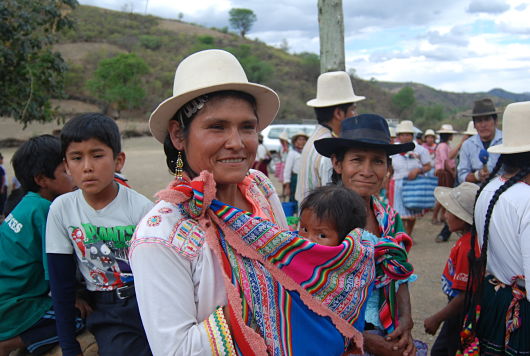
Six out of every 10 people in rural Bolivia live below the poverty line. In 2011, the World Bank Group launched its Community Investment in Rural Areas (PICAR) initiative in Bolivia, seeking to broaden impoverished rural access “to basic and productive infrastructure.”
Thus far, the project has maintained an effective track record, financing 612 sub-projects as of April 2015, including water and sanitation, irrigation, infrastructure and livestock protection initiatives. These sub-projects have a 75 percent completion rate, impacting 132,219 rural Bolivian inhabitants. The World Bank estimates that the project will surpass all target numbers, impacting more than 35,000 rural households in the country’s poorest communities.
After a successful start, the World Bank Group has extended an additional $60 million credit on top of the original $40 million loan for PICAR’s implementation. The funding increase is anticipated to facilitate the implementation of poverty reduction and rural development initiatives in 750 new communities, also providing 120 communities with a second round of grants.
By increasing funding, the World Bank Group expects PICAR to positively impact an additional 200,000 rural, primarily indigenous Bolivians, bringing PICAR’s number of beneficiaries to an estimated 350,000.
Along with indigenous groups, rural women are most strongly affected by poverty. Impoverished people face greater levels of food insecurity, limited access to basic services and depressed economic opportunities.
PICAR has been designed to take into account the importance of providing economic opportunities and necessary services to rural women, with 40 percent of sub-projects prioritized and implemented under female directive. The World Bank also reports that at the community level, PICAR has helped to develop 660 female leaders.
“We expect that at least 45 percent of PICAR beneficiaries will be women,” World Bank Resident Representative in Bolivia Nicola Pontara said, “with at least 20 percent being female heads of household, the most vulnerable group among the poor.”
Handing over the reins of agency to those most impacted by poverty is a common theme. PICAR functions by providing communities with financial resources to meet the issues the community members identify with solutions they define based on small projects, completed with local labor and materials.
Through direct transfers of resources to the communities in which the funds will be invested, PICAR seeks to give Bolivia’s most impoverished regions the capital and support to not only participate in, but actually manage their own advancement.
Alberto Rodriguez, World Bank Country Director for Bolivia, Chile, Ecuador, Peru and Venezuela, spoke on this aspect of empowerment: “[Bolivia’s most vulnerable communities] are able to search for collective solutions to their basic and productive needs, lead projects and manage their own resources, enabling them to control their own development.”
Although Bolivia still faces significant challenges — 30 percent of the population lives in poverty — the country has taken strides toward economic growth. With assistance and initiatives like PICAR, substantial poverty reduction promises to continue.
– Emma-Claire LaSaine
Sources: World Bank, UNICEF
Photo: World Bank

Korea and UNICEF Support Maternal Health in Uganda
The United Nations Children’s Fund (UNICEF) recently announced its partnership with the Korean International Cooperation Agency (KOICA) to support a public health program in Uganda targeting child and maternal health. The much-needed project calls attention to the poor state of public health in Uganda for women and children, as well as the viability of South Korea as an international health aid donor.
Uganda’s UNICEF representative Aida Girma notes that while Uganda’s healthcare system is sound, a chronic lack of resources contributes to spotty coverage, especially in the rural Karamoja and Acholi regions in the north of the country. She hopes that this new program “will solve some of those challenges and that the number of women dying while giving birth and children who die before they are five will reduce especially in [the] Karamoja region.”
In a country where almost 90 percent of the population lives in the countryside, health services tend to be spread thinly. In 2010, public spending accounted for only 15 percent of total health spending, while spending from international aid was almost twice that. Thus, the burden of paying for health care tends to fall squarely on the shoulders of Ugandan citizens who must suffer through high out-of-pocket expenses if they want to enjoy adequate coverage. A 2014 World Health Organization report on the country said that to achieve good coverage, “efficiency in resource allocation and utilization, especially of donor funds needs to be improved.”
The partnership is worth about $8.5 million dollars and is expected to reach about 200,000 women and infants. Janet Museveni, Ugandan Minister of Karamoja Affairs, notes that there are geographic disparities in maternal and neonatal health, and the partnership should help smooth those out. Uganda’s national rate of maternal mortality estimates to be about .44 percent, while Karamoja and Acholi have mortality rates of .75 percent and .56 percent, respectively. Malnutrition is also a significant contributor to under-five child mortality in those regions.
This particular public health project is a small indication of Korea’s transformation from aid recipient to aid donor. From 1945 until the mid-90s, Korea received almost $13 billion in aid, mostly from the U.S. Over several decades, the country went from receiving international aid grants, to loans, to project-based loans, finally graduating from World Bank lending list in 1995.
Today, Korea is an economic powerhouse and is coming into its own as an international aid contributor. In 2010 it became the only former international aid recipient to join the OECD Development Assistance Committee, an elite group of nations that contribute the most foreign aid.
In 2014, then Prime Minister Jung Hong-won pledged two billion dollars in official development assistance, which was an 11 percent increase from the previous year. By the end of 2015, the country hopes to set aside .25 percent of its budget for foreign aid. In comparison, the U.S. typically donates about .2 percent of its budget.
This partnership with UNICEF also displays Korea’s willingness to use innovative financing to achieve their aid goals. In 2007, the Korean government started levying a fee of $1 for outbound flights from the country. The revenue from this levy was set aside for Korea’s “Innovative Maternal and Child Health Initiative Fund.” Portions of this fund went to supporting health projects in Uganda such as the UNICEF partnership, which will be implemented through the Ugandan government as well as non-governmental organizations.
In the long run, Uganda will ideally be able to take a country-led approach to developing its health care sector. Donor funds probably don’t represent the best long-term solution to a lack of medical resources and Uganda will have to increase its spending on medical training and infrastructure in order to reach its most remote citizens. However, partnerships between international donors like Korea and UNICEF can help stimulate an expansion of health care coverage while strengthening Uganda’s governance over public health issues.
– Derek Marion
Sources: East African Business Week, USAID, Economic Development Cooperation Fund, Devex, WHO
Photo: Flickr
Why Malnourished People Have Bloated Stomachs
In the United States, we have generally come to associate a bloated stomach with obesity. Counter-intuitively, the same notion applies to undernourished or malnourished people. Many forms of malnourishment – the most widely known of which is Kwashiorkor – are characterized by bloated, distinctively rounded stomachs.
Kwashiorkor: The Bloated Bellies of Malnourished People
Although many forms of undernutrition, as well as malnutrition, can manifest in a characteristic big abdomen, Kwashiorkor is the most commonly known form of malnutrition with this symptom.
To understand the reasoning for this, it is important to know that in malnourishment, the rounded abdomen is not due to fat accumulation. Instead, the water retention and fluid buildup in the body cause the abdomen to expand. This results in a bloated, distended stomach or abdominal area.
The physiological reasoning behind this is the specific lack of certain nutrients, which determine which kind of nutritional deficiency it is. In Kwashiorkor, for instance, the caloric intake of the children affected is fine in that is it is not lacking in the energy needed by the body for metabolic processes. However, the diet is severely lacking in certain nutrients, particularly proteins.
Proteins in the body are responsible for the balance of osmotic pressure in the body, besides their structural roles. Proteins are generally macromolecules, which means that they are sizably large and not easy to transport through cells permeable membranes. The proteins can pass through the membranes only through special mechanistic procedures in the membranes and are otherwise found in the blood serum or lymph.
The presence of proteins in the lymphatic system of the body leads to a higher osmotic pressure in the lymphatic fluid, as compared to the water in the gut. This hypertonicity causes fluid to flow from the gut into the lymph fluid and eventually into the blood stream.
The regulation of water maintains a healthy distribution of water throughout the body. If this regulation is compromised due to protein deficiency, the buildup of fluid leads to distention of abdomen as well as fluid retention or edema.
Another function of the proteins is to act in reverse of the hydrostatic pressure to maintain osmotic pressure in the tissues. The presence of proteins in the bloodstream of capillaries keeps water inundation of tissues in check. Proteins being larger molecules do not seep out of capillary walls like water does. Therefore, the presence of these proteins inside the capillaries creates colloid osmotic pressure.
This regulates the uptake of water back into the bloodstream, so the tissues are not over saturated with water. With a lack of proteins due to malnutrition, this mechanism of regulation is stunted and water builds up in tissues as well.
The buildup becomes more pronounced in the more severe cases, with fluid retention becoming apparent in other parts of the body besides the abdomen as well, such as facial areas.
The cure for edema developed due to malnutrition is to replenish the body with lacking nutrients. It is common practice to deliver simple carbohydrates and fats before administering proteins to achieve a normal blood pressure. The symptoms of malnourishment including distended abdomen may take a few days to alleviate. However, the impact on future growth and physical strength of children affected by this is permanent in nature.
– Atifah Safi
Sources: NIH, AJR
Photo: Indiana Public Media
How One 18-Year-Old Funds Education for Girls
Girl code: A universal language spoken by the women of the world. Right down to its core, however, it means that girls are “in this together.”
Mary Grace Henry has been up-to-date with the girl code’s core since before she was a teenager. At the young age of 12, with the sewing machine she requested for her birthday, Henry began creating reversible headbands for purchase and used the profits to help fund girls’ education in Uganda and Kenya.
Henry named her business Reverse the Course, with the hope that her reversible headbands would “reverse the course” of girls living in poverty. Now 18 and a soon-to-be freshman at the University of Notre Dame, Henry’s organization has sold over 16,000 hair accessories to support primary and secondary education for girls living in extreme poverty in sub-Saharan Africa.
The organization has reversed the course of many lives, saving girls from malnutrition, early marriage and female genital mutilation.
Since its founding six years ago, Reverse the Course has supported 66 girls and provided funds for 154 years of education fees, including tuition, textbooks and boarding costs. Henry’s most immediate goal is to reach 100 girls. Next, she’d like to develop an entrepreneurial program for the girls her organization funds to provide them with skills beyond education.
Henry firmly believes in universal quality education and 100 percent of her business profits fund education for impoverished girls. Her hair accessories are affordably trendy and of a worthy cause. Her efforts have reached four countries and 21 schools, and every student who boards is fed three meals a day.
Secondary education prevents early marriages and pregnancies and provides girls with the skills to build a sustainable life. According to UNICEF, child marriage rates in sub-Saharan Africa and South and West Asia would decrease by 64 percent with secondary education. Education has the power to change and build lives.
Girls are in this together, and Henry is definitely a veteran to this notion. She provides girls with quality education to lift them out of poverty, giving them the tools they need to build a sustainable life. Who knew that in addition to transforming a hairstyle, a headband could also transform a life?
– Sarah Sheppard
Sources: Take Part, Reverse the Course
Photo: Take Part
Investment Project to Benefit 350,000 in Rural Bolivia
Six out of every 10 people in rural Bolivia live below the poverty line. In 2011, the World Bank Group launched its Community Investment in Rural Areas (PICAR) initiative in Bolivia, seeking to broaden impoverished rural access “to basic and productive infrastructure.”
Thus far, the project has maintained an effective track record, financing 612 sub-projects as of April 2015, including water and sanitation, irrigation, infrastructure and livestock protection initiatives. These sub-projects have a 75 percent completion rate, impacting 132,219 rural Bolivian inhabitants. The World Bank estimates that the project will surpass all target numbers, impacting more than 35,000 rural households in the country’s poorest communities.
After a successful start, the World Bank Group has extended an additional $60 million credit on top of the original $40 million loan for PICAR’s implementation. The funding increase is anticipated to facilitate the implementation of poverty reduction and rural development initiatives in 750 new communities, also providing 120 communities with a second round of grants.
By increasing funding, the World Bank Group expects PICAR to positively impact an additional 200,000 rural, primarily indigenous Bolivians, bringing PICAR’s number of beneficiaries to an estimated 350,000.
Along with indigenous groups, rural women are most strongly affected by poverty. Impoverished people face greater levels of food insecurity, limited access to basic services and depressed economic opportunities.
PICAR has been designed to take into account the importance of providing economic opportunities and necessary services to rural women, with 40 percent of sub-projects prioritized and implemented under female directive. The World Bank also reports that at the community level, PICAR has helped to develop 660 female leaders.
“We expect that at least 45 percent of PICAR beneficiaries will be women,” World Bank Resident Representative in Bolivia Nicola Pontara said, “with at least 20 percent being female heads of household, the most vulnerable group among the poor.”
Handing over the reins of agency to those most impacted by poverty is a common theme. PICAR functions by providing communities with financial resources to meet the issues the community members identify with solutions they define based on small projects, completed with local labor and materials.
Through direct transfers of resources to the communities in which the funds will be invested, PICAR seeks to give Bolivia’s most impoverished regions the capital and support to not only participate in, but actually manage their own advancement.
Alberto Rodriguez, World Bank Country Director for Bolivia, Chile, Ecuador, Peru and Venezuela, spoke on this aspect of empowerment: “[Bolivia’s most vulnerable communities] are able to search for collective solutions to their basic and productive needs, lead projects and manage their own resources, enabling them to control their own development.”
Although Bolivia still faces significant challenges — 30 percent of the population lives in poverty — the country has taken strides toward economic growth. With assistance and initiatives like PICAR, substantial poverty reduction promises to continue.
– Emma-Claire LaSaine
Sources: World Bank, UNICEF
Photo: World Bank
Froggy Sink: Better Hygiene and Sanitation Saves Lives
Parents know that it can be difficult to get their child to wash their hands or brush their teeth. Sometimes, to get kids to do what is best for them, you have to make it fun.
A new toy can help prevent children from getting sick with diseases or diarrhea. It is a bright green and white plastic box that has frogs and a colorful logo on it.
LaBobo is the newest toy sink produced by nonprofit WaterSHED. It has been launched in Cambodia, where access to basic hygiene and sanitation needs ranks last in Southeast Asia and 110th in the world, contributing to the deaths of 10,000 children per year.
The World Health Organization (WHO) reports that nearly 800,000 children die every year from lack of sanitation, which leads to diseases.
LaBobo sells the frog toy sink at $15, making it a very affordable product, and the sink dispenses 15 liters of water. Instead of giving out buckets and soap, WaterSHED takes an innovative approach to helping solve sanitation problems in developing countries.
“If you give people a bucket and a piece of soap, more often than not you will find the bucket ends up being used for something else,” says Geoff Revell, WaterSHED’s regional program manager.
In one year, WaterSHED has sold 10,000 units in Cambodia. Regular hand-washing and sanitation is a significant challenge in Cambodia, where only 44 percent of Cambodians are able to wash their hands with soap and 60 percent of the rural population defecate in the open.
WaterSHED is working on marketing tools to bring LaBobo to Vietnam, which also has low sanitation standards.
Forty percent of the global population lacks basic sanitation. LaBobo does not help decrease the number of people who do not have access to sanitation, but it does increase the number of children who will wash their hands.
In places like Niger, where only 18.3 percent of the population has access to improved sanitation facilities, there needs to be stronger commitments from the international community to ensure that residents can access proper sanitation.
Diseases are a cross-national threat. But by investing in sanitation facilities and innovative ways to improve children’s sanitation, the large number of deadly diseases these children could become afflicted with can be reduced.
– Donald Gering
Sources: Good News Network, Reuters, Social Progress Imperative, WaterSHED, WHO
Photo: Good News Network
World Food Program Shifts to Recovery Efforts in Nepal
The United Nations World Food Program announced on Wednesday a shift from emergency response efforts to long-term recovery efforts in Nepal.
The announcement signaled an end to nearly two months of emergency response efforts conducted by both Nepal’s government and multiple allies from across the globe after a large portion of the country was devastated by a 7.8 magnitude earthquake on April 25.
Serving as the largest humanitarian aid agency in the world, the WFP works to assist nearly 100 million people in 75 countries each year and participates in fighting extreme poverty, providing emergency assistance and improving infrastructure and health systems within developing communities.
Richard Ragan, Emergency Coordinator for the WFP’s response in Nepal, stated in an interview this week, “We have started the difficult transition from the emergency period to the early recovery phase – providing cash, employment and rebuilding opportunities for people heavily impacted by the disaster.” Ragan noted that the WFP has successfully provided meals to nearly 2 million displaced citizens since the disaster.
The WFP has implemented a highly effective cash-for-work program in severely affected areas, which pays citizens to build transitional housing and repair agricultural centers and, in turn, revitalizes local markets and economies. The United Nations estimates that 20,000 porters who became displaced and unemployed by the earthquake are now receiving income to repair essential road and trail networks damaged by the disaster, as well as provide vital supplies to isolated communities.
Despite the positive figures offered by this UN program, the WFP warned this week that the operations currently being conducted within Nepal are only 38 percent funded and that they require an additional $74 million in order to continue providing operational assistance until 2016.
In response to questions about the lack of funding, Ragan stated, “To maintain and expand an operation of this scope and logistical complexity, sustained financial support is required.”
– James Thornton
Sources: United Nations, World Food Programme
Photo: Flickr
Forbes Calculates America’s Most Generous Companies
A new survey released by The Chronicle of Philanthropy ranks 12 companies in order of who gave away the highest percentage of profits in 2013. Seventy U.S. companies participated in the survey. The top 12 most generous companies are listed below along with descriptions of their core values and donations.
12 Most Generous American Companies
– Kelsey Parrotte
Sources: Alcoa, Bank of America, DOW, Exelon, Forbes 1, Forbes 2, Goldman Sachs, Kroger, MetLife, Nationwide, Safeway, State Farm,, Target, UPS
Photo: Flickr
LED and Solar Technology Reduces Poverty
People living in poverty in developing countries without traditional power sources spend 100 to 1,000 times more per unit of light than the rest of the world using a variety of fuels such as kerosene and diesel. In return, the fuel-powered light sources put off more greenhouse-gas emissions than 30 million American cars.
Solar-LED lights carry low wattages and are downsized so that the product is affordable and easy to use. With more than 100 solar-LED options, at a cost between $10 and $75, people living in poverty can reduce their energy spending in one year by purchasing these products.
SolarAid, an international nonprofit, provides solar lights to rural areas around the world to help eradicate the growing costs of using kerosene lamps. There are 598 million people in Africa who do not have access to electricity. SolarAid has provided one million solar lights for those people.
In Africa, seven million households have purchased or obtained a solar-LED light since they went on the market with over 40 companies selling the products.
Coal is often a suggested answer to problems dealing with electricity in the developing world, but the World Bank suggests that coal is not a cure for global poverty. Coal prices burden the poorest countries in the world. Also, the health impacts of coal and climate change impose consequences on people living in developing countries.
The impact of solar-LED lights on families is substantial. The lights create clean and safe lighting, which reduces the risk of fires that fuel-powered lighting has.
On average, $70 is saved every year from reducing the amount of money spent on kerosene or candles. To most households, $70 is about 10 percent of their yearly income.
Families are noticing the health benefits of switching from fuel to solar-LED lights. About half of the families that switched to solar noticed their health is improving due to the reduced indoor pollution. Coughing, chest pains and eye irritations were more frequent and common before eliminating their fuel-powered lighting.
Annually, $230 million are being saved by families, 6 million people notice their health increasing, 890,000 tons of CO2 has been averted, and children have 2 billion extra hours to study and read.
Lighting is one of the most basic human rights and solar technology is one way to reduce poverty due to lighting. In return, the investment for Solar-LED lights increases health and children’s chances to learn and study.
– Donald Gering
Sources: Energy Matters, The Guardian 1, The Guardian 2, SolarAid
Photo: The Guardian
Policies Leave Child Immigrants Helpless and Endangered
U.S. legislation meant to help children escape violence and corruption in Central America is only hampering their efforts to find safety. As gang warfare escalates, the number of children trying to cross the southern U.S. border through Mexico has hit an all-time high, but none of these child immigrants have been granted access.
The U.S.’s most recent program for Central America minors (CAM) has been created to help child immigrants in the violent “Northern Triangle” countries of Guatemala, Honduras, and El Salvador whose parents are legally residing in the U.S. Its goal is to help aid in the perilous passage through Mexico to the U.S. border.
However, Mexico has not been one to cooperate, deporting 10,000 child immigrants from October 2014 to March 2015. Mexico’s policies for processing and granting asylum to children are also slow and insufficient for the influx of kids seeking shelter in the U.S. As a result, half the number of Central American children reached the U.S. in 2015 as did in 2014. In 2014 alone, 68,000 children were apprehended at the U.S. border with Mexico. Although over 2,000 kids have applied for the CAM program, not a single one has been granted access to the States. There are a number of reasons for this lack of implementation.
For one, extensive paperwork is required for each child, including DNA testing of both parents, birth certificates, medical and security checks, and proof of legal immigration to America on behalf of the parents. The refugee organizations running the CAM program refuse to set up interviews with parents to help them reunite with their child immigrants and many parents are afraid to attract media attention to the issue for fear there will be retaliation against their kids.
As kids are forced to stay in their violent homelands, the fighting has only grown worse. In El Salvador, more people were killed in May (an average of 20 a day) than in any month since 1992. Honduras has one of the highest murder rates in the world, and Guatemala is experiencing violence from two gangs with links to international organized crime organizations. Children are often the subjects of violence because they are witnesses to murders or other crimes. They are recruited to gangs as young as 8, but shelters do not accept victims of domestic abuse under the age of 12. Children under threat of such violence don’t have time for excessive paperwork or waiting times.
Critics say one flaw of the CAM program is that it is a reunification, not protection program. Therefore, families who are being targeted by gangs can not seek help. Congressional relief packages, including a US$1 billion aid package proposed by Obama to improve economic status, infrastructure, and security in the “Northern Triangle” countries, is likely to pass anytime soon. In the meantime, people in these countries-particularly children- will be waiting, in fear of violence and hope of freedom.
– Jenny Wheeler
Sources: State, Irin News
Photo: Wilson Center
Coconut Water: Re-Hydrating Life in Asia
For centuries, natives of Southeast Asia have been drinking coconut water, paying a mere 30 rupees — the equivalent of 50 cents in the United States — for a fresh coconut filled to the top with juice. Asian families have been cooking with coconuts for centuries and have perfected dishes, oils and powders, making it a staple in any Southeast Asian household. However, over the past five years, coconut products have entered the homes of people in the Western world as well.
It is no secret that coconut water and all coconut products in general have several added health benefits. With the increasing fight against sugary drinks and fattening foods, it appears as though coconut products are here to stay.
Farmers throughout Asia and South America have been attempting to support the high demands of the ever-increasing market. Much of the issue they faced in the beginning was a lack of technology. For many years, farmers simply threw away the water from the center of the coconut and used the pulp to make coconut milk. There was never a specific kind of technology to extract the water from a coconut without letting the water become rancid and without causing issues with the pulp of the coconut. Now, with the help of major companies like Pepsi Co and Coca-Cola, many farmers now have the technology to utilize all parts of the coconut, including the water. Although most of the farms are owned by small families, major companies are still able to use the coconut water as long as enough of the profit is given to the farmer.
Another issue many farmers face is the long growing period for coconut trees. The average time it takes for a coconut tree to begin producing fruit is five years, and with the popularity of the products, it has become very difficult for farmers to produce enough coconuts to keep up with the growing demand. Over the past few years, the demand for coconut products has risen over 400 percent in the Philippines alone. Luckily, with the help of corporations who are heavily invested in the production of coconuts, farmers are being given new seeds which are thought to allow the trees to grow faster. While this is still in the testing phase, it may prove to be very beneficial for poor farmers who are not making enough money to support their families with current crop yields.
Current market expectations imply that coconut water is sure to continue to be a grand success. Coconut farmers have been attempting to expand their fields, thus preventing large corporations from getting overly involved and misusing land. This spike in the industry will provide a steady income to poor families, which in turn will raise their standard of living. Such development may allow children to get better educations as technology increases and may eventually raise an entire farming population from an impoverished lifestyle to a better one. Thanks to people’s ever-increasing quest for healthy options, yesterday’s trash has become today’s treasure.
– Sumita Tellakat
Sources: Blogs, Quartz
Photo: Flickr