
Maternal deaths have been cut nearly in half since 1990 according to a new report by the United Nations and World Bank. Thanks to increased access to reproductive and family planning health services, mortality rates have shrunk to 216 per 100,000 live births in 2015 from 385 in 1990.
East Asia made especially notable progress, reducing its mortality rate from 90 to 27. Nine countries: Bhutan, Cambodia, Cape Verde, East Timor, Iran, Laos, The Maldives, Mongolia and Rwanda have cut rates by up to 75-90 percent.
While optimistic, experts warn that progress has been inequitable among developing countries and has fallen well short of the Sustainable Development Goal to achieve a worldwide reduction of maternal deaths of 75 percent.
“Many countries will make little progress, or even fall behind, over the next 15 years if we don’t make a big push now,” said Executive Director for the United Nations Population Fund (UNPF), Dr. Babatunde Osotimehin.
Nearly all maternal deaths occur in developing countries, 70 percent in sub-Saharan Africa alone, and most cases occur in rural and remote communities where women face inadequate access to medical care.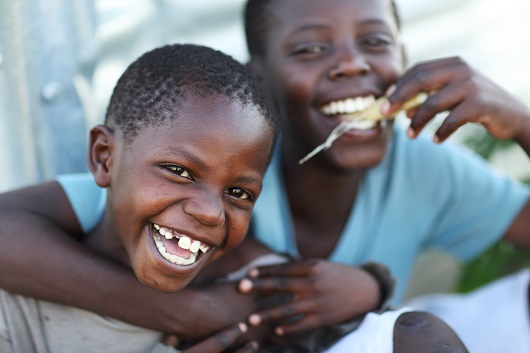
Common causes of maternal death include infections, severe bleeding, high blood pressure during pregnancy and complications during delivery – risks that health officials urge are entirely preventable.
That’s why the World Health Organization (WHO), within the framework of the newly launched UN Global Strategy for Women’s, Children’s and Adolescent’s Health, has begun a vigorous campaign to address the disconnect between expectant mothers and well-trained healthcare providers in impoverished communities.
Under the mandate of the Global Strategy, the WHO will partner with local governments to ensure that every mother has access to prenatal and antenatal care, that health care providers are performing at globally set standards, and that healthcare systems are receiving the resources and funding they need to respond to the patient needs.
The organization has designed and implemented training materials and is offering public policy guidance and progress tracking programs.
To achieve the Sustainable Development Goal, however, the U.N. and WHO acknowledge that their strategy will need to couple delivery of care with educational initiatives.
They will engage women in marginalized communities, teaching them practices to maintain their health and the health of their babies – lessons that the organizations believe will challenge traditional and cultural modes of thinking about healthcare.
The World Bank has expressed confidence in these efforts and has reported receiving increasingly reliable birthing data from local governments. “Ending maternal deaths by 2030 is an achievable goal if we redouble our efforts,” said World Bank Senior Director of Health, Nutrition and Population, Dr. Tim Evans.
– Ron Minard
Sources: Reuters, UN, WHO, World Bank
Photo: Pixabay, Flickr

New Zero TB Cities Project Launched in India
An alliance of international and domestic health organizations has created the Zero TB Cities project in an effort to drastically reduce tuberculosis (TB) infections around the world. Chennai, India is one of the coalition’s first targets.
According to the World Health Organization, 2.6 million people in India are infected with TB, accounting for 23 percent of global TB cases.
Pamela Das, Executive Editor of The Lancet said in an Editorial, “The goal is to help communities move to zero deaths from tuberculosis in their own way, and create ‘islands of elimination,’ which will hopefully reverse the overall tuberculosis epidemic.”
The project will be using a comprehensive method at a community level to tackle the disease. The “island of elimination” strategy is a simple strategy that pushes for better use of current tools and methods for attacking TB.
Zero TB Cities relies on the collaboration between local governments, institutions and grassroots associations to provide life-changing treatment. The partnership of the Municipal Corporation of Chennai, Chennai-based REACH and the National Institute of Research in Tuberculosis (NIRT) will conduct the project.
Although TB is an airborne disease, Tom Nicholson, head of the project, said that it can be controlled and has been in the past.
According to Dr. Suvanand Sahu, Deputy Executive Director of the Stop TB Partnership in Geneva, the transmission of TB is much higher in cities because people live in close proximity to each another and infection spreads quickly.
In Chennai, the project will actively search for people infected with TB and treat them to interrupt transmission cycles and reduce mortality. The project will also provide preventative TB treatments for people in high-risk areas and routine monitoring for early and accurate diagnosis.
Nicholson, an associate in research at the Duke Center for International Development (DCID) in Durham, said he believes that any city can reach “pre-elimination phase”. This phase refers to a relatively TB free environment found in wealthy countries as a result of Zero TB Cities.
– Marie Helene Ngom
Sources: TheHindu, Indread, TBfacts
Photo: Flickr
Cooking to Produce Electricity in Malawi
Thermoelectric generators that use heat from clay stoves to produce electricity are becoming a popular tool in Malawi where efforts are being made to protect the environment.
Developed with the help of Irish Aid, the thermoelectric generator also provides an affordable option for Malawians to access electricity from a clean energy source.
The device is bolted to a clay cooking stove and uses the heat from everyday cooking to charge devices such as phones, LED lights and radios. The electrical current is created by the differential in temperature between two metal parts.
Malawi is one of the least developed countries in the world. Fewer than one out of every 100 rural people have access to grid electricity and more than 85 percent of people live in rural areas.
Aidan Fitzpatrick, Head of Development at Irish Aid, said, “At the very best by 2025, only 20 percent of the population will have grid electricity, so there will still be a huge need to find energy solutions for the majority of Malawians.”
The Irish aid group worked to create a device that would be easy to use for people and could use while cooking to create electricity. The group focused on a generator that would create and sustain community jobs.
A thermal engineering research group joined with Concern Universal and Irish Aid in Malawi to design an electricity generator that could fit on a clay stove, which are already in use as part of the government’s plan to produce two million clean stoves by 2020.
The group decided to use a trial-and-error design process because there are already many innovative solutions to produce electricity.
According to lead engineer, Professor Tony Robinson, “We needed to design something to withstand an extreme environment, requiring no training or maintenance so people can plug in their phone or light while they’re cooking and get on with their lives without having to go search for firewood every day. On top of that, it had to be cheaply produced in Malawi with locally available materials.”
The generators will eventually be made locally for around 20 euros. Many families in Malawi will be able to purchase the generators through microfinance options.
Concern Universal Project Manager, Blessings Kambombo, said; “Once it is rolled out, it will make a huge difference to rural communities not only by improving their quality of life but providing business opportunities and therefore choices.”
– Jordan Connell
Sources: BBC News, The Irish Times
Photo: Flickr
Water, Sanitation and Hygiene: Better Nutrition for The Poor
However, poor sanitation and hygiene often lead to diseases which cause diarrhea and fluid loss. These conditions can also result in malnutrition as more food is being expelled rather than processed and used. With a little help and knowledge, sanitation, hygiene and clean water can reverse the tide of disease and improve nutrition.
Take for example the situation in the Yarou Plateau village in Mali from the USAID blog:
“People used to use any open space for bathroom needs. Flies could easily find fecal matter lying around, and from there land on food, spreading diseases like diarrhea and intestinal worms. Fecal matter in open areas also contaminated the groundwater, which villagers use for drinking and preparing food. Diarrhea can worsen malnutrition, and the undernourished already have weakened immune systems — making them more susceptible to intestinal infections and more severe episodes of diarrhea.”
To combat the malnutrition these diseases cause, the World Health Organization has set some global targets for 2025:
USAID says malnutrition “is an underlying factor in almost half of all child deaths” and also increases a child’s chance of dying from preventable illnesses such as pneumonia and diarrheal disease. These diseases cause anemia, loss of appetite and a decrease in the body’s ability to properly absorb nutrients.
Two years ago, conditions in the Yarou Plateau village changed for the better. The village has improved its sanitation by building more than 60 latrines and fixing ones they already had.
In addition to Yarou Plateau, more than 179 other villages have been able to improve sanitation and hygiene through support from USAID’s project WASHplus.
The program works not only to improve water, sanitation and hygiene but also to reduce “diarrheal diseases and malnutrition.” WASHplus introduces and promotes proper hand washing, water treatment and food preparation and storage.
Where proper sanitation and hygiene practices are initiated and properly implemented, the poor and those living in underdeveloped countries can avoid illness and get the nutrition they need to grow, thrive and break the cycle of poverty.
– Drusilla Gibbs
Sources: USAID, WHO
Photo: Flickr
Why Drones Could Soon Be Delivering Health Care
Drones, or unmanned aircraft, can be controlled by remote or autonomously. They can be used for a variety of things including surveillance, leisure and weaponry. Now, the potential has been unlocked for drones to help the field of healthcare.
Timothy Amukele, a pathologist at Johns Hopkins, is one of the people exploring this possibility. Recognizing that access in many third world countries is inadequate and expensive, he thought, why not drones?
“If we now have a cheaper way to move samples, it’s a good thing, especially for patients who are hard to reach, whether they live in rural areas or places without good roads,” Amukele said.
In order to stabilize health throughout Africa, access to medicine is necessary. One of the main reasons medicine becomes undeliverable is poor road conditions.
According to the Africa Development Bank, in 2010 only 34 percent of rural Africa had adequate road access. That small percentage is further crippled by the fact that those roads are poor quality and the government was unwilling to grant money for their repair.
Right now, helicopters or motorcycles are the best means of transportation throughout rural Africa. While motorcycles are cheaper to operate, they also have their disadvantages.
Motorcycles are smaller, eliminating the possibility for large amounts of cargo to be transported. Helicopters, on the other hand, make more sense because they are larger and avoid roads altogether. However, the operational costs are excessive.
Drones, potentially, are a solution to that logistical issue. The unmanned aircraft do not need to deal with traveling across haphazard roads. They are also significantly less expensive to operate, as they do not require fuel.
Drones can also help alleviate the number of patients a physician has to help for non-threatening medical issues. According to the World Bank, Bhutan only has one physician for every 3,333 people.
Having the ability to send drones to deliver medicine would cut down on the number of patients a physician would have to see. This would free up time for doctors to be able to attend to patients in desperate need of care.
Even though the idea of drones providing healthcare services is new, there are many positive attributes. Still, more must be achieved and learned to allow for this conception to become a reality.
– Alyson Atondo
Sources: MIT, The Conversation, Washington Post, Benzinga
Photo: Flickr
Pope Francis Supports Global Education for Refugee Children
Pope Francis announced his support for global education for refugee children at the Jesuit Refugee Service’s 35th anniversary ceremony.
The ceremony included 15 refugees along with friends and staff of the Jesuit Refugee Service (JRS). Pope Francis stressed the importance of education for refugee children and youth in order to build peace and improve societies. “To give a child a seat at school is the finest gift you can give,” said the Pope.
Pope Francis has formally recognized and pledged support for the JRS Global Education Initiative to increase the number of refugees served by JRS’s educational program by 100,000 by the year 2020.
“Your initiative of ‘Global Education’ with its motto ‘Mercy in Motion,’ will help you reach many other students who urgently need education which can keep them safe,” Pope Francis said.
Today there are more than 60 million people who have had to flee their homes.
The Initiative helps refugees overcome barriers to education such as overcrowding in schools and being accepted into host communities. Education can keep children safe from gender-based violence, child labor and early marriage. It can also prevent them from joining armed groups.
Only 36 percent of refugee children attend secondary school and less than 1 percent have the opportunity to pursue higher education.
“For children forced to emigrate, schools are places of freedom… Education affords young refugees a way to discover their true calling and to develop their potential,” said the Pope.
JRS works in 45 countries and 10 different regions across all faiths and nationalities to help the most vulnerable in the hardest to reach areas.
According to Independent Catholic News, JRS was founded in 1980 by the Superior General of the Society of Jesus to meet both the human and spiritual needs of refugees. JRS is currently focused on helping refugees from Syria, Afghanistan, the Central African Republic and the Eastern part of the Democratic Republic of Congo.
JRS is continuing to grow and expand in order to accommodate for refugee children and their need for education.
– Jordan Connell
Sources: Independent Catholic News, Jesuit Refugee Service, Vatican Radio
Photo: Flickr
Empowering Female Entrepreneurs to Escape Poverty
The World Bank recently established a line of credit for female entrepreneurs in the world’s poorest nations. The program has already helped more than 3,000 female entrepreneurs in Ethiopia start their own businesses and escape poverty.
In poor communities, women are far less likely than men to own valuable assets to use as collateral to get a loan. Without these loans, many business ventures never make it off the ground.
An estimated 70 percent of women who own small or medium-sized businesses are unable to stabilize and improve them because of a lack of funding credit. This challenge creates a huge loss in potential income within a community.
According to World Bank economists Francesco Strobbe and Salman Alibhai, investing in female-owned businesses results in one of the “highest return opportunities available in emerging markets.”
The World Bank is helping to put an end to this opportunity loss and stagnation of female business opportunities by offering female entrepreneurs loans through the International Development Association and several international development organizations in Canada and the United Kingdom.
Between January 2014 and September 2015, Ethiopia’s Women’s Entrepreneurship Development Project disbursed 768 million birr (about $38 million) worth of credit to 3,227 female entrepreneurs. Currently, nearly $2 million in credit is being disbursed each month with an average individual loan size of approximately 219,605 birr (approximately $11,000).
Research shows that female entrepreneurs are more likely to hire other women to work in their businesses, opening up employment opportunities in communities where positions for women were scarce before.
Thus far, 76 percent of the women who have taken advantage of the program are first-time borrowers, unlocking untapped capital and opening up a new route to closing the gendered financial gap.
Despite the majority being first-time borrowers with little to no collateral, the repayment rate is 99.4 percent. Besides the success of the small loans, the program also offers entrepreneurship training to inspired women throughout the nation.
So far, more than 5,000 women have taken advantage of training and hope to enter into the exciting realm of business ownership. This trend is likely to drive down the overall rate of unemployment throughout Ethiopia, which currently stands at 17 percent.
– Claire Colby
Sources: CIA World Factbook, World Bank
Photo: Flickr
Addressing the Global Water Crisis
The statistics concerning the global water crisis are staggering, especially in developing countries.
These are just a few of the shocking statistics that highlight the seriousness of the global water crisis. However, by donating and investing in initiatives that are environmentally safe and cost-effective it is possible to turn back the tide of the growing global water crisis.
Students, especially girls, who no longer have to focus time and effort on collecting water, can devote more time to attending school. With the addition of safe and sanitary latrine areas, girls can also stay in school throughout their teenage years following puberty.
With access to water, food security can become a reality in developing countries. Fewer crops will be lost and schools can begin to feed their students through the use of their own gardens, which will slash costs.
Access to clean water also means clean hands which lead to healthier bodies. People can focus on ending the cycle of poverty instead of succumbing to water-related sicknesses.
Clear cut access to clean water can also help alleviate conflicts over 276 transboundary river basins. An improved understanding of proper sanitation can increase access to clean water and significantly reduce pollution through unsanitary practices such as waste dumping into these river basins.
According to The Water Project, access to clean water alone can go a long way towards breaking the cycle of poverty for millions of people. All that is needed is to act upon this knowledge.
– Drusilla Gibbs
Sources: World Water Council, Water, The Water Project
Photo: Occupy For Animals
Reaching Millions Through Feed the Future
In 2014 alone, the organization reportedly reached nearly 19 million households and helped nearly seven million farmers gain access to new tools and technologies.
New data demonstrates that through Feed the Future and other U.S. government efforts, childhood stunting rates have declined in Ethiopia, Ghana and parts of Kenya. These rates have dropped between 9 and 33 percent in recent years while areas in Uganda have seen a 16 percent drop in poverty.
In Honduras, Feed the Future is helping to reduce both poverty and stunting for its program participants.
Led by the U.S. Agency for International Development (USAID), the organization is working towards pioneering a comprehensive approach to ending hunger and creating global change. Feed the Future draws on the resources and expertise of 10 other U.S. government partners.
The organization currently focuses on small farm holders, particularly women, across 19 countries globally.
“Through Feed the Future, the United States is partnering across borders and across sectors to unlock the transformative potential of agriculture,” Eric Postel, the Associate Administrator for USAID, said.
“This global effort is empowering rural farming families to lift themselves out of poverty and hunger, and the results are clear. From Asia to the Caribbean to Africa, Feed the Future is helping raise crop yields and incomes, reduce stunting and poverty, and improve child nutrition.”
With nearly 800 million people suffering from chronic hunger, and with the world’s population projected to increase to more than nine billion by 2050, ensuring that everyone has enough nutritious food to eat will require a 60 percent increase in agricultural production without adversely affecting the environment.
According to Postel, “Going forward, USAID and our partners will continue working to ensure everyone has the nutritious food they need to lead full, healthy lives.”
– Kara Buckley
Sources: Feed the Future 1, Feed the Future 2, USAID
Photo: Flickr
Maternal Death Rates Plummet Worldwide
Maternal deaths have been cut nearly in half since 1990 according to a new report by the United Nations and World Bank. Thanks to increased access to reproductive and family planning health services, mortality rates have shrunk to 216 per 100,000 live births in 2015 from 385 in 1990.
East Asia made especially notable progress, reducing its mortality rate from 90 to 27. Nine countries: Bhutan, Cambodia, Cape Verde, East Timor, Iran, Laos, The Maldives, Mongolia and Rwanda have cut rates by up to 75-90 percent.
While optimistic, experts warn that progress has been inequitable among developing countries and has fallen well short of the Sustainable Development Goal to achieve a worldwide reduction of maternal deaths of 75 percent.
“Many countries will make little progress, or even fall behind, over the next 15 years if we don’t make a big push now,” said Executive Director for the United Nations Population Fund (UNPF), Dr. Babatunde Osotimehin.
Nearly all maternal deaths occur in developing countries, 70 percent in sub-Saharan Africa alone, and most cases occur in rural and remote communities where women face inadequate access to medical care.
Common causes of maternal death include infections, severe bleeding, high blood pressure during pregnancy and complications during delivery – risks that health officials urge are entirely preventable.
That’s why the World Health Organization (WHO), within the framework of the newly launched UN Global Strategy for Women’s, Children’s and Adolescent’s Health, has begun a vigorous campaign to address the disconnect between expectant mothers and well-trained healthcare providers in impoverished communities.
Under the mandate of the Global Strategy, the WHO will partner with local governments to ensure that every mother has access to prenatal and antenatal care, that health care providers are performing at globally set standards, and that healthcare systems are receiving the resources and funding they need to respond to the patient needs.
The organization has designed and implemented training materials and is offering public policy guidance and progress tracking programs.
To achieve the Sustainable Development Goal, however, the U.N. and WHO acknowledge that their strategy will need to couple delivery of care with educational initiatives.
They will engage women in marginalized communities, teaching them practices to maintain their health and the health of their babies – lessons that the organizations believe will challenge traditional and cultural modes of thinking about healthcare.
The World Bank has expressed confidence in these efforts and has reported receiving increasingly reliable birthing data from local governments. “Ending maternal deaths by 2030 is an achievable goal if we redouble our efforts,” said World Bank Senior Director of Health, Nutrition and Population, Dr. Tim Evans.
– Ron Minard
Sources: Reuters, UN, WHO, World Bank
Photo: Pixabay, Flickr
Gender Equality in Rwanda Ranks in Top 10
When people think of gender equality they often do not associate it with Rwanda. But, according to the World Economic Forum’s (WEF) annual report, people should.
Gender equality in Rwanda outperformed many expectations, scoring high in the graded categories of economics, health, education and politics. Additionally, the country placed in the top ten for the second year in a row. They even improved their spot by one, coming in at sixth place.
As a continent, Africa has some of the worst performing countries in the world. Numerous African countries scoring in the bottom 20 supplement that fact. Chad, Mali and Guinea are some of the countries that have yet again found themselves in the bottom 20.
Impressively, Rwanda beat out many well-developed countries. They boast better scores than France (15th) Germany (11th) and even the United States (28th).
The country has continued to see success in bridging the gender equality gap. According to WEF’s Global Gender Gap Report, an impressive 88 percent of women in Rwanda hold jobs. Comparatively, the percentage of women in the United States who have jobs is only 66 percent.
While Rwanda’s placement on the index is certainly praiseworthy, the question remains – how did the country outperform 139 others?
Saadia Zahidi, a member of the WEF, explains: “There are quite a few theories for this and certainly one of them is that after the genocide there has been much lower numbers of men who are able and willing to be working. So, that has changed the dynamics.”
The genocide that Zahidi talks about occurred in 1994. It was aimed at the country’s minority group, the Tutsi’s, and claimed the lives of over one million civilians. Many women became widowed as a result.
After the genocide ended, women came together and demanded change. They successfully re-wrote parts of the constitution and ensured that 30 percent of political roles would be held by women. They also called for marriage equality and land ownership rights.
In terms of political opportunities, Rwanda has the highest percentage of women in Parliament, something that remains to be celebrated.
Of course, there is still much that needs to be done in order to continue to eliminate the gap between genders. However, Zahidi remains confident that the divide in gender equality in Rwanda will continue to close.
– Alyson Atondo
Sources: The World Economic Forum 1, Huffington Post, QZ.com, Washington Post, The World Economic Forum 2
Photo: Flickr