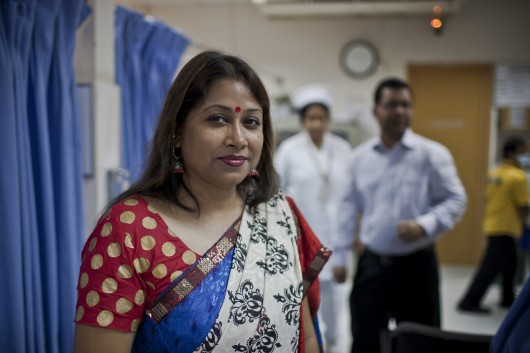
The U.S. along with 30 countries has announced a commitment to achieving the targets of the Global Health Security Agenda (GHSA). Targets include responding to infectious disease threats and preventing epidemics.
The GHSA “seek[s] to accelerate progress toward a world that is safe and secure from infectious disease threats and to promote global health security as an international security priority,” GlobalHealth.gov said.
The Agenda was created in response to epidemic threats, such as ebola and seeks to promote global health and protect citizens around the world from life-threatening diseases.
The 30 countries that the U.S. has partnered with are: Bangladesh, Burkina Faso, Cambodia, Cameroon, Cote d’Ivoire, Democratic Republic of Congo, Ethiopia, Georgia, Ghana, Guinea, Haiti, India, Indonesia, Jordan, Kazakhstan, Kenya, Laos, Liberia, Mali, Mozambique, Pakistan, Peru, Rwanda, Senegal, Sierra Leone, Tanzania, Thailand, Uganda, Ukraine, and Vietnam, as well as the Caribbean Community.
The commitment includes a five-year country roadmap that will detail practical plans for the GHSA.
“These roadmaps are intended to enable a better understanding across sectors and assistance providers of the specific milestones, next steps, and gaps toward achieving capacity needed to prevent, detect, and respond to biological threats,” the White House said in a press release.
The countries involved seek to collaborate on a global issue that impacts millions of people in developing areas. Infrastructure, equipment and skilled personnel are some of the resources that the GHSA partnership plans to provide.
During this year’s G-7 Summit in Germany, G-7 leaders committed to collectively assisting at least 60 countries, including the countries of West Africa, over the next five years. The G-7 Health Ministers agreed to announce these countries by the end of this year according to the White House.
This collaboration provides a bright spot for the future. Health security is a huge issue today, as infectious diseases kill over 17 million people a year. At least 30 new diseases have emerged in the last 20 years, and they all require attention and research in order for cures to be discovered according to the World Health Organization.
Next year’s GHSA event will be hosted by the Netherlands and will highlight progress and continue to build momentum on these issues.
– Ashley Tressel
Sources: White House, WHO, Global Health
Photo: Flickr

Hydroponic Systems: Food Security in Developing Countries
Hydroponic systems use water and nutrients to grow high-yield crops through a sustainable method that does not require soil. As an agricultural alternative, it uses less water and boosts local markets by providing food security. The methodology also creates opportunities for additional income in developing regions.
While advanced hydroponic systems remain impractical for some developing regions there is an alternative, simplified hydroponics growing system. Such a system is accessible with training and a small initial investment. Yields from simplified systems are lower than advanced systems but still outperform traditional farming methods and use 80 percent less water.
Simplified hydroponics can be taught to farmers and individuals with no prior knowledge. These farmers can generate income from small plots of land with vertical farm tools, even in urban areas. New jobs and farms supported by hydroponics contribute to a green economy.
The World Bank sees the potential for simplified hydroponic systems. Jonathan Coony, Program Coordinator for the Climate Technology Program at the World Bank writes, “These sustainable techniques enhance climate resilience while creating local jobs and fostering regional investment.”
Research by students at MIT also noted that materials such as fish tanks, ceramic and aluminum containers can be appropriated into hydroponic systems at a low cost. In addition, some materials, especially in simplified hydroponic systems, can be locally sourced.
A pilot program for low-resource communities in Ecuador utilized simplified hydroponics to improve nutrition, especially among children. The diet of most poor Ecuadorians contains little to no fruits and vegetables.
Practical Hydroponics & Greenhouses published a report of the pilot program, which organizers saw as an opportunity to improve nutritional options with simplified hydroponics.
The program’s objective was to consistently provide high-quality vegetables and train the community on how to use hydroponic systems. After two years, the program concluded and the report affirmed the viability of simplified hydroponics as “an effective alternative for integration into food security.”
Hydroponic systems can be utilized to grow crops for livestock as well. Hydroponics Kenya, a Nairobi-based company, sells hydroponic supplies and systems to the local community. According to the company, a 6m x 9m area can produce 500kg or 1,100lbs of fodder for livestock.
Hydroponics Kenya founder Peter Chege has been recognized by several NGOs for his innovations modifying hydroponic systems for the Kenyan climate with fabric and specialized trays. His business is growing and hiring more employees, “We are recruiting, and every week we sell five hydroponic systems,” Chege said.
– Cara Kuhlman
Sources: InfoDev, Mission 2014 at MIT, Practical Hydroponics & Greenhouses, The World Bank
Photo: Flickr1, Flickr
South African Company Makes Water from Air
In South Africa, one company is tapping into an alternative yet ubiquitous source for drinking water—the air.
Water From Air is pioneering technology for use in domestic settings that allows clean, drinkable water to be harvested from the humidity in the air.
Even though the technology used in Water From Air’s machines is not new, the company’s CEO Ray de Vries told news24 that his company is the first to make home units available.
The machines operate according to the humidity in the air, drawing it in and cooling it to allow condensation to form in a collecting tank. The collected water is then disinfected with ultraviolet light and filtered to remove further impurities.
Since the water is drawn from the air rather than the ground, it is already cleaner and excludes contaminants more commonly found in terrestrial sources. The result is “100 percent pure and clean” water, according to de Vries.
The company manufactures different sized machines powered through solar, diesel or gas. The most popular machine is the AW3 model designed for domestic use in households and clinics. Depending on the humidity of the surrounding air, the AW3 model is capable of capturing 32 liters of water per day.
Models designed for larger scale use are estimated to be capable of producing up to 1,500 liters of water per day. The company estimates that in cities such as Cape Town where humidity averages approximately 75 percent, the device might be able to provide an average of between 25 and 28 liters of water every day.
Water From Air has sold upwards of 400 units since its debut earlier this year. As severe drought conditions persist in South Africa, the company is trying to keep pace with the growing demand for its units.
The main idea behind marketing the devices is to provide households in drier regions with a more secure supply of water, especially in times of water shortage or drought. The Water From Air devices enable users to directly harvest water from the surrounding air instead of transporting the precious resource from other areas of the country.
Unlike more expensive alternatives such as desalination, Water From Air also offers a cost-effective and novel approach geared towards sustainability.
The machines are manufactured in the company’s native South Africa, “made by South Africans for South Africans” according to de Vries. Water From Air expects to provide 300 initial jobs to South Africans and potentially add another 600 as the company’s operations continue to grow.
– Jace White
Sources: Water From Air, Business Standard, News24
Photo: Flickr
Global Schools Foundation Set to Build Five Schools in India
Global Schools Foundation (GSF) is a leading name in global education across South East Asia, Africa, the Middle East and India. The organization, which operates 20 schools in India, South East Asia, Japan, is looking to expand its reach with five new schools in India.
GSF plans to have the five schools up and running in India within the next two years according to the organization’s Chief Operating Officer, Karmal Gupta. The schools will be built in the populous cities of Mumbai, Pune, Nagpur and Bangalore.
The foundation will introduce the International Baccalaureate program in each school, adding to its offerings of a Central Board of Secondary Education curriculum and the Global Montessori Plus program.
In addition, GSF has created the Global Indian International School (GIIS), an international network of award-winning institutions with 21 campuses in seven different countries. GIIS schools offer holistic personality development and learning opportunities for all students.
The GIIS institutions have been honored with several international and national awards for excellence in education. The schools have also been lauded because they provide a home for students of diverse nationalities.
According to Gupta, the foundation hopes to build the schools in collaboration with property developers in new housing and commercial estates in India who will help to manage the capital investment in assets.
In addition to it’s plans in India, GSF is in the process of completing its goal to build a $100 million dollar campus in Singapore by 2017. The campus will be the foundation’s largest since it began operations in 2002.
– Jordan Connell
Sources: The Economic Times, Global Schools Foundation 1, Global Schools Foundation 2
Photo: Flickr
India Seeks MIT Expertise for Energy Solutions
Minister Piyush Goyal meets with MIT Energy Initiative Expertise to seek energy solutions for India.
India has recently set some of the most aggressive near-term energy goals of any nation in the world. Minister Goyal met with MIT Energy Initiative and Tata Center for Technology and Design to discuss and look for solutions that will help India meet its goals.
Goyal serves as minister for coal, power and renewable energy said, “India is embarking on most of its new development initiatives on the back of technology and that engagement with the United States has been very deep.”
One goal of India is to ensure that every part of the country gets electricity in the next 1,000 days.
There are currently 220 million people in India with no access to electricity at all, which is an estimated 50 million households. Those that do get electricity only have access for a few hours a day.
In major cities blackouts and power cuts are a common occurrence at peak usage times. Goyal is determined to make reliable 24 hours seven days a week electricity a reality in India.
“Affordability is a very integral part of our plans,” said Goyal.
India relies heavily on coal to power to power the country. Ahmed Ghoniem, Professor of Mechanical Engineering at MIT, agreed that fossil fuels are an important part of the equation for developing countries that require energy solutions immediately.
“We cannot ignore the fact that there are billions of people who need power. Their lives are in danger unless we help to get the right technology for them. And it needs to happen right now, not fifty years from now,” said Ghoniem.
One solution to the electricity problem is the potential for solar-powered micro-grid solutions that could reach remote areas. The government would need to properly incentivize companies to invest in these projects.
Goyal and MIT have decided to collaborate in order to create new technologies and policies to meet India’s electrification goals.
Goyal says, “We will make it happen.”
This is not the first time India has looked to MIT for solutions. In September, India’s business, nonprofit and government sectors attended The Tata Center for Technology and Design Annual Symposium at MIT’s Media Lab. India continues to work with MIT researchers to overcome challenges and meet opportunities in the developing world.
– Jordan Connell
Sources: MIT News, Tata Center Technology and Design
Photo: Google Images
UNICEF Fights for Central African Republic Children
UNICEF is halfway to its goal for assisting the children of the Central African Republic who continue to suffer due to sectarian violence and political instability.
UNICEF requested $70.9 million for malnourished children in the Central African Republic at the beginning of this year. The plan called for food and basic health services to be made available to the children. As of December, the organization has raised just over half that amount.
By the end of this year, UNICEF had planned for:
The Central African Republic has been in a state of conflict that escalated two months ago with the “worst violence” the capital, Bangui, has ever seen.
Clashes among religious groups have created a violent atmosphere especially for Central African Republic children, who have been caught in the middle of these tensions.
Exactly half of the total affected population or 2.4 million Central African Republic children need assistance. UNICEF hopes to reach two million people by the end of the year, including 1.4 million children.
From July to December, the organization has focused on treating vaccine-preventable and water-borne diseases, as well as other infectious diseases. Providing access to clean facilities has also been high on the agenda.
The UNICEF’s Rapid Response Mechanism (RRM) provides safe drinking water and sanitation facilities to about 200,000 people in remote areas. “The RRM will continue to advocate for a multi-sectoral response in the hard-to-reach areas,” UNICEF said.
– Ashley Tressel
Sources: Reuters, UNICEF 1, UNICEF 2
Photo: Flickr
Global Partnership for the Global Health Security Agenda
The U.S. along with 30 countries has announced a commitment to achieving the targets of the Global Health Security Agenda (GHSA). Targets include responding to infectious disease threats and preventing epidemics.
The GHSA “seek[s] to accelerate progress toward a world that is safe and secure from infectious disease threats and to promote global health security as an international security priority,” GlobalHealth.gov said.
The Agenda was created in response to epidemic threats, such as ebola and seeks to promote global health and protect citizens around the world from life-threatening diseases.
The 30 countries that the U.S. has partnered with are: Bangladesh, Burkina Faso, Cambodia, Cameroon, Cote d’Ivoire, Democratic Republic of Congo, Ethiopia, Georgia, Ghana, Guinea, Haiti, India, Indonesia, Jordan, Kazakhstan, Kenya, Laos, Liberia, Mali, Mozambique, Pakistan, Peru, Rwanda, Senegal, Sierra Leone, Tanzania, Thailand, Uganda, Ukraine, and Vietnam, as well as the Caribbean Community.
The commitment includes a five-year country roadmap that will detail practical plans for the GHSA.
“These roadmaps are intended to enable a better understanding across sectors and assistance providers of the specific milestones, next steps, and gaps toward achieving capacity needed to prevent, detect, and respond to biological threats,” the White House said in a press release.
The countries involved seek to collaborate on a global issue that impacts millions of people in developing areas. Infrastructure, equipment and skilled personnel are some of the resources that the GHSA partnership plans to provide.
During this year’s G-7 Summit in Germany, G-7 leaders committed to collectively assisting at least 60 countries, including the countries of West Africa, over the next five years. The G-7 Health Ministers agreed to announce these countries by the end of this year according to the White House.
This collaboration provides a bright spot for the future. Health security is a huge issue today, as infectious diseases kill over 17 million people a year. At least 30 new diseases have emerged in the last 20 years, and they all require attention and research in order for cures to be discovered according to the World Health Organization.
Next year’s GHSA event will be hosted by the Netherlands and will highlight progress and continue to build momentum on these issues.
– Ashley Tressel
Sources: White House, WHO, Global Health
Photo: Flickr
Intel: Preparing Nigerian Students for Future Employment
Intel Corporation is using its resources to improve education in Nigeria by teaching educators to successfully incorporate technology into classrooms. The company believes this program will be the key to increasing 21st-century employment opportunities for Nigerian students.
Intel’s technology teacher training program is being implemented in conjunction with national governments and public institutions. The program focuses on a student-centered approach to learning instead of the traditional teacher-centric one.
Through this method, the teacher serves as a guide for students and helps maintain group collaboration. The students learn together and with each other. In addition, they also choose their own areas of study which keeps them engaged and fosters a passion for learning.
Another problem related to student engagement is the generation gap. Elderly teachers are not familiar with the latest technology and therefore, shun it in the classroom. This upholds the traditional pen and paper classrooms with their teacher-centered focus leading to boredom in the classroom.
Intel’s technology teacher training will help address this problem by educating instructors. For example, Dr. Kemi Banjoko, a Senior Lecturer in Chemistry, said what intrigued him the most was “the use of mobile phone and tablets in teaching.”
Intel’s corporate affairs group manager, Babatunde Akinola, stressed the importance of this education for Nigeria. He said, “The world is getting more global and if you do not fit in, you face being dis-enfranchised.”
Nigeria is a growing country with massive oil reserves and a large youth population. However, the country lacks a strong education system. Notably, the primary school attendance rate for males is 72 percent but drops to 54 percent for secondary school. The government is hoping that the inclusion of technology will help keep Nigerian students engaged in learning.
Intel’s program has trained over 10 million educators in 70 different countries and Nigeria is hoping to benefit from the collaboration. Since 2013, Intel has teamed up with major educational institutions in Nigeria like Tai Solarin University of Education and Sa’adatu Rimi College of Education.
– Andrew Wildes
Sources: AllAfrica, Edutopia, Intel, TechTrends Nigeria, UNICEF
Photo: Flickr
Bamako School: Improving Education in Mali
According to UNICEF, the enrollment rate in Mali, Africa is 80 percent. However, the achievement rate stands at 54 percent for boys and 44.8 percent for girls due to a low supply of qualified teachers, high student-to-teacher ratios and poor learning materials. The poor and rural areas of Mali fare worst of all, experiencing a 70 percent dropout rate before sixth grade.
The most qualified teachers accept positions in well-off urban communities, which offer sufficient pay and lodging. Consequently, inner areas traditionally receive the superior education in Bamako.
According to Yahoo News, Youchaou Traore, a former translator for diplomats founded a school in one of the poorest neighborhoods on the edge of Mali’s capital—Bamako. Ten years later, École Privée Youchaou (EPY) is helping its students place first or second in national exams, surpassing the elite private schools.
Traore, who didn’t begin first grade until the age of 13, is very familiar with the struggles and shortcomings of the Malian education system. He designed EPY to confront and rectify the complications that prevent impoverished children from receiving a quality education in Bamako.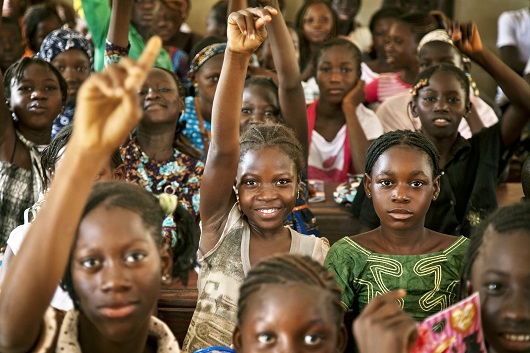
A 2011 report by Education International revealed that over half of Mali’s 40,000 instructors are unqualified to teach primary levels. Students sit in class day after day and absorb less than a quarter of what they should be learning at their level. Furthermore, bribery for exam scores allows students to graduate without developing basic literacy and mathematical skills.
“It’s possible to reach 9th grade here and barely be able to read,” Traore told Yahoo News.
Instead of pulling competent instructors away from other schools, Traore chose members of his own community and put them through intensive training to learn teaching techniques and management skills.
The community-centered education system helped ease issues of money and trust that plague many Malian parents. The adults in Bamako feel comfortable approaching Traore and his staff to inquire about scholarships and other funding opportunities.
Traore does his best to accommodate families that can’t afford school fees, allowing them to sell snacks to students. There are times when he provides funding from his own personal finances.
For students like Traore who start late or transfer, EPY offers catch-up lessons to ensure that each child who comes through the doors learns to read, write and solve mathematical equations.
EPY incorporates all of the high-risk groups—orphans, girls, extremely poor families—yet its dropout rate is less than one percent because the students feel comfortable there. They realize they have the chance to receive the best education in Bamako.
“If I have a chance to talk to people in the world, I would like them to understand that here in Mali it’s not very easy, but students are serious,” said Bourama Fomba, a 13-year-old student in a Guardian article.
– Sarah Prellwitz
Sources: Education International 1, Yahoo, Education International 2, The Guardian, UNICEF
Photo: Flickr1, Flicker2
Women’s World Banking Fights Poverty by Empowering Females
Women’s World Banking raises money to provide women with the resources and tools needed to become successful entrepreneurs in their respective regions.
The organization operates primarily in Africa, Asia and Latin America, but has left footprints in other regions, such as the Middle East and Western Europe.
Women’s World Banking recognizes that although many women globally use their earnings to give back to their families and communities, the demographic continues to be underserved and underrepresented.
Once the group determines the tools needed to empower successful female entrepreneurs, they network with financial institutions to guide women through the business startup process.
Women’s World Banking consists of an executive team, staff members, fellows and a board of directors, all of whom help keep the organization afloat. These individuals have dedicated themselves to the development of innovated products, micro-insurance programs and enterprises.
The team helps women develop credit, savings and insurance programs that fit their needs. Through research and on-the-job experience, the organization also creates innovative methods that they share with hardworking women throughout the world.
This year, roughly 530,000 women have accessed tools and resources provided by Women’s World Banking, with the total participants each year totaling over one million. Eighty-five percent of people participating in their leadership programs each year are young women looking to make a living for themselves and their families.
For more than 35 years, Women’s World Banking has created and networked with more than 38 organizations dedicated to empowering women throughout these regions, leaving a worldwide impact on the state of poverty found within predominantly female areas.
– Julia Hettiger
Sources: Womens World Banking, Microfinance Gateway, Friends of Women`s World Banking
Photo: Flickr
Heifer International: Donate a Cow for Economic Stability
75 percent of the world’s poor make a living in rural areas and most people depend on agriculture for survival. The recently-implemented Sustainable Development Goals aim to “end hunger, achieve food security and improved nutrition and promote sustainable agriculture” by 2030.
Alleviating poverty in rural areas is the mission of Heifer International. The organization furthers agriculture by helping small-scale farms achieve empowerment and financial security.
When founder Dan West arrived in Spain to provide relief for refugees of the Spanish Civil War, he found families living off of a single cup of milk per day. West realized that in order for people to recover from the war, they needed more than a cup of milk. They needed the entire cow.
With the help of donors, Heifer International delivers livestock to rural areas, along with a team of volunteers to provide guidance and training. Animals such as cows, chickens and bees do double duty in the fight against global poverty because they provide both food and reliable income through agricultural products.
In less than 70 years, Heifer International has achieved widespread success. Participants give the first female offspring of their livestock to the next family in need, as well as share the training they received. Entire communities transform into thriving, self-sufficient farms within a few seasons.
Furthermore, reducing poverty in rural areas positively impacts education and women’s empowerment, which further reduces hunger. Educated farmers produce twice as many consumer goods as their non-educated counterparts, according to Farming First.
Likewise, if women had equal access to education and resources, malnutrition would decrease by as much as 17 percent.
With the holidays around the corner, now is the perfect time to donate in honor of a friend or loved one. In 2011, 79 percent of Americans reported that they would rather have a charitable donation in their name than receive a gift they probably won’t use. Why not consider donating a cow?
– Sarah Prellwitz
Sources: World Bank, Farming First, Heifer, Red Cross
Photo: Flickr