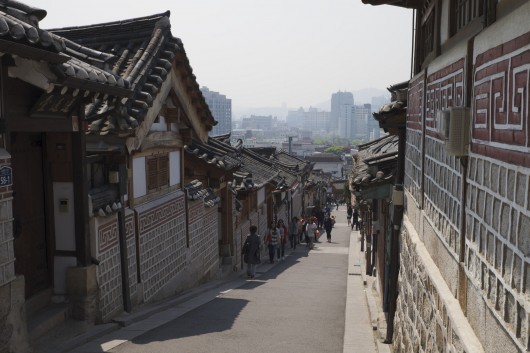
 When people think of South Korea, they may imagine an export powerhouse replete with skyscrapers, neon lights and a booming economy. Few remember the South Korea of yesteryear, a war-torn nation with a GDP per capita of $70 in 1957, equivalent to Ghana. Even fewer recall the New Village Movement. To teach the world about this program that eliminated its extreme rural poverty, South Korea held its second annual Global Saemaul Leadership Forum (GSLF) from Nov. 24 to Nov. 27, 2015.
The New Village Movement is called “Saemaul Undong” in Korean. Begun by President Park Chung-Hee, South Korea’s dictator from 1961 to 1979, it is based on a simple idea: community-led development. Park provided each of the nation’s 33,267 villages with 335 bags of cement, a half ton of iron rods and a plan.
The plan consisted of four steps that began with selecting community leaders and gathering seed money. Step 2 featured small meetings with villagers to persuade everyone to join. Step 3 was the main phase of the project, and involved modernizing homes, establishing cultural facilities and launching cooperative ventures. Lastly, villages would create their own newspapers, build city halls and partner with neighboring towns.
Within 9 years, rural income nearly sextupled from a household average of 225,800 won to 1,531,800 won. Thatched huts gave way to tiled houses across the country. Rural poverty decreased from 27.9 percent before the program to 10.8 percent after, and women gained a more prominent place in the local economy.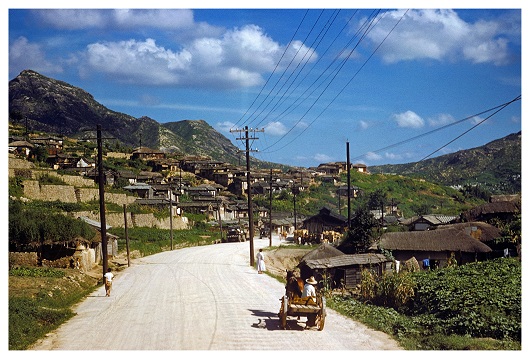
Due to the success of the New Village Movement, the United Nations recognized the program as a model for rural development. At the November GSLF conference in Daegu, more than 500 delegates from 50 countries gathered to learn more about the model. Countries with representatives included Afghanistan, Ethiopia, Rwanda, Myanmar, Mongolia, Sri Lanka, Honduras and Azerbaijan.
The primary aim of the conference was education for New Village Movement leaders in countries outside of South Korea. Leaders are trained at the Global Saemaul Undong Training Center in Seoul, but the conference provides a unique opportunity for them to learn from each other as well as their Korean mentors.
South Korea has made considerable progress in getting other countries to adopt its model. According to a press release in September 2015, the United Nations Development Programme (UNDP), in partnership with the Korean government, created an updated New Village Movement called “Saemaul toward Inclusive and Sustainable New Communities” (ISNC). ISNC is being implemented in Bolivia, Vietnam, Uganda, Myanmar, Laos and Rwanda .
Whether the New Village Movement will flourish in other countries remains to be seen, but there is reason to hope. Sri Lanka has already implemented seven New Village Movement projects in its country. By following the Korean model, villages now have concrete roads, a city hall and electricity. One village has already seen its income quadruple through the addition of powered pottery wheels. This had the added benefit that local women could become potters.
People often dismiss efforts to eradicate poverty, but in truth, it has already been done. South Korea lifted millions of impoverished villagers out of poverty while entwining them in the larger fabric of the national community. As the New Village Movement spreads around the globe, millions more are sure to benefit.
– Dennis Sawyers
Sources: Asia Foundation, Modern Ghana, Saemaul Undong, The Sunday Times, UNDP
Photo: Flickr1, Flickr

EU Finances Program Tackling Poverty Reduction in Pakistan
The Sindh Union Council and Community Economic Strengthening Support (SUCCESS) program will be funded for six years by the European Union. During the launch of the SUCCESS program, organizers told Pakistani newspaper The News, that the objective is to “reduce poverty through undertaking the Community Driven Development (CDD) based on the proven social mobilization approach of the Rural Support Programmes (RSPs).”
RSPs have been part of the country’s development strategy for decades. Utilizing community driven initiatives, they have a record for poverty reduction, aiding development and empowering women through community programs. Additionally, Deputy Secretary Sindh Ajaz Ali Khan told The News “it was encouraging that the SUCCESS programme would involve and be led by women.”
Social mobilization is also a key element for the SUCCESS program and NRSP to incorporate the poorest people into the development process. These programs provide a multi-level approach according to the NRSP website. They promote “a culture of participation, inclusivity and solidarity, direct provision of front-line services, planning and development, business creation, savings, conflict resolution, dialogue and interaction with local authorities.”
Approximately 770,000 rural households will be mobilized through the SUCCESS program. Going forward, households will come together in Community Organisations (COs), one of the several tiers the rural support programs use to mobilize and organize.
RSPN Chief Executive Officer Khaleel Ahmed Tetlay told The News that the SUCCESS program would focus on sustainable and financially viable approaches to poverty reduction in Pakistan. The program also aims to “link the community institutions with the government service delivery departments.”
The Daily Times in Pakistan reports a fundamental issue for the Sindh province is “to accommodate talented and educated youth into industry and job market.” With the support of the Sindh government, the organizations involved hope the SUCCESS program will help the province retain rural youth by creating new work opportunities.
– Cara Kuhlman
Sources: The Daily Times, National Rural Support Programme, The News
Photo: Google Images
Investing in Uganda
Uganda’s most obvious investment appeal is its location – bordered by Sudan in the north, Kenya in the east, the United Republic of Tanzania to the south, and the Democratic Public of Congo to the west – that offers the nation a powerful base for central trade partnerships as the country acts as a regional hub for investment.
Uganda is a nation that depends on agriculture for economic stimulation thanks to the country’s favorable climate and fertile soils. Investing in Ugandan farming expansion and sustainability efforts will help support the 80 percent of the population working in agriculture, feed the nation and will support economic growth.
According to the State House of Uganda, the country is among the leading producers of coffee and bananas, with exports of tea, cotton, tobacco, fruit, vegetables, and silk contributing to Uganda’s 2014 record GDP of $26.3 billion.
Agricultural opportunities for investors include commercial farming, value addition, fertilizer and pesticide manufacturing, machinery supply, packing materials, and cold storage facilities.
The Agriit Institute of Uganda, an agricultural development advocacy organization, states that growth in agriculture is up to 11 times more effective in reducing poverty within sub-Saharan Africa than development in any other divisions.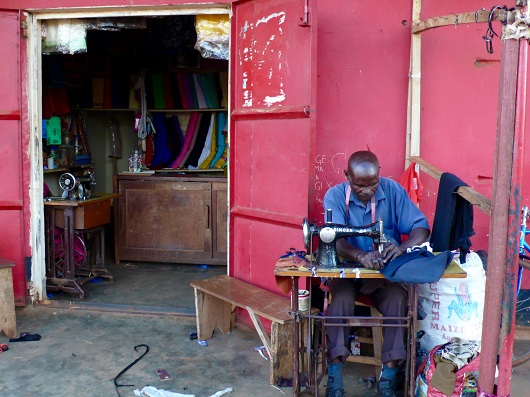
The international Food Policy Research Institute (IFPRI) finds that agricultural growth can reduce urban poverty levels as food prices go down. These prices are often lowered when crop sustainability measures are taken through investments in developmental farming technologies.
Uganda offers investment prospects due to the growth in natural resource discovery. According to the Petroleum Exploration and Production Department of Uganda, there have been 21 discoveries of oil and/or gas throughout the nation.
A total of 87 oil wells have been drilled from 21 fields in Uganda. There are currently 3.5 billion barrels of unprocessed oil, with 1.2 billion recoverable barrels in existence. The U.S. Department of State reports that only 40 percent of the oil-rich areas in the region have been explored, which leaves great investment opportunity.
The potential growth and discovery of these natural resources welcome investors into untapped markets licensing for petroleum production, crude oil pipeline construction and maintenance, environmental services, waste disposal and drilling services.
According to the U.S. Department of State, Uganda’s foreign direct investment doubled from 900 million to $1.7 billion from 2011 to 2012 due to investor interest in the oil sector. The Uganda Poverty Status Report of 2014 shows a direct link to these investments and poverty alleviation, stating that the national poverty rate dropped from 24.5 percent in the 2009-2010 fiscal year to 19.7 percent during 2012-2013.
– Kelsey Lay
Sources: Agritt Institute, International Food Policy Research Institute, The State House of Uganda, Uganda Ministry of Finance, U.S. Department of State
Photo: Google Images, Flickr
OneDollarGlasses: Solution for Global Visual Impairment
Martin Aufmuth has created an innovative solution to global visual impairment. In 2012, he founded OneDollarGlasses, an association that manufactures spectacles for just $1. First piloted in Uganda, OneDollarGlasses has since expanded to Rwanda, Malawi, Ethiopia, Benin, Brazil, Burkina Faso and Bolivia.
According to the World Health Organization, 153 million people worldwide have impaired vision. Ninety percent of those with impaired vision live in developing countries where trained optometrists are few and glasses, too expensive. Left uncorrected, impaired vision can become a major impediment to people’s performances in work and education.
Through OneDollarGlasses, opticians are able to travel to remote areas of developing regions where the consequences of vision impairment are most greatly felt.
Opticians are equipped with all that they need in just a 30 x 30 x 30 centimeters box (11 x 11 x 11 inches). The box contains 25 durable, polycarbonate lenses of varying strengths and a “bending machine” that shapes steel frames on-site.
After conducting an eye test, opticians can match a person with a pair of lenses that are manually inserted into the frames. The ease of this process facilitates the future replacement of lenses should a person’s vision change.
The low-maintenance bending machine lies at “the core” of OneDollarGlasses, says Aufmuth on his website. No electricity is necessary, and a single pair of glasses can be manufactured onsite in 10-30 minutes.
Opticians themselves are required to attend an intensive 14-day training on how to use the equipment. Afterward, they are free to run their businesses independently.
For Aufmuth’s work, OneDollarGlasses was the 2013 recipient of the Siemens Foundation’s award for “simple technology that empowers people” as well as the 2015 Tech Award in San Jose, California.
The Centre for Vision in the Developing World states that eyesight “will be one of the world’s top 10 health issues in terms of productivity and opportunities” by 2030. OneDollarGlasses is helping the developing world to see a brighter future.
– Jocelyn Lim
Sources: The Centre for Vision in the Developing World, Martin Aufmuth, The Guardian, The Independent, The New Scientist, World Health Organization 1, World Health Organization 2
Picture: Flickr
World Food Programme’s Proactive FoodSecure Initiative
The World Food Programme (WFP) is the world’s largest hunger-fighting agency, feeding more than 80 million people living in approximately 80 countries. A new fund aims to fight hunger while reducing disaster risk, particularly for disasters resulting from climate change. The FoodSecure Initiative serves as a proactive measure to fight hunger and reduce the impact of an increase in climate change.
With the Paris talks for climate change occurring this December and the recent passage of the Sustainable Development Goals (SDGs), there has been more attention focused on the impact of climate change on livelihood. People living in low-lying areas, such as the Mekong Delta region in Southeast Asia, areas of India and Bangladesh and the Nile Delta region are at the greatest risk for displacement as a result of rising sea levels.
As sea levels rise, individuals will be displaced, and so it is more imperative than ever that agencies, nations and international bodies prepare. Furthermore, climate change will also affect crop yields, water quality and rates of infectious disease. This will affect the progress development organizations have made in these areas and organizations will have to face a new set of circumstances.
The World Food Programme’s initiative is a collaboration between the WFP, the German Red Cross and the International Foundation of the Red Cross and Red Crescent Societies (IFRC). The fund hopes to implement programs that stop the chronic disaster-relief-disaster-relief cycle. WFP’s FoodSecure Initiative is a multi-year fund that is disaster-forecast based. Thus, funds will be released before disasters actually occur. Using a forecast-based system is cost-effective and reduces the negative impact disasters cause in vulnerable communities.
By utilizing a forecast-based system and addressing disaster relief before, during, and after the fact, the WFP hopes to instill long-term resilience in communities. It follows a three-window implementation plan in order to maximize its impact.
The FoodSecure Initiative has already completed several pilot projects in developing nations. These projects include the distribution of flood preparedness kits before flooding, training of farmers to grow drought-resistant crops and promotion of soil and water conservation in agriculture.
In order to give this fund its maximum impact, the WFP estimates that it will cost $400 million. Presently, the WFP uses 40 percent of its funds for building resiliency but this will not be enough as climate change worsens. As the FoodSecure Initiative works to obtain full funding, it has already begun projects in five countries: the Philippines, Niger, Sudan, Guatemala and Zimbabwe. Hopefully, the FoodSecure Initiative will get the funding it needs to make a difference for years to come.
– Priscilla McCelvey
Sources: EPA, World Food Programme 1, World Food Programme 2
Photo: Flickr
The Restoration of Africa’s Lost Forests
More than a dozen African nations and the World Bank have committed $1.6 billion to the restoration of 100 million hectares of the lost forests across Africa by 2030, combating climate change and poverty. The African Forest Landscape Restoration Initiative, referred to as AFR100, is working to reverse the ravaging effects that deforestation has had on the landscape.
The African Forest Landscape Restoration Initiative, referred to as AFR100, is working to reverse the ravaging effects that deforestation has had on the landscape.
The project is expected to improve soil quality and fertility, water resources, food security and biodiversity throughout the region. So far, Burundi, the Democratic Republic of the Congo, Ethiopia, Kenya, Niger, Uganda and Rwanda have pledged to restore more than 42 hectares of lost forests — an area larger than Germany.
AFR100 is expected to dramatically improve the region’s environmental health and prosperity. As a result, countries will benefit from increased land productivity and profitability.
Dr. Vincent Biruta, Rwanda’s Minister of Natural Resources to the Associated Press that “With forest landscape restoration we’ve seen agricultural yields rise and farmers in our rural communities diversify their livelihoods and improve their wellbeing.”
The project comes on the tails of a successful forest restoration campaign in Ethiopia. During the Ethiopia initiative, one sixth of the nation’s land was restored, which is the equivalent of England and Wales combined.
Similarly, in Burkina Faso, more than 200,000 hectares of land has been restored, increasing food production by approximately 80,000 tons per year and feeding an additional 500,000 people.
Climate change expert and Green Belt Movement (GBM) International Director, Pauline Kamau told the Guardian that restoration of lost forests is key to the health and sustainability of the population.
“Africa is already experiencing some of the most dramatic extreme temperature events ever seen. Without action to reduce emissions, average annual temperatures on the continent are likely to rise 3-4C by the end of the century and [there could be] a 30% reduction in rainfall in sub-Saharan Africa,” says Kamau. “ Restoring degraded lands can both help rein in warming and adapt to higher temperatures.”
Climate change experts and the more than a dozen participants in AFR100 are excited for both the environmental and societal benefits. Wanjira Mathai, chair of the Green Belt Movement and daughter of the Nobel peace prize laureate Wangari Maathai, said, “Restoring landscapes will empower and enrich rural communities while providing downstream benefits to those in cities. Everybody wins.”
Wanjira Mathai, chair of the Green Belt Movement and daughter of the Nobel peace prize laureate Wangari Maathai, said, “Restoring landscapes will empower and enrich rural communities while providing downstream benefits to those in cities. Everybody wins.”
– Claire Colby
Sources: Associated Press, The Guardian 1, The Guardian 2
Photo: Flickr
12 Charitable Ideas for Christmas
According to the World Bank, as of 2012, 896 million people are living in extreme poverty or less than $1.90 a day. A staggering 77.8 percent of people in extreme poverty currently reside in Sub-Saharan Africa and South Asia.
Holiday Christmas shoppers can find ways to help those living in poverty. According to the National Philanthropic Trust, the average American donation was $2,974 last year. For an average family of four, that number breaks down to about $743 per person.
Here are 12 charitable ideas for Christmas:
– Alyson Atondo
Sources: World Bank, National Philanthropic Trust, Amazon, Capital One, Soles 4 Souls, One, Greater Good, Chicago Tribune, TisBest, World Vision
Picture: Pixabay, Flickr
American Academy of Pediatrics: Remember the Children
The American Academy of Pediatrics (AAP) wrote an open letter to the U.N. last month to ensure that all children be counted in the post-2015 global development agenda.
The letter, entitled “All Children Count But Not All Children Are Counted,” was addressed to the U.N. Statistical Commission and Inter-Agency Expert Group on Sustainable Development Goals (SDG) Indicators. It included two recommendations in response to the “leave no one behind” item of the post-2015 agenda:
The AAP argues that there is limited data on the number of children living in developing countries and that they should be represented in all data and estimates.
Today, many children in developing countries are born into conditions that pose many risks to their health and well-being, giving them a small chance for survival. About 29,000 children under the age of five die every day (that’s 21 each minute), mainly from preventable causes, according to UNICEF.
Lack of representation in data and estimates of hard-to-reach areas could further complicate the situations of vulnerable children as it would prevent them from getting the solutions they need.
According to the AAP, the children that are most at risk are those without parental care because of trafficking, conflict, disaster or armed group recruitment. Given the current state of international conflict and disaster, the risk of children not being counted has increased especially with the Syrian refugees.
UNICEF has also taken notice of the elevated risk and has requested $624 million to give water and school supplies for almost 500,000 children (2.6 million people total) that have been affected by the Syrian refugee crisis.
With its letter, the AAP addresses a critical issue that we are being faced with now: protecting children around the world. Children in suffering countries, who are incapable of protecting themselves, deserve our attention.
“Indeed, all children count, but not all children are counted,” AAP said.
– Ashley Tressel
Sources: AAP Publications, Lumos, UNICEF 1, UNICEF 2
Photo: Flickr
Break Poverty Hackathon Will Improve Lives of Kenyans
A 24-hour break poverty hackathon between Kenyans and Canadians aims to develop a solution to tackle rural poverty and to improve lives of Kenyans.
Developers Without Borders, a Canadian non-profit organization, hosted the hackathon. The non-profit runs an online platform connecting software developers worldwide with international development projects.
The hackathon took place in Nairobi and Toronto over Skype and provided an opportunity for more than 200 Canadian and Kenyan software developers to work together. The hackathon trained software developers to build SMS, hardware and mobile web solutions, which will improve health, education and agriculture to the people of rural Kenya.
Danielle Thé, founder of Developers Without Borders, said, “The core of Break Poverty Hackathons are to build cross-continental relationships between software developers in different countries. By listening to others before we build, hackathon attendees at Break Poverty will create technology that aren’t just cool, but immensely life changing for people living in poverty.”
Participants in Toronto spent part of the event learning about real issues on the ground in Kenya, then coming up with ideas that could improve conditions and issues people face on a daily basis. The developers worked together to create realistic solutions to education, business and farming problems. Some of the apps created could help residents in areas such as measuring the market prices of their agriculture or monitoring maternal health.
“The number one goal is increasing access to information,” Thé said.
The winning solutions from the Break Poverty hackathon will be implemented by Free the Children in some of Kenya’s most remote areas. Free the Children is an international charity and educational partner that works to free children and their families from poverty and exploitation.
Developers Without Borders believes that solutions to international development issues will not come about if people work in isolation. The non-profit wants to continue to tackle rural poverty around the world.
– Jordan Connell
Sources: Development Diaries, Disrupt Africa, Free the Children, Metro News
Photo: Devs Without Borders
South Korea’s New Village Movement
The New Village Movement is called “Saemaul Undong” in Korean. Begun by President Park Chung-Hee, South Korea’s dictator from 1961 to 1979, it is based on a simple idea: community-led development. Park provided each of the nation’s 33,267 villages with 335 bags of cement, a half ton of iron rods and a plan.
The plan consisted of four steps that began with selecting community leaders and gathering seed money. Step 2 featured small meetings with villagers to persuade everyone to join. Step 3 was the main phase of the project, and involved modernizing homes, establishing cultural facilities and launching cooperative ventures. Lastly, villages would create their own newspapers, build city halls and partner with neighboring towns.
Within 9 years, rural income nearly sextupled from a household average of 225,800 won to 1,531,800 won. Thatched huts gave way to tiled houses across the country. Rural poverty decreased from 27.9 percent before the program to 10.8 percent after, and women gained a more prominent place in the local economy.
Due to the success of the New Village Movement, the United Nations recognized the program as a model for rural development. At the November GSLF conference in Daegu, more than 500 delegates from 50 countries gathered to learn more about the model. Countries with representatives included Afghanistan, Ethiopia, Rwanda, Myanmar, Mongolia, Sri Lanka, Honduras and Azerbaijan.
The primary aim of the conference was education for New Village Movement leaders in countries outside of South Korea. Leaders are trained at the Global Saemaul Undong Training Center in Seoul, but the conference provides a unique opportunity for them to learn from each other as well as their Korean mentors.
South Korea has made considerable progress in getting other countries to adopt its model. According to a press release in September 2015, the United Nations Development Programme (UNDP), in partnership with the Korean government, created an updated New Village Movement called “Saemaul toward Inclusive and Sustainable New Communities” (ISNC). ISNC is being implemented in Bolivia, Vietnam, Uganda, Myanmar, Laos and Rwanda .
Whether the New Village Movement will flourish in other countries remains to be seen, but there is reason to hope. Sri Lanka has already implemented seven New Village Movement projects in its country. By following the Korean model, villages now have concrete roads, a city hall and electricity. One village has already seen its income quadruple through the addition of powered pottery wheels. This had the added benefit that local women could become potters.
People often dismiss efforts to eradicate poverty, but in truth, it has already been done. South Korea lifted millions of impoverished villagers out of poverty while entwining them in the larger fabric of the national community. As the New Village Movement spreads around the globe, millions more are sure to benefit.
– Dennis Sawyers
Sources: Asia Foundation, Modern Ghana, Saemaul Undong, The Sunday Times, UNDP
Photo: Flickr1, Flickr
Fighting Malaria with Genetically Modified Mosquitoes
Scientists have genetically modified mosquitoes in an effort to combat the spread of malaria globally. This technological advancement could substantially reduce the transmission of malaria which continues to have devasting impacts especially in developing countries.
Malaria Facts
According to the World Health Organization (WHO):
Researchers affiliated with Imperial College London will seek to genetically modify Anopheles gambiae, the mosquito species most responsible for malaria transmission. Using a technology called “gene drive,” the researchers will use a modified gene to “disrupt” the egg production in female mosquitoes, making them sexually unable to reproduce.
However, some mosquitoes will simply become carriers of the modified gene. The gene will then be passed down “at an accelerated rate to offspring,” slowly discontinuing the spread of malaria throughout the population over time.
In order to test the gene drive, the team identified three genes that were important in female fertility. After diagnosing those genes, they altered them, resulting in an adjustment that “disrupted the activity.”
The genes were modified with the CRISPR/Cas9 endonuclease, a special type of tool that is able to cut designated parts of the genetic code. Having the enabled ability to cut DNA at an exact location, researchers could then mutate them, rendering female mosquitoes infertile.
The researchers are optimistic that the spread could not only drastically reduce the number of malaria cases, but, in three years’ time, local populations of malaria-carrying mosquitoes could be eliminated.
“If successful, this technology has the potential to substantially reduce the transmission of malaria,” said co-author Andrea Crisanti from the Department of Life Sciences at Imperial.
The technique, although only targeting the Anopheles gambiae, could be tested on other mosquito species as well. The team did target other species while conducting their research; however, they decided to focus their efforts on Anopheles gambaie. Their range of testing proves that their “gene drive” is flexible and can be applied to a range of varied genes.
However, it will still be a substantial amount of time before the gene-altered mosquitoes will be ready. Professor Austin Burt from Imperial’s Department of Life Sciences told The Economic Times that he expects it will be “at least 10 more years before gene drive malaria mosquitoes could be a working intervention”.
Naturally, there is more work that needs to be accomplished before genetically modified mosquitoes can be introduced. Safety assessments and extensive reports must be generated before field trials can take place. However, the futuristic technology is encouraging and could dramatically alter the spread of malaria, as well as change the way scientists will attack other diseases.
– Alyson Atondo
Sources: WHO 1, WHO 2, IFLScience, India
Picture: Flickr1, Flickr2