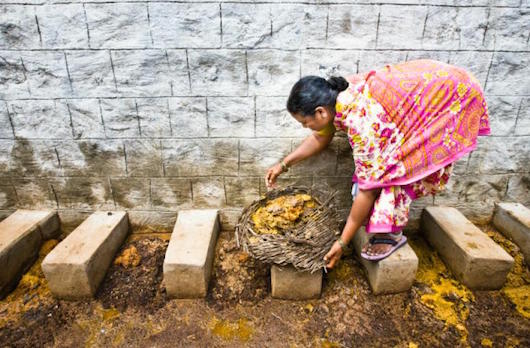
The caste system in India is one that uses birth to assign a person’s placement in society. The practice of determining hierarchical status stems from the Hindu belief that a person’s position in life is based upon the good deeds or sins of their past life.
Traditionally, there are four principal castes which are then further divided into many sub-categories. However, one category of people falls outside of this system: the Dalits. This fifth group was created to perform tasks considered too menial or degrading to be performed by caste members.
Although India’s constitution prohibited this form of discrimination, there are currently 165 million Dalits in India, accounting for roughly 17 percent of the total population.
“Dalits have long been marginalized in India,” Kaushal K Vidyarthee, a researcher on Dalit issues at the University of Oxford said in an Aljazeera article.
Dalits regularly face discrimination at every level, from access to education and medical facilities to restrictions on property ownership.
Moreover, close to half of the Dalit population lives below the poverty line, and nearly 62 percent are illiterate. Less than 10 percent of Dalit households can afford safe drinking water, electricity and toilets.
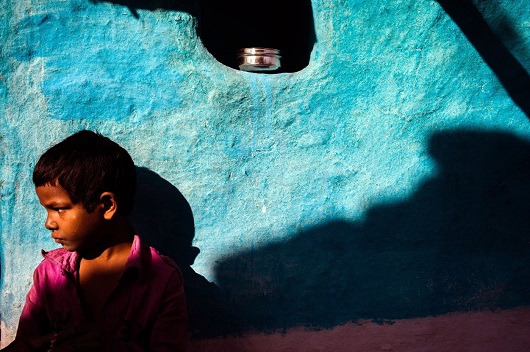
A survey by the National Campaign on Dalit Human Rights on the practices of untouchability (Dalits) undertaken in 565 villages in 11 major states of India found in 73 percent of villages, Dalits were not permitted to enter non-Dalit homes.
In 70 percent of villages, non-Dalits would not eat with Dalits. In 48.4 percent of surveyed villages, Dalits were denied access to common water sources. In as many as 38 percent of government schools, Dalit children were made to sit separately while eating.
Dalits also face routine violence. A 2005 government report said there is a crime committed against a Dalit every 20 minutes.
In December 2006, Indian Prime Minister Mannohan Singh became the first Indian leader to acknowledge the parallel between untouchability and apartheid in India.
Singh described untouchability as a “blot on humanity” and acknowledged that despite constitutional and legal protections, caste discrimination still exists throughout much of India.
Today in Asia, well over 200 million men, women and children continue to endure near complete social ostracism on the grounds of their descent. Sixty-five years after Indian independence, Vinod Sonkar, a Dalit, said, “We are still Dalit, still broken, still suppressed.”
“Dalits are increasingly becoming aware of their rights and raising their voice against discrimination and atrocities,” researcher Vidyarthee said. “Future efforts needs to be in that direction.”
– Kara Buckley
Sources: Navsarjan, Aljazeera, BBC News, Dalit Solidarity, National Campaign on Dalit Human Rights
Photo: Google Images, Flickr

WorldRemit: Overseas Money Transfers Made Easy
Ismail Ahmed experienced this necessity firsthand. While studying in London, Ahmed faced a time-consuming process each time he needed to send money to family in his native Somalia. To facilitate this process, he founded WorldRemit.
“WorldRemit,” Ahmed explains, “is an online service that lets people send money to friends and family living abroad, using a computer, smartphone, or tablet.”
According to his website, money transfers that would have taken hours reduces to three simple stages: selecting a country, adding recipient details, and sending the money. Senders and recipients are notified by email or SMS when a transfer has been received.
Money can be sent to bank accounts or for cash pick-up as well as through Mobile Money service and mobile airtime top-up.
According to Debbi McCullough from The Guardian, the increased rate of global migration places a higher demand on more rapid, cost-efficient transfer services like WorldRemit.
Globally, the World Bank estimates that one in seven people are either an international or internal migrant. Remittance flows to developing countries are projected to increase 8.4 percent in 2016 (reaching up to $516 billion in total).
Despite these increases, remittance fees in some countries still remain as high as 29 percent. Furthermore, the process of “[traveling] to an agent location, [standing] in line, [filling] out forms” and more creates a sense of unnecessary tedium, says McCullough.
While online transactions raise the question of security, Ahmed assures that “[sending] money through WorldRemit is extremely safe.” Partner companies are held up to high security and data protection standards.
Though most of its main offices are based in London, WorldRemit continues to expand. In early 2015, it opened up its first U.S. office in Denver, Colorado.
For those who need to send money, WorldRemit is currently available for use in 50 countries. Recipients live in up to 120 countries throughout Europe, Asia, Africa, Australia, North America and South America.
– Jocelyn Lim
Sources: Aldo Svaldi, Debbi McCullough, WorldRemit, The World Bank
Photo: Google Images
Dalit Caste: Apartheid in India
The caste system in India is one that uses birth to assign a person’s placement in society. The practice of determining hierarchical status stems from the Hindu belief that a person’s position in life is based upon the good deeds or sins of their past life.
Traditionally, there are four principal castes which are then further divided into many sub-categories. However, one category of people falls outside of this system: the Dalits. This fifth group was created to perform tasks considered too menial or degrading to be performed by caste members.
Although India’s constitution prohibited this form of discrimination, there are currently 165 million Dalits in India, accounting for roughly 17 percent of the total population.
“Dalits have long been marginalized in India,” Kaushal K Vidyarthee, a researcher on Dalit issues at the University of Oxford said in an Aljazeera article.
Dalits regularly face discrimination at every level, from access to education and medical facilities to restrictions on property ownership.
Moreover, close to half of the Dalit population lives below the poverty line, and nearly 62 percent are illiterate. Less than 10 percent of Dalit households can afford safe drinking water, electricity and toilets.
A survey by the National Campaign on Dalit Human Rights on the practices of untouchability (Dalits) undertaken in 565 villages in 11 major states of India found in 73 percent of villages, Dalits were not permitted to enter non-Dalit homes.
In 70 percent of villages, non-Dalits would not eat with Dalits. In 48.4 percent of surveyed villages, Dalits were denied access to common water sources. In as many as 38 percent of government schools, Dalit children were made to sit separately while eating.
Dalits also face routine violence. A 2005 government report said there is a crime committed against a Dalit every 20 minutes.
In December 2006, Indian Prime Minister Mannohan Singh became the first Indian leader to acknowledge the parallel between untouchability and apartheid in India.
Singh described untouchability as a “blot on humanity” and acknowledged that despite constitutional and legal protections, caste discrimination still exists throughout much of India.
Today in Asia, well over 200 million men, women and children continue to endure near complete social ostracism on the grounds of their descent. Sixty-five years after Indian independence, Vinod Sonkar, a Dalit, said, “We are still Dalit, still broken, still suppressed.”
“Dalits are increasingly becoming aware of their rights and raising their voice against discrimination and atrocities,” researcher Vidyarthee said. “Future efforts needs to be in that direction.”
– Kara Buckley
Sources: Navsarjan, Aljazeera, BBC News, Dalit Solidarity, National Campaign on Dalit Human Rights
Photo: Google Images, Flickr
Drones: Revolutionizing Healthcare in South Africa
While Americans may enjoy the entertainment of recreational drones, in South Africa the devices serve an alternative purpose. Barry Mendelow, Professor Emeritus at the University of Witwatersrand, Johannesburg, South Africa, has developed drones into what could be a life-saving delivery service.
Mendelow has dubbed his drone delivery service ‘e-Juba,’ inspired by carrier pigeons (iJuba in Zulu).
e-Juba would provide remote areas with essential medical supplies, including vaccines and pharmaceuticals.
The drones are not only designed for one-way deliveries but also allow users to send their own blood and DNA samples to labs for testing.
With this system, disease detection and diagnosis could take as little as a day. Without the drone delivery service, says Mendelow, current disease diagnosis takes up to six weeks. During this period, a patient’s condition could worsen or a contagious disease could be spread to others unknowingly.
This large window of time is due in large part to a general lack of infrastructure in rural areas. Unpaved roads, according to Mendelow, pose a significant challenge to patients that have to make their way from remote areas to labs for testing. E-Juba serves as a simple and convenient solution to the infrastructural obstacle.
Trials that Mendelow conducted demonstrated a high possibility for the drones’ success. 300 flights, each traveling about 30 kilometers, did not lose “a single cargo or artifact.”
The drones may prove especially beneficial to revolutionizing healthcare in South Africa, a country that the World Health Organization deems as having one of the “highest burdens” globally for Tuberculosis (TB) and HIV.
South Africa’s 2014 incidence of TB at 834 per 100,000 people. Compare this figure to France, with a 2014 estimate of nine per 100,000 people.
Mendelow’s project is close to coming to fruition. With the trials successfully conducted, all that he now requires is clearance by the South African Civil Aviation Authority to implement e-Juba as an authorized delivery system.
– Jocelyn Lim
Sources: Barry Mendelow, Barry Mendelow et al., National Health Laboratory Service, New Scientist
Photo: Google Images
What Causes Stunting?
Stunting is described as, low height for age or a height more than two standard deviations below the WHO Child Growth Standards median.
It is estimated 162 million children under the age of five are stunted worldwide.
According to The Future of Children, stunting is an indication of malnutrition or nutrition related disorders. Contributing factors include poor maternal health and nutrition before, during and after pregnancy, as well as inadequate infant feeding practices especially during the first 1,000 days of a child’s life and infection.
In a global study, UNICEF explains that nearly half of all deaths of children under the age of five are attributable to chronic malnutrition. In one year, that’s a loss of nearly three million lives.
Malnutrition doesn’t only lead to decreased stature. Malnutrition increases the risk of dying from common infections, the frequency and severity of such infections and contributes to delayed recovery. According to UNICEF, the relationship between malnutrition and infection can create a potentially lethal cycle of worsening illness and deteriorating nutritional status.
The effects of stunting are lasting and generally irreversible. Children over the age of two who are stunted are unlikely to be able to regain their lost growth potential. In addition, children who experience stunting have an increased risk for cognitive and learning delays.
The effects of malnutrition on a population have broader impacts. Malnutrition perpetuates poverty and slows economic growth. Reports from the World Bank show that as much as 11 percent of gross national product in Africa and Asia is lost annually to the impact of malnutrition.
A study looking at the long-term effects of stunting in Guatemala showed adults who were stunted as children received less schooling, scored lower on tests, had lower household per capita expenditure and a greater likelihood of living in poverty. For women, stunting in early life was associated with a lower age at first birth and a higher number of pregnancies and children.
The World Bank estimates a 1 percent loss in adult height due to childhood stunting is associated with a 1.4% loss in economic productivity. Further estimates suggest stunted children earn 20 percent less as adults compared to non-stunted individuals.
In 2012, the World Health Assembly endorsed a plan to improve maternal, infant and young child nutrition by 2025. Their first target: a 40 percent reduction in the number of children under the age of five who are stunted.
Overall, progress has been made. UNICEF reported between 1990 and 2014 the number of stunted children under five worldwide declined from 255 million to 159 million. Today, that is just under one in four children under the age of five who have stunted growth.
At the same time, numbers of stunting have increased in West and Central Africa from 19.9 million to 28.0 million. As of 2014, just over half of all stunted children live in Asia and over one-third reside in Africa.
– Kara Buckley
Sources: World Bank, UNICEF, The Future of Children, World Health Organization 1, World Health Organization 2
Photo: Needpix.com
Conference Calls for Clean Water
For three days, 24 governments in the sub-Saharan region had the opportunity to meet with major investment banks, international organizations, businesses and experts.
Their collective goal is to find new methods to raise an estimated $20 to $30 billion annually for the water, sanitation and hygiene sector. Success will bring universal access of those services to West and Central Africa, home to nearly half the global population currently living without access to improved drinking water.
The Joint Monitoring Report Update of 2015 estimates 663 million people globally still lack access to improved drinking water sources. 2.4 billion people have no access to improved sanitation facilities, and of that number, 946 million defecate in the open.
According to UNICEF, no country in West and Central Africa has universal access to improved drinking water and access to sanitation even rarer. In countries with the best coverage of the sub-Saharan area, as many as one in four people still lack adequate sanitation.
Within the last 25 years, the population of the sub-Saharan area has nearly doubled. Growing populations are outpacing government efforts to provide essential services. Access to improved sanitation and clean water has not kept pace with these changes. In fact, improved sanitation only increased by 6 percent and water only 20 percent within the same time period.
The number of people in the region who defecate in the open is higher now than it was in 1990.
Without speedy action, UNICEF warns the situation could drastically worsen within the next 20 years.
The UN estimates global economic losses due to inadequate water, sanitation and hygiene amount to $260 billion dollars per year. As the sub-region with the worst access, West and Central Africa carries a significant portion of this burden.
Funding for the water, sanitation and hygiene sector is uneven and insufficient, noted UNICEF. No African country has allocated more than 0.5 percent of its gross domestic product to the sector.
Meanwhile, of the $3.8 billion overseas development aid (ODA) allocated for the water, sanitation and hygiene sector in 2012, approximately three-quarters went to water and the remaining quarter to sanitation.
Most ODA funding goes to countries that are already doing well, and while rural access to clean water is far behind urban access, both external and domestic funding go primarily to urban systems.
“While we know what needs to be done, we have to figure out a way to do it faster and better,” UNICEF Regional Director for West & Central Africa Manuel Fontaine said. “There are a lot of options on the table; what is not an option is to continue to allow children to pay for our lack of action.”
– Kara Buckley
Sources: WASH Finance, UN, UNICEF
Photo: Wikimedia Commons, Flickr
Digital Transfers Open New Doors for Women’s Health in India
With the help of The Public Financial Manage System (PFMS), Health Module India is pursuing its goal of having healthy mothers deliver healthy babies as a part of the overall development plan. The initiative is especially focused on pregnant women from rural areas.
Prior to the introduction of digital transfers, the paper-based government cash-transfer was a slow process and in many cases money went missing due to widespread corruption. However, the World Bank reports that digitizing the program will help prevent these “leakages” of money and save the project 36 million dollars per year.
The program trains female attendants, called ASHAs to care for pregnant women in their own rural neighborhoods. They then offer cash incentives in order to encourage women to deliver in healthcare centers and bring their children back for immunization.
The project aims to train 88,000 ASHAs by 2016 in order to expand the program to all four districts of Bihar.
With less paperwork, women’s health workers are more focused on providing health care: “We can utilize that time in monitoring, hospital and field work,” explained a local health care worker in a World Bank report.
With the paper-based benefits-transfer payment system, ASHAs had to wait 191 days to receive payment. Some beneficiaries even reported having to pay a “facilitation fee” in order to receive funds. Now with the digitized system beneficiaries receive cash within two days and ASHAs only wait 30 days for payment.
In addition, the rate of bribes has fallen. “Through the system, the payment comes directly to my account. No one can take the money,” ASHA Madhu told the World Bank.
The International Finance Corporation (IFC) supports the program by calculating and authenticating the records of payments. IFC also automates the depositing of funds directly into recipients’ bank account.
Since the installation of the new system in April 2014, 11 million rupees have been processed to beneficiaries and ASHAs. In order to receive transfers, women are required to get an ID and open a bank account; direct transfers have played a big role in empowering women in Bihar.
– Marie Helene Ngom
Sources: World Bank, CGAP, IFC
The Caterpillar Foundation Fights Poverty
The “Together.Stronger.” approach is not one of competition, but one of collaboration towards a similar goal.
“No one individual, no one corporation, no one organization can do it themselves,” says Michele Sullivan, President of the Caterpillar Foundation. “But together, we are stronger.”
“Caterpillar has learned from its business and years of philanthropic work that the bigger the project, the better the team needs to be,” she says. “Together.Stronger. is our effort to build the best team possible… because ending extreme poverty is something that will take all of us.”
To accomplish this, the platform is based on three areas of focus:
Caterpillar works to bring the world together to fix a problem that affects us all. With this in mind, the foundation works to create global citizens: a people that aren’t just citizens of a town or a country, but of the globe at large.
“The world is better when everyone stands together. Because together, we truly are stronger.”
– Katherine Martin
Sources: Caterpillar, Global Citizen, ONE, Scene7
Photo: Needpix.com
Using Nutrition to Improve Literacy in Afghanistan
Education has been a priority of the Afghan government postwar, but childhood stunting is affecting brain health and learning development in Afghan children. Studies have linked childhood stunting to poor cognitive development.
A third of Afghanistan’s population falls short of daily calorie needs, with 20 percent of the population lacking enough protein in their diet and 40 percent of children ‘stunted,’ or small for their age.
“A malnourished mother has a higher risk of delivering a fetus that is malnourished, small for its gestational age, and sometimes even premature,” explained child-health expert Zulfiqar Bhutta. “By virtue of this handicap, these babies often have issues with lifelong learning.”
To tackle the issue of food security in Afghanistan, NEI has been working with local governments and the United Nations World Food Programme (WFP) to encourage the farming of soybeans.
Soybean was selected because it contains high-quality protein, zinc, iron and plenty of calories. In a country recovering from a war, cultivating soybeans is the most economical option.
NEI program has also provided employment and education for Afghans. NEI has trained over 70,000 farmers on cultivating soybeans and how to turn them into flour and milk.
Soybean is not a traditional part of the Afghan diet or landscape and the endeavor was initially met with criticisms, but with government support and local trainers that teach villagers about the benefits of soy, the program has expanded.
In 2014, the Republic of Korea contributed $12 million to the WFP to build Afghanistan’s first soy milk factory. The leftover soybean pulp will be distributed to local women as chicken feed in order to encourage them to raise poultry and generate income.
NEI aims to eliminate protein malnutrition all over Afghanistan by aid farmers in producing 300,000 metric tons of soybeans, which in turn will provide growing children with more protein in their diets, which then has a direct effect on increasing literacy in Africa.
– Marie Helene Ngom
Sources: WFP, Project Literacy
Photo: Google Images
Bringing Water to Thousands of Albanian Villagers
Thanks to a new project designed to install new and improved water pumping stations throughout coastlines, Albanian villagers are enjoying improved community water sources and piped water for the first time.
The picturesque villages covering the Albanian countryside boast breathtaking views, but attracting reliable income from tourism has been a problem due to the villages’ lack of reliable potable water. Alexandra Spiro, a resident of the village of Lukove, expressed the daily trials associated with sporadic water supply. “Before, the water only came at certain times,” Spiro said, “and when the water came we filled every pot we had.”
Since then, the Integrated Coastal Zone Management project has introduced powerful new water pumping stations throughout the Albanian coast. The project, funded by the World Bank, has taken the original water network and done a major overhaul, making upgrades and adding improved features.
Vladimir Kumi, Former Mayor of Lukove Commune, which incorporates the 14 villages benefiting from the new project, said, “In all the villages of our commune, there were amortized water pipes from the 70’s and only public taps. People didn’t have water at home, and little water came to villages.”
To keep the new increase in water supply affordable for residents, each village has received metering systems. Compared to the previously charged flat rate, households now only pay for what they use, making the service more attainable for the lower income villagers.
The upgrades have had a great impact on the Albanian Villagers making their daily tasks, such as cooking, cleaning and laundry, faster and more efficient. However, the residents most impacted are the small business owners. Liljana Shehu, a cafe owner in Lukove, said the water upgrades have been good for business, “It helps us maintain better hygiene. Before, we didn’t have water and now we have water all the time, whenever we want just by turning on the tap. And the water is healthier too.”
Thanks to the project, these small-scale, entrepreneurial ventures are sprouting up around the region. Like Shehu, Miliano Bitri, from the village of Piqeras, owns a family-run small hotel that offers views of his farm and olive orchard. Since the project was completed, operations of the business for Bitri and his family and been, quicker, easier, and most importantly, more profitable.
– Claire Colby
Sources: CIA World Factbook, World Bank
Photo: Google Images
Female Farmers: The Key to End World Hunger?
With unequal access to tools, training and land, female-run farms produce between 14 to 30 percent lower yields, according to a 2014 study by the World Bank.
The same report determined that if female farmers were treated equally in agriculture across Africa farm yields would increase by up to 30 percent.
According to the Food and Agriculture Organization of the United Nations, a percentage increase of that magnitude could feed an additional 150 million people every day, thereby reducing the number of undernourished people in the world by 12 to 17 percent.
Landesa is a rural development institute aimed at reforming laws and policy tools to help alleviate poverty, reduce hunger and ease land conflict. Their research illustrates the effects created when women are economically and socially empowered through secure legal rights to land.
According to Landesa, when women are given land rights they:
U.N. Women, a United Nations entity for gender equality and female empowerment, describes gender equality and women’s rights as cross-cutting throughout the 2030 Agenda, with its 17 Sustainable Development Goals (SDGs).
The SDGs are fundamentally linked to the lives of women and girls globally, especially those of rural women. This is particularly true for the goal to universally end poverty in all its forms, the goal to end hunger, achieve food security and improved nutrition, promote sustainable agriculture as well as the goal to achieve gender equality and women’s empowerment.
U.N. Women describe rural women as key agents for achieving the economic, environmental and social changes required for sustainable development. Limited access to credit, health care and education are among the many challenges faced by women.
Land ownership and other means of women’s empowerment are crucial not only to the well-being of individuals, families and rural communities but also economic productivity, given women’s presence in the agricultural field.
– Kara Buckley
Sources: FAO, Landesa, Rockefeller Foundation, Take Part, UN Women
Photo: Google Images