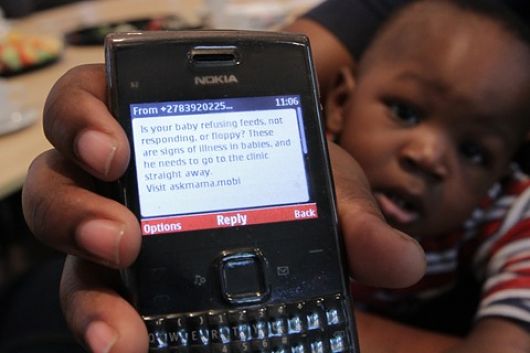
A diagnosis could be as quick as a text message away through the program MedicSMS.
MedicSMS is a new way for doctors to give diagnoses to patients in developing countries. The service is provided by means of Artificial Intelligence (AI), an upcoming technology that is gaining credibility and popularity.
Many people in developing countries have access to basic mobile phones. According to the 2015 Ericsson Mobility Report there are 2.6 billion smartphone subscriptions that exist globally. By the year 2020, Ericsson predicts that number will jump to 3.5 billion.
MedicSMS capitalized on growing mobile connections, creating a new way for patients and their doctors to interact when “in-person” is not an option. The program works collaboratively with IBM Watson, a “supercomputer platform” that can “analyze health data” and Twilio, the SMS service used. The machine, using basic question and answer sets, will “reveal insights from large amounts of unstructured data,” according to IBM.
After the data is received from the patient, Watson goes to work. The AI interface translates the SMS into a “likely diagnosis,” according to MedicSMS. The patient is then delivered a set of steps to follow for their newly diagnosed condition.
After a diagnosis is made, patients can start a treatment regimen immediately.
A service similar to MedicSMS, called FrontlineSMS, is seeing success from its pilot project in Malawi, which is the world’s poorest country, according to data from the World Bank.
According to the FrontlineSMS website, the service saved hospital staff an estimated “1,200 hours of follow-up time and $3,000 in motorbike fuel.” The time saved by Frontline SMS could be allocated to other patients in need of “in-person” aid, while the financial resources could be stretched further to assist other people in need.
The MedicSMS AI interface also asks for a location from the patient. That information is logged and transported to local health authorities that can administer extra aid if needed, as well as medication that the patient requires.
The GPS location also allows health authorities to pinpoint where illnesses and diseases are taking place, helping them to be better prepared for future outbreaks of certain diseases.
Harley Katz, one of the Ph.D. members of the MedicSMS team, hopes that soon, health organizations can better understand where the epicenter for diseases and outbreaks are taking place.
“Eventually, we’re hoping to track much more, including where similar symptoms are popping up on the map,” he said.
– Alyson Atondo
Sources: World Bank, Ericsson, IBM, Frontline SMS, Techcrunch, Devpost
Photo: Google Images

Global Education Conference Redefines Education
As the world becomes more tightly connected, the opportunity and demand for education increase.
The sixth annual Global Education Conference explores the concept of redefining education. Over a period of four days, from Nov. 16 to 19, the conference promoted both classroom and “real world” education to provide participants with a well-rounded and highly informative experience.
The annual online event connects classrooms, raises awareness of cultural diversity and supports educational access for all. Anyone with internet access can learn more about upcoming changes in education, as well as promote their own ideas.
Though the Global Education Conference isn’t a conventional method of online learning, it offers many of the same benefits. Participants learn from speakers and instructors of many different countries and backgrounds and receive a much broader perspective on the topics.
Technology allows questions to be answered immediately and for multiple discussions to take place at once. The nonstop sessions make sure everyone, no matter how busy, can attend at least one seminar a day and choose the topic that best meets their interests.
The conference presented two topics in particular that could prove beneficial to the war on global poverty: learning more about refugees and understanding the relationship between poverty and education.
Because half of the Syrian refugees are children and many are in refugee camps instead of schools, the Global Education Conference dedicated a session to The Refugee Story Circle, a student-run project founded by Qatar Foundation International.
Resettled refugees had the opportunity to tell their personal experiences in a respected and dignified environment. The audience was then able to connect first-hand with the refugees through online discussions and letters of encouragement.
Richard Close, CEO of Chrysalis Campaign, Inc., explained the viewpoint of poverty and education. “Students who are given resources and encouragement realize over time that they have a bright future. Children who live in poverty learn early on to think, ‘What future?’ Consequently, they don’t develop the skills and self-motivation needed to succeed.”
Mary Brownell, a member of iEARN-USA, explained the nonprofit network’s partnership with Kids Can Make a Difference to encourage teachers to discuss hunger, inequality and poverty with their students.
“The goal is to imprint upon students what the effects really are on our world,” Brownell said.
Furthermore, impoverished students will feel like their needs are being addressed. Those who can’t attend schools will, hopefully, receive more attention and assistance.
– Sarah Prellwitz
Sources: Elluminate, EdSurge, Franklin University, Global Education Conference 1, Global Education Conference 2, iEARN
Photo: Europa Education
An End in Sight for Mother-to-Child HIV Transmission
In celebration of World AIDS Day, the Pan American Health Organization (PAHO) and the World Health Organization (WHO) have announced that 17 countries and territories have likely eliminated the vertical transmission of HIV from mother-to-child through screening and intervention efforts.
Cuba was the first nation to be certified as transmission free by the WHO. At least 17 other nations are close behind or have already achieved the same success. The elimination of mother-to-child HIV transmission is a part of the United Nation’s campaign to end the AIDS epidemic, which has claimed the lives of 39 million people since it began.
Marcos Espinal, Director of PAHO/WHO’s Department of Communicable Diseases and Health Analysis, said, “If we want to end HIV by 2030, we need to accelerate action for prevention and access to treatment, focusing on key populations and increasing investment and resources.”
There is now strong evidence that an increased investment in preventative measures could make vertical transmission a thing of the past on a global scale. Carissa Etienne, Director of PAHO/WHO, said in a news release “The countries of the Americas have made tremendous efforts to reduce mother-to-child transmission of HIV, cutting new infections by half since 2010.”
Despite steps in the right direction, the transmission of HIV from mother to child is still a critical issue for millions. Transmission can occur during pregnancy, birth, or during breastfeeding.
To combat mother-to-child HIV transmission, pregnant women are given HIV medication throughout their pregnancies. For those who have not received treatment throughout the course of their pregnancies, an IV-administered antiviral called zidovudine can be given during labor, the point at which infants are most exposed to infected blood and bodily fluids.
The IV treatment enters the infant’s bloodstream via the placenta, rendering the infant immune to HIV infection, regardless of the level of the mother’s infection.
Due to the many risk factors associated with mother-to-child HIV transmission, the eradication throughout an entire nation is an impressive feat.
This success in the Americas signals a new phase of hope in the preventive medicine game.
– Claire Colby
Sources: AIDS info, A Plus
Picture: Google Images
Plant Lamps Light the Way for Rainforest Villages
According to the Universidad de Ingenieria y Tecnologia (UTEC), around 40 percent of the rainforest villages in Peru do not have much electricity.
Translation: sundown means lights out. It’s a genuine problem for families and students unless they resort to unhealthy and dangerous kerosene lamps which are bad for eyesight and lungs because of the resulting smoke.
Nature, the geographical isolation of these communities and routine flooding are all part of the problem.
However, researchers and students at UTEC decided to make nature part of the solution. Taking stock of their surroundings, the team used two plants and soil to create “plantalámparas” or plant lamps.
Elmer Ramirez, a professor of Energy and Power Engineering at UTEC, explains, “We can obtain energy from the earth. Based on principles and findings documented in other countries we developed our own prototype, using a clean energy system.”
Ramirez goes on, “Every plant produces nutrients, and these nutrients — in contact with microorganisms in the earth called geobacter — undergo an oxidation process generating free electrons that are captured through electrodes. These electrodes are in a grid. This energy is stored in a conventional battery to be used to light an LED light bulb.”
Each plant lamp unit consists of a planter with an electrode grid buried in the soil, in which a single plant is growing. The electrode grid collects free electrons generated by oxidation processes and stores the energy in a conventional battery, also buried in the soil.
The battery then powers the low-consumption LED lamp, attached to the side of the planter. Each lamp is capable of generating enough power to supply two hours of light per day.
UTEC has partnered with global ad agency FCB Mayo to produce several prototypes for distribution. As of now, ten houses in Nuevo Saposoa have a plant lamp. With such innovation and low production costs, the demand for plant lamps will likely increase.
A promotional video provided by UTEC presents many members of the Nuevo Saposoa community expressing their gratitude. One resident is heard saying, “electricity is life for our children.”
– Kara Buckley
Sources: Discovery News, Slate, MIT Technology Review, YouTube
Photo: Vimeo
FINCA Boots Entrepreneurship in Underserved Countries
FINCA International helps small business owners in more than 23 countries worldwide by providing the finances and resources they need to keep their businesses up and running.
The innovative nonprofit focuses on four core areas: financial assistance, social intermediation, enterprise development and social service impact.
FINCA International serves as a financial intermediary by providing developing business owners with loans, teaching them how to open savings accounts and helping them find insurance tailored to the products and services they offer. This helps new businesses blossom into full-running operations that help women and men provide for their families.
Their second facet, social intermediation, is also an important part of their business model. Because they are serving entrepreneurs in countries that may be lacking in gender equality, they have to serve as people who can help bring change to these communities. FINCA International provides this intermediation through education in financial literacy and Village Banking loan programs.
In addition to enterprise development, they also help developing communities through educational programs, nutrition services, and health training. These programs contribute to the success and growth of the villages and towns they serve.
FINCA International was launched in 1984 by former Peace Corps member Dr. John Hatch. Hatch started the organization as Village Banking, which operated in Bolivia and served as a financial intermediary for farmers struggling through tough economic times. The following year, Hatch started the organization.
In its early days, FINCA International operated primarily in Latin America, including Honduras, Mexico, and El Salvador, but by the early 1990s, its services had spread to Africa and Eurasia as well. Since its inauguration, FINCA International has lived up to its name and has provided services in countries all over the world.
Subsidiaries exist in countries in Africa, Western Europe, Latin America and Asia.
– Julia Hettiger
Sources: FINCA, Give, Philanthropedia, MicroCapital
Photo: Flickr
Using Cell Phones to Measure Poverty in Developing Countries
A new study published by the University of Washington and the University of California, Berkeley reports that mobile cell phone information can be used to measure levels of wealth and poverty in developing countries.
Historically, poverty data in developing countries has been difficult to measure because information is captured through door-to-door surveys.
“[Cell phones] could be a useful policy instrument to estimate the geographic distribution of poverty and wealth,” said Joshua Blumenstock, one of the study’s authors, in a NY Times interview.
Blumenstock and his colleagues used anonymous data from 1.5 million subscribers of Rwanda’s largest mobile phone network. The team analyzed billions of interactions which included the time and length of phone calls as well as text messages. Cellphone towers helped them get a rough idea of geographic location.
During the study, the researchers also interviewed 850 cell phone owners. The respondents were asked about their housing situations, the assets they had access to and other indicators of wealth or poverty.
The researchers used this information to create an algorithm that predicts a person’s wealth based on their cellphone usage. Using this model, the team was able to answer more specific questions including whether a house has electricity.
Notably, the resulting wealth and poverty maps closely mirrored the findings of the Rwandan government’s door-to-door surveys.
The researchers are trying to conduct similar work in Afghanistan because certain areas are dangerous or too difficult to access and door-to-door surveys are not possible.
“We do not think this method is the be-all or end-all, but in the absence of good information, this is better than nothing,” said Blumenstock. However, the researchers’ approach could lead to new ways to quickly analyze poverty at a fraction of the cost of other methods.
– Jordan Connell
Sources: PC Tech Magazine, The New York Times
Photo: Flickr
MedicSMS Diagnoses Patients Remotely in Developing Countries
A diagnosis could be as quick as a text message away through the program MedicSMS.
MedicSMS is a new way for doctors to give diagnoses to patients in developing countries. The service is provided by means of Artificial Intelligence (AI), an upcoming technology that is gaining credibility and popularity.
Many people in developing countries have access to basic mobile phones. According to the 2015 Ericsson Mobility Report there are 2.6 billion smartphone subscriptions that exist globally. By the year 2020, Ericsson predicts that number will jump to 3.5 billion.
MedicSMS capitalized on growing mobile connections, creating a new way for patients and their doctors to interact when “in-person” is not an option. The program works collaboratively with IBM Watson, a “supercomputer platform” that can “analyze health data” and Twilio, the SMS service used. The machine, using basic question and answer sets, will “reveal insights from large amounts of unstructured data,” according to IBM.
After the data is received from the patient, Watson goes to work. The AI interface translates the SMS into a “likely diagnosis,” according to MedicSMS. The patient is then delivered a set of steps to follow for their newly diagnosed condition.
After a diagnosis is made, patients can start a treatment regimen immediately.
A service similar to MedicSMS, called FrontlineSMS, is seeing success from its pilot project in Malawi, which is the world’s poorest country, according to data from the World Bank.
According to the FrontlineSMS website, the service saved hospital staff an estimated “1,200 hours of follow-up time and $3,000 in motorbike fuel.” The time saved by Frontline SMS could be allocated to other patients in need of “in-person” aid, while the financial resources could be stretched further to assist other people in need.
The MedicSMS AI interface also asks for a location from the patient. That information is logged and transported to local health authorities that can administer extra aid if needed, as well as medication that the patient requires.
The GPS location also allows health authorities to pinpoint where illnesses and diseases are taking place, helping them to be better prepared for future outbreaks of certain diseases.
Harley Katz, one of the Ph.D. members of the MedicSMS team, hopes that soon, health organizations can better understand where the epicenter for diseases and outbreaks are taking place.
“Eventually, we’re hoping to track much more, including where similar symptoms are popping up on the map,” he said.
– Alyson Atondo
Sources: World Bank, Ericsson, IBM, Frontline SMS, Techcrunch, Devpost
Photo: Google Images
PPPs Fight African Youth Unemployment
According to The Guardian, “youth unemployment is a global issue,” as young people account for approximately 40 percent of the world’s unemployed. Of note, 90 percent of this demographic live in developing countries, such as South Africa.
Not surprisingly, one of the U.N.’s Sustainable Development Goals seeks to address this global issue by “substantially [reducing] the proportion of youth not in employment, education, or training” by 2020.
Public-private partnerships (PPPs) have already started to make a difference for unemployed youth in South Africa, where the youth unemployment rate stands at a staggering 50 percent. PPPs are working to provide young workers with government funded education, internship opportunities and technical services.
PPPs run projects between the private sector and the government, nongovernment organizations (NGOs) and the private sector, or a combination of all three.
Zambian Youth Benefit
In Zambia for example, a PPP comprised of Unicef, Barclays and the Zambian government provided free courses focused on enterprise, entrepreneurship and communication skills.
According to The Guardian, Ernest Daka, a 22-year-old Zambian unemployed youth turned entrepreneur, credits a business and financial literacy course offered by this PPP as his motivation to become a self-starter.
Daka learned how to apply for a startup loan from a microfinance institution to purchase 50 chicks, a chicken coop, feed and charcoal.
The young entrepreneur began raising chickens after he learned more about local food supply and demand during the PPP course. Daka hired his brother as an employee and plans to package his chicken and eggs for grocery and restaurant sale in the future.
He has since repaid his loan in full and was able to pay for his brother’s school fees using profits from his business.
New Funding for PPPs
In 2014, the African Development Bank Group (AFDB) approved the financing of 48 new private sector operations with an investment of UA 1.59 billion. According to the AFDB, PPPs are one of the best ways for countries to foster development via power transport, water and sanitation and telecommunications.
As the desire for greater efficiency and better services grows, the availability of public financing resources diminishes. The South African government continues to promotes PPPs to make up for this lack of funding, improve the business environment and reduce the youth unemployment rate.
– Kelsey Lay
Sources: African Development Bank Group, The Guardian, UN
Photo: Flickr
South Korean Villages Fight to Keep Primary Schools Open
While rural schools in South Korean villages are facing closings, communities are trying to find solutions to keep them open. Next spring, local school Nogok Primary will close after its only enrolled student graduates, 12-year-old Chung Jeong-su. For the one student enrolled, it costs more than $87,000 per year to keep the school running.
In South Korea, 93 percent of students graduate from high school on time compared to 81 percent in the United States, an average considered among the best in the world.
“Villages around here have no more children to send,” the school’s only teacher, Lee Sung-kyun said. “Young people have all gone to cities to find work and get married there.” Located 110 miles east of South Korean’s capital, Nogok is a typical farmland town where farmers tend to potatoes, beans, and red peppers.
In the aftermath of the Korean War, farmers found premier education as a ticket to freedom for their children to escape poverty. By sending their children to Nogok Primary, students graduated and earned wages that were significantly higher than their parents.
Along with other Nogok Primary youth, recent high school graduates began moving to big cities where they could pursue university or receive higher-paying jobs. This demographic shift hit rural towns, including the Nogok community.
In 1960, the population of Nogok was 5,387. In 2010, the town reported a population of 615. That year, only 17 were primary school age. Since 1982, nearly 3,600 schools have closed across South Korea due to lack of enrollment.
“It’s a sorry sight,” said Mr. Baek, a graduate of Nogok Primary. “When I was a student here, 300 children were crawling all over there, giving weeds no time to grow.”
While the country has an excellent education system, rural South Korean villages are suffering, creating a larger gap between the rich and the poor. With the 13th largest economy in the world, South Korea’s rural towns have taken initiative, starting campaigns to save their schools. Some solutions include hiring buses to transport children from neighboring towns and providing free housing for families moving to the rural towns with school-age students.
Continued efforts give villages hope they can bring another generation of students back to the once prospering population.
– Alexandra Korman
Sources: ABC News, The New York Times, U.S. Department of Education
Photo: Google Images
Waiting for Health Project Highlights Global Health Crisis
Health care is considered by many to be a fundamental right. However, there are so many people in the world that do not have access to the care and services they need, creating a global health crisis.
A project called Waiting for Health brings awareness to this problem through a photo series that chronicles the stories of those waiting for health care. The photos are taken by 12 photographers and focus on 12 different countries.
The Waiting for Health project was created by the Global Coalition for Universal Health Coverage. It also had support from the Rockefeller Foundation.
Ultimately, the project hopes to spark a conversation about the disparity that exists in health care around the world.
According to the World Health Organization (WHO), approximately one billion people in developing countries do not have the access to health care that they need due to a number of factors such as high costs, poor quality facilities as well as a shortage of health care workers.
A 2014 WHO World Health Statistic revealed that in the African Region there were approximately 2.6 physicians per 10,000 patients. The density of the remaining health workforce to the population is also concerning: nursing and midwife personnel (12), dentistry personnel (0.5) and pharmaceutical personnel (0.9).
Due to the lack of financial resources, many people living in extreme poverty often have to choose between getting the medical attention that they need or buying food for survival.
Waiting for Health hopes to rejuvenate the conversation surrounding health care. Photographer Aurelie Marrier d’Unienville says that the photos will give people a different perspective on health care in developing countries. The photos will add a touch of “humanity” giving viewers a better visual understanding of what is occurring around them.
“Statistics and surveys present us with inanimate and abstract figures of which we can’t relate,” she said. “These photos present a compelling and visual story, which can evoke a sense of real understand and empathy.”
Her photos focused on the health care crisis in Guinea, but the series documents many other global experiences. Another example focuses on Libyan refugees in Norway waiting for mental health care.
According to the Waiting for Health website, “We hope these photographs inspire all of us to slow down and think more deeply about what really needs to change and make universal health care coverage a reality,”
– Alyson Atondo
Sources: European Parliamentary Research Service, World Bank, Waiting for Health, Mashable
Photo: Flickr
WeChat Wallet Launches in South Africa
Social messaging app, WeChat recently introduced a digital wallet service in Johannesburg, South Africa.
With WeChat Wallet, users can securely store bank cards and make instant cash payments just as they would with a physical wallet. The new service also enables users to electronically send cash to friends or family.
In addition, WeChat Wallet also offers the use of three chip, PIN debit and credit cards and the capability to transact via cards verified by Visa and MasterCard.
WeChat, which is owned by Chinese juggernaut, Tencent has partnered with Standard Bank for the launch of WeChat Wallet.
When registering for the digital wallet, users automatically become Standard Bank Instant Money users, which makes it possible for those without bank accounts to use the service. Accountholders at other banks are also able to access WeChat Wallet.
Brett Loubser, Head of WeChat Africa told IT News Africa, “The service is another way WeChat is merging the online and offline worlds, providing people with seamless payment integration in a single application. Now they won’t be inconvenienced if they forget their purses or money at home because everything they need is at their fingertips.”
WeChat Wallet is available to South Africans who are sixteen or older with a Valid ID who use iOS or Android phones. To register for the digital wallet service, all they have to do is log into WeChat, tap “wallet” then follow the step-by-step instructions.
To use the digital wallet service for in-store payments, customers simply need to scan the QR code located in stores that support this mobile payment platform and then enter the amount of their purchase into their phone. Users can even “cash in” and “cash out” via Instant Money vouchers at Standard Bank ATMs and other participating retailers.
According to Tencent, more than 200 million customers globally have added their bank cards to the mobile payment platform in November 2015.
– Jordan Connell
Sources: NFC World, It News Africa