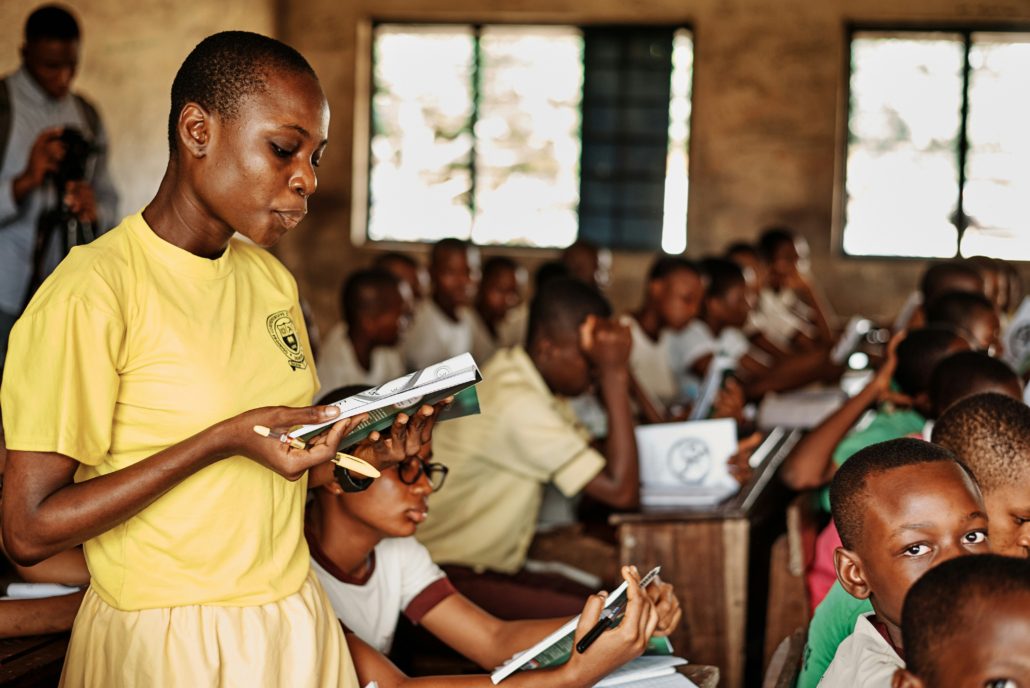
 Often referred to as the gateway to Africa, Ghana has been a beacon of hope to other African countries and continues to make strides in all major sectors. However, that hope is bleak, especially in rural and underserved communities with regard to SDG 4 in Ghana. For example, many children have difficulty accessing education due to having to travel long distances or they have to abandon school to go to work. Children brave enough to pursue their educational dreams often study in dilapidated buildings, trek for miles through dangerous terrains and do so with little to no reading or studying materials.
Education in Ghana
According to a 2022 report by the World Bank, UNESCO and other organizations, nearly 53% of 10-year-old Ghanaian children cannot read and understand a simple story. Teacher shortages, overcrowded classrooms and limited access to learning materials remain persistent obstacles. Updates on SDG 4 in Ghana hint that gender disparities still affect educational attainment, particularly among girls in rural areas. Factors such as early marriage, menstruation-related absenteeism and domestic responsibilities often push girls out of school.
For more than two decades, Ghana, through government initiatives and support from NGOs has worked hard to achieve near-universal primary school enrollment. Around 70,000 out-of-school children being reintegrated through a nationwide education initiative supported by the Ghanaian government and its development partners. Their stories reflect a broader national commitment: ensuring every child in Ghana receives quality education.
This ambition aligns with Sustainable Development Goal 4 (SDG 4): Quality Education, which Ghana continues to pursue through legal reforms, public-private partnerships and community-led efforts. Despite funding pressures and pandemic disruption, the country has made notable strides since 2020.
The Free Senior High School (SHS) Bill
One of the biggest policy shifts on the horizon is the Free Senior High School (SHS) Bill introduced in 2024 by Ghana’s Ministry of Education to give legal backing to the provision of free and compulsory education at the senior high school level. While the free SHS policy has existed since 2017, passed into law will make it a constitutional right, securing access for future generations. Former President of Ghana, Nana Addo Dankwa Akufo-Addo, in his final State of the Nation Address in Parliament on Jan. 3, 2025, praised the transformative impact of the initiative.
“We have transformed education, and there can never be a reversal of the fact that 5.7 million young adults have gained access to secondary education, who would otherwise not have had the opportunity but for Free Senior High / Technical and Vocational Education and Training (SHS/TVET),” he stated. However, Fact-Check Ghana fact checked this statement and adjusted its number of beneficiaries to 3.2 million in total. With institutions such as the National Association of Graduate Teachers (NAGRAT) calling for the suspension of the Free SHS policy, its impact still remains significant for many families that have tremendously benefited since its inception.
“I never thought my daughter would finish high school,” says Efua, a mother of four in the Central Region. “But because of Free SHS, she’s now writing her WASSCE exams.”
An analysis by Africa Education Watch on the financial burden and implementation of the Free SHS Policy revealed that between the 2017/2018 and 2023/2024 academic years, a total of GH¢12.88 billion went toward the policy, averaging GH¢1.84 billion annually.
Initiatives To Improve Education Access
Efforts to address SDG 4 in Ghana has involved the introduction of the Education Regulatory Bodies Act (2020) to strengthen oversight of schools by creating bodies like the National Schools Inspectorate Authority (NaSIA). As of January 2024, all pre-tertiary schools are now required to register with NaSIA, improving accountability and educational standards.
On Feb. 27, 2025, President John Dramani Mahama announced the introduction of the No-Fee Stress Policy, which will remove tertiary admission fees for all students, while persons with disabilities (PWDs) will receive full tuition-free education throughout their studies.
Delivering a nation address on May 7, 2025, he noted that his government was taking concrete steps to implement the policy, allocating GH¢452 million to cover academic facility user fees for 156,294 first-year students across the country for the 2025 academic year.
Ghana has also finalized an Inclusive Education Policy, supported by UNICEF, which promotes learning access for children with disabilities. More than 1,500 teachers have been trained in inclusive, gender-responsive teaching practices.
Yet, challenges remain. Despite these reforms, education spending has dropped from 4.3% of GDP in 2020 to just 3.1% in 2023, below the UNESCO-recommended minimum. Advocates argue that sustainable investment is essential if Ghana is to meet its SDG 4 targets by 2030.
Investments in Education in Ghana
On Feb. 21, 2025, Ghana launched a $2.23 million Global Partnership for Education (GPE) grant in collaboration with UNICEF to build institutional capacity and improve policy planning and accountability in the education system. The grant, which took effect in January 2025, is expected to end in December 2027.
Previous efforts like the Secondary Education Improvement Project (SEIP) helped more than half a million students transition into higher education, with targeted scholarships for rural girls. SEIP demonstrated that data-driven, donor-supported models can effectively bridge educational gaps.
Public-private collaborations have also taken root. For example, the “Communities of Excellence” initiative, funded by the Jacobs Foundation, is building localized learning ecosystems in rural districts. More than 23,000 students, half of them girls, now benefit from personalized, differentiated instruction.
Grassroots Efforts
Efforts toward SDG 4 in Ghana are increasing at the grassroots level as nonprofits continue to fill gaps and champion vulnerable learners. In 2023, Plan International Ghana supported more than 28,000 children across 66 communities, providing school supplies, scholarships and teacher training. In Volta and Oti, Plan International’s efforts equipped 46 schools with new desks and delivered thousands of textbooks.
Girls’ education, a vital piece of SDG 4, is receiving focused attention. UNICEF’s Undaunted Women Support Project empowered nearly 15,000 girls across five rural districts, combining academic support, mentorship and the provision of sanitary supplies. One participant, 15-year-old Rita, credits the program for “changing her path” after nearly dropping out due to menstruation-related stigma and poverty.
During the pandemic, Ghana’s Back-to-School campaign helped reintegrate pregnant girls and young mothers through community advocacy and new national guidelines, reinforcing that motherhood should not end a girl’s education. “Without the Back-to-School Campaign, I may have never returned to school after childbirth. I am grateful for the support from my parents and teachers, which helped me resume my studies. I am now on track to becoming a nurse” Ernestina a participant.
Looking Ahead
Addressing SDG 4 in Ghana is complex. Legislation is progressing, partnerships are thriving and NGOs are stepping up where state resources fall short. But funding gaps and learning disparities still challenge long-term gains.
As the world watches, Ghana’s evolving model, rooted in legal reform, community action and cross-sector collaboration, offers valuable lessons for nations pursuing education for all.
– Dela Michel
Dela is based in Rockville, MD, USA and focuses on Good News for The Borgen Project.
Photo: Unsplash

Investments to End Poverty: Renewable Energy in Nigeria
Electricity access influences nearly every aspect of daily life, from communication and business operations to school attendance and health care outcomes. In rural Nigeria, a lack of reliable power often forces health clinics to rely on candlelight or diesel generators, which are costly and inefficient. Students in off-grid communities struggle to study after sunset, while farmers face difficulties storing perishable goods for the market. Without intervention, this electricity gap reinforces existing inequalities.
Energy Access and Poverty Reduction
The government’s renewable energy initiative seeks to reduce poverty by expanding access to reliable electricity across rural and underserved regions in Nigeria. According to Nigeria’s Minister of Humanitarian Affairs and Poverty Reduction, Professor Nentawe Yilwatda, energy poverty contributes to wider inequality, limits educational attainment and hinders health service delivery. Improved access to electricity can support small businesses, boost crop processing and reduce household reliance on costly, polluting generators. In support of this strategy, the Global Energy Alliance for People and Planet (GEAPP) has partnered with Nigerian agencies to scale up distributed renewable energy solutions and implement low-carbon infrastructure across the country.
Nigeria’s Evolving Energy Infrastructure
The country’s current energy transition includes solar, wind, geothermal and hydropower components. These renewable energy sources in Nigeria are expected to replace aging fossil fuel-based systems, enabling a reduction in emissions and creating new economic opportunities. According to Konrad Adenauer Stiftung, this transition supports Nigeria’s broader ambition to achieve net-zero emissions by 2060. Updated infrastructure could also generate up to 340,000 new jobs by 2030 across the renewable energy and energy efficiency sectors, according to the International Renewable Energy Agency.
Regional Potential and Global Implications
Nigeria’s push for distributed renewable energy forms part of a broader continental effort to address energy poverty. The World Bank estimates that scaling up distributed access renewable energy (DARES) systems could benefit more than 200 million people across Africa. Nigeria’s model—focused on affordability, decentralization and local capacity—provides a framework other low-income countries could adopt.
Looking Ahead
As Nigeria advances its national electrification plan, future efforts could focus on improving grid resilience, expanding community-based mini-grid networks and fostering private sector collaboration. Streamlining regulatory frameworks and offering incentives for local manufacturing of renewable components may lower project costs and promote self-sufficiency. Expanding technical training programs could also help address skill shortages in the clean energy workforce.
According to the International Energy Agency (IEA), sub-Saharan Africa requires more than $25 billion annually in energy investments to meet universal access goals by 2030. Sustained political commitment and effective monitoring could be key to ensuring that these investments translate into lasting, inclusive progress for all Nigerians.
– Anastasia Flerchinger
Photo: Flickr
Addressing Mental Health in Mauritania
As of 2025, there is no publicly available data more recent than the 2004 joint study by Mauritania’s Ministry of Health and the World Health Organization (WHO). According to The New Humanitarian, the study found that approximately 34% of the country’s population had experienced a mental health issue. This encompasses a range of conditions including stress, depression and schizophrenia.
Poverty’s Effect on Mental Health
According to the United Nations Children’s Fund (UNICEF), as of 2022, one in four children lives in extreme poverty and 80% are exposed to some form of violence. This contributes to chronic stress and a heightened risk of mental health disorders.
Poverty remains one of the most significant barriers to both physical and mental health in Mauritania. According to the World Bank, rural areas bear the brunt of deprivation due to underdeveloped infrastructure and limited access to essential services. Many Mauritanians rely on informal or subsistence work, which offers little to no financial security, health insurance or protection against job loss.
This instability contributes to chronic stress, especially in households already dealing with illness, trauma or displacement. According to the World Bank, in these communities, even basic health services can be financially and geographically inaccessible, making mental health in Mauritana support a distant priority. The lack of income, combined with social stigma and institutional neglect, keeps many individuals trapped in a cycle where untreated mental health in Mauritania conditions both stem from and contribute to extreme poverty.
Having only one psychiatric hospital, the Nouakchott Centre for Specialised Medicine, with a limited number of beds, the population of Mauritania has very limited access to mental health care. According to Radio France Internationale (RFI), most patients only stay for a few days due to there being a limited number of beds and staff. The hospital only has 20 rooms, according to RFI.
Economic Toll of Untreated Mental Illnesses
The consequences of untreated mental illness in Mauritania extend far beyond individual suffering. They create a significant, long-term burden on the nation’s already fragile economy. Mental health disorders often limit a person’s ability to attend school, maintain employment or care for family members. In a country where 90.9% of Mauritania’s total employment is informal as of 2017, according to the Global Economy, any loss in productivity can have immediate and devastating effects on household income. This is especially damaging for families living at or below the poverty line, who lack savings, insurance or access to consistent medical care.
According to the National Institutes of Health (NIH), it is estimated that depression and anxiety cost the global economy more than $1 trillion each year in lost productivity. Individuals experiencing mental illness often drop out of school or are unable to secure jobs, reducing their lifelong earning potential. According to the United Nations Foundations, in many cases, caregiving responsibilities fall to women and girls, who may leave school or the workforce to support relatives, further entrenching gender and economic inequalities.
Long-Term Impact
According to a study conducted by the Tacoma-Pierce County Health Department in 2016, untreated mental illness can lead to higher health care costs in the long term, as conditions worsen and require more intensive interventions.
Untreated mental illnesses can also lead to social issues such as homelessness. The NIH reported that in 2021, more than 20% of people who experience homelessness also have a mental illness.
Expanding access to mental health care in Mauritania, training professionals locally and integrating psychological support into primary care could reduce long-term public spending while improving workforce participation and overall quality of life. According to the WHO, “every $1 invested in scaling up treatment for depression and anxiety leads to a return of $4 in improved health and productivity.”
Voices From Nouakchott
Despite limited staff, visitors and patients of the Nouakchott Centre for Specialised Medicine are satisfied with their visits. For example, in 2007, according to TNH, Dianaba Dia took her child to see a psychiatrist at the hospital for violent seizures.
“He was a doctor just like any other,” Dia told TNH. “What counts for me though is that since we saw him my daughter has got better.”
Additionally, the scarcity of mental health resources also profoundly affects individuals like Sidi Lemen after a failed attempt to emigrate to the United States in 2025. According to RFI, this setback led to depression and subsequent substance abuse. He sought help from the Nouakchott Centre for Specialised Medicine. However, due to limited resources, he was only admitted for a few days, highlighting the pressing need for expanded mental health services in Mauritania.
“We need to increase the number of beds,” Dr. Mohamed Lemine Abeidi told RFI. “Lots of patients travel long distances to come here, and there’s no other psychiatric care infrastructure.”
Mauritania faces significant challenges in providing mental health care not only because of the limited number of beds, but also due to a scarcity of trained professionals. According to France 24, all of the country’s psychiatrists have received their training abroad, highlighting the absence of local educational programs in this field.
Hope for Health Care
Mauritania’s mental health crisis is deeply intertwined with poverty. However, recent initiatives offer a glimmer of hope. The World Bank has launched a national program aimed at improving health services for approximately 2.5 million people, focusing on women, children and adolescents in underserved communities. This program aims to improve primary health care and increase access to mental health services.
Additionally, the United Nations High Commissioner for Refugees (UNHCR) is working closely with the Mauritanian government to integrate refugees into national healthcare systems, including mental health support. These collaborative efforts aim to build a more inclusive and resilient health infrastructure.
Despite these promising developments, significant challenges remain. According to Alima, the Mbera refugee camp is operating beyond its capacity, housing more than 116,000 refugees in a space designed for 80,000. This overcrowding exacerbates the strain on already limited mental health resources.
– Clarissa Dean
Photo: Pexels
Operation Smile in Panama: Changing Lives
While Panama City is a bustling metropolis full of international trade, the wealth gap is desperately wide, with many Panamanians who live in rural areas living in extreme poverty. The rural and indigenous communities of Panama lack access to clean water, education and, most prevalently, health care. The Panama health crisis affects many, but one of the less addressed issues is the lack of available medical resources for those born with cleft palates.
Cleft Palates
A cleft palate is a condition where a gap in the roof of a baby’s mouth doesn’t fully close during fetal development. Affecting one in 700 children worldwide, children born with a cleft palate often experience severe difficulties eating. Without access to reconstructive surgery early on in life, this condition can swiftly leave a child more susceptible to infection, malnutrition and in some severe cases, starvation.
However, with 94% of children born with cleft palates coming from low-income backgrounds, this life-changing surgery is simply unobtainable due to the health care poverty that is widespread around Panama. Many families in rural Panama have little to no access to a doctor. They often cannot afford the surgery even if it were available.
How Operation Smile Is Helping
Since 1991, dedicated Operation Smile volunteers, including surgeons, nurses and speech therapists, have travelled across Panama to deliver free and life-changing surgeries to more than 3,000 children. Behind every operation is a network of professionals that aid in bridging the gap in health care within Panama’s most impoverished communities.
In addition to performing surgeries, the Operation Smile team provides a complete package of support, from dentistry and orthodontics to nutrition and speech therapy. These volunteers are vital in ensuring that these children have access to medical and emotional support, ensuring that patients go on to heal from their surgery and thrive into healthy adults.
The Story of Laura Alvarez
One of the most inspiring stories of an Operation Smile volunteer comes from Laura Alvarez. As a Panamanian woman, born with a cleft palate, she has made it her life’s ambition to help others born with the same condition. Although Alvarez could access surgery for her condition, she understood the importance of making medical care available across Panama, where her journey with Operation Smile began.
Alvarez recalls the struggles of growing up with a cleft palate, stating, “After I turned 10 years old, some classmates pointed out how I spoke strangely and looked different from them. ‘You look like a pig,’ they said. These cruel comments made me feel ashamed of myself.” With a first-hand understanding of the issue, Alvarez began working for the organization and soon traveled internationally to speak at the Latin America in Action (LEA) conference.
Conclusion
Operation Smile is bridging the health care gap in Panama by providing free, life-changing surgeries to needy children. The organization delivers critical care through dedicated volunteers and inspires long-term change in communities affected by health poverty.
– Abbey G Malin
Photo: Flickr
Everything To Know About Hunger in Sudan
The Current Situation of Hunger in Sudan
Despite being the only officially confirmed famine in the world, Sudan has received very little help from foreign aid and a lack of media coverage. In an interview with Save the Children, comedian Ola Labib highlights how the media has ignored the conflict and subsequent famine because Western culture has normalized African pain. However, what is happening is far from normal, and mass desensitization to this scale of suffering is terrifying.
About 8.5 million people in Sudan are facing food insecurity at an emergency level, and 25.6 million people are facing it acutely. And yet, despite the international community abandoning them, civilians have demonstrated commendable resilience by creating Emergency Response Rooms (WhatsApp group chats that coordinate humanitarian aid) to combat widespread hunger in Sudan. For example, the Khartoum State Emergency Response Rooms (ERRs) collaborate with non-governmental organizations (NGOs) to feed people across the Khartoum state. Since April 2023, the Khartoum State ERRs have united existing support systems to form a network of decolonized aid, consisting of 162 base ERRs and 4,000 volunteers across all seven districts of Khartoum. In recognition of their incredible work, the Nobel Peace Prize committee has nominated them for the 2025 award.
What Caused the Crisis of Hunger in Sudan?
Sudan’s famine is a multi-layered issue, with many factors such as drought, flooding and economic collapse coming into play. However, although changing weather patterns have exacerbated hunger in Sudan, humans can also cause modern famines. The ongoing conflict between the Sudanese Armed Forces (SAF) and the paramilitary Rapid Support Forces (RSF), which began in April 2023, has largely caused Sudan’s humanitarian crisis. After co-leading a two-year coup, rising tensions between Gen Fattah al-Burham (SAF) and Gen Mohamed Hamdan Dagalo (RSF) sparked Sudan’s third civil war. During this conflict, both sides have actively blocked access to aid and looted resources from civilians, utilizing hunger in Sudan as a weapon of war. Evidence also shows that the RSF, which originated from the Janjaweed militia and receives partial funding from the United Arab Emirates (UAE), has committed genocide in the region of Darfur and used rape as a weapon of war.
Organizations Supporting Sudan
There are many organizations addressing hunger in Sudan, including the World Food Programme (WFP), Action Against Hunger and Save the Children. The World Food Programme (WFP) has been working in Sudan since 1989. By providing emergency food packages, cash-based assistance and nutrition supplements, as well as supporting agricultural workers to increase production and prevent losses, the WFP has assisted more than 13 million people since the conflict began in 2023. Similarly, Save the Children has been working in Sudan since 1983 and has helped 3.8 million people since 2023 by providing emergency care nutrition programs and cash transfers for livelihood support. Meanwhile, Action Against Hunger started working in Sudan in 2017 to provide health and nutrition interventions. The organization also established community protection networks for women and girls at risk of sexual violence, supporting 44 health facilities and seven hospitals and helping 180,000 people last year alone.
In addition to more well-known charities, Kids for Kids, with support from Dame Joanna Lumley, is a brilliant organization that implements sustainable change by speaking to families in Sudan about what would help them most, and then using this information to direct their projects. Some of these projects include kitchen kits, goat loans and delivering seeds. Kids for Kids has worked with 110 Sudanese villages so far, helping 590,000 people in total.
Activists and Journalists Raising Awareness
In addition to NGOs supporting those experiencing conflict, Sudanese journalists and activists have been raising awareness about hunger in Sudan. African correspondent for Sky News, Yousra Elbagir posts excellent content on Sudan. Her recent coverage of her return home to the capital, Khartoum, is particularly moving. Elbagir’s personal narratives have humanized the crisis, ensuring that the suffering of Sudanese does not just become another statistic. While it is difficult to document exact numbers regarding her impact on funding and aid, her reporting has successfully mobilized people to promote awareness about the famine. Sara Elhassan is another excellent journalist utilizing her social media platforms to make people aware of hunger in Sudan. Her easy-to-follow overviews of the war and its impact on civilians, as well as daily updates on the conflict, ensure readers stay informed and engaged with the crisis.
A Call for Action
Despite the scale of devastation and hunger in Sudan, it is important to recognize the work that community-led action and organizations are delivering on the front line. ERRs, community kitchens and charities in Sudan have created a network of aid that demonstrates human resilience. With support from the international community, their impact could be amplified so that there is no more silence regarding hunger in Sudan.
– Clodagh Dowson
Photo: Flickr
Updates on SDG 4 in Ghana: Improving Education Access
Education in Ghana
According to a 2022 report by the World Bank, UNESCO and other organizations, nearly 53% of 10-year-old Ghanaian children cannot read and understand a simple story. Teacher shortages, overcrowded classrooms and limited access to learning materials remain persistent obstacles. Updates on SDG 4 in Ghana hint that gender disparities still affect educational attainment, particularly among girls in rural areas. Factors such as early marriage, menstruation-related absenteeism and domestic responsibilities often push girls out of school.
For more than two decades, Ghana, through government initiatives and support from NGOs has worked hard to achieve near-universal primary school enrollment. Around 70,000 out-of-school children being reintegrated through a nationwide education initiative supported by the Ghanaian government and its development partners. Their stories reflect a broader national commitment: ensuring every child in Ghana receives quality education.
This ambition aligns with Sustainable Development Goal 4 (SDG 4): Quality Education, which Ghana continues to pursue through legal reforms, public-private partnerships and community-led efforts. Despite funding pressures and pandemic disruption, the country has made notable strides since 2020.
The Free Senior High School (SHS) Bill
One of the biggest policy shifts on the horizon is the Free Senior High School (SHS) Bill introduced in 2024 by Ghana’s Ministry of Education to give legal backing to the provision of free and compulsory education at the senior high school level. While the free SHS policy has existed since 2017, passed into law will make it a constitutional right, securing access for future generations. Former President of Ghana, Nana Addo Dankwa Akufo-Addo, in his final State of the Nation Address in Parliament on Jan. 3, 2025, praised the transformative impact of the initiative.
“We have transformed education, and there can never be a reversal of the fact that 5.7 million young adults have gained access to secondary education, who would otherwise not have had the opportunity but for Free Senior High / Technical and Vocational Education and Training (SHS/TVET),” he stated. However, Fact-Check Ghana fact checked this statement and adjusted its number of beneficiaries to 3.2 million in total. With institutions such as the National Association of Graduate Teachers (NAGRAT) calling for the suspension of the Free SHS policy, its impact still remains significant for many families that have tremendously benefited since its inception.
“I never thought my daughter would finish high school,” says Efua, a mother of four in the Central Region. “But because of Free SHS, she’s now writing her WASSCE exams.”
An analysis by Africa Education Watch on the financial burden and implementation of the Free SHS Policy revealed that between the 2017/2018 and 2023/2024 academic years, a total of GH¢12.88 billion went toward the policy, averaging GH¢1.84 billion annually.
Initiatives To Improve Education Access
Efforts to address SDG 4 in Ghana has involved the introduction of the Education Regulatory Bodies Act (2020) to strengthen oversight of schools by creating bodies like the National Schools Inspectorate Authority (NaSIA). As of January 2024, all pre-tertiary schools are now required to register with NaSIA, improving accountability and educational standards.
On Feb. 27, 2025, President John Dramani Mahama announced the introduction of the No-Fee Stress Policy, which will remove tertiary admission fees for all students, while persons with disabilities (PWDs) will receive full tuition-free education throughout their studies.
Delivering a nation address on May 7, 2025, he noted that his government was taking concrete steps to implement the policy, allocating GH¢452 million to cover academic facility user fees for 156,294 first-year students across the country for the 2025 academic year.
Ghana has also finalized an Inclusive Education Policy, supported by UNICEF, which promotes learning access for children with disabilities. More than 1,500 teachers have been trained in inclusive, gender-responsive teaching practices.
Yet, challenges remain. Despite these reforms, education spending has dropped from 4.3% of GDP in 2020 to just 3.1% in 2023, below the UNESCO-recommended minimum. Advocates argue that sustainable investment is essential if Ghana is to meet its SDG 4 targets by 2030.
Investments in Education in Ghana
On Feb. 21, 2025, Ghana launched a $2.23 million Global Partnership for Education (GPE) grant in collaboration with UNICEF to build institutional capacity and improve policy planning and accountability in the education system. The grant, which took effect in January 2025, is expected to end in December 2027.
Previous efforts like the Secondary Education Improvement Project (SEIP) helped more than half a million students transition into higher education, with targeted scholarships for rural girls. SEIP demonstrated that data-driven, donor-supported models can effectively bridge educational gaps.
Public-private collaborations have also taken root. For example, the “Communities of Excellence” initiative, funded by the Jacobs Foundation, is building localized learning ecosystems in rural districts. More than 23,000 students, half of them girls, now benefit from personalized, differentiated instruction.
Grassroots Efforts
Efforts toward SDG 4 in Ghana are increasing at the grassroots level as nonprofits continue to fill gaps and champion vulnerable learners. In 2023, Plan International Ghana supported more than 28,000 children across 66 communities, providing school supplies, scholarships and teacher training. In Volta and Oti, Plan International’s efforts equipped 46 schools with new desks and delivered thousands of textbooks.
Girls’ education, a vital piece of SDG 4, is receiving focused attention. UNICEF’s Undaunted Women Support Project empowered nearly 15,000 girls across five rural districts, combining academic support, mentorship and the provision of sanitary supplies. One participant, 15-year-old Rita, credits the program for “changing her path” after nearly dropping out due to menstruation-related stigma and poverty.
During the pandemic, Ghana’s Back-to-School campaign helped reintegrate pregnant girls and young mothers through community advocacy and new national guidelines, reinforcing that motherhood should not end a girl’s education. “Without the Back-to-School Campaign, I may have never returned to school after childbirth. I am grateful for the support from my parents and teachers, which helped me resume my studies. I am now on track to becoming a nurse” Ernestina a participant.
Looking Ahead
Addressing SDG 4 in Ghana is complex. Legislation is progressing, partnerships are thriving and NGOs are stepping up where state resources fall short. But funding gaps and learning disparities still challenge long-term gains.
As the world watches, Ghana’s evolving model, rooted in legal reform, community action and cross-sector collaboration, offers valuable lessons for nations pursuing education for all.
– Dela Michel
Photo: Unsplash
Digital Poverty in the Least Developed Countries
Background
Digital poverty in the least developed countries could deepen global socio-economic inequalities and exclude those living in LDCs from fully participating in the global economy. Digital poverty is also holding the growth of business back; in Senegal, 80% of people cannot use the internet for work, and in Rwanda this jumps to 99%. Elsewhere, in the LDCs of Mozambique, Tanzania and Uganda, only 10% of businesses have a computer.
As new technologies develop at an exponential rate in more developed countries, LDCs are left outpaced. For example, 5G mobile networks are becoming commonplace in more developed countries, whilst LDCs are still only able to work with 2G and 3G networks, according to the U.N. This digital gap reinforces disparities in education, employment, and economic growth. However, efforts are underway to understand the facts that contribute to digital poverty in least developed countries and to bridge the digital divide.
About Digital Poverty
Digital poverty refers to restricted or no access to digital resources such as the internet, computers and mobile phones. It also encompasses digital illiteracy, where individuals lack the skills or education necessary to utilize online tools effectively. Digital poverty exists on a spectrum—while some individuals may have limited access, others do not have access to technological advancements at all.
Globally, 3.7 billion people lack access to or do not use the internet, with sub-Saharan Africa particularly affected. Digital poverty disproportionately affects vulnerable populations, including women, the elderly, and those with lower education levels.
Key contributing factors to digital poverty include:
The Impact
The impacts of digital poverty can limit other aspects of a person’s life, including their earning potential. More than 80% of jobs that are middle-skilled, and therefore higher earning, rely on individuals having skills in technology and access to digital platforms and technology, according to the Institute of Electrical and Electronics Engineers (IEEE). Lower-skilled jobs, which do not have these requirements, tend to be lower paid. This results in a cycle of individuals in digital poverty taking on lower-income jobs, which further limits possible education, meaning that people cannot gain the digital skills they need to secure the higher-earning, digitally focused jobs.
In LDCs, this cycle could limit a nation’s economic progress, both in terms of its citizens’ economic opportunities and mobility, and in limiting an LDCs ability to partake as effectively in online trade, both nationally and globally.
Digital Poverty: Solutions
Amazon’s Project Kuiper is a low-cost satellite internet initiative that provides broadband access to underserved regions. Whilst precise costs are still not public, the project promises that its 3,232 satellite constellation will provide speeds comparable to 4G internet, addressing infrastructure limitations faced by LDCs.)
The UNDP commenced its Doha Program of Action (DPoA) in 2022, set to run through to 2031. The DPoA is a framework strategy which aims to accelerate digital accessibility in LDCs through five key steps, including early engagements with governments, tailoring digital solutions that “work for everyone,” creating result-driven roadmaps, improving technical capacities and sharing skills and expertise through archives and assemblies.
Whilst the DPoA is still in its’ formative years, initiatives like this, which focus on policy development, equitable digital solutions, and infrastructure expansion, in collaboration with governments, NGOs, academia, and private companies, have previously been successful.
Digital Literacy Workshops
In Bangladesh, the UNDP facilitated digital literacy workshops for female entrepreneurs, boosting their ability to generate income. Similarly, in Nepal, the UNDP collaborated with a local bank firm to equip women from rural areas with the knowledge of how to partake in online transactions.
UNDP reports on its website that an initiative in Afghanistan improved and expanded a digital payment system, which resulted in a growth in financial inclusion and the synchronization of financial services. These success stories demonstrate how global collaboration can boost access to the digital age and enhance local economies.
The Future
Bridging the digital divide extends beyond simple internet access—it directly impacts global poverty reduction. Improved internet access enables entrepreneurship and job creation while allowing individuals to access essential financial services. More than 25% of the global population lacks access to banking, restricting economic mobility, but with the right initiatives, this can change.
Expanding digital access could improve economies by enhancing trade, education and health care. Closing the digital divide could foster international economic growth, benefiting both developing and developed nations.
Closing the digital divide is not a challenge that any single country can solve alone—it requires global collaboration and, when used the right way, technology can even be a part of the solution. While recent technological initiatives provide hope, sustained investment in digital infrastructure, policy reform, and education will be necessary to ensure long-term success.
– Amber Lennox
Photo: Flickr
The Realities of Child Poverty in the Philippines
Root Causes and Response Initiatives
Causes, familiarity and socio-economic conditions contribute to the rising number of children living below the poverty line. Advocacy organizations and programs like the Pantawid Pamilyang Pilipino Program (4Ps) and Childhope Philippines Foundation work to ensure that children living on less than $2.15 per day can access education, health care, housing and other resources needed to break the poverty cycle. The Philippines continues to pursue its goal of becoming an upper-middle-income country. However, poverty in the country stems from multiple interconnected issues. The long-term effects of child poverty extend beyond the affected children to wider society.
Several factors, including limited employment, inadequate access to quality education and health care and regional conflict, contribute to the persistence of poverty among children.
Child Labor
Low household income remains a key driver of child labor. To support their families, many children either drop out of school or divide their time between work and school. According to the Philippine Statistics Authority (PSA), in 2023, around 1.09 million children aged 5 to 17 were working and 678,000 of them were not eligible to work legally. Although the number of working children has decreased from previous years—935,000 in 2021 and 828,000 in 2022—child labor remains a significant concern. Many children leave school due to financial hardship, creating a cycle of poverty that could persist across generations.
Education
Education plays a vital role in national development. The Philippine government mandates a 13-year basic education system from kindergarten through 12th grade, known as the K–12 program. Despite this, many Filipino children face a learning crisis marked by poor performance in international assessments and high levels of learning poverty. According to UNICEF, children in the Philippines lag five to six years behind students in countries with similar economic profiles.
The education system is governed by three agencies: the Department of Education (DepEd), which manages the K–12 public school system; the Commission on Higher Education (CHED), which oversees universities; and the Technical Education and Skills Development Authority (TESDA), which supervises vocational training programs. While enrollment has increased, access to quality education remains uneven, especially in rural areas. Addressing inaccessibility through advocacy and investment could help children build a better educational foundation.
Child Poverty Reduction Solutions
Governmental and nongovernmental organizations (NGOs) programs, such as the Conditional Cash Transfer (CCT) programs and Childhope Philippines Foundation, work to combat child poverty in the Philippines. Government programs provide financial support to low-income families, help ensure that every child can attend school and receive necessary health care, while NGOs offer educational solutions, food assistance and community development projects. Expanding and implementing these solutions can potentially get every individual to work together to fight against child poverty effectively, for an increase in opportunities for children as they grow older.
Pantawid Pamilyang Pilipino Program (4Ps)
The Pantawid Pamilyang Pilipino Program (4Ps) serves as the country’s flagship poverty reduction strategy. Implemented by the Department of Social Welfare and Development (DSWD), the program provides financial aid to poor households for up to seven years. Conditions include children’s school attendance, regular health visits and participation in family development sessions.
The 4Ps is the fourth-largest CCT program globally and funds 4,177,476 loan recipients, with 870,865 newly registered households. The strategy covered 75% of the country’s population alongside the Philippine government and the Millennium Development Goals (MDGs), eradicating extreme poverty and hunger, achieving quality education, advancing gender equality, decreasing child mortality and upgrading maternal health care. The 4Ps’ accomplishments have resulted in a poverty reduction of 1.4 percentage points per year or 1.5 million fewer poor Filipinos. In the end, more than 600,000 Filipino families accomplished self-sufficiency with help from the 4Ps.
Childhope Philippines Foundation
Childhope Philippines is a renowned NGO that aims to promote the welfare, uphold and protect the rights of street children in the Philippines. The organization provides education, health services and livelihood opportunities for the impoverished youth. Established in 1995, Childhope empowers children with skills and resources to achieve a brighter future. It encourages everyone to become a united community where individuals play a role in raising awareness of child poverty in the country.
Nationally and internationally, the foundation encourages people to send donations and participate in volunteer work to become a beacon of hope for 50,000 to 70,000 Filipino children who live and work on the streets of Metro Manila, Philippines. Throughout the years, Childhope transformed the lives of approximately 10,500 street children with long-lasting impacts through its partnerships and projects.
Looking Ahead
Every child deserves access to basic rights and opportunities for a better future. Child poverty in the Philippines requires comprehensive strategies that address economic hardship, improve education and expand social welfare. Efforts by both the government and NGOs play a crucial role in reducing hardship and supporting children’s development. Ongoing commitment from all sectors could help build a society where every child can thrive and contribute meaningfully to national growth.
– Makayla Johnson
Photo: Flickr
How USAID Programs in Russia Have Addressed HIV/AIDS and TB
Starting in 1992, after the end of the Cold War and the fall of the Soviet Union, the United States began a robust program of assistance to the new Russian Federation starting with the Freedom Support Act authorizing USAID to begin work in Russia. USAID programs in Russia included initiatives to assist with democratic reform, market assistance, anti-corruption programs, but mostly important disease eradication.
USAID’s Fight Against TB and HIV/AIDS in Russia
USAID programs in Russia fought both tuberculosis and HIV/AIDS. Starting in 1999, USAID began to focus specifically on drug-resistant tuberculosis (TB), which had become a major issue in the former Soviet Union, especially in Russia. According to William B. Taylor, coordinator of U.S. assistance to Newly Independent States, in 1999, USAID was critical to coordinating between Russian authorities, the World Health Organization (WHO) and the Red Cross to combat TB, starting in three provinces and then the rest of Russia. Additionally, USAID also helped provide more than $200 million in critical medical supplies.
By 1999, the spike of TB incidence finally ended and began to decline through the early 2010s. TB mortality rates also declined and experts attributed much of this progress to early detection and prevention programs in Russia.
Additionally, USAID was instrumental in fighting HIV/AIDS in Russia on several levels; increasing coordination between Russian and American biomedical researchers, assisting with vaccine development, infection prevention, treatment and increasing awareness among Russian business and civic leaders. In 2010, USAID funded the HIV Prevention for At-Risk Populations in Russia program, which treated thousands in the city of Kazan alone.
The Current Situation
According to former U.S. ambassador to Russia, Michael McFaul, “Over the last twenty years, the USAID Mission in Russia has worked with Russian government officials and Russian non-governmental organizations to achieve a remarkable record of success.” However, in 2012, due to rising tensions between the Russian and U.S. governments, Vladimir Putin ordered USAID to cease its operations in Russia.
The Russian government argued that Russian society had moved past the need for external aid. In reality, living conditions in Russia have continued to be extremely difficult. By 2018, Russia became the third-highest country for TB infection, largely due to its inability to follow WHO guidelines.
The Russian Red Cross had to end five different programs dedicated to fighting TB since it received funding from USAID. That being said, thanks to continued funding and cooperation with other international organizations, TB mortality and incidence rate continues to modestly decline, despite setbacks. However, much of the progress in fighting HIV/AIDS in Russia has suffered major reversals. By 2017, Russia had the largest number of HIV-positive individuals in Europe. As of 2024, 30,000 Russians annually are estimated to have died from HIV/AIDS.
Looking Ahead
The history of USAID programs in Russia highlights the danger of suddenly turning off humanitarian aid. In 2025, freezes of USAID funding in places like Ukraine have threatened HIV treatment, endangering more than 116,000 people. However, that history also serves as an encouragement of what is possible with U.S. support.
– Joseph Laughon
Photo: Wikipedia Commons
Clinton Foundation Aids Myanmar and Thailand Earthquake Victims
Seismic Risk and Regional Vulnerability
Experts attribute the quake to tectonic activity along the Sagaing Fault, a major boundary between the India and Eurasia plates that cuts through densely populated areas like Mandalay. According to geologist Dr. Rebecca Bell of Imperial College London, the fault’s linear structure allows for wide ruptures, contributing to the scale of destruction.
Impact on an Ongoing Humanitarian Crisis
The earthquake added pressure to Myanmar’s existing humanitarian emergency. Since 2023, escalating conflict has led to widespread displacement and many of those affected by the earthquake were already living in fragile conditions. The disaster intensified the need for shelter, clean water, food and health care. According to Health Poverty Action, thousands of people have been injured or displaced, while hospitals face critical supply shortages. The International Rescue Committee (IRC) reported urgent needs for tents, medical services and clean drinking water
Economic Toll
The quake caused an estimated $36 billion in damage, roughly 70% of Myanmar’s GDP. This widespread destruction further weakens a national economy already strained by conflict and poverty. Beyond the immediate destruction, the earthquake severely disrupted Myanmar’s agricultural sector, particularly in the Dry Zone, which is the country’s primary region for pulses, oilseeds and cereals.
Damage to infrastructure, such as roads and bridges, has hindered farmers’ access to markets and essential inputs, threatening upcoming planting seasons and potentially leading to reduced harvests and incomes. Furthermore, the destruction of key government facilities in Naypyidaw, including ministries responsible for trade and commerce, has impeded administrative functions critical for economic recovery and export activities. These compounded effects are expected to exacerbate inflation, increase poverty rates and strain Myanmar’s limited foreign exchange reserves, posing long-term challenges to the nation’s economic stability.
Coordinated Aid Through the Clinton Global Initiative
The Clinton Foundation’s Clinton Global Initiative (CGI) quickly mobilized its members to respond to the crisis. These partners worked alongside local and international groups to support communities affected by the disaster.
Looking Ahead
As relief efforts continue to aid those affected by the earthquake in Thailand and Myanmar, international organizations and local partners remain focused on recovery, emphasizing the importance of collaboration during disasters. The coordinated response through the Clinton Foundation’s network reflects the growing role of philanthropic and nonprofit actors in delivering rapid humanitarian assistance, especially in regions already experiencing poverty and instability.
– Abirame Shanthakumar
Photo: Flickr
Indigenous Poverty in Colombia
Armed Conflict and Displacement
Colombia has endured decades of armed conflict, beginning in 1964 with the emergence of guerrilla groups such as the Revolutionary Armed Forces of Colombia (FARC) and the National Liberation Army (ELN). Though a peace agreement was signed with the FARC in 2016, violence and displacement remain ongoing challenges.
Indigenous communities are particularly vulnerable in this context. Due to their geographic isolation and limited political representation, many Indigenous families live in conflict zones and face territorial disputes involving armed actors. ABColombia reports that more than 300 Indigenous people have been forcibly displaced in recent years. Children from these communities also face heightened risk: since 2016, more than 8,000 Indigenous children have been forcibly recruited by armed groups.
Systemic Discrimination and Rights Violations
Historical discrimination continues to affect Indigenous people in Colombia. Though the 1991 Constitution officially recognized their rights, enforcement remains inconsistent. Many Indigenous groups still face exclusion from decision-making and public services.
Land dispossession, threats and attacks against community leaders persist. Advocacy for Indigenous rights can be dangerous: in 2023, Colombia recorded 142 killings of human rights defenders, nearly half the global total. Indigenous advocates are among those most frequently targeted. The violence impedes community organizing, weakens support networks and perpetuates cycles of poverty.
Pathways to Support and Development
Despite the challenges, organizations across Colombia are working to support Indigenous communities and reduce poverty. Targeted assistance and advocacy are essential to improve living conditions and ensure access to education, health care and legal protection.
Looking Ahead
Efforts to reduce Indigenous poverty in Colombia increasingly involve strengthening local governance, education access and legal land rights. According to the International Fund for Agricultural Development (IFAD), land tenure security is a key catalyst for multiple benefits in poverty eradication, food security and nutrition. Expanding such measures in Colombia offers a pathway for enhancing economic stability while protecting cultural heritage. National and international programs continue to support civil society participation, territorial autonomy and rural development. Long-term improvements in these areas remain tied to sustained investment, enforcement of existing protections and collaboration with Indigenous-led organizations.
– Jose Gabriel Lopez
Photo: Flickr