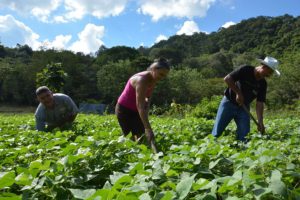
The International Fund for Agricultural Development (IFAD) and the Honduran government have cooperated for many years to fight rural poverty in Honduras. The country is largely agrarian, with every one in four citizens employed in agriculture, and is considered a low to middle-income country. With nearly half the population living on less than $6.15 a day, Honduras is the poorest country in Central America, and the second poorest behind Haiti in Latin America.
Adding to Honduras’s perennial issues are the frequent severe weather events and climate disasters that plague the country’s rural infrastructure. For instance, a 2019 drought decimated the land’s bean and corn crops, creating widespread food insecurity for Honduran citizens. The following year, hurricanes Eta and Iota affected more than 400,000 citizens and caused more than $2 billion in damage.
Since 1979, the IFAD has worked with Honduras to alleviate rural poverty, provide financing to rural farmers and build systems and infrastructure that support small, independent agriculture. This article will explore IFAD’s current program benefiting farmers, the Project for the Economic and Social Inclusion of Small Rural Producers in Northeast Honduras (PROINORTE) and the organizational framework, the Country Strategic Opportunities Programme (COSOP), that currently guides IFAD’s operations in Honduras. The article will also examine one of IFAD’s former successes in the country to demonstrate how COSOP and PROINORTE will help alleviate rural poverty in Honduras.
About IFAD
Founded in 1977 in response to global food shortages, IFAD is a United Nations (U.N.) agency dedicated to addressing rural poverty. The agency provides funding, training and investment to rural communities to strengthen small-scale agribusiness and the overall well-being of rural populations. IFAD partners with businesses, corporations, international organizations and governments to secure funding for grants and low-interest loans directed toward rural farmers.
IFAD is guided by its Country Strategic Opportunities Programme 2020-2025 (COSOP) in Honduras. COSOP is an institutional framework that outlines the rules of engagement for IFAD’s involvement in Honduras. It defines the specific areas where individual IFAD projects should concentrate their efforts and outlines the strategic objectives the organization aims to accomplish.
Specifically, COSOP lists two objectives that guide Honduran IFAD projects. The first focuses on increasing rural productivity and building sustainable food systems. This goal not only aims to help local rural farmers improve their business practices, but also strives to improve rural Honduran communities’ social and physical health. The second objective aims to boost rural employment in Honduras by helping producers access markets and funding.
PROINORTE: Building Small-Scale Farming Businesses
Under the guiding framework of COSOP, IFAD has created two projects to help reduce rural poverty in Honduras, the Project for Competitiveness and Sustainable Development in the South-Western Border Region (PRO-LENCA) and the Project for the Economic and Social Inclusion of Small Rural Producers in Northeast Honduras (PROINORTE). PRO-LENCA reached completion in 2023 and will be discussed in the next section below.
PROINORTE is the only IFAD program currently open in Honduras. The program operates in the northeast region of Honduras, where 59% of households live in poverty. Like its guiding framework, COSOP, PROINORTE aims to improve the productive and marketing capabilities of small rural farmers and to foster sustainable business practices and lifestyles in rural communities. Additionally, the program looks to help farmers build resilience against Honduras’ frequent climate disasters and economic volatility.
PROINORTE includes three areas of activity or “components.” Component 1 helps farmers develop organizational frameworks, build partnerships between businesses and producers, and bolster entrepreneurial agrarian activity. Meanwhile, component 2 provides financing and implementation of plans put forth by local producers and businesses. Component 3 monitors PROINORTE’s progress and ensures that goals are met.
PROINORTE, rather than providing emergency relief or assistance, works to develop small-scale, subsistence-level farms into functioning, free-market businesses. By providing professional training and investment, the project seeks to connect agrarian farmers with markets to sell their products, thereby increasing rural employment and living standards. The project has an estimated total cost of $46.48 million, with funding provided by the IFAD, the OPEC Fund for International Development, the Honduran government and local beneficiaries in Honduras.
Past Successes
To understand how PROINORTE will positively impact northeastern Honduran communities, it is important to examine IFAD’s past successes in the country. PRO-LENCA, a program similar to PROINORTE but located in the southwestern region of Honduras, wrapped up in 2023. Like PROINORTE, PRO-LENCA sought to reduce rural poverty in Honduras by investing in and developing local businesses and agriculture.
According to IFAD documents, PRO-LENCA was largely successful, benefiting 59,000 Honduran citizens and creating more than 1,800 jobs in the area. The program reached nearly all of the households it set out to help, with the incomes of these impacted households rising by almost 50%. Moreover, for every dollar invested in PRO-LENCA, $2.40 was created in economic benefits for rural Hondurans in the target region. Additionally, the project increased youth and female employment in southwest Honduras and decreased food insecurity.
Looking Forward
While it is too early to assess PROINORTE’s economic impact, the benefits that PRO-LENCA created paint a positive future. PRO-LENCA worked to build organizational capabilities and link rural businesses to consumer markets. The hope is that PROINORTE will repeat this program’s success in Honduras’ northeast region. Guided by COSOP, PROINORTE looks to continue IFAD’s track record of reducing rural poverty in Honduras. By helping rural farmers turn their small-scale agriculture into full-fledged businesses, PROINORTE will stimulate rural economies and help Honduran farmers build resilient food systems.
– Charles Citron
Charles is based in Boston, MA, USA and focuses on Business and Politics for The Borgen Project.
Photo: Flickr

A Framework for Change: Akokán Fighting Poverty Through Art
While Cuba has a history of overcoming challenges, these challenges have become more and more frequent in recent years. Since the pandemic in 2019, the Cuban economy has struggled to bounce back, with inflation recently estimated to be at 30%. However, spiralling prices are not the only worry for Cubans. Powerful storms regularly hit the island, leading to blackouts due to the outdated Soviet-era power grids. As such, food insecurity has become a big concern on the island, with some estimating that as much as 37.8% of the population is food insecure.
The sugar industry, for example, has declined significantly since 1959, with more than 160 mills reduced to just 20 in 2024. This has resulted in the island importing a product it once dominated. And, with a population of 8.62 million (2023) that shrank by 18% in just two years, brain drain and an aging population have significantly impacted economic output.
The Role of Art in Cuba
Since the Special Period in the 1990s, resilience has become a core element of Cuban identity. Despite recent government efforts to limit artists who seek to raise awareness about the economic difficulties on the island, art has become a vehicle for hope and innovation in Cuba.
What makes Cuban art distinctive is its tendency to use daily objects and turn them into thought-provoking works that deal with themes of struggle and paradox. Yoan Capote, for example, uses oil-based paints with fishing hooks to explore the theme of migration in Cuban culture and the dangers associated with crossing the sea.
Beyond the artwork, the galleries encompass the Cuban spirit of renewal, as the popular Fábrica de Arte (Vedado, Havana) demonstrated: a previously run-down cooking oil factory that became a gallery for emerging and established artists. The space stands as a source of hope for generations in Cuba as it celebrates artistic creation in an environment of economic downturn and struggle.
Akokán
Art is a source of hope and expression in times of difficulty in Cuba. However, some organizations have gone the extra mile to channel the island’s artistic wealth into the most marginalized communities. In 2016, a group of professors and students from the Colegio Universitario San Gerónimo in Havana formed a project called Akokán.
This historical, cultural and environmental project aims to bring out the creative potential of the people from Los Pocitos. Los Pocitos is a community on the outskirts of Havana that faces growing violence, unemployment, housing insecurity and a lack of public spaces. Across the enormous scope of meaningful projects Akokán has delivered, Dame una Mano (lend me a hand) uses urban art for social transformation and strengthening identity.
Additionally, Akokán holds an annual event in Los Pocitos, which celebrates the artistic and innovative achievements of the community.
A Framework for Change
Mass migration, food insecurity and poverty are just a few challenges Cuba faces today. However, a by-product of such a struggle is artistic excellence. What distinguishes Cuban art is its inherent capacity to adapt to societal needs by working with rather than against. Historically, during economic downturns, Cubans have found innovative ways to improve their daily lives. However, a sense of hope manifests through art, culture and conservation.
– Alfie Williams-Hughes
Photo: Pexels
Women Coders: Empowering Women in Ethiopia
Fast forward to the global tech boom of the 2000s and Africa now represents the fastest-growing region for technology worldwide—an enormous opportunity for poverty alleviation through economic growth and increased market access. But as the tech sector grows, gender disparities also widen. In Ethiopia, the digital economy has magnified decades-old inequalities in income, leadership and opportunity.
The Feminization of Poverty
With a population nearing 127 million, Ethiopia ranks as Africa’s second most populous country and one of its fastest-growing economies. Yet, approximately 69% of the population—about 82 million people—live in multidimensional poverty. Additionally, 18.4% or more than 22 million Ethiopians remain vulnerable to poverty. Women in Ethiopia are particularly affected, facing a unique phenomenon known as the feminization of poverty, a concept representing the disproportionate number of women facing debilitating barriers to personal development. The following statistics reflect systemic barriers:
These gaps cost the country an estimated $3.7 billion annually, underscoring the economic consequences of gender inequality.
Tech Training for a New Generation
In Ethiopia, where only half of all primary school girls reach fifth grade, forging a new path to sustainability and financial independence for future generations of women is critical. SheCodes, in partnership with the Delac Foundation, provides a tech-based solution to these ongoing challenges.
The initiative offers coding education to 5,000 Ethiopian women, delivering free online workshops in front-end development, product design and project management. Indeed, with every purchase at SheCodes, one Ethiopian woman receives free coding education through online workshops focusing on product development, design and management.
Founded in 2017 by Matt Delac, SheCodes initially started as an idea supporting only 10 female students. Almost a decade later, SheCodes has provided online training to more than 235,000 women, of whom 2,257 reside in Ethiopia and across 191 developing countries.
Closing the Gender Gap Through Technology
The program’s work includes growing the number of women coders seeking professional and career development by boosting female participation in technology. This increased involvement is pivotal in poverty reduction, driving economic growth and the continued ascent of women and their families.
Research from the World Bank demonstrated how helping women break into the male-dominated digital and tech sector improves income, raises employment and creates new opportunities for all. The Harvard University Center for African Studies demonstrated how women-led tech firms experienced a 34% higher return on investment than those led solely by men. With one coding class at a time, SheCodes bridges the employment and wage gap, equipping aspiring women coders in Ethiopia with the skills to build a better future.
Looking Ahead
Mental Health in Saint Vincent and the Grenadines
The government of SVG continues to make efforts to advance treatment for mental health conditions. Although increasing care and resources for the mental health community in SVG has been difficult, it has made improvements.
Mental Health and Post-Colonialism
Colonialism has had a long-lasting impact on trauma-based mental health struggles. The legacy of colonial-era psychiatry shaped social stigmas around mental health diagnosis and care. For example, enslaved Africans brought to the Caribbean were diagnosed as mentally ill if they tried to escape their masters. Post-abolition psychiatric treatments included locking patients in asylums, away from society. However, a broader, more comprehensive approach to reframing mental health diagnosis and care can help overcome stigma.
The Mental Health Centre
Saint Vincent and the Grenadines has one psychiatric hospital called the Mental Health Centre. The colonial British Government was built it in 1938 to keep psychiatric patients away from society. It was designed to house 90 patients.
The center serves a different purpose today. It provides inpatient, outpatient and drug rehabilitation services. It can now house more than 160 inpatients. As of 2020, the total number of hospital admissions was 401, with 387 being involuntary. About 29.4% of inpatients stayed in the center for less than a year.
Schizophrenia, substance abuse and related disorders, such as psychosis, are the main mental health conditions that receive treatment in SVG. As of 2020, out of 1,125 treated cases of psychosis, 954 were men and 171 were women.
Suicidal behavior among Vincentian adolescents is disproportionately high at 26%. Economic class disparities, substance use, being bullied, access to mental health services and loneliness are all risk factors.
Legislation
SVG passed the Mental Health Act in 1981 and amended in 1991. It includes sections for admission to the psychiatric hospital, mental review board, approved homes, and protection of property of persons suffering from mental disorders.
Psychiatrist Shortage in SVG
The shortage of psychiatrists in Saint Vincent and the Grenadines is alarming. The Saint Vincent Times explained in an April 7, 2025 article, “The recruitment of mental health professionals is hindered by various factors, including limited resources, inadequate incentives and the growing global competition for qualified psychiatrists.” The government of SVG is aware of this issue and is working to recruit qualified mental health professionals.
Government Efforts To Improve Mental Health in SVG
The government, led by Prime Minister Ralph Gonsalves, recognizes that mental health services in Saint Vincent and the Grenadines are still weak. Gonsalves has expressed the importance of providing mental health support to marginalized groups such as prisoners and disaster survivors.
About 6% of the government’s health expenditure goes to mental health care. Mental health services and medication in SVG are free of cost to patients and national health insurance covers them. However, it is a cost to the state. The state’s limited resources continue to be a challenge to improving mental health services for Vincentians. Additionally, the stress of poverty and lack of employment leads to increased depression, anxiety, and other mental health struggles.
Examples of mental health programs implemented by the government include Mental Health Awareness, Mental Health and Suicide Awareness and Psychological First Aid and counseling.
Conclusion
Although SVG has made progress, mental health in Saint Vincent and the Grenadines still has a long way to go. Ongoing efforts to address poverty, increase mental health awareness, fund mental health programs and recruit mental health professionals will help close the gaps in SVG mental health care needs.
– Vijji Michael
Photo: Wikipedia Commons
Making Mental Health in Global Aid a Priority
Mental Health in Crisis Settings
Access to mental health care remains limited in many low-income countries. In Syria, more than half of displaced children report symptoms of depression and anxiety, but only a small portion receive psychological support, as reported by Médecins Sans Frontières. Children with untreated mental health conditions often struggle in school. Adults experiencing psychological trauma may find it difficult to participate in the workforce, while entire communities suffer from weakened social cohesion. These ongoing challenges perpetuate the cycle of poverty.
A Shift Toward Integrated Solutions
Several organizations now recognize the value of integrating mental health into humanitarian aid. The International Rescue Committee (IRC) equips local health workers in Lebanon and South Sudan with training in psychological first aid and ongoing mental health care. This approach ensures sustainability and culturally appropriate care while reducing stigma.
In Nepal, Transcultural Psychosocial Organization (TPO) runs community-based mental health programs that are both cost-effective and scalable. By training teachers, social workers and community leaders to identify and refer individuals with mental health needs, TPO Nepal ensures that services reach even the most remote areas. These community-based models improve sustainability and reduce stigma.
Mental Health Crisis Among Marginalized Groups
Even in high-income nations, marginalized communities face significant mental health challenges. Indigenous groups in Canada and Australia report high rates of suicide and depression linked to intergenerational trauma and systemic neglect. A 2023 report by the United Nations Permanent Forum on Indigenous Issues called for culturally grounded mental health services as part of international development partnerships.
In British Columbia, Canada’s First Nations Health Authority has launched community-led healing programs rooted in Indigenous traditions. These initiatives, supported in part by development funding, serve as a model for mental health in global aid that respects cultural identity while addressing clinical needs.
Likewise, refugee communities in Europe face significant barriers to mental health care. Programs like the Mental Health and Psychosocial Support Network bridge the gap by providing trauma-informed therapy to displaced people from Syria, Afghanistan and other war-torn countries.
The Economic and Social Payoff
According to the World Bank, each dollar invested in mental health generates a $4 return through better health outcomes and increased productivity. According to the WHO, untreated depression and anxiety in low-income countries cost $1 trillion annually. Moreover, mental health support enhances the effectiveness of other aid sectors. For instance, in education, children receiving psychosocial support are more likely to stay in school. In post-conflict reconstruction, communities with mental health services are better equipped to rebuild trust and social infrastructure.
Moving Forward
Expanding the role of mental health in humanitarian aid involves increasing financial investment, integrating psychological support into broader health initiatives and supporting community-based, culturally informed services. Training local health workers can potentially improve the accessibility and continuity of care while helping reduce stigma. As humanitarian needs become more complex, aligning mental health with long-term development efforts could enhance the overall effectiveness and sustainability of global aid.
– Rhasna Albuquerque
Photo: Flickr
Tajikistan Migration: Solutions for Families Left Behind
In response, international organizations and the Tajik government are shifting focus from emergency support to sustainable progress. They’re investing in programs that empower women, support children and help returning migrants reintegrate. These efforts mark a significant initiative in addressing Tajikistan’s migration and development.
Empowerment of Families Left Behind
According to the International Organization for Migration (IOM), women and children in Tajikistan often face increased emotional and economic hardship when male family members migrate for work. In rural areas, where formal employment opportunities are limited, women must take on new responsibilities, often without support or resources.
To address this, in August 2021, the United Nations (U.N.), in collaboration with the Government of Tajikistan, launched a Joint Program titled “Empowerment of Families Left Behind for Improved Migration Outcomes” in the Khatlon region. The program aimed to support families affected by labor migration, particularly in the Kulob and Dusti districts.
The program provided vocational training to 45 women, resulting in state-recognized diplomas and trained 80 social workers in child rights, case management and psychosocial support. Social services reached 200 children and 290 women, offering guidance and referrals. Women participating in the program reported increased confidence and independence, with some launching small businesses to support their households.
Furthermore, it helped establish more than 60 specialized agricultural schools, serving 300 women farmers and 851 children. These schools provide education and community support, giving children a sense of stability while promoting agricultural literacy in a country where farming remains a dominant livelihood. These solutions underscore a growing emphasis on sustainable Tajikistan migration and development strategies.
The 1+1 Approach
Similarly, the Food and Agriculture Organization (FAO) launched a matching grant initiative, encouraging migrants and their families to invest in agriculture. For every dollar a migrant contributes to a small enterprise, the program offers a matching grant. This 1+1 model supports returnees, women-led households and individuals seeking to transition from remittance dependency to independence. Business development and financial literacy training are core components of the initiative, ensuring participants are equipped for long-term success.
Reintegration
Reintegration remains a challenge for migrants returning to Tajikistan, especially when their journey ends due to deportation or economic strains abroad. The IOM offers various reintegration services, including entrepreneurship training, legal assistance and psychological support. These programs aim to turn a forced return into an opportunity for community reinvestment and stability, making them a key part of Tajikistan’s migration and development goals.
Final Thoughts
With international partners and local stakeholders collaborating, Tajikistan is beginning to transition from dependence on remittances to proactive development. By investing in the skills, well-being and resilience of migrants and their families, these programs offer a model for inclusive, community-based solutions to global labor migration challenges.
– Giovanni Garcia
Photo: Wikimedia Commons
Goals for Education: FIFA Global Citizen Education Fund
A Message Delivered on the Global Stage
FIFA and Global Citizen unveiled the fund during the 2025 Global Citizen NOW Summit in New York City. FIFA President Gianni Infantino emphasized football’s ability to unify communities and create new opportunities. Global Citizen CEO Hugh Evans described the initiative as a bold move to confront the global education crisis. In addition, organizers plan to launch localized campaigns to promote community-level engagement. These campaigns will include mentorship programs, parent workshops and student leadership clubs designed to keep children enrolled and motivated. By focusing on holistic engagement, the initiative aims to reduce dropout rates and encourage lifelong learning.
Football Drives Access to Education
The FIFA Global Citizen Education Fund represents a unique fusion of sports, entertainment and advocacy to promote educational access. Its creators believe football’s universal popularity can be a tool for social change and educational access. According to the United Nations (U.N.), young people who engage in at least five hours of physical activity per week perform better academically than those active for less than one hour. This initiative comes at a time when about 244 million children worldwide remain out of school.
This global initiative will target countries and regions most in need of education infrastructure and programming. By working with partners worldwide, the fund aims to build stronger education systems, especially in areas where youth have been disproportionately affected by poverty and lack of access to schooling. In addition to ticket sales and concert revenue, the fund plans to attract private sector partnerships and additional donations from philanthropists. These contributions will expand program reach, train teachers and equip classrooms with the resources necessary for students to thrive.
Moving Forward
With ongoing support and global attention on major events like the Club World Cup, the fund aspires to create a sustainable impact for future generations. By harnessing the universal appeal of football and the influence of global music and activism, the FIFA Global Citizen Education Fund aims to raise funds and build lasting change in communities that need it most. If successful, it could serve as a model for how entertainment, sport and philanthropy can work together to close the education gap and give every child the tools to shape their future.
– Glenn Brown III
Photo: Flickr
Nagorno-Karabakh: Post-War Recovery of Refugees
Russia moderated the ceasefire due to the shared ties with both nations; however, tension prevailed. In 2022, a blockade by Azerbaijani activists at the Lachin corridor prevented the free movement of food and essential goods. Both parties accused each other of posing threats, which was not confirmed. What remains clear is the consequent humanitarian crisis leading to an urgent post-war recovery of Nagorno-Karabakh refugees.
Blockade of Lachin Corridor
The Azerbaijani military operation led to the displacement of thousands of ethnic Armenians from their homes. The blockade in the Lachin corridor left the population facing a severe shortage of resources essential to survival, such as medical and food supplies. The Azerbaijani government has been criticized internationally due to its failure to ensure a safe passage for the population and human rights violations.
The International Committee for the Red Cross (ICRC) and Russian peacekeepers tried sending aid, which the Azerbaijani administration had blocked, alleging unauthorized objects among them.
Displacement and Daily Struggles
Thirteen-year-old Natalie Musayelian fled Nagorno-Karabakh with her family. On her way, she collected berries, stones and a branch, keeping all the items in a small box of chocolates and the key to her house. Currently, she lives in Armenia with her aunt and grandmother. She misses her home every day and cherishes these objects as memories and comfort after the loss. Her story is just one of many people who were displaced from their homes due to the conflict.
Many refugees from Nagorno-Karabakh have fled to the capital of Armenia, Yerevan and the region of Syunik. Armenia has already opened shelters and provided social aid for the displaced population. The U.N. launched a $97 million funding appeal to ease the burden on the volunteers and the Armenian host community. However, it anticipates further movement of people as they search for employment and long-term housing.
The Role of the US Foreign Aid
In 2023, the United States Agency for International Development (USAID) Administrator Samantha Power visited Armenia after a disproportionate number of displacements. She announced $11.5 million in U.S. humanitarian aid, providing essential supplies and psychosocial services. The collection of refugee testimonies enabled the criticism of the blockade. Furthermore, they reaffirmed the high level of concern for a post-war recovery of Nagorno-Karabakh refugees.
Furthermore, the U.N. World Food Program (WFP) hosted a two-day visit from USAID’s Bureau for Humanitarian Assistance (BHA) to assess support for refugee families. The delegation collaborated with local officials, social workers and even families, such as a grandmother in Kotayk struggling with her grandchildren’s care. USAID’s BHA provided a $1.13 million grant for emergency food assistance, which helped 30,000 refugees. Additionally, from February to September 2024, food cards and parcels were distributed to alleviate short-term needs, ensuring the families’ well-being.
– Sara Arias Saiz
Photo: Flickr
How IFAD Fights Rural Poverty in Honduras
The International Fund for Agricultural Development (IFAD) and the Honduran government have cooperated for many years to fight rural poverty in Honduras. The country is largely agrarian, with every one in four citizens employed in agriculture, and is considered a low to middle-income country. With nearly half the population living on less than $6.15 a day, Honduras is the poorest country in Central America, and the second poorest behind Haiti in Latin America.
Adding to Honduras’s perennial issues are the frequent severe weather events and climate disasters that plague the country’s rural infrastructure. For instance, a 2019 drought decimated the land’s bean and corn crops, creating widespread food insecurity for Honduran citizens. The following year, hurricanes Eta and Iota affected more than 400,000 citizens and caused more than $2 billion in damage.
Since 1979, the IFAD has worked with Honduras to alleviate rural poverty, provide financing to rural farmers and build systems and infrastructure that support small, independent agriculture. This article will explore IFAD’s current program benefiting farmers, the Project for the Economic and Social Inclusion of Small Rural Producers in Northeast Honduras (PROINORTE) and the organizational framework, the Country Strategic Opportunities Programme (COSOP), that currently guides IFAD’s operations in Honduras. The article will also examine one of IFAD’s former successes in the country to demonstrate how COSOP and PROINORTE will help alleviate rural poverty in Honduras.
About IFAD
Founded in 1977 in response to global food shortages, IFAD is a United Nations (U.N.) agency dedicated to addressing rural poverty. The agency provides funding, training and investment to rural communities to strengthen small-scale agribusiness and the overall well-being of rural populations. IFAD partners with businesses, corporations, international organizations and governments to secure funding for grants and low-interest loans directed toward rural farmers.
IFAD is guided by its Country Strategic Opportunities Programme 2020-2025 (COSOP) in Honduras. COSOP is an institutional framework that outlines the rules of engagement for IFAD’s involvement in Honduras. It defines the specific areas where individual IFAD projects should concentrate their efforts and outlines the strategic objectives the organization aims to accomplish.
Specifically, COSOP lists two objectives that guide Honduran IFAD projects. The first focuses on increasing rural productivity and building sustainable food systems. This goal not only aims to help local rural farmers improve their business practices, but also strives to improve rural Honduran communities’ social and physical health. The second objective aims to boost rural employment in Honduras by helping producers access markets and funding.
PROINORTE: Building Small-Scale Farming Businesses
Under the guiding framework of COSOP, IFAD has created two projects to help reduce rural poverty in Honduras, the Project for Competitiveness and Sustainable Development in the South-Western Border Region (PRO-LENCA) and the Project for the Economic and Social Inclusion of Small Rural Producers in Northeast Honduras (PROINORTE). PRO-LENCA reached completion in 2023 and will be discussed in the next section below.
PROINORTE is the only IFAD program currently open in Honduras. The program operates in the northeast region of Honduras, where 59% of households live in poverty. Like its guiding framework, COSOP, PROINORTE aims to improve the productive and marketing capabilities of small rural farmers and to foster sustainable business practices and lifestyles in rural communities. Additionally, the program looks to help farmers build resilience against Honduras’ frequent climate disasters and economic volatility.
PROINORTE includes three areas of activity or “components.” Component 1 helps farmers develop organizational frameworks, build partnerships between businesses and producers, and bolster entrepreneurial agrarian activity. Meanwhile, component 2 provides financing and implementation of plans put forth by local producers and businesses. Component 3 monitors PROINORTE’s progress and ensures that goals are met.
PROINORTE, rather than providing emergency relief or assistance, works to develop small-scale, subsistence-level farms into functioning, free-market businesses. By providing professional training and investment, the project seeks to connect agrarian farmers with markets to sell their products, thereby increasing rural employment and living standards. The project has an estimated total cost of $46.48 million, with funding provided by the IFAD, the OPEC Fund for International Development, the Honduran government and local beneficiaries in Honduras.
Past Successes
To understand how PROINORTE will positively impact northeastern Honduran communities, it is important to examine IFAD’s past successes in the country. PRO-LENCA, a program similar to PROINORTE but located in the southwestern region of Honduras, wrapped up in 2023. Like PROINORTE, PRO-LENCA sought to reduce rural poverty in Honduras by investing in and developing local businesses and agriculture.
According to IFAD documents, PRO-LENCA was largely successful, benefiting 59,000 Honduran citizens and creating more than 1,800 jobs in the area. The program reached nearly all of the households it set out to help, with the incomes of these impacted households rising by almost 50%. Moreover, for every dollar invested in PRO-LENCA, $2.40 was created in economic benefits for rural Hondurans in the target region. Additionally, the project increased youth and female employment in southwest Honduras and decreased food insecurity.
Looking Forward
While it is too early to assess PROINORTE’s economic impact, the benefits that PRO-LENCA created paint a positive future. PRO-LENCA worked to build organizational capabilities and link rural businesses to consumer markets. The hope is that PROINORTE will repeat this program’s success in Honduras’ northeast region. Guided by COSOP, PROINORTE looks to continue IFAD’s track record of reducing rural poverty in Honduras. By helping rural farmers turn their small-scale agriculture into full-fledged businesses, PROINORTE will stimulate rural economies and help Honduran farmers build resilient food systems.
– Charles Citron
Photo: Flickr
Vietnam’s Transformed Economy: The Rice Revolution
From Crisis to Recovery
Following the end of the Vietnam War in 1975, the country faced profound challenges. Widespread poverty, food shortages, devastated infrastructure and a stagnant economy threatened national survival. Humanitarian aid from countries like the United Kingdom (U.K.), Australia, Japan and the United States (U.S.) helped avert famine. The turning point came with the launch of Doi Moi in 1986—an economic and political reform policy initiated by the Communist Party. Doi Moi shifted Vietnam’s centrally planned economy toward a more market-oriented system, unlocking the potential of its agricultural sector, especially rice production.
Rice Revolution Powers Rural Prosperity
According to the Observatory of Economic Complexity (OEC), Vietnam ranks as the world’s third-largest rice exporter out of 184 countries. In 2023 alone, the country exported $3.88 billion of rice, mainly to the Philippines, Indonesia, China, Ghana and Côte d’Ivoire. Vietnam supplies more than 7 million tons annually to countries across Asia, Africa and the Middle East. Vietnam’s transformed economy depends on the Mekong Delta, often called the “Rice Bowl of Vietnam,” producing more than half of the country’s rice, accounting for 95% of its exports.
The government’s dismantling of the collective farming system and its return of land-use rights to households drove this transformation. As Dr. Matthew Morell, Director General of the International Rice Research Institute (IRRI), explained: “Vietnam contributes more than 6% of global rice production. Promoting good agricultural practices such as the ‘1 Must Do, 5 Reductions’ will help farmers reduce pesticide use and at the same time increase productivity toward sustainable rice production and gradually improve the brand of Vietnam rice.”
The government also heavily invested in rural infrastructure. Roads and electricity are used by almost 100% of the population, enabling farmers to access markets efficiently. This helped lift millions out of poverty, especially in rural provinces such as A Giang, Dong Thap and Kien Giang. During the COVID-19 pandemic, domestic rice production ensured national food security and reinforced Vietnam’s role in global food supply chains.
Beyond Agriculture: A Diversified Economy
While agriculture remains central, Vietnam has broadened its economy to include manufacturing, services and technology. The country has become a preferred destination for foreign investment in electronics and textiles, with tech companies like Samsung, Intel and LG establishing operations since 2008. In 2023, Vietnam launched its first homegrown electric vehicle brand, Vinfast, which began exporting to North America and Europe.
The Road Ahead
How the MOBILIST Program Promotes Sustainable Development
The Mobilising Institutional Capital Through Listed Product Structures (MOBILIST) program connects global investors to investment products that promote sustainable development in developing countries. In February 2025, the United Kingdom (U.K.) announced up to an additional £100 million in funding for the program. This funding expands the program’s ability to mobilize more investment and strengthen its partnerships with entities such as Thai Credit Bank and InfraCredit.
The MOBILIST Program
The U.K.’s MOBILIST program promotes sustainable development by identifying investment products that align with the Sustainable Development Goals (SDGs) and removing obstacles that prevent those products from listing on public exchanges. MOBILIST helps overcome these challenges by offering expertise, hands-on assistance and government backing. This approach improves investor confidence and funding access for SDG-aligned ventures.
The SDGs, adopted by the United Nations (U.N.) in 2015, are a set of 17, wide-ranging targets that aim to achieve long-lasting progress. The SDGs operate on the premise that goals such as ending poverty must align with other objectives, including economic growth and gender equality. By supporting investment solutions that promote the SDGs, MOBILIST brings these products more funding, widening their impact.
The U.K. expects its £100 million funding pledge to attract between £400 million and £600 million in investments. Since its 2021 launch, the MOBILIST program has assisted the public listing of investment products such as the Thai Credit Bank and InfraCredit.
The Thai Credit Bank
On Feb. 9, 2024, the Thai Credit Bank completed its public listing with support from the MOBILIST program. The bank provides loans to micro, small and medium enterprises (MSMEs). These enterprises are crucial to Thailand’s economy but have difficulty obtaining the funding necessary to grow. Through funding MSMEs, the bank supports the SDG of economic growth, therefore decreasing poverty and raising standards of living.
The Thai Credit Bank will use the profit from its public listing to further finance MSMEs, specifically focusing on businesses in rural areas and those owned by women. As an essential investor, MOBILIST was key in making the IPO possible. The expansion of this SDG-promoting product is an example of how the program promotes sustainable development.
Infracredit in Nigeria
The Nigerian-based company, InfraCredit, de-risks investing in Nigerian infrastructure projects by providing credit guarantees to investors. Nigeria needs more than $2.3 trillion from 2021 to 2043 to close its infrastructure gap. InfraCredit’s model supports job creation, infrastructure development and clean energy growth, aligning with multiple SDGs.
On April 14, 2025, MOBILIST announced its investment of $6 million to support InfraCredit’s public listing on NASD. The listing attracted local institutional investors, including pension funds. Subsequently, InfraCredit obtained two investments from pension funds since its NASD listing.
MOBILIST’s investment also supports InfraCredit’s movement toward investing in renewable energy. Its focus on promoting infrastructure, creating jobs, increasing quality of life and its green movement reflects the SDG of clean energy.
Looking Ahead
MOBILIST’s support for Thai Credit Bank and InfraCredit has strengthened their financial reach and visibility. With the U.K.’s additional investment, more companies that align with the SDGs could gain access to capital markets. The program continues to widen its impact by helping sustainable development-focused businesses scale across emerging economies.
– Madison Fetch
Photo: Flickr