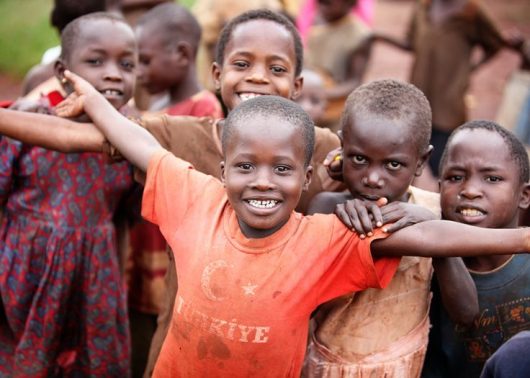
The dichotomy between the “global north” and the “global south” continues to persist around the world, especially in the case of Africa. That is why it is essential for citizens of the most powerful country on earth to realize that Africa matters to the U.S.
While many Americans might envision a far-away land home to exotic animals and people plagued by famine, crime or sickness, the continent’s reality is much brighter.
Enrollment rates in secondary education increased by 48 percent from 2000 to 2008, life expectancy has increased roughly 10 percent and real income per person has increased by over 30 percent across the continent, according to the Economist.
The IMF also predicts that three of this year’s 10 fastest growing economies will be the Ivory Coast, Tanzania and Senegal.
The future of Africa could be brighter still with continued U.S. involvement. Not only can U.S. aid efforts help diminish poverty, they can simultaneously promote U.S. interests abroad. Through encouraging peace and security, expanding Africa’s energy sector, competing with China and opening up new markets for U.S. businesses, both the U.S. and Africa can flourish.
It is for these reasons that Africa matters to the U.S. and the U.S. matters to Africa.
Peace and Security are Global Needs
The United Nations cites “violence and fragility” as the biggest barriers to achieving the Millennium Development Goals (MDGs), the first aim of which is to cut the number of people living in extreme poverty in half. African countries face numerous security risks including transnational crime syndicates, corrupt governments and terrorist groups. These obstacles perpetuate the cycle of poverty and must be properly addressed if U.S. companies hope to find success in Africa.
According to Lesley Anne Warner, a top research fellow at the National Defense University, the U.S. can help mitigate these challenges by better resourcing agencies like the State Department and USAID instead of solely relying on the Department of Defense. This would make our country’s engagement with African countries more “proactive” instead of “reactive,” and help deescalate and prevent conflicts.
Congress took notice of why Africa matters to the U.S. in February when it passed the Electrify Africa Act to increase African energy access. However, more work can be done to lift people out of poverty while simultaneously advancing U.S. national security interests.
“Energy poverty undermines economic development, fueling political instability and the creation of failed states that can harbor our enemies and threaten our allies,” John P. Banks, a nonresident fellow at the Brookings Institution, writes in his paper, “Key Sub-Sarahan Energy Trends and their Importance for the U.S.”
A U.S. policy that supports further energy access initiatives in Africa would not only improve the living conditions of thousands, but also weaken the global threat of terrorism.
China Cannot Ethically Deliver Aid
With a record lacking transparency, democratic values and concern for the environment, the U.S. must be wary of China’s increased involvement in Africa.
Just last year, China offered the continent $60 billion in development assistance. Moreover, the Center for Global Development reports that there were almost 2,000 Chinese development projects in the region from the years 2000 to 2011 totaling up to $75 billion.
It is imperative that the U.S. partner with China to effectively and morally deliver aid, explains Yun Sun, a visiting fellow at the Brookings Institution. In addition, she suggests the U.S. work with African countries to explain the damaging impact the unilateral Chinese approach would have on their future success.
U.S. Markets Need Diversification
The U.S. would also benefit from expanding its markets and increasing foreign direct investment (FDI) in African countries. As previously stated, three of the world’s 10 fastest growing economies are located in Africa, and if U.S. companies fail to tap into these growing economies, they will lose out on major business opportunities.
Last year, Congress passed a measure lengthening the African Growth and Opportunity Act (AGOA) into the fiscal year of 2025 as a sign of hope for the future of U.S.-African business relations. Yet only one percent of U.S. FDI is spent in Africa, and the total number of U.S. exports to sub-Saharan Africa in 2013 decreased by 20 percent compared to 2012, according to the Office of the U.S. Trade Representative.
There is no doubt that the U.S. has a multifaceted role to play throughout the world. Africa matters to the U.S. because its development can reduce poverty, create a safer, more secure world, fill Chinese foreign assistance voids and diversify U.S. businesses.
-Kristina Evans
Photo: Pinterest

Dr. Jill Biden Promotes Women’s Empowerment in Africa
Dr. Jill Biden, wife of U.S. Vice President Joe Biden, promoted women’s rights, immigration and education during her recent trip to Africa. She visited Ethiopia, Malawi and Niger, where she focused on matters associated with economic empowerment and educational opportunities.
In each country, Dr. Biden met with local citizens in many different places in order to engage in government and civil society and focus on issues relative to each country. Here are some of the highlights of her three-country trip.
Ethiopia
Malawi
Niger
Dr. Jill Biden’s focuses on women’s empowerment and education are based on the notion that education is a tool that can be used to lift communities out of poverty. By developing self-confidence through education, girls and women in Africa can become active participants in their local communities.
– Kimber Kraus
Photo: Voice Of America
Why Africa Matters to the United States
The dichotomy between the “global north” and the “global south” continues to persist around the world, especially in the case of Africa. That is why it is essential for citizens of the most powerful country on earth to realize that Africa matters to the U.S.
While many Americans might envision a far-away land home to exotic animals and people plagued by famine, crime or sickness, the continent’s reality is much brighter.
Enrollment rates in secondary education increased by 48 percent from 2000 to 2008, life expectancy has increased roughly 10 percent and real income per person has increased by over 30 percent across the continent, according to the Economist.
The IMF also predicts that three of this year’s 10 fastest growing economies will be the Ivory Coast, Tanzania and Senegal.
The future of Africa could be brighter still with continued U.S. involvement. Not only can U.S. aid efforts help diminish poverty, they can simultaneously promote U.S. interests abroad. Through encouraging peace and security, expanding Africa’s energy sector, competing with China and opening up new markets for U.S. businesses, both the U.S. and Africa can flourish.
It is for these reasons that Africa matters to the U.S. and the U.S. matters to Africa.
Peace and Security are Global Needs
The United Nations cites “violence and fragility” as the biggest barriers to achieving the Millennium Development Goals (MDGs), the first aim of which is to cut the number of people living in extreme poverty in half. African countries face numerous security risks including transnational crime syndicates, corrupt governments and terrorist groups. These obstacles perpetuate the cycle of poverty and must be properly addressed if U.S. companies hope to find success in Africa.
According to Lesley Anne Warner, a top research fellow at the National Defense University, the U.S. can help mitigate these challenges by better resourcing agencies like the State Department and USAID instead of solely relying on the Department of Defense. This would make our country’s engagement with African countries more “proactive” instead of “reactive,” and help deescalate and prevent conflicts.
Congress took notice of why Africa matters to the U.S. in February when it passed the Electrify Africa Act to increase African energy access. However, more work can be done to lift people out of poverty while simultaneously advancing U.S. national security interests.
“Energy poverty undermines economic development, fueling political instability and the creation of failed states that can harbor our enemies and threaten our allies,” John P. Banks, a nonresident fellow at the Brookings Institution, writes in his paper, “Key Sub-Sarahan Energy Trends and their Importance for the U.S.”
A U.S. policy that supports further energy access initiatives in Africa would not only improve the living conditions of thousands, but also weaken the global threat of terrorism.
China Cannot Ethically Deliver Aid
With a record lacking transparency, democratic values and concern for the environment, the U.S. must be wary of China’s increased involvement in Africa.
Just last year, China offered the continent $60 billion in development assistance. Moreover, the Center for Global Development reports that there were almost 2,000 Chinese development projects in the region from the years 2000 to 2011 totaling up to $75 billion.
It is imperative that the U.S. partner with China to effectively and morally deliver aid, explains Yun Sun, a visiting fellow at the Brookings Institution. In addition, she suggests the U.S. work with African countries to explain the damaging impact the unilateral Chinese approach would have on their future success.
U.S. Markets Need Diversification
The U.S. would also benefit from expanding its markets and increasing foreign direct investment (FDI) in African countries. As previously stated, three of the world’s 10 fastest growing economies are located in Africa, and if U.S. companies fail to tap into these growing economies, they will lose out on major business opportunities.
Last year, Congress passed a measure lengthening the African Growth and Opportunity Act (AGOA) into the fiscal year of 2025 as a sign of hope for the future of U.S.-African business relations. Yet only one percent of U.S. FDI is spent in Africa, and the total number of U.S. exports to sub-Saharan Africa in 2013 decreased by 20 percent compared to 2012, according to the Office of the U.S. Trade Representative.
There is no doubt that the U.S. has a multifaceted role to play throughout the world. Africa matters to the U.S. because its development can reduce poverty, create a safer, more secure world, fill Chinese foreign assistance voids and diversify U.S. businesses.
-Kristina Evans
Photo: Pinterest
Water Quality in China: The Danger Beneath the Surface
From a poverty alleviation perspective, the rapid growth of the Chinese economy over the last several decades is an unprecedented success story. In 1984, the rate of extreme poverty in China was 84 percent, but by 2010 that number had fallen to 12 percent. At the same time, the rapid industrialization that has driven this growth has produced its own negative effects. Some of these effects are visible on an everyday basis, while others, like the poor water quality in China, are less obvious.
Under the Fog
Air quality is the face of China’s struggle with pollution. Images of China’s capital, Beijing, choked by smog have resonated with environmental movements around the world. While water quality in China may not have made as many headlines, it has come under severe strain as well. According to new statistics by the Chinese media, underground water pollution has become a full-on crisis, with 80 percent of the water samples taken from a wide range of wells across northern and central China being unsafe.
Across the North China Plain, which has been hit hard by deforestation and desertification over the last several decades, groundwater is a key water source for both rural and urban areas. Northern China is also the site of the vast majority of China’s coal reserves, a major problem as coal mining is highly damaging to groundwater, unless mitigating measures are taken.
However, cheap supplies of coal are so central to China’s model of economic growth that, thus far, these measures have not been taken, leading to a steady deterioration of water quality in China. According to official statistics, every metric ton of coal mined leads to 1 cubic meter to 2.5 cubic meters of groundwater being destroyed. That number is sobering, considering that in 2015, 3.65 billion metric tons of coal were mined in China.
Hope for Improvement
That same year, The State Council of the People’s Republic of China, the nation’s highest administrative body, issued the “Water Ten Plan.” This ambitious plan laid out a series of steps to improve water quality in China. It includes both broad goals and specific measures for improving groundwater quality. The plan calls for the percentage of groundwater of “very bad” quality to fall to 15 percent by 2020, a target that should be achievable, given that as of 2014, 16.1 percent of groundwater fell into this category.
The Chinese government’s response targets industries that are seen as being major contributors to groundwater pollution, in particular, the coal mining industry. The plan calls for the effective handling of water used during the coal mining process.
It also addresses groundwater depletion, stemming from industrial use of water by declaring a moratorium on further extraction of groundwater from threatened areas. The textile, paper and dyeing industries, significant sources of harmful run-off, are another major target of the plan’s strict controls.
Equal Access to Clean Water
One key aspect of water quality in China is the rural-urban divide that permeates so much of Chinese society. Cities in China benefit from access to deeper underground reservoirs, while those living in rural areas extract shallower water that is more likely to be polluted. Thus, just as industrialization led to the gap in incomes between rural and urban markets, it has also meant that access to safe water supplies has become more bifurcated. Alleviating this divide is vital in the years ahead.
– Jonathan Hall-Eastman
Photo: Pixabay
Mount Sinai is Transcending Borders for Global Healthcare
On June 8, 2016, The Icahn School of Medicine at Mount Sinai released news of its Department of Health System Design and Global Health. The program is the first in the nation to utilize the strengths of U.S. health care systems and integrate them into global health systems.
A Worthy Leader
Leading this evolutionary integration and development project is Dr. Prabjot Singh, MD, PhD. Director of The Arnhold Institute for Global Health at Mount Sinai, Dr. Singh plans on having both departments work together in transforming and improving global healthcare.
Dr. Singh wishes to address typical but significant issues and borders surrounding global healthcare, namely quality healthcare at affordable costs and prevention as well as sustainable treatment. In order to achieve these goals, Dr. Singh stressed the need to break down the borders between U.S. health systems and the rest of the world.
According to Dr. Singh, “Our new Department, in conjunction with The Arnhold Institute for Global Health, will focus on training practitioners, designing new methods and developing solutions that collapse this barrier. The groundswell of interest from across the Mount Sinai Health System and Icahn School of Medicine signals a promising future.”
A Global Vision
The Mount Sinai Hospital already has built a stellar reputation in the world of medicine and healthcare. According to U.S. News & World Report, Mount Sinai is ranked amongst some of the top hospitals nationwide. The Icahn School of Medicine at Mount Sinai is also lauded as one revolutionaries in clinical and basic science research.
Essentially, Mount Sinai’s Department of Health System Design and Global Health will focus on transcending the borders and hurdles global healthcare faces. The Department will create better healthcare systems based on cost-effective business strategies and advanced technology.
Running these healthcare models will be a diverse faculty with expert-level backgrounds from economic and policy analysis, operations research, data science and interaction design. The well-rounded staff complete with the collaboration of Mount Sinai’s multiple departments is expected to reform and break the challenges surrounding global healthcare practices and accessibility.
– Jenna Salisbury
Photo: Wikidot
Orlando Bloom’s Dedication to Water Conservation
Orlando Bloom has traveled to Nepal twice to learn about how UNICEF aids impoverished communities. He has become informed about the impact UNICEF has, whether it be educating people about water sanitation, providing vaccinations or providing safe homes for young girls.
Bloom and UNICEF
During a trip to Nepal in 2007, Orlando Bloom was made aware of the power and importance of spreading information. He learned about the process, supported by UNICEF, that young kids often use to create clean and sanitary water using UV rays from the sun. By filling a clear plastic water bottle to the top (leaving no air inside) and placing it at a 30-degree angle on a rooftop, the sun’s rays are able to kill any unsafe bacteria and germs.
In an interview, Bloom explains, “When the message is made clear to people, they can start to advance forward.”
By educating and spreading valuable information to kids on creating safe water, they are able to bring multiple bottles of clean water home to their families. He encourages people to spread valuable information that can help communities, as he has first-hand seen the benefits of this through UNICEF’s water sanitation programs.
Rita’s Story
Bloom’s trip to Nepal opened his eyes to how precious a resource water is. He was able to spend time with a 6 year old girl named Rita, who occupies half of her day collecting water.
She uses a water tank in a basket, which connected to a strap that goes over her head. He explains her journey, “She walks a few miles up and down a mountain to get to a well and collects water to bring back to her house. And the water she’s collecting from the well is not clean, it can make her sick.”
Bringing it Home
Now at home in the United States, Bloom is speaking out about the importance of conserving water. Inspired by his trip to Nepal, he explains that we cannot take our daily access to water for granted. He has instilled this mindset into his son, for example, by teaching him to turn off water while brushing his teeth.
Orlando Bloom has also visited places including Liberia, Jordan and Moscow to learn about the struggles families go through, to further raise awareness for other issues besides water conservation and sanitation.
– Casey Marx
Photo: Flickr
Global Health Issues: Priority of Global Health Policy Forum
Global health issues were the focus of the June 14 global health policy forum hosted by Health Affairs in Washington, D.C. The recorded event, titled “Global Health: Patient Safety, Cancer Care, Universal Health Coverage and Innovation,” attracted more than 150 experts in the health and healthcare fields and covered various topics concerning universal healthcare and patient safety.
Health Affairs is an esteemed academic journal which publishes health policy research and theory. Its mission is to address global health issues such as access to and quality of healthcare. The U.S. as well as international legislators and health leaders often cite Health Affairs in official legislation, and its publications and events are critical to global healthcare decision making.
Present at the forum, the World Innovation Summit for Health (WISH) is a global healthcare initiative of the Qatar Foundation. WISH’s presence at the forum was significant given that its mission to improve global health might influence legislators in Washington, D.C. As CEO of WISH Egbert Schillings said, “The ultimate purpose of WISH is to influence decision makers using the best possible evidence available.”
WISH was created in 2012 when Sheikha Moza bint Nasser of Qatar addressed global delegates at the Global Health Policy Summit in London and urged them to work together to prevent and to treat diseases. WISH facilitates global healthcare innovation, and the initiative collaborates globally with groups like Health Affairs in order to help achieve this goal.
Health Affairs and WISH’s global vision and willingness to cooperate make events like this month’s global health forum possible and effective. As Professor Lord Darzi of Denham, Executive Chair of WISH, said, “Our partnership with Health Affairs is evidence of the global impact of WISH research.”
Health Affairs and WISH’s research have the power to positively change global health issues as they work together to share accurate health research with decision makers worldwide. Their partnership is effectively enabling world leaders to solve global health issues through cooperation, collaboration and a dedication to sharing valuable information with decision makers.
– Addie Pazzynski
Photo: Health Affairs
USAID Works to Improve Poor Water Quality in Indonesia
Climate change, poor urban infrastructure and pollution resulting from rapid urban development and environmental destruction have led to poor water quality in Indonesia.
Although Indonesia enjoys 21 percent of the total freshwater available in the Asia-Pacific region, nearly one out of two Indonesians lack access to safe water, and more than 70 percent of the population rely on potentially contaminated sources.
Poor water quality in Indonesia is directly related to a life of poverty, as poor individuals are unable to afford clean drinking solutions.
To combat poverty and improve the lives of individuals, USAID has partnered with local governments and civil society organizations to weaken the agents of poor water quality in Indonesia by strengthening biodiversity and climate change resilience.
Climate Change
Climate change threatens to disrupt seasonal variations and thus water quality in Indonesia. The dry season may become more arid which would drive water demand, and the rainy season may condense higher precipitation levels into shorter periods, increasing the possibility of heavy flooding while decreasing the ability to capture and store water.
Increased flood conditions and rainfall facilitate the spread of disease in areas where the population lacks access to clean water and sanitation.
USAID works with the Indonesian government to help the most vulnerable areas of Indonesia become more resilient to climate change effects. The agency builds local government and civil society organizational capacity to understand the effects of climate change and to implement climate change solutions in agriculture, water and natural resources management.
More than 13,000 people have been trained in climate change adaptation strategies and disaster risk reduction. As a result, USAID has worked with more than 360 communities to develop action plans addressing the impacts of climate change, which in effect improves the poor water quality in Indonesia.
Environmental Destruction
Environmental destruction associated with unmanaged development and deforestation has left many parts of Indonesia extremely vulnerable to landslides, tsunamis and floods.
An environmental disaster furthers the cycle of poverty in Indonesia as individuals are left with even fewer resources than before. The country has lost around 72 percent of its forest cover over the last 50 years.
Large barren hillside areas and the underlying soils, both subject to heavy precipitation, greatly increase the likelihood and severity of floods. When flooding does occur, urban infrastructure is quickly overwhelmed which leads to sewage spillover and further contamination.
To combat environmental destruction and improve water quality in Indonesia, USAID works to conserve and strengthen biodiversity in Indonesia. The agency does so by building capacity in national and local government bodies and associated civil society actors, and by entering partnerships, to promote and strengthen sustainable land-use practices and management in four provinces.
Projects developed by USAID focus on conserving large swaths of lowland and peat forest with high concentrations of biodiversity.
Pollution
Indonesia has become a pollution hotspot due to its economic development and rapid urbanization. Waste from commercial and industrial processes is increasingly making its way into both groundwater and surface supplies affecting water quality in Indonesia. Moreover, Indonesia’s urban slums particularly lack wastewater treatment to combat the growing pollution.
The basic sanitation infrastructure necessary to prevent human excrement from contaminating water supplies is virtually nonexistent. Households simply dispose their domestic waste directly to a river body.
Since many Indonesians are poor and have no access to piped water, they use river water for drinking, bathing and washing. Around 53 percent of the population obtains water from sources contaminated by raw sewage, which greatly increases human susceptibility to water-related diseases.
To improve the poor water quality in Indonesia by combating the effects of pollution, USAID has facilitated access to clean water for more than 2 million people and basic sanitation to more than 200,000 people.
These actions have built one more step for individuals in Indonesia to walk out of poverty, as their low income does not inhibit them from enjoying clean drinking water.
– Alexis Pierce
Photo: Pixabay
How Quinoa Production Helps Alleviate Poverty in Peru
Prior to quinoa’s surge in popularity, few Americans had heard of this South American grain. U.S. imports alone quadrupled between 2006 and 2010 as quinoa’s virtues of versatility and high protein content spread.
Negative Speculations
Unbeknownst to the public, quinoa production had a direct impact on the levels of poverty in Peru. So, soon after quinoa “took off,” a slew of inflammatory articles in 2013 reprimanded quinoa consumers for raising the demand and price of the nutritious food, which restricted access for poor Andean people.
Poverty in Peru and Bolivia affects over 50 percent of people in the Andean region. Many suffer from lack of education, food insecurity, poor health care and a life expectancy 20 years lower than people in Lima.
Due to conditions in this region, “foreign quinoa consumption is keeping locals from a staple grain” is a serious accusation. However, the popularity of this protein-rich food has provided many economic benefits for the area. A NPR study showed how living conditions drastically improved for people in the Andes during the boom in quinoa sales.
In 2013, the Guardian published an inflammatory article called, “Can Vegans Stomach the Unpalatable Truth About Quinoa?” claiming that fame has driven the prices so high that locals can no longer afford it. The argument seemed sound as poverty in Peru is a major issue. It seemed though, that the Guardian brought up a touchy subject–droves of articles then began cropping up both defending and debunking this argument.
Positive Effects
The good news is that quinoa prices are still within reach for Peruvians. A recent article from NPR explains two different studies focusing on the super grain: one found that the people in quinoa-growing regions, farmer or otherwise, experienced an economic flourishing that favored farmers and generally overcame any additional quinoa costs; the second study focused on quinoa consumption in the Puno region where 80 percent of Peruvian quinoa is grown.
The author of the second study, a Berkeley graduate student, discovered that people in the Puno region consumed a similar amount of the grain without cutting any valuable nutrients from their diets.
While quinoa is culturally important, it is not a staple crop like rice or maize. On average, only between 0.5 and 4 percent of an average Peruvian family’s budget is spent on quinoa–thus the extra cost is not debilitating. In fact, quite the opposite of debilitation occurred: domestic quinoa consumption tripled in 2013.
While the positive economic effects continue to boost the region, there are reasonable concerns about the sustainability or longevity of quinoa production. Demand has caused farmers to decrease the amount of quinoa varieties grown, as well as reduce llama farming which used to provide fertilizer.
Degradation of soil and biodiversity are also risks of extensive quinoa production. Unfortunately, quinoa’s popularity also attracts competitors, and as other countries began to grow the super grain and supply increases, Peruvian demand falls. Prices are sinking, which is great for frugal, health conscious shoppers but very concerning for Bolivian quinoa farmers.
Sustaining Success
While unclear how long benefits will last, quinoa’s popularity proves extremely beneficial towards alleviating rural poverty in Peru and Bolivia. In order to extend the grain’s benefits, some organizations are trying to encourage the sale of more varieties of quinoa to conserve biodiversity and renew interest in South American grown grains.
On the positive side, quinoa has provided some temporary relief for those facing poverty in Peru.
– Jeanette I. Burke
Photo: Pixabay
The Truth about Poverty in Tunisia
In June 2016, the International Monetary Fund’s (IMF) online magazine announced that the organization has approved a four-year, $2.9 billion loan program to help alleviate poverty in Tunisia.
Continued Struggles Post-Revolution
This news may come as a shock to some people. The IMF gave financial assistance in the form of a Stand-By Arrangement following the 2010 Tunisian Revolution, and the North African country is considered to be one of the few successes that emerged from the Arab Spring.
While Tunisia has come a long way both politically and economically, the country is still plagued by high unemployment and a lagging private sector.
According to IMF Survey, 15 percent of Tunisia’s population and 35 percent of its youth, are unemployed, contributing greatly to poverty in Tunisia. Civil society representatives, speaking with World Bank Group President Jim Yong Kim during his visit in May, claimed that only 27 percent of the country has access to finance due to strict rules on foreign transactions.
Joblessness and lack of opportunities has produced lackluster economic growth and low government approval ratings. The World Bank reported that only twenty percent of young Tunisians in urban areas trust the government. The figure is ten percent for the countryside.
Regional disparities are also a problem; while the national unemployment rate is high, it is even higher in regions far from the coast. In southwest Tunisia, 26.1 percent of people were unemployed in 2015, according to Tunisia’s National Statistics Institute.
Where unemployment goes, poverty follows. A 2014 World Bank report revealed that the poverty rate in central Tunisia was four times higher than the national average; as high as 30 percent in certain areas.
All of these factors combine to produce a significant number of disgruntled youth that extremist groups seek to recruit.
IMF to Counter Terrorism
According to a Voice of America article published on June 6, 2016, over 7,000 people in the country have become fighters for the Islamic State and other jihadist groups. The reason, cited by many, is that the government has failed to integrate a youth population that is in a process of soul-searching, following the democratic uprising of 2010 that lasted into 2011.
In order curb this terrorist threat, which has major security implications for the region and the world at large, economic development and poverty reduction are key. The new IMF program aims to do exactly that.
In an interview with IMF Survey, IMF Mission Chief for Tunisia Amine Mati stated that by injecting more money, the $2.9 billion loan would help maintain the overall stability of the country’s economy.
As civil society representatives and young Tunisian entrepreneurs have made clear, labor market, private sector and structural reforms are also needed. According to Mati, the program will also assist government efforts in creating a more dynamic economy and ensuring growth is distributed across the country.
Tunisia has great potential. Its democratic government is committed to solving the country’s problems. Foreign aid will help accelerate the progress already made in reducing poverty in Tunisia.
– Philip Katz
Photo: Pixabay
Female Equality: #WhatIReallyReallyWant for Women’s Rights
Project Anyone and The Global Goals for Sustainable Development have teamed up to recreate the Class Spice Girls song “Wannabe,” this time with girls’ and women’s rights in mind. In this version, the females who sing the chorus of, “Tell me what you want, what you really really want,” respond with a global request: female equality. The viral video has produced a widespread social media campaign, and the organizations behind it hope to take the campaign’s findings to the attention of the United Nations (UN).
The video portrays girls and women around the world, recreating the song while background buildings and signs display requests in response to the chorus. “End Violence Against Women,” one sign responds as the singers echo, “Tell me what you want.” Quality education for all girls, end child marriage and equal pay for equal work are among the other responses in the video.
The video ends with a platform for continuing the campaign on social media, asking women and girls to share photos of their own requests on various social media platforms, so that the needs expressed by the global female community can be shared with policymakers.
Female Equality: Essential for the World
Actress Emma Watson, the UN Women Goodwill Ambassador, weighed in via Twitter, sharing “#WhatIReallyReallyWant is to see Goal 5 – Gender Equality achieved @theGlobalGoals.” Her international work to promote gender equality over the past several years has made Watson an important voice in promoting women’s rights.
Project Everyone is an organization which works to promote the accomplishment of the Sustainable Development Goals. The Sustainable Development Goals include that which Watson singled out in her response to the campaign, Goal 5: “Achieve Gender Equality and Empower All Women and Girls.” Many of the other goals, which seek things like inclusive and quality education, also stand to enable the empowerment of girls and women.
The relationship between female empowerment and achieving sustainable development also works in the other direction. Gender equality and opportunities for women to be educated and contributing members of society is a key step in achieving goals like ending poverty, which is Sustainable Development Goal number one.
Global goals and Project Everyone’s “Wannabe” remake ends with a message and a call to action. “Girl Power has come a long way, let’s take it further,” comes upon the screen following the video.
The impact and scope of the #WhatIReallyReallyWant campaign represents a large step in the right direction towards eliminating gender inequality, gender violence and unequal access to education. The importance of empowering girls and women is far-reaching. The potential which is unlocked when female equality is promoted has a direct impact of achieving Sustainable Development Goal number one: “Ending poverty in all its forms everywhere.”
– Charlotte Bellomy
Photo: IBI Times