Poverty in Tajikistan remains a problem. Tajikistan is frequently cited as the poorest former Soviet republic, with one of the world’s lowest GDPs per capita (ranked 192). While it is a place that Americans do not hear about often, USAID has been busy in the country of just over eight million inhabitants for more than 20 years, almost as long as Tajikistan has been a sovereign nation.
Poverty in Tajikistan: Key Facts
1. Proportional to GDP, Tajikistan has one of the largest remittance economies in the world.
Due to a scarcity of secure employment opportunities, which contributes greatly to poverty in Tajikistan, more than one million Tajik citizens leave the country searching for work. The money that these Tajiks send home equals more than half of the entire country’s GDP. The vast majority of these migrants—90 percent—travel to Russia.
2. Poor infrastructure stagnates the Tajik economy.
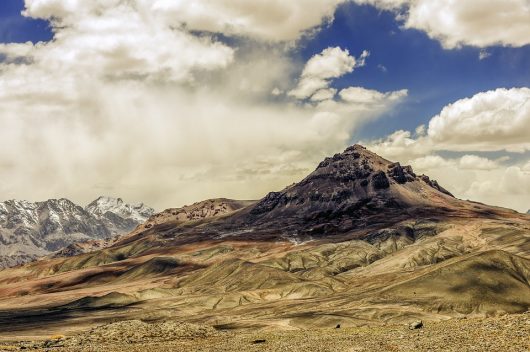
Tajikistan is landlocked and sits in the northwestern Himalayas, one of the most mountainous regions on the planet, making transportation a challenge. Trade with other nations, which is important to the country’s economy, relies on a dilapidated railway system. The diminutive electricity market means energy infrastructure is also lacking. Power shortages and outages are rampant, especially during the winter.
The future for Tajikistan’s infrastructure may, however, be looking up due to foreign investment, which may alleviate some of the poverty in Tajikistan. Recently, Chinese investors funded new road construction in Dushanbe, the capital. Russia and Iran have also invested in hydroelectric plants, including a dam on the Vakhsh River that may become the world’s largest.
3. Tuberculosis is a growing public health problem.
Multi-drug resistant tuberculosis (MDR-TB) is disproportionately high in many central Asian countries, including Tajikistan. The country’s healthcare system is ill equipped to respond to this issue, lacking adequate information systems and human resources. Most funds for fighting TB come from international assistance.
MDR-TB is a complicated public health challenge, however, the World Health Organization (WHO) has partnered with the government and aid groups to improve and monitor Tajikistan’s ability to treat TB and stave off MDR-TB.
4. Most of the population does not have access to clean water.
Nearly 60 percent of Tajik citizens rely on unsanitary water supplies. Many depend on irrigation ditches for drinking water, meaning waterborne diseases are common. Diarrhea is the sixth leading cause of death in children under five.
While these statistics may seem bleak, water quality is a relatively straightforward issue to tackle. USAID has made notable strides in providing better access to clean water, one of its main focuses in Tajikistan. According to its website, USAID has “established 56 community-level water users’ associations,” helping the Tajik weather and water forecasting agency better manage the country’s vast supply of fresh water.
5. The civil war destroyed one out of five schools in the country.
Funding for education decreased drastically after Tajikistan became independent from the Soviet Union in 1992. The following five years of fighting destroyed or damaged a significant portion of the country’s schools. Naturally, such collateral destruction has contributed to the precarious state of the education system.
Since the fighting, the country has either struggled to or failed to revive school systems. According to the latest reports from UNICEF, schools are overcrowded, underfunded and understaffed, with many teachers working triple shifts. Furthermore, dropout rates are high, especially for girls.
The state of Tajikistan’s education system leaves much to be desired. However, organizations like USAID and UNICEF have partnered with the Tajik government. They are determined to nurture this fragile system to a point where it can sustain itself, mainly by focusing on preventing dropouts and improving equity and access.
In many ways, Tajikistan seems to lag behind its neighbors in the Central Asian region. With a strong memory of war and political upheaval, coupled with uncompromising geography, the country has struggled to develop.
But international aid organizations have shown great ambition and, partnered with the Tajik government, achieved tangible successes in reducing poverty in Tajikistan and its burdens. Likewise, international investment from the private sector suggests promise and hope for a society that has much to gain.
– Charlie Tomb
Photo: Pixabay

Kenya: Model for African Nations in UN’s Blue Economy
Out of 54 total countries in Africa, 38 are coastal, including the fastest growing economy on the continent, Kenya. Last year, Bloomberg ranked Kenya the third fastest growing economy in the world. The key to its success has been a strong blue exporting economy.
The backbone of Kenya’s private sector is its horticulture and tea industries, which are both export markets. Kenya not only produces the most black tea in the world, but it also exports the most. However, while neighboring nations like Tanzania produce more horticulture than Kenya, Kenya’s well-designed shipping infrastructure makes it a vastly superior exporter.
The economic trend visible in Kenya is that even when production is comparatively low, a streamlined exportation system can cause a big economic boom. The new handbook by the ECA explains how African nations can use their coastal status to promote long-term growth.
As in Kenya, the handbook emphasizes the blue economy involving shipping and other markets. The ECA calls for an update of maritime transportation to make Africa a center for global trade.
An overarching theme of the handbook is sustainability, particularly the use of hydroelectric power over petroleum or coal. As expected, Kenya mirrors the ECA’s suggestion, with 71 percent of national electricity coming from hydroelectric sources.
It will take a lot of work to make the handbook’s blue economy a reality. Countries with big shares of coastline like Eritrea and Somalia nonetheless trail far behind economically due to political instabilities in its region. Furthermore, the other African nation seeing major GDP growth, Nigeria, is heavily reliant on oil exports–the opposite of what the ECA suggests.
While the ECA cannot expect changes overnight, Executive Secretary Carlos Lopes is hopeful that Africa will benefit massively from a well run blue economy. According to Lopes, “If fully exploited and well managed, Africa’s Blue Economy can constitute a major source of wealth and catapult the continent’s fortunes.”
– John English
Photo: Flickr
CEO Fights to End Food Shortages in Venezuela
Oil Profits Plummet
In 2013, following the death of Hugo Chávez, former Vice President and current Head of the United Socialist Party of Venezuela Nicolas Maduro was elected president and promised to continue the policies of his predecessor. According to The Washington Post, Maduro is “discouraging private industry that could have diversified the nation’s economic base” and using revenues from PDVSA, the state oil company, to “pay for generous social welfare benefits that won votes.” This lack of diversification and unruly spending, combined with the harsh drop in oil prices, has left the economy and citizens of Venezuela in turmoil. The International Monetary Fund’s figures show that Venezuela “went from earning $80 billion from oil in 2013 to a projected $20-25 billion in 2016.” This discrepancy of billions of dollars has created food shortages in Venezuela, resulting in riots and violence. Numerous looters have been shot and killed, hundreds have been arrested and lines of hungry families continue to grow.
Uncooperative Government
Political and economic instability has allowed crime to prosper. According to the Los Angeles Times, “gangs on motorcycles have fought over the right to control and distribute food.” Instead of taking responsibility for the lack of revenue, mounting inflation and food shortages, President Maduro has shifted blame onto the U.S. government, as well as Mendoza. Mendoza’s business, a large-scale food processing and brewery corporation, is a unique entity within Venezuela’s socialist society. Empresas Polar is the largest privately owned enterprise in a country whose government controls a substantial portion of businesses.
President Maduro accused Mendoza of withholding goods and slowing production during the crisis. The Wall Street Journal reports that the government views Mendoza as “a traitor responsible for the scarcities.” Mendoza denies all accusations and believes that it is the government’s control of prices, lack of imports and halts in production forced by a lack of federal funds that is fueling the food shortages. In fact, Mendoza is actively fighting to end the overwhelming food shortages in Venezuela. The CEO is urging his government to cooperate with organizations that can offer aid.
Venezuela Refusing Help
In February, The Wall Street Journal reported that Mendoza contacted Harvard economics professor Ricardo Hausmann to speak of “Venezuela’s need for up to $60 billion of loans from the International Monetary Fund and World Bank to avoid economic meltdown.” This cry for help will most likely go unheard, as Venezuela’s government has denied foreign aid from most countries, especially the U.S., since the time of Hugo Chávez.
While President Obama and President Maduro did meet for a few moments at the Summit of the Americas in April, Maduro spent most of his time lambasting Obama for his sanctions, which are based on human rights violations by a handful of Venezuelan officials.
Moving Forward
In this time of crisis, Empresas Polar and its charismatic CEO Lorenzo Mendoza are bringing hope to Venezuela. Empresas Polar represents a bright future for Venezuelan business, as it is responsible for the employment of thousands, offers price-conscious products, a provides a profitable business plan and diversification of the Venezuelan market. Moreover, despite attacks on his character and livelihood made by the government, Mendoza will continue to fight for foreign aid to end the food shortages in Venezuela.
– Liam Travers
Photo: Business Insider
5 Things to Know About Poverty in Tajikistan
Poverty in Tajikistan remains a problem. Tajikistan is frequently cited as the poorest former Soviet republic, with one of the world’s lowest GDPs per capita (ranked 192). While it is a place that Americans do not hear about often, USAID has been busy in the country of just over eight million inhabitants for more than 20 years, almost as long as Tajikistan has been a sovereign nation.
Poverty in Tajikistan: Key Facts
1. Proportional to GDP, Tajikistan has one of the largest remittance economies in the world.
Due to a scarcity of secure employment opportunities, which contributes greatly to poverty in Tajikistan, more than one million Tajik citizens leave the country searching for work. The money that these Tajiks send home equals more than half of the entire country’s GDP. The vast majority of these migrants—90 percent—travel to Russia.
2. Poor infrastructure stagnates the Tajik economy.
Tajikistan is landlocked and sits in the northwestern Himalayas, one of the most mountainous regions on the planet, making transportation a challenge. Trade with other nations, which is important to the country’s economy, relies on a dilapidated railway system. The diminutive electricity market means energy infrastructure is also lacking. Power shortages and outages are rampant, especially during the winter.
The future for Tajikistan’s infrastructure may, however, be looking up due to foreign investment, which may alleviate some of the poverty in Tajikistan. Recently, Chinese investors funded new road construction in Dushanbe, the capital. Russia and Iran have also invested in hydroelectric plants, including a dam on the Vakhsh River that may become the world’s largest.
3. Tuberculosis is a growing public health problem.
Multi-drug resistant tuberculosis (MDR-TB) is disproportionately high in many central Asian countries, including Tajikistan. The country’s healthcare system is ill equipped to respond to this issue, lacking adequate information systems and human resources. Most funds for fighting TB come from international assistance.
MDR-TB is a complicated public health challenge, however, the World Health Organization (WHO) has partnered with the government and aid groups to improve and monitor Tajikistan’s ability to treat TB and stave off MDR-TB.
4. Most of the population does not have access to clean water.
Nearly 60 percent of Tajik citizens rely on unsanitary water supplies. Many depend on irrigation ditches for drinking water, meaning waterborne diseases are common. Diarrhea is the sixth leading cause of death in children under five.
While these statistics may seem bleak, water quality is a relatively straightforward issue to tackle. USAID has made notable strides in providing better access to clean water, one of its main focuses in Tajikistan. According to its website, USAID has “established 56 community-level water users’ associations,” helping the Tajik weather and water forecasting agency better manage the country’s vast supply of fresh water.
5. The civil war destroyed one out of five schools in the country.
Funding for education decreased drastically after Tajikistan became independent from the Soviet Union in 1992. The following five years of fighting destroyed or damaged a significant portion of the country’s schools. Naturally, such collateral destruction has contributed to the precarious state of the education system.
Since the fighting, the country has either struggled to or failed to revive school systems. According to the latest reports from UNICEF, schools are overcrowded, underfunded and understaffed, with many teachers working triple shifts. Furthermore, dropout rates are high, especially for girls.
The state of Tajikistan’s education system leaves much to be desired. However, organizations like USAID and UNICEF have partnered with the Tajik government. They are determined to nurture this fragile system to a point where it can sustain itself, mainly by focusing on preventing dropouts and improving equity and access.
In many ways, Tajikistan seems to lag behind its neighbors in the Central Asian region. With a strong memory of war and political upheaval, coupled with uncompromising geography, the country has struggled to develop.
But international aid organizations have shown great ambition and, partnered with the Tajik government, achieved tangible successes in reducing poverty in Tajikistan and its burdens. Likewise, international investment from the private sector suggests promise and hope for a society that has much to gain.
– Charlie Tomb
Photo: Pixabay
UN Unveils New Advertising Initiative: Common Ground
The Common Ground Initiative was unveiled at the Cannes Lions advertising festival on Friday, June 24 to a crowd of some of the industry’s top leaders. U.N. Secretary General Ban Ki-Moon shared the stage with some of advertising’s most powerful CEOs to make the announcement.
The initiative is a plan to produce and distribute advertising about the Sustainable Development Goals (SDGs), the United Nation’s set of 17 goals for improving living conditions around the world. The ads will run in publications such as The Economist, The Wall Street Journal, the Daily Mail and Le Figaro, to name a few.
The collaborative effort between the rival companies is unprecedented, even more so when considering that both the ads and media time were gifted pro-bono for the cause.
However, considering the importance of the SDG’s, the necessity of raising awareness in participating countries cannot be understated. It is especially vital considering that there are no legal mandates pushing countries towards adopting the SDGs.
The Wall Street Journal interviewed Jan Eliasson, the deputy secretary-general of the U.N. In his interview, Eliasson argued that raising awareness of the goals would add pressure on governments to take a stand on some of the issues in question.
A 2013 survey by the European Commission found that only six percent of the European Union was aware of the U.N.’s previous initiative, the Millennium Development Goals, despite their success. The U.N. hopes that Common Ground will inspire more countries to reach the 2030 date for the current goals.
According to the Jamestown Sun, the first set of advertisements will focus on everyday people agreeing that the goals of the SDG’s are more important any rivalries between interested parties, implying that everybody should be a strong supporter of the U.N.’s goals.
In debuting the initiative, the advertising companies issued the following statement: “By working in partnership to support the Sustainable Development Goals, we want to demonstrate that even fierce competitors can set aside their differences in order to serve a wider common interest.”
– Sabrina Santos
Photo: U.N. Multimedia
Why Poverty Exists and What We Can Do About It
A Lack of Resources
The World Health Organization reports that nearly 700 million people in the world lack access to safe water. According to The World Food Programme, nearly 800 million, or one in nine people, lack the food and nutrition necessary to live a healthy and active life.
Water and food are becoming an increasingly large concern as the world population is expected to reach between nine and 11 billion by the end of the century. However, the world already produces enough food to feed 10 billion people. Furthermore, with desalination and water recycling technology, supplying safe drinking water to even the driest areas of the world is possible with enough energy and money.
Despite the rising population, there are currently more than enough resources to nourish everyone, and there exists a significant incentive to disperse these resources. Every U.S. dollar spent on water and sanitation returns $4 to the global economy. Likewise, every dollar spent on proven nutrition interventions returns $16, as adequately nourished children go on to have higher IQs, increased education and better salaries.
On the right track, Congress recently passed the Global Food Security Act, which provides a platform and allocated funding to develop a global nutrition security strategy. Many developed nations have similar programs, but despite the economic incentive to provide water and food security, not enough funding is provided for these programs. There have been steps taken to end resource poverty but not at the necessary scale.
A Lack of Education
At the heart of many narratives, and perhaps a symptom of the larger issue, individual shortcomings are the reasons why poverty exists. Those who are unable to compete in the market do so because they lack skills relative to the population at large.
For many, disadvantage takes the form of fewer opportunities for education and economic growth. More than 72 million children of school age are not in school, and 759 million adults remain illiterate and unable to better their living conditions.
For others, disadvantage begins with conception. Prenatal malnutrition, drug use, environmental toxins and even stress can lead to poor brain development in the womb. Poor development begets poor performance as well as inadequate skills to compete economically. A lack of skills and education becomes the cause of one generation’s poverty, and a symptom of that of the next.
Many steps in the cycle of why poverty exists are easily preventable. Over 16,000 children under the age of five die of preventable causes, and 800 women die everyday related to childbirth and pregnancy. The Reach Every Mother and Child Act, which has been introduced to the House and Senate, aims to help save the lives of 600,000 women and 15 million children by 2020, and will help to ensure healthy development. Healthy, well-nourished children are much easier to educate.
Social v. Economic Reasons
Institutionalized inequalities create cycles of poverty exacerbated by lack of resources, education and opportunity.
Political systems that favor the wealthy may not have the interests of the working poor at heart. Corrupt governments prevent aid from reaching those in need. Social structures may prevent movement between classes. Historical exploitation of a country’s resources may have long-lasting effects, and oppression of a population leads to large income disparities. One does not have to search far to find documented examples of each of these depravities, and they even point to a larger problem than just a lack of resources or skills.
If we are in fact past our colonial era, then our involvement in developing countries should be in the interest of cultivating a global economy–one that works for all countries involved. Allocating funds to foreign aid and growth is a step in that direction. Domestic and foreign interests need not be mutually exclusive.
Successful poverty reduction exists but could be improved and expanded with more time and resources. The U.S allocates only 0.19 percent of its gross national income to foreign aid. Only six countries have ever met the target laid forth by the Organization for Economic Co-operation and Development, which sits at just 0.7 percent of GNI. Not only will aid help improve the global economy, but also many developed countries play a role in creating the political and social inequalities listed above. With economics and ethics on the side of the poverty reduction, is 0.19 percent cutting it?.
In a fair world, choice will be the only reason for why poverty exists, and at that point it can be deemed inevitable, but at present, the suffering of many stems from causes, if not within our control, then within our reach.
– Lia Ferguson
Photo: Pixabay
So You Want to Become a Senator?
How do you become a Senator? For many people in the United States, the steps to becoming a senator may seem mysterious and inaccessible for the common citizen. In reality, there are few requirements insisted on by the Constitution. Being a senator can be challenging and rewarding, especially for one advocating for the world’s poor. During the six-year term after the election, a senator reviews specific bills and votes on whether or not they should become laws. One could even propose global poverty focused bills! Sound fascinating? Here are the requirements and recommendations on how to become a senator, for all of our budding politicians out there who want to help the world.
3 Eligibility Requirements in the Constitution:
How to Become a Senator
Finally, what is the one thing of importance that veterans of the Senate can all agree upon? “What matters… is a willingness to work and learn, to stand up for values, and most important, to earn trust.”
– Caylee Pugh
Sources: NY Times, How Stuff Works, US Senate
Photo: Maid in DC
Drones Now Delivering Lifesaving Vaccines
Many low- and middle-income countries struggle to deliver lifesaving vaccines to sick people who are fighting preventable diseases.
Bruce Y. Lee, director of operations at the International Vaccine Access Center at the Bloomberg School says “[We] make all these vaccines but they’re of no value if we don’t get them to the people who need them. So there is an urgent need to find new, cost-effective ways to do this.”
Currently, vaccines such as hepatitis B, tetanus, measles and rotavirus are typically transported by road through two to four storing sites before they reach clinics where the doses are finally administered to patients. The majority of vaccines require refrigeration until they are used or else they will spoil.
In addition, non-vaccine costs of routine immunization are expected to rise between 2010 and 2020, mostly derived from supply chain logistics.
In the meantime, unmanned drones have proliferated. They can traverse all land and topography, decrease labor costs and substitute the need for vehicle transportation. They have been heavily used for surveillance and in humanitarian aid delivery.
A study conducted at Johns Hopkins University found that utilizing drones to transport vaccines to their final destination could slightly increase the rate of immunization, immunizing 96 percent of the target population as compared to 94 percent using land-based transport. This simultaneously produced significant savings, eight cents for every dose administered (roughly 20 percent savings).
“Assuming the drones are reliable, are capable of making the necessary trips and have properly trained operators, they could be a less expensive means of transporting vaccines, especially in remote areas,” says Lee. He adds, “They could particularly be valuable for urgent orders.”
An initiative led by the United Parcel Service Foundation and Gavi, the Vaccine Alliance, has raised $800,000 grant to support the launch of a zip line drone project in Rwanda that will commence later this year. The government of Rwanda will use zip line drones to make 150 life-saving blood deliveries per day to 21 transfusing facilities in western part of the country.
According to Dr. Seth Berkley, CEO of Gavi, the Vaccine Alliance, “It is a totally different way to deliver vaccines to remote communities and we are extremely interested to learn if UAVs can provide a safe, effective way to make vaccines available for some of the hardest-to-reach children.”
The Rwanda drone network has been initially focused on delivering blood supplies, but plans to expand to include vaccines and treatments for HIV/AIDS, malaria and tuberculosis.
In rural Virginia, Bhutan and Papua New Guinea, drones are currently being tested for medical supply deliveries. UNICEF is also testing their viability of use in Malawi and in Tanzania.
– Sarah Poff
Photo: Pixabay
Refugee Camps: Temporary Solutions to Long-Term Problems
Refugee camps are supposed to be temporary living settlements for displaced people fleeing violence and persecution from their home countries. While the accommodations within refugee camps are built on short-term solutions, the idea of “temporary” for refugees grows obsolete as their living situations become more permanent.
A refugee spends an average of 12 years living in a camp according to the New York Times. These camps face their own significant problems. In the last 10 years, the number of displaced people in the world tripled. Over 60 million people are now displaced, said the United Nations High Commissioner for Refugees (UNHCR). Refugee camps are constantly subjected to insufficient funding and support from the international community, overcrowding, scarcity of food, shortage of clean water and poor sanitation.
Without adequate food, refugees are susceptible to chronic malnutrition, which increases their risk of disease or illness. While the UNHCR recommends a daily minimum of 20 liters per person per day, many refugee camps fail to meet these standards. A lack of clean water and poor sanitation systems result in more diseases, such as diarrhea and cholera.
Proactive health measures, however, are being taken. To combat malnutrition and nutrient deficiencies, some refugee camps have implemented community gardens. At the Meheba refugee camp in Zambia, for example, refugees can grow their own food and add fruits and vegetables to their diets. Calls for improvements in both the latrine and sufficient waste disposal systems have also been made, as these will not only improve sanitation but also prevent disease.
The Kilis Refugee Camp in Turkey resembles more of a permanent shelter. There are no tents, but sturdy containers instead. The camp has amenities that many others lack; electricity, maintenance, a clinic and grocery stores. Within the grounds, there are also schools and counselors.
However nice the camp is, the prolonged stay of many of the refugees makes it more difficult to maintain psychological well-being. The placement of refugee camps away from society and the increasing length of stay by their residents make it hard for the people to remain engaged. Without employment and integration, refugees cannot practice their skill sets or feel connected to the local community.
UNHCR Engineer and Physical Planning & Shelter Officer Anicet Adjahossou found that one solution to strengthen community building within refugee camps was to work with anthropologists and refugees to redesign the standard refugee camp grid format into a new housing layout.
In 2012, Adjahoosu worked with UNHCR at the Dollo Ado refugee camp in Ethiopia to organize the homes into sets of U-shaped enclosures. The innovative arrangement prompts more family interaction and allows for larger communal areas. Also included were locations for schools, water distribution points, markets and health centers.
In addition to improving the living conditions in refugee camps, more aid must be given to prevent and end conflicts, so that we do not continue to see an increase in people forced to flee their homes in search of safety. Luckily, it appears that advocates like Anicet Adjehossou are taking the lead.
– Erica Rawles
Photo: Flickr
10 Facts About Poverty In Malawi
Many Malawians work in agriculture and it is hard for them to produce enough crops to maintain an income above the international poverty line. With parental death, disease and crop failure, the obstacles that many Malawians face are abounding. Below are the leading facts that thoroughly explain and illuminate the pressing issue of poverty in Malawi.
The people of Malawi face great hardships; however, with the help of nonprofits like IFAD and Access Health Africa, there is hope for an increased economy, health services and better school systems. This, in turn, will decrease disease, orphaned children and overall poverty in Malawi.
– Bella Chaffey
Photo: Flickr
Updated: June 01, 2024
Addressing Poverty in Qatar: 60 Percent Live in “Labor Camps”
The Ministry of Development Planning and Statistics disclosed on June 6, 2016 that 1.4 million people, nearly 60% of Qatar’s population, live in what the Qatari government officially labels as “labor camps.”
Migrants from poorer countries have moved to Qatar in recent years to develop its infrastructure for tourism projects, including preparation for the 2022 World Cup.
However, migrant workers continue to live a life of poverty in Qatar, with many human rights groups like Amnesty International condemning Qatar for providing “squalid and cramped accommodation” for its very large migrant workforce.
According to Amnesty International, migrant workers are also not paid for several months at a time, which puts significant emotional and financial pressures on workers already burdened with heavy debts.
Recently, 13 people died in a fire that broke out in a labor camp for migrants working on a waterfront tourism project in southwest Qatar. The fire highlights how Qatar has treated migrant workers by providing poor living conditions for them.
The government responded to criticism by building new housing complexes for workers, including a city south of Doha. This new city, known as “Labour City,” will include cinemas, shops and a cricket stadium for migrant workers.
Outside of the government, various organizations have also assisted migrant workers to overcome their life of poverty in Qatar. One such organization is Reach Out to Asia (ROTA), a member of the Qatar Foundation for Education, Science and Community Development.
On June 8, ROTA launched its Ramadan Project 2016, bringing together over 100 local volunteers to pack and distribute bulk groceries to more than 200 families in need across Qatar.
ROTA volunteers packaged food parcels containing items such as flour, cooking oil, milk powder and lentils that were later distributed before the start of Ramadan. The program also provided beneficiary families with shopping vouchers to purchase other products.
ROTA volunteers, numbering 300, partook in several community service activities set to take place over the month, including the installation of computer labs for migrants working on construction projects.
Despite living a life of poverty in Qatar, migrant workers are slowly overcoming hardships through additional assistance by the government and various organizations.
– Alexis Pierce
Photo: Flickr