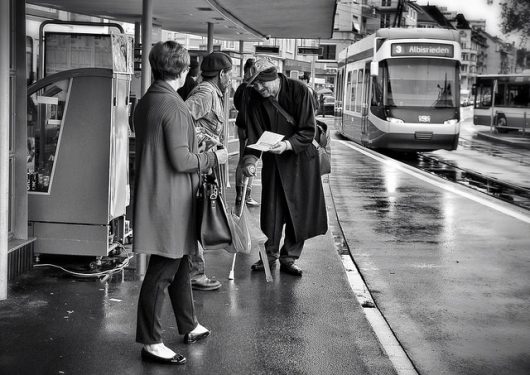
Poverty in Switzerland remains lower than many of its European neighbors. However, rates still affect a large part of the population. So, why are the Swiss poor? In the country, a lack of awareness about poverty combined with a high cost of living compounds the struggles felt by impoverished residents. Below are the leading facts about poverty in Switzerland.
Top Seven Facts about Poverty in Switzerland
1. One in 13 Swiss Residents Lives Below the Poverty Line.
Switzerland is one of the world’s wealthiest nations. However, data shows that one in 13 residents of Switzerland are still living in poverty. This rate may come as a surprise to many, as Switzerland is often associated with economic stability. By comparison, an estimated one in five residents of Britain lives in poverty, while the average resident of Zurich makes 21 times more per hour than the average resident of Kiev, Ukraine. Switzerland’s poverty rate is significantly lower than nearby European nations, however, 6.6 percent of the Swiss population still lives in poverty.
2. The High Cost of Living Amplifies the Issue.
Residents of Switzerland must account for a high cost of living; food prices and the cost of housing make daily financial needs quite high. Mandatory private health insurance adds further expense. Recent reports show Zurich and Geneva as two of the most expensive cities in the world in terms of cost of living, with certain reports placing the cities above New York City. However, higher incomes in the cities typically offset this cost, with high purchasing power reported. As a result, Zurich and Geneva rank second and third respectively in terms of purchasing power (surpassed only by Luxembourg.)
3. The Poverty Line is Set to Incorporate the Cost of Living.
In order to account for the high cost of living in Switzerland, the poverty rate has been set to incorporate the financial demands of living in the country. For a single person, the poverty line is set as making less than 2,200 francs per month (equal to slightly more than $2,200 in the U.S.) A couple living with two children is considered below the poverty line if earning less than 4,050 francs per month. Poverty in Switzerland is understood as the inability to afford the goods and social services necessary for a healthy and socially integrated life. The Swiss Conference for Social Statistics sets poverty line thresholds based upon meeting those needs.
4. Elderly, Immigrant and Single-Parent Populations are Especially Vulnerable.
Certain populations in Switzerland are especially vulnerable to poverty. These populations are much like the vulnerable populations in many countries, including families with only one parent, elderly residents, the unemployed, unskilled laborers and people living alone. Rates of poverty among these populations are significantly higher than other demographics. For example, those over the age of 60 are nearly three times more likely to live in poverty.
5. Trial and Error Approach to Solutions, Including Universal Basic Income.
As Switzerland seeks to address the levels of poverty that remain in the country, a referendum was voted on which would have paid each Swiss family a weekly guaranteed income. While the referendum failed in a vote this June, it represents an innovation in seeking solutions to poverty. Switzerland is the first country to consider a solution of this kind. Some consider the failure an important step, nonetheless, as it provides a platform for discussing the meaning of basic income.
6. Wages and Income Can Be Quite High in Relation to European Neighbors.
Incomes in Swiss cities are often quite high, with the average resident of Zurich earning $41 per hour or more. This level of earning is often what leads to the association of Switzerland with a lifestyle of security and contributes to offsetting high costs of living. However, for the 6.6% of Swiss residents who do live in poverty, keeping up with city living costs (dependent on similar wages) can lead to a daily struggle.
7. Poverty in Switzerland is Decreasing.
The good news for addressing poverty in Switzerland is a recent decrease in the number of those living in poverty. Since 2007, rates have decreased from 9.3% to 6.6%.
Assessing poverty in Switzerland demonstrates the importance of not allowing a minority impoverished population to go overlooked. The country’s innovative and consistent efforts to address poverty represent a democratic model for the discussion surrounding poverty in developed nations.
– Charlotte Bellomy
Photo: Flickr

Federal Budget Aimed at Reducing Poverty in Pakistan
On June 3, Minister for Finance Ishaq Dar presented budgetary proposals for the fiscal year of 2016-17. Dar plans to focus on reducing poverty in Pakistan by boosting the agriculture industry.
According to the budget report, agriculture makes up 44 percent of Pakistan’s labor force and 21 percent of its GDP according to the budget report. In short, the agriculture sector is vital to the economy.
The Pakistani government aims to increase the productivity and income of the rural population by instituting various changes. Such changes include lowering the cost of fertilizer, eliminating a tax on pesticides and extending credit to farmers. This will increase the credit budget from 600 to 700 billion rupees (approx. 5.7 billion to approx. 6.7 billion dollars).
Part of the proposed agricultural budget includes a measure for an off-peak tariff decrease on tube wells. Tube wells are made by driving a tube into a stratum in the ground that bears water.
This decrease would bring the price down from 8.85 rupees per unit (approx. 8 cents) to 5.35 rupees per unit (approx. 5 cents). The Pakistani government will bear a cost of 27 billion rupees (approx. $259 million) to provide more affordable means of reaching water sources for the depleted agriculture sector.
Dar hopes that helping shoulder the burden of cost brought on by decreased food prices and unfavorable weather will rejuvenate a critical piece of an economy that has seen a mere 4.7 percent overall growth in the past two years.
In assisting agriculture, Pakistan could also see improvement in the textile industry. In fact, 70 percent of the raw materials used by that sector are provided by the agriculture sector.
To further support the textile industry, imports of textile machinery will continue to be exempt from customs duty. Textiles and other export-oriented sectors of the economy will have a zero-rate tax regime.
The Pakistani government has also proposed a suspension of taxes on exports in the hopes of halting the current decline.
The education budget is largely unchanged from recent years. However, the budget includes an 11 percent increase in the funding of higher education. This allocation of 79.5 billion rupees (approx. $763 million) is the largest amount ever set aside for higher education.
Elements of this budget include faculty development programs for universities, as well as the establishment of sub-campuses.
Better-trained faculty and more university campuses could lead to a more educated population that would possess the tools necessary to generate income and start businesses. These new business owners would need to hire employees, so providing aid for higher education could reduce poverty in Pakistan and create more jobs.
Research by the Pakistani government with the help of World Bank shows that the government has been successful in its effort of reducing poverty. The poverty has dropped from 64.2 percent in 2001-02 to 29.5 percent in 2013. Conditions in Pakistan are getting better, but there is still room to improve.
Foreign aid is effective in helping to reduce poverty, but national governments face the task of instituting programs that will provide people with jobs to sustain life above the poverty line.
The 2016-17 Pakistani budget seeks to increase funding for critical sectors of the economy. Funding these important programs could help the economy in its continued growth by providing education and job opportunities to the nation’s young and rural populations, thus reducing poverty in Pakistan.
– Aaron Parr
Photo: Huffington Post
Global Health Focused Social Entrepreneurship on the Rise
Oftentimes, business and altruism seem to be at odds. Social entrepreneurship aims to dismantle that notion. This effort takes a number of shapes, but specifically, entrepreneurial initiatives addressing global health are on the rise. These types of businesses intend to implement solutions to health care problems faced by marginalized groups in ways that bureaucratic governments and health organizations cannot.
To backtrack, a social entrepreneur is someone who seeks to establish sustainable social change on a large-scale. They intend to promote social values while keeping fiscal responsibility in mind.
A key characteristic is innovation. A social entrepreneur should be able to adapt new or improved methods to fit the targeted populations in order to help the world. A social business is one that does not sacrifice responsibility for profit, but rather shoots for responsibility while turning a profit.
According to the Journal of the American Medical Association (JAMA), the rise in social entrepreneurship is an unmistakable trend in full force. At least 27 universities worldwide are currently offering courses or programs in that particular field of study. There are at least 25 annual competitions for social entrepreneurship, which reflects the rising popularity of this sect of the business world.
Unlike other businesses, social ventures do not rely on patented technologies or methods, but rather search to inject something new, namely perspective, into an already existing system. With healthcare, this means companies can circumvent the norm and introduce a unique lens through which healthcare is delivered.
Outside of the private sector, social entrepreneurship is changing the way the public sphere operates as well. Governments and NGO’s are learning from these ventures. From organizations in Bangladesh and Thailand to the U.K.’s own Oxfam, NGO’s are adopting entrepreneurial methods to maximize the effectiveness of their operations.
Governments are beginning to endorse social entrepreneurship as a valuable ally to local economies and social change.
– Connor Borden
Photo: The Startup Couch
Effects of Poverty on Society
Issues like hunger, illness, and poor sanitation are all causes and effects of poverty. That is to say, that not having food means being poor, but being poor also means being unable to afford food or clean water. The effects of poverty are often interrelated so that one problem rarely occurs alone. Bad sanitation makes one susceptible to diseases, and hunger and lack of clean water makes one even more vulnerable to diseases. Impoverished countries and communities often suffer from discrimination and end up caught in a cycle of poverty.
Effects of Poverty on Society
The vicious cycle of poverty means that lifelong barriers and troubles are passed on from one generation to the next. Unemployment and low incomes create an environment where children are unable to attend school. Children must often work to provide an income for their family. As for children who are able to go to school, many fail to see how hard work can improve their lives as they see their parents struggle at every day tasks. Other plagues accompanying poverty include:
Ultimately, poverty is a major cause of social tensions and threatens to divide a nation because of income inequality. This occurs when the wealth of a country is poorly distributed among its citizens—when a tiny minority has a majority of the money. Wealthy or developed countries maintain stability because of the presence of a middle class. However, even Western countries are gradually losing their middle class. As a result there has been an increased number of riots and clashes. For society, poverty is a very dangerous factor that can destabilize an entire country. The Arab Spring is a great example of how revolts can start because of few job opportunities and high poverty levels.
Child Poverty
The number of children affected by poverty has been increasing since the 1960s. Children are those with the least amount choice and ability to change their circumstances. There is very little they can do to help their families, nor should they have to. Usually by the age of six they can be enrolled in child labor. Nearly all the potential effects of poverty impact the lives of children—poor infrastructure, unemployment, malnutrition, domestic violence, child labor, and disease. Simply analyzing the effects of child poverty on education in developed countries alone reveal some disturbing statistics:
Effects of Poverty and Violence
The effect of poverty on terrorism is not as straightforward as the media often perceives it to be. Poverty fuels terrorism by creating a state of misery and frustration that pushes people to join terrorist organizations. But more research shows, it is more complicated.
Of course, some terrorists come from poor countries with high unemployment, and terrorist organizations often provide higher salaries than other jobs. But terrorism may not be a direct effect of poverty. So what is the source of frustration and anger?
Studies show that countries with weak governments, fragile institutions, and limited civil rights are a great environment to nurture the production of terrorist activity. Countries undergoing difficult transitions—i.e. from authoritarian to democratic regime—often encounter political instability with the blurring of certain rules and laws.
These periods of profound change come with a transformation of social order, values, and methods of governing that many people may find distressing and unsettling. Therefore, stabilizing and empowering political institutions is a crucial part of fighting against the dangerous consequences of poverty.
– Scarlet Shelton
Sources: Poverties.org, CPAG, UK Government
The Effects of Protracted Conflict on Poverty in Yemen
Ranked 160 out of 188 countries on the UNDP Human Development index, Yemen is one of the poorest countries in the Arab World. Ravaged by conflict for the past year and a half, poverty in Yemen has been increasing and will likely continue to do so as conflict is prolonged.
Since Houthi rebels seized the government in 2014, a Saudi-led coalition has been engaged in combat with them. Al-Qaeda in the Arab Peninsula and ISIS have also increased activity opposed to both groups and further serve to increase unrest.
So far, the conflict has resulted in over 6,400 deaths, over 30,500 people injured and 2.8 million people internally displaced. In a country of 25.6 million people, 82% of the population is in need of emergency humanitarian assistance and 19.3 million Yemenis are without safe drinking water or sanitation. At the beginning of the conflict, 14.4 million Yemenis faced chronic food insecurity, but that figure has increased by 35% since the conflict began.
The conflict has also had a significant toll on economic activity. Oil and gas exports, Yemen’s main source of income, have ceased. Imports have also contracted, aside from critical food and energy imports. Inflation reached as high as 30% in 2015, and is expected to increase further as the fiscal performance continues to weaken.
To alleviate the crisis, more than 70 humanitarian organizations have been attempting to provide assistance to those experiencing these conditions. However, limited access and budgets have hampered its ability to reach a majority of the population.
The UNDP initiative, Yemen Our Home, is one of the actors attempting to provide relief to the Yemeni people. Yemen Our Home is trying to garner support for and donors to restore and support community functions such as through a recent deal with Sabafon Telecommunication Company, which created a mobile clinic in the Sho’ub District of Yemen’s Capital City, Sana’a. Other projects that the initiative is attempting to fund and implement include solid waste management in cities, food production and energy.
Even before the most recent conflict, Yemen was one of the poorest countries in the Middle East. Thirty-seven percent of the population lives below the poverty line of $2 a day per person, the concentration of which live in rural areas. Statistics from 2012 indicate that almost 60% of children under the age of five have chronic malnutrition, 35% are underweight, and 13% have acute malnutrition, which are some of the highest rates in the world.
Poverty in Yemen persists in part due to lack of access to basic resources such as land and water and to services such as health care and education. With a majority of the population living in rural areas, their state of isolation makes it even more difficult for people living in poverty to gain access to resources and services.
Such conditions compounded with poor infrastructure prevent humanitarian assistance from accessing those Yemenis in need. Even with a cease-fire signed in March, difficult-to-reach areas are limited in the amount of assistance they can receive.
As long as conflict continues, poverty in Yemen will only increase in magnitude. Restoring peace and order is critical for beginning reconstruction and addressing the issue of poverty.
– Adam Gonzalez
Photo: flickr
SoleRebels: An Ethiopian Shoe Company That Helps Struggling Artists
A new company in Ethiopia is revolutionizing the way people make and sell shoes. SoleRebels, founded in 2004 by Bethlehem Tilahun Alemu, crafts traditional Ethiopian footwear.
The company also provides employment opportunities for impoverished people within the local community and abroad. Alemu’s goal in starting such an enterprise was to help kickstart Ethiopia’s economy by creating well-paid and sustainable work.
In addition, the company ensures that all of its employees have access to on-site medical checkups and transportation. Africa-Middle East projects that the company will earn over $10 million in revenue this year. SoleRebels will also sell their wares internationally. The shoes will sell in flagship stores and in partnered organizations such as Whole Foods and Urban Outfitters.
Alemu decided to start SoleRebels when she noticed the poor living conditions of artists in her local neighborhood. It all began with nothing more than half-dozen of those struggling artists crafting shoes in a small workshop. However, she quickly expanded her enterprise.
In an interview with Wharton, Alemu said, “We aimed from day one to create, grow and control a world-class footwear brand right from our community that would create ever more jobs and growing prosperity for the workers, and to do this by leveraging the artisan skills of the community and the natural resources of the nation.”
SoleRebels currently remains the only Fair Trade certified footwear company on the market today. This means that they have undergone a rigorous auditing process to determine that all of their products are made in accordance with sustainable working conditions and environmental practices.
In the future, Alemu hopes to expand upon SoleRebels’s mission by building a full scale production facility. However, she assured Wharton, this will not change the organization’s artisan-driven model, which she cites as key to the company’s success.
She explained, “This model will not simply forever end aid dependency, but it will allow Africa to compete in the global marketplace of ideas on our own terms, and at full value for those ideas. And once we do that, then the images associated with Africa will be forever changed in a way that is real and meaningful and tangible.”
– Sabrina Santos
Photo: SoleRebels
Liberia Invests in Strengthened Midwifery Programs
During the 14-year civil war in Liberia, the health system became increasingly fragile, and a lack of roads and transportation made it difficult for pregnant women to receive necessary emergency care. This issue has created a strong need for strengthened midwifery in Liberia.
As a result, Liberia had one of the highest maternal mortality rates in the world according to a 2015 USAID article, but the country is now trying to change that through investment in midwifery programs.
Currently, 44 percent of Liberian women give birth without a skilled attendant, and nearly one out of 138 mothers die from preventable causes during childbirth. Such issues could be avoided with basic or strengthened midwifery in Liberia, according to the World Health Organization.
Bentoe Tehounge, a trained midwife in Liberia, told WHO, “We need midwives who can ensure a safe pregnancy even before a woman is pregnant. People who can provide advice on family planning, nutrition, physical activity and preventing mother-to-child transmission of HIV.”
There are six midwifery schools in the Liberia, half of which are in rural areas, and less than 200 midwives for over four million people. Most of these midwives work in urban areas. Strengthening these schools, especially the rural ones, will improve access to quality care for women around the country.
Retaining these midwives is one step towards Liberia’s investment in the profession. According to WHO, many health professionals were driven out of the country due to the civil war and the Ebola crisis, and now midwives lack “safe accommodation and transport, are overworked and paid poorly and have limited opportunities for career advancement.”
A new B.S. program addresses a portion of these concerns by providing further professional development. The program graduates 50 to 75 registered midwives per class, which is expected to staff more than 700 health facilities in the country. To develop better teaching methods, Liberia is working with the Danish Midwives Association to pair Liberian and Danish midwives in order to learn more advanced skills, like preventing and treating hemorrhages. It is hoped that this new alliance will result in strengthened midwifery in Liberia.
In the United States, this final element is comparable to the apprenticeships or clinicals that midwives do to obtain a license. Mary Anne Brown, a midwife serving the Great Falls and Helena areas of Montana, said that degree programs require that their students find and work directly with a midwife to gain clinical experience.
Past midwife training in Liberia tried to work within a culture of home birth in Liberia (USAID reported that 63 percent of Liberian women gave birth outside of a health facility) and with the knowledge of traditional midwives.
The goal was to shift the focus to encouraging birth preparedness, recognizing and referring complications and providing appropriate emergency care through what USAID called “home-based life-saving skills.” By utilizing storytelling, case histories, discussion, role-play and demonstrations, midwives, expectant parents and community leaders were able to educate themselves at community meetings.
One of the greatest achievements of the previous midwife training in Liberia was its ability to connect traditional midwives to both health facilities and certified midwives. Certified midwives perform their own visits to discuss problems the traditional midwives are having, replenish supplies and reinforce the training.
The current programs are a part of WHO’s efforts to provide clear guidelines, tools and an evidence base to lead to strengthened midwifery in Liberia and around the world in order to improve care for pregnant women and reduce both maternal and neonatal mortality rates.
– Anastazia Vanisko
Photo: Public Domain Images
Seven Important Facts About Poverty in Switzerland
Poverty in Switzerland remains lower than many of its European neighbors. However, rates still affect a large part of the population. So, why are the Swiss poor? In the country, a lack of awareness about poverty combined with a high cost of living compounds the struggles felt by impoverished residents. Below are the leading facts about poverty in Switzerland.
Top Seven Facts about Poverty in Switzerland
1. One in 13 Swiss Residents Lives Below the Poverty Line.
Switzerland is one of the world’s wealthiest nations. However, data shows that one in 13 residents of Switzerland are still living in poverty. This rate may come as a surprise to many, as Switzerland is often associated with economic stability. By comparison, an estimated one in five residents of Britain lives in poverty, while the average resident of Zurich makes 21 times more per hour than the average resident of Kiev, Ukraine. Switzerland’s poverty rate is significantly lower than nearby European nations, however, 6.6 percent of the Swiss population still lives in poverty.
2. The High Cost of Living Amplifies the Issue.
Residents of Switzerland must account for a high cost of living; food prices and the cost of housing make daily financial needs quite high. Mandatory private health insurance adds further expense. Recent reports show Zurich and Geneva as two of the most expensive cities in the world in terms of cost of living, with certain reports placing the cities above New York City. However, higher incomes in the cities typically offset this cost, with high purchasing power reported. As a result, Zurich and Geneva rank second and third respectively in terms of purchasing power (surpassed only by Luxembourg.)
3. The Poverty Line is Set to Incorporate the Cost of Living.
In order to account for the high cost of living in Switzerland, the poverty rate has been set to incorporate the financial demands of living in the country. For a single person, the poverty line is set as making less than 2,200 francs per month (equal to slightly more than $2,200 in the U.S.) A couple living with two children is considered below the poverty line if earning less than 4,050 francs per month. Poverty in Switzerland is understood as the inability to afford the goods and social services necessary for a healthy and socially integrated life. The Swiss Conference for Social Statistics sets poverty line thresholds based upon meeting those needs.
4. Elderly, Immigrant and Single-Parent Populations are Especially Vulnerable.
Certain populations in Switzerland are especially vulnerable to poverty. These populations are much like the vulnerable populations in many countries, including families with only one parent, elderly residents, the unemployed, unskilled laborers and people living alone. Rates of poverty among these populations are significantly higher than other demographics. For example, those over the age of 60 are nearly three times more likely to live in poverty.
5. Trial and Error Approach to Solutions, Including Universal Basic Income.
As Switzerland seeks to address the levels of poverty that remain in the country, a referendum was voted on which would have paid each Swiss family a weekly guaranteed income. While the referendum failed in a vote this June, it represents an innovation in seeking solutions to poverty. Switzerland is the first country to consider a solution of this kind. Some consider the failure an important step, nonetheless, as it provides a platform for discussing the meaning of basic income.
6. Wages and Income Can Be Quite High in Relation to European Neighbors.
Incomes in Swiss cities are often quite high, with the average resident of Zurich earning $41 per hour or more. This level of earning is often what leads to the association of Switzerland with a lifestyle of security and contributes to offsetting high costs of living. However, for the 6.6% of Swiss residents who do live in poverty, keeping up with city living costs (dependent on similar wages) can lead to a daily struggle.
7. Poverty in Switzerland is Decreasing.
The good news for addressing poverty in Switzerland is a recent decrease in the number of those living in poverty. Since 2007, rates have decreased from 9.3% to 6.6%.
Assessing poverty in Switzerland demonstrates the importance of not allowing a minority impoverished population to go overlooked. The country’s innovative and consistent efforts to address poverty represent a democratic model for the discussion surrounding poverty in developed nations.
– Charlotte Bellomy
Photo: Flickr
Child Poverty in New Zealand
New Zealand is among the world’s most developed countries. The average life expectancy of its population is over 80 years of age, and the country’s education system is considered one of the best in the world. Unfortunately, poverty exists and is a challenge. In particular, child poverty in New Zealand is a real issue.
Approximately 305,000 children in New Zealand live in poverty. This means over a quarter of children living within the country are underprivileged. Additionally, 14 percent of these children cannot afford basic food, housing or clothing. According to UNICEF, “the economic cost of child poverty is in the range of NZ $6-8 billion per year.”
The organization states the failure to invest in poverty reduction efforts in the present will lead to major economic issues in the future.
Children that grow up in poverty–which is often in households with single-parents, large families or a disabled relative–are more likely to experience health problems, struggle to access education and become imprisoned in the future. Unfortunately, childhood poverty is cyclical and is not easily escaped from generation to generation.
In New Zealand, certain ethnic groups have higher rates of child poverty than others. Specifically, the Maori and Pacific populations face greater child poverty than the rest of the country.
Eliminating child poverty is not only a humanitarian responsibility but also an opportunity to help the country’s economy. According to UNICEF, eliminating child poverty can help improve New Zealand’s economy in the long run. Lowering child poverty rates would decrease the financial burden of healthcare and crime. Essentially, the entire community can benefit from aid programs.
Consequentially, many are calling upon the government to increase funding and programs available to the poor. There are multiple organizations dedicated to alleviating child poverty in New Zealand, including UNICEF, KidsCan and Child Poverty Action Group (CPAG).
KidsCan is an organization working to provide impoverished children with essential food, clothing and healthcare. Organizations such as these are crucial to solving the child poverty crisis within the country.
CPAG is another independent charity raising awareness and funding for child poverty in New Zealand. The organization believes that the government has not implemented any substantial efforts to reduce the problem.
It is crucial to address child poverty specifically as newer generations can break the cycle of poverty when given proper resources.
– Saroja Koneru
Photo: UNICEF
Global Poverty TEDx Talk Challenges Perceptions About Aid and Trade
In April, Anna Hagemann Rise gave a global poverty TEDx talk at the Stockholm School of Economics (TEDxSSE) entitled “Why we need a rethink in the fight against global poverty.” Her lecture focused on “trade versus aid” and the complexity of sustainably solving global poverty.
Rise begins her talk by posing a simple question about global poverty relief: “Who’s not in favor?” No hands go up. Of course no one is going to say they are against helping the impoverished. However, this speaker has a unique challenge for her audience.
Rise has a diverse academic background in international politics, communication and peace and conflict resolution. She has worked for the UN in various positions both in the U. S. and in Denmark, her home country. Her recent work has included communications, media, marketing and field work with the Swedish fruit smoothie company Froosh. She is currently its Group Communication & Public Affairs Director.
Rise admitted in her talk that her thinking about aid was initially “institutionalized” by her education. She perceived that trading with developing countries was exploitation, and that giving aid was always a helpful poverty solution.
As she traveled with Froosh and worked on the farms in developing countries where the company buys its produce, Rise saw the value in supporting farmers through trade. She realized that buying from developing countries was a sustainable way to fight poverty. In fact, she believes that this is the best way to fight global poverty.
In her global poverty TEDx talk, Rise passionately recounted how influential the fruit farms that she visits are in their own communities. For example, Guatemalan fruit farms invest in schools, local businesses and even housing in order to give back to their communities. Rise saw the value in the long-term investments that these farms were making to develop their communities.
Rise believes that the key to solving poverty is this type of long-term thinking that creates more sustainable solutions. According to her, the private and public sectors must work together to accomplish this. As she expressed in her talk and an interview, sustainable solutions require involvement and cooperation from both sectors.
Unfortunately, a vast number of trade barriers and bureaucratic procedures still exist that impair developing countries from trading with the rest of the world. The media can also negatively impact trade in developing countries since popular sentiments are not always open to some of these nations.
As Rise put it in her talk, “We need to be open and honest about how the conditions and how the reality is for these people.” For example, aid can sometimes harm developing nations despite good intentions. Leaders can misuse aid money and NGOs sometimes fail to provide long-term solutions for developing communities.
For this reason, Rise encouraged her audience to think critically about where aid money goes and how it works in developing communities. Educated consumerism is a “trendy” way to support good causes. But in her opinion, labels are simply advertising techniques for corporations to connect with conscious consumers.
So although buying from developing countries is good, it is important to keep questioning and challenging the system. “All aid is not bad. Of course. All trade is not good. No, of course not. All labels are not bad, either.”
Since global poverty is not a cut-and-dry issue, Rise’s advice to challenge the simple answers proves valuable for everyone concerned with helping to solve world poverty. “The world is not black and white. It’s actually very colorful.”
Rise’s global poverty TEDx talk encourages people to use the knowledge and inquisitiveness of this colorful world to improve conditions for all humans everywhere.
“Who’s not in favor?”
–Addie Pazzynski
Photo: Flickr
Rainwater Harvesting Systems: Water Insecurity in Kenya
With a rapidly growing population and unpredictable climate, the citizens of Kenya find themselves in an increasingly dire situation of water insecurity. However, a few recent innovations using rainwater harvesting systems are taking key steps towards changing that and eliminating water insecurity in Kenya.
In a population of 46 million people, nearly 50% live below the poverty line. To make matters worse, an extreme weather climate means that the country at times enjoys plentiful rain and an abundant water supply, while at other times drought leaves much of the country with little water.
The resultant water insecurity in Kenya means that many — particularly women and children — spend as much as one-third of their day walking to get water. In times of extreme drought, citizens can be forced to walk more than nine miles in search of fresh water.
Several non-governmental organizations in Kenya and abroad are currently working hard to end this trend and create innovations to combat water insecurity in Kenya.
The Africa Sand Dam Foundation, along with several other organizations, have begun partnering with communities to build rock catchment systems that can be used as effective rainwater harvesting systems during Kenya’s wet seasons.
The system uses naturally occurring rock outcroppings to divert the rainwater into a large collection tank where it can be saved and stored for later use. Using the new system allows villages to collect upwards of 90% of the total rainwater in the area and because it uses no chemicals or fuels, the system has very little environmental impact.
Experts who’ve developed the infrastructure work closely with local villagers to teach them how to build and maintain the system. Each village also has the opportunity to form a committee to oversee the construction and maintenance of the system, ensuring that it will be used properly and continue to be efficient long after the experts have left.
This new method has the potential to dramatically change the situation of water insecurity in Kenya since a consistent, reliable water source will allow citizens to be more productive and focus their energy on other areas instead of spending much of their day searching for water. Many schools have already seen benefits and many no longer have to ration water during lengthy dry seasons.
Since the rainwater is run through a filter embedded within the system, the number of waterborne diseases has also been dramatically reduced and places that have begun to use the system have already seen improvements to overall health.
Water insecurity in Kenya isn’t the only thing being improved by these new innovations either. The village committees that oversee the systems are also able to sell some of the excess water that is collected that they can then use to invest in other projects.
One village, for example, earned $160 from selling water that they used to purchase ten goats for the community. The goats can then generate their own income that results in a multiplying effect within the community. The end result is a drastic improvement to the overall health and welfare of the community and an avenue through which these communities can lift themselves out of poverty.
Water insecurity in Kenya is a significant, ongoing problem that for years has hindered growth in the country and left Kenya’s citizens at the mercy of the weather with few resources to combat their situation.
New rainwater harvesting systems currently being developed have the potential to reverse this problem and provide the people of Kenya with the help they need to make the necessary push towards development. The hope is that in time the entire country will have consistent access to clean water and the ability to thrive without development assistance.
– Sara Christensen
Photo: Flickr