WhatsApp Tutors in Lebanon Are Educating Refugee Children
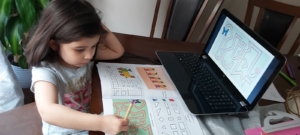 In Lebanon, Syrian refugee children often face unreliable internet and little access to formal education due to the conflict that recently happened in the area. Early this year, after a ceasefire took effect in Lebanon, much of the infrastructure remains in ruins. As a result, the region’s education suffered a large toll and it lost opportunities. However, a small but mighty resolution began with an unexpected platform: WhatsApp.
The Problem in Lebanon
Education is highly dependent on the infrastructure it lies on. Proper facilities, strong internet and a safe region determine the quality of education. However, in Lebanon, many children, especially those affected by the recent conflict, are facing a lack of access due to overcrowding, cost and legal barriers.
The lack of a strong digital infrastructure primarily explains this, underscoring the importance of education facilities. Regarding Lebanon’s education sector, the system has faced multiple issues, from the refugee influx to a significant port explosion and the COVID-19 pandemic. As a result, public education opportunities began to dwindle as the infrastructure started to collapse. This is where WhatsApp tutors in Lebanon began to change the picture.
WhatsApp Tutors in Lebanon Comes to the Rescue
When the state cannot provide education, WhatsApp tutors in Lebanon rise to the challenge by creating virtual classrooms. On WhatsApp, peer tutors share voice notes containing lessons on various subjects, including math and science.
In the absence of physical classrooms, teachers and tutors use WhatsApp to distribute assignments and collect submissions. A nonprofit called Jusoor has started providing $25 grants to refugee families to help them afford phones and data packages, enabling their participation in virtual education.
To save data and prevent potential outages, educators conducted lessons through chat and audio, which created a community where students began to support other students. To save data and avoid potential outages, educators delivered lessons through chat and audio, fostering a community where students began supporting one another.
The biggest life-saver for many families was that WhatsApp only requires a smartphone. Many other online platforms require a computer or other expensive hardware. WhatsApp allowed tutors in Lebanon to reach more students simply through mobile access.
The Digital Future
Research has found that conducting education through online platforms such as WhatsApp is not as effective as the physical classroom. However, in Lebanon, it is important to understand that WhatsApp and other similar platforms are the only opportunities many kids have.
Learning does not require a building or sophisticated technology. In areas devastated by war and conflict, such as Lebanon, tutors are creating makeshift classrooms using only mobile phones, chat messages and voice notes.
Despite limited resources and unstable conditions, they built a space where education continues, proving that determination and creativity can overcome even the harshest barriers to learning.
– Kallen Zhou
Kallen is based in Hattiesburg, MS, USA and focuses on Business and Technology for The Borgen Project.
Photo: Wikimedia Commons
