Ways Ethical Refugee Policy in Europe Is Resisting Politicization
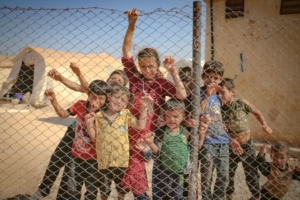 In recent years, the link between migration and political agendas has intensified across the European Union (EU). However, humanitarian organizations and public institutions are increasingly defending ethical refugee policy in Europe. While several political parties frame migration as a security threat or economic burden, a growing coalition of NGOs, civil society actors and EU bodies are working to ensure that refugee protection and global development remain grounded in human rights and solidarity. Their efforts challenge the politicization of asylum and reinforce Europe’s longstanding commitment to ethical international cooperation.
NGOs Defending Asylum Rights
Organizations like Sea-Watch have taken a frontline role in rescuing migrants at sea and advocating for their rights. Based in Germany, Sea-Watch conducts search-and-rescue operations in the Mediterranean and has consistently opposed efforts to criminalize such missions. The organization has also filed legal actions and partnered with legal advocacy groups to challenge EU migration policies undermining asylum rights. Its operations saved more than 1,400 people in 2023 alone, underlining the continuing need for humanitarian intervention at sea. Sea-Watch’s operations exemplify how ethical refugee policy in Europe is practiced on the ground.
Another prominent group, Caritas Europa, represents a wide network of Catholic charities and operates in 46 European countries. Caritas advocates for fair and well-funded asylum systems and recently launched campaigns urging the EU to safeguard refugee services amid budget reallocations. In its 2024 statement, Caritas emphasized the need for migration policies that are “humane, sustainable and based on solidarity.” The organization also directly serves, offering shelter, education and mental health support to asylum seekers across Europe.
The European Council on Refugees and Exiles (ECRE) also plays a key advocacy role at the institutional level. The organization releases policy papers and legal analyses to influence EU asylum directives and budget allocations. ECRE’s 2023–25 Strategic Plan openly criticizes EU externalization policies, which aim to outsource asylum responsibilities. It argues that these efforts are attempts to evade legal obligations under EU and international law. This position is reaffirmed in its 2024 Annual Report, which urges full compliance with the new Asylum Pact while firmly rejecting externalization schemes.
Parliamentary Oversight and Ethical Review
Beyond civil society, EU institutions have played a growing role in reviewing the ethical use of aid in migration deals. In late 2023, the European Ombudsman opened an inquiry into the European Commission’s agreement with Tunisia, which allocated more than $1 billion to limit departures from North Africa. The investigation was launched in response to concerns raised by rights groups about the treatment of sub-Saharan migrants under this deal.
Human Rights Watch and Médecins Sans Frontières reported widespread abuse at Tunisia’s southern borders, including forced expulsions and denial of humanitarian assistance. The Ombudsman called for greater transparency in how development funds are used. It emphasized that EU values must be upheld even in external partnerships. The European Parliament has also debated the appropriateness of tying foreign aid to migration control. Several Members of the European Parliament (MEPs) have called for preserving aid’s primary purpose: supporting health, education and poverty reduction in developing nations.
This debate intensified after reports from organizations like Statewatch and ECRE raised alarms about the growing share of development funding being diverted toward border control efforts. Although no formal resolution has been adopted recently, parliamentary discussions have increasingly highlighted the need for aid transparency, ethical oversight and alignment with the EU’s human rights obligations. Such institutional pushback reflects the importance of maintaining ethical refugee policy in Europe amid rising populism.
National Models for Ethical Refugee Policy
Some EU member states have adopted policy approaches that maintain a humanitarian lens on refugee issues. These country-specific efforts highlight how ethical refugee policy in Europe can be implemented at the national level despite broader EU political tensions. Portugal, for example, significantly increased its resettlement quota under the EU Resettlement Program, welcoming more than 1,000 refugees in 2019 alone.
Unlike other member states, Portugal has not made refugee intake conditional on repatriation agreements or aid cuts. The government has invested in long-term integration, offering language training, job placement services and access to public education for all registered asylum seekers. Sweden and Finland have also introduced digital literacy and mental health support into their refugee resettlement programs, recognizing the importance of holistic approaches to integration.
In Sweden, asylum seekers are granted early access to psychological services and school enrollment even while awaiting case decisions, a model praised by the UNHCR for reducing long-term dependency.
Restoring the Purpose of Development Aid
Critics of the politicization of aid argue that diverting funds from poverty alleviation to border enforcement undermines long-term global development goals. According to the Statewatch NGO, as of 2025, 14% of the EU’s NDICI-Global Europe budget (worth more than $80 billion) is allocated to migration and border management, well above the initial 10% target. This shift risks deprioritizing sectors like health care, climate resilience and education, foundational to reducing poverty.
In contrast, organizations like Oxfam and the International Rescue Committee (IRC) have advocated for aid that addresses the root causes of displacement, such as conflict and inequality. In its 2024 position paper, IRC recommended rechanneling funds toward early warning systems, peace-building initiatives and local economic development programs.
The Development Assistance Committee (DAC) of the Organization for Economic Cooperation and Development (OECD) also warned that conditioning aid on migration cooperation could erode donor credibility and weaken global solidarity. In a 2025 advisory, the DAC urged donor countries to recommit to aid effectiveness principles that prioritize need over negotiation.
Maintaining a Humanitarian Vision
As debates around refugees and European politics continue, the work of NGOs, oversight institutions and reform-minded governments illustrates a counter-current to the politicization of aid. Their efforts demonstrate that development funds can remain focused on poverty alleviation, rather than becoming bargaining chips in migration negotiations.
Challenges persist, including rising anti-immigrant sentiment and electoral pressures. Nonetheless, defenders of ethical refugee policy in Europe continue to offer a roadmap for preserving the integrity of refugee protection and sustainable development. In doing so, they reinforce the principle that support for displaced people should not be dictated by political cycles, but by shared commitments to human dignity and international solidarity.
Continued advocacy, public education and cross-border collaboration will ensure that European policies align with the continent’s humanitarian values.
– Ray Bechara
Ray is based in Glasgow, Scotland and focuses on Politics for The Borgen Project.
Photo: Pexels
