Modernizing Agriculture in Kenya: Technology and Tools
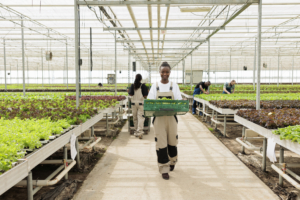 Kenya, a country in East Africa with a population exceeding 50 million, relies heavily on its agriculture sector for economic stability. The agriculture sector in Kenya employs more than 70% of rural citizens. It is responsible for 33% of the country’s GDP, with an additional 27% through connections with other sectors.
While Kenya remains heavily reliant on its farmland, the population is growing rapidly. It is predicted to hit 81 million by 2039. The increasing population has caused farmers to relocate to make room for new residents. As a result, many farmers have moved to less ideal farmland, facing various climate challenges.
Challenges Facing Kenya’s Agriculture Sector
Most regions within Kenya are arid, with 80% of the country’s climate ranging between arid and semi-arid. The nation has been experiencing intense droughts followed by torrential rain for nearly a decade. This has caused a strain on many rural farming communities, as 95% of their crops rely on rainfall for adequate production. In March 2025, an estimated 2.2 million Kenyans experienced food insecurity, while more recent predictions in June 2025 approximate the number to be closer to 2.8 million.
Due to the rising population and food insecurity rates, integrating technology tools and new scientific developments for agriculture in Kenya can be key to ensuring an adequate food supply. This could benefit those in Kenya and other countries plagued by food insecurity. Agricultural technology in Kenya involves a wide array of approaches, ranging from digital services to climate-smart farming techniques advanced by science. These tools address many common agricultural concerns in Kenya, including climate-related struggles, product yields and overall knowledge of farmland and crops.
Digital Services and Platforms
In partnership with the World Bank, Kenya’s Ministry of Agriculture implemented the Kenya Climate-Smart Agriculture Project and the National Agriculture & Rural Inclusive Growth Project. These gave Kenyan farmers access to various online support services in hopes of increasing production and profit. In addition, the collaboration led to the development of the Big Data Platform and the Kenya Agricultural Observatory Platform (KAOP). The Ministry also introduced the One Million Farmer Platform, which fostered collaboration between 24 AgTech startups and 27 county governments, connecting 1.1 million farmers.
The platforms have been vital in sharing high-resolution geospatial data with farmers and employees within the agriculture sector. These tools work by assessing specific coordinates to a location and delivering information about the geography, which has helped optimize land usage. The online services also provide advice to farmers tailored to their specific needs, such as seed and fertilizer suggestions. In addition to geographic data, the KAOP is notable for its weather forecast accuracy. The platform uses satellite-based information and shares weather advisories and patterns with the public via online messaging. This has allowed farmers to better prepare their farmland for inconstant weather events like heavy rain.
A popular app in Kenya tailored to smallholder farmers is iCow. The service works by utilizing SMS to better inform farmers on how to care for livestock, for example, providing information on disease management. In addition to SMS, iCow provides search engines to help farmers find experts nearby and also shares an online database full of information ranging from crops and soils to climate instability. Currently, 1.6 million individuals in Kenya utilize iCow and the service has sent more than 110 million messages to farmers.
Climate-Smart Farming
The joint effort between scientists at the Kenya Agricultural and Livestock Research Organization (KALRO) and the Alliance of Bioversity International and CIAT introduced a new bean for farmers in Kenya. Nyota beans are genetically modified to thrive in droughts and grow within shorter periods. Farmers who have grown Nyota beans have reported increased crop yields and profits. In Kenya, the bean consumption rate outweighs the bean production rate by 155,000 metric tons. However, the Nyota bean could decrease the deficit in the coming years.
New developments have allowed scientists to detect nutrient, water and carbon levels throughout Kenya to determine the most efficient technique for planting and growing crops in a certain area. They also observe the best soil and watering techniques in regions with frequent drought and water scarcity. Scientists share the information with farmers through hundreds of “farmer field schools” administered by KALRO. The farmers who used the farming techniques reported a crop yield increase of 20% and a 20% decrease in fertilizer use.
Conclusion
With shifting climate patterns and a growing population facing food insecurity, Kenya’s agricultural sector faces mounting pressure. In response, integrating modern technologies has become a significant step forward. From digital platforms that deliver localized weather forecasts and farming guidance to climate-smart innovations, modern technologies are addressing many of the top concerns of individuals living in Kenya. The success of these initiatives emphasizes the growing potential of agriculture technology and sustained investment and collaboration are crucial to expanding these accomplishments.
– Grace Johnson
Grace is based in Chicago, IL, USA and focuses on Technology and Global Health for The Borgen Project.
Photo: Freepik
