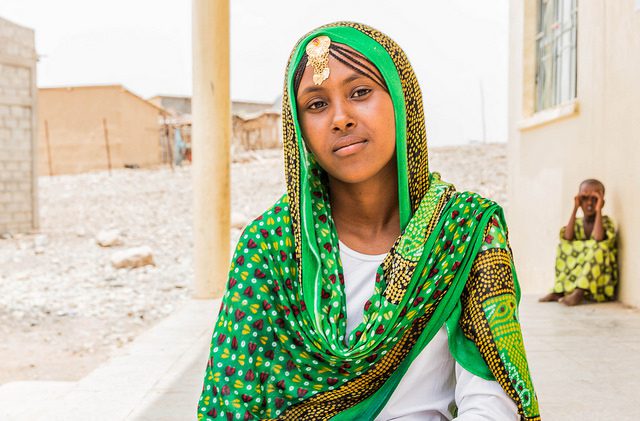
 According to the World Health Organization, female genital mutilation (FGM) refers to any procedure that involves “partial or total removal of the external female genitalia, or other injury to the female genital organs for non-medical reasons.”
There is no health benefit for girls or women and possible medical complications include severe bleeding, cysts, infections, difficulty urinating and issues with childbirth. The practice is especially dangerous because it is rarely performed in a medical setting.
More than 200 million girls and women from 30 different countries have been cut, and UNICEF estimates that 30 million more could be cut in the next 10 years if current trends do not change. The practice is concentrated in countries in Africa, the Middle East and Asia, with a 90 percent prevalence rate in Somalia, Guinea, Djibouti and Egypt.
Why is it difficult to stop?
Female genital mutilation is a deeply entrenched cultural practice that is often considered a coming-of-age rite of passage and is therefore performed near the start of puberty. It is believed to make girls cleaner, to improve marriage prospects, to preserve virginity and also has religious undertones. Due to the depth of its cultural significance, it is very difficult to convince practitioners – typically midwives or other locals – to cease the practice.
Those who perform the procedure also have another reason to continue – it is their livelihood. Unless NGOs and anti-FGM organizations can provide an alternative way for them to make a living, practitioners have little incentive to stop.
What is the link between FGM and education?
Regarding FGM and education, program advisor for USAID Somalia MaryBeth McKeever said that advocacy should be focused on community education communities. “These communities are composed of parents, students, teachers, school administrators and traditional/religious leaders and each school has one. The CECs have been instrumental in increasing girls’ education and can help girls and women make informed choices on decisions that will impact their health, education and lives,” McKeever said.
The connection between FGM and education is twofold: education and awareness about the practice and its risks and general educational attainment. Teaching young girls and women about the dangers of FGM is a powerful tool in changing public opinion and reversing the trend. However, the importance of overall education may seem less clear.
The International Center for Research on Women published a report on FGM and education that stated that, while more research needs to be done, “emerging evidence illustrates that basic education can be an effective instrument for abandoning the practice of FGM.”
This research shows that women are less likely to have their daughters cut as their level of education rises. In addition, a higher level of education also makes fathers less likely to support FGM.
Education exposes students, male and female, to a variety of competing ideas and concepts and a broader worldview. This allows them to make more informed decisions regarding their own reproductive health and agency.
What is being done?
UNICEF’s education initiatives with local governments – such as their support of mobile schools and boarding schools, improved sanitation facilities and better quality curriculums – all contribute to ending the practice of female genital mutilation.
Programs in Egypt aim to introduce information on FGM to medical and nursing schools because the practice is highly medicalized there. Healthcare personnel play a key role in continuing the practice and therefore could play a key role in ending it. School-based interventions across the world focus on integrating information on FGM into compulsory science curriculums.
The Global Women PEACE Foundation, a joint American and Liberian NGO, devised their own curriculum for teachers and administrators to teach them how to have conversations about FGM and reproductive rights with their students. The Tostan Education Program targets the students with a four-part plan that teaches human rights, reproductive health, hygiene and problem-solving. Safe Hands for Girls, an American and Gambian initiative, also implements outreach and advocacy training in schools.
The emphasis on school-based interventions highlights the link between FGM and education, and the important role that schools can play in ending this dangerous practice.
– Olivia Bradley
Photo: Flickr

The Successes of Humanitarian Aid to Montenegro
Humanitarian aid to Montenegro has been extremely helpful to the country’s growth, thanks in part to assistance from the United States Embassy in Montenegro and organizations such as the United Nations Development Programme. The country of Montenegro continues to grow and progress in positive ways with the help of the United States Embassy, as well as organizations such as the United Nations Development Program (UNDP).
The Role of the U.S. Embassy
The United States Embassy in Montenegro has been essential in giving humanitarian aid to Montenegro in the following ways:
The UNDP has also provided, and continue to provide, crucial humanitarian aid to Montenegro that helps the country in their economy and in the betterment of the overall livelihood of the Montenegro people.
The United Nations Development Program
The UNDP has a few different humanitarian aid projects in Montenegro that have been a great benefit to the country. One of their projects supports anti-discrimination and gender equality policies. The purpose of the project is to contribute to the protection, promotion and enforcement of human rights and equal opportunities in Montenegro. So far, the project has empowered female members of parliamentary political parties through the advancement of their knowledge and skills in the areas of gender equality and women’s political activism. The effort has also provided trainings that “aim to enhance political engagement of women.”
Sustainability
Another UNDP project in Montenegro is geared towards strengthening sustainability of protected areas. That project’s purpose is to develop institutional capacities to design, plan and manage a more representative system of protected areas. The project has already accomplished a few of its goals such as designing an environmental information system for the Environmental Protection Agency of Montenegro, helping improve legal framework for functioning of National Parks by supporting amendments to the Law on National Parks and supporting the establishment of educational programmes in protected area management and rural development, with emphases on financial planning and management of protected areas.
The World Bank
The World Bank also deserves a worthy mention in its provision of humanitarian aid to Montenegro. Last year, the organization approved a $14 million loan to Montenegro for the country’s Revenue Administration Reform Project. The objective of that project is to improve the effectiveness of operational functions of Montenegro’s Tax Administration and to reduce the compliance costs for corporate taxpayers.
With the continued assistance from the U.S. Embassy as well as the UNDP and the World Bank, Montenegro will continue to positively progress.
– Kennisha L. Crawford
Photo: Flickr
Understanding the Challenges of Measuring Poverty in Cyprus
Cyprus is a Mediterranean nation with about a quarter of its population living in poverty, but it’s difficult to understand the full scope of the issue because the government does not consider poverty in Cyprus to be a major issue worthy of recording.
To make matters more complex, Cyprus is a nation divided between the north and south. The north is a self-declared Turkish Republic, and the south is known simply as the Republic of Cyprus. This division makes keeping track of those in need on the island more difficult.
A Brief History
Cyprus was classified as a low-income country by the U.N. until 1988, and received $331.6 million in aid from the Food and Agriculture Organization (FAO) of the U.N. from 1973 to 1988. Cyprus has since become a popular vacation spot and rebounded from its tumultuous past; however, the nation has not shown its citizens as much attention as it has its economy. Of the 1.17 million people living in this popular tourist destination in 2016, 230,000 individuals were at risk of poverty.
Tracking Poverty
One reason it’s hard to track poverty in Cyprus is due to the large Greek population in the south. They have strong familial relations, and if one family member suffers from poverty, there is usually someone in the family willing to take them in. Due to this, most at-risk individuals in Cyprus are immigrants, single mothers and retired elderly with no family.
Gathering statistics on poverty in the North is even more difficult, since the country is only recognized by one other U.N. nation (Turkey). Because of this, statistics aren’t regularly collected, and the only ones that are relate to GDP.
International Aid
In June 2012, Cyprus became the fifth euro-area member to request international aid. At the time of President Nicos Anastasiades’ first election, Cyprus had been shut out of debt markets for two years, with lenders losing 4.5 billion euros in 2012’s restructuring of Greek sovereign debt.
Over 100,000 people in Cyprus are unemployed, and shopkeepers and small businesses struggle to make ends meet. The nongovernmental organization, Volunteer Groups, reported that there are still over 12,000 additional families in desperate need of basic provisions.
Supporting the Community
Food lines and soup kitchens are a part of daily life for at least 40,000 Cypriot families. The Sophia Foundation and other charities are busy feeding school children and citizens in destitution. Up for election again in 2017, Nicos Anastasiades ran against opposition party leader Andros Kypriano — Kypriano said that the president is never called out on the issues of poverty in Cyprus.
“Mr. Anastasiades is not asked to explain why, whereas he and his administration are portraying Cyprus as something akin to Switzerland, about one-third of the population is on the poverty threshold. For the last five years this government has turned its back on low-income pensioners, disabled persons and sick people.”
Hopefully with more time and development, Cyprus will not only be able to accurately and comprehensively document its impoverished population, but it will also be able to make strides in poverty eradication.
– Sam Bramlett
Photo: Pixabay
The US Benefits from Foreign Aid to the Philippines
It is well known that the relationship between the U.S. and the Philippines is strained to say the least. This tension between the countries stems from a variety of issues, mainly differences in opinion on how each government is run, and the allies each country chooses to associate with. Even with such a rocky relationship, the U.S. continues to spend foreign aid on the Philippines. This is not only because they have been a longstanding ally of the U.S., but also because the U.S. benefits from foreign aid to the Philippines. These benefits come in many different forms and work for both countries.
A Strong Ally
One of the main reasons for foreign aid is that the U.S. sees the Philippines as a strong partner for trade and economic growth. Much of the aid given to the Philippines goes to increasing the economic growth and trade abilities of the country. Although the two countries are already strong economic partners, the U.S. being one the Philippines’ largest trading partners, promoting the growth of trade and increasing the power of the country’s economic capabilities benefits both countries economically.
To put this relationship into perspective, in 2017 there was $9.35 billion worth of trade between the two countries, but it was a slower year than usual. As of 2012, the average amount of trade between the two countries has been around $14.17 billion per year. The main commodity traded between the countries is electronics, the U.S.’ second biggest import is fresh fruit, and the Philippines’ is transport.
A Powerful Investment (and Investor)
The second way that the U.S. benefits from foreign aid to the Philippines is equally connected to the economic status of both countries — investment. Whether aid goes directly to investing in businesses or U.S. investments benefit from aid indirectly, this fiscal back-and-forth improves the economic growth and abilities of businesses in the Philippines which then, in turn, benefits its investors.
The U.S. is, in fact, one of the largest foreign investors in the Philippines. So as aid helps improve the economy and capabilities of businesses, the U.S. benefits just as much as the Philippines.
A Hub for Foreign Aid
Foreign aid also works as a way to strengthen the currently unstable relationship between the U.S. and the Philippines. The more both countries are able to work together and aid one another, the stronger the alliance between them grows.
The U.S. has designated the Philippines as a major non-NATO ally, and keeping this alliance together, with the help of foreign aid, benefits the U.S. both geographically and politically. The Philippines could be a valuable military ally of the U.S. if the need ever arises, and the nation also works as a diplomatic ally, whether through the alliances the Philippines holds with countries the U.S. does not, or from connections made through trade and economics.
The U.S. benefits from foreign aid to the Philippines both directly and indirectly. Not only does aid strengthen the relationship between both countries and provide a valuable political ally in the east, but it also benefits both countries through trade and investment.
– Keegan Struble
Photo: Flickr
How OneGirl is Empowering Sierra Leonean Women
Sierra Leone is considered one of the worst places to be a girl, but the nonprofit OneGirl is revolutionizing this status by empowering Sierra Leonean women through its program LaunchPad.
Women’s rights are a profound issue in Sierra Leone — poor conditions and social norms create immense vulnerability for girls and often inhibit them from choosing their own path. As a result, a girl’s fate is typically determined by three things: being sold into marriage, having an early or forced pregnancy and poverty.
Marriage and Pregnancy
In Sierra Leone, 44 percent of girls are married off to an older man by the time they are 18 years old. They are essentially owned by their husbands, and this often inhibits them from continuing their education. UNICEF reports that 68 percent of sexually active teenage girls in Sierra Leone become pregnant. Considered a nation-wide problem, early and forced pregnancies are the main reason why girls in Sierra Leone stop attending school; these pregnancies can occur as a result of rape, prostitution and not using contraceptives.
Poverty in Sierra Leone
More than 70 percent of Sierra Leoneans live in extreme poverty, managing to survive on less than two dollars a day. Consequently, education is not a top priority for families — if a family can afford to educate a child, it is almost always a boy.
After meeting Brenda — an African girl trying to escape a fate of poverty and lack of schooling by collecting 40 dollars to attend school — the founders Chantelle Baxter and David Dixon became inspired to create OneGirl. OneGirl is based in Australia and has big plans: to send 1 million girls to school.
OneGirl’s Impact
OneGirl’s LaunchPad program is making big strides toward empowering Sierra Leonean women to stay in school and educating them about business opportunities. They are accomplishing this in an amazing way — selling feminine hygiene products. The company has already sold more than 17,400 boxes of pads, and although selling pads may seem minuscule, it has had profound impacts.
To understand why this is so impactful, it is important to know the cultural perceptions surrounding menstrual cycles in Sierra Leone. Girls primarily use a cloth to soak up menstrual blood; when cleaning these, girls typically do not have access to sanitary water. Further, girls cannot dry their cloth properly because there is a taboo surrounding menstrual blood in Sierra Leone. Ultimately, this results in girls developing rashes, infections and diseases. OneGirl states that menstrual complications can result in a girl missing up to 12 weeks of school, but thankfully, LaunchPad solves this problem.
LaunchPad
LaunchPad makes it possible for women to have cheap access to sanitary biodegradable products, while also keeping in mind of cultural considerations. For instance, the company does not sell reusable cloths or tampons because clean water is limited and female genital mutilation makes tampon-use painful.
LaunchPad has made more than just health and educational strides — the organization has opened a new market in which Sierra Leonean women can participate. LaunchPad has worked with Restless Development Sierra Leone to train female community leaders across the country to sell their product; these women are known as LaunchPad Champions.
LaunchPad champions earn a profit from their work, and because of their service, women across Sierra Leone are more educated about their menstrual health and have higher chances of staying in school.
Female Champions
One LaunchPad champion named N’Mah Fofonah went above and beyond her call of duty by involving her neighboring community in LaunchPad’s efforts. The two groups of women joined together in their endeavors to put all their profits toward helping their community members.
Efforts such as those accomplished by OneGirl demonstrate the lengths of positivity and change that can occur by empowering Sierra Leonean women. Sierra Leone is just another example that when you empower women, they empower others.
– Mary McCarthy
Photo: Flickr
The Success of Humanitarian Aid to Cote d’Ivoire
In the early 2000s, a military coup took place which resulted in Laurent Gbagbo obtaining office, instigating a civil war between government supporters and dissidents in the region. With this civil war beginning, Cote d’Ivoire’s import/export business faltered, and with the economic and political unrest in the region, the success of humanitarian aid to Cote d’Ivoire has yet to fully be understood.
In terms of positive outcomes, the most obvious success of humanitarian aid to Cote d’Ivoire is the recent completion of the United Nations’ peacekeeping mission in the region. On June 30, 2017, the U.N. successfully removed peacekeeping forces from Cote d’Ivoire. According to a brief which took place on February 8, 2017, the U.N. considered the peacekeeping efforts an overwhelming success.
Included in the list of positive impacts the U.N. made in the region are revised legislative elections, a re-drafted constitution that improves the quality of life for women and children and a dramatic decrease in the amount of human rights violations taking place in the area. The U.N.’s peacekeeping efforts have truly worked to stabilize the country.
Another source of success in humanitarian aid to Cote d’Ivoire is the growth of nonprofit work in the region. In 2014 and 2015 Ebola broke out in West Africa. With the effects of political unrest still plaguing the country, aid and access to medical care and Ebola preventatives were hindered. The European Commission has addressed this issue by allocating more than €119 million to Cote d’Ivoire to aid in the recovery process after the disease swept the nation.
Similarly, the rate of maternal mortality in Cote d’Ivoire is a cause for concern. According to the EC, there are several humanitarian projects working within the country, such as a hospital in the Tonkpi region offering more overarching services for new mothers and their children, including infant vaccinations, postpartum follow-ups and continued infant medical care, in an attempt to lower mortality rates.
The Partnership for Transition program through the EC has helped collect medical supplies to distribute to hospitals and clinics in Cote d’Ivoire. From 2012 to 2014, more than 26 cargo planes full of medical supplies flew to Cote d’Ivoire. In each plane were cesarean section kits, anesthesia kits and basic pharmaceutical supplies. These were distributed between 17 different regional clinics and have helped maintain the goal of free and accessible healthcare that the government desired.
The successes of humanitarian aid to Cote d’Ivoire that have been mentioned here do not even scratch the surface. Nonprofit organizations are helping to build food security, agricultural sustainability and civil services, and others within the nation are working to maintain a healthy and functioning government. While this aid will most likely remain necessary for the foreseeable future, Cote d’Ivoire has grown much more stable with the help of international humanitarian aid in both the social and the political arenas.
– Molly Atchison
Photo: Flickr
The Link Between FGM and Education
There is no health benefit for girls or women and possible medical complications include severe bleeding, cysts, infections, difficulty urinating and issues with childbirth. The practice is especially dangerous because it is rarely performed in a medical setting.
More than 200 million girls and women from 30 different countries have been cut, and UNICEF estimates that 30 million more could be cut in the next 10 years if current trends do not change. The practice is concentrated in countries in Africa, the Middle East and Asia, with a 90 percent prevalence rate in Somalia, Guinea, Djibouti and Egypt.
Why is it difficult to stop?
Female genital mutilation is a deeply entrenched cultural practice that is often considered a coming-of-age rite of passage and is therefore performed near the start of puberty. It is believed to make girls cleaner, to improve marriage prospects, to preserve virginity and also has religious undertones. Due to the depth of its cultural significance, it is very difficult to convince practitioners – typically midwives or other locals – to cease the practice.
Those who perform the procedure also have another reason to continue – it is their livelihood. Unless NGOs and anti-FGM organizations can provide an alternative way for them to make a living, practitioners have little incentive to stop.
What is the link between FGM and education?
Regarding FGM and education, program advisor for USAID Somalia MaryBeth McKeever said that advocacy should be focused on community education communities. “These communities are composed of parents, students, teachers, school administrators and traditional/religious leaders and each school has one. The CECs have been instrumental in increasing girls’ education and can help girls and women make informed choices on decisions that will impact their health, education and lives,” McKeever said.
The connection between FGM and education is twofold: education and awareness about the practice and its risks and general educational attainment. Teaching young girls and women about the dangers of FGM is a powerful tool in changing public opinion and reversing the trend. However, the importance of overall education may seem less clear.
The International Center for Research on Women published a report on FGM and education that stated that, while more research needs to be done, “emerging evidence illustrates that basic education can be an effective instrument for abandoning the practice of FGM.”
This research shows that women are less likely to have their daughters cut as their level of education rises. In addition, a higher level of education also makes fathers less likely to support FGM.
Education exposes students, male and female, to a variety of competing ideas and concepts and a broader worldview. This allows them to make more informed decisions regarding their own reproductive health and agency.
What is being done?
UNICEF’s education initiatives with local governments – such as their support of mobile schools and boarding schools, improved sanitation facilities and better quality curriculums – all contribute to ending the practice of female genital mutilation.
Programs in Egypt aim to introduce information on FGM to medical and nursing schools because the practice is highly medicalized there. Healthcare personnel play a key role in continuing the practice and therefore could play a key role in ending it. School-based interventions across the world focus on integrating information on FGM into compulsory science curriculums.
The Global Women PEACE Foundation, a joint American and Liberian NGO, devised their own curriculum for teachers and administrators to teach them how to have conversations about FGM and reproductive rights with their students. The Tostan Education Program targets the students with a four-part plan that teaches human rights, reproductive health, hygiene and problem-solving. Safe Hands for Girls, an American and Gambian initiative, also implements outreach and advocacy training in schools.
The emphasis on school-based interventions highlights the link between FGM and education, and the important role that schools can play in ending this dangerous practice.
– Olivia Bradley
Photo: Flickr
Infrastructure in Tonga Focused on Urban Development
The island’s small size and geographical isolation result in limited internal, regional and international transport and communication linkage. With few natural responses and vulnerability to external economic shocks, these areas are crucial to Tonga’s economic development and social well-being. Its roughly 105,000 people face decaying infrastructure in Tonga, which when combined with financial constraints poses a challenge of meeting domestic and international transport safety security requirements.
The Ministry of Infrastructure
The Ministry of Infrastructure was created to assist the government with improving infrastructure in Tonga. It began as the Ministry of Transport, whose goal to improve compliance of the civil aviation and maritime entities with international safety and security standards. It was then merged with the Ministry of Works to form the Ministry of Infrastructure. So far, the Ministry of Infrastructure’s successes have included:
Urban Development Sector Project
Another source of aid to infrastructure in Tonga is the Integrated Urban Development Sector Project, funded by the Asian Development Bank, who stated that rapid population growth has put pressure on the infrastructure in Tonga’s capital, Nuku’alofa. Along with the Australian government aid agency AusAID, this multi-million dollar project focused on six different components of Nuku’alofa’s urban services, including water supply, solid waste services and development of roads and drains. Its goal is also to raise awareness in the community about issues such as household management of solid waste and public health benefits for safe waste disposal. Since 2016, 30 kilometers of expressways, national highways, fully access-controlled roadways and provincial, district and rural road networks have been built or upgraded.
The improvement of infrastructure in Tonga will aid the country a great deal in its economic development. Infrastructure plays such a vital role in every nation and with the projects working hard to sustain Tonga, there is a chance for employment rates and incomes to rise.
– Kailey Brennan
Photo: Flickr
The Global Importance of the UN Secretary-General
Starting in 1946, the United Nations assigned its first Secretary-General while still in its infancy as an organization. His name was Trygve Lie from Norway, and there have been eight successors since; Antonio Guterres currently serving as U.N. Secretary-General.
The Role of a Secretary-General
The U.N. Charter, the foundational treaty of the U.N., describes the Secretary-General as “chief administrative officer” of the Organization, “who shall act in that capacity and perform ‘such other functions as are entrusted’ to him or her by the Security Council, General Assembly, Economic and Social Council and other United Nations organs.”
Overall, the U.N. Secretary-General is someone who is supposed to symbolize humanitarian ideals of equality and hold an interest for obtaining peace among nations.
On a day-to-day basis, the Secretary-General attends U.N. meetings, consults with world leaders and other state officials and must remain up-to-date on important international and national relations.
In times of crisis, the U.N. Secretary-General should take it upon his/herself to speak in front of the United Nations Security Council (UNSC) and rally support for action. This role requires the utmost responsibility to maintain international peace and security — if there are any conflicts occurring within or between borders that goes against human rights and international security, the Secretary-General must be aware and ready to rally support.
The Seventh Secretary-General
One man who truly upheld and set an example in his role as U.N. Secretary-General was Kofi Annan. Annan, born in Ghana, worked for many years with the U.N. before becoming Secretary-General in 1997.
Human dignity was central to Annan’s mission with the U.N. — he sought to advance human dignity in three predominant ways:
In the early 1990s, and prior to Annan’s entrance as a Secretary-General, the Cold War left the international field in a state of tension. In zones of conflict, such as during the Rwandan genocide, U.N. was seen in a negative light. Due to a lack of resources and a clear mandate for peacekeeping units to use force, the Rwandan genocide became known for its mass atrocities.
The Revolutionizing Ability of the Secretary-General
Annan had been Undersecretary-General at the time, and vowed to make positive changes starting in 1997; specifically, he wanted to make human rights a concept known and promoted for every member state. While the idea of protecting human rights was casually thrown around in the mid-late 20th Century, it was never fully given the attention it deserved.
During the World Summit in September 2005, all governments in attendance recognized the R2P and even gave it the nickname of being the “Annan doctrine” due to the intense lobbying the Secretary-General did during his years in office for human rights. The R2P meant that all governments within the U.N. clearly accepted their collective responsibility to protect populations from genocide, war crimes, ethnic cleansing and crimes against humanity.
Never before had a Secretary-General put so much effort into humanitarian causes and the protection of birth right; but during Annan’s 10 years in office, U.N. peacekeeping grew both in terms of scale and efficacy. The governing body also increased the annual budget for U.N. peacekeeping from $1 billion in 1997 to $5 billion in 2006. Annan transformed not only the role of the U.N. and its member states, but positively impacted the lives of thousands (if not millions) of people.
– Caysi Simpson
Photo: Flickr
Sustainable Agriculture in Moldova Key Part of Economic Growth
Moldova, officially the Republic of Moldova, is a landlocked country surrounded by Romania and Ukraine in eastern Europe. Previously part of the Soviet Union, Moldova was then one of the richest countries in Europe. Nowadays, despite its progress in recent years, Moldova remains the poorest country in Europe.
Moldova is mainly an agricultural country, with about 75 percent of its land utilized for farming and agriculture. However, Moldova still suffers from food insecurity and an unstable economy. The economy in Moldova is thwarted by high government spending and low government integrity. Moldova is nearly completely reliant on agricultural exports to other countries.
Recently, Moldovans have introduced initiatives to create sustainable agriculture in Moldova and to enhance the competitiveness of the agro-food sector.
In 2012, the World Bank funded the Moldova Agriculture Competitiveness Project. The goal of this project is to enhance the competitiveness of the agro-food sector by modernizing food safety management, increasing market access for farmers and creating sustainable land management. This will increase Moldovan agricultural exports to other countries, which will lead to future economic growth. Moldova received over $20 million in funding from the World Bank for the project, including additional funding in 2015 and 2016. The project is set to close in 2019.
The Moldovan non-governmental organization EcoVisio was created in 2017. The aim of the organization is to increase awareness and education for sustainable development in Moldova, specifically in establishing sustainable agriculture in Moldova. The organization has a goal of education in the fields of organic agriculture and eco-construction. This will help create food security in Moldova.
The Food and Agriculture Organization (FAO) of the United Nations has also implemented initiatives within Moldova. Since 2015, the United Nations has spent more than $1 million on creating and strengthening sustainable agriculture in Moldova. In accordance with the Technical Cooperation Program, the FAO has been working to strengthen the food safety system in Moldova. By growing safer and healthier food, Moldovans will be able to create better food security for their country.
Another way that the FAO is trying to create sustainable agriculture in Moldova is through pest control. In particular, the United Nations initiative focuses on integrated pest management, the disposal of obsolete and harmful pesticides and enabling other conditions specific to food safety.
Many of these initiatives have already started to help stabilize the economy. The GDP in 2016 was over $6 million, which, while still low, is slowly rising. Unemployment was also down to just over 4 percent in 2016.
Moldova still has a long way to go before it has a completely sustainable agriculture system. These programs and projects have created a great starting place and have laid the groundwork for Moldovans to build on for many years to come. By creating sustainable agriculture in Moldova, the Moldovan economy will have a better opportunity to stabilize and prosper further.
– Courtney Wallace
Photo: Flickr
Improving Credit Access in Myanmar
Myanmar had credit cards more up until the country’s banking crisis in 2003. As one of the 21 banks that are Myanmar Payment Union members, Kanbawza Bank announced in May 2015 that it will be Myanmar’s first domestic bank to offer credit cards once again. “We have to manage the services within limits, and that will probably not meet the customers’ wants in the initial stage,” says U Mya Than, Myanmar Payment Union’s chairman.
Another concern is that only a few Myanmar shop owners know how to use point-of-sale machines and will often reject credit cards as a method of payment. Many Myanmar shops accept cash only, a mindset that U Mya Than believes needs to change. “People need to get used to not carrying cash and instead putting money onto their cards. Their habits may change if they can get credit,” he says.
Co-operative Bank Ltd. (CB Bank) plans to issue only secure credit cards in its first stage of helping to improve Myanmar’s credit access. CB Bank also proposed policies and procedures for its credit card program to the Central Bank of Myanmar (CBM). The policies require the bank customer to have the same amount of money on their credit card as they do in their deposit account. CB Bank managing director U Pe Myint says the program will begin once the CBM approves it.
In October 2015, Myanmar’s government announced a goal for 40 percent of the country’s people to have financial services access by 2020 and for 15 percent to use more than one financial services product. The government believes that mobile phones coupled with agent cash-in and cash-out services can accelerate Myanmar’s development toward this goal. Myanmar was also reported to be the third fastest-growing mobile market in the world after India and China. Myanmar’s government is working to ensure that the right business models are put in place to allow mobile operators and subsidiaries to provide financial services.
In December 2016, the World Bank’s board of executive directors approved a $100 million credit to support Myanmar in improving access to financial services for families and small and medium-sized businesses. Myanmar’s Financial Sector Development Project aims to promote the development of a stable financial sector, including reforms to increase the provision of banking services, improved credit access in Myanmar and other financial products across the country.
“Improved access to credit will mean higher incomes and more jobs,” says Ulrich Zachau, the World Bank country director for Southeast Asia. The credit will come from the International Development Association, including credit terms for a maturity of 38 years, a six-year grace period and a 0 percent interest rate. Myanmar’s farmers, small businesses and low-income households will also benefit.
In May 2017, the International Finance Corporation (IFC) successfully supported the CBM in developing a regulation for credit reporting. The CBM also issued a regulation that provides the basis for credit reporting companies’ operations and establishment. This served as a key step toward improving credit access in Myanmar, along with helping the country’s small and medium enterprises.
“With an effective enabling environment that the enactment of this regulation brings, we hope to see the very first credit bureau come online soon,” says DawKhin Saw Oo, the CBM’s deputy governor. The IFC plans to continue supporting the CBM in strengthening its supervisory capability over credit reporting services providers. The IFC will also help the CBM educate Myanmar’s people on credit information sharing and financial consumer protection.
These efforts and others will continue to work toward making credit access in Myanmar possible. Improving the country’s financial services will play a key role in providing Myanmar’s citizens with credit access and other financial benefits. Myanmar’s growing mobile market can also help strengthen the country’s financial stability, helping more Myanmar residents have access to financial services as well.
– Rhondjé Singh Tanwar
Photo: Flickr