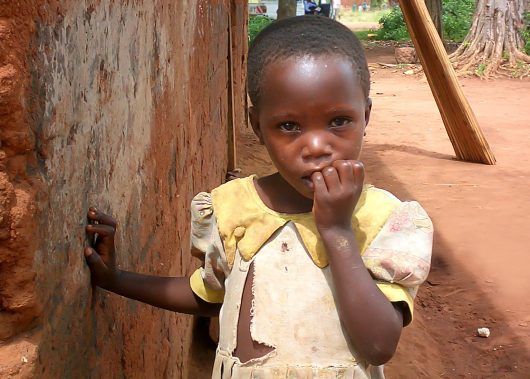
 Residents of Uganda’s rural areas are challenged in finding accessible healthcare facilities. Without organized transportation, many Ugandans must walk or ride their bicycles to a health center. However, many Ugandan health centers cannot guarantee having the medicines or other services necessary to these patients. Fortunately, efforts are being made to improve healthcare in Uganda.
In June 2017, President Yoweri Museveni launched work on a $250 million hospital that will be located in Lubowa. The hospital will ensure that Ugandans no longer have to travel abroad for organ transplants, cancer treatment and heart surgery. The hospital will operate as a 264-bed facility with ultramodern health facilities. President Museveni adds that the hospital could promote Uganda as a destination for medical tourism.
In September 2017, the Merck Foundation committed to a long-term partnership with Uganda’s government that could build the country’s healthcare capacity. The partnership will specifically focus on Ugandans’ struggles with diabetes, cardiovascular diseases, cancer and infertility. The Merck Foundation also emphasized a commitment to work with Uganda’s Ministry of Health because of the country’s great strides in building regional centers of excellence for fertility and cancer.
The Merck Foundation and Uganda’s Ministry of Health also visited western Uganda’s rural villages where a campaign has established various projects to support infertile women. The Merck Foundation gave an oxen plow, poultry farms and table banking projects to the women in order to socially and economically empower them. “One of my most fulfilling moments is seeing these childless women lead happy and independent lives,” said Merck Foundation CEO Dr. Rasha Kelej to Africa Business Communities.
The Merck Foundation also committed to supporting the training of embryologists and fertility specialists at Uganda’s new Women Maternal Hospital. The organization will also support the hospital’s establishment of Uganda’s first public IVF center. The center aims to improve access to cost-effective fertility care across Uganda and the rest of Africa.
In November 2017, XSML (Central and East Africa’s fund managing company) announced plans to finance Ecopharm, a Ugandan medical center. “With this financing, Ecopharm will be able to reach out with additional pharmacies in new neighborhoods in Kampala,” said Jarl Heijstee, XSML’s managing partner. XSML’s financing will also help Ecopharm serve Uganda’s thousands of customers with high-quality pharmaceuticals.
Healthcare in Uganda has become a growing concern for the U.S. as well. On Jan. 3, 2018, the U.S. Agency for International Development launched a $28.3 million activity to strengthen the Acholi region’s health services. The Regional Health Integration to Enhance Services in Northern Uganda, Acholi (RHITES-Acholi) activity will increase Uganda’s healthcare provider availability, promote effective equipment maintenance and improve health services management.
On Jan. 16, 2018, the musician Diddy announced plans to donate $200,000 to the Unforgettable healthcare campaign that is improving Uganda’s Suubi “Hope” Health Center. This initiative was begun by French Montana after filming the video for “Unforgettable” in Kampala. “In addition to passing the torch to French, I’m showing my support for the work he is doing in Uganda,” said Diddy.
Diddy’s donation is also in response to French Montana and The Weeknd’s donations that each totaled $100,000. The three artists’ combined donations of $400,000 will help build Uganda’s maternal healthcare facilities that include a birth house, prenatal care clinic, new ambulance and more. “It’s important to give back, it’s important to be an agent of change,” said Diddy in the PSA video announcing his donation.
Financial stability is crucial to improving Uganda’s health services. The Merck Foundation’s long-term partnership with the country will continue to help Uganda’s patients and medical facilities. Assistance and aid from other entities will also play a key role in improving healthcare in Uganda.
– Rhondjé Singh Tanwar
Photo: Flickr

Power of Technology: The Waves of Renewable Energy in Ghana
As technological advances increase and non-renewable sources depreciate, more countries have started investing in less conventional forms of renewable energy — including the extraction of wave energy. This is the case for an Israeli-based company, Yam Pro Energy (YPE), that works to increase the amount of renewable energy in Ghana.
There is a large range of wave energy technologies that each rely on different mechanisms to harness energy; three of the methods are as follows:
Oscillating Water Columns use a horizontal front-to-back motion that extracts energy using a roll rotation, while the Oscillating Bodies use a side-to-side motion to extract wave energy using a pitch rotation. The last technology is overtopping, the mechanism used by YPE, that uses a vertical up-and-down motion to harness the energy.
Advantages
The main advantages of these systems are its simplicity, reliability and power, which make each option a promising investment. While Europe is still the main lead market for wave technology, other countries have followed the trend; for instance, Ghana works with Yam Pro Energy to bring hydropower plants to its shorelines.
Yam Pro Energy is a long-time supporter of wave energy and works to provide millions of people with clean, efficient energy and eliminate global dependency on fossil fuels. YPE accomplishes such actions with the erection of their wave-energy-harnessing plants, also known as Sea Wave power plants.
YPE recently created a prototype that harnesses the energy from crashing waves and uses it to produce renewable energy that does not harm the ecosystem; the plant is set to be built on the coastline of Ghana’s capital city, Accra.
Efficiency
This prototype is more efficient than other devices, such as buoys that can easily be destroyed and can sink in rough seas, and are easily accessible. This means that maintenance issues can easily be addressed without sending out scuba divers or boats. These machines do not emit pollution or harm wildlife, and can easily withstand the harsh environment of the sea, making them a valuable investment.
Zeev Peretz, Yam Pro Energy’s CEO, says that wave technology, specifically when using YPE’s Sea Wave plants, is more efficient as it creates up to 65 percent of energy per year compared to other sources that create between 22 and 24 percent.
According to The Solutions Project and Standford University, the top sources of renewable energy in Ghana are as follows:
Of note, Mark Jacobson from The Solutions Project explained that wave technology is the least utilized source of renewable energy in Ghana. By 2050, it is projected that hydropower will contribute to almost 15 percent of Ghana’s renewable energy, as water energy is meant to complement other renewable energy sources rather than be a source of its own.
With its optimistic future of endless possibilities and success, it is only a matter of time before hydropower acts as a major pillar of renewable energy for Ghana.
– Chylene Babb
Photo: Flickr
How the U.S. Benefits from Foreign Aid to Zimbabwe
U.S. citizens share a common misconception in attitudes towards foreign aid. Contrary to popular belief, the United States government spends less than 1 percent of the federal budget on foreign assistance. Of the countries receiving this less than 1 percent, Zimbabwe relies on the United States the most heavily as its number one foreign aid provider.
With improvements in HIV/AIDS prevention and economic growth, the benefits Zimbabwe reaps from foreign aid are more apparent than what the United States gets out of the deal. Oftentimes the successes in aid-receiving countries get the focus, but the U.S. benefits from foreign aid to Zimbabwe in different, less measurable ways.
Bilateral Economic Relations
For the fiscal year of 2018, the United States is targeted to provide almost $150 million in funds to Zimbabwe. Why provide so much money to a country navigating a rather turbulent period of governance and recovering from years of economic decline?
By providing funds to Zimbabwe, the United States is working to promote Zimbabwe’s economic recovery. This provides opportunities for trade and investments that will benefit the economies of both Zimbabwe and the United States. As Zimbabwe’s economy continues to grow and prosper with the funds the United States provides, business opportunities in Zimbabwe will open up and allow U.S. citizens to take advantage of those opportunities.
International Cooperation
In addition to benefiting economically, by providing funds, the United States promotes positive international relations and thus benefits from foreign aid to Zimbabwe. The United States and Zimbabwe are members of many of the same international organizations. Both countries are members of the United Nations, the International Monetary Fund, the World Bank and the World Trade Organization.
As the world enters an age of increased international interaction and communication, the U.S. benefits from foreign aid to Zimbabwe and many other countries by cultivating relationships with other international players.
National Security
From a national security standpoint, politically and economically stable countries are less likely to go to war or engage in any type of international conflict. Military leaders have seen firsthand how addressing poverty and disease in countries benefits the United States.
Zimbabwe is currently in an uncertain political period. In November 2017, Robert Mugabe resigned as Zimbabwe’s president after 37 years in office. After a week of military occupation, Emmerson Mnangagwa came to power and is serving as president until elections in August 2018.
The United States hopes to allocate its 2018 funds to programs that advocate government transparency, enhance political participation and create an active civil society. These sorts of programs have the potential to create a sense of political stability that contributes to the security of both citizens from Zimbabwe and the United States.
One of the critiques of foreign aid is that the U.S. sends money that is chewed up by corrupt governments. This is not the case. In Zimbabwe, the United States works directly with a variety of NGOs and community leaders.
The U.S. benefits from foreign aid to Zimbabwe in many different ways encompassed by a variety of sectors. The economy, international relations, and national security are all improved by providing foreign assistance.
– Sonja Flancher
Photo: IRIN
Spotlight: US Republican Sen. Johnny Isakson
Road to the Senate
Finishing his education at the University of Georgia, Isakson served in the Georgia Air National Guard from 1966 to 1972. He was elected to the Georgia State Senate in 1993 and furthered his career as residing chair to the Georgia board of education.
Isakson continued his path in politics by becoming a U.S. Representative in the One Hundred Sixth U.S. Congress, filling Newt Gingrich’s open seat. He was re-elected twice more to the House of Representatives. In 2004, Isakson was elected to the U.S. Senate.
Legislation for Foreign Aid
Sen. Johnny Isakson has done substantial work in the Senate and is willing to push forward in Congress when times seem troubling.
He has introduced the African Growth and Opportunity Act (AGOA) and Millenium Challenge Act (MCA) Modernization Act, which encourages U.S. commercial relationships with African countries that are committed to principles of good governance and looking to improve the trade environment between all parties.
The Economic Growth and Development Act is another bill Sen. Isakson sponsored through his career. This bipartisan legislation helps the private sector work with the U.S. to strengthen economic development, fight disease and alleviate poverty in developing countries.
Sen. Isakson has continued to promote and further U.S. capabilities in regards to foreign aid. He introduced the Reach Every Mother and Child Act, which aims to alleviate preventable mother and child deaths by 2035. This bill alone will help save lives and allow for mothers and children to receive medical help.
Sen. Johnny Isakson has done remarkable work through introducing bills and promoting foreign aid to strengthen U.S. international diplomacy. His work never ends as a U.S. Senator; Isakson’s office told The Borgen Project that his next priority in legislation is to ensure “the life-saving food security programs managed under the Feed the Future Initiative will continue for another five years.” The program not only helps neighboring countries abroad but also is an investment in U.S. national security.
Striving to assist other developing countries and further the growth of U.S. foreign aid is greatly shown in Sen. Isakson’s efforts in Congress. He is looking to promote through legislation an international environment for business to grow. Sen. Isakson’s office told The Borgen Project that “when you empower individuals, communities and businesses, you can help drive economic growth.” Action in communities and government go a long way to help the impoverished and this action is seen in Sen. Johnny Isakson’s career in Congress.
– Bronti DeRoche
Photo: U.S. Air Force
Sustainable Agriculture in American Samoa
Discovered in the early 18th century, the archipelago sits between Hawaii and New Zealand. According to the CIA World Factbook, the total population in American Samoa is 51,504, spread out among seven islands.
Several sustainable agriculture projects in American Samoa are conducted through three organizations:
Sustainable Agriculture Research and Education
SARE reports that several projects in western American Samoa have been extremely successful. The American Samoa community college network attended many different courses during the past year, in which they learned about sustainable development and ways the school system can educate local farmers about options for more sustainable agriculture in American Samoa.
One of SARE’s major focuses during the courses was to teach farmers about food safety. Several of the points made revolved around the improvement of soil health, effective and integrated insect control and proper crop selection. SARE provided many opportunities, and sustainable farming and agricultural improvement in American Samoa is on the rise with the knowledge SARE provided to the college system.
Women in Business Development Inc.
WIBDI is helping build sustainable agriculture in American Samoa. One of their newest investments is the growth of organic farming groups. Small villages have been training grounds for a new group of farmers who focus on making sustainable choices possible with American Samoan land.
According to their website, WIBDI is in the process of teaching 600 American Samoan farmers to become certified organic farmers. They are taught how to work in a more economically beneficial way. The goal of the operation is to create a completely insecticide-free environment and to increase the ability of farmers to export goods like coconut oil, dried bananas and skincare products. Through smart business investments and a growing organic community, WIBDI is building a more agriculturally friendly community.
National Institute of Food and Agriculture
The United States Department of Agriculture’s NIFA is the third of the organizations involved in American Samoan sustainable agriculture. According to their website, they specialize in the organization and regulation of farming in American Samoa. Sustainable agriculture in American Samoa is growing because of the regulation of crop rotation, grazing rotations and water quality, among other things.
The American Samoan people are working to build a self-sustaining ecosystem within their small territory. NIFA is dedicated to observing and helping grow a more institutionalized organic market for food production and conservation.
Sustainable agriculture in American Samoa is growing steadily, although there has been instability in the climate as of late. Organizations like SARE, WIBDI and NIFA, among others, are assisting in the growth of the American Samoan economy.
– Molly Atchison
Photo: Flickr
Improving Healthcare in Uganda With the Merck Foundation
In June 2017, President Yoweri Museveni launched work on a $250 million hospital that will be located in Lubowa. The hospital will ensure that Ugandans no longer have to travel abroad for organ transplants, cancer treatment and heart surgery. The hospital will operate as a 264-bed facility with ultramodern health facilities. President Museveni adds that the hospital could promote Uganda as a destination for medical tourism.
In September 2017, the Merck Foundation committed to a long-term partnership with Uganda’s government that could build the country’s healthcare capacity. The partnership will specifically focus on Ugandans’ struggles with diabetes, cardiovascular diseases, cancer and infertility. The Merck Foundation also emphasized a commitment to work with Uganda’s Ministry of Health because of the country’s great strides in building regional centers of excellence for fertility and cancer.
The Merck Foundation and Uganda’s Ministry of Health also visited western Uganda’s rural villages where a campaign has established various projects to support infertile women. The Merck Foundation gave an oxen plow, poultry farms and table banking projects to the women in order to socially and economically empower them. “One of my most fulfilling moments is seeing these childless women lead happy and independent lives,” said Merck Foundation CEO Dr. Rasha Kelej to Africa Business Communities.
The Merck Foundation also committed to supporting the training of embryologists and fertility specialists at Uganda’s new Women Maternal Hospital. The organization will also support the hospital’s establishment of Uganda’s first public IVF center. The center aims to improve access to cost-effective fertility care across Uganda and the rest of Africa.
In November 2017, XSML (Central and East Africa’s fund managing company) announced plans to finance Ecopharm, a Ugandan medical center. “With this financing, Ecopharm will be able to reach out with additional pharmacies in new neighborhoods in Kampala,” said Jarl Heijstee, XSML’s managing partner. XSML’s financing will also help Ecopharm serve Uganda’s thousands of customers with high-quality pharmaceuticals.
Healthcare in Uganda has become a growing concern for the U.S. as well. On Jan. 3, 2018, the U.S. Agency for International Development launched a $28.3 million activity to strengthen the Acholi region’s health services. The Regional Health Integration to Enhance Services in Northern Uganda, Acholi (RHITES-Acholi) activity will increase Uganda’s healthcare provider availability, promote effective equipment maintenance and improve health services management.
On Jan. 16, 2018, the musician Diddy announced plans to donate $200,000 to the Unforgettable healthcare campaign that is improving Uganda’s Suubi “Hope” Health Center. This initiative was begun by French Montana after filming the video for “Unforgettable” in Kampala. “In addition to passing the torch to French, I’m showing my support for the work he is doing in Uganda,” said Diddy.
Diddy’s donation is also in response to French Montana and The Weeknd’s donations that each totaled $100,000. The three artists’ combined donations of $400,000 will help build Uganda’s maternal healthcare facilities that include a birth house, prenatal care clinic, new ambulance and more. “It’s important to give back, it’s important to be an agent of change,” said Diddy in the PSA video announcing his donation.
Financial stability is crucial to improving Uganda’s health services. The Merck Foundation’s long-term partnership with the country will continue to help Uganda’s patients and medical facilities. Assistance and aid from other entities will also play a key role in improving healthcare in Uganda.
– Rhondjé Singh Tanwar
Photo: Flickr
Water Shortages Challenge Sustainable Agriculture in Yemen
Since Yemen is a predominantly rural country, with 68 percent of its population living in rural areas, irrigated agriculture is the main source of income, employment and economic activity. Thus, when a rapid drop in groundwater resources occurs, sustainable agriculture in Yemen suffers greatly.
Water scarcity in Yemen has put a huge constraint on food production. Almost 90 percent of water use is for agriculture. A large proportion of scarcity is due to inefficient irrigation techniques and the expansion of qat cultivation, which alone counts as 30 percent of the water use. Qat cultivation is six times more profitable than most food crops and relatively easy to cultivate. It has expanded at the expense of food crops, contributing to the dependence on food imports.
However, due to its profitability, year-round cultivation and high domestic demand, the water supply is dwindling. According to New Agriculturists, “water is being extracted from the Sana’a basin four times quicker than it is being replenished and, with a population growth rate of seven percent, Sana’a could become the first capital city to run out of water.” Without support to create sustainable agriculture in Yemen, this water shortage could devastate the region.
In response to this growing water scarcity, the U.K.’s Department for International Development (DFID) has been funding water harvesting projects in Sa’adah province in the village of Al-Qatab. Hand-pumps and precipitation tanks have been provided to this mountain-top community with a reliable source of water.
Additional aid has come from the International Fund for Agricultural Development (IFAD) which has been working with farmers to help them conserve their soil and water resources through terrace rehabilitation, wadi bank protection and improving irrigation systems. With activities like milk processing and beekeeping, IFAD seeks to enable farmers to diversify their agricultural production and improve processing overall.
In addition, the Groundwater and Soil Conservation Project has been working to improve irrigation water use efficiency, which will increase farmer returns to water and create conditions that will allow farmers to reduce pumping from aquifers.
There has been some success, as many of the farmers assisted by this project have received substantial benefits. These benefits help to reduce costs and improve yields. In addition, this project’s investments have saved 80 million cubic meters of groundwater per year and have significantly improved the lives of farmers and their families. These changes will drastically improve sustainable agriculture in Yemen and help save the nation’s water resources.
– Kailey Brennan
Photo: Flickr
System Improvements: Sustainable Agriculture in Cameroon
In 2008, Cameroon was the scene of hunger-related protests and protesters asking for cuts in fuel and food prices. In April 2010, a new initiative launched and was set to last for seven years; this act was known as the Agricultural Competitiveness Improvement Project (PACA), which led to major improvements for Cameroon’s food market and food security.
Financed by the government of Cameroon and an $82 million loan from the World Bank’s International Development Association, PACA was created to encourage young people to become farmers through the development of rural infrastructure facilities and the investment in value chains such as rice and maize cultivation, and pork and poultry.
Sustainable Agriculture and the Fruits of PACA Labor
By 2016, the project had already increased crop yields by 16 percent for rice, 98 percent for maize and 220 percent for plantain. Regarding the production of broiler meat, numbers doubled with a 122 percent increase for the average annual pig live weight, 257 percent for the average annual poultry live weight and 141 percent for the average annual egg production.
In fact, sustainable agriculture in Cameroon represents more than half of the country’s non-oil export revenues, and constitutes a field of high employment, with 60 percent of the country’s working population having a job in the sector. The project not only helps address the challenge of agricultural competitiveness, but it also brings food security, income generation and job creation in rural Cameroon.
Sustainable Agriculture and Women
Sustainable agriculture in Cameroon also proved to be a way for women in certain villages to improve their livelihoods. Joshua Kankonko is one of the founders of those eco-villages — in Bafut (a village in Cameroon), he implemented “permaculture,” an innovative system of sustainable agriculture and design principles that replenishes the soil and maximizes yields on small plots.
Systemic Improvements in Sustainable Agriculture
This system achieves better management of soil and environmental resources through natural and mechanical erosion control; one can use plans to hold soil and moisture together and the other uses natural materials such as bamboo to create barriers. From improving family incomes to restoring the natural environment, this project is successful at benefiting the overall well-being of Bafut’s community.
From large projects such as PACA, to smaller and locally-sourced projects like the one in Bafut, there has been a number of efforts to make sustainable agriculture in Cameroon a tool for higher productivity, higher incomes and better job opportunities.
– Sarah Soutoul
Photo: Wikimedia Commons
Improving Levels of Sustainable Agriculture in Tajikistan
Since its independence, Tajikistan has made great strides in reducing poverty. Between 2000 and early 2009, poverty fell from over 83 to about 47 percent; between 2012 and 2016 it fell further from 37 to 30.3 percent; and since 2012, the poorest regions of the country have made the most progress in poverty reduction. Despite these successes, though, there are still substantial issues regarding sustainable agriculture in Tajikistan.
For instance, Tajikistan suffers from chronic food insecurity. Agriculture accounts for 75 percent of total employment and about a quarter of total GDP; however, just 7 percent of Tajikistan’s land surface is arable. This is a problem as approximately 70 percent of the population lives in rural areas where often the only paid jobs are seasonal agricultural labor on cotton farms or unpaid work tending household farms.
Feed the Future
With lack of sustainable agriculture in Tajikistan as the root cause of hunger, USAID has created the Feed the Future initiative to accelerate agricultural development and improve nutrition for Tajiks. The Feed the Future strategy is focused on the Khatlon Province in the southwest region of the country along the border with Afghanistan, as it is a key region for agricultural production. This area contains a large number of people living below the poverty line and the highest rate of undernutrition. With Khatlon’s irrigated lands and cotton production, this site is a promising start to affect water and land reform to create sustainable agriculture in Tajikistan.
This effort has improved agricultural productivity for farmers and agribusiness and contributed to over $2 million in increased farm revenue in 2011. USAID programs trained 30,000 rural residents on land-use rights and provided one-on-one legal aid consultations on land rights to 12,000 people. Understanding their rights to farm has allowed the people more control over crops and land.
Sustainable Agriculture and Water Management Project
Additional support aided in producing sustainable agriculture in Tajikistan. According to the World Bank, the objectives of the Additional Financing for the Second Public Employment for Sustainable Agriculture and Water Management Project for Tajikistan seek to:
These measures will ideally improve food availability and allow food access for low-income people in rural areas. Additional funds from this project will be used to fund public works to help employment for low-income and food insecure population, including migrant workers returning to Tajikistan.
With poverty rates decreasing and projects such as these funding the production of sustainable agriculture in Tajikistan, this nation is hopefully on its way to becoming a safer, stronger and more sustainable country.
– Kailey Brennan
Photo: Flickr
The Success of Humanitarian Aid to Angola
https://borgenproject.org/poverty-angola-causes-updates-statistics/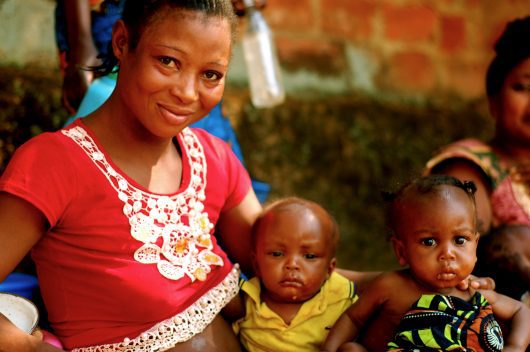 Angola is in southern Africa, bordered by Namibia, the Democratic Republic of the Congo and Zambia. As of today, Angola continues to suffer from the repercussions of a civil war that lasted more than three decades. The local economy and the infrastructure are inadequate and unstable, and the majority of people residing in Angola live in poverty, with difficulty sustaining their livelihoods. Their difficulties also include malnutrition, illiteracy, high infant mortality rates and a lack of healthcare and quality education. This is why it is essential to ensure the success of humanitarian aid to Angola.
People in Need (PiN) is an organization that has been supporting Angola for more than 10 years. PiN is a Czech nonprofit and non-governmental group that provides humanitarian assistance through long-term development projects as well as educational and human rights programs. Their mission to help Angola began with setting up aid in Bié, which was one of the provinces most affected by the war and destitution.
In the early stages of PiN’s humanitarian aid to Angola, they focused on restoring and improving elementary education, while also working on developing agricultural markets in more rural areas to help crop production and economic development. The most important goal for PiN is to enable the people of Angola to provide for themselves and take control of their livelihoods.
In September 2017, PiN began working in Huambo and Huíla. The focus in these provinces was to address health issues involving mothers and children, water access, nutrition and sanitation. In doing all of this, PiN has helped upwards of 875,000 people living in Angola. This includes helping 37,000 children escape malnutrition, building 14 schools and four centers for education, developing over 10,000 toilets and providing training and tools for more than 3,000 farmers. They are able to do this so efficiently because PiN involves the communities in all of their projects and also works with local authorities in Angola.
Not only does PiN help with long-term aid, they also work with Angola in emergency situations. A specific example includes providing sanitation, hygiene and drinking water for citizens in the north, where over 33,000 people are seeking refuge from ongoing violence in the bordering country of Congo.
One of the most important goals that PiN has had is to help local children gain access to a quality education. In addition to building new schools, PiN also focuses on giving the staff at the schools specialized training, which more than 1,850 teachers have participated in. Also, 25,000 teaching materials were distributed in order to better help the teachers give the children a quality education. And because a large portion of the adult population is illiterate, PiN also focuses on assisting that part of the population to reduce illiteracy. By implementing these tactics, PiN has taught around 450,000 children and 1,2000 illiterate adults to read, write and do basic mathematics.
This is just one example of successful humanitarian aid to Angola. Assistance like this is essential for nations like Angola to survive such harsh living conditions. PiN has helped thousands of children and adults have a better quality of life through better sanitation, education, agriculture and infrastructure. It is aid like this that allows people to thrive in difficult places.
– McCall Robison
Photo: Flickr
Myanmar’s Healthcare System World’s Worst
In 2000, the World Health Organization (WHO) ranked the healthcare systems of 190 countries throughout the world. In this ranking, Myanmar’s healthcare system was listed as the worst overall. Myanmar is still a grade three level of concern to the WHO, meaning multiple major events have affected public health in Myanmar.
Health of Mothers and Children
Shortly after becoming independent from Great Britain in 1948, Myanmar — formerly Burma — became the subject of a dictatorship, which lasted until November 2015. Under this dictatorship, nearly a third of the country’s budget was allocated for the military, while just over one percent of funding was set aside for Myanmar’s healthcare system. As a result, infant and maternal mortality rates and infectious illness rates were astronomical; the maternal mortality rate was listed at 380 per 100,000 live births, nearly 60 times the rate of Japan. As of 2013, the government increased healthcare spending to almost four percent, but the people of Myanmar are still struggling with overall wellness.
The Myanmar Maternal and Child Welfare Association (MMCWA), founded to improve the health of mothers and children in Myanmar, has collaborated with various organizations like the International Planned Parenthood Federation, United Nations Population Fund and UNICEF to redesign Myanmar’s healthcare system. By providing education on disease and STI prevention, advocacy programs and family planning services, the MMCWA aims to lower maternal and infant mortality rates and help level out birth rates in Myanmar.
Overall Healthcare in Myanmar
Another organization, Medical Action Myanmar (MAM), is working from the bottom up to improve overall healthcare in Myanmar. MAM’s focus is on communities with little to no access to healthcare. The organization is working to create a network of health services and provide medical treatment and preventative education. To decrease the incidences of HIV in the country, MAM is providing safe needle exchange, condom distribution and STD treatment. The services are free for those who cannot afford them.
The U.S. Agency for International Development (USAID) also provides public health interventions and health assistance to communities in Myanmar. USAID’s focus often lies in extending assistance to high-risk communities that wouldn’t usually have access to healthcare. By performing the country’s first-ever demographic survey, USAID was able to identify what health concerns were most prevalent and, over time, has provided treatment to those suffering from tuberculosis, malaria, diarrheal disease and other emergent health concerns.
Growth efforts in Myanmar are off to a slow start after being under a dictatorship for so long, but the government is determined to make a change. The Ministry of Health’s “Vision 2030” goal of improving nine major sectors of Myanmar’s healthcare system, although lofty, is an incredible beginning to the transformation of the country with the world’s worst healthcare.
– Anna Sheps
Photo: Pixabay