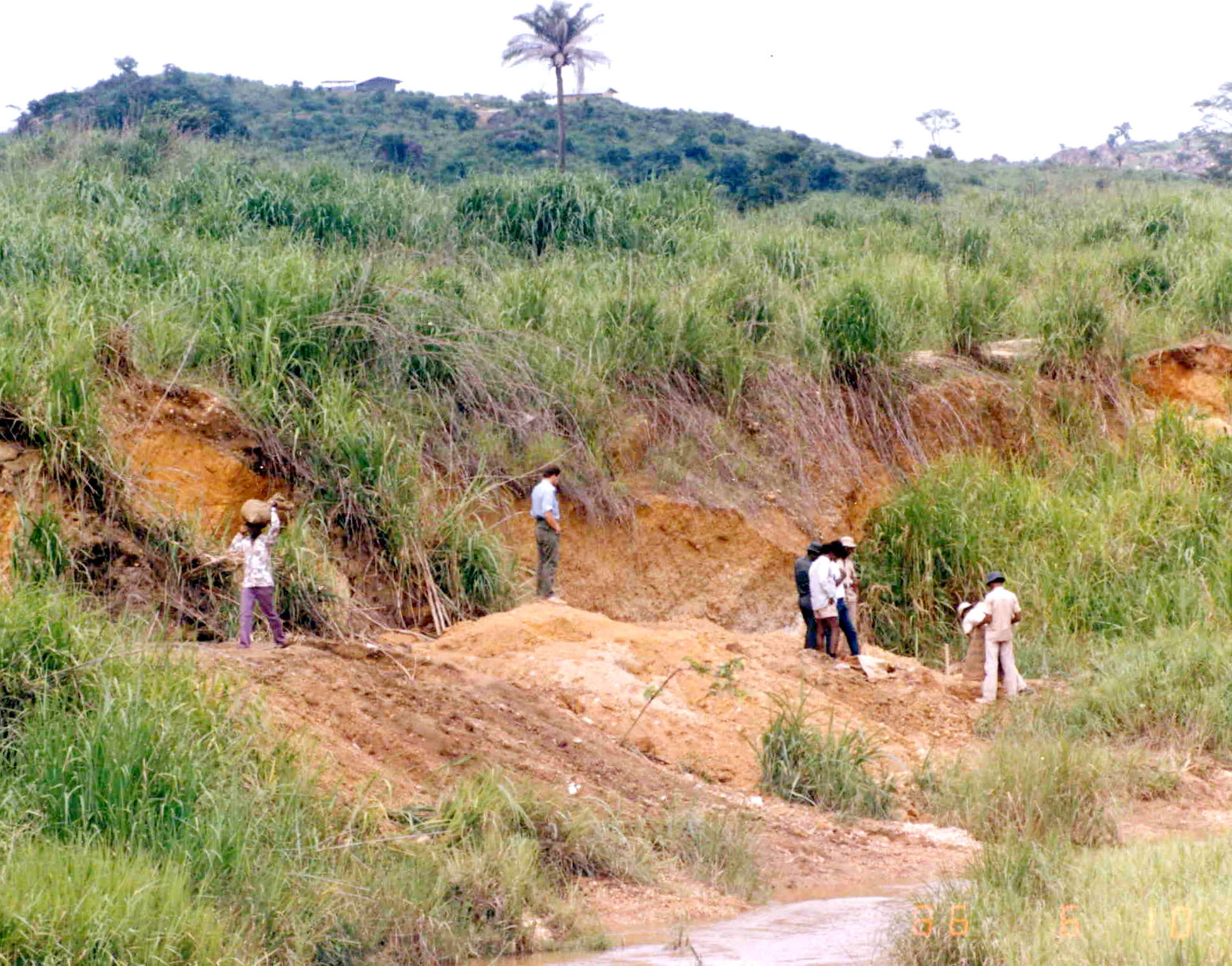
Blood diamonds, or “conflict diamonds,” have been a hot topic since the 1990s. After civil war broke out in central and western Africa, diamond profits were used to fund wars, weapons, slavery and anti-government rebellions. Children and families were forced into slavery to mine diamonds, and the gemstone funded extreme violence and war among communities, destroying stability and peace. To this day, blood diamonds are perpetuating poverty in areas around Africa especially.
The Kimberley Process
The Kimberley Process was initiation in an effort to eradicate this cycle of slavery and violence surrounding the stone. This process was designed to turn blood diamonds into conflict free gems, and entailed certification of place of origin, how it was mined, where it was cut, who was involved in all processes and the intended destination of export.
The idea was to create a sort of passport for the diamond, so that buyers and consumers would be able to verify the ethical sourcing of the product; making sellers accountable for the diamonds they handled was a way to increase ethical practices.
While the Kimberley Process was a good theory, there were a few problems with it: since many people were involved in the process, sellers were still able to use bribery and violence to fake certification, and the process only regulated how the proceeds were used.
As long as it was not funding a war, weapons or means of overthrowing a government, the diamonds were given the stamp of approval. This leaves a huge problem that still runs rampant today — the inhumane conditions of which miners endure.
Worker Treatment and Fair Trade
Many workers are actually slaves, taken for the purpose of harvesting blood diamonds. Those who came to work willingly are underpaid, mistreated, abused and working under backbreaking conditions. While the Kimberley Process addresses the crisis of blood diamonds funding war and slaughter, the giant blank space remains that diamonds are unethical under the certification.
The need for ethical sourcing is as relevant as ever, especially with the millennial push for fair trade. While other luxury items like electronics and fine wines are booming, the diamond market has been stagnant for years. The current generation cares about ethical conditions, sustainability, and environmentally responsible practices. Knowing that blood diamonds are perpetuating poverty, millenials are abstaining from consuming the product at all.
This push has led big companies such as Tiffany and Co. and De Beer’s Forevermark to enforce stringent standards on their diamonds. Whether they choose to only buy from Canada, or work directly with the diamond sellers, they are listening to the push for fair trade.
Ethical Sourcing
While this is a great start, the issue remains that it is very hard for even experts to tell a diamond’s origin. Not knowing where the diamond came from makes it difficult to tell if it came from somewhere practicing conflict-free practices or not. While things like the coffee bean have been bursting with fair trade market placement, diamonds have remained an emotionally heavy issue — people are still dying over these goods. Blood diamonds are perpetuating poverty, even now.
While many argue to simply stop buying from problematic countries all together, the issue remains that a lot of poverty-stricken people rely on the mines for food. Children drop out of school to work in the diamond mines so they can contribute to feeding their families.
While they are working in inhumane conditions, boycotting the diamonds would also mean boycotting a family’s dinner, or a child’s milk for the week.
Possible Solutions
A solution discussed by committees for human rights has often been to enforce fair trade standards, as done with coffee. While cutting off the problem would also cut off the poverty stricken workers, working with the sellers would help them keep their jobs.
Involving the sellers in the process, and making them a part of the solution, would not only ensure humane practices and improve the lives of the workers and decrease the slave trade, but would it would also motivate sellers to enforce ethical practices.
Such methods worked in the coffee industry, and many propose that it could work in this industry as well. Such moves would turn a corrupt business into a viable income for those entrapped in it.
While the line is a fine one, finding the balance between helping sustain diamond workers and holding sellers accountable is attainable. Places like Botswana and Namibia are already starting to put stricter and more humane standards into place. In time, the hope is to ensure consumers that their gems are ethically traded, just like their espresso beans and fair trade clothing.
A Conscientious Future
This generation is a conscientious one, and that alone might be enough to propel the fight for ethics forward in the diamond industry. Rather than omitting diamonds in luxury, consumers need to either buy from ethically conscious sources, or demand higher standards from those not yet practicing conflict free practices. The demand and need for diamonds must remain in order to make a difference in the lives of those who mine them.
Blood diamonds are perpetuating poverty now, but with the pressure of loud voices and those with deep pockets, the tide will hopefully shift more dramatically in favor of ethical sourcing and humane worker treatment.
– Emily Degn
Photo: Flickr

Fighting Malaria Fights Poverty: Malaria Prevention in Ghana
Volunteer Adofo Antwi (right) explains to mother-of-four Ama Konadu in Apenimadi, Bonsaaso Millennium Village, how to hang a bednet. Trained by Millennium Village Project staff, volunteers across the cluster work with communities to hang bednets at all sleeping sites and educate local people about the dangers of malaria. Since 2006, over 30,000 long-lasting insecticide-treated bednets have been distributed, covering all households in the cluster.
Malaria prevention in Ghana is a focus of the nation’s Health Service efforts and is seen as the largest epidemic tormenting the Ghana people. Malaria is a potentially deadly disease caused by a one-celled parasite known as Plasmodium. This parasite is carried and transmitted by the Anopheles mosquito that feeds of humans.
People who become infected with malaria often show flu-like symptoms such as: fever, chills, aches and more. The devastation of this disease on not just the people, but the social and economic structure of Ghana, cannot be understated.
Who is Most Vulnerable to Malaria?
Over three million people contract malaria every year in Ghana which accounts for 44.5 percent of all outpatient attendances. Nearly half of all malaria cases in Ghana are children under the age of five and the disease is responsible for 12 percent of under-five deaths. Of those who die from malaria, 85 percent of them are children.
With such devastating numbers, especially for the nation’s children, it is no wonder malaria prevention in Ghana is the top priority of health officials. Not only are the children of Ghana at a greater risk of contracting malaria, but it also disproportionately affects pregnant women whose immune systems are lowered and more vulnerable during pregnancy.
Pregnant women who contract malaria can see severe adverse health effects such as maternal anemia which leads to: miscarriages, low birth weight, and even maternal mortality.
How does Malaria Affect Ghana?
Malaria prevention in Ghana doesn’t just save the lives of children and their mothers, but it also is necessary for the economic and technological growth of Ghana. Malaria has historically been the number one cause of illness and morbidity in Ghana, but malaria is also a major cause of poverty and poor productivity.
With nearly half of the three million malaria cases every year attributed to children, staying in school falls to the wayside as families focus on the recovery of their children. Being taken out of school, greatly affects one’s future earning capacity for themselves, their family, and their future children.
Obtaining an education is often the biggest tool to improving living conditions of not just the individual and their family, but the community as well.
Not only are children at a risk of death after contracting malaria, but children who survive and fight the disease carry long-term consequences into adulthood such as seizures and brain dysfunction. These conditions can make it difficult once the disease is gone to go back to school and receive an education.
Treating and fighting the malaria endemic costs Ghana a significant amount that causes economic growth to be slowed by 1.3 percent a year in Africa; the annual economic burden of malaria is estimated to be 1-2 percent of the Gross Domestic Product in Ghana.
Roll Back Malaria Initiative: Goals and Successes
In 1999, Ghana signed onto the Roll Back Malaria initiative developing a strategic plan of action for implementation. The goal of malaria prevention in Ghana, as dictated by the initiative, is to reduce malaria specific morbidity and mortality by 50 percent by 2010 and 75 percent by 2015.
While Ghana did not meet those deadlines at the expected times, Ghana continues to strengthen health services to make malaria prevention techniques more available to the people of Ghana. Strategies for malaria prevention in Ghana as seen on Ghana’s Health Services page includes the:
The Roll Back Malaria Initiative in Ghana empowers the nation to pursue goals to better equip health facilities with malaria diagnostic tools (microscopes or RDTs) and effective antimalarial drugs. Furthermore, the implementation of indoor residual spraying and the spread of insecticide treated materials such as bug nets, have shown success.
The Need for Scale-Up
Nearly 750,000 lives have been saved across Africa due to the Roll Back Malaria Initiative, but the fight for malaria prevention in Ghana still has a long journey ahead. Ensuring children in rural areas have access to clinics and malaria treatment options can be tricky.
Ghana still calls for a scaling up of this community-based treatment in more secluded districts; in districts where treatment is available, the cost of treatment can be out of reach for many families. The inability to access such resources decreases community engagement in treatment, and demonstrates how great the need in Ghana is for affordable malaria prevention methods.
– Kelilani Johnson
Photo: Flickr
How the Media Misrepresents North Korea
The media misrepresents North Korea by portraying its citizens as unaware of the truth about the world. A 2017 article titled “A Journey into the Heart of North Korea” by Will Ripley and Marc Lourdes of CNN described North Koreans thusly: “The truth is, all these children know is government propaganda teaching fierce hatred of the U.S., and loyalty to the Kim family. Statues and photos of the Kims are everywhere. They’re under constant state media”.
While this statement is correct, the media often ignores the other side of the story. Illegal media is being smuggled into North Korea every day via the Chinese black market, and it is changing the thoughts, hearts and lives of North Koreans.
Kim Jong Un keeps a tight control on the truth, and North Koreans take dangerous steps to learn it every day. From illegal media to growing cell phone use, the North Korean people’s search for truth grows stronger every day, but so do the consequences. This is how the media misrepresents North Korea.
Smuggled Media
Contraband movies, TV shows and music are smuggled through the Chinese-North Korean border on USB drives every day. These forms of media give North Koreans second thoughts about the lies they were told in school. Because of this, many North Koreans know the truth about the outside world, and because of this information, some brave souls choose to defect.
“What North Korea really fears is their people becoming aware of their oppression,” said Kang Cho-hwan, founder of the North Korean Strategy Center.
The threat illegal media poses to the government is one of supreme danger: awareness. One North Korean defector, Yeon-mi Park, described her thoughts when watching American films for the first time, “I never heard my father tell my mother, ‘I love you’. But in the movies, a man tells a woman, ‘I love you’. And those things were never allowed to be expressed to each other, other than to the dear leader. So of course, this information helped me understand the outside world. I realized there was some humanity out there.”
Smuggled Cell Phones
Chinese cell phones being brought into North Korea are connecting families that have been separated for almost 70 years.
North Koreans are using smuggled cellphones to reach family members in South Korea for the first time in decades, even if they can only talk for ten minutes. The risk is extreme; cell phone connections can be traced by the North Korean government, but some North Koreans are willing to take the risk if it means minutes of connections with loved ones.
Ms. Ju, a North Korean citizen, describes calling her father in South Korea. “We barely spoke for ten minutes before the connection was suddenly lost. My father lost sleep that night, fearing that I might have been caught by North Korean soldiers.”
Smuggled Books
Banned books have been playing a role in enlightening the North Korean people. Along with USB drives filled with outside media, one can also find books that have been translated into Korean on the black market.
Je Son Lee, another North Korean defector, describes reading a black market book. “Back in North Korea, I once read a fantasy novel called ‘Lucy’s Closet’ and it was a story about a girl named Lucy entering a whole new different world through her closet. Before ‘Lucy’s Closet,’ I had never read anything about an imaginary world. Once I began reading it, I couldn’t stop reading until the very end of the story. I kept turning pages under a lit candle and I pulled an all-nighter just so I could finish reading Lucy’s Closet.”
Je Son Lee guessed that the book was actually “The Lion, the Witch and the Wardrobe” by C.S. Lewis.
These black-market books, like the smuggled Hollywood movies, provide a different view of the outside world, contrary to what the North Korean government tells its citizens.
These cases are just a few examples of how the media misrepresents North Korea. With outside information continuing to pour into North Korea, one cannot help but think the future of the “hermit kingdom” might be bright. Perhaps instead of a war or nuclear disaster, North Korea will free itself with the truth.
– Tristan Gaebler
Photo: Flickr
What is the Current State of Poverty in Haiti?
Haiti is the poorest country in the Western Hemisphere and one of the most poverty-stricken countries in the developing world. Despite this, the Trump Administration is abruptly ending the Temporary Protected Status for Haitians. The humanitarian program allowed about 59,000 Haitians to live and work in the U.S. since the 2010 earthquake which killed 150,000 people.
Haitians will be expected to leave the U.S. by July 2019 or face deportation. This is devastating news for Haitians who earn money in the U.S. to send to their families and for those receiving an education.
Poverty in Haiti
According to the World Bank, life expectancy for Haitians is only 57 years. Less than half of the population is literate and only about one child in five of secondary-school age actually attends secondary school.
Health conditions are poor and about one-fourth of the population has access to safe water. The population continues to grow at a high rate, estimated at almost 200,000 people per year, with the overwhelming majority living in extreme poverty.
Key factors of poverty in Haiti include political instability, inadequate growth in private investment, underinvestment in human capital, and poverty traps including environmental degradation, crime, systematic human rights violations, and outward migration.
Steps to be taken
There is clearly a lot of work to be done, but instead of abandoning Haitians when they need help the most, the U.S. needs to directly help with overturning their situation of dire poverty.
– Julia Lee
Photo: Flickr
The Top 10 Need-to-Know Poverty in Singapore Facts
Singapore is seldom thought of as a poor country since the nation ranks fourth in the richest countries in the world; however, the reality is that many Singaporeans live in poverty. For far too many people, poverty in Singapore is a fact of life.
The Top 10 Poverty in Singapore Facts:
1. Singaporeans have to live on $5 a day
Four-hundred thousand Singaporeans live on $5 a day. Singaporeans Against Poverty, the campaign whose concern is “for those in Singapore caught in the cycle of poverty despite our economic success,” began the $5 challenge, where people can pledge money and try to live on a $5 per day budget.
2. Some Singaporeans have no income
A survey from the Housing Development Board showed that one-third of Singaporeans living in one or two room flats have no source of income. Additionally, an Ipsos APAC and Toluna study found that 62 percent of Singaporeans state that their dissatisfaction is a result of their personal financial situation.
3. There is no official poverty line in Singapore
According to Worldbank, there are several reasons to measure poverty: “to keep the poor on the agenda; if poverty were not measured, it would be easy to forget the poor.” Additionally, poverty lines “target interventions that aim to reduce or alleviate poverty,” and finally, measurements help to evaluate projects, policies and institutions that aim to help the poor.
In a Straits Times article, it was stated that Prime Minister Lee Hsien Loong doesn’t believe establishing poverty lines will be helpful as there are great disparities between poor groups in Singapore; each group requires “different sort and scale of help… This cannot be accomplished by a rigid poverty line, he said, which might be polarising and leave some outside the definition of poor.”
4. Singapore’s wealth gap is one of the widest
As noted in the CIA World Factbook, Singapore was ranked 36th out of 150 countries for income inequality in 2016 based on the Gini coefficient, a ratio of highest to lowest incomes. This means that the high-income households are extremely wealthy, while the low-income households are extremely poor. In fact, a Credit Suisse report showed that more than a quarter of the country’s wealth is held by the top 1 percent of the population.
5. The Gini coefficient has begun to decrease
According to the Singapore Management University (SMU) handbook, the government has begun to acknowledge the wealth disparity. Although Singapore is still ranked high for income inequality, the Gini coefficient has decreased in the past two years.
6. Wages fall for low-income households
In the SMU handbook, it was stated that the bottom 20 percent of workers saw a decrease in wages between 1998 and 2010.
7. Singapore is the most expensive city to live in
According to the Economist Intelligence Unit, Singapore was the most expensive city to live in in 2017 for the 4th year running. This makes it increasingly difficult for the impoverished population to afford basic necessities.
8. Increase in cost of goods and services
Likewise, the past three years saw a 13.1 percent increase in goods and services, according to Singaporeans Against Poverty.
9. More Singaporeans are being covered under ComCare
ComCare was established by the Singaporean government in 2005 to provide assistance to needy families who are either unable to work or are currently searching for employment.
As reported in the Ministry of Social and Family Development (MSF), the number of Singaporeans being covered under ComCare grew from 13,479 in 2012 to 18,996 in 2015, but the government claims this is not due to higher poverty levels; rather, it says it’s due to changes to the program.
The Ministry of Social and Family Development has extended coverage so that more families can apply for ComCare.
10. Singaporean government is taking steps towards alleviating poverty
As noted in The Observer, the government has put plans into place to fight poverty. Of these are plans are the goals to reduce the cost of education, to exempt lower-income families from paying taxes and to contribute cash payments to those in need.
These top 10 poverty in Singapore facts demonstrate the acute issues for low-income houses. However, the Singaporean government is making considerable strides to help its people, enough so that these top 10 poverty in Singapore facts may eventually become irrelevant.
– Olivia Booth
Photo: Flickr
What Can Be Done About Blood Diamonds Perpetuating Poverty
Blood diamonds, or “conflict diamonds,” have been a hot topic since the 1990s. After civil war broke out in central and western Africa, diamond profits were used to fund wars, weapons, slavery and anti-government rebellions. Children and families were forced into slavery to mine diamonds, and the gemstone funded extreme violence and war among communities, destroying stability and peace. To this day, blood diamonds are perpetuating poverty in areas around Africa especially.
The Kimberley Process
The Kimberley Process was initiation in an effort to eradicate this cycle of slavery and violence surrounding the stone. This process was designed to turn blood diamonds into conflict free gems, and entailed certification of place of origin, how it was mined, where it was cut, who was involved in all processes and the intended destination of export.
The idea was to create a sort of passport for the diamond, so that buyers and consumers would be able to verify the ethical sourcing of the product; making sellers accountable for the diamonds they handled was a way to increase ethical practices.
While the Kimberley Process was a good theory, there were a few problems with it: since many people were involved in the process, sellers were still able to use bribery and violence to fake certification, and the process only regulated how the proceeds were used.
As long as it was not funding a war, weapons or means of overthrowing a government, the diamonds were given the stamp of approval. This leaves a huge problem that still runs rampant today — the inhumane conditions of which miners endure.
Worker Treatment and Fair Trade
Many workers are actually slaves, taken for the purpose of harvesting blood diamonds. Those who came to work willingly are underpaid, mistreated, abused and working under backbreaking conditions. While the Kimberley Process addresses the crisis of blood diamonds funding war and slaughter, the giant blank space remains that diamonds are unethical under the certification.
The need for ethical sourcing is as relevant as ever, especially with the millennial push for fair trade. While other luxury items like electronics and fine wines are booming, the diamond market has been stagnant for years. The current generation cares about ethical conditions, sustainability, and environmentally responsible practices. Knowing that blood diamonds are perpetuating poverty, millenials are abstaining from consuming the product at all.
This push has led big companies such as Tiffany and Co. and De Beer’s Forevermark to enforce stringent standards on their diamonds. Whether they choose to only buy from Canada, or work directly with the diamond sellers, they are listening to the push for fair trade.
Ethical Sourcing
While this is a great start, the issue remains that it is very hard for even experts to tell a diamond’s origin. Not knowing where the diamond came from makes it difficult to tell if it came from somewhere practicing conflict-free practices or not. While things like the coffee bean have been bursting with fair trade market placement, diamonds have remained an emotionally heavy issue — people are still dying over these goods. Blood diamonds are perpetuating poverty, even now.
While many argue to simply stop buying from problematic countries all together, the issue remains that a lot of poverty-stricken people rely on the mines for food. Children drop out of school to work in the diamond mines so they can contribute to feeding their families.
While they are working in inhumane conditions, boycotting the diamonds would also mean boycotting a family’s dinner, or a child’s milk for the week.
Possible Solutions
A solution discussed by committees for human rights has often been to enforce fair trade standards, as done with coffee. While cutting off the problem would also cut off the poverty stricken workers, working with the sellers would help them keep their jobs.
Involving the sellers in the process, and making them a part of the solution, would not only ensure humane practices and improve the lives of the workers and decrease the slave trade, but would it would also motivate sellers to enforce ethical practices.
Such methods worked in the coffee industry, and many propose that it could work in this industry as well. Such moves would turn a corrupt business into a viable income for those entrapped in it.
While the line is a fine one, finding the balance between helping sustain diamond workers and holding sellers accountable is attainable. Places like Botswana and Namibia are already starting to put stricter and more humane standards into place. In time, the hope is to ensure consumers that their gems are ethically traded, just like their espresso beans and fair trade clothing.
A Conscientious Future
This generation is a conscientious one, and that alone might be enough to propel the fight for ethics forward in the diamond industry. Rather than omitting diamonds in luxury, consumers need to either buy from ethically conscious sources, or demand higher standards from those not yet practicing conflict free practices. The demand and need for diamonds must remain in order to make a difference in the lives of those who mine them.
Blood diamonds are perpetuating poverty now, but with the pressure of loud voices and those with deep pockets, the tide will hopefully shift more dramatically in favor of ethical sourcing and humane worker treatment.
– Emily Degn
Photo: Flickr
2017 Ibrahim Prize Awarded to Liberia’s Ellen Johnson Sirleaf
In February, former Liberian President Ellen Johnson Sirleaf was awarded the Mo Ibrahim Prize for Achievement in African Leadership. The Mo Ibrahim Foundation, an organization dedicated to promoting leadership and governance across Africa, dispenses the $5 million honor to former African heads of state that “have developed their countries and strengthened democracy and human rights for the shared benefit of their people.”
Mo Ibrahim Prize
Johnson Sirleaf is the fifth recipient of this honor, which is reserved for democratically elected leaders who, in the previous three years, have demonstrated leadership and left office following legally mandated terms. Previous winners include the former presidents of Mozambique, Botswana, Cape Verde and Namibia.
The selection committee, which chose not to issue the award in 2015 and 2016, selected Johnson Sirleaf for having “led a process of reconciliation” in Liberia in the aftermath of the nation’s civil war. The first female recipient of the Ibrahim Prize, Johnson Sirleaf became the first democratically elected African head of state when she was inaugurated as President of Liberia in 2006.
In many ways, Johnson Sirleaf’s journey mirrors that of her country — both have weathered significant tumult and overcome controversy in their search for stability.
Ellen Johnson Sirleaf
Ellen Johnson Sirleaf was born and raised in Liberia, and eventually came to the United States to study, earning an MBA from Harvard in 1972. She was back in Liberia working as a finance official, when, in 1980, a staff sergeant led a coup which ousted its president. The coup, which resulted from tensions between the indigenous people and the Americo-Liberians – descendants of settlers who came to the nation as part of a program of the American Colonization Society – commenced the nation’s descent into chaos.
Johnson Sirleaf managed to escape to the United States. Following an interlude working in international finance, she returned to Liberia and ran for the Senate, but was arrested and sentenced to work in a labor camp. Mounting international pressure culminated in her release after less than a year of her ten-year sentence.
Tensions between competing militias intensified, thrusting the nation into further violence and civil war. Forced to flee once more, Ellen Johnson Sirleaf took a job at the United Nations.
Development and Women’s Rights
She returned to Liberia in 1997, and lost her presidential bid before being elected in 2005. During her tenure, she leveraged her ties with international organizations to bring development assistance to Liberia. She also prioritized women’s rights and stopping “gender-based violence, building ‘capacity’ and furthering reconciliation among former combatants” to stabilize the country.
Helped by her financial expertise, Liberia succeeded in having much of its international debt forgiven, and also managed to secure significant foreign direct investment to a nation whose infrastructure had been decimated by its civil wars.
Johnson Sirleaf’s presidency was punctuated by the Ebola crisis; under her leadership, Liberia became the first of three nations to stop the outbreak.
Faults and Success
Despite her successes, Johnson Sirleaf’s presidency was not without controversy. She faced substantial criticism for her brief support of the warlord Charles Taylor in 1990 and she also weathered charges of nepotism for her appointment of her sons to government posts. Critics consider this behavior a regrettable irony for a leader who made combating corruption a hallmark of her campaign.
The Mo Ibrahim Foundation recognized these “shortcomings” but chose to issue the award because Liberia was the only nation in the Ibrahim Index of African Governance which improved its scores in each category during Johnson Sirleaf’s tenure.
– Brendan Wade
Photo: Flickr
How International Trade Benefits Latin American Development
Latin America encompasses the area from Mexico to the southern tip of South America, and consists of 19 sovereign states amidst other territories and dependencies that span two continents.
The region has had a varied and unstable economic history: in 1982, rising oil prices led to the Mexican debt crisis, latin American GDPs began to decline and around 64 million people lived in poverty. In 2010, however, the overall GDP growth rate rose to 5.8 percent. Some of this recent growth can be attributed to various trade agreements adopted by Latin American countries.
From Mercosur to the Pacific Alliance, international trade benefits Latin American development in very significant ways.
Mercosur
Created on March 26, 1991 by the Treaty of Asuncion, Mercosur is a South American economic and political trade bloc that includes four members: Argentina, Brazil, Paraguay and Uruguay.
The bloc is a notable example of renewed global interest in regional trade agreements, and the four countries agreed to five terms:
In addition, people from member countries can apply for a two-year residency with the right to work. This policy benefits immigrants because they can obtain permanent residency as long as they do not have criminal records.
Since 1991, Mercosur has grown intra-bloc trade from $5.1 billion to $58.2 billion while world trade growth was only five-fold. In addition, the bloc acts an essential step in boosting industrial activity; for instance, Argentina and Brazil are the third biggest global markets for automobiles. Through results such as these, Mercosur demonstrates how international trade benefits Latin American development.
NAFTA
In 1994, Canada, the U.S. and Mexico signed the North American Free Trade Agreement (NAFTA), which created a trilateral trade bloc in North America. NAFTA’s goal was to integrate Mexico into the highly developed economies of the U.S. and Canada.
NAFTA is the largest free trade agreement in the world. This agreement eliminates tariffs to a large extent, and Mexico abrogates non-tariff barriers and other trade-distorting restrictions. This policy also leads to lower prices on groceries and oil in the U.S. and more exports from Mexico. Regional trade grew from around $290 billion in 1993 to more than $1.1 trillion in 2016.
Although Mexico’s unemployment has risen since then, many experts conclude that its economic performance is affected by non-NAFTA factors, such as devaluation of the peso and competition with China’s low-cost manufacturing sector. Overall, NAFTA has reshaped the trade pattern between these three countries and is one of the ways that international trade benefits Latin American development.
Pacific Alliance
Established in 2011, the Pacific Alliance is a Latin American trade bloc that includes four member countries: Chile, Colombia, Mexico and Peru. Its goal is to build a comprehensive trade relationship between its member countries, promote a free flow of capital, goods, people and services, and further expand this relationship to Asia-Pacific trade. Under this agreement, member countries agree to reduce tariffs to 10 percent. This kind of international trade benefits Latin American development.
In 2014, the Alliance signed the Framework Agreement to cut 92 percent of all tariffs and phase out the remaining 8 percent in the coming years. In 2016, the Pacific Alliance accounted for 35 percent of the total GDP of Latin American and the Caribbean. Compared to Mercosur, Pacific Alliance has an even more powerful influence on Latin American economic growth.
The growth in exports of goods and services reached 14.6 percent in 2010, while Mercosur resulted in more than 7 percent growth. All in all, the Alliance stimulates foreign investment in member countries and regulates government intervention in economic affairs.
Global Engagement
These trade agreements are good examples of the effect that international cooperation can have on the economies of developing countries. The continued encouragement of free trade both within Latin America and with other nations will promote growth and opportunities for all of Latin America’s people.
– Judy Lu
Photo: Flickr
What Is the Worst Tsunami Ever?
On the morning of December 26, 2004, an underwater earthquake with a magnitude of at least 9.1 occurred in the Indian Ocean near the coast of Indonesia. This was no ordinary earthquake, but was one that, due to its location in the ocean, would create a series of the most devastating tsunamis in modern history, destroying massive portions of the Indian Ocean coastline and leaving 14 countries devastated in its wake.
While not the largest tsunami ever recorded (that title goes to the 1958 Lituya Bay tsunami, which reached over 1,700 feet high), the sheer devastation caused by the 2004 Indian Ocean tsunami make it the worst tsunami ever. In its wake, the daunting waves left only disrepair and ruin, along with lessons for how to recover from such a hopeless situation and prevent it from happening again.
Because the Indian Ocean lacked an international system to warn the public about tsunamis, most victims were unaware of the approaching danger until it crashed into the shore. The devastating waves first hit India, Thailand, Malaysia and Indonesia. The four countries received the brunt of the tsunami, being positioned close to the earthquake. Indonesia was hit the hardest, with more than half of the estimated 230,000 deaths occurring on its shores.
Hours later, countries along the eastern coast of Africa, such as South Africa, Madagascar, Somalia, and Kenya, were hit by smaller tsunamis resulting from the same quake. Though casualties were lower, the less developed countries were hit the hardest, because they had little infrastructure in place to protect them from storms and few response systems available.
In areas like Somalia, recovery was slow due to a crippled government and high rates of poverty. Many citizens were left to fend for themselves in the aftermath of the disaster. The greatest problem in East Africa was the damage to infrastructure, which was underdeveloped in places like Somalia, leading to a large displacement of citizens. However, the important question here is not just, “What is the worst tsunami ever?”, but also, “How did the world recover?”
As with many catastrophes, the desolation caused by the 2004 tsunami was met immediately by the best humanity has to offer. The response to the disaster was unprecedented, with more than $6 billion in humanitarian relief sent to the 15 affected countries from around the world. Much of this went towards funding immediate shelter and food for those displaced, improving health systems to decrease the likelihood of disease spreading, revitalizing the affected economies and improving infrastructure. Though a major tragedy, the 2004 tsunami proved to be an example of how well-utilized humanitarian aid can change the world, with many affected areas showing few traces of the disaster by 2009.
In the aftermath of the disaster, experts wondered why the Indian Ocean tsunami had been uniquely devastating. It was largely due to a lack of an international warning system that monitored the Indian Ocean, leaving most victims with little time to evacuate. It was this lack of preparedness that led to the development of an international warning system in early 2005, created by Smith Dharmasaroja, the ridiculed scientist who accurately predicted the tsunami a decade in advance and cautioned that the lack of a warning mechanism could increase casualties.
The area that best encapsulates both the despair and triumph of the Indian Ocean tsunami is Banda Aceh, capital of the province of Aceh located on the island of Sumatra in Indonesia. In the aftermath of the tsunami, Aceh was devastated. Very few homes remained, most having been swept away by the massive wave. The river that ran through the city was almost unrecognizable due to the immense flooding that had occurred.
And yet, despite this devastation, Banda Aceh was once again built into a flourishing city, one that is almost incomparable to its state in the immediate aftermath of the tragedy. The city is not only a monument to the devastation caused by the worst tsunami ever, but also to the hard work and humanitarianism that assisted those in need and allowed the world to recover.
– Shane Summers
Photo: Flickr
10 Most Important Facts About Search for Common Ground
In an increasingly polarized world, it is becoming more and more common for individuals to be split on issues. Although this may not be negative, such binarization certainly has the potential to breed conflict. Search for Common Ground (SFCG) is a non-governmental agency that seeks to prevent violence that results from differences. Here are ten facts about Search for Common Ground that provide a better understanding of what the organization does.
10 Facts about Search for Common Ground
Creating Change
These facts about Search for Common Ground do not encompass the entirety of the organization’s successes as a whole. To learn more about the organization or how to help, visit sfcg.org.
– Mary McCarthy
Photo: Flickr
Responding to Rana Plaza: Rethinking the Garment Industry
In April 2013, Rana Plaza — an eight-story factory building in Bangladesh — collapsed, killing 1,130 people. The structure housed a number of North American and European brands, including Benetton, Bon Marche, The Children’s Place and Joe Fresh. Bangladesh has the second largest garment industry in the world, valued at $28 billion and ranked just behind China, although it has the lowest wages globally for garment workers.
The disaster, considered to be one of the worst industrial tragedies in history, has led to a call for increased accountability and transparency in the clothing industry. While agreements such as the Accord on Fire and Building Safety in Bangladesh have been put in place in the aftermath of the accident, there are still steps the garment industry can take to repair its broken system.
Companies such as H&M, Walmart and Gap have voiced their interest in improving conditions, yet progress has been a slow and difficult process.
The Building
The Rana Plaza building, based in the Dhaka District, was owned by Sohel Rana, who constructed the factory in 2006 with his father. It was created from poor quality construction materials, while heavy, vibrating machinery operated within its walls. The ground that the building had been set upon had previously been a body of water and was swampy, containing rubbish.
When Rana was developing the structure, the upper floors were added illegally, without a permit, and the creation was not made in consent. Inspection teams found cracks in the building on the Tuesday before, but workers were ordered to return to the unsafe environment the following day. That morning, the factory collapsed, with over 3,000 people inside.
The Aftermath
In the aftermath of the incident, workers protested and coalitions came together to promote rights within the garment industry and take measures towards preventing a future crisis like Rana Plaza. On May 15, 2013, brands, retailers and trade unions — such as Abercrombie & Fitch, American Eagle Outfitters and Fruit of the Loom — signed a five-year, legally binding agreement to create safer conditions in the Bangladesh Ready Made Garment industry, drafting the Accord on Fire and Building Safety in Bangladesh.
The Accord includes an inspection program, as well as the establishment of the right of workers to refuse unsafe work. Funds will be made available to repair any damaged equipment, and all corrective action plans and inspection reports will be publically disclosed.
Most recently, new signatories have continued to show solidarity for the Transition Accord, which extends the Accord on Fire and Building Safety in Bangladesh until after 2018.
Organizations, Brands and Change
In addition, a nine-member coalition including Human Rights Watch and the International Labor Rights Forum created the Apparel and Footwear Supply Chain Transparency Pledge, which demands that companies report on manufacturing sites and pertinent details twice a year.
The Follow the Thread Campaign, a coalition consisting of organizations such as Clean Clothes Campaign and Human Rights Watch, asked retail companies to sign a Transparency Pledge in April 2017.
Brands such as H&M, Walmart and Gap affirmed that they would like to participate in improving worker safety in Bangladesh. While Walmart did not sign the Accord on Fire and Building Safety in Bangladesh, the company was one of the founding members of the Alliance for Bangladesh Worker Safety, a group of 28 retailers that holds standards and inspections, as well as supporting worker empowerment, among other practices.
Commitment to Transparency
Yet these initiatives have not been enough. Reports by the coalition the Asia Floor Wage Alliance show that many garment buildings in Bangladesh do not have adequate fire exits. According to 2015 research from New York University’s Stern School of Business, out of 3,425 inspections in Bangladesh that were held after the collapse, only eight addressed their violations fully enough to pass final inspections.
A commitment to transparency still remains a vital aspect of progress needed in the garment industry. Workers frequently experience abuse, while earning low wages, with Bangladesh’s minimum wage being 32 cents per hour.
Facing the powerful impact of the Rana Plaza tragedy of 2013, corporations and unions have come together to try to address the dangerous conditions found in Bangladesh’s garment industry (which is one of the world’s biggest). But for factories to move forward, businesses and human rights organizations will have to confront the negligence found within the system and recognize that fashion is not worth such a costly price.
We, as a globe, will need to see increased accountability and responsibility in the manufacturing places of clothing companies to learn from Rana Plaza and see workers’ conditions sustainably improve.
– Shira Laucharoen
Photo: Flickr