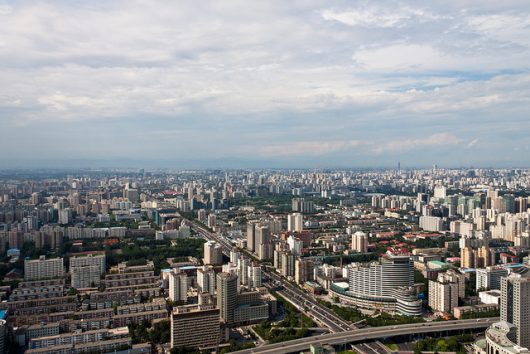
During ancient times, the Silk Road connected Eurasian regions by economic and cultural exchanges. Commodities, technologies and people all flowed via the Silk Road — a path that fostered regional development along trading routes.
OBOR
In recent years, the Chinese government proposed the One Belt One Road Initiative (OBOR) as the development strategy to promote cooperation and connectivity between Eurasian countries. With this initiative amongst others, China intends to take a greater role in global affairs and transport its wealth on this China-centered trading network.
One Belt One Road has two main components: the 21st Century Maritime Silk Road and the Silk Road Economic Belt. The 21st Century Maritime Silk Road (MSR) connects the European economic industry with the Asia-Pacific financial industry in the east.
The Silk Road Economic Belt is the legacy of the Silk Road, which was launched during the Chinese Western Han dynasty by Zhang Qian. This belt goes through the Central Asian countries, such as Kazakhstan and Afghanistan, to the south.
One Belt One Road covers numerous African and Asian countries, such as Kenya, Indonesia, Israel and many others amongst its total reach of 44 countries. Interestingly, most of these countries are developing ones. China’s One Belt One Road helps these countries improve their transportation, energy production and trade.
Transportation
One Belt One Road has assisted many countries in developing infrastructure from transportation to electrical energy. For example, China has invested $14 billion in Eastern Africa Kenya’s Standard Gauge Railway (SGR). SGR is 485km single-track railroad, and acts as one of the most significant projects since Kenya became independent in 1963.
SGR stretches from Mombasa to the Kenyan capital, Nairobi, and in December 2015, Kenya loaned $1.5 billion from China to extend the SGR further to Naivasha in the north-west. The SGR also facilitates local industries and trade between Africa and China.
Energy
One example of an One Belt One Road investment in energy is its project in Pakistan — the Nehru Tim Jielu Mu Hydropower Station. Electricity is a big problem in Pakistan; during the summer, there is more than 500 million megawatt deficit on the national grid. Power cuts are frequent in hospitals, commercial buildings and residential buildings.
In 2014, the construction of Nehru Tim Jielu Mu Hydropower Station was approved and operated by a joint engineering team of China Gezhouba Group Co., LTD (CGGC) and China Machinery Engineering Corporation (CMEC). This project invested around $4.3 billion, and its goal is to build a dam on Nehru River and provide electricity via hydroelectric generation.
This hydropower station is Pakistan’s largest hydropower project, which can generate the capacity of 5.15 billion kilowatt-hours. This project brings light to Pakistan and also assists in the nation’s economic development.
Economics
One Belt One Road promotes trade between each country and generates mutual economic benefits. For example, Kazakhstan is a landlocked country in Central Asia, and as its winters are very cold, there is barely any vegetable production.
One Belt One Road connects Kazakhstan and the northwestern Chinese Xinjiang Uygur Autonomous Region. The cross-border trade of vegetables provides Kazakhstan’s people with their basic needs. The total trade between Xinjiang and Kazakhstan is more than $11 billion annually, a figure that composes 40 percent of China-Kazakhstan trade in total.
Another example of OBOR comes in the form of the trade routes of Brunei. Brunei has abundant oil and gas resources, but the nation lacks the material for producing oil and gas pipelines.
Liaoning, a province in northeastern China, provides $2.123 million in financing loans, and Huludao City Steel Pipe Industrial Co., Ltd. produces 100,000 tons of oil and gas pipelines. This investment not only generates $100 million, but it also offers more than 300 job opportunities.
One Belt One Road shortens the distance between each country and promotes the global economy, and will hopefully see ongoing progress and generate benefits for every country.
– Judy Lu
Photo: Flickr

Understanding the Negative Effects of Budget Cuts to USAID
Recently, the Trump administration, in collaboration with congressional leadership on Capitol Hill, has hammered out a deal to prevent a government shutdown while effectively gutting the State Department and agencies like USAID of their funding. This move not only signals a sidelining of diplomacy but marks one of the biggest budget cuts to USAID and the State Department since the early 1990s.
The effects of the budget cuts to USAID are undoubtedly going to hinder diplomatic agencies in eliminating poverty around the globe and increasing diplomatic relations with the countries that depend on us the most. The United States Agency for International Development (USAID) is the State Department’s main tool for dispensing aid to foreign countries and strengthening diplomatic relations.
USAID currently operates in roughly 100 countries, fighting the spread of poverty and disease while working to improve economic conditions worldwide. The proposed budget cuts to USAID weigh in at approximately $9 billion, a staggering defeat to those working toward the end of poverty worldwide.
The President’s proposed budget cuts to USAID amount to nearly one-third of its total budget, in what seems to be a strategic move away from diplomacy and toward military strengthening. Regardless of the President’s agenda, this move away from soft power and diplomacy has been condemned by many members of the military.
A total of 151 retired senior military commanders, including former chiefs of the Navy, Army, Air Force, Marine Corps and Special Operations Command, have warned that a reduction of this magnitude could have detrimental effects around the globe. As threats to the United States’ national security continue to grow, it is a risk to decrease diplomatic ties at such a pivotal moment.
Many civilians and government employees agree with the opinions of their military leaders. Former USAID Administrator Andrew Natsios said, when facing the 1999 budget cuts to foreign aid, that it is likely budget cuts could have detrimental effects toward the technical expertise of USAID and could mark the beginning of a disaster in the long-term.
As well as the statement above, Natsios describes budget cuts toward foreign aid and agencies such as USAID as an “evisceration of the most important tool of American influence in the developing world.” Other staffers from USAID warn of the spread of disease in the United States rising as foreign aid spending is cut. Outbreaks such as the Ebola outbreak may become much larger and harder to contain with a lack of funding to agencies such as USAID. These concerns are still relevant and even more serious today.
Agencies such as USAID are pivotal in diplomatic relations and national security. By providing funds, resources, goods and trade to other countries, the U.S. invests in itself as well as others. By providing healthcare to those in need, USAID prevents the spread of communicable diseases, prevents premature death and builds a market for low-cost medical technologies.
By providing food and farming technologies, the U.S. prevents world hunger and promotes market trading of produce and other consumable goods. By providing foreign aid, the country also helps form more efficiently-run governments and promotes democracy wherever possible. All of these efforts also prevent bigger catastrophes around the globe, such as mass migrations, food shortages and natural disasters.
At the end of March, Congress approved an omnibus appropriations bill for FY18 that will keep the government open through September 30, 2018. When it comes to funding for development and diplomacy, the omnibus overwhelmingly rejects the deep and disproportionate cuts proposed by the Administration in FY18 – highlighting the strong bipartisan support in Congress for these critical programs. Still, there is more work to be done to protect funding for the foreign aid budget in FY19 and beyond.
– Dalton Westfall
Photo: Flickr
How the Media Misrepresents Mexico
News often tends to focus on the bad rather than the good. In recent years, almost all of the news reported on Mexico, especially in the U.S., has related to the Mexican Drug War and desperate, impoverished people turning to crime to support themselves. Sadly, this is how the media misrepresents Mexico and has made many of us forget what a great country Mexico truly is along with the many great things it offers.
Travel Warnings
Earlier this year, the U.S. Department of State issued “do not travel” advisories for the Mexican states of Colima, Michoacan, Sinaloa, Tamaulipas and Guerrero. The warning is comparable to travel advisories for Syria, Afghanistan and Iraq. As of March, nearing spring break, a popular time for travel to Mexico, warnings have spread into locations that were once considered safe and popular resort areas. A security alert warned Americans not to travel to Playa del Carmen which is a popular destination in itself and surrounded by other resort locations such as Cancun and Tulum.
It is true that Mexico is currently struggling with many issues including a drug war, and that some locations in Mexico are dangerous, but the fixation on only these areas is exactly how the media misrepresents Mexico and this situation, the focus often portraying Mexico as much worse off than it is.
As a whole, the U.S. classifies travel to Mexico with the same rank of danger as travel to Germany. It is only specific locations, as mentioned above, that rank higher. That being said, the vast majority of Mexicans are not criminals or dangerous to tourists. They are actually very welcoming and inclusive of visitors. Mexicans honor friendships and family and strive to include those interested in their culture.
A Thriving Mexico
Speaking of culture, it is currently thriving in Mexico, especially at its heart, Mexico City. Although it was once more dangerous, Mexico City has become as safe as any other large urban area, and it’s working on being even safer, including the introduction of train cars specifically for women and children to better prevent sexual harassment.
Mexico City offers a wide variety of restaurants and street vendors serving everything from traditional Mexican cuisine to creative modern dishes, or a combination of the two, making it a foodie paradise. Art is another growing scene in the city, with independent art galleries and shops showing up in droves. The reason for this cultural and creative boom can most likely be attributed to the steady growth of Mexico’s economy.
Beyond the bustle of city life, Mexicans also care dearly for their county’s beautiful landscapes and environment. Many government policies regarding the environment have been enacted in recent years, including the creation of conservation zones which protect against logging. These protected areas include the Monarch Butterfly Biosphere Reserve which consists of approximately 140 thousand acres of butterfly habitat. Thanks to Mexico’s protection, the once diminishing population of Monarchs is now flourishing.
Although Mexico faces many issues regarding crime and drugs, a fixation of reports and stories regarding it is often how the media misrepresents Mexico. The news on Mexico does not represent its country and people. There are still many wonderful, safe locations in the country with welcoming locals eager to show the real Mexico to visitors. Even with the many struggles it faces, Mexico continues to grow and improve as a nation both economically and culturally. Its people, including the government, work hard to preserve as well as advance these successes.
– Keegan Struble
Photo: Flickr
Credit Access in Cambodia Greatly Improves the Economy
In recent years, cooperation between financial institutions and the Credit Bureau of Cambodia (CBC) has made credit access in Cambodia easier. Currently, 49.9 percent of individuals in Cambodia have access to credit. Credit coverage in Cambodia covers 5,059,897 individuals, and in 2017, the country came in seventh in the World Bank’s “Ease of Doing Business” ranking under “Getting Credit,” a category which measures credit information sharing and legal rights of borrowers and lenders.
“We are very proud our activities have allowed Cambodia to improve its position in the World Bank’s ranking, particularly when it comes to securing credit,” stated Oeur Sothearoath, the CBC’s CEO. The CBC is Cambodia’s leading provider of credit information, analytical solutions and credit reporting services to banks, microfinance institutes, leasing companies, credit operators and consumers in Cambodia. It provides the tools needed to analyze and reduce credit risks and, even more so, increase transparency in providing credit.
The deputy governor of the National Bank of Cambodia (NBC), Neav Chanthana, has also agreed that the work of the CBC has allowed borrowers more extensive and faster access to credit, noting that the new World Bank rating has already been able to attract new investors into the country. She further applauded the CBC, stating how its achievements reflect the development of the country’s financial infrastructure, with improvements to the credit information system being vital for customers and the financial sector.
The NBC, along with the Association of Banks in Cambodia, the Cambodian Micro-finance Association and the International Finance Corporation, all have been strong supporters of the establishment of the CBC. The CBC, in response to the demands of the National Bank, plans to run a fair, transparent and well-managed credit market which would support economic growth in Cambodia.
Credit access in Cambodia has continued to improve since programs launched in 2010, making credit for agribusinesses more accessible. Cambodia’s agribusiness sector plays an essential role in aiding the country’s economic growth, poverty reduction and job creation. This financial program has been a collaborative effort between the Royal Government of Cambodia, the International Finance Corporation and the International Development Association.
By guaranteeing that 50 percent of the loans extended by participating banks and microfinance institutions extend to this sector, the program aims to mitigate the default risk banks face when lending to Cambodian agribusinesses. This improved access to finance for agribusinesses has provided strong support to the country’s economy, with agriculture accounting for one-third of the country’s GDP and employing around 70 percent of the population.
Further data is provided by the World Bank with its Credit Information Index which measures the scope, access and quality of credit information available through public registries and private bureaus. The index includes a variety of indicators whose values indicate the amount of credit information available.
The “strength of legal rights index,” on a scale from zero to 12, measures the degree to which collateral and bankruptcy laws protect borrower and lender rights, and “credit bureau coverage” indicates the number of individuals and firms listed by a private credit bureau with information on their borrowing history. The country scored 10 and 49.9 percent.
Credit access in Cambodia over the past few years has increased in strength and size. With continued improvements being made in credit access, positive changes should continue to be seen in Cambodia’s businesses.
– Ashley Quigley
Photo: Flickr
India’s Fight Against Polio is an Unprecedented Success
Polio, or poliomyelitis, is an infectious disease spread through poliovirus. Since the early twentieth century, polio has been widespread in many countries, causing paralysis in thousands of children every year. With the help of various nonprofit organizations and the Global Polio Eradication initiative, the disease is now narrowed down to a handful of nations.
In 2014, India was certified as a polio-free country, leaving Pakistan, Nigeria and Afghanistan on the list for polio eradication programs. India’s fight against polio is a remarkable achievement because of the various challenges the country faced. Nicole Deutsch, the head of polio operations for UNICEF in India, called it a “monumental milestone.”
Polio: Cause and Prevention
Poliovirus is highly contagious, infecting only humans and residing in the throat and intestine of the infected person. It spreads through feces and can contaminate food and water in unsanitary conditions.
The virus affects the brain and spinal cord of the infected person, causing paralysis which cannot be cured. Immunization through inactivated poliovirus vaccine and oral poliovirus vaccine are the only possible methods to fight against the virus. In the case of India, it was the second option which was administered.
India’s Fight Against Polio: the Challenges Faced
India’s fight against polio faced unique challenges, such as its huge population density and an increased birth rate. The number of people living in impoverished conditions with poor sanitation is huge, making them vulnerable to the polio disease.
Lack of education and prejudice among certain sects of the population also hindered the immunization process. Other challenges faced were the unstable healthcare system, which does not support people from all levels of society, and the geographically-dispersed inaccessible terrain, which made the immunization process difficult.
Overcoming these Challenges
Overcoming the challenges of polio eradication was possible due to the combined help provided by UNICEF, WHO, Rotary Club, the Indian government and millions of frontline workers. They took micro-planning strategies to address the challenges faced by the socially, economically, culturally and linguistically diverse country that is India.
India began its oral polio vaccine program in 1978 but it did not gain momentum until 1994, when the local government of New Delhi successfully conducted a mass immunization program for children in the region. From the year 1995, the government of India began organizing National Immunization Day, and in 1997, the first National Polio Surveillance Project was established.
Other initiatives taken include:
Inspiration for Other Countries
In 2009, almost 741 polio cases were reported in India, which dropped down to 42 in 2010, until the last case was reported in 2011 in the eastern state of West Bengal. This unprecedented success is an inspiration for countries like Pakistan, Afghanistan and Nigeria, where the disease is still looming at large.
India’s fight against polio has set an example in the world that the country can be proud of, but the fight is not over yet. Although India has been declared polio-free by the WHO, it is of the utmost importance that the nation continue to assist other nations still facing the polio epidemic.
– Mahua Mitra
Photo: Flickr
How One Belt One Road Benefits Developing Countries
During ancient times, the Silk Road connected Eurasian regions by economic and cultural exchanges. Commodities, technologies and people all flowed via the Silk Road — a path that fostered regional development along trading routes.
OBOR
In recent years, the Chinese government proposed the One Belt One Road Initiative (OBOR) as the development strategy to promote cooperation and connectivity between Eurasian countries. With this initiative amongst others, China intends to take a greater role in global affairs and transport its wealth on this China-centered trading network.
One Belt One Road has two main components: the 21st Century Maritime Silk Road and the Silk Road Economic Belt. The 21st Century Maritime Silk Road (MSR) connects the European economic industry with the Asia-Pacific financial industry in the east.
The Silk Road Economic Belt is the legacy of the Silk Road, which was launched during the Chinese Western Han dynasty by Zhang Qian. This belt goes through the Central Asian countries, such as Kazakhstan and Afghanistan, to the south.
One Belt One Road covers numerous African and Asian countries, such as Kenya, Indonesia, Israel and many others amongst its total reach of 44 countries. Interestingly, most of these countries are developing ones. China’s One Belt One Road helps these countries improve their transportation, energy production and trade.
Transportation
One Belt One Road has assisted many countries in developing infrastructure from transportation to electrical energy. For example, China has invested $14 billion in Eastern Africa Kenya’s Standard Gauge Railway (SGR). SGR is 485km single-track railroad, and acts as one of the most significant projects since Kenya became independent in 1963.
SGR stretches from Mombasa to the Kenyan capital, Nairobi, and in December 2015, Kenya loaned $1.5 billion from China to extend the SGR further to Naivasha in the north-west. The SGR also facilitates local industries and trade between Africa and China.
Energy
One example of an One Belt One Road investment in energy is its project in Pakistan — the Nehru Tim Jielu Mu Hydropower Station. Electricity is a big problem in Pakistan; during the summer, there is more than 500 million megawatt deficit on the national grid. Power cuts are frequent in hospitals, commercial buildings and residential buildings.
In 2014, the construction of Nehru Tim Jielu Mu Hydropower Station was approved and operated by a joint engineering team of China Gezhouba Group Co., LTD (CGGC) and China Machinery Engineering Corporation (CMEC). This project invested around $4.3 billion, and its goal is to build a dam on Nehru River and provide electricity via hydroelectric generation.
This hydropower station is Pakistan’s largest hydropower project, which can generate the capacity of 5.15 billion kilowatt-hours. This project brings light to Pakistan and also assists in the nation’s economic development.
Economics
One Belt One Road promotes trade between each country and generates mutual economic benefits. For example, Kazakhstan is a landlocked country in Central Asia, and as its winters are very cold, there is barely any vegetable production.
One Belt One Road connects Kazakhstan and the northwestern Chinese Xinjiang Uygur Autonomous Region. The cross-border trade of vegetables provides Kazakhstan’s people with their basic needs. The total trade between Xinjiang and Kazakhstan is more than $11 billion annually, a figure that composes 40 percent of China-Kazakhstan trade in total.
Another example of OBOR comes in the form of the trade routes of Brunei. Brunei has abundant oil and gas resources, but the nation lacks the material for producing oil and gas pipelines.
Liaoning, a province in northeastern China, provides $2.123 million in financing loans, and Huludao City Steel Pipe Industrial Co., Ltd. produces 100,000 tons of oil and gas pipelines. This investment not only generates $100 million, but it also offers more than 300 job opportunities.
One Belt One Road shortens the distance between each country and promotes the global economy, and will hopefully see ongoing progress and generate benefits for every country.
– Judy Lu
Photo: Flickr
Methods in Addressing Mental Health Disorders in Asia
We all face stress and mental anguish; these emotions are experienced by both the rich and the poor. The only difference is the rich tend to possess the means for coping and addressing mental health disorders. People who experience mental illness often remain adrift in social stigma and thus excluded from revenue-generating incomes. This vicious cycle — Poverty -> Social Causation -> Mental Illness -> Social Drift — also excludes these people from access to healthcare.
How Does Stress Lead to Mental Disorders?
But biologically speaking, how exactly does stress lead to mental disorders? Constantly worrying over where to find food or a place to sleep results in a heightened production of stress hormones called cortisol.
High levels of cortisol for extended periods can affect the brain down to the genetic level. It can increase the level of neural connections of the amygdala, or the “fear center.” This increase will then inhibit neural connections of the hippocampus, the part of the brain that is associated with learning and memory.
The majority of this mental disorder is experienced in developing nations. These are the same nations with the widest gap of healthcare inequity, and the ones most unequipped to properly address physiological needs, let alone mental health disorders.
The Stress of Poverty
Many of the issues underlying depression — such as violence, unemployment, crime, inadequate housing, lack of education and poor sanitation — all stem from the stress of poverty.
Too much cortisol can lead to the loss of synaptic connections between brain cells, and fewer brain cells created in the hippocampus. This deficit will cause the brain to actually shrink in size, specifically in the prefrontal cortex — the region of the brain that allows for control of behaviors such as judgment and social interaction.
The Destigmatization of Mental Disorders
In Asian cultures, if a person is suffering from a mental disorder, his or her community will pretend like it never happened, since the impact is not outwardly apparent. However, just because it’s not outwardly apparent, that doesn’t mean ignoring the disorder will make it go away. The reason Asian communities cover up a sufferer’s condition largely stems from shame or embarrassment. There is also widespread belief that mental disorders are a divine punishment in retribution for a person’s past sins or crimes.
The 10-member nations of ASEAN have outlined their 2025 Socio-Cultural Blueprint that aims to raise mental health as one of the health priorities under the ASEAN Post 2015 Health Development Agenda for 2016-2020. This prioritization would mean integrating mental health into each of the national health systems, and coordinating between facilities, local organizations and NGOs for spreading awareness and empowerment.
The power of possessing a positive or negative outlook is more powerful than one might think; people with positive emotions can live longer and more fulfilling lives. Before we can harness the powers of emotions for improved physical health, we must first invest in better understanding and addressing mental health disorders. Once this is accomplished, we will then have made remarkable strides and come a long way from stigma and dehumanization.
– Awad Bin-Jawed
Photo: Flickr
The Impacts of the Food For Peace Modernization Act
On March 14, the Food For Peace Modernization Act (H.R. 5276) was introduced on the House floor. Though this bill has not received much attention from the media, it is an important piece of legislation that could have a drastic impact on global food insecurity if passed.
The Food For Peace Modernization Act
The Food For Peace Modernization Act is a bipartisan bill introduced by Senator Bob Corker (R-TN) and Senator Chris Coons (D-DE) in an effort to reform the Food For Peace program, which was originally signed into law by President Eisenhower in 1954. The goal of the program is to deliver healthy food to people all over the world who suffer from malnutrition.
Since its creation, the Food For Peace program has provided aid to over 3 billion people and is widely considered a success; however, lawmakers now address that the effort hasn’t yet reached its full potential.
As it currently stands, the law requires that all food used for foreign assistance purposes has to be produced in the U.S. While this may sound like a good way to promote American farming, it is an extreme burden for the Food For Peace program. Due to the costs incurred by transporting all of the food overseas, only 30 percent of the program’s funds are spent on actual food.
The Food For Peace Modernization act seeks to change this aspect of the law. Instead of requiring 100 percent of food products to be made in the U.S., the revised version of the bill drops this number to just 25 percent. This would mean that the majority of food can be derived from within the countries the program is trying to assist.
The Monetization System
Another part of the law the Food For Peace Modernization Act hopes to alter is the “monetization” system. Currently, NGOs are required to take food which was donated to them by the U.S., sell it in overseas markets, and use the profits to fund their food insecurity programs. However, this process often negatively affects the communities in which the food is sold because it forces local farmers to drive down their prices in order to compete. The new version of the bill (S. 2551) would eliminate this requirement.
Not only will these revisions allow more money to be spent on actually feeding the hungry, it may also boost the economies of the local food markets in impoverished countries and ultimately decrease their dependence on U.S. assistance — all at no extra cost to the American taxpayers.
Overall the hope is that, if passed, the bill will redirect the focus of the Food For Peace program to be on the people who need assistance, rather than the business ventures of U.S. corporations.
Representative Ed Royce (R-CA-39) captured this sentiment in a statement to the House Foreign Affairs Committee stating, “Just as aid can’t be an entitlement for those overseas, it shouldn’t be an entitlement here at home. This includes food aid, which for too long has been treated as an entitlement for a handful of shipping companies rather than as a humanitarian program meant to save lives.”
– Maddi Roy
Photo: Flickr
5 Effective Advocacy Examples that Fight Global Poverty
These are five effective ways that people who want to help end global poverty can advocate for change. While some methods — such as contacting elected officials — are easier than others (going to another country), every single method is valuable, and everything that people do to advocate for change is important. The most important thing to remember is that it does not matter what is done to advocate for change just as long as people take some action that helps to achieve the change.
Example 1: Educate people at work or on campus about global poverty.
Of all the advocacy examples that people could choose from, education is one of the most important ways to advocate for change. Unless people are educated about a problem, there is no way to mobilize others to make a difference. An easy way to educate people about global poverty, then, is to direct them to the Borgen Project’s website.
Another way to educate people about poverty is to direct them to first-hand reports about the problems people who live in impoverished countries face on a day-to-day basis. This visual could be accomplished by showing people a documentary about poverty, for instance.
Example 2: Contact and encourage an elected official to fight global poverty.
While contacting local representatives is one of the most powerful ways to advocate for change, few people realize how profound of an impact either calling or writing to elected officials can have. Contacting a representative allows the elected official to know that an issue is important to their constituents, and that knowledge can then be translated into actionable change in regard to global poverty.
Elected officials do not have an abundance of time to deal with every issue that comes across their plate, so they generally will spend their time working on issues important to the people who live in their district. Representatives assume that the issues that people in their district contact them with are the most important matters to their districts.
Example 3: Volunteering to help fight global poverty locally and/or abroad.
One of the advocacy methods that first comes to mind with the topic of ‘fighting global poverty’ is volunteering. There are generally two types of volunteering:
While both raising awareness about an issue and actively trying to address the issue are important, causing more people to be aware of an issue ensures that people will attempt some form of solution. Even though going to a foreign country is a rewarding experience, it is also just as helpful to raise awareness domestically to the problems caused by global poverty so that the roots of the problem can become fixed on the policy level.
Example 4: Educate the larger community about global poverty.
Let members of the community know about the problems caused by global poverty. An easy way to let people know about global poverty is to write a letter to the editor, creating a short show to air on the local community television station or posting flyers about poverty around the community.
Letting the whole community know about global poverty is even more important than educating people at work or at school because informing more people about a problem is more likely to lead to lasting change.
Example 5: Hold a rally about global poverty.
While this is more difficult than other advocacy examples, it is also one of the most effective ways to advocate for change. If a large group of people rally for an issue, more people will take notice of the problem. Contacting larger media outlets and having them cover the rally would bring the issue of global poverty to the attention of a larger group of people.
There’s significant opportunity at these rallies to inform people about the Borgen Project and other advocacy/awareness organizations, pass out information about how to fight global poverty, and if the rally is large enough, hold a press conference is shown around the nation.
The most important aspect of advocacy is getting other people to notice that some people care deeply about an issue. Specific actions people take when they advocate for change is yes, important, but getting more people aware of an issue, and getting more people to become an advocate for change, will bear incredibly impactful long-term results.
Every person who decides to become an advocate is a small, vastly important cog in the machine of change. As long as each person makes a small effort to advocate for an issue such as global poverty, it is possible to both raise awareness of a problem and create solutions.
– Michael Israel
Photo: Flickr
Why Poverty In China is Still a Problem and Methods Towards Alleviation
By the year 2020, according to most financial and political analysts, China will surpass the U.S. as the largest economy on the planet. The World Bank even reported that China opening itself to free-market reforms in the last few decades managed to raise more than 800 million people out of poverty in China.
The Positives
In addition to this positive news, the financial institutions also added the reassuring fact that thanks to this unprecedented growth rate, the Chinese economy improved the living standards for a massive percentage of its population. A closer look at the data reveals how in 1981, 88.3 percent of China’s population lived on less than $1.90 a day (roughly 870 million people), and 99.1 percent lived on less than $3.10 a day (over 980 million people).
The last reported year for which the World Bank gathered official data is 2010, and the results are staggering — only 11.2 percent (almost 150 million people) lived in poverty in China in 2010. The overall prospect, then, seems quite promising; however, there are some further considerations of note in regard to this set of data.
The Divide
Taking into account China’s enormous social and economical strides since the Communist Party took power, one can see that there is a massive divide in income between rural and urban areas.
More specifically, in 1978 only 23 percent of the population was employed in urban areas; by 2014, over 770 million Chinese citizens were urban workers. Such figures acknowledge the significant improvement in the urbanization process, while also concealing the fact that the rest of population still lives and works in rural areas.
Those families are largely stuck in the same economic and social distress they were before the Communist revolution and unfortunately, haven’t made significant steps forward. Other statistics reveal how China’s per capita GDP, for example, is still very much below the standards of a developed country. It ranked, in fact, at $6,894.50 in 2016, which is 55 percent below the world’s average.
The Question
How can a country whose GDP grows at an annual rate of 6.9 percent still have children begging on the streets and families living on less than $2 a day? While it’s hard to provide a definite answer, a few considerations are worth bringing forth about the Chinese political system.
The country is still ruled by a one-party system which owns and controls the vast majority of enterprises and sectors of the economy. Private property is still very weakly protected and the judicial system is dominated by the Communist Party that arbitrarily appoints judges and influences court operations and verdicts.
Moreover, the regulatory framework is also arbitrary and very intricate — details that make it difficult for a private enterprise to blossom and grow. Corruption is also a massive issue which, when paired with the state-controlled financial system and state-owned enterprises, highly depresses foreign investments and contributes to enriching the economic elite and maintaining poverty in China.
China has made improvements in its poverty alleviation efforts, but there is clearly still room for improvement. Only time will tell how the nation keeps up with its progress.
– Luca Di Fabio
Photo: Flickr
Five Countries with the Lowest Life Expectancy in the World
Out of the established 224 countries on the earth, these are the bottom five with the lowest life expectancy in the world. The countries listed below range from an average lifespan of 52.1 years to 50.6 years old.
Five Countries with the Lowest Life Expectancy in the World
Swaziland has the fifth-lowest life expectancy in the world at an average of 52.1 years. Swaziland is the only country on this list with men living, on average, longer than women. As of 2016, the top two reasons for deaths were HIV/AIDS and lower respiratory infections.However, Swaziland is one of the countries receiving help from USAID. One of the top priorities of USAID is fighting against HIV/AIDS by preventing sexual transmission, increasing the prevalence of male circumcision, improving institutions and training, lessening the impact of HIV/AIDS and decentralizing care and treatment. With USAID’s continued assistance and its partnerships within the African nation, there is a chance that the average lifespan in Swaziland can increase above 52.1 years.
With an average lifespan of 52.1 years, Gabon is ranked number four for the lowest life expectancy in the world. Despite being rated so low, Gabon has a robust oil-dependent economy, making it a middle-income country.Due to this income status, it is ineligible for relief programs such as Global Alliance for Vaccines and Immunization. This ineligibility may be why HIV/AIDS and heart disease are the top two reasons for death in the country, contributing to the low life expectancy.
The only country not in Africa, Afghanistan is ranked at number three with an average lifespan of 51.7 years. This ranking may increase over time through help from USAID.In Afghanistan, USAID is working to promote health and education, both critical factors in raising life expectancies. USAID and its partners are making substantial strides to improve the healthcare for Afghans. For example, in 2016, the organization began a project to help reduce malnutrition and increase access to safe water and sanitation.USAID is also working toward making essential health services available and improving the quality and quantity of medicines. These resources, once available to Afghans, grant the nation a high potential to no longer be one of the countries with the lowest life expectancy in the world.
The second-to-last country with the lowest life expectancy in the world is Guinea-Bissau, averaging about 51 years of life. Aid for Africa is working in Guinea-Bissau with programs that help improve health and education, create businesses and protect wildlife.Another program through Aid for Africa, called Tostan, works by using local languages and traditions to promote democracy, problem-solving, human rights, hygiene and health. Through this program, successful countries have become more prosperous as well as healthier. With the continued implementation of programs such as these, Guinea-Bissau could improve its quantity of life.
Chad has the lowest life expectancy in the world at an average lifespan of 50.6 years. The life expectancy in this nation is so low because it has one of the highest rates of maternal mortality and high infant mortality as well.USAID has several programs to help those living in Chad. USAID and the U.N. World Food Programme are working together to distribute food and make sure access to food is readily available all over the country.Starting in 2018, programs such as In-Kind Food Aid, Local and Regional Food Procurement, Cash Transfers for Food and Food Vouchers all will be funded to help citizens. With these various programs helping improve health and nutrition, sources are working with Chad to increase the average lifespan.
World life expectancy continues to increase on the whole, but these five countries are still lagging behind. In order to increase the longevity and potential of their citizens’ lives, they will require targeted aid and a focus on infrastructure and healthcare.
– Amber Duffus
Photo: Flickr