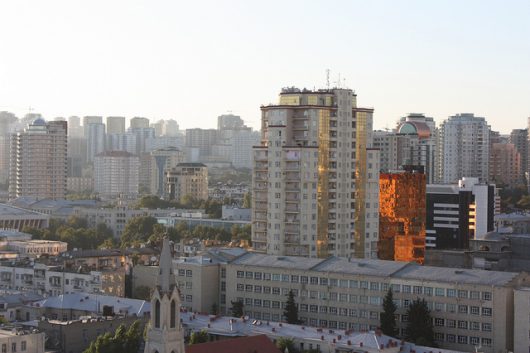
Since its formation in 1992, Azerbaijan has had positive diplomatic relations with the United States. The U.S. has affirmed its commitment to strengthening democracy in the region, as well as diversifying the economy and promoting regional stability. In 2017, the United States’ government gave $15.31 million in foreign assistance to Azerbaijan.
Over $4 million of that contribution went towards democracy, human rights and governance agendas. Another $3.63 million went towards economic development. Here are the four major ways in which the U.S. benefits from foreign aid to Azerbaijan.
Positive U.S.-Azerbaijan Relations Support American Jobs
Azerbaijan purchases American services. In 2010, Azerbaijan signed a $1 billion contract purchasing eight civilian airplanes from the American Boeing company; this contract supported 11,000 American jobs.
That same year, seeking to create its first communication satellite, Azerbaijan signed another contract with the Orbital Sciences Corporation in Virginia. The $205.3 million contract created 1,500 American jobs.
U.S. Companies’ Substantial Stakes in Azerbaijan Economy
Azerbaijan has welcomed U.S. investment in its economy. The Law on Protection of Foreign Investments allows for foreigners to directly invest in any activity of the Azerbaijan economy in which a national investor may also invest.
U.S. companies quickly capitalized on this opportunity. Many have long-standing investments in offshore oil development projects; however, experts predict a decline in this industry.
As a result, several U.S. companies are investing in other fields of the Azerbaijan economy such as agriculture, telecommunications, tourism and transportation services. The U.S. also regularly exports aircraft and heavy machinery to the region.
Azerbaijan: Useful Ally in Combating Terrorism
Azerbaijan has a confirmed commitment to combating terrorism. The country is a member of several international organizations such as the Organization for Security and Cooperation in Europe, and the Organization for Islamic Cooperation. The collaborative work of Azerbaijan’s State Security Forces and the Foreign Intelligence Service have made sizeable contributions to the international community’s efforts to combat terrorism.
Furthermore, as a member of the Council of Europe’s Committee of Experts on the Evaluation of Anti-Money Laundering Measures and the Financing of Terrorism (MONEYVAL), Azerbaijan has also taken steps to deter money laundering schemes that could finance terrorism.
Given this commitment, positive relations with Azerbaijan could help advance U.S. security goals in the region.
Successful Market Democracy Could Provide a Model for the Region
The primary objective of USAID contributions in Azerbaijan is “to support Azerbaijan’s reform processes by promoting competition and pluralism in the society, laying the foundations for a sustainable market-based democracy.”
As a Muslim-majority country with a history of religious tolerance, Azerbaijan could be a model for countries in the region. Azerbaijan shares a border with both Russia and Iran. If Azerbaijan can successfully become a market economy, perhaps it can provide a model for similar countries in the region.
How the U.S. Benefits From Foreign Aid To Azerbaijan
By providing aid to the Azerbaijan people, the United States is ensuring the continued economic and security cooperation with a proven ally. Though often overlooked by popular U.S. media, Azerbaijan’s development has a notable effect on the American people.
– Joanna Dooley
Photo: Flickr

Reasons Impoverished People Come to the United States
Most Americans will never know what it is like to be forcibly displaced from their home country. Living in a place where there is no threat of violence is a luxury when compared to the hardships faced by many other people. For those who are not privileged, every day can seem like a struggle. The reasons for impoverished people coming to the United States are many.
Asylum-Seeker and Refugee
What is the difference between an asylum-seeker and a refugee? Refugees are those who have to seek safety in neighboring counties during times of war or other perils and are recognized by the International Law. Asylum-seekers, however, are migrants whose identity as a refugee is not recognized by their home country. Their reason for fleeing may be related to personal threats of violence and they have not yet claimed refugee status. These two can fall under the term “migrant”.
In the current political climate, a pilgrimage to the United States is a great risk. Therefore, it is important for the natural born citizens of this nation to align themselves with the reasons impoverished people come to the United States.
Top 10 Reasons Impoverished People Come to the United States
The above reasons for impoverished people to come to the United States will not only help American citizens empathize with their struggle but possibly look for ways to help them out. Embracing migrants is something that has been an enormous struggle for centuries in the United States, and while every immigrant’s reasons for leaving their home country may be different, their desire to build new, bright future is what brings them here.
– Tresa Rentler
Photo: Flickr
How the US Benefits from Foreign Aid to Azerbaijan
Since its formation in 1992, Azerbaijan has had positive diplomatic relations with the United States. The U.S. has affirmed its commitment to strengthening democracy in the region, as well as diversifying the economy and promoting regional stability. In 2017, the United States’ government gave $15.31 million in foreign assistance to Azerbaijan.
Over $4 million of that contribution went towards democracy, human rights and governance agendas. Another $3.63 million went towards economic development. Here are the four major ways in which the U.S. benefits from foreign aid to Azerbaijan.
Positive U.S.-Azerbaijan Relations Support American Jobs
Azerbaijan purchases American services. In 2010, Azerbaijan signed a $1 billion contract purchasing eight civilian airplanes from the American Boeing company; this contract supported 11,000 American jobs.
That same year, seeking to create its first communication satellite, Azerbaijan signed another contract with the Orbital Sciences Corporation in Virginia. The $205.3 million contract created 1,500 American jobs.
U.S. Companies’ Substantial Stakes in Azerbaijan Economy
Azerbaijan has welcomed U.S. investment in its economy. The Law on Protection of Foreign Investments allows for foreigners to directly invest in any activity of the Azerbaijan economy in which a national investor may also invest.
U.S. companies quickly capitalized on this opportunity. Many have long-standing investments in offshore oil development projects; however, experts predict a decline in this industry.
As a result, several U.S. companies are investing in other fields of the Azerbaijan economy such as agriculture, telecommunications, tourism and transportation services. The U.S. also regularly exports aircraft and heavy machinery to the region.
Azerbaijan: Useful Ally in Combating Terrorism
Azerbaijan has a confirmed commitment to combating terrorism. The country is a member of several international organizations such as the Organization for Security and Cooperation in Europe, and the Organization for Islamic Cooperation. The collaborative work of Azerbaijan’s State Security Forces and the Foreign Intelligence Service have made sizeable contributions to the international community’s efforts to combat terrorism.
Furthermore, as a member of the Council of Europe’s Committee of Experts on the Evaluation of Anti-Money Laundering Measures and the Financing of Terrorism (MONEYVAL), Azerbaijan has also taken steps to deter money laundering schemes that could finance terrorism.
Given this commitment, positive relations with Azerbaijan could help advance U.S. security goals in the region.
Successful Market Democracy Could Provide a Model for the Region
The primary objective of USAID contributions in Azerbaijan is “to support Azerbaijan’s reform processes by promoting competition and pluralism in the society, laying the foundations for a sustainable market-based democracy.”
As a Muslim-majority country with a history of religious tolerance, Azerbaijan could be a model for countries in the region. Azerbaijan shares a border with both Russia and Iran. If Azerbaijan can successfully become a market economy, perhaps it can provide a model for similar countries in the region.
How the U.S. Benefits From Foreign Aid To Azerbaijan
By providing aid to the Azerbaijan people, the United States is ensuring the continued economic and security cooperation with a proven ally. Though often overlooked by popular U.S. media, Azerbaijan’s development has a notable effect on the American people.
– Joanna Dooley
Photo: Flickr
5 Crucial Facts About Human Rights in El Salvador
The focus on immigration along the U.S. border has brought human rights of several Latin American countries into the limelight. A large portion of the migrants come from El Salvador — the smallest and most densely populated country in Central America. A large number of migrants is largely due to violations of women’s rights and gang violence throughout the country. Here are 5 crucial facts about human rights in El Salvador.
5 Important Facts About Human Rightsi in El Salvador
Reward Greater Than Risk
Human rights in El Salvador must be addressed and improved in order to ensure widespread safety. If violence decreases and improved rights are met, then the peoples’ quality of life overall will prosper and hardship will lessen. Fewer people will be forced to helplessly flee in search of difficult asylum elsewhere, and family members and familiarity will cease to be left behind.
– Jessie Serody
Photo: Flickr
Top 10 Facts About Poverty in the Philippines
Poverty in the Philippines is more persistent than in other countries in Southeast Asia. Consisting of 7,641 islands, the Republic of the Philippines is a country located in the western Pacific Ocean. Despite a declining poverty rate in recent years, 21.6 percent of the country’s population still live below the national poverty line.
Rural areas in the Philippines show a poverty rate of 36 percent in comparison with the 13 percent of urban areas. However, urban poverty has also shown a steady increase in recent years, possibly due to the unemployed and low-income migrants who are unable to afford housing.
Other key contributors to the poverty rate include vulnerability to shocks and natural disasters, an underdeveloped agricultural sector, high population growth and moderate economic growth. Here are 10 facts about poverty in the Philippines, including the causes, outcomes and improvements.
10 Facts About Poverty in the Philippines
The Republic of the Philippines has made and continues to make improvements in poverty reduction. However, overpopulated urban areas and lack of economic opportunities for rural populations still create a need for more progress. The fact that such issues are receiving recognition from political leaders and various organizations is creating hope for the Philippines and its people.
– Diane Adame
Photo: Flickr
10 Facts About Human Rights in Pakistan
Pakistan, cushioned between India and Afghanistan, is home to more than 212 million people and is the sixth most populous country in the world. Each one of these people living in Pakistan should be given basic human rights no matter their ethnic origin, color, gender, religion or any other reason.
Even if human rights should be granted to everyone, not everyone is given the same rights as the other in some countries around the world. There is much to know how each human is treated or could be treated in the country of Pakistan. Here are 10 facts on human rights in Pakistan.
10 Facts On Human Rights in Pakistan
Postive Push
While there may be progress budding in regard to human rights in Pakistan, the road to completely improved human rights will be long and difficult. If those pushing for their rights are heard and supported, the return of basic human rights and safety can return to Pakistan.
– Victoria Fowler
Photo: Flickr
Top 10 Facts About Human Rights in Guatemala
Guatemala is a tourist destination well-known for being the center of the ancient Mayan civilization. What many people may not realize about this small, Central American country, however, is that from 1960 to 1996, Guatemala struggled with a 36-year civil war that has left the country in a problematic state in regards to human rights. Although there have been several improvements to human rights in Guatemala, there is still work to be done. Below are 10 important facts about human rights in Guatemala.
10 Facts About Human Rights in Guatemala
These facts about human rights in Guatemala show that things have improved since the genocidal times of civil war, but many issues persist. The rights of indigenous people, journalists and minorities need more attention from the government. While Guatemala seeks justice for its past crimes with the aid of organizations like CICIG and Benetech, current human rights issues lack effective attention. With an improvement in economic opportunity and governance along with a decrease in impunity and corruption, Guatemala could significantly improve its human rights situation and experience a greater decrease in poverty and violent crimes.
– Matthew Cline
Photo: Flickr
How the US Benefits from Foreign Aid to Moldova
The U.S. government has invested over 1 billion dollars in Moldova since 1992 through various foreign aid assistance programs. In times where many Americans think that the government should concentrate on domestic aid, it is important that they should be informed about how the U.S. benefits from foreign aid to Moldova. So, how is the aid America invests in Moldova promoting American interest?
The Economic Benefits
Foreign aid is often characterized as an investment because it typically brings a return for the American people. This is especially true in the case of American businesses. In Moldova, the poorest country in Europe, the logic of foreign aid applies perfectly.
The stated goal of U.S. foreign aid to Moldova is to “target assistance at the country’s most promising economic sectors; which will help create economic opportunities that will raise incomes, promote job growth, and improve living standards.” By improving the economy and living standards, the foreign aid investments will then create a new market for American goods, demonstrating the mutual benefit for Moldova and the United States.
When the U.S. government provides aid for an impoverished country, the country’s economy improves, and typically so do the lives of its people. With this improved quality of life, citizens of the country are transformed from targets of charity to consumers with purchasing power. Instead of barely surviving, they become productive members of society, which results in new markets for U.S. companies. Not only does this create more potential customers for U.S. companies, but the increased demand for American made goods can create jobs in the U.S. to create these goods.
USAid in Moldova
USAID, America’s primary foreign aid agency, plays an important role in connecting American businesses directly with these new consumers in developing markets. USAID accomplishes this by encouraging American companies to partner with local people to help educate and support them on projects in local areas.
The result is the creation of a mutually beneficial relationship, whereby the target of the aid becomes self-reliant and also aligned with U.S. companies. In this way, the U.S. benefits from foreign aid to Moldova as well as Moldova itself.
Furthermore, the U.S. Embassy in Moldova implements programs such as The Cultural/English-Language Small Grants Program, to use education and cultural exchange to help foster mutual understanding between the United States and Moldova. It is the hope that this mutual understanding will lay the foundation for further economic, cultural, and political cooperation between the two countries.
National and International Security
Another common argument in favor of foreign aid is that this assistance helps stabilize vulnerable countries. This lowers the probability of future conflict and, as a result, keeps Americans safe. Syria is the most evident example of what can happen when a country becomes unstable. After the country experienced a drought in 2007, the resulting destabilization and actions by a repressive regime created the terrible crisis we see today.
This is the very reason that the U.S. foreign aid to Moldova targets economic growth in Moldova’s unstable agricultural industry as well as the consolidation of democratic institutions. If there were a slowdown in Moldova’s agricultural industry, which accounts for approximately 17 percent of its GDP, or a crackdown on democracy, the resulting destabilization could be problematic, especially given Moldova’s proximity to Russia.
Therefore, the U.S. benefits from foreign aid to Moldova by helping to minimize the risk of breakdowns in the critical areas of Moldovan society, which helps ensure stability, economic opportunity and pro-American sentiment in an otherwise vulnerable country.
– Taylor Pace
Photo: Flickr
Girls’ Education in Benin
Top 10 Facts About Poverty in Libya
While Libya may be primarily known for its involvement in the Arab Spring and the subsequent civil war, the country has since undergone a period of drastic socio-economic change. This period has left a large portion of Libya impoverished. These are current facts about poverty in Libya.
Facts About Poverty in Libya
These facts about poverty in Libya are complex and rapidly changing. While there is still considerable uncertainty for poverty in Libya, and for the country itself, Libya has already taken important steps forward. These steps will hopefully lift the country out of poverty and restore its economic power in the region.
– Sam Kennedy
Photo: Google
Top 10 Facts About Human Rights in Venezuela
Once the richest country in South America, Venezuela has since been ridden with economic, socio-cultural and political turmoil. But there is hope, as the United Nations and its allies recognize the importance of salvaging the situation. Here are some important facts about human rights in Venezuela.
Facts About Human Rights in Venezuela
The Venezuelan President, Nicolás Maduro, uses the Venezuelan security forces to maintain authoritarian control. It was reported by The Independent in April 2017 that the forces had detained 5,000 people. In the same month, the security forces were accountable for 46 of 124 reported deaths. Their other acts of violence include raiding houses and torturing innocent civilians and those detained.
To maintain an iron fist, the government has jailed several politicians on the grounds of acting as opposition. In 2017, more than 340 politicians were put in prison or brought for questioning by intelligence services. Several mayors were also subject to sentencing that did not comply with international procedure guidelines. Many leaders were also given prison sentences despite the lack of evidence supporting their charges.
The circumstances have cost Venezuelans their right to quality health care. Currently, 85 percent of all medication is not available, and the political instability has led 13,000 doctors to flee the country. The prevalence of communicable diseases has greatly increased, as seen in the 69 percent rise in malaria cases between 2016 and 2017. However, the head of the WHO Global Malaria Program, Pedro Alonso, is devoting resources to rid Venezuela of malaria by working with regional bodies. The Venezuelan Health Minister, Luis Lopez, has also been key in implementing vaccination and fumigation programs.
Due to the heavy shortages, stores in Venezuela are missing menstrual hygiene products and birth control measures. The lack of contraception is especially alarming as Venezuela currently has the highest number of teen pregnancies in South America. Women resort to the black market to buy birth control pills or exchange basic food items like flour for pads and tampons. Fortunately, Girls Globe reports that social media has helped women gain greater access to these products.
The United States, Canada and the European Union have imposed sanctions on Venezuela, making it harder for the nation to import essential medicines and nutrients. Although initially imposed to discourage human rights abuse and corruption, these sanctions have further locked Venezuela in a situation they cannot get out of, especially without external help.
In light of the severe shortages and hyperinflation, Venezuelans have resorted to crime to make ends meet. In 2017, the murder rate reached a high of 89 deaths per 100,000 people. Moreover, close to 40 percent of residents have reported robberies in the past year alone. Venezuela currently has one of the highest crime rates in the world, which is yet another factor causing residents to migrate. However, there are several nonprofit organizations working in Venezuela’s major cities to deconstruct this image and promote revenue through tourism.
In 2017, the Venezuelan health minister reported that in 2016, the maternal mortality rate had increased by 65 percent and infant mortality had increased by 30 percent. These alarming statistics can be attributed to the poor infrastructure offered by hospitals and the lack of sanitation and food. Cases of severe malnutrition also increased to 14.5 percent in September 2017 from 10.2 percent in February 2017, crossing the crisis threshold defined by WHO. These circumstances are undermining Venezuelans’ right to health and nutrition
In Maduro’s quest to quell the opposition, several media agencies and sites have been suspended or disbanded altogether, and their journalists have been detained by security forces or had their equipment confiscated. International news agencies were also banned from entering Venezuela or detained for covering the local crises. This is in light of the Venezuelan government’s “Law Against Hatred,” which was passed in November 2017 and vaguely outlines the expected coverage content. The law even enforces a maximum jail sentence of 20 years for individuals and agencies that do not adhere.
The lack of human rights in Venezuela has left almost 1.5 million Venezuelans seeking asylum or living as refugees in neighboring countries. Colombia, the largest of the neighbors, currently hosts more than 600,000 Venezuelans. However, in early 2018, Colombia discontinued temporary visas, making it extremely difficult for Venezuelans to find jobs and settle across the border and exacerbating the situation. However, organizations like Mercy Corps are helping Venezuelans make the best of the circumstances by protecting their human rights in Colombia as well as their home country.
In August 2017, the United Nations recognized the current state of Venezuelan politics as a violation of basic human rights and is looking to pursue charges against people at the highest levels of government. In May 2018, the United Nations Human Rights Council (OHCHR) also adopted a resolution acknowledging Venezuela’s position and declaring that the sanctions currently imposed on it do harm to the poor and the most vulnerable classes instead of serving their original purposes. With the WHO already involved in Venezuela’s malaria crisis and the OHCHR resolving to assuage these human rights violations, there is hope for collective action through the U.N.’s work.
Although Venezuela is going through a hard time, the work of non-profit organizations and allies of the U.N. has given the nation a fighting chance. With continued foreign aid, Venezuelans can expect to see better days.
– Sanjana Subramanian
Photo: Flickr