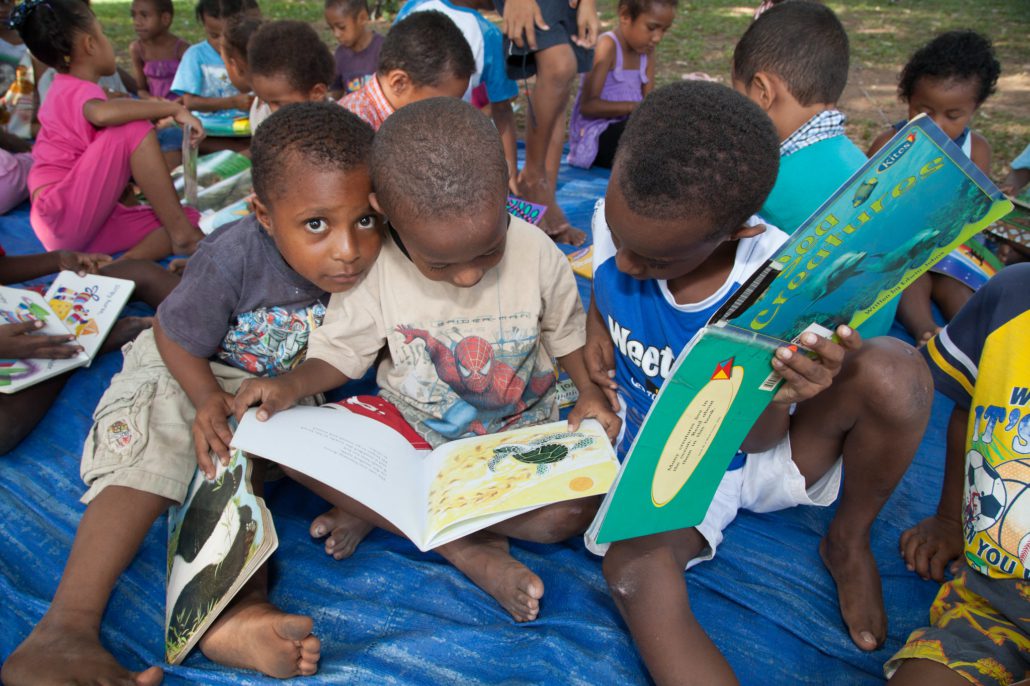
 In sub-Saharan Africa, more than one in three adults cannot read and 22 percent of primary aged children are not in school. A staggering 48 million youths ranging from ages 15 to 24 are illiterate. In fact, 182 million adults are unable to read and write. Global organizations around the world mobilized literacy programs in sub-Saharan Africa to provide children opportunities to develop and thrive.
Defining the Literacy Crisis
According to the African Library Project, UNESCO defines a literate person as someone who can read and write a short, simple statement about their life. Illiteracy denies people opportunity because it impacts the individual’s active citizenship, health, empowerment and the state of their poverty.
In sub-Saharan Africa, the World Literacy Foundation reports that 27 percent of people are illiterate. This is a part of the world where the cost of a children’s book can be a month’s salary. According to the World Literacy Foundation, millions of classrooms in Africa are located “off the grid” and have limited educational resources and no books.
The reading crisis has led to several strategies for improvement, such as:
- promoting a culture of reading
- encouraging parents to read to their children
- making books accessible in schools and improving initial teacher education through literacy programs in sub-Saharan Africa.
Why South Africa?
South Africa was ranked last out of 50 countries in the 2016 Progress in International Reading Literacy (PIRLS) study. The study tested reading comprehension of learners in their fourth year of primary schooling. The organization found that 78 percent of South African pupils at this level could not read for meaning. Consequently, this suggests the need for literacy programs in sub-Saharan Africa.
According to a reading project called The Book Bus, Malawi is ranked as one of the poorest countries in the world. The country faces challenges in education because the student-to-teacher ratio is 120:1. The organization noted how the numbers impacted the vital role teachers play in the classroom. This is especially crucial as books are rare and very expensive in this part of the world, often costing more than one month’s wages.
As a response, The Book Bus reading project has partnered with two local schools in Malawi to support teachers with their literacy programs in sub-Saharan Africa. According to the organization, the Book Bus Reading Team visits the schools weekly and listens to the children read.
Literacy Programs in sub-Saharan Africa
Room to Read began working in South Africa in 2006 as a literacy program. The program was directed toward:
- teacher training in literacy,
- school libraries
- reading materials across many official languages.
The organization has published materials in all eleven of South Africa’s official languages. Their literacy program aligns closely with the government’s educational policies and priorities. Currently, Room to Read in South Africa has reached 469 schools, 1,021 teachers and 362,180 students.
Room to Read collaborates with local communities and governments in developing countries. The program focuses on literacy and gender equality in education. Additionally, the nonprofit works with local villages to build schools and libraries filled with children’s books across South Africa. Room to Read also develops programs to support girls and encourage them to pursue an education.
Publisher Tom Maschler founded the registered charity, The Book Bus, in 2008. Mashchler began work with schools in Zambia, delivering books and working with teachers and volunteers to get more children reading. The program administered reading tests to each child and recorded the scores. Comparatively, the same test was conducted six months later and the results reflected an increase in literacy by an average of 35 percent.
Unique Methods to Literacy Programs
The World Literacy Foundation, under the initiative called Sun Books, designed and developed an app. That app is pre-loaded in a solar-powered device, containing digital content and e-books in English and the local language. The foundation provided the device to classrooms for early primary-level children, along with training for teachers about the device.
According to the foundation, the use of the device is effective regardless of internet or electricity. In territories like Uganda, where only 27 percent of the population has access to electricity and has limited internet access, this is particularly vital.
The Book Bus promotes the image that choosing the right books is crucial to ensure the books are relevant and engaging to each child. Accordingly, the program aids the children as a literacy program in sub-Saharan Africa. It also provides the children access to new worlds and helps expand their knowledge.
How Literacy Promotes Change
Each year, Book Aid creates and supports thousands of school libraries with the belief that books have the power the change lives. This belief is the foundation of their vision, mission and the values which guide the organization.
Additionally, Book Aid provides aid from primary school to university, aiding students and pupils with the books to help them succeed and reach their full potential.
Through collaboration with local governments, Room to Read educates communities on the importance of literacy. Furthermore, the program shows how to play a role in enabling students to succeed through literacy programs in sub-Saharan Africa.
Above all, organizations such as these make it possible to help children combat poverty through literacy programs in sub-Saharan Africa. Donations to help expand Room to Read, Book Aid, The Book Bus and several other global literacy programs can be found on their websites. The sites also provide information on more ways to take action.
– AnaCarolina Chavez
Photo: Flickr

Girl Determined Promotes Leadership
Women and girls regularly face issues such as gender inequality, violent relationships and extreme prejudice. 2016 Demographic and Health Survey found that 21 percent of women had reported experiencing physical, sexual or psychological violence from their partner. Researchers even believe that, given the authoritarian-style government in Myanmar, the real number is actually much higher.
Part of the problem is that girls between the ages of 12 and 17 lack the confidence and empowerment needed to speak up for their rights. In a nation where females are born into the expectation that they will remain subdued, gaining the courage to challenge the norm can be difficult. Girl Determined is working to change that.
The Program
The program is structured primarily around Circles. Circles are weekly after-school peer groups that provide young girls with a place to share their experiences and learn from one another. Currently, more than 2,000 girls across Myanmar participate in Circles. The meetings follow a curriculum that addresses five categories:
During the group sessions, topics can range from universal experiences among adolescents, like puberty and chore lists, to challenges exclusive to the female Myanmar community. For example, shared fears concerning the risk of sex trafficking, lack of education and violence witnessed in war.
To provide support for Circles, Girl Determined hosts an annual Girls’ Leadership summer camp, a Girls’ Conference and a number of athletic programs and campaigns. They are encouraged to keep a journal, plant seeds and participate in team sports. All of these opportunities are designed to put girls at center stage. Furthermore, the program intends to create an outlet to advocate for issues that inherently affect them.
The Impact
Through something as simple as open discussion and encouragement, participants are paving a brighter future for girls in Myanmar. Adolescent girls have become a marginalized group after decades of being taught to follow cultural norms and remain silent. Girl Determined promotes leadership, while also functioning as a platform for real change. Many of the girls who have participated in the program say it taught them to speak up, specifically against gender-based violence and has mobilized them to spark change in their communities.
In 2013, over 800 participants gathered for a conference in Rangoon to celebrate the International Day of the Girl Child. Teenagers from Girl Determined advocated for policy change in the social welfare department. The local news even covered their statement. Since their statement, women’s organizations working closely with the government have implemented protection for girls into Myanmar’s National Strategic Plan for the Advancement of Women.
The Circles program is entirely voluntary, so the program measures its overall success is by retention of attendance. Across various project sites in Myanmar, attendance averages at 90 percent. Overall, this speaks to the power in how Girl Determined promotes leadership among young women.
– Anna Lagattuta
Photo: Flickr
Clean Water and Proper Sanitation in Burundi
Burundi is a small, land-locked country in Africa that is consistently listed as one of the top ten poorest countries in the world. Despite the country’s abundance of natural water resources, such as Lake Tanganyika and the Nile River, there is still a struggle to find clean water and proper sanitation in Burundi. Overpopulation, political unrest and slow economic development have prevented Burundians from accessing basic necessities, such as clean water. As of 2016, there is a very high risk of contracting water-borne diseases, which contributes to high mortality rates.
Small-scale Solutions
In 2017, the International Committee of the Red Cross (ICRC) partnered with REGIDESO, Burundi’s water company. This was to supply 56,000 Burundians with clean and easily-accessible drinking water. Six spring-fed tap stands, sourced from the 32 surrounding natural springs, and a water tower has improved water quality. Further, they have reduced the risk of contracting waterborne diseases. It is one such effort from international organizations partnering with Burundi to help over 64 percent of residents. This is how many residents live below the poverty line. Many poor Burundians have difficulty finding clean water, and the ICRC’s water project is one step to alleviating the side effects of poverty.
Other Initiatives
Also addressing the issue of the lack of clean water and proper sanitation in Burundi are organizations and initiatives. The country relies heavily on international nonprofits and United Nations organizations in receiving aid for the water crisis in Burundi, such as through the construction of wells. UNICEF partnered with Beyonce’s charity, BeyGOOD, to solve the ongoing water crisis in Burundi. As of 2018, the partnership has resulted in more than 35 wells. Furthermore, they are set to build 80 more in the future.
Caryl Stern, President and CEO of UNICEF USA notes:
Stern referred to the main cause of death of children under the age of five to be waterborne diseases such as schistosomiasis. Many Burundians drink from unsafe sources of water. The undeveloped health care industry makes matters worse, as those with diseases are not treated properly.
In 2019, UNICEF and its partners began a strategic plan to combat the lack of clean water. Additionally, the organization aims to provide food, proper health care, child protection services and education to more than half a million Burundians. They plan to provide clean water for drinking, cooking and personal hygiene to 200,000 residents this year. The humanitarian strategy requires $10 million to alleviate the water crisis in Burundi. In 2018, over 47,000 Burundians were provided water for drinking, cooking and hygiene.
Future Initiatives
The 2015 protests involving President Pierre Nkurunziza forming a military coup has resulted in Burundians across the country still being affected. As a result, more than 100,000 Burundians have fled the country. These protests are ongoing and affect the economy. As a result, the government shut down all the universities, the telephone lines and the Internet. Despite the continued protests, UNICEF, the ICRC and various nonprofits are the foundation to future success in providing access to clean water and proper sanitation in Burundi.
– Lucas Schmidt
Photo: Flickr
Top 5 Poems About Poverty
Poverty by Jane Taylor
Jane Taylor wrote the famous jingle Twinkle, Twinkle, Little Star. She is best known for her nursery rhymes and novels. She lived in London in the late 18th and early 19th century. The speaker of this poem isn’t someone who lives in poverty, but someone who sees it from the outside. They resolve to never hide from the fight against poverty, saying “I never will squander away/ While many poor people I know/Around me are wretched as they.”
The Curse of Poverty by Ramesh Rai
The speaker acknowledges the human fault in the creation of poverty. Additionally, they identify the necessity for humans to fix the problem by eliminating it from their “roots.” Click here for more poems by Ramesh Rai.
Each Man For Himself by tyktmy
Another of the five poems of poetry is this poem which resolves that all humankind are one. Further, it is necessary to act this way by helping each other. The speaker points out that, while some are starving and dying, others are doing nothing about it. This puts people in different worlds when they should be living among each other in support.
Stop Child Labor Now by Simon Amu
There are 1 billion children worldwide who live in poverty. In addition, according to UNICEF, poverty kills 22,000 children every day.
Children around the world are hungry, even when they are working. Eradicating poverty will save children from diseases they can’t afford medication for, dying from starvation and having to work hard for little pay when they should be in school getting an education.
Mother Africa Wept by Marcus Dawes
This poem features a speaker who is frustrated by the inaction of people around the world and their disconnect from the continent of Africa. While people are distracted by luxuries, they have forgotten about their homeland. So while they enjoy their lives, Africa weeps. This poem makes the reader think about the ways they can be distracted from taking action or the ways they may be ignorant of the suffering due to poverty.
Reading these five poems about poverty and other poetry can be an excellent way to better understand it. One simple way to take action against poverty is to contact elected officials. Senators and representatives act based on their constituencies, so the more communication they receive about a certain issue, like global poverty, the more likely they are to support measures to alleviate it.
– Ava Gambero
Photo: Flickr
The Impact of Literacy Programs in sub-Saharan Africa
Defining the Literacy Crisis
According to the African Library Project, UNESCO defines a literate person as someone who can read and write a short, simple statement about their life. Illiteracy denies people opportunity because it impacts the individual’s active citizenship, health, empowerment and the state of their poverty.
In sub-Saharan Africa, the World Literacy Foundation reports that 27 percent of people are illiterate. This is a part of the world where the cost of a children’s book can be a month’s salary. According to the World Literacy Foundation, millions of classrooms in Africa are located “off the grid” and have limited educational resources and no books.
The reading crisis has led to several strategies for improvement, such as:
Why South Africa?
South Africa was ranked last out of 50 countries in the 2016 Progress in International Reading Literacy (PIRLS) study. The study tested reading comprehension of learners in their fourth year of primary schooling. The organization found that 78 percent of South African pupils at this level could not read for meaning. Consequently, this suggests the need for literacy programs in sub-Saharan Africa.
According to a reading project called The Book Bus, Malawi is ranked as one of the poorest countries in the world. The country faces challenges in education because the student-to-teacher ratio is 120:1. The organization noted how the numbers impacted the vital role teachers play in the classroom. This is especially crucial as books are rare and very expensive in this part of the world, often costing more than one month’s wages.
As a response, The Book Bus reading project has partnered with two local schools in Malawi to support teachers with their literacy programs in sub-Saharan Africa. According to the organization, the Book Bus Reading Team visits the schools weekly and listens to the children read.
Literacy Programs in sub-Saharan Africa
Room to Read began working in South Africa in 2006 as a literacy program. The program was directed toward:
The organization has published materials in all eleven of South Africa’s official languages. Their literacy program aligns closely with the government’s educational policies and priorities. Currently, Room to Read in South Africa has reached 469 schools, 1,021 teachers and 362,180 students.
Room to Read collaborates with local communities and governments in developing countries. The program focuses on literacy and gender equality in education. Additionally, the nonprofit works with local villages to build schools and libraries filled with children’s books across South Africa. Room to Read also develops programs to support girls and encourage them to pursue an education.
Publisher Tom Maschler founded the registered charity, The Book Bus, in 2008. Mashchler began work with schools in Zambia, delivering books and working with teachers and volunteers to get more children reading. The program administered reading tests to each child and recorded the scores. Comparatively, the same test was conducted six months later and the results reflected an increase in literacy by an average of 35 percent.
Unique Methods to Literacy Programs
The World Literacy Foundation, under the initiative called Sun Books, designed and developed an app. That app is pre-loaded in a solar-powered device, containing digital content and e-books in English and the local language. The foundation provided the device to classrooms for early primary-level children, along with training for teachers about the device.
According to the foundation, the use of the device is effective regardless of internet or electricity. In territories like Uganda, where only 27 percent of the population has access to electricity and has limited internet access, this is particularly vital.
The Book Bus promotes the image that choosing the right books is crucial to ensure the books are relevant and engaging to each child. Accordingly, the program aids the children as a literacy program in sub-Saharan Africa. It also provides the children access to new worlds and helps expand their knowledge.
How Literacy Promotes Change
Each year, Book Aid creates and supports thousands of school libraries with the belief that books have the power the change lives. This belief is the foundation of their vision, mission and the values which guide the organization.
Additionally, Book Aid provides aid from primary school to university, aiding students and pupils with the books to help them succeed and reach their full potential.
Through collaboration with local governments, Room to Read educates communities on the importance of literacy. Furthermore, the program shows how to play a role in enabling students to succeed through literacy programs in sub-Saharan Africa.
Above all, organizations such as these make it possible to help children combat poverty through literacy programs in sub-Saharan Africa. Donations to help expand Room to Read, Book Aid, The Book Bus and several other global literacy programs can be found on their websites. The sites also provide information on more ways to take action.
– AnaCarolina Chavez
Photo: Flickr
10 Crazy Facts About Desertification
What is Desertification?
Desertification can be defined as the degradation of land in areas that experience arid, semi-arid and dry sub-humid climates. It is when fertile land becomes dry and unusable. Desertification is caused by a variety of human factors. These factors include unsustainable farming, clearing of forestation and trees, overgrazing and mining.
10 Facts About Desertification
The Impact of Desertification
Overall, as the rate of desertification increases, thousands of people are impacted every day. These facts about desertification clearly show how desertification has become a global issue. They are certainly driven by multiple forces. The United Nations has deemed it one of the greatest challenges for our environment.
– Logan Derbes
Photo: Flickr
The Impact of the International Women’s Coffee Alliance
The International Women’s Coffee Alliance aims to empower women to achieve sustainable, meaningful lives through international coffee communities. IWCA recognizes the integral part women play in both a business and an economic aspect. As such, IWCA believes women need to be involved in both family sustainability and economic choices. When this happens, multiple aspects typically leading to poverty in a community decrease.
“When women are fully involved, the benefits can be seen immediately: families are healthier; they are better fed; their income, savings and reinvestment go up. And what is true of families is true of communities and, eventually, whole countries,” states Kofi Annan, as quoted on IWCA’s homepage.
Strong Women = Strong Coffee
IWCA’s motto is “Strong Women = Strong Coffee: Connect. Empower. Advance.”
According to IWCA chapter manager Blanca Castro, “The chapters have very localized issues that they centralize their work around to be a collective force. The common denominator for the groups is that they are all mothers, daughters and workers and share many of the same challenges around the world, not just specific to coffee, such as the price of coffee but the also laws and customs that make women earning a dignified living that much more of a challenge.”
Now how is the IWCA taking action to implement and empower women?
IWCA Ethiopia
Strong Partners Build Economic Empowerment
IWCA is involved in multiple parts of the world, including Ethiopia. The Ethiopian Women in Coffee (EWiC) partnered with the International Trade Center, which brings platforms for corporations to empower companies to connect with women-owned supply companies. As a result, the EWiC and ITC are working together to build a foundation for the same goal.
The EWiC is one branch under IWCA. It moves to improve the economy and the importance of women within a community. Through the incorporation of women in international trade, IWCA believes that poverty within Ethiopia will soon be alleviated.
IWCA Burundi
Working Together Grows Quality and Premiums
The IWCA also has a chapter in Burundi, specifically in the regions of Ngozi and Kayanza where they have seen a growing impact of empowering the women of this region. Since their start in Burundi in 2012, there has been an increase in job opportunities for the community. Moreover, this has led to improved livelihoods based on coffee bonuses and pay raises.
In Burundi alone, there has been an increase in green coffee bags. In 2012, 94 green coffee bags were produced, as compared to 2,065 green coffee bags in 2017.
WCA-India
Building Awareness, Strengthening Communities
Coffee Santhe (Coffee Market) is held annually in India’s coffee capital, Bangalore. Santhe is a program that helps raise funds for communities. It also unites different states within India’s massive demographic to come together and learn how they can impact and improve their communities.
Santhe generates funds and provisions for children who are in government-run schools in coffee regions. These funds and provisions support their education. It also teaches them how they can impact their own lives and those around them.
The IWCA has a presence in 22 different countries. And it promotes economic sustainability by empowering women to enter the workforce of international trade, specifically through the coffee industry. Ultimately, the International Women’s Coffee Alliance believes by uniting different nations and closing the gender gap in the workforce, the issues of global poverty will disperse.
– Hannah Vaughn
Photo: Google Images
4 Ways to Reduce Poverty in Burundi
Burundi is a small country in Central-East Africa with a poverty rate of more than 60%. It is difficult for many Burundians to access basic necessities, such as clean water and health care. This is due to so many people in the country living on less than $2 a day. There are many ways to reduce poverty in a developing country. The following describes four essential areas to improve in order to reduce poverty in Burundi.
Health Care
Food or waterborne diseases, such as typhoid fever and hepatitis A, are common in Burundi. Health care spending in 2016, as a percentage of GDP, was 7.49%. The U.S., on the other hand, spent 17.04% of GDP on health care. Investment in the health care industry would only help reduce poverty in Burundi. Therefore, it would create jobs and improve the livelihood of Burundians.
The functionality of a society relies on good health. This is why investing in the health care industry spurs development. A disease, such as malaria, can hold individuals back from performing at work. It would be difficult for the more than 80% of the population in the agriculture industry to work if sick. In fact, about 81.5% of patients have to go into debt or sell a portion of their crops, land or livestock to pay for basic health care needs.
Education
Burundi spent 4.7% of its GDP on education in 2017. Investing in education can help increase profits in agriculture, which are minuscule. As a result, this can drive farmers to innovate and use efficient means of producing and storing crops for sale. Farmers in Burundi sell about 15% of crops for profit and eat the rest for survival. There are no long-term means of storage, so there is little reason to try to produce more crops; they would just spoil.
Education induces innovation and a more educated population. Provided they have the right tools, this leads to business developments. Agriculture accounts for more than 80% of all jobs in Burundi. This makes investing in other sectors, such as the power sector, appealing. With affordable and widespread electricity, farmers could afford better equipment, solar power, for example, to store and use energy when needed. As shown above, investment in education has a widespread effect on an economy, especially in a developing economy.
Infrastructure
In terms of GDP, Burundi grew little since 2015. However, investing and improving in various sectors is a good start to developing the country. This could result in the creation of jobs, the improvement of health and education and a reduction in poverty. Electricity, roads and bridges are areas that require growth. Subsequently, their development in Burundi would create jobs. For instance, jobs could emerge building schools, providing electricity to more than 90% of Burundians without electricity and supplying farming equipment to help increase productivity and wages.
According to Bertrand Badre, CFO of the World Bank, “Infrastructure is the backbone of any country, generating jobs, improving the quality of life for the poor and boosting economic growth.” Infrastructure creates jobs and therefore helps increase the profits of those employed in the industry. Additionally, the infrastructure helps those who would use public transportation and electricity for their occupation. Electricity access is only five percent. Therefore, increasing access would only help grow the struggling economy, thus helping to reduce poverty in Burundi.
Business
Burundi must also improve the business environment so that external investors and internal investors will view the potentially lucrative opportunity of producing products and services in the country. A stable and predictable business environment can form as a result of the government providing an incentive to entrepreneurs who are looking to expand to the country. Without government involvement, it is difficult to improve health care, education and infrastructure. In order to reduce poverty in Burundi, development begins with responsible governments that take initiative in helping its people.
– Lucas Schmidt
Photo: Flickr
Top 10 facts About Living Conditions in the Central African Republic
The Central African Republic is a landlocked country in Africa with 16 prefectures. The Central African Republic is among the poorest nations in the world even though the country has an abundance of natural resources. Roughly 90 percent of the population lives in poverty, with little access to food, decent housing, water or sanitation. One of the main causes of poverty is the ongoing conflict that shattered the country. This conflict caused the living conditions in the Central African Republic to deteriorate along with the way of life for many citizens. Here are the top 10 facts about living conditions in the Central African Republic.
Top 10 Facts About Living Conditions in the Central African Republic
As the country currently stands as one of the world’s poorest countries, there is still a lot of work to do. However, there is still hope for the improvement of living conditions in the Central African Republic.
– Madeline Oden
Photo: Flickr
Top 5 Women Activists in Developing Countries
Top 5 Women Activists in Developing Countries
The founder of the Girls Not Brides movement in Rajasthan, northern India, Kriti Bharti prevented over 900 child marriages. Kriti established the Saarthi Trust in 2011 to pull girls from forced child marriages and to educate them on their societal rights. Bharti is both a social activist and a rehabilitation psychologist. She set up rehabilitation programs for the girls released from child marriage.The Girls Not Brides movement has forums that provide food, shelter and water for girls banished from their families. The forums also include educating girls on their societal rights and providing them with life skills such as sowing. Twenty-seven percent of girls in India marry before the age of 18 resulting in India being the highest country with child brides. The Saarthi Trust was the first organization in India to annul a marriage and annulled 31 other child marriages since 2012.
Poverty is a leading cause that resolves itself in child marriage. Usually, families marry off their young daughter to help alleviate finances; the younger the bride, the lower the dowry (a form of payment). Gender norms also play a key factor in child marriages. A girl is of lower value in general. Typically, females are not able to contribute to society because of this, leading their value to be held in household chores and motherhood. Moreover, a woman’s value is upheld in her benefitting her marital family more than her blood family. Thus, the family will usually educate their sons rather than their daughters.
The South Asia Initiative to End Violence Against Children (SAIEVAC) takes local action against abuse towards children by providing shelter with food and water and by educating girls in jobs. The Sustainable Development Goals stated that India is striving to end child marriages and forced labor by the year 2030.
Malala is now a household name across the world. The youngest person awarded the Nobel Peace Prize in 2014; she now uses her voice and her story to speak for the women around the globe who could not. “I tell my story not because it is unique, but because it is the story of many girls,” Yousafzai said.After she spoke out against education oppression towards girls in 2012, a Taliban gunman shot Malala in the head in 2012. Then, she began the Malala Fund. The Malala Fund now reaches six different countries; Afghanistan, Brazil, India, Nigeria, Pakistan and Syria. In each country, it recruits female teachers and tries to bridge the gap between gender disparity in education. It also educates teachers and students on gender discrimination, teaches girls how to speak about their rights, gives free secondary schooling and campaigns for new policies advocating for girls’ education. The goal of Malala’s Fund is to give girls “12 years of free, safe, quality education.”
The Yes I Do project of Indonesia began with three girls advocating against child marriage in their village and country. Holida, Suci, both 18, and Ria, 16, advocated that the abuse’s of child marriage is everyone’s responsibility to end. The Yes I Do project strives to prevent child abuse and forced sexual acts due to the selling of young girls into marriage. The project exposes the effects that sexual abuse has and the ways it affects reproductive health.Through village forums and discussions, the girls highlighted with their fellow neighbors that they have the same rights as boys do. Through their voices, child marriage cannot go unnoticed. Now, when a girl is forced or marries young, people talk about it. This gives fire to Holida, Suci and Ria’s campaign. The girls plan on making a movie to take to other villages around their own. “We want everyone to know why child marriage is wrong so that girls everywhere can achieve their dreams,” Suci said.
Manal al-Sharif, an Iraqi woman, co-founded the Women to Drive movement bringing awareness to the oppression of women’s rights in Saudi Arabia and bringing back the ability for women to drive. In 1957, Saudi Arabia decreed that women could no longer drive. In 1990, a large protest took place where 47 women drove around the country’s capital. Over 20 years later, in 2011, Manal al-Sharif started the Facebook campaign called Women to Drive to spread awareness of their oppression.Later that same year, al-Sharif and fellow co-founder, Wajeha al-Huwaider, recorded a video of themselves driving and speaking out against the difficulty of being a woman and commuting. In June 2018, King Salman issued a decree that Saudi women could obtain a driver’s license. Al-Sharif and the women advocating for years for freedom for their gender are making progress. Since the summer of 2018, women can take to the road, something they were not able to do for 62 years.
The Lybian Women’s Platform for Peace (LWPP) is an organization that puts pressure on the government to give opportunities to women to uphold sociopolitical places within government and society. Zahra’ Langhi is a co-founder and feminist activist who started speaking out in 2011 when Muammar Gaddafi’s reign ended after decades of abusing his power over the country. The leading effects after the uprising resulted in 35 women joining together to form LWPP. The state of Libya is dangerous and unbalanced, especially for women advocating to eliminate corruption in politics. Langhi never gave up her voice and continues to speak for compassion and understanding to infiltrate her country. “We need to start acting as agents of compassion and mercy. We need to develop a feminine discourse that not only honors but also implements mercy instead of revenge, collaboration instead of competition, inclusion instead of exclusion,” Langhi said.
These five women activists in developing countries spread their knowledge to their fellow neighbors and friends. From halfway across the globe, people Western countries can stand next to these women activists in developing countries and let them know they have support.
– Hannah Vaughn
Photo: Flickr
Fighting Radicalization in Mauritania
The Mauritanian government, with the help of outside organizations, has been working to decrease radicalization in Mauritania since the early 2000s. While Islamic terrorist attacks have been effectively stopped, there are still concerns about the spread of extremist views throughout the nation as well as in the surrounding countries. Several Islamic extremist groups have bases in Mauritania, including Al-Qaeda. Fighting radicalization in Mauritania requires a multi-faceted approach that tackles the factors contributing to radicalization and proactively dissuades extremist views from being able to gain traction.
Factors Contributing to Radicalization
The common problems many impoverished countries face include high unemployment, food insecurity, violence and political turmoil, all of which cause great suffering. These issues can sometimes make individuals more likely to adopt extremist views.
In Mauritania, unemployment is high, particularly for the youth with approximately 18.6 percent of 15 to 24-year-olds unemployed. Combined with poverty and a disconnect from political and civic life, this creates a population of young people who feel disillusioned by the options available to them. These individuals may then look for alternative and sometimes extreme methods through which they can exhibit their frustrations.
A majority of the Islamic jihadists in Mauritania are middle or low-income people, the majority of whom are below the age of thirty. Underemployment and delinquency are two additional factors common in the experiences of these individuals.
Racism in Mauritania
Another contributing factor to radicalization in Mauritania is ethno-racial tension. Conflicts between Arab and black Africans go back as far as the 1960s with the government giving preference to the Arab population. For example, when Arab leaders gained control of the nation’s education system, they reformed the system according to their values and mostly excluded black Africans from administrative positions.
Black Africans are also excluded more generally from society. Even those who have assimilated to the Arab culture are more likely to be illiterate, viewed as second-class citizens and sometimes denied basic rights. In combination with the poverty that many black Africans face, these genuine grievances contribute to the appeal of extremist views.
Additionally, it is important to note that much of what Islamic extremists are protesting – authoritarianism, torture, corruption and Mauritania’s relationship with the West – are genuine grievances. While extremism is never tolerable, the presence of these significant problems will continue to create a context in which extremist ideas are considered attractive.
Fighting Radicalization in Mauritania
The government’s efforts to combat terrorism have included arrests, raids, strengthening border control, improving military and intelligence capabilities and cooperating with the United States. While this is an important part of reducing the threat of terrorism, it is also important to implement programs and policies intended to prevent radicalization in Mauritania.
In 2015, the Ministry of Youth and Sport and UNDP created the National Strategy for Youth and Sport to encourage youth participation in society as a method for preventing radicalization. A youth center in the city of Nouakchott began providing opportunities for young people to discuss the problems as well as their aspirations for the future. Young people also participate in educational programming that teaches them important skills for employment. Discussion forums hosted by the center help train young people to recognize and resist extremist rhetoric and give them the tools to engage in productive dialogue in their communities.
One high school student indicated that her goal is to become a surgeon, but without the support of the youth center, she wouldn’t be prepared for this level of education. Another student expressed the desire to become a teacher and noted that he was “struck by the ignorance that still exists in poor suburbs, and by the lack of teachers in rural areas.” His hope was to be able to help by teaching in those communities.
Another participant noted that being unemployed and religious, he had been “tempted in the past by extremist ideas because of intense frustration,” but the center steered him away from radicalization through training sessions and debates. Over time, he recognized that he had a place in society and began to feel less disillusioned. Centers like the one in Nouakchott are essential for preventing extremism amongst Mauritania’s youth by providing an opportunity to engage in dialogue as well as prepare for a successful future.
Moving Forward
UNDP is also working with the government to create other projects aimed at fighting radicalization in Mauritania. It is focused on tackling the root causes. Starting with the youth is important, but based on the contributions poverty and ethno-racial tensions play in promoting extremism, these issues also need to be addressed more fully in counter-terrorism efforts.
Moving forward, extremism needs to be more fully recognized as a product of poverty and inequality. Efforts to decrease radicalization in Mauritania, therefore, should focus on decreasing poverty more broadly as well as promoting human rights for all Mauritanians. Only through a multi-faceted approach that seeks to tackle the factors contributing to extremism in the nation will fighting radicalization in Mauritania become truly successful.
– Sara Olk
Photo: Flickr