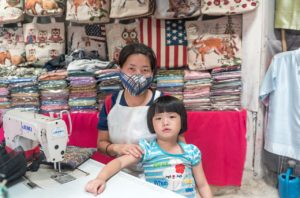
In recent years, brands like Zara, Topshop, Uniqlo, H&M and Forever 21 have come under fire for creating fast fashion. Fast fashion products are clothing and accessories that companies price significantly lower than the competition, produce more quickly and make of lower quality. Like many products, the world’s poor produces fast fashion, and thus, helps continue the cycle of poverty. Here are three facts about fast fashion and poverty.
Sweatshops
People create fast fashion in dangerous sweatshops. To provide cheap, ever-changing inventories for customers, fast fashion companies perpetuate fast fashion and poverty by relying on factories in countries with poverty wages, where safety, sustainable practices and suitable working conditions are nearly nonexistent.
One such factory complex was Rana Plaza in Bangladesh, where the collapsing of a building in 2013 killed over 1,100 people and injured thousands more. Rana Plaza housed five garment factories that manufactured products for almost 30 major European and North American fashion companies.
Today, however, there has been an increasing demand for company transparency and ethical manufacturing practices. In the wake of the Rana Plaza Tragedy, the Bangladeshi government has sought to improve safety measures in garment factories and had 38 people charged with murder in 2016 for their roles in the building collapse. Along with the Bangladeshi government’s efforts, companies and trade unions signed two major safety agreements: the Accord on Fire and Building Safety in Bangladesh and the Alliance for Bangladesh Worker Safety. Brands like Nike and Patagonia committed to adhering to higher transparency standards after the tragedy.
Environmental Impact
The business model of fast fashion companies emerged from the idea that consumers always want to stay on top of trends, and thus, will buy new clothes as trends change. To change trends more quickly, fast fashion brands release new clothing once a week or more, which creates a great deal of waste. Instead of the Fall/Winter and Spring/Summer clothing seasons that were once prevalent, fast fashion companies have created 52 micro-seasons.
Since the clothes are only trendy for one week or less, companies do not create them to last. Often, fast fashion clothing falls apart in the washing machine or dryer after only one or two wears. If the clothing falls apart in one wash and was no longer trendy anyway, consumers automatically go back out to buy new, cheap pieces from the fast fashion brands. The clothing is so cheap to buy that consumers may not realize that they are spending more money in the long run in terms of cost-per-wear on a fast fashion garment compared to a more high-quality one.
The destroyed and unwearable fast fashion, which contributes to nearly 70 pounds of textile waste per person, per year in the United States, ends up in U.S. landfills or ships, along with other garbage, to developing countries. Many of these developing countries do not have the capacity to deal with all of this additional waste, and therefore, cannot prevent pollution or other waste-related problems.
To combat the issue of the fast-fashion causes, retailers like Asos and Gap, along with dozens of others, signed the 2020 Circular Fashion System Commitment in 2017; the Commitment encourages brands to use monofibers instead of mixed-fiber and synthetic fabrics. These practices make it easier for people to recycle fabrics and garments going forward.
Chemicals in Clothes
Fast fashion products often contain lead to create bold colors and shiny accessories. Vinyl and plastic products that are red, green, orange and yellow are more likely to have high contamination than products in darker or more muted hues.
Even in low concentrations, lead is extremely dangerous to human health. When it comes to fast fashion merchandise, experts are concerned that these products will leave microscopic particles of lead and other chemicals on consumers’ hands; without proper sanitation practices, these particles can end up on food, drink and other accessories, which can create an environment for repeated exposure.
The Dangers of Lead
Lead contamination, even at low levels, can cause kidney failure, nervous system issues and cardiovascular risks. Lead accumulation in bones and tissues can also cause reproductive issues in women, such as infertility; lead released during pregnancy puts both the mother and fetus in danger. Many experts, considering these risks, have stated that there is no safe level of lead contamination.
The women and children charged with producing these garments and accessories are in danger of lead contamination, just like the women purchasing and wearing these products. For these workers, treatments for health conditions related to lead contamination are either too costly to afford or unavailable. Often, workers may die from complications related to lead contamination in the products they manufacture.
To combat these problems, the Center for Environmental Health (CEH) is fighting against fast fashion companies to eliminate lead contamination on clothing and accessories. In 2010, the CEH sued retailers regarding toxins in accessories; since then, the CEH has been testing accessories sold in-store and online by fast fashion brands for lead contamination.
As more disturbing facts come to light about the fast fashion industry, consumers continue to demand change. With the rise of ethical fashion brands and the increased popularity of secondhand shopping, both fast fashion and poverty may disappear in the future.
– Shania Kennedy
Photo: Pixabay

Midterm Election in the Philippines Helps Duterte
Millions of voters marched to the polls on May 13, 2019, for the 2019 midterm election in the Philippines. More than 18,000 government positions were up for election, but all eyes were on the Senate race due to its influence on President Rodrigo Duterte’s authoritarian agenda.
All 12 Duterte-backed Senate candidates won by a landslide, demonstrating the popularity of President Duterte’s policies. Three candidates in the spotlight were former special assistant to President Bong Go, former police chief and the architect of Duterte’s drug war, Ronald “Bato” dela Rosa, and Imee Marcos, the daughter of the former dictator, Ferdinand Marcos.
The Consolidation of Power
The results indicate that the destructive drug war plaguing the Philippines is far from over. So far, the conflict has resulted in a total of 22,983 deaths since Duterte took office in 2016, according to the Philippine National Police. This statistic includes suspected drug users, drug pushers and civilians living in impoverished communities, all of whom the President and his police force see as collateral damage.
During Duterte’s war on drugs, not a single drug lord received apprehension. Further, the drug war has not effectively reduced drug use or decelerated the drug trade in the Philippines. On the contrary, the drug war has caused the prices of methamphetamines, or shabu, to lower by a third of the original price, increasing the accessibility and prevalence of the drug.
Additionally, Duterte’s policies include reinstating the death penalty and lowering the age of criminal liability from 15 to 9 years old. Before the midterm elections, a portion of the Senate did not approve of Duterte’s policies, resulting in political gridlock. Now, Duterte’s newly-consolidated legislative power gives him the upper hand in following through with these policies.
Duterte’s High Approval Rating
Despite Duterte’s undemocratic tactics, his approval rating remains high at 81 percent. Duterte has garnered support for his strongman leadership and his promises to keep the streets safe. His popularity reveals the nation’s fragility and puts into question the stability of the Philippines’ political structures.
The Opposition
The opposition still holds a stake in the political landscape despite the lack of congressional representation after the midterm election in the Philippines.
The opposition includes key figures such as former Senator Leila de Lima and Rappler journalist, Maria Ressa. Duterte has imprisoned both Lima and Ressa in order to silence their critiques against his administration, but human rights groups are dedicated to releasing them from prison, claiming that they received conviction without a fair trial. These human rights groups include the Human Rights Watch, Amnesty International and FORUM-ASIA, and they are determined to hold the Filipino government accountable for all human rights violations.
Efforts abroad are also looking to combat the Duterte administration, such as the Malaya Movement. The Malaya Movement is a U.S.-based organization that organizes events such as rallies and summits and mobilizes individuals to petition against the drug war and government corruption in the Philippines. Its mission is to broaden the opposition against Duterte’s policies and endorse freedom and democracy in the Philippines.
– Louise Macaraniag
Photo: Wikimedia Commons
JCWO and FJC Provide Health Care to the Needy
Latin America’s abundance of natural resources has been the main source of income for its economies. Production of copper, oil, coffee, sugar and other valuable commodities have made countries in Latin America key players in the global marketplace. Yet, the region faces significant economic challenges and a large part of its population lives in extreme poverty today. Venezuela is a clear example of this. Even with some of the largest oil reserves in the world, its economy has suffered; as of 2018, inflation was at 130,060 percent and its economy shrunk by 22.5 percent since 2017. Infrastructure and public services have deteriorated, and health care has been one of the most affected sectors. The declining state of public health institutions affects the most underprivileged Venezuelan populations since they cannot have access to proper care and treatment. To fill the demand for accessible, reliable medical care, many non-governmental organizations have come to action to help patients in need across the country. In particular, the Jacinto Convit World Organization (JCWO) and Fundación Jacinto Convit (FJC) provide health care to the needy relating to diagnosing and developing treatments for cancer patients.
The Problem
According to the Economic Commission for Latin America and the Caribbean, rates of extreme poverty rose from 9.9 percent of the Latin American population to 10.2 percent. Access to proper health care is of the utmost importance to all populations, especially those in economic trouble. The survival rate for cancer is highest when those affected receive an early, precise diagnosis. Yet, in many countries in Latin America, the public health care system cannot provide this. This is where organizations like the Jacinto Convit World Organization come into play.
JCWO and FJC
Many organizations around the world, such as the Jacinto Convit World Organization in the United States and Fundación Jacinto Convit in Venezuela, are committed to creating scientific and health-centered programs that target the most underserved and underprivileged populations, mainly in developing countries. The sister organizations received their names from the late Dr. Jacinto Convit, a leading medical researcher and humanist who introduced vaccines and treatments that helped poverty-stricken communities.
In an interview with Ana Federica Convit, the president of JCWO and granddaughter of Dr. Convit, she described the need to promote scientific solutions and health assisting programs in poor developing countries where patients have limited access to health services. She notes that “JCWO and FJC work to improve the lives of underprivileged and underserved populations that lack access to adequate diagnostics and innovative or even conventional cancer treatments.” The Molecular Diagnostics Program has already reached, “eight of the main health centers in Venezuela,” and outreach continues to spread across the country and eventually to other nations of the region that can benefit from this program.
The Two Programs
JCWO and FJC provide health care to the needy by focussing on providing cancer patients with access to specialized tests through the Molecular Diagnostics Program (MDP) and personalized therapeutic options through the Cancer Immunotherapy Program (CIP). Currently, the MDP has performed 1,950 diagnoses for 390 pediatric and adult patients, indirectly benefiting 1,560 relatives of patients. For the CIP, stage IV breast cancer patients will receive a new therapeutic vaccine in upcoming clinical trials.
The MDP “provides free access to early, precise and personalized diagnosis in various types of cancer and infectious diseases such as HIV.” The program performs highly specialized tests like genetic alterations that medical professionals do not offer anywhere else in Latin America. To date, the program has treated more than 390 patients mainly in extreme poverty.
The CIP “works on advancing the development of a personalized breast cancer immunotherapy designed by Dr. Convit during his last years of life.” This treatment aims to use the patient’s immune system to attack tumors and prevent the disease from recurring. This treatment is currently in process to begin clinical trials. Ana Federica describes the importance of this therapeutic vaccine, saying that “it is a simple, low cost, and potentially safe and effective therapy that is targeted to underprivileged patients who many times cannot access other treatments due to their high costs.”
Non-governmental organizations (NGOs) play a crucial role in solving critical needs around the world, especially in developing countries with poorer conditions. JCWO and FJC provide health care to the needy and have committed to expanding their programs and uniting efforts with all sectors to continue to serve impoverished communities on both a local and international scale. With efforts like these, underserved and underprivileged communities can access the health care they need.
– Andrew Yang
Photo: Flickr
10 Features of the Parliamentary System
Despite the fact that numerous nations around the world follow the parliamentary system of government, many Americans do not understand what it is. The parliamentary system is a democratic government. In this government, a coalition of political parties with the greatest representation in Parliament form the nation’s governing body. Below are ten features of the parliamentary system that describe this popular form of democracy.
Ten Features of the Parliamentary System
With so many types of government around the world, it can be difficult to understand how each works. These are ten features of the parliamentary system that can help citizens around the world have a better understanding of this popular form of government.
-Shreya Gaddipati
Photo: Flickr
The Rukmini Foundation Empowers Nepalese Girls
Bibhuti Aryal’s great grandmother was a child bride who eventually became a mother and a widowed teenager. She did not get the opportunity to receive an education, but she instilled the importance of education as a way to escape poverty for her family. Aryal’s grandfather went on to become a respected educator in their home village, starting the family’s involvement in education in the community. It was traveling back to his home nation of Nepal that caused him to come up with the idea of the Rukmini Foundation. Despite recent progress in terms of equal access to education, many children, especially girls, are “doomed to become workers, wives and mothers” when still children. The Rukmini Foundation empowers Nepalese girls to have the opportunity to graduate high school. Aryal started the Foundation with the help of his family in 2011.
“It is because of girls education that her sons are able to benefit,” Aryal says as he shares that his mother was the first girl from her village to go to school which led to an opportunity to study at the University of Pittsburgh in the United States.
The Situation in Nepal
Despite attempts to tackle the rampant poverty from various sectors, Nepal remains one of the poorest countries in the world. Nepal ranks 145 out of 187 countries in terms of human development. Poverty in the landlocked nation impacts both the rural and urban populations with harsher effects in the rural areas. Ninety percent of the total poor live in rural areas. Land fragmentation, high population growth, low economic growth, increasing unemployment and underemployment and income inequality contribute to the poverty phenomenon in the country.
In the majority of the well-populated rural areas, there is little access to education, health care, sanitation and clean drinking water. Some of these families must make decisions influenced by their economic situations, such as whether to send their child into the workforce rather than receive an education.
While growth in privatized education widened the education gap between the rich and the poor, public education is free for the Nepalese population. However, when families struggle to afford the basics such as food and uniforms, even free education can become expensive. Along with social inequalities, Nepal plays host to gender inequalities as the society much prefers boys over girls. People often view the male gender more as an investment because more opportunities to earn money are available to them, which helps support their families. In contrast, there are fewer opportunities for females. Aryal and the Rukmini Foundation are working to educate parents about the assumption that boys are more valuable in order to present girls with the opportunity to support their families as well.
The Rukmini Foundation and the Power of Education
A girl’s education not only impacts her life but the lives of her family, community and nation as well. When poverty impacts girls, it has a negative effect on future generations. The Rukmini Foundation empowers Nepalese girls because it believes all children have a right to education and the nonprofit organization focuses on girls because poverty affects girls and women more severely than boys.
“The vicious cycle of poverty can only be counteracted through education and the empowerment of girls and women to have a voice,” Aryal mentioned.
The Rukmini Foundation aims to “empower girls through quality education so that we can eradicate child marriage, end gender inequality, and enable a more equitable and prosperous Nepal.”
The nonprofit organization offers academic programs, health and wellness programs. It also provides a mentoring program to focus on mental, emotional and physical health.
The Gyan Program works with students in the Pharping area in southern Nepal to pioneer education regardless of social or economic standing to increase awareness and access to quality education. Gyan is the Sanskrit word for knowledge. The program also improves access to technology and STEM-related fields. To combat the vulnerability of young girls in rural populations, the Rukmini Foundation empowers Nepalese girls by providing support through graduation to girls whose family cannot financially support educational costs.
With support from the Manmohan Memorial Community Hospital, the Aayush Program provides routine check-ups and health education along with health awareness programs to ensure the girls and their families remain healthy. Aayush is a Sanskrit word that means health.
The Didi Program is the final component of the Rukmini Foundation’s holistic approach. To ensure positive self-esteem, the Didi Program provides mentoring from elder girls who volunteer to guide the girls through education and life’s challenges to build self-worth and confidence. The mentors act as positive role models and inspiration through the girls’ educational pursuits. Didi is the Nepali word for elder sister.
The Successes of The Rukmini Foundation
The Rukmini Foundation implemented a Moms Club program through a partnership with Global GLOW and LitWorld, both U.S.-based organizations. This program allows the foundation to work directly with women who may have married early and had little opportunity to receive an education. It gives them a piece of their childhood back that was taken from them, Aryal says. They can now advocate for issues affecting women and girls and can share their skills.
Over the last eight years, the Rukmini Foundation has witnessed encouraging results. Aryal mentions that all 10 of the girls who began the program graduated from high school which enabled the nonprofit organization to impact the lives of many others. In the past year, 11 more girls graduated from high school with some achieving high scores on national standardized exams. The organization was also were able to intervene in two cases of potential child marriage which allowed the girls to continue their education and later graduate high school, rather than marrying.
Some of the graduates have found work as department store managers and nurses, Aryal says. This shows they not only have a diploma but real-life skills and a means to earn a living.
In the immediate future, the nonprofit hopes to focus on malnutrition because they “believe it is impossible to fill a child’s mind if their bellies are empty.” The nonprofit also hopes to reach villages that struggle the most economically and others that are recovering from the 2015 earthquake in Nepal.
In the long-term future, the Rukmini Foundation hopes to develop a “pipeline of leadership,” so graduates have economic opportunities within their own communities to increase the prosperity. A simple proverb says it all: “when you teach a boy, you teach a man, but when you teach a girl, you teach a village.”
– Gwen Schemm
Photo: Flickr
Life Expectancy in the Democratic Republic of Congo
Major, violent conflict and extreme, rampant poverty have gripped the Democratic Republic of Congo, a large nation in the center of Africa. The Congolese people have faced decades of government and humanitarian failures that have greatly impacted their quality of life. These 10 facts about life expectancy in the Democratic Republic of Congo paints the circumstances the nation faces as well as the human impact of its problems.
10 Facts About Life Expectancy in the Democratic Republic of Congo
The situation in the Democratic Republic of Congo has been quite dire. The Congolese people are in desperate need of additional support, aid and attention, but there is still hope. These 10 facts about life expectancy in the Democratic Republic of Congo should draw awareness to the Congo’s situation and possibly inspire action.
– Zachery Abunemeh
Photo: Wikipedia Commons
10 Facts About Poverty in Moldova
Moldova, a country located between Romania and Ukraine, was one of the richest countries in Europe while under the Soviet Union. By 1991, when Moldova claimed independence, its economic prowess dropped to an all-time low. This drastic change caused Moldova to become one of the poorest and least visited countries in Europe. Listed below are 10 facts about poverty in Moldova and the development of the country.
10 Facts About Poverty in Moldova
The 10 facts about the poverty in Moldova listed above are not only informative about the country’s state of poverty, but also how it continues to look towards a better future. With the World Bank and other organizations, the country should continue to rise economically and further out of poverty.
– Emilia Rivera
Photo: Flickr
Top 10 Facts About Living Conditions in Montserrat
Montserrat is located in the Lesser Antilles chain and is a British owned island filled with lush green fields and mountainous landscapes. However, due to the island’s location, living conditions can be hectic. Here are the top 10 facts about living conditions in Montserrat.
Top 10 Facts About Living Conditions in Montserrat
Solutions
Montserrat received $15.66 million under the 10th EDF Montserrat as general budget support for the 12-year Sustainable Development Plan. This was to help improve its economy. In January 2013, the EU also gave Montserrat a $55.2 million aid package to boost economic recovery with a specific focus on public finance, reform and economic management.
After the volcanoes that devastated the land, the Adventist Development and Relief Agency along with other organizations worked together to provide relief for all citizens affected by the volcanoes. It helped people evacuate from active volcano areas and began housing 200 people in an unfinished multi-purpose center and providing food to them and other citizens of need.
The top 10 facts about Montserrat offer awareness to a country that is going through major repairs. It is no secret that after the destruction of the various volcanic eruptions that took place in the 1990s, Montserrat has undergone a major transformation because of this. Life for the Montserratians has not gotten any easier but with major aid from Britain and Canada, the government is able to put reforms in place and bring the economy back to what it once was without its former capital. While Montserrat has a long way to go, the island will become stronger and better than what it once was with the changes in place.
– Carrington Peavy
Photo: Flickr
South Sudanese Children Released from Hostage Situation
On July 23, 2019, 32 South Sudanese children were released from a hostage situation. These children were released to their families and other community members in Leer County, in northern South Sudan. These children were abducted by political opposition groups, with some of the boys abducted as early as 2016. Since the abduction, these 32 children were forced to witness armed conflicts and even participate as child soldiers. Unfortunately, the abduction of these 32 boys is not an uncommon incident; it is a daunting aspect of the South Sudanese civil war.
South Sudan has been in unrest since December 2013, when a civil war was sparked by conflict between the nation’s president and vice president. Supporters for President Salva Kiir were pitted against opposition supporters for Vice President Riek Machar, creating a power struggle over which regime would control the country. This resulted in five years of violence against armed forces and unarmed civilians. The devastation from this civil war has resulted in an estimated 400,000 deaths and has caused nearly 2.5 million refugees to flee the country.
Of the many atrocities committed within this civil war, the recruitment of children into armed forces is one of them. Recruitment, in this case, means the abduction or sale of children. Child abduction across South Sudan has become more frequent due to the nation’s civil war. In 2018, the U.N. last reported that around 19,000 children have been forced into armed groups across South Sudan. Young boys are typically made into child soldiers, while the abducted young girls are made into child brides. It is not uncommon for young girls to be sold into marriage, as the nation’s civil war has economically damaged many communities.
Where these abducted children end up is a mixed bag; some of these children are taken by armed opposition groups, while some of the child soldiers wind up in South Sudanese government forces. For the children integrated into government armed forces, their placement there is not condoned by the nation’s army, South Sudan’s People Defense Force (SPLA). A spokesperson for SPLA, Lul Ruai Koang, publicly stated, “We don’t want child soldiers… We gave their names to UNICEF.” In other words, if there are child soldiers found within SPLA ranks, their information will be given to UNICEF. From there, UNICEF is in charge of what happens to these children.
As for the South Sudanese children released from their hostage situation on July 23, 2019, UNICEF has enrolled all 32 boys into a three-year integration program. This program will provide for the boys’ basic needs, along with additional educational and psychological programs. As of July 2019, UNICEF has assisted 3,143 children throughout South Sudan after they have been released from armed forces. UNICEF’s reintegration programs have become essential in helping these children cope past their traumas and become functioning members of society.
“These children are deprived of a childhood and have seen things children should never experience,” South Sudanese UNICEF representative Mohamed Ag Ayoya said about the July hostage release. “However, it is not too late to give them a future, and that future started today.”
– Suzette Shultz
Photo: Flickr
Three Facts About Fast Fashion and Poverty
In recent years, brands like Zara, Topshop, Uniqlo, H&M and Forever 21 have come under fire for creating fast fashion. Fast fashion products are clothing and accessories that companies price significantly lower than the competition, produce more quickly and make of lower quality. Like many products, the world’s poor produces fast fashion, and thus, helps continue the cycle of poverty. Here are three facts about fast fashion and poverty.
Sweatshops
People create fast fashion in dangerous sweatshops. To provide cheap, ever-changing inventories for customers, fast fashion companies perpetuate fast fashion and poverty by relying on factories in countries with poverty wages, where safety, sustainable practices and suitable working conditions are nearly nonexistent.
One such factory complex was Rana Plaza in Bangladesh, where the collapsing of a building in 2013 killed over 1,100 people and injured thousands more. Rana Plaza housed five garment factories that manufactured products for almost 30 major European and North American fashion companies.
Today, however, there has been an increasing demand for company transparency and ethical manufacturing practices. In the wake of the Rana Plaza Tragedy, the Bangladeshi government has sought to improve safety measures in garment factories and had 38 people charged with murder in 2016 for their roles in the building collapse. Along with the Bangladeshi government’s efforts, companies and trade unions signed two major safety agreements: the Accord on Fire and Building Safety in Bangladesh and the Alliance for Bangladesh Worker Safety. Brands like Nike and Patagonia committed to adhering to higher transparency standards after the tragedy.
Environmental Impact
The business model of fast fashion companies emerged from the idea that consumers always want to stay on top of trends, and thus, will buy new clothes as trends change. To change trends more quickly, fast fashion brands release new clothing once a week or more, which creates a great deal of waste. Instead of the Fall/Winter and Spring/Summer clothing seasons that were once prevalent, fast fashion companies have created 52 micro-seasons.
Since the clothes are only trendy for one week or less, companies do not create them to last. Often, fast fashion clothing falls apart in the washing machine or dryer after only one or two wears. If the clothing falls apart in one wash and was no longer trendy anyway, consumers automatically go back out to buy new, cheap pieces from the fast fashion brands. The clothing is so cheap to buy that consumers may not realize that they are spending more money in the long run in terms of cost-per-wear on a fast fashion garment compared to a more high-quality one.
The destroyed and unwearable fast fashion, which contributes to nearly 70 pounds of textile waste per person, per year in the United States, ends up in U.S. landfills or ships, along with other garbage, to developing countries. Many of these developing countries do not have the capacity to deal with all of this additional waste, and therefore, cannot prevent pollution or other waste-related problems.
To combat the issue of the fast-fashion causes, retailers like Asos and Gap, along with dozens of others, signed the 2020 Circular Fashion System Commitment in 2017; the Commitment encourages brands to use monofibers instead of mixed-fiber and synthetic fabrics. These practices make it easier for people to recycle fabrics and garments going forward.
Chemicals in Clothes
Fast fashion products often contain lead to create bold colors and shiny accessories. Vinyl and plastic products that are red, green, orange and yellow are more likely to have high contamination than products in darker or more muted hues.
Even in low concentrations, lead is extremely dangerous to human health. When it comes to fast fashion merchandise, experts are concerned that these products will leave microscopic particles of lead and other chemicals on consumers’ hands; without proper sanitation practices, these particles can end up on food, drink and other accessories, which can create an environment for repeated exposure.
The Dangers of Lead
Lead contamination, even at low levels, can cause kidney failure, nervous system issues and cardiovascular risks. Lead accumulation in bones and tissues can also cause reproductive issues in women, such as infertility; lead released during pregnancy puts both the mother and fetus in danger. Many experts, considering these risks, have stated that there is no safe level of lead contamination.
The women and children charged with producing these garments and accessories are in danger of lead contamination, just like the women purchasing and wearing these products. For these workers, treatments for health conditions related to lead contamination are either too costly to afford or unavailable. Often, workers may die from complications related to lead contamination in the products they manufacture.
To combat these problems, the Center for Environmental Health (CEH) is fighting against fast fashion companies to eliminate lead contamination on clothing and accessories. In 2010, the CEH sued retailers regarding toxins in accessories; since then, the CEH has been testing accessories sold in-store and online by fast fashion brands for lead contamination.
As more disturbing facts come to light about the fast fashion industry, consumers continue to demand change. With the rise of ethical fashion brands and the increased popularity of secondhand shopping, both fast fashion and poverty may disappear in the future.
– Shania Kennedy
Photo: Pixabay
South Korea Helps Fight Food Shortages in North Korea
Currently, food shortages in North Korea are severe. Over the last year, serious droughts, low crop yield and economic sanctions have pushed hunger levels in North Korea to crisis levels. The UN recently estimated that approximately 10 million North Koreans are in urgent need of food aid.
Last month, South Korea pledged to aid in reducing these food shortages, through a donation of 50,000 tons of rice and 4.5 million dollars to the World Food Programme. Once the World Food Programme can guarantee high standards of access and monitoring for this donation, they will oversee its delivery and distribution in North Korea.
Food Shortages in North Korea
Several factors have contributed to the severe food scarcity in North Korea, according to a UN report from May 2019. Conditions over the past year have been terrible for crop production. Prolonged dry spells, serious droughts, flooding and high temperatures prevented crops from growing normally. On top of this, UN experts expect post-harvest losses to be high as well. This is due to shortages of fuel and electricity. This will complicate the transport and storage of crops.
At the beginning of this year, food rations in North Korea fell to a mere 300 grams per person per day. The UN predicts these rations may fall even further in the coming months. The decreasing size of rations is important since the majority of North Koreans require these rations. The UN report estimates that 40 percent of North Koreans are in urgent need of food, while 70 percent of North Koreans depend on rations.
North Korea hasn’t experienced food scarcity of this magnitude, since a nationwide famine in the 1990s. While there is no definitive data for the 1990s famine, experts believe it caused the deaths of hundreds of thousands of North Koreans. These food shortages could cause similar fatalities if food aid isn’t provided quickly.
South Korea’s Food Donation
On June 19, the World Food Programme officially accepted the donation from the Republic of Korea. South Korea has pledged 4.5 million dollars, as well as a direct donation of 50,000 tons of rice. These donations will help approximately 1.5 to 2 million children, pregnant women and nursing mothers.
This donation represents South Korea’s largest donation to food aid in North Korea since 2008. That donation was when South Korea contributed 5,000 tons of rice to relieve food scarcities in North Korea. South Korea’s unification minister, Kim Yeon-Chul, stressed that the South Korean government couldn’t ignore the struggles of its northern neighbor. For South Korea, this donation represents a step forward in the relationship between the two countries.
Looking Forward
Despite the monumental donation from South Korea, the World Food Programme estimates food shortages in North Korea will require more aid. It estimates a need of approximately 300,000 metric tons of food and the equivalent of 275 million dollars of supplies. Though UN sanctions do not limit humanitarian aid to North Korea, the international political situation has made it difficult to reliably distribute aid in the area. However, South Korea’s government believes its donation will cross the border. Overall, the country hopes it will bolster efforts towards reconciliation on the Korean peninsula.
– Morgan Harden
Photo: Flickr