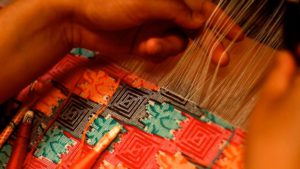
At the age of 13, Kondola became the tenth wife to an older man and a servant in her in-laws’ house. Shortly after, she was tricked, sold and forced into prostitution in Sonagachi, Kolkata. She was forced to work in order to send money back to her family, who lived in Murshidabad, a high-risk district of West Bengal for human trafficking. Her future looked incredibly bleak. That was until she started a conversation with Annie and Kerry Hilton on the street. Along with twenty other brave women, she took the step to leave the sex trade business that she was unjustly forced into and began a sewing job with Freeset.
How Did This Organization Begin?
In 1999, Kerry and Annie Hilton left New Zealand and moved to Kolkata, signing for an apartment in the middle of the day. To their surprise, by nightfall, they discovered they had moved into one of Asia’s largest red-light areas, Sonagachi, and their neighbors were women who were forced into prostitution. They began building relationships with the women around them, including Mina, a woman who shared a similar past to many others, was advocating for new employment opportunities to help. Head of In-Country Communications, Sophie Bond, told The Borgen Project, despite the fact that “the Hiltons had no experience in manufacturing or business”, they were determined to be compassionate and trustworthy employers who could offer training and a secure job to these women, “to bring real change and freedom”.
Human Trafficking in India
Human trafficking in India is still a prevalent issue that the government must tackle. Two-thirds of the population live in poverty, with 68.8 percent living on less than two dollars per day. A small percentage of the population has benefited from the recent economic boom, in which 133 million Indians rose out of poverty between 1994 and 2012, yet there has been a steady increase in trafficking and violence, with almost 20,000 women and children trafficked in 2016. Victims usually belong to poor families in rural areas, with 70 percent of trafficking victims being members of the Dalit class of the caste system, among the most disadvantaged socio-economic groups in India. Members are prone to vulnerabilities and the pressures of survival make them easy targets to trick with false promises of repaid debts and money for their families. Women are the most vulnerable as social pressures have confined them to the domestic sphere, resulting in having a lack of education and literacy. They are also prevented from any justice or equality, further subjecting them to human rights abuses.
Freeset Today
Today, Freeset makes about 50,000 t-shirts and 240,000 bags per year. All staff members earn wages, with entry-level staff earning slightly more than the average garment maker in West Bengal. The designs are made by the women themselves, as well as by those who have volunteered at the organization. The organization typically sells in bulk orders to larger businesses looking to add their own logos to the merchandise. Bond shared that currently, about 200 women are employed and 30 men. In most cases, each woman supports at least three other family members and share eerily similar, yet simultaneously unique stories of being forced into prostitution by trafficking and poverty.
Freeset Offers Counseling
Tamar, an organization funded by the Freeset Trust, is a means of holistic care in each community. Bond told The Borgen Project, “Tamar is there to help with life skills and supporting women in their new path”. Several of the Tamar staff members are trained in Trauma-informed care, which is a huge part of the lives of the women working at Freeset. “For many of them, traumatic experiences–in the sex trade, as victims of trafficking, in domestic violence–have left deep mental and emotional (not to mention physical) scars. Counselling can help a woman to understand her own behaviors and reactions, as a result of the trauma she has experienced, and give her the tools to integrate into the workplace, and ‘normal’ society”. Additionally, as of 2016, Freeset has been awarded Fair Trade Guaranteed status by the World Fair Trade Organization (WTFO).
What is the World Trade Organization?
Home of Fair Trade Enterprises, this organization recognizes those who are empowering their staff to alleviate poverty. The goal of the WTFO is to transform communities by empowering women, practicing sustainable methods, and applying a community concept to trade those who are typically exploited by larger corporations.
What is Fair Trade?
Fair Trade has become an increasingly integral part of poverty alleviation, as it now impacts about one million livelihoods, with 74 percent of those being women. In fact, 54 percent of senior roles in fair trade organizations are held by women. Fair Trade policies aim to help empower people to combat poverty, strengthen, and take control of their own lives.
What Is The Government Doing To Help?
In India today, women constitute about 14 percent of the total entrepreneurship. However, the lack of equal access to education, employment, labor, and sexual violence hinders further advancements. The government has struggled to combat the issue of human trafficking, as it has been so widespread. Currently, it is looking toward crime prevention and harsher penalties for child prostitution and forced marriage, as well as improvements to protect victims. However, India’s vast landscape and corruption of officials still pose as obstacles that the government must overcome to further the progress throughout the country.
Check this out to see how you can get involved with Freeset: https://freesetglobal.com/volunteer/
– Adya Khosla
Photo: Flickr

The Northern Triangle Enhanced Engagement Act
On July 15, 2019, the United States House of Representatives unanimously passed the United States-Northern Triangle Enhanced Engagement Act. The bill, announced by New York Representative Eliot L. Engel and Texas Representative Michael McCaul, seeks to provide greater safety and security for the Northern Triangle countries. The highest volume of immigrants from South America come from Honduras, El Salvador and Guatemala. It is the hope of the United States Congress that increasing aid and promoting a stronger economy and sense of security in these nations will address the root causes of the current migration crisis. This bipartisan legislation outlines several ways the United States may assist the Northern Triangle nations.
Details About The Bill
Firstly, the bill details a five-year program which focuses on economic development, the strengthening of democratic institutions and anti-corruption efforts. Because the insecurity of these countries’ economies is driving so many to seek refuge in foreign nations, enhancing market-based internal solutions for Honduras, El Salvador and Guatemala is a priority of this plan. Furthermore, it will implement institutions and programs that will allow these places to remain resilient in the wake of frequent natural disasters.
In order to support the integrity of the democratic institutions of the Northern Triangle, this bill intends to provide support to ensure free, fair elections and the continuation of an independent media. This measure is to prevent the spread of political propaganda and to make the democratic process accessible to all.
This bill includes many measures to support and fund anti-corruption efforts, which is so important when so many migrants from these countries are leaving to escape the prevalent gang violence. It provides support for such efforts as faith-based organizations for at-risk youth. Many young people have no choice but to engage in violent gang activities in order to protect themselves or their families.
Funding From The United States
The United States-Northern Triangle Enhanced Engagement Act is allotting $577 million dollars in monetary aid to these three countries for the 2020 fiscal year but includes strong conditions as to how the countries must use the funding.
The bill also includes measures to protect the safety of not only those native to Guatemala, Honduras and El Salvador but also the many American people who have concerns regarding immigration into the United States. The act calls for visa bans and asset freezes for corrupt individuals in an effort to halt some of the corruption in government and drug trafficking which are making these nations unsafe.
This bipartisan legislation will also provide increased support for development efforts in southern Mexico. The hope is that there will be more peaceful relations between Mexico and the Northern Triangle nations to diminish some of the reasons for the mass exodus from these countries.
Lastly, Congress has mandated that the State Department and USAID provide reports regarding the root causes of migration in the Northern Triangle countries after the implementation of the United States’ aid. The bill mentions some of the root causes including drug trafficking, human trafficking, extortion, corruption, gender-based violence, gang activities and the forcible recruitment of children into gang activities. These reports will allow Congress to determine how aid from the United States and the implementation of social services has altered the social and political climate of the Northern Triangle.
A Promising Victory
With so much ever-heightening concern regarding the immigration crisis, the unanimous, bipartisan passing of the United States-Northern Triangle Enhanced Engagement Act, which the Borgen Project supports, is a victory for the current state of poverty amongst immigrants. If this bill officially becomes law, it is the hope of Congress that the United States’ assistance and aid to the Northern Triangle countries will target the many causes of immigration and allow people to remain in their homes with a sense of security.
– Gina Beviglia
Photo: Flickr
Building a Better Foundation: Improving Education in Malaysia
Dr. Maszlee bin Malik, Malaysia’s Minister of Education, has implemented budget increases and new programs to increase the quality of education in Malaysia. Approximately 60.2 billion Malaysian ringgit (or $14.63 billion) has been set aside for 2019 — once again accounting for the largest share of the total federal budget at 19.1 percent.
Around 2.9 billion Malaysian ringgit will be used towards helping impoverished areas, including purchasing new books and food. Some of the increased budget has also been designated for school improvements and repair. In fact, 100 million Malaysian ringgit will go toward rebuilding schools in need of a facelift.
New Education Initiatives in Malaysia
The Ministry of Education in Malaysia has also been striving to make education more inclusive for all children, particularly for the B40 group or the “Bottom 40” — which represents the lowest earners in the country. According to Maszlee, 60 percent of residential school spots have been reserved for B40 students. These students have also been given priority enrollment into secondary and tertiary institutions.
The Ministry has also been targeting special-needs enrollment by implementing a “Zero Reject Policy” in schools throughout the country. More than 5,400 special needs students are now enrolled in Malaysian schools as of 2019. The government is also working toward making 11 years of education compulsory by revising the Education Act of 1996. Making secondary education mandatory will help to improve the quality of education in Malaysia by enforcing higher levels of classes throughout the country.
STEM education has also taken a forefront throughout 2019 in the Ministry’s new STEM4ALL campaign. The initiative is working towards making STEM education a priority for both boys and girls throughout primary and secondary education. STEM4ALL is working toward bringing technology to rural schools as well, since many of these schools are only accessible by boats or dirt paths. The program is also partnered with Microsoft Malaysia to bring more technology into classrooms to better prepare students for future careers.
Student-Centered Education
The Ministry decided to eliminate midyear and final exams for years one through three in schools to adopt a more student-oriented method of learning. This has impacted more than 1.3 million students because teachers can focus less on test-oriented materials and adopt more personal approaches for teaching. This swap also allows parents to see more growth from their children as opposed to only seeing test results at the end of the year.
Dr. Maszlee bin Malik has made multiple strides to enhance the quality of Malaysian education. His many initiatives to infuse technology into classrooms and increase funding to repair school buildings have significantly improved Malaysian school systems in recent years.
– Kristen Bastin
Photo: Flickr
Why Are More People Crossing the Border?
In early 2019, Congress approved a humanitarian aid plan for migrants at the U.S.-Mexico border. Nevertheless, the political crisis of migrant treatment and their arrival to the U.S. continues. In February 2019, President Donald Trump declared a national emergency to obtain funding for his planned border wall. He has repeatedly called the situation at the U.S. border an invasion. The question remains: why are more people crossing the border?
People should note, however, that the number of border apprehensions dropped by 28 percent in the course of a month. The number decreased from the apprehension of an estimated 120,000 plus people in May 2019 to an estimated 80,000 plus people in June 2019.
In the past, most of the undocumented immigrants found in the U.S. southern border were single men from Mexico. Recently, most immigrants trying to cross the U.S.-Mexico border are families coming from countries in Central America’s Northern Triangle, namely Guatemala, El Salvador and Honduras. These countries have severe instabilities. The number of people from these three nations applying for asylum around the world has increased seven-fold since 2010.
High Murder Rates in the Northern Triangle
High murder rates are a reason why more people have been leaving the Northern Triangle. Murder rates in the area have been considerably higher than in other areas, like the U.S. or Europe. These numbers peak at approximately 108.6 murders per 100,000 inhabitants in El Salvador and 63.8 in Honduras. Residents of Honduras also face extortion as criminals may kill them if they do not pay a war tax.
Many families try to seek asylum in Mexico to escape these murders. Nevertheless, the number of migrants at the Mexican border tell a similar story to that of the U.S. border. The number of deportations from Mexico back to the Northern Triangle has considerably increased between 2014 and 2015.
Poverty and Migration
Another reason for the rise in migrants at the southern border in recent years has been economic imperatives. Most recent migrants hail from impoverished regions such as the western highlands of Guatemala, in search of a life better suited to raising a family.
Everyday life in the area beckons land rights conflicts, environmental instabilities and depressed prices for their crop, which undermines the ability of citizens to make a living for their family. Nearly 70 percent of Honduras’ population lives in poverty. In Guatemala, nearly 60 percent live in poverty.
Gangs and Drug Cartels
In the Northern Triangle, drug cartels and gangs are a part of everyday life and threaten national and personal security. Violent groups often impose informal curfews, make absurd tax demands and recruit youth against their will. After the fight between in Mexican government and former drug boss Joaquin “El Chapo” Guzman, many other groups moved into the drug trade, leading to the killings of many innocent people in the country. In 2018, the number of people who made claims of credible fear and asked for asylum at the U.S. border skyrocketed to 92,000, compared to 55,000 claims in 2017.
Thousands of immigrants are facing the impossible choice of living in constant fear or seeking asylum, risking the possibility of detainment for indefinite periods or deportation back to their home nations where they risk a violent death.
No More Deaths
Illegal border crossing should not be a death sentence. No More Deaths, or No Más Muertes, is a humanitarian organization based in southern Arizona that is dedicated to stepping up efforts to stop migrant deaths in the desert. The organization works in the U.S.-Mexico borderlands through the civil initiative.
It is crucial for every American citizen to realize that migrants are not entering the United States because they want to, but because they have to. Entering the detention centers at the southern border comes after a perilous journey. Migrants ride trains where gang members demand tolls of upwards of $100 per station. Gang members kidnap more than 20,000 migrants in these situations.
Action is imperative to help people crossing the border as countless lives depend on it. Nevertheless, it is possible for individuals to help. Individuals can volunteer with organizations such as No More Deaths to provide food, advocacy and mapping efforts. They can also use their voice and email Congress through The Borgen Project’s website. Lastly, it is important for all citizens to educate themselves about migrants, their treatment in detention centers and why more people are crossing the border, even when circumstances seem dire.
– Monique Santoso
Photo: Flickr
How Freeset is Setting Women Free in India
At the age of 13, Kondola became the tenth wife to an older man and a servant in her in-laws’ house. Shortly after, she was tricked, sold and forced into prostitution in Sonagachi, Kolkata. She was forced to work in order to send money back to her family, who lived in Murshidabad, a high-risk district of West Bengal for human trafficking. Her future looked incredibly bleak. That was until she started a conversation with Annie and Kerry Hilton on the street. Along with twenty other brave women, she took the step to leave the sex trade business that she was unjustly forced into and began a sewing job with Freeset.
How Did This Organization Begin?
In 1999, Kerry and Annie Hilton left New Zealand and moved to Kolkata, signing for an apartment in the middle of the day. To their surprise, by nightfall, they discovered they had moved into one of Asia’s largest red-light areas, Sonagachi, and their neighbors were women who were forced into prostitution. They began building relationships with the women around them, including Mina, a woman who shared a similar past to many others, was advocating for new employment opportunities to help. Head of In-Country Communications, Sophie Bond, told The Borgen Project, despite the fact that “the Hiltons had no experience in manufacturing or business”, they were determined to be compassionate and trustworthy employers who could offer training and a secure job to these women, “to bring real change and freedom”.
Human Trafficking in India
Human trafficking in India is still a prevalent issue that the government must tackle. Two-thirds of the population live in poverty, with 68.8 percent living on less than two dollars per day. A small percentage of the population has benefited from the recent economic boom, in which 133 million Indians rose out of poverty between 1994 and 2012, yet there has been a steady increase in trafficking and violence, with almost 20,000 women and children trafficked in 2016. Victims usually belong to poor families in rural areas, with 70 percent of trafficking victims being members of the Dalit class of the caste system, among the most disadvantaged socio-economic groups in India. Members are prone to vulnerabilities and the pressures of survival make them easy targets to trick with false promises of repaid debts and money for their families. Women are the most vulnerable as social pressures have confined them to the domestic sphere, resulting in having a lack of education and literacy. They are also prevented from any justice or equality, further subjecting them to human rights abuses.
Freeset Today
Today, Freeset makes about 50,000 t-shirts and 240,000 bags per year. All staff members earn wages, with entry-level staff earning slightly more than the average garment maker in West Bengal. The designs are made by the women themselves, as well as by those who have volunteered at the organization. The organization typically sells in bulk orders to larger businesses looking to add their own logos to the merchandise. Bond shared that currently, about 200 women are employed and 30 men. In most cases, each woman supports at least three other family members and share eerily similar, yet simultaneously unique stories of being forced into prostitution by trafficking and poverty.
Freeset Offers Counseling
Tamar, an organization funded by the Freeset Trust, is a means of holistic care in each community. Bond told The Borgen Project, “Tamar is there to help with life skills and supporting women in their new path”. Several of the Tamar staff members are trained in Trauma-informed care, which is a huge part of the lives of the women working at Freeset. “For many of them, traumatic experiences–in the sex trade, as victims of trafficking, in domestic violence–have left deep mental and emotional (not to mention physical) scars. Counselling can help a woman to understand her own behaviors and reactions, as a result of the trauma she has experienced, and give her the tools to integrate into the workplace, and ‘normal’ society”. Additionally, as of 2016, Freeset has been awarded Fair Trade Guaranteed status by the World Fair Trade Organization (WTFO).
What is the World Trade Organization?
Home of Fair Trade Enterprises, this organization recognizes those who are empowering their staff to alleviate poverty. The goal of the WTFO is to transform communities by empowering women, practicing sustainable methods, and applying a community concept to trade those who are typically exploited by larger corporations.
What is Fair Trade?
Fair Trade has become an increasingly integral part of poverty alleviation, as it now impacts about one million livelihoods, with 74 percent of those being women. In fact, 54 percent of senior roles in fair trade organizations are held by women. Fair Trade policies aim to help empower people to combat poverty, strengthen, and take control of their own lives.
What Is The Government Doing To Help?
In India today, women constitute about 14 percent of the total entrepreneurship. However, the lack of equal access to education, employment, labor, and sexual violence hinders further advancements. The government has struggled to combat the issue of human trafficking, as it has been so widespread. Currently, it is looking toward crime prevention and harsher penalties for child prostitution and forced marriage, as well as improvements to protect victims. However, India’s vast landscape and corruption of officials still pose as obstacles that the government must overcome to further the progress throughout the country.
Check this out to see how you can get involved with Freeset: https://freesetglobal.com/volunteer/
– Adya Khosla
Photo: Flickr
Three Innovations Helping Nepal Escape Poverty
It is common for countries around the world to experience rapid growth instead of modest poverty reduction, as income is increasingly concentrated in the hands of the wealthy. Nepal, however, leans toward the opposite. The country has reduced the poverty rate by half in just seven years and witnessed an equally significant decline in income inequality. Yet, Nepal remains one of the poorest and slowest-growing economies in Asia. Nonetheless, a few groundbreaking innovations are helping Nepal escape poverty.
Even without poverty as a factor, Nepal faces challenging obstacles to overcome. Since Nepal is a landlocked country it creates a natural barrier to its development. Nepal’s history of extractive political regimes left Nepal with extremely low levels of physical and human capital and illiteracy rates of 90 percent in 1951. A propensity for natural disasters also contributes to continuous setbacks.
Getting to the root of poverty requires solving many of these additional issues along the way. Poverty isn’t just inadequate access to income. It manifests itself in health services and education, often allowing sexism and racism to flourish. In spite of that, numerous solutions are being drafted every day with the world’s poor in mind. Here are three innovations helping Nepal escape poverty:
Suaahara Nutrition Project
Suaahara translates to “good nutrition,” and is a comprehensive nutrition program that teaches skills for nutrient-rich backyard vegetable farming, raising poultry, improving sanitation and hygiene, and controlling pests through demonstration farms and new mothers’ discussion groups.
Though about two-thirds of Nepalese workers worked in agriculture in recent years, the country’s agricultural sector has suffered dramatic losses since a devastating earthquake in 2015. Against a backdrop of food price volatility, the percent of households relying on food assistance increased from less than one-tenth of a percent before the earthquake to 35 percent after. Suaahara will ensure the health of future generations and guarantee budgets prioritize not just the amount of food people eat, but also the nutritional quality.
The Rani Jamara Kulariya Irrigation Project
Before 2012, Nepal’s rural population was primarily made up of smallholder farmers whose level of income was low by international standards. Farmers often experienced rainfalls and droughts that threatened their crop yields. Before project implementation, the Rani Jamara Kulariya Irrigation Scheme regularly suffered from either a shortage of water or severe flood damage. Furthermore, the government was unable to manage the water equitability which hindered the water distribution. The Rani Jamara Kulariya Irrigation Project put an emphasis on providing more efficient, reliable and flexible water services to farmers and households to mitigate agricultural losses due to water hazards and improve economic gains.
Modernizing the irrigation scheme allowed it to be resilient to water-induced hazards, proven after torrential rain in August of 2017. The project’s inclusive approach increased the number of women working in the Water User Association from 19 percent to 33 percent between 2012 and 2017. Moreover, about 40 percent of the command area saw an increase in irrigated crop yields; 117 kilometers of village roads were upgraded to gravel roads, bridges and culverts, and nearly 16,000 water users have benefitted from this project so far.
Promotion of Early Grade Reading
Nepal has made remarkable progress in expanding learning opportunities for children and adults. Since 1990, primary school enrollment rates have increased from 64 to 96 percent. However, the quality of education remains low and the overall literacy rate is around 65 percent.
A USAID-supported early grade reading assessment in 2014 showed that 19 percent of third-graders could not read a single word of Nepali. Together with the Ministry of Education, USAID plans to help one million young children acquire strong reading skills in grades one to three across 16 districts of Nepal.
Beyond just improving reading and literacy skills, these focused education efforts are strengthening curriculum and training teachers, school committee members, parents and technical support staff across the country. Just a 10 percent increase in basic literacy skills can boost a country’s economic growth by 0.3 percent and create a foundation for future learning.
These kinds of innovations are crucial in helping bend the curve toward increased child survival, lower malnutrition, greater literacy skills, and ultimately, the end of extreme poverty. Solutions like these will help Nepal escape poverty, drive broader development progress and elevate transformative efforts toward change.
– GiGi Hogan
Photo: Flickr
Best Ways to Reduce Global Poverty According to GPIG
The World Bank and the Asian Development Bank’s partnership established the Global Poverty Reduction and Inclusive Growth Portal (GPIG) on May 6, 2016. The portal specializes in “policy research, data analysis, country profiles and news on poverty reduction and inclusive growth.” It does this through online and offline events that aim for the increase of international cooperation in collaboration with China’s International Poverty Reduction Center (PRC). This article demonstrates the best ways to reduce global poverty according to GPIG.
The GPIG Portal
GPIG’s area of studies falls under the aim of successfully achieving the Sustainable Development Goals (SDGs). Specifically, SDG1 aims for the elimination of poverty, SDG2 aims for zero hunger, SDG10 aims for reduced inequalities and SDG17 aims for partnerships in achieving these goals. Along with the SDGs, GPIG’s ultimate goal is to support China’s efforts to end poverty by 2020. It would do so through its exhaustive research and analysis on ways to reduce poverty.
The Portal emphasizes the importance of international exchange and cooperation to reduce poverty as well as the need for aid towards China’s efforts to achieve the aimed reduction. GPIG supports the idea of using the Outline for Development-Oriented Poverty Reduction for China’s Rural Areas (2011-2020) as a guideline for international cooperation.
The document focuses on supporting the reduction of domestic poverty by introducing international resources, spreading China’s poverty reduction methods and promoting relations between China and other countries to strengthen the “experience-sharing” in poverty reduction. Within this document, GPIG recommends focusing on applying newer innovations on such mechanisms to expand the platform and better enhance economic and social development.
How should we reduce global poverty?
The best ways to reduce global poverty, according to GPIG, involve the inclusion of the whole society. GPIG believes poverty reduction methods are ineffective if the entire society does not participate. Inclusion of the whole society brings several advantages such as mobilizing strengths to reduce poverty. It also diversifies poverty reduction and its development strategies by combining the efforts of different parties such as domestic offices, government departments, private businesses and NGOs. More importantly, it ensures the sustainability of the poverty reduction achieved since it seems to be the fastest and most consistent method.
GPIG suggests developing projects that create an encouraging environment that keeps the focus of the government’s social organization on poverty reduction. To achieve the most effective project on reduction, GPIG suggests research and interviews on the PRC and on international experiences in social organization’s service contracting, PRC’s roles and motivations in poverty reduction and previous ways the social organization has achieved poverty reduction. Finally, GPIG suggests using such analysis to develop effective and efficient recommendations that focus on expanding the social organization to involve a national rural poverty reduction program.
More about GPIG
GPIG research methods and recommendations are co-managed by the International Poverty Reduction Center in China and the China Internet Information Center. To ensure its best possible functioning and the provision of the most effective recommendations for poverty reduction, UNDP also contributed to the Portal’s establishment along with WB and ADB. The three parties allowed the creation of a clear mission: to create an international platform that will provide the best ways to reduce global poverty by focusing on areas such as research, exchange, training and cooperation.
– Njoud Mamoun Mazhar Mashouka
Photo: Flickr
The U.S. Response to the Rohingya Crisis
A Coordinated Response in Bangladesh
Many Rohingya (745,000) have fled to the neighboring country of Bangladesh since the violence began. The Bangladesh government has cooperated with international bodies to ensure the reception and integration of these many refugees, but several challenges remain. For one, about 84 percent of the refugee population resides in a camp in the city of Cox’s Bazar; its location on the Bay of Bengal renders the area subject to monsoons and cyclones, which, combined with congested living conditions, increase the likelihood of death and disease. Additionally, many displaced women face sexual violence in both Myanmar and the refugee sites, and 12 percent of refugees experience acute malnutrition, creating an urgent need for adequate medical services.
In response to the Rohingya crisis, the United States has provided $450 million in aid to host communities in Bangladesh. The United States recently earmarked $105 million for the U.N.’s 2019 Joint Response Plan (JRP). This aid is important, as the JRP works to:
Further Steps Needed
In contributing to the U.N.’s JRP, the United States mitigates the negative effects of the Rohingya crisis. However, the political conditions in Myanmar that caused so many to flee remain, largely because the government continues to carry out atrocities against the Rohingya people. The leader of the country’s military, General Min Aung Hlaing, has directly authorized the ethnic cleansing campaigns. According to Refugees International, this has essentially allowed Myanmar soldiers to impose a reign of terror on Rohingya villages. The group has documented “consistent accounts of Myanmar soldiers surrounding villages, burning homes to the ground, stabbing, shooting, and raping the inhabitants, leaving the survivors to flee for their lives.”
Myanmar continues to block humanitarian relief organizations from entering the country, which is a roadblock preventing a thorough response to the Rohingya crisis. Moreover, the government continues to deny the existence of military campaigns, which allows perpetrators to avoid punishment.
The U.S. has worked to place pressure on the Myanmar government so as to create accountability checks and dissuade other leaders from taking similar adverse actions against the Rohingya. For example, on July 16, 2019, the Trump administration placed sanctions on a number of military officials, including General Min Aung Hlaing. Countries and organizations can do more to halt the violence, though. Both the special rapporteur and Refugees International have called upon the U.S. and other members of the U.N. Security Council to refer the case to the International Criminal Court (ICC) or to set up an independent tribunal, which could try those responsible for the Rohingya crisis. While the ICC prosecutor has already taken preliminary investigative steps, a U.N. Security Council referral or tribunal establishment would put even greater political pressure on Myanmar.
Moving Forward
While the Rohingya crisis was years in the making, its impact has been especially acute in the past two years. The U.S.’ response to the Rohingya crisis has included successful collaboration with the U.N., and raised hopes of bringing the perpetrators to justice. In so doing, it will save countless lives and move the Rohingya community in Myanmar one step closer to protection.
– James Delegal
Photo: Wikimedia Commons
Eight Facts about Education in Tunisia
Naturalin: A Novel Solution for Diabetes and Obesity
Currently, almost 80 percent of diabetes deaths occur in low or middle-income countries. Halo Life Sciences, a company based in Austin, Texas, plans to change that. It has developed a product that it calls Naturalin, a naturally occurring phytonutrient that can go into snack foods, dairy, protein products, beverages and more. The addition of Naturalin makes these products far more nutritious. Naturalin has a massive potential to enact positive change in the food industry in a number of nations around the world as a solution for diabetes and obesity.
Naturalin Basics
Entrepreneur Michael Reyes originally developed Naturalin as a response to the growing number of obese, diabetic and pre-diabetic individuals in developing countries. Island nations such as the Marshall Islands, Tuvalu and Nauru have the highest rates of diabetes in the world. Individuals who are diabetic often contract the disease because their bodies are insulin resistant. Many different things can cause insulin resistance, but it is closely associated with excess weight and body fat. This, in turn, places an undue burden on both these individuals and the health care providers in these countries, as individuals with diabetes often require specific medications, such as short and long-acting insulin, amylinomimetic drugs, alpha-glucosidase inhibitors and DPP-4. Naturalin can help reduce this burden by fortifying common foods such as rice and flour. In addition to its nutritional benefits, Naturalin is a sustainable product and is a renewable resource, ensuring that it will be available for usage by future generations.
Plans for Expansion
Halo Life Sciences is currently in the process of getting Naturalin into markets around the world, including in Brazil, India, China and Israel. The company has partnered with a number of individuals and corporations in these countries. It is also planning to start developing its own CPG’s (consumer packaged goods) that will already have Naturalin in them. These recent developments will likely result in Halo Life Sciences receiving investments from those who see Naturalin’s potential as a solution for diabetes and obesity. Such investments will make the process of expanding into global markets much easier.
Potential Roadblocks
While Naturalin has the potential to enact real global change, it does face some potential roadblocks in the implementation process. For one, a strong marketing campaign must back the product, so that people know about its benefits. Halo Life Sciences has already done some work on this end, as it has invested heavily in scientific research; researches at the University of Texas-Austin validated Naturalin as safe, functional and effective when they tested it. However, it must continue to work on getting its message out to people around the globe. The company must also navigate the oftentimes tricky process of delivering its product into rural communities. If Naturalin can deal with these two potential roadblocks, it will be able to thrive as a product in countless nations around the world.
Changing the World
Naturalin has the capacity to change the world for the better by being a solution for diabetes and obesity. It provides individuals with a quick and easy way to consume more nutritious food, and upon implementation, will almost certainly reduce the total number of individuals suffering from diabetes and obesity worldwide. It is, without a doubt, a very promising solution to one of the most pressing issues facing the modern world.
– Kiran Matthias
Photo: Pixabay
5 Terms to Use as an Alternative to “Third World”
The term “third world” has a deep history, dating back to the Cold War when the world was divided between Western capitalism and Soviet communism. In 1952, French demographer Alfred Sauvy wrote “Three World’s, One Planet,” an article that divided countries into the three different groups we know today.
Three Worlds
Nations such as the United States and Western Europe were designated as the first world. The Soviet Union and its allies became the second world. Finally, all the other nations became known as third world countries. Over the years, the term “third world” began to gather a negative connotation of being less developed and economically sound than the first and second world.
Furthermore, what counts as the third world is not so easy to define. B.R. Tomlinson expressed in his article, “What was the Third World?” that the term is a “convenient and rather vague label for an imprecise collection of states.”
Peter Worsely, a proponent of introducing the term into academia, confessed that “the nature of the Third World seemed so self-evident in the 1960s that in a book on The Third World I published in 1964, I saw no need to define it any more precisely than that it was the world made up of the ex-colonial, newly-independent, non-aligned countries.”
This way of defining nations has long since been outdated. The Soviet Union isn’t even a nation anymore. So, if these nations aren’t the third world, what are they? Is there a more appropriate alternative to third world?
5 Phrases to Use as an Alternative to Third World
“Third World” is an old and demeaning term that does not truly describe nations in the modern era. In truth, trying to categorize nations will never be entirely accurate. Every nation has its own culture and way of life. However, if we must refer to them using categories, there are plenty of alternatives to use that should become a part of our vernacular. Using an appropriate alternative to “third world” can help change the way that the world views its nations.
– Maura Byrne
Photo: Flickr