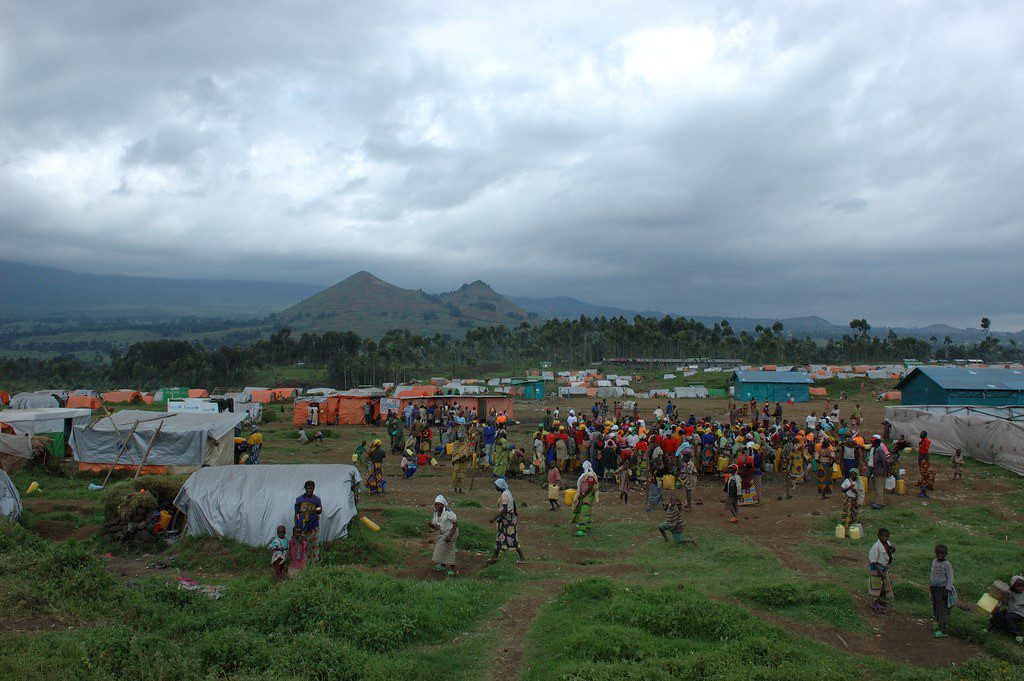
As of early 2019, estimates determine that Rwanda is host to approximately 150,000 refugees. To support this number, Rwanda maintains six refugee camps and four transit/reception centers, in addition to supporting refugee integration into urban areas. Rwanda is remarkable for its inclusive approach to refugees, most of whom are from Burundi and the Democratic Republic of Congo. The national government, UNHCR, the World Food Programme (WFP), the Government of Japan and other international, national and local organizations are all working to improve opportunities and livelihoods for refugees in Rwanda.
Approximately 79 percent of refugees in Rwanda live in the refugee camps, with the remainder — about 13,000 — living in urban centers. Rwanda gives refugees the right to do business and access health services, insurance, banking and education to promote integration. As of 2017, Rwanda had integrated more than 19,000 refugee students from Burundi into its national school system.
According to UNHCR, enabling the self-reliance of refugees is an essential part of its mission. UNHCR creates and supports initiatives that allow refugees to contribute to the economic development of their host country.
Ali Abdi has lived in Rwanda for 20 years after fleeing Somalia. After applying for a business card, he now runs a small convenience store and lives with his Rwandan wife. Ali described Rwanda as “a peaceful country” where “people do not discriminate.” He is thankful for his ability to be independent.
Supporting Refugee Entrepreneurs
In Kigali, the capital of Rwanda, many refugees like Ali are finding success in entrepreneurship. UNHCR labels Kigali as a “City of Light” for its accepting and supportive attitude toward refugees. The Government of Rwanda is actively working to promote the integration of refugees into the city with targeted assistance.
For refugees aspiring to own their own business, Inkomoko is a local business consulting firm that trains and supports refugees with UNHCR’s support. Beginning in 2016, Inkomoko’s refugee program has worked with 3,300 refugees, resulting in the creation of 2,600 new jobs across the country, a significant boost to the economy. The director of Inkomoko’s refugee program, Lydia Irambona, stated, “Our main goal is to help them increase their revenue, get more customers and understand how to do business here.”
Annick Iriwacu, a Burundian refugee, went to Inkomoko after a referral from her cousin. She has since opened a successful business selling liquid petroleum gas. The business has grown enough for her to now have five employees. She stated, “They gave me the strength and hope to continue, because I was giving up.”
Financial Support for Refugee Camps
While refugees in Rwanda’s refugee camps have fewer opportunities for economic independence and contribution, supporting and protecting them is still crucial. In June 2019, the Government of Japan donated $270,000 to UNHCR Rwanda to cover the needs of 58,552 Burundian refugees in Mahama, the largest refugee camp in the country. This is one of many donations, as the Government of Japan has supported Rwanda for six years and provided a total of approximately $7 million to the UNHCR to support Rwandan refugees.
UNHCR intends to use the 2019 money to maintain and improve refugees’ access to legal assistance and protection against violence, as well as health care services. Refugee camps in Rwanda provide primary health care and send refugees to local health facilities if they require secondary or tertiary care, which can be costly.
Supporting Refugee Farmers
Many refugees living in Rwandan camps want to become more economically independent, however. While the refugee camps provide displaced people with access to basic education and health facilities, many refugees have found that working allows them to take further advantage of what Rwanda can offer them and their families.
The IKEA Foundation, UNHCR, the World Food Programme, the Government of Rwanda and the Food and Agriculture Organization have all provided funding. These organizations are working together to improve the livelihoods of both refugees and local Rwandan farmers.
In the Misizi marshland, 1,427 Rwandans and Congolese refugee farmers are working together for agricultural success. The project is also generating social cohesion, as the Rwandan and refugee farmers are learning to work together and recognize the benefits of cooperation. As of early 2019, these farmers had produced more than 101 tonnes of maize, the profits of which enabled them to feed their families.
Rwanda’s Example
Rwanda intends to continue its inclusive approach to refugees them become successful and independent whether they live in camps or cities. Refugees have found success in Rwanda because its government and international partners are working hard on their behalf.
While there is still more work to do to ensure that refugees in camps have access to work opportunities and that refugees in cities receive support in achieving economic independence, the nation serves as an example of how to successfully help refugees begin new lives and contribute to a country’s economy.
– Sara Olk
Photo: Flickr

5 Organizations Helping to Resettle North Koreans
The Democratic People’s Republic of Korea has committed numerous human rights violations throughout modern history. Many North Koreans who have managed to escape the country reveal the horrific conditions in which they lived. These conditions include generational incarceration in concentration camps, the public execution of dissidents and mass famine.
As such, many North Koreans have attempted the escape their country through secret escape routes and brokers. To escape, North Koreans must traverse forests, cross the Yalu River and navigate heavily patrolled areas. Unfortunately, many don’t make it. Those who survive must then adapt to and resettle in modern society, a complicated and tedious process.
Resettlement is difficult because North Korea lacks technological, social and economic progress. Additionally, many North Korean refugees face discrimination due to stigma. North Korea is so technologically behind, many North Koreans have never touched a computer. This makes it near impossible to find a job or receive an education when they resettle in new countries, like South Korea.
Luckily, many institutions help North Korean refugees resettle in these new cultures and societies. To do so, they provide North Korean refugees with essential skills to find a job, proper housing, education and more. Here are five organizations helping to resettle North Koreans.
5 Organizations Helping to Resettle North Koreans
Overall, it is essential to remember that the fight for human rights is not only dependent on politics. The conflict surrounding North Korea is complicated and cannot be solved in one summit. However, ordinary people can help North Koreans by supporting these organizations and raising awareness of the human rights violations happening in North Korea. These 5 organizations helping to resettle North Koreans provide hope and assistance that make it possible for North Koreans to achieve real freedom.
– Adriana Ruiz
Photo: Flickr
Plastic in Exchange for Education
Many schools in poverty-ridden countries have begun to accept plastic in exchange for education by using the waste as payment for school tuitions. Nigeria is ranked 11th in the world for plastic pollution and it is estimated that nearly 450,000 megatons of plastic waste are discarded every year in the city of Lagos’ water sources alone. Because of this, a partnership with Africa Clean Up Initiative (ACI), RecyclesPay and Wecyclers has allowed parents to start paying their children’s tuition with the plastic waste they collect. How much tuition is covered depends on the amount of waste brought in each week; the more that is brought in, the more tuition is paid for. This helps parents relieve financial burdens and to be able to use what little money they have on school materials while the plastic waste they collect and turn in pays for their child’s tuition.
In 2016, Parmita Sarma and Mazin Mukhtar opened a school in India where parents could pay for school tuition by bringing in 25 pieces of plastic waste to school each week. Their plan was to help children receive an education while also cleaning up their town from plastic waste. At the time the school opened, most children were being sent to work rather than attending school because parents either could not afford the education or they could not afford to care for the entire family. This initiative has since been extremely well-liked by the community, and its popularity has grown. The curriculum focuses on generic education practices but also includes curriculum on environmental issues and the importance of keeping the community clean. Because of the positive impact and growth of using plastic in exchange for education, the couple plans to open 100 similar schools within the next five years to increase education in India.
Reducing plastic pollution while improving children’s education is one step closer to resolving plastic pollution and ending world poverty with increased educational opportunities.
– Chelsea Wolfe
Photo: Unsplash
Refugees in Rwanda: An Inclusive Approach
As of early 2019, estimates determine that Rwanda is host to approximately 150,000 refugees. To support this number, Rwanda maintains six refugee camps and four transit/reception centers, in addition to supporting refugee integration into urban areas. Rwanda is remarkable for its inclusive approach to refugees, most of whom are from Burundi and the Democratic Republic of Congo. The national government, UNHCR, the World Food Programme (WFP), the Government of Japan and other international, national and local organizations are all working to improve opportunities and livelihoods for refugees in Rwanda.
Approximately 79 percent of refugees in Rwanda live in the refugee camps, with the remainder — about 13,000 — living in urban centers. Rwanda gives refugees the right to do business and access health services, insurance, banking and education to promote integration. As of 2017, Rwanda had integrated more than 19,000 refugee students from Burundi into its national school system.
According to UNHCR, enabling the self-reliance of refugees is an essential part of its mission. UNHCR creates and supports initiatives that allow refugees to contribute to the economic development of their host country.
Ali Abdi has lived in Rwanda for 20 years after fleeing Somalia. After applying for a business card, he now runs a small convenience store and lives with his Rwandan wife. Ali described Rwanda as “a peaceful country” where “people do not discriminate.” He is thankful for his ability to be independent.
Supporting Refugee Entrepreneurs
In Kigali, the capital of Rwanda, many refugees like Ali are finding success in entrepreneurship. UNHCR labels Kigali as a “City of Light” for its accepting and supportive attitude toward refugees. The Government of Rwanda is actively working to promote the integration of refugees into the city with targeted assistance.
For refugees aspiring to own their own business, Inkomoko is a local business consulting firm that trains and supports refugees with UNHCR’s support. Beginning in 2016, Inkomoko’s refugee program has worked with 3,300 refugees, resulting in the creation of 2,600 new jobs across the country, a significant boost to the economy. The director of Inkomoko’s refugee program, Lydia Irambona, stated, “Our main goal is to help them increase their revenue, get more customers and understand how to do business here.”
Annick Iriwacu, a Burundian refugee, went to Inkomoko after a referral from her cousin. She has since opened a successful business selling liquid petroleum gas. The business has grown enough for her to now have five employees. She stated, “They gave me the strength and hope to continue, because I was giving up.”
Financial Support for Refugee Camps
While refugees in Rwanda’s refugee camps have fewer opportunities for economic independence and contribution, supporting and protecting them is still crucial. In June 2019, the Government of Japan donated $270,000 to UNHCR Rwanda to cover the needs of 58,552 Burundian refugees in Mahama, the largest refugee camp in the country. This is one of many donations, as the Government of Japan has supported Rwanda for six years and provided a total of approximately $7 million to the UNHCR to support Rwandan refugees.
UNHCR intends to use the 2019 money to maintain and improve refugees’ access to legal assistance and protection against violence, as well as health care services. Refugee camps in Rwanda provide primary health care and send refugees to local health facilities if they require secondary or tertiary care, which can be costly.
Supporting Refugee Farmers
Many refugees living in Rwandan camps want to become more economically independent, however. While the refugee camps provide displaced people with access to basic education and health facilities, many refugees have found that working allows them to take further advantage of what Rwanda can offer them and their families.
The IKEA Foundation, UNHCR, the World Food Programme, the Government of Rwanda and the Food and Agriculture Organization have all provided funding. These organizations are working together to improve the livelihoods of both refugees and local Rwandan farmers.
In the Misizi marshland, 1,427 Rwandans and Congolese refugee farmers are working together for agricultural success. The project is also generating social cohesion, as the Rwandan and refugee farmers are learning to work together and recognize the benefits of cooperation. As of early 2019, these farmers had produced more than 101 tonnes of maize, the profits of which enabled them to feed their families.
Rwanda’s Example
Rwanda intends to continue its inclusive approach to refugees them become successful and independent whether they live in camps or cities. Refugees have found success in Rwanda because its government and international partners are working hard on their behalf.
While there is still more work to do to ensure that refugees in camps have access to work opportunities and that refugees in cities receive support in achieving economic independence, the nation serves as an example of how to successfully help refugees begin new lives and contribute to a country’s economy.
– Sara Olk
Photo: Flickr
Women’s Empowerment in Agriculture in Egypt
Agriculture in Egypt accounts for about 14.5 percent of GDP and women make up most of the workforce. World Bank data shows that between 2011 and 2014, 43 percent of women were employed in agriculture versus only 24 percent of men. These women often work long hours and in labor-intensive sectors including harvesting and fertilizing land. According to a paper by Korang Ismail Abdel-Gawad, a survey of Upper and Lower Egypt shows that women participation in harvesting was 67 percent in lower-Egypt and 94.3 percent in upper-Egypt.
Despite women’s contribution to the economy through agriculture, they are frequently overlooked in both data and investment. The Principal Bank of Development and Agriculture, a major financial institution responsible for providing agricultural credit in Egypt, neglects to grant many long-term loans to women. Only one in twenty-six long-term borrowers and one-third of short-term borrowers are women. Furthermore, women make up only 5 percent of agricultural landowners.
Women’s empowerment in agriculture is crucial in order to increase growth in agriculture-related GDP. According to the International Monetary Fund, if the female labor force participation rate in Egypt is raised to the male level, coupled with access to employment opportunities, the GDP would increase by approximately 34 percent. This includes gaining access to land, educational or instructional opportunities and gender-based equity programs. Here are a few main projects in Egypt related to women’s empowerment in agriculture:
USAID’s Strengthening Entrepreneurship and Enterprise Development (SEED):
This project was created to strengthen micro, small and medium business owners (MSMEs) to ensure that they have access to the appropriate business development tools. In particular, the project focuses on businesses owned by women and youth with special attention to disadvantaged communities.
Related to this project is the Workforce Improvement and Skills Enhancement (WISE) program that provides employment training and technical-skills training to women and youth.
Food and Agriculture Organization (FAO):
The FAO improves agricultural productivity and food security through sanitary measures and regulations. This organization also supports female empowerment by encouraging of small enterprises and agricultural investment programs.
Women’s Employment Promotion Program:
This program helps to promote workplace safety and increase employment contracts that benefit women through pay equity, benefits and steady hours. In addition, the program provides educational seminars that help increase labor-force participation and prepare youth for employment
These three projects help to promote women in the workforce in order to increase economic returns and foster a safe and productive work environment. A prime focus is women’s empowerment in agriculture since it is such a large source of employment in Egypt. With access to credit, training opportunities and overall support in the agricultural sector, women can continue to have a growing impact on Egypt’s GDP and provide reliable income for their families. Strengthening the agricultural sector by supporting women in the workforce means an overall increase in food exports, and thus a larger contribution to the global economy.
– Tera Hofmann
Photo: Flickr
Efforts to Fight Corruption in Guatemala
The United States has long been a sponsor and provider of aid to Guatemala, along with other non-governmental organizations backed by the U.N. Much of this aid has been to fight corruption—either the investigations of corrupt practices or the establishment of institutions to monitor and prevent corruption, impunity and organized crime.
The Background
As in many Latin American countries, particularly the Northern Triangle region (consisting of Guatemala, El Salvador and Honduras), corruption is ubiquitous from the local to national levels of government. Corrupt government leads to extractive institutions, which in turn leads to poverty, violence and mass emigration; at present, the majority of migrants at the U.S./Mexico border are from Guatemala.
In recognition of this, several political leaders and pundits of both parties have spoken out against proposed cuts to foreign aid, citing the need to stabilize the region by addressing the problem at its source. USAID and State Department programs focused on economic development have been widely successful, resulting in: increased access to nutrition for 230,000 children under the age of five, a 51 percent increase in rural agricultural sales, 20,000 new jobs in the agricultural sector, a 60 percent increase in American agricultural exports to Guatemala and many other improvements besides.
The long history of institutional corruption has not burdened agriculture, which allows for direct economic investment while the country focusses on anti-corruption efforts to dismantle impunity in other sectors—particularly in customs administration. The customs and tax administrations conducted the Linea bribery scandal of 2015, which resulted in the impeachment of President Otto Perez Molina and nearly 600 arrests. Since the Linea scandal, officials in multiple areas have been working with the UNODC (U.N. Office on Drugs and Crime) to combat the corruption that enables the use of Guatemala’s ports as drug trafficking avenues.
The UNODC and IACAC’s Efforts to Fight Corruption
While not as specialized as other anti-corruption programs and NGOs operating within Guatemala, UNODC has been instrumental in Guatemala’s fight against organized crime, with which governmental corruption naturally dovetails. In 2010, the drug trade alone was worth double the country’s GDP. The violence it generated (Guatemala has the 15th-highest murder rate in the world, out of 230 countries) dissuaded tourists and investors, which in turn contributed to the poverty that engenders corruption and organized crime, to begin with. However, with the help of UNODC along with other domestic and international programs, Guatemala has made significant economic progress. Its current GDP is nearly double what it was before the major anti-crime and anti-corruption initiatives began in 2010 and 2011.
International efforts to fight corruption in Guatemala have a long history, which has resulted in significant governmental reforms. The earliest instance of this was the adoption of IACAC, or the Inter-American Convention Against Corruption, which Guatemala ratified in 2001. The country has made substantial institutional reforms to maintain its compliance with IACAC, most notably a commission that allows for the coordination between the executive and judicial bodies, and its independent Association of Journalists. IACAC has also spawned several bilateral agreements with other countries—including the United States—to share evidence and otherwise support anti-corruption legal proceedings.
The reforms prompted by IACAC compliance had few immediate effects—within the first two years after ratification, Guatemala’s Corruption Perception Index (CPI) did not change enough to indicate a conclusive shift. However, the primary effect of IACAC has been to keep institutions updated and to keep corruption in Guatemala in the public eye. With the institutional reforms that IACAC prompted in the early 2000s, there was an existing framework for other anti-corruption initiatives to operate with much greater effectiveness.
The International Commission Against Impunity’s Success
The U.N.-backed International Commission against Impunity (referred to as CICIG by its Spanish initials) is the most successful NGO fighting corruption in Guatemala, which has prosecuted over 100 cases and obtained roughly 300 convictions since its establishment in 2003. Yet despite its impressive record, Guatemala’s current president, Jimmy Morales, attempted to end CICIG’s mandate before its natural expiration in November 2019. Guatemala’s Constitutional Court halted that decision and legal battles are still ongoing. Public support is heavily in favor of CICIG and the Court.
In the meantime, CICIG’s commissioner, Iván Velásquez, has taken the time to respond to the Morales administration’s accusations against CICIG in detail. Velásquez upholds CICIG’s record of convictions and dryly remarks that “[threats and smear campaigns are] foreseeable with respect to an entity whose purpose is to attack structures that co-opt the State to profit and refuse to lose privileges obtained illegally and illegitimately.” The country recently blocked Velásquez from re-entering, along with dozens of other CICIG staff, when Morales announced the premature termination of the commission. The country must continue to restore Guatemalan’s confidence in its elections.
– Robert Sprankle
Photo: Flickr
8 Facts about Education in South Korea
South Korea is known for its high-performing education system and strong academic outcomes. However, these achievements are often linked to the country’s highly competitive academic culture and the significant pressure placed on students. These eight facts examine South Korea’s education system and the realities students face within its rigorous learning environment.
8 Facts about Education in South Korea
This overview highlights the large emphasis that South Korea places on education. While the nation remains an intellectual powerhouse, it should perhaps take the emotional needs of its youth into account and take steps to reduce stress. Through the adoption of AI and more fair grading, South Korea aims to continue to improve its education system and ensure that it progresses on par with the world around it.
– Grayson Cox, Jackson Mayer
Photo: Flickr
The Future of Microfinancing in Africa
The Bright Side of Microfinancing
To proponents of microfinancing practices, the new fiscal theory provides a fresh, grassroots fix to a deeply entrenched problem that requires new solutions. The Grameen Bank, founded by Yunus, still stands by the fiscal theories created by its founder. Microfinancing from Grameen bank is called “Grameencredit” and according to the bank itself, its aim is to help poor families overcome poverty by helping themselves. It is also targeted to help poor women. The premise of microfinancing operates on the idea that with more economic independence, at-risk individuals and communities can become more powerful and self-sufficient against problems such as corruption, poverty, and women’s rights issues. To proponents of microfinance, microfinancing in Africa will allow rural villages and impoverished people to gain economic independence, which will allow them to take advantage of education opportunities and health care services.
What Needs Work
Skepticism centers around a lack of concrete data and a distrust of anecdotal evidence. The U.N. finds that current data on microfinancing shows how it can be hard to measure how micro-finance affects poverty. Proponents of microfinance usually rely on case studies and anecdotal evidence. The same UN report also cited that some question the efficacy of microfinance because small businesses don’t contribute much to the economy’s productive capabilities or structural changes. Offering small loans to poor communities will do little to move the needle in terms of a countries gross domestic produce and it won’t address federal or state-level corruption. While offering microfinancing in Africa will help families on a case by case basis, the overall effects on regional or domestic economies have yet to show conclusive evidence of structural change beneficial to the poor.
Microfinance Today
To combat the shortcomings of microfinance, many institutions that give out micro-finance loans also offer other forms of aid and assistance. The Foundation for International Community Assistance (FINCA) has operated micro-finance operations since the 1980s and continues to do so today. Along with offering traditional banking services to the poor, FINCA also provides other services as well such as mobile banking. According to FINCA financial services are not always available in developing countries, but cellphones are becoming more common. Mobile banking services provide people in rural areas the opportunity to access banking services through FINCA that were previously unavailable. Along with mobile financing options, FINCA also operates banks with “POS [point of sale] terminals equipped with biometric recognition, otherwise known as fingerprint scans. These provide better security for clients accessing their FINCA accounts. Thus, modern technologies improve access to banking institutions while also ensuring secure transactions.
Along with offering baking services that require payment such as loans, FINCA also invests money into local markets in need of attention. FINCA also invests in energy, education and agriculture through FINCA Ventures in Africa. FINCA Ventures operates a specific type of investing called impact investing, where those receiving investment need to meet certain requirements set out by the investing institution. FINCA Ventures invests in startups with clear goals and plans to make a deep social impact and create a customer base using FINCA’s network. Those that FINCA invests in must offer a service that betters a community while also giving them access to FINCA’s banking and investing services. One such company is Amped Innovation, which offers affordable solar energy powered home systems and appliances. By augmenting microfinancing in Africa with other services, FINCA can affect larger systemic issues that traditional microfinancing ignores.
Microfinance Going Forward
FINCA, as well as other microfinance firms such as Grameen Bank, try to combat the shortcomings of microfinance by offering services and investments that aim at fixing systemic problems in impoverished communities such as infrastructure and banking security. Microfinance is still in its infancy and needs to find solutions to shortcomings of the past. With additional services and time to prove its worth, microfinancing in Africa will be an effective tool in the fight against poverty.
– Spencer Julian
Photo: Flickr
Female Empowerment in Zanzibar
The Situation for Women in Zanzibar
Women in Zanzibar are “twice as likely as men” to be uneducated. This has contributed to increasing employment inequalities since an education is becoming more essential to obtaining a job. Approximately 32 percent of female youths in Zanzibar are unemployed in comparison to only 10 percent of male youth. Women who do have jobs often earn less with 73 percent of women being paid at a lower rate than their husbands.
Additionally, only 16 percent of women in Zanzibar have bank accounts, and 91 percent do not own land, making it hard for women to become economically self-sufficient. When women do own land or other assets, these things are often controlled by their husband or male relatives. Female empowerment in Zanzibar involves women gaining financial and economic freedom as well as increasing their social status. The following are a few ways women’s lives in Zanzibar are improving.
Female Entrepreneurship
In response to high youth unemployment, many young women are turning to entrepreneurship as a way to make a living. At least 47 percent of women who are self-employed stated that their reason for doing so was the inability to find other employment. The majority of those who become interested in entrepreneurship are women with 82 percent of working women being self-employed. Self-employment and entrepreneurship offer women the opportunity to become financially independent, which is difficult in the low-paying formal sector.
Entrepreneurship is difficult, however, and many women who are self-employed still struggle economically. According to the Ministry of Labor, there are initiatives that support female entrepreneurs, but these do not reach all women. The most marginalized women do not have these opportunites. Moving forward, it is crucial that female entrepreneurs receive more support from the government and NGOs, otherwise, many will remain financially dependent on male relatives.
Seaweed Farming
For other women, seaweed farming has helped decrease economic inequalities and increase female empowerment in Zanzibar. In coastal villages, women have long been sequestered in their homes, only leaving for funerals, weddings or to care for sick relatives. Seaweed farming was taken up by women from these villages as a way to enter the public sphere and earn money for themselves.
According to marine biologist Flower Msuya, “At the beginning some husbands threatened divorce if their wives went out to farm seaweed… But, when they saw the money women were making, they slowly began to accept it.” Women’s social statuses in the villages have increased, and many have helped their families rise out of poverty. The work has also been crucial for women who were divorced from their husbands as they need to be able to support themselves.
Solar Training
Barefoot College, an organization that spread from India to East Africa, is offering a training program for women in Zanzibar, teaching grandmothers and single mothers in rural villages how to be solar engineers. The program focuses on this demographic of women because many are often illiterate and lack other opportunities. Solar training is also beneficial to the community as a whole since rural areas often lack adequate electricity.
Women are trained at Barefoot College for five months after which they return to their villages to set up solar lighting systems for family and neighbors. This is a cheaper option for most families, and the price they pay helps support the female engineers who help maintain the solar equipment in their village. Salama Husein Haja, a single mother, praised the program, stating, “When I go back I will have status. I will be knowledgeable and I will be proud.”
Reclaiming Public Spaces
A project in Zanzibar called Reclaim Women’s Space is working towards female empowerment in Zanzibar by helping women overcome cultural and religious constraints that require them to stay in the private sphere. There are few public places for women to gather socially in Zanzibar, so women generally go to work and then return home, in part because they are also responsible for domestic tasks.
Reclaim Women’s Space seeks to give women spaces in the public sphere where they can meet and work together to solve community problems. One of their projects was the creation of a community center, which has become a symbol of women’s economic, social and political power. Madina Haji, an engineer involved with the project stated that the goal is to “empower women to stand on their own” by improving their social status and giving them opportunities to come together.
It is crucial that initiatives such as these continue, and that women who are trying to obtain more autonomy are supported by local, national and international organizations and programs. Female empowerment in Zanzibar will take time to achieve, but persistent efforts to help these women become economically independent in a way that is also personally and socially empowering for them are an important part of making gender equality a reality.
– Sara Olk
Photo: Flickr
New HIV Drug Implemented In Kenya
In 2017, there were approximately 36.9 million people living with HIV/AIDS worldwide. Additionally, 6.1 million of those with HIV were located in western and central Africa. Kenya, a country in eastern Africa, had approximately 1.5 million people living with HIV/AIDs in 2017. That same year, an HIV drug implemented in Kenya started to successfully combat this deadly immune system virus. Unitaid and the Kenyan government simultaneously introduced it to the country.
Dolutegravir and Antiretroviral Therapy
The new HIV/AIDS drug, Dolutegravir or DTG, received approval in 2014 and is the most recent and effective antiretroviral drug used in the treatment against HIV/AIDs. DTG has been the drug of choice in high-income countries for its antiresistance properties, few side effects and easy one pill a day treatment. In 2015, the World Health Organization recommended this drug replace other first-line regimens for adults and adolescents. Recently this drug was not available in low-income countries, like Kenya, because of its high cost.
In 2018, only 62 percent of people with HIV/AIDs had access to antiretroviral therapy, which was an increase from the previous year. This corresponds to the 23.3 million people who were able to receive treatment, however, approximately 14.6 million people could not access treatment. In Kenya, 75 percent of adults with HIV/AIDs received treatment in 2018, which increased from 2016, when only 64 percent of people received treatment. One reason for the increase in HIV/AIDs testing is the partnerships between the government of Kenya and Unitaid that began in 2017 which introduced the generic brand of DTG.
Now, the generic brand of this life-saving drug has been available to people in Kenya since early 2018. This new HIV drug implemented in Kenya has the potential to make life-saving drugs more accessible to those who would normally not be able to afford it. In 2017, a number of nonprofits including the Bill & Melinda Gates Foundation, Unitaid, USAID, PEPFAR and others agreed to a pricing agreement to help make the drug more affordable in developing countries. This pricing agreement would allow public sector purchases at $75 per person, per year.
Side Effects of Other Drugs
Before the introduction of DTG, the first-line drug in Kenya was Efavirenz, an antiretroviral medication with side effects for some users including nausea, dizziness, rash and headaches. When the pricing agreement first emerged, the Kenyan Ministry of Health decided that the first round of DTG it distributed would go to 27,000 people who suffered the negative side effects from efavirenz. Then, the Ministry of Health assigned various other health clinics to receive the drug until it could become available to the entire country.
The number of new HIV/AIDs diagnoses in Kenya has halved over the last decade to approximately 80,000 people a year. The new HIV drug implemented in Kenya will only help decrease the number of people suffering from HIV/AIDs. Comprehensive sex education, HIV/AIDs testing centers and the continuation of drug pricing agreements will help alleviate the prevalence of HIV in developing countries, like Kenya.
– Hayley Jellison
Photo: Flickr
Top 10 facts About Life Expectancy in Taiwan
Taiwan is a small island off the eastern coast of China. The small country, rich in culture, food and language, is also known for their longevity and aging population. Additionally, over time, Taiwan has seen an increase in advocacy for better living standards of citizens of Taiwan; in turn, increasing the life expectancy in Taiwan. Here are the top 10 facts about life expectancy in Taiwan.
Top 10 Facts About Life Exectancy in Taiwan:
Life expectancy in Taiwan has been steadily growing since the 1950s. Although its resulting aging population puts a strain on pension and welfare systems, the Taiwanese government’s endeavors on aging through policy, research and promotion have evidently resulted in great successes in the older adult populations.
– Andrew Yang
Photo: Flickr