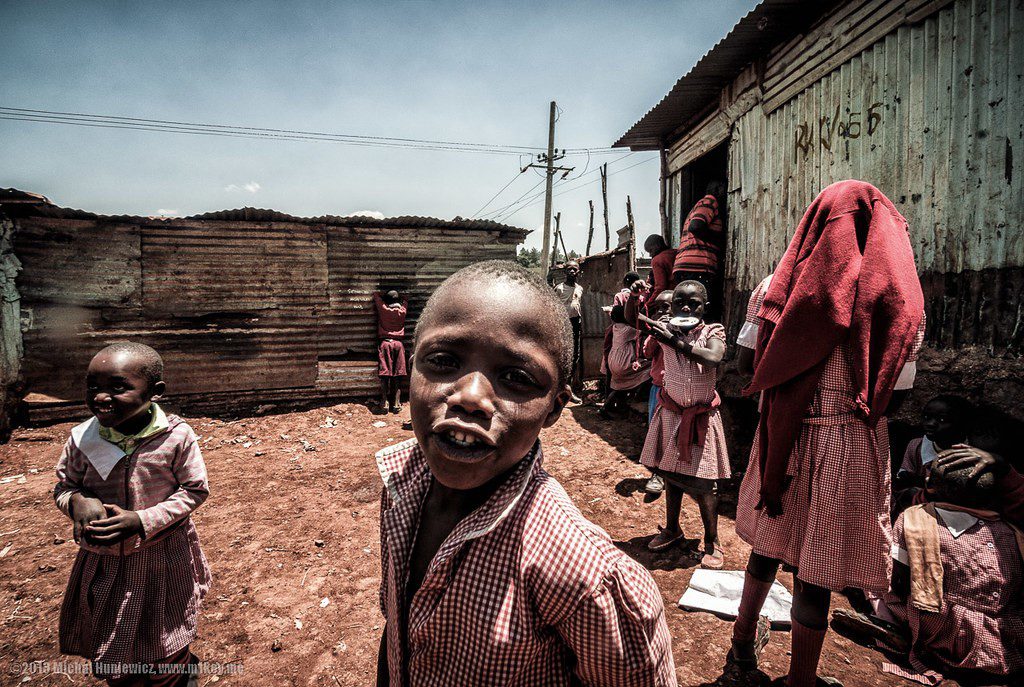
Addressing violent extremism requires going beyond a strictly military approach to address the root causes of radicalization. While many have argued that poverty is a leading factor behind radicalization, the relationship between poverty and violent extremism is complex. Poverty by itself does not necessarily lead to a rise in violent extremism. However, societal exclusion and marginalization, which poverty links to, have a significant capacity to propel people to violence.
Government Failure
A more accurate way of determining the relationship between poverty and violent extremism is to examine not just individual cases of poverty, but entire structures that lead to deprivation and exclusion. A variety of societal factors can drive people to extremism. Firstly, a failure of state governments to provide social services not only results in poverty but allows extremist groups to fill the service gap. Secondly, distinct economic inequality between social groups can lead to grievances and disillusionment which makes extremist viewpoints more attractive. Connected to this form of inequality is social exclusion, in which society relegates one group to its outskirts. Without an ability to fully participate in the community and take part in the political process, people may become desperate for a sense of belonging and empowerment, two things which extremist groups promise.
Feelings of abandonment and resentment are prone to occur in weak states which are unable to provide their citizens with security and basic services. This not only heightens inequality, but it also means that impoverished people may come to rely on terrorist groups to provide services. By filling this role of a social service provider, extremist groups can ingratiate themselves with the community and gradually recruit. Multiple terrorist groups have succeeded in proliferating through this welfare terrorism strategy.
Hezbollah, for instance, has established schools, medical centers and agricultural programs among Shiite populations in Lebanon, while Hamas has made similar investments in education, health and cultural establishments in the West Bank. The Taliban and Al Qaeda have both established religious schools which are sometimes the only educational option available in poor regions, leaving parents with little choice but to send their children to schools that can teach violent ideologies. The failure of governments to provide education, health and social services aids this phenomenon. When terrorist groups provide these services, it not only encourages the population to accept extremists into their community, it also delegitimizes the state and political system.
Inequality and Discrimination
Additionally, it is necessary to evaluate poverty in context within a country in order to determine its relationship to violent extremism. Relative poverty tends to be more of a factor than absolute poverty in radicalizing someone towards violence. In other words, while poverty on an individual level is unlikely to prompt someone to become an extremist, the existence of societal poverty or marked inequality between social groups, can have that effect. People know inequality between groups, in which one group has privilege over the other, as horizontal inequality and it is particularly likely to lead to grievances and the perception of injustice.
One can find an example of horizontal inequality in Syria, where significant disparities have existed for decades between Sunni and Shia Arabs. Under the Al-Assad regime, Sunnis, who make up the majority of the population, have faced economic hardship and discrimination in favor of Alawite elites. Syria is one of the most economically unequal countries in the region with a GINI coefficient of 38.8, and regions of the country have experienced development in a very uneven way. Terrorist groups such as ISIS and Al Qaeda have been able to exploit Sunni anger at the state to recruit in Syria.
Social Exclusion
Social exclusion is also a crucial factor in driving people towards violent extremism. The U.N. defines social exclusion as a “lack of participation in decision-making processes in civil, socio-economic and cultural life” and the institutionalized withholding of rights which make it impossible to fully integrate with the broader community. When whole social groups receive systematic alienation, group members can become desperate for a sense of belonging and autonomy. This makes them ripe targets for recruitment into terrorist groups, which offer a sense of inclusion and identity.
As one young man in Kenya describes it, “poverty feeds terrorism by eroding a basic human need: the need to belong… Poor people have no stake in nations and economies that ignore them.”As he points out, a lack of economic resources means people are denied the chance to fully participate in and contribute to society. Instead, they spend all their time merely trying to survive. When young people are unable to find productive work and feelings of alienation and deprivation overwhelm them, it can tempt them to join gangs and terrorist networks. These provide not only money but a sense of belonging and utility. Additionally, an inability to enact change through undemocratic political systems may prompt people to turn to violence as an attempt to restore justice.
Activists in marginalized communities have worked to combat this problem through programs which provide not just economic assistance, but a sense of community. For instance, Shining Hope for New Communities (SHOFCO), works in Kibera and Mathare. The organization runs a school for girls that provides tuition-free learning as well as free nutrition and health services for students and their families. The organization also issues microloans which allow people to start small businesses and gain financial stability. Crucially, SHOFCO also works to provide a sense of community for residents through theater, soccer programs and employment advice sessions.
The Role of Foreign Aid to Reduce Violent Extremism
Beyond programs like these, foreign aid has significant potential to reduce the circumstances which can drive people to violent extremism. It is important that aid goes beyond economic assistance to address the sources of grievances which can lead to radicalization. Multiple studies have found that high levels of civil liberties and a strong rule of law correlate with a low number of domestic terrorist attacks. Repression and weak rule of law not only delegitimize the state, but they also deny citizens appropriate channels for addressing grievances through the political system, leading some to take up violent means. With this in mind, foreign aid which focuses on good governance and promoting civil society has the potential to reduce extremism.
One study which examined the number of terrorist attacks in countries from 1997 to 2020 found that governance and civil society assistance results in fewer terrorist attacks in countries that were not experiencing a civil war. As this study shows, investment in foreign aid has the ability to reduce violent extremism, which is one of the key priorities of U.S. national security policy. If U.S. policymakers want to stop the spread of violent extremism, they should support programs that promote providing people with basic needs, economic equality and give people a stake in their community.
– Clarissa Cooney
Photo: Flickr

7 Facts About Cervical Cancer in Thailand
Cervical cancer is one of the greatest threats to women’s lives globally. With an estimated 570,000 new cases in 2018, it ranks as the fourth most frequent cancer in women. In the South-East Asia region, it is the third most common type of cancer. Last year, there were an estimated 158,000 new cases and 95,766 cervical cancer-related deaths in the region alone. The World Health Organisation (WHO) has urged the countries in this region to speed up their efforts to eliminate cervical cancer by 2030. Thailand, one of the countries in the South-East Asia region, has made great strides towards eliminating the disease in the past two decades. Here are seven facts about cervical cancer in Thailand.
7 Facts About Cervical Cancer
It is quite possible that Thailand will meet the WHO’s request to eliminate cervical cancer by 2030. The country is a good example to other low and middle-income countries on how they can deal with the disease.
– Sophia Wanyonyi
Photo: Pixabay
Does Poverty Result in Violent Extremism?
Addressing violent extremism requires going beyond a strictly military approach to address the root causes of radicalization. While many have argued that poverty is a leading factor behind radicalization, the relationship between poverty and violent extremism is complex. Poverty by itself does not necessarily lead to a rise in violent extremism. However, societal exclusion and marginalization, which poverty links to, have a significant capacity to propel people to violence.
Government Failure
A more accurate way of determining the relationship between poverty and violent extremism is to examine not just individual cases of poverty, but entire structures that lead to deprivation and exclusion. A variety of societal factors can drive people to extremism. Firstly, a failure of state governments to provide social services not only results in poverty but allows extremist groups to fill the service gap. Secondly, distinct economic inequality between social groups can lead to grievances and disillusionment which makes extremist viewpoints more attractive. Connected to this form of inequality is social exclusion, in which society relegates one group to its outskirts. Without an ability to fully participate in the community and take part in the political process, people may become desperate for a sense of belonging and empowerment, two things which extremist groups promise.
Feelings of abandonment and resentment are prone to occur in weak states which are unable to provide their citizens with security and basic services. This not only heightens inequality, but it also means that impoverished people may come to rely on terrorist groups to provide services. By filling this role of a social service provider, extremist groups can ingratiate themselves with the community and gradually recruit. Multiple terrorist groups have succeeded in proliferating through this welfare terrorism strategy.
Hezbollah, for instance, has established schools, medical centers and agricultural programs among Shiite populations in Lebanon, while Hamas has made similar investments in education, health and cultural establishments in the West Bank. The Taliban and Al Qaeda have both established religious schools which are sometimes the only educational option available in poor regions, leaving parents with little choice but to send their children to schools that can teach violent ideologies. The failure of governments to provide education, health and social services aids this phenomenon. When terrorist groups provide these services, it not only encourages the population to accept extremists into their community, it also delegitimizes the state and political system.
Inequality and Discrimination
Additionally, it is necessary to evaluate poverty in context within a country in order to determine its relationship to violent extremism. Relative poverty tends to be more of a factor than absolute poverty in radicalizing someone towards violence. In other words, while poverty on an individual level is unlikely to prompt someone to become an extremist, the existence of societal poverty or marked inequality between social groups, can have that effect. People know inequality between groups, in which one group has privilege over the other, as horizontal inequality and it is particularly likely to lead to grievances and the perception of injustice.
One can find an example of horizontal inequality in Syria, where significant disparities have existed for decades between Sunni and Shia Arabs. Under the Al-Assad regime, Sunnis, who make up the majority of the population, have faced economic hardship and discrimination in favor of Alawite elites. Syria is one of the most economically unequal countries in the region with a GINI coefficient of 38.8, and regions of the country have experienced development in a very uneven way. Terrorist groups such as ISIS and Al Qaeda have been able to exploit Sunni anger at the state to recruit in Syria.
Social Exclusion
Social exclusion is also a crucial factor in driving people towards violent extremism. The U.N. defines social exclusion as a “lack of participation in decision-making processes in civil, socio-economic and cultural life” and the institutionalized withholding of rights which make it impossible to fully integrate with the broader community. When whole social groups receive systematic alienation, group members can become desperate for a sense of belonging and autonomy. This makes them ripe targets for recruitment into terrorist groups, which offer a sense of inclusion and identity.
As one young man in Kenya describes it, “poverty feeds terrorism by eroding a basic human need: the need to belong… Poor people have no stake in nations and economies that ignore them.”As he points out, a lack of economic resources means people are denied the chance to fully participate in and contribute to society. Instead, they spend all their time merely trying to survive. When young people are unable to find productive work and feelings of alienation and deprivation overwhelm them, it can tempt them to join gangs and terrorist networks. These provide not only money but a sense of belonging and utility. Additionally, an inability to enact change through undemocratic political systems may prompt people to turn to violence as an attempt to restore justice.
Activists in marginalized communities have worked to combat this problem through programs which provide not just economic assistance, but a sense of community. For instance, Shining Hope for New Communities (SHOFCO), works in Kibera and Mathare. The organization runs a school for girls that provides tuition-free learning as well as free nutrition and health services for students and their families. The organization also issues microloans which allow people to start small businesses and gain financial stability. Crucially, SHOFCO also works to provide a sense of community for residents through theater, soccer programs and employment advice sessions.
The Role of Foreign Aid to Reduce Violent Extremism
Beyond programs like these, foreign aid has significant potential to reduce the circumstances which can drive people to violent extremism. It is important that aid goes beyond economic assistance to address the sources of grievances which can lead to radicalization. Multiple studies have found that high levels of civil liberties and a strong rule of law correlate with a low number of domestic terrorist attacks. Repression and weak rule of law not only delegitimize the state, but they also deny citizens appropriate channels for addressing grievances through the political system, leading some to take up violent means. With this in mind, foreign aid which focuses on good governance and promoting civil society has the potential to reduce extremism.
One study which examined the number of terrorist attacks in countries from 1997 to 2020 found that governance and civil society assistance results in fewer terrorist attacks in countries that were not experiencing a civil war. As this study shows, investment in foreign aid has the ability to reduce violent extremism, which is one of the key priorities of U.S. national security policy. If U.S. policymakers want to stop the spread of violent extremism, they should support programs that promote providing people with basic needs, economic equality and give people a stake in their community.
– Clarissa Cooney
Photo: Flickr
Countries Caught in Resource Traps
Resource Trap
While rich countries are capable of enacting change, the manner by which their wealth was accumulated affects how their governments appropriate funds. The resource trap, or resource curse, as called by the Natural Resource Governance Institute (NRGI), posits that resource-rich countries tend to have higher rates of conflict and authoritarianism combined with lower rates of economic stability and economic growth. Along with the NRGI, Bloomberg finds that countries with vast natural resources have high degrees of conflict, corruption and poverty.
One of the many examples of this conundrum in the world today is Iran. According to the CIA’s World Factbook, Iran’s economy has a large industrial sector which makes up 35.3 percent of the country’s GDP. Iran’s large oil reserves gave rise to its top three industries: petroleum, petrochemicals and gas production. These three are resources commonly cited in reports regarding resource traps.
Even though Iran is rich with natural resources, it has an Aggregate Freedom Score of 18/100, which categories the country as “Not Free”. In their report on Iran, Freedom House cites antigovernment protests over the worsening economy and corruption as a factor in Iran’s low score. These dynamics have rendered the country prey to the resource trap. Resource traps like those found in oil-rich countries are especially troublesome because their governments are beneficiaries of vast amounts of income that would otherwise come from taxation. Since the government does not depend on tax revenues to remain in power, the will of the people tends to be ignored, which leads to unchecked corruption.
Economic Monitoring
NGOs combating corruption in oil-rich countries work to address how petroleum-based revenues are used to suppress its people. According to Radio Farda, Iran has a record of marginalizing NGOs that attempt to address the exploitation of its citizens. Solving the riddle of resource-trapped countries is a hard task and involves a multitude of tactics. Most of the work done by NGOs in Iran is done through the World Bank’s Economic Monitor program. Monitoring efforts like these where selected topics of interest to Iran and the international community are published provide data useful in liberating countries from their resource traps.
– Spencer Julian
Photo: Flickr
Technology to Promote Literacy in Papua New Guinea
Papua New Guinea (PNG) is an independent state comprised of about 600 small islands, that also shares a land border with Indonesia. PNG uses technology to promote literacy in a number of ways. PNG broke off from Australia in 1975 but still receives substantial economic, geographical and educational gains from the country. However, the Australian government reports that in spite of their economic growth and middle-income country status (due to agricultural and mineral wealth), “PNG’s social indicators are among the worst in the Asia Pacific. Approximately 85 percent of PNG’s mainly rural population is poor and an estimated 18 percent of people are extremely poor.”
The World Bank details that PNG also faces a “vexing” situation regarding their remoteness and number of languages. Communities in PNG are very closed off from one another and land travel is strenuous. PNG has 563 airports and air travel has proven to be the common way to get from one place to another. At over 800 languages, PNG is recognized as “the most linguistically diverse country in the world.” As a result of these two factors, PNG’s education system faces a variety of challenges. PNG was ranked 153 on the Human Development Index in 2017, and its adult literacy rate was reported to be 63.4 percent in 2015. Australian Aid and the Voluntary Services Overseas (VSO) cooperated to produce The SMS Story research project, a way to use technology to promote literacy.
The goal of the SMS Story Research Project was to ascertain whether daily text message stories and lessons would improve the reading ability of children in grades 1 and 2 in Papua New Guinea. The text messages were sent to elementary school teachers in the Madang Province and Simbu Province using a free, open-source software program called Frontline SMS. The project was a controlled trial with two groups, one group of teachers received the message and the other did not. About 2500 students were evaluated before and after the trial. Using statistical testing, it was determined that the reading ability of the group who received text messages was higher than that of the group that did not.
It was found that the schools participating in the study had little to no reading books in the classroom and that students in groups without an SMS story were “twice as likely to be unable to read a single word of three sub-tests (decodable words, sight words and oral reading).” It seemed that many classrooms in PNG did not provide easy access to reading materials or proper reading lessons.
Amanda Watson, a researcher involved with the project stated that the SMS stories were helpful to the teachers as well. She says, “The teachers actually received almost like a reminder to teach, a bit of a motivator to keep teaching and they received that every single day and we think that really helped them to realize that they’re supposed to be teaching reading every single day, five days a week.” This suggests that before the trial, some of the teachers may not have promoted reading as much as they should have, either due to lack of access to materials or not realizing its importance.
Daniel A. Wagner, of the University of Pennsylvania and his colleagues, detail the importance of using technology to promote literacy in countries with minimal access to education or educational materials in their paper, “Mobiles for Literacy in Developing Countries: An Effectiveness Framework”. He underlines the importance of promoting literacy through information and communications technologies (ICTs) in today’s world where there are “more connected mobile devices than people” and provides several examples of organizations that are working towards increasing literacy through ICTs.
The Bridges to the Future Initiative (BFI) is run in South Africa by the Molteno Institute for Language and Literacy. They aim to “improve literacy through interactive, computer-based lessons” created by the University of Pennsylvania’s International Literacy Institute (ILI). They provide access to educational materials and issue students with “mother-tongue resources” in regions where computer sources or books are mostly in English. Comparably, Ustad Mobile is an application in Afghanistan that runs offline on phones. They center around instructing reading comprehension, listening, and numeracy. Teachers and students can download and share lessons; the app also includes exercises, videos and interactive quizzes in order to “mobilize education for all”.
BBC Janala is another project using technology to promote literacy in Bangladesh. It is a multi-platform service and can be accessed through TV, internet, print and mobile phones. BBC Janala concentrates on teaching English through three-minute audio lessons, quizzes, TV shows, newspapers, textbooks and CDs.
Illiteracy is an issue in Papua New Guinea; most likely due to the lack of reading materials and importance placed on literacy. However projects like, “The SMS Story” are all over the world and are working towards using technology to promote literacy one step at a time.
– Jade Thompson
Photo: Flickr
Poverty and PTSD
How Poverty Contributes to PTSD
Mental disorders manifest in distinct ways for many people. However, the common underlying origin of Post-traumatic stress syndrome (PTSD) remains a terrifying or traumatic life event. Living in poverty often means surviving daily in vulnerable conditions, and with financial instability that limits access to necessities such as food, shelter and water. The inability to pay for expenses starts to become emotionally and mentally taxing. Poverty acts as a traumatic experience in many people’s lives and even after graduating in class status, difficulty persists to enjoy day to day life.
Symptoms of PTSD can appear within months of the traumatic event and include:
Some people with PTSD may exhibit all these symptoms, while others exhibit just a few. The severity of PTSD also varies from person to person. PTSD can be broken down into subtypes such as:
Women with PTSD
Research estimates that 284 million people globally suffer from anxiety disorders such as PTSD. About 63 percent of people that suffer from anxiety disorders are women. In addition, women living in poverty tend to face PTSD at higher levels than any other group within the general population. The relationship between poverty and PTSD embodies that of the domino effect. Poor women’s PTSD symptoms often worsen due to the fact that living in impoverished neighborhoods risk ongoing exposure to triggers of the traumatic incident. A study undertaken by the Social Cognitive Theory also reveals that most of the women living in poverty with PTSD share a history of domestic violence and lack social support.
Treatments
It can feel nearly impossible to live a normal life with PTSD. Luckily, effective treatments exist that minimize the symptoms of the disorder. One of the best treatments for PTSD is Psychotherapy. Psychotherapy allows PTSD victims to talk about their cognitive behavioral process to a mental health professional to reduce and change reactions to triggers. Another important tool for managing PTSD is having a strong support system. The help of friends and family means everything during a mental health crisis. A support system of others that have suffered from PTSD also helps signify that a person is not alone in the experiences of the mental disorder. There are also organizations such as the PTSD Alliance, who work to educate and empower people with PTSD psychologically, economically and emotionally to thrive beyond environmental barriers. The organization currently has five international partners that provide programs to help improve the lives of those living in poverty with PTSD.
Overall, poverty and PTSD remain two prominent issues impacting people on a global scale. The connection between poverty and PTSD only further emphasizes that the more work that is done to reduce global poverty also diminishes the mental health crisis.
– Nia Coleman
Photo: Wikimedia
10 Health Costs of the Syrian Civil War
The Syrian civil war, which began in 2011, has led to a monumental refugee crisis, hundreds of thousands of deaths, the rise of the Islamic State of Iraq and Syria (ISIS) and destabilization in the Middle East. Yet another devastating effect of the war is the health consequences for people still living in Syria. Civilian doctors and nurses in active war zones face significant challenges not encountered in peacetime. These include a massive amount of trauma victims, shortages of medical equipment and personnel, infectious disease epidemics and breaches in medical neutrality. Here are 10 health costs of the Syrian civil war for the Syrian people.
10 Health Costs of the Syrian Civil War
Conditions on the ground in Syria make it more difficult for Syrian citizens to receive vital medical aid from health care workers. Many people and organizations are working diligently to help injured and sick Syrians, however. These 10 health costs of the Syrian civil war illuminate some of the consequences of war that are perhaps not as storied as the refugee crisis. While aiding refugees is an undoubtedly worthy goal for international NGOs and governments, policymaker’s and NGOs’ agendas should include recognizing and alleviating the harm to those still living in Syria.
– Sarah Frazer
Photo: Flickr
Kio Kit: A “Classroom in a Box” in Rural Africa
Education Is A Human Right
The United Nations recognized education as a human right in the 1976 International Covenant on Civil and Political Rights. However, as of 2015, the UNESCO Institute of Statistics estimates that 37.1 percent of upper-secondary-school-aged children globally are not in school. Barriers to education come in many forms: some children begin working at a young age to help provide for their families, in some places girls are not allowed to go to school and many children live in regions undergoing conflicts or crises that prevent them from accessing education. Additionally, a lack of funding can mean untrained teachers, no school buildings and not enough educational materials.
A lack of access to technology is another barrier to education. Modern technology expands the horizons of what an instructor can teach — perhaps she will download ebooks, or show an educational video about biology, or teach students computer skills that are an asset in the workforce. In many regions, particularly in Africa, internet access is limited. For example, in Chad, Niger and Madagascar, less than 10 percent of the population was using the internet in 2017. The U.S. Energy Information Administration estimates that in 2014 approximately 15 percent of the world population did not have access to electricity, with electricity being less accessible in urban areas. So how can we adapt educational technology to work in regions where there is limited access to electricity and the internet?
How To Adapt Technology
BRCK, an engineering and design company based in East Africa, has developed a solution. BRCK, founded in 2013, focuses on digital solutions that are specific to African infrastructure. The company was named one of TIME Magazine’s 50 Genius Companies in 2018. BRCK’s Kio Kit project was launched in 2015 and consists of a set of forty tablets and a Wi-Fi router that can connect to web content. Kio Kit tablets charge wirelessly, either by connection to a power source or by solar power, and can run for 8 hours on a charge, meaning they can still be used when electricity is unreliable.
The Kio Kit comes in a weather-proof case and is designed to be usable for untrained teachers. The entire kit, including the tablets, is turned on and off with one button. BRCK calls the Kio Kit a “classroom in a box” and promises to expose rural children to “the same information and learning tools available to kids in any city.” As of 2018, BRCK had sold more than 200 Kio Kits to communities in fourteen countries. BRCK does not list prices online, but a 2015 article from QuartzAfrica reports that one kit costs $5,000, to be paid over twelve months without interest. While this is a hefty price and is not possible for some communities, BRCK’s commitment to getting students online is admirable, and the Kio Kit is a valuable step toward accessible education.
– Meredith Charney
Photo: Pexels
5 Facts About the Aga Khan Foundation
5 Facts About the Aga Khan Foundation
The AKF is an international network of agencies working to fight poverty and improve the quality of life for people in developing countries around the world. These five facts about the Aga Khan Foundation show that by providing well-rounded opportunities like schools, healthcare and financial help, the foundation has been able to provide a variety of assistance to those in need. The Aga Khan Foundation has helped millions of people over the last 60 years and is on track to help millions more in the near future.
– Jessica Winarski
Photo: Aga Khan Development Network
10 Facts About Life Expectancy in The Gambia
The Gambia is a small West African country that people know for its diverse ecosystems around the Gambia River. It is the smallest country within mainland Africa and farming, fishing and tourism drive its economy. The Gambia has a life expectancy of 65 years which is relatively low when considering that the global average life expectancy is 72 years. The Gambia also faces problems associated with poverty that can have serious effects on population and life expectancy. Here are 10 facts about life expectancy in The Gambia.
10 Facts About Life Expectancy in The Gambia
Despite problems people associate with agriculture, income and health, life expectancy in The Gambia is rising while infant and maternal mortality rates are declining.
– Darci Flatley
Photo: Flickr
The Link Between Mental Health and Poverty
Although mental health and poverty are two things that one might not always group together, there is a serious link between people living below the poverty line and mental health disorders. According to a Substance Abuse and Mental Health Services Administration SAMHSA report, around 9.8 million people living in the United States had mental health disorders in 2015, and 25 percent of those people were living below the poverty line.
Both poverty and mental health can bring about the other. For instance, a Gallup poll found that about 15.8 percent of people not living in poverty reported having diagnosed depression, while 31 percent of people living in poverty reported depression. In addition, a McSilver Institute for Poverty Policy and Research study based on data from the National Center for Education Statistics found that a household is likely to experience a 50 to 80 percent increase in food insecurity if the mother has diagnosed depression. While it is not clear whether the depression leads to living in poverty or living in poverty results in depression, the link between the two issues is clearly prevalent. Therefore, it is crucial that others address and treat the mental health of people living in poverty.
Ways to Treat Mental Health
One large issue with impoverished people having mental health disorders is that they often do not have the insurance and money to seek therapy and get medical help. This can be especially harmful to children living in poverty. The Official Journal of the American Academy of Pediatrics has three main recommendations for low-income families to seek help for mental health disorders, including education and training, establishing relationships with providers and creating multidisciplinary teams.
The best way to help and treat mental health in low-income families and communities is education. By integrating mental health education in schools and free programs that schools offer to families and communities, more people can learn about how to cope with mental health disorders and keep themselves and their families healthy and happy. In addition, integrating mental health services into school health services allows children to seek help for any mental health disorders right at school.
Further, establishing relationships with school health providers and counselors allows children to feel comfortable enough to seek the help that they need, in a safe space that they are used to. Communication between children/families and health care providers also allows the providers to be available more quickly and could result in more effective treatment.
Effects of Improving Mental Health
Poverty can strain a person’s mental health due to stress and instability. Therefore, public mental health has a huge impact on communities and the mental health of the people. People do not widely recognize public health, which is why is it crucial that communities are actively working to prevent mental health problems and to educate the community on how to cope with mental health strains.
Mental health problems and poverty have a serious link and it is vital that people are aware of the strains of poverty and understand their community and who is at risk. Only by monitoring and evaluating impacts of mental health, creating educational programs and addressing both physical and mental health, both mental health and poverty can improve together.
– Paige Regan
Photo: Flickr