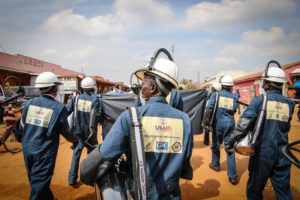
Bed nets. Insecticide. Preventative medicine. These are the tools that are most known for fighting malaria—and for good reason. Tactics like these have saved millions of lives. However, when a country manages to eliminate most incidences of malaria, the traditional techniques lose their impact. One group of researchers, realizing the need for new strategies against malaria, decided to not focus on mosquitoes (the traditional tactic) but on humans themselves. Ultimately, studying human behavior can help eradicate malaria by targeting weak spots in preventative plans and providing a clearer implementation of resources. To better understand malaria, its far-reaching impacts and the importance of a new human-centered technique, it is helpful to start from the beginning.
What is Malaria and How Was it Treated in the Past?
Malaria has plagued humans for, quite literally, as long as humanity remembers. The earliest written records — Mesopotamian cuneiform tablets — describe symptoms characteristic of the disease. Scientists found human remains dating back to 3200 BC with malaria antigens. Ancient scholars called the illness the “king of diseases.” It certainly lives up to the title. It is thousands of years old and it has killed hundreds of millions of people.
Anopheles mosquitoes, most active at dusk and night-time, are responsible for the malaria parasite’s spread. Carried in the insect’s stomach, the parasite enters the human bloodstream through the mosquitoes’ saliva (the same substance that makes bites itch and swell) as they feed.
Humans first exhibit symptoms a week or so after infection. If untreated, the disease quickly becomes serious. Sufferers feel flu-like symptoms, including body aches, fatigue, vomiting and diarrhea. Patients can die within 48 hours after they first exhibit symptoms.
In 1820, chemists developed quinine, the first modern pharmacological treatment for malaria. In the 1900s, the men who identified the malaria parasite, demonstrated that mosquitoes were responsible for transmission and developed the mosquito-repelling insecticide DDT all won Nobel Prizes for their respective discoveries. Understanding and preventing malaria were matters of great international importance.
What is Malaria’s Global Presence Today?
Fighting this disease remains a top global priority. Modern preventative measures now include insecticide-treated bed nets (to keeps the nocturnal malaria-carrying mosquitos away) and indoor sprays. Children in high-transmission areas are also eligible for seasonal malaria chemoprevention. Thanks to a surge in global humanitarian attention, the disease’s presence has fallen worldwide. Between 2010 and 2017, malaria incidence decreased by nearly 20 percent and fatalities decreased by nearly 30 percent.
However, the World Health Organization (WHO) estimates that 216 million clinical cases still occurred worldwide in 2016 alone, resulting in 445,000 deaths. The disease causes a massive drain on economies, due to healthcare costs and loss of workforce efficiency. In sub-Saharan Africa, where potent strains of the parasite thrive, those damaging effects are especially notable. Malaria and its effects cost Africa a stunning $12 billion every year and, because people living near unclean water sources and insecure housing are most at risk, malaria disproportionally affects the impoverished. By prohibiting individuals from attending work or school, let alone its potential to kill, malaria perpetuates the cycle of poverty. While reducing prevalence is a key factor, eradication continues to be the ultimate goal. That means the end to malaria’s ill-effects on communities, particularly impoverished ones.
How Studying Human Behavior Can Help Eradicate Malaria
When regions successfully employ traditional tactics, as many have, they find themselves with a new problem. “Lingering cases” is a term used to describe when a region no longer experiences outbreaks, but that the disease still exists locally. In general, eliminating any illness gets harder the fewer instances of it that occur. Tracking the carrier mosquitoes is infeasible, if not impossible. However, researchers in Zanzibar took a new approach – they decided to track humans instead.
In July 2019, the Johns Hopkins Center for Communication Programs published an article in Malaria Journal that details the reasoning behind the new technique. While indoor measures work, people are not necessarily confined to the home at nighttime. One Zanzibari woman remarked in an interview, “When you are outside, you can’t really wear the bed nets, can you?” Existing steps against malaria are not effective outdoors, which makes it nearly impossible to eliminate the last few cases.
Researchers conducted over 60 in-depth interviews and studied routine human movements: between homes, stores, public spaces, religious services and even special events, like weddings. They found many insights. For example, men were at the highest risk for infection because they most often work or socialize outside after dark. There is also a notable population of seasonal workers that come to Zanzibar from Tanzania’s mainland. These individuals rarely own mosquito nets nor insecticides to spray their residences. Better understanding the movements of people vulnerable to malaria, as well as those that find themselves periodically unprotected, is important. That information allows scientists to create better-targeted interventions, including community support programs, outdoor areas with preventative measures, and basic indoor resources for those without.
Small scale use of these techniques has proven effective, and the researchers behind this investigation believe they could be scaled up successfully. Best of all, 26 other countries have similarly low rates of malaria incidence. If Zanzibar, a high-transmission area for the parasite, could push back against this disease so successfully, other countries could benefit greatly from the same changes.
Conclusion
Malaria, a disease that has lasted for around 5000 years, has never been closer to eradication. The last century has seen a great surge in momentum for fighting this illness. The results are stunning; millions of lives saved, several countries eliminated the disease entirely, and dozens more are nearing that goal. In turn, people have prospered. For every dollar invested in African malaria control, the continent sees 40 dollars in economic growth. Much of that prosperity goes back to impoverished people, who can thrive with less illness and more economic efficiency. Now, researchers are pursuing the “last mile” strategies. Studying human behavior can help eradicate malaria by preventing remote cases. Total eradication and the end of malaria’s drain on the impoverished has never been closer.
– Molly Power
Photo: Wikimedia

The Hub of Technology in Kenya
In recent years, a focus on technology crept through cables and bloomed within the country of Kenya. Mobile phones, an item sought after in developed countries, conveys a deeper significance for Kenyan citizens, establishing digital communities and managing the majority of payments. Other programs have been created in Kenya, focusing on artificial intelligence and information technology and communication.
AI Kenya & Artificial Intelligence
Devoted to the learning of artificial intelligence, AI Kenya acts as a growing community of data science practitioners, government officials and enthusiasts. The organization provides “tracks” regarding coding and machines, claiming whether “you’ve just learned to code or you’re a seasoned machine learning practitioner,” information will be provided, free to learn.
AI Kenya’s tracks are lessons, introductions and resources that aid the visitor on the path to digital learning. For the introduction to artificial intelligence, Microsoft’s AI Business School and a self-directed online course from Babson College are presented. For an intermediate track, a group of videos reviewing Statistical Machine Learning is listed, provided by Carnegie Melon University.
Across Africa and in various international countries, AI Kenya shares upcoming expos and conferences regarding artificial intelligence and digital technology. Podcasts join the organization’s information as well, spotlighting businesses and research or documenting Code Maktaba, a training event series improving community members on concepts.
VMWare & Information Technology
Besides artificial intelligence, other skills involving learning through technology prove valuable in careers. VMWare, a software company, leads an information technology (IT) academy with a program dubbed “Virtualize Africa.” The company commits to supply students with the technical skills and techniques needed to pursue jobs created by the digital age. They explain that to combat the rapidly changing and advancing technology in Kenya and other countries, skill sets must also be honed.
Strathmore University, located in Nairobi, Kenya, incorporates courses developed by VMWare which cover cloud computing, the Internet of Things (IOT), virtualization and other subjects. Students access online resources as well as in-person lab experiments. In partnership with VMWare, students may earn certifications by the company and chances to work as part of it.
Mobile Transactions
Kenya currently endures a hefty transition from cash to submitting payments with money-transfer systems on mobile phones. 70 percent of the country now use their phones to give money to each other, which is more than any other country. The interest inspires entrepreneurs to take advantage of cell phones and invent creative programs interweaving their technology.
Blogs have arisen, documenting technology in Kenya and how it is attracting others to the country. An environment fostering technological revolution supports the emergence of VMWare and AI Kenya, along with communities such as iHub, a center for creative professionals and influencers, hosting sessions for ideas and competitions.
While leading in mobile rankings, Kenya still wishes to rise up to developed countries with other aspects of technology. Currently, artificial intelligence and IT boast an abundance of programs and organizations. An increasing focus on technology in Kenya and schools also prepares students for the digital age and allows a head-start in the pool of technological revolution. Finally, the technological hub offers untapped sources of economic advantages, allowing companies to spread their programs outwards to the rest of the globe; the research on artificial intelligence allows for a web of further ideas, creating drones and services to aid the economy further.
– Daniel Bertetti
Photo: Flickr
Aid and Investments in Cameroon’s Agriculture Industry
There is potential for growth in Cameroon’s agriculture industry. Although Cameroon is Africa’s fourth-largest cocoa producer, the country imports more than $800 million worth of cereal, flour and fish to feed its people and meet demands in production.
The subsistence agriculture industry employs more than 50 percent of Cameroonians, which requires hard labor without machinery. Cameroon President Paul Biya emphasized the need for a more productive and modern agriculture industry that would benefit small and medium-sized farms. The World Bank, Nestle and the IFC have made various efforts to develop the Cameroonian agriculture sector.
World Bank Project
The World Bank created the Agriculture Investment and Market Development Project to improve the productivity of subsistence crops such as cassava, maize and sorghum. The project began in 2014, costs $166 million and closes on July 2021. The areas of focus range from improving seed quality and public infrastructure to enhancing agricultural technology and distribution systems. Commercial farming is rare. This is why the World Bank is helping create a dominant industry that departs from the old, inefficient and arduous ways of subsistence farming.
Various targets under the project are complete. Yields in cassava, maize and sorghum have all increased. Maize yields have already surpassed the set target while cassava and sorghum are just below their targeted yields. The project has implemented more than 86 sub-projects out of the target goal of 100. More than 15,000 clients have adopted improved agricultural technology that the project introduced, and there are more than 139,000 direct project beneficiaries out of the goal of 150,000. The project also distributed more than 16 million cassava seeds. Although the project ends in July 2021, it met many of its targets. The project benefited Cameroon’s agriculture industry and will continue to do so thanks to the World Bank and its partners.
A Win-Win Scenario
Due to Cameroon’s position as a trade hub off the coast of Africa, companies are seeing opportunities in the growing agriculture industry. Tiger Brands bought Cameroonian company Chococam in 2008 and afterward saw “excellent growth in operating income, driven by strong volume growth and tight cost management.” Nestle produces its Maggi stock cubes in Cameroon but wants more inputs from local farmers. Nestle views it as a win-win scenario, as it gives Nestle a competitive advantage and also helps local farmers and rural development. Nestle also wants to create a starch similar to cornstarch from Cameroon’s cassava plant. It currently imports cornstarch from Europe.
The insurance industry is also developing Cameroon’s agriculture industry and helping farmers insure their crops. International Finance Corporation (IFC) partners ACTIVA Assurance and AXA Cameroon are two insurance companies that provided index insurance to nearly 8,000 cotton growers. Index insurance helps farmers during climatic shocks, such as floods that are common in the country. The goal of IFC and its partners is to provide 135,000 agricultural index insurance contracts by the end of 2020. This will enable 700,000 farm households to offset yield reductions during natural disasters.
Future of the Industry
Companies and NGOs aided Cameroon’s growing agriculture industry either directly or indirectly. Progress is ongoing, but more the industry requires more to develop and help those in poverty. About 90 percent of the poor reside in rural areas, where the main source of income comes from subsistence farming. Thanks to the World Bank, Nestle, Tiger Brands and various NGOs and nonprofits, Cameroon is seeing positive growth in agriculture development.
– Lucas Schmidt
Photo: Flickr
Hope for Slums in Kenya
A homeless child is wandering the streets of the largest slum in Africa. The child steals a mango, his meal for the next two days. An angry mob seeks justice and starts beating the hungry child. For some reason, a man saves the child from further punishment by paying for the mango. The man carried on with his day, but that boy’s life was changed forever. His name is Kennedy Odede and he is the founder of the multimillion-dollar nonprofit organization called Shining Hope for Communities (SHOFCO) to create hope for slums in Kenya.
Odede was forced to the streets at the young age of 10 because of poverty and violence in his family. After being saved from the angry mob, Odede met a Catholic priest who helped him go back to school. In addition to school, Odede was working a factory job that paid him only $1 for 10 hours of work. The kindness from strangers in the face of these struggles is what inspired Odede to create Shining Hope for Communities as a way to give back to his hometown and help the urban poor.
SHOFCO started in 2004 with, “passion, 20 cents and a soccer ball.” The grassroots organization works to transform urban slums into communities of hope. They do this in three ways. The first is by providing life-saving services like healthcare and clean water. As a grassroots organization, they also promote collective action, so that the struggling communities can advocate for lasting change. Finally, SHOFCO also works to educate young girls and allow them to be leaders because they are the key to advocating for and maintaining positive change in Kenya and Africa’s slums.
Here are a few ways that SHOFCO has benefited Kibera:
The progress SHOFCO has made in Kenya and other African nations are remarkable. Grants and donations are SHOFCO’s main source of funding. They have yet to receive foreign aid, but the possibility of funding from the Kenyan government is looking more likely. SHOFCO could give hope for slums in Kenya and so many other slums in Africa if they received foreign aid. The impact that they have already made is astounding and they can only go up from here. In 2018, SHOFCO had some remarkable achievements:
Fifteen years ago a boy who had struggled for most of his life started an organization that would change the lives of thousands. From earning $1 for 10 hours of work, Kennedy Odede used 20 cents of that dollar to create SHOFCO. With his amazing passion and kindness, SHOFCO has given hope for slums in Kenya. Together, Odede and SHOFCO have provided essential services to the poor and empowered young girls and women to create lasting change.
– Gaurav Shetty
Photo: Flickr
3 Charitable International Soccer Players
People know soccer players for their athletic ability and worldwide fame, but more often than not many soccer players use their platforms as an opportunity to help those in need. Three charitable soccer players that worked toward improving the quality of life in developing countries include Mohammed (Mo) Salah, Sadio Mane and Marta Viera da Silva (Marta).
Mohammed Salah’s Work in Egypt
A Nagrig, Egypt native, Mohammed Salah currently plays for Liverpool in England’s Premier Football League. In 2018, the Premier League awarded him the Golden Boot. He was also the top scorer for Egypt in the 2018 World Cup in Russia. Mo Salah serves as an inspiration to young soccer players all over the world as a charitable soccer player, but the impact he had on his home country is resounding. An article in The Conversation addressed Salah’s reciprocal relationship with the youth of Egypt. Mo Salah inspires the youth despite political tension and a growing trend of Egyptian youth feeling disenfranchised.
In Egypt, 7.3 million people do not have access to safe drinking water. The inability to access clean water can lead to dehydration, causing illnesses such as diarrhea. In Egypt, almost 4,000 children under the age of 5 die from diarrhea every year. In 2018, alongside his father, Mo Salah launched a project near his hometown of Nagrig to develop a sewage system. This system will provide clean water to people living in this village. Mo Salah provided nearly half a million dollars for this project, and this is not the only time he gave back to his country. In the past, Mo Salah donated to the Long Live Egypt Fund, in order to fund the construction of a school, hospital and ambulance in Nagrig.
Sadio Mane’s Work in Senegal
Another charitable soccer player and teammate of Mohammed Salah on the Liverpool team is Sadio Mané. Born and raised in Senegal, Mané grew to become an incredibly successful soccer player. In 2019, The Premier League awarded Mané the Golden Boot. The Confederation of African Football also awarded the Senegalese National team, which Mané captains, the team of the year in 2016, 2017 and 2019. Mané’s relationship with Senegal goes far beyond soccer, and throughout his career, he continuously gave back to his home country through various kinds of donations.
As a developing nation, Senegal struggles to offer advanced health care and schooling to all of its citizens. Currently, 39 percent of Senegal’s population lives in poverty. Furthermore, preventable diseases like malaria are the prominent causes of death, and one in five children are underweight. Conditions remain poor when looking at education as well. Forty percent of Senegalese children work to help their families instead of going to school, and the literacy rate for Senegal is at 49.7 percent. These statistics are even more severe for those living in rural areas.
Charitable soccer players like Mané play their part it giving back and improving living conditions in their country. In 2018, Mané donated money to fund the building of a hospital in Banbali, Senegal, one of the many rural villages in the country. He also recently visited Banbali to view the completion of the construction of the school he donated 200,000 euros. In an official presentation of the school, Mané’s uncle, Sana Toure, read a speech on Mané’s behalf, stating, “Education is very important. This is what will enable you to have a good career.” Other charitable works on behalf of Mané include donating one hundred soccer jerseys to orphans in Malawi, providing 50,000 Francs a month to families in Banbali and funding the building of a Mosque and soccer stadium in Banbali as well. Mané also recently cleaned the bathroom of a mosque he regularly attends in Liverpool, England.
Marta Vieira da Silva’s Partnership with the UN
Another charitable soccer player, Marta Vieira da Silva, is possibly one of the best female soccer players of all time. At the age of only 15 years old, she represented Brazil in the Women’s World Cup. She was in every single Women’s World Cup since. Throughout her career, FIFA awarded her player of the year five times, and she received the Golden Boot and Golden Ball for her 2007 performance in the Women’s World Cup. Marta’s outstanding skills are the reason she is not only one of the best female soccer players, but also one of the best soccer players of all time. In 2018, Marta became the U.N. Women Goodwill Ambassador for women and girls in sport. Upon being appointed, Marta said “I know, from my life experience, that sport is a fantastic tool for empowerment…Through sport, women and girls can challenge socio-cultural norms and gender stereotypes and increase their self-esteem, develop life skills and leadership.” Marta worked with the U.N. since 2010 as part of the U.N. Development Programme, encouraging sports in schools.
At the end of her last game in the 2019 Women’s World Cup, Marta gave a speech encouraging women to take leadership roles in sports. In the post-game interview, Marta said, “Women’s football depends on you to survive. So think about that. Value it more. Cry in the beginning so you can smile in the end.” This message aims to inspire young women to stay involved in sports. In the sports world, women often receive less pay than men, and women and girls in developing nations often do not receive the same opportunities as those in developed nations. Women and girls in developing nations may face discrimination and ridicule because of social norms and religious beliefs. In Turkey, for example, women’s soccer leagues face a lack of funding and participation as well as harassment during games.
In the developing world, sports are often one of the key ways that communities stay together. According to South Africa UNICEF, schools reported an 80 percent decline in violence in schools participating in a sport for development program. Marta is a charitable soccer player, who as a U.N. ambassador aims to open doors for women and girls in sports, which will not only benefit them but their community and country as well.
– Desiree Nestor
Photo: Flickr
The South Asian Food and Security Initiative
The South Asian Food and Security Initiative (SAFANSI) launched in 2010 to fight malnutrition in South Asia. The program has already had two full successful phases and is in the process of planning more. Since 2010, SAFANSI has contributed a great deal to several projects that help decrease malnutrition in South Asia. This article will outline how SAFANSI identified the problem and created 27 solutions. It will also express SAFANSI’s future plans.
Identifying the Problem
The South Asian Food and Security Initiative set out to combat the Asian Enigma, a problem for people in South Asian countries such as India, Nepal and Afghanistan who suffer from malnutrition and stunted growth at levels comparable to poorer countries. Food security is part of this problem. Despite the populace having the means to purchase food, it did not meet its nutritional needs. Furthermore, SAFANSI found that a major issue was that people did not know how to eat a healthy diet. This caused SAFASNI to identify the need for further innovations benefitting food security. These issues caused people from countries with comparatively low poverty rates to suffer from malnutrition.
Creating a Solution
In order to fix the discrepancy in the Asian Enigma, the South Asian Food and Security Initiative funded projects that fit its mission using money from the World Bank and foreign governments, including England and Australia. These projects range from sponsoring studies that investigate causes and solutions to communicating proper nutrition practices. In its 2018 report, SAFANSI listed some significant accomplishments, including sponsorship of 17 published peer-reviewed studies on food security on a household level (cited 75 times).
SAFANSI had also informed seven policies for countries including Bangladesh, Afghanistan and Nepal. These policies support community-based nutrition programs that empower communities to take control of their own nutritional habits. Appealing to the populace, the organization has reached almost 5 million people through news articles and social media posts with information on food education. Another project provided $16 million in aid to pregnant mothers, children under 2 years of age and rural farmers. SAFANSI conducted these innovative projects with an initial investment of only $4.2 million. To continue to address the need for food products with increased nutritional value, SAFANSI funded a project in India to fortify milk with vitamins that provided milk to over 55 million people. These 27 projects that SAFANSI funded over the last three years are by no means, the extent of its efforts.
Continued Efforts
Despite the tremendous efforts over the past nine years, SAFANSI intends to do more. Since SAFANSI’s second phase is coming to an end, planning for a third phase will commence soon. In this third phase, SAFANSI aims to further investigate methods for stunting and waste, as well as beginning to work more with the private sector on projects. SAFANSI wishes to build on its success by continuing to bring together experts to create innovative ideas regarding clean water, agriculture, sanitation and public administration.
– Josh Fritzjunker
Photo: Flickr
8 Facts About Education in Switzerland
Switzerland is one of the leaders in education within the European Union. With a national initiative to have accessible education to all of its citizens, the Swiss education system ranks number six on the Study E.U. education ranking of 2018. So what exactly is it that allows for such a praiseworthy education system? These eight facts about education in Switzerland show why the country is so successful in the education of its people.
8 Facts About Education in Switzerland
Switzerland’s educational system is the ultimate goal for what education should be across the world. These eight facts about education in Switzerland show how the country is striving to create a more learned and prosperous future for its youth. Switzerland is a fantastic example of a country that has met the fourth goal on the global goals for sustainable development: quality education.
– Emma Hodge
Photo: Flickr
Slow Fashion And Guatemalan Textile Production
Global interest in slow fashion and Guatemalan textile production often leads to exploitation of the designs and the profits. The weavers themselves often do not receive a fair wage for their work, which is incredibly time and labor-consuming. Fortunately, recent efforts are pushing for collaborations to protect these traditions and the indigenous weavers while still sharing their extraordinary work with the world.
The Guatemalan Textile Production Tradition
Mayan mothers and grandmothers teach women in Guatemala how to work with cotton from a very young age. They learn to use a loom and to create traditional natural dyes from ingredients such as avocado, banana, lemon and cochineal, a local insect. The hand-spun cotton and loom that the indigenous women use represents the very essence of their cultural practices. The result of this process is beautiful and colorful garments, bags and accessories that tourists have long purchased as souvenirs. People often purchase the goods and mark them up for resale, leaving the artisan behind.
An awareness of concerns about exploitation and cultural appropriation, along with movements of slow fashion has led to efforts to protect, preserve and appropriately collaborate and share traditional Guatemalan textile weaving.
Slow Fashion and Traditional Guatemalan Textile Production
A short documentary called “Artisans Guatemaya” sheds light on the complexities of the relationship between the 1 million Guatemalan artisans who need to have their opportunities and rights protected as well as the perspective of fashion industry leaders. Mutual goals may include a vision of sustainability, collaboration, preservation of culture, knowledge-sharing and a mutually profitable model of cultural tourism which makes tradition and history economically viable today. In addressing the ethics of this dynamic, it is important to move away from cultural appropriation toward cultural appreciation. The women face poverty and need to make a living. Therefore, people should place attention on these women’s economic and social development.
Small collectives of indigenous women join forces to protect their rights. Pablo Martinez of Etnica Travel Eco Tours says there are occasions when outsiders offer the women help that is inappropriate and therefore not useful. He emphasizes the necessity of listening carefully to the needs and wishes of local, artisan women and including them in the outcome of the exchanges. Through co-creation efforts, one should not lose sight of the artistry of the women.
A New Protected Artisanal Market in Guatemala
Slow fashion and traditional Guatemalan textile production also led to a specialized and protected artisanal market in Guatemala. Ethical Fashion Guatemala protects the rights of artisans and prevents high markup resale of goods purchased and then resold. James Dillon and Kara Goebel, both from the U.S., founded Ethical Fashion Guatemala. They bring the technology platform to provide a global market to local artisans. The pair also led the battle against 64,000 Etsy sellers for copyright infringement of Guatemalan patterns. This legal action was highly effective in curbing the blatant stealing of designs.
Ethical Fashion Guatemala claims transparency. It states that Guatemalan artisans receive 80 percent of the money that people spend on textile goods on its site and that all other sites that make such claims are imitations. Customers can purchase traditionally woven goods and can also arrange to have a tourism experience and connect with the local weavers. Many local artisans create very high-quality and high-fashion handmade goods. People especially know them for purses and bags.
The Consequences of Fast Fashion in Guatemala
One side effect of fast fashion that threatens traditional practices is the occurrence of pacas. Pacas are small, second-hand clothing shops that some indigenous women run as a small business. Indigenous women chose to run these as opposed to weaving as a matter of convenience. Weaving traditional textiles is time and labor-intensive, often with a small payout. It can take weeks or a full month to weave a traditional garment. Resale of used clothes arriving from the U.S., on the other hand, is quick and easy. There is a concern that this model could be a threat to traditional practices as fewer women will pass on the ways of dying and weaving to their daughters. Pacas are one of the primary reasons that indigenous women have stopped wearing their traditional clothing. Guatemalan factories still churn mass-produced textiles (fast fashion), known as maquilas. This type of industry is highly competitive with China and continues to boom, despite a movement for more sustainable products. Ten to 20 years ago, the spotlight revealed the labor violations in these maquilas. There are still some labor violations, but paople have been paying much less attention to these factories in recent years.
In summary of slow fashion and traditional Guatemalan textile production issues, artisans can protect their heritage and legacy, and craft in collaboration with each other and with concerned and interested outside partners. There will always remain the vulnerability of exploitation, but awareness, legal action and strong relationships can minimize these challenges.
– Susan Niz
Photo: Flickr
Advances in Cambodian Health Care
Cambodia is a country located in Southeastern Asia, bordering Thailand, Vietnam, Laos and the Gulf of Thailand. The Khmer Rouge regime and its actions brought the nation’s mostly positive trajectory to a definitive halt in the 1970s. However, the nation has been rebounding. The recent advances in Cambodian health care illuminate the country’s gains and foreshadow the possibilities for this economically developinging country.
Cambodia‘s regression in the 1970s was significant in its health care field. This is because the Khmer Rouge explicitly targeted the educated and elite in Cambodia during the reign of the regime. In fact, one could easily qualify the regime’s activities as genocide. By the end of the regime’s four-year rule, it is estimated that only 12 doctors remained in Cambodia.
Regardless of the strife and hardships Cambodians faced, those in Cambodia have not lost faith. The Cambodian health care system has made advances from a multitude of angles. Through its work with NGOs and making advancements within its own government by way of reform, Cambodia is developing a just and proper health care system.
Transform Healthcare Cambodia
There are a variety of NGOs offering assistance with the health care crisis in Cambodia. Transform Healthcare Cambodia’s work highlights these efforts. The goal for Transform Healthcare Cambodia is to protect the region from diseases the Southeastern Asian population do not receive treatment for.
With Khmer Rouge eliminating almost all of the country’s doctors, the number of doctors has remained limited. However, by training physicians to diagnose, treat and manage diseases prominent in the region, the organization is taking action against diabetes and many infectious diseases plaguing the region.
The charity accomplishes this by sending its partners to Battambang Provincial Hospital where they train the Cambodian staff in instances of health care. In turn, the existing staff trains future medical professionals.
Governmental Reforms
A health care system is only as strong as the government that supports it. That is why the Second Health Sector Support Program Project (HSSP2) has taken on the task of governmental reform in Cambodia. By improving the coverage and quality of health care, it gives the government a quality guideline to uphold.
By supplying and supporting these health programs, it gives the health care system legs to stand on. Since its involvement, the project has accomplished much in the region, including the following:
Through strife, struggle and hardship to the extent of genocide, the Cambodian people have persevered. Although Cambodia still requires much work in regards to regulating and sustaining its health care system, the advances the country has made are a clear indicator of growth and a sign of a brighter future.
– Austin Brown
Photo: Flickr
Human Behavior Can Help Eradicate Malaria
Bed nets. Insecticide. Preventative medicine. These are the tools that are most known for fighting malaria—and for good reason. Tactics like these have saved millions of lives. However, when a country manages to eliminate most incidences of malaria, the traditional techniques lose their impact. One group of researchers, realizing the need for new strategies against malaria, decided to not focus on mosquitoes (the traditional tactic) but on humans themselves. Ultimately, studying human behavior can help eradicate malaria by targeting weak spots in preventative plans and providing a clearer implementation of resources. To better understand malaria, its far-reaching impacts and the importance of a new human-centered technique, it is helpful to start from the beginning.
What is Malaria and How Was it Treated in the Past?
Malaria has plagued humans for, quite literally, as long as humanity remembers. The earliest written records — Mesopotamian cuneiform tablets — describe symptoms characteristic of the disease. Scientists found human remains dating back to 3200 BC with malaria antigens. Ancient scholars called the illness the “king of diseases.” It certainly lives up to the title. It is thousands of years old and it has killed hundreds of millions of people.
Anopheles mosquitoes, most active at dusk and night-time, are responsible for the malaria parasite’s spread. Carried in the insect’s stomach, the parasite enters the human bloodstream through the mosquitoes’ saliva (the same substance that makes bites itch and swell) as they feed.
Humans first exhibit symptoms a week or so after infection. If untreated, the disease quickly becomes serious. Sufferers feel flu-like symptoms, including body aches, fatigue, vomiting and diarrhea. Patients can die within 48 hours after they first exhibit symptoms.
In 1820, chemists developed quinine, the first modern pharmacological treatment for malaria. In the 1900s, the men who identified the malaria parasite, demonstrated that mosquitoes were responsible for transmission and developed the mosquito-repelling insecticide DDT all won Nobel Prizes for their respective discoveries. Understanding and preventing malaria were matters of great international importance.
What is Malaria’s Global Presence Today?
Fighting this disease remains a top global priority. Modern preventative measures now include insecticide-treated bed nets (to keeps the nocturnal malaria-carrying mosquitos away) and indoor sprays. Children in high-transmission areas are also eligible for seasonal malaria chemoprevention. Thanks to a surge in global humanitarian attention, the disease’s presence has fallen worldwide. Between 2010 and 2017, malaria incidence decreased by nearly 20 percent and fatalities decreased by nearly 30 percent.
However, the World Health Organization (WHO) estimates that 216 million clinical cases still occurred worldwide in 2016 alone, resulting in 445,000 deaths. The disease causes a massive drain on economies, due to healthcare costs and loss of workforce efficiency. In sub-Saharan Africa, where potent strains of the parasite thrive, those damaging effects are especially notable. Malaria and its effects cost Africa a stunning $12 billion every year and, because people living near unclean water sources and insecure housing are most at risk, malaria disproportionally affects the impoverished. By prohibiting individuals from attending work or school, let alone its potential to kill, malaria perpetuates the cycle of poverty. While reducing prevalence is a key factor, eradication continues to be the ultimate goal. That means the end to malaria’s ill-effects on communities, particularly impoverished ones.
How Studying Human Behavior Can Help Eradicate Malaria
When regions successfully employ traditional tactics, as many have, they find themselves with a new problem. “Lingering cases” is a term used to describe when a region no longer experiences outbreaks, but that the disease still exists locally. In general, eliminating any illness gets harder the fewer instances of it that occur. Tracking the carrier mosquitoes is infeasible, if not impossible. However, researchers in Zanzibar took a new approach – they decided to track humans instead.
In July 2019, the Johns Hopkins Center for Communication Programs published an article in Malaria Journal that details the reasoning behind the new technique. While indoor measures work, people are not necessarily confined to the home at nighttime. One Zanzibari woman remarked in an interview, “When you are outside, you can’t really wear the bed nets, can you?” Existing steps against malaria are not effective outdoors, which makes it nearly impossible to eliminate the last few cases.
Researchers conducted over 60 in-depth interviews and studied routine human movements: between homes, stores, public spaces, religious services and even special events, like weddings. They found many insights. For example, men were at the highest risk for infection because they most often work or socialize outside after dark. There is also a notable population of seasonal workers that come to Zanzibar from Tanzania’s mainland. These individuals rarely own mosquito nets nor insecticides to spray their residences. Better understanding the movements of people vulnerable to malaria, as well as those that find themselves periodically unprotected, is important. That information allows scientists to create better-targeted interventions, including community support programs, outdoor areas with preventative measures, and basic indoor resources for those without.
Small scale use of these techniques has proven effective, and the researchers behind this investigation believe they could be scaled up successfully. Best of all, 26 other countries have similarly low rates of malaria incidence. If Zanzibar, a high-transmission area for the parasite, could push back against this disease so successfully, other countries could benefit greatly from the same changes.
Conclusion
Malaria, a disease that has lasted for around 5000 years, has never been closer to eradication. The last century has seen a great surge in momentum for fighting this illness. The results are stunning; millions of lives saved, several countries eliminated the disease entirely, and dozens more are nearing that goal. In turn, people have prospered. For every dollar invested in African malaria control, the continent sees 40 dollars in economic growth. Much of that prosperity goes back to impoverished people, who can thrive with less illness and more economic efficiency. Now, researchers are pursuing the “last mile” strategies. Studying human behavior can help eradicate malaria by preventing remote cases. Total eradication and the end of malaria’s drain on the impoverished has never been closer.
– Molly Power
Photo: Wikimedia
Japanese Organizations Combating Poverty Globally
Just like other highly developed nations, Japan actively pursues international affairs. People tend to think of America as a country that aids in poverty reduction before Japan, with famous American humanitarian groups like the Red Cross or Salvation Army in mind. Japan has charities of its own, though; a handful of them focus on eliminating poverty in various locations. Here is a list of Japanese organizations combating poverty on a global scale, expanding the visions of a better future from Japan to the rest of the globe.
The Nippon Foundation
One Japanese organization is the Nippon Foundation, which participates in several areas of activity, including how to enrich communities and bring them closer together. The Nippon Foundation describes itself as a social innovation hub, but it is also a nonprofit organization providing grants to fund research. The Establishment of Model Learning Deaf School in the Philippines receives around $161,000 in grants. Scholarships, fellowships and supporting projects in social issues are also part of the Foundation’s scope. Projects of the Nippon Foundation branch out into multiple fields; it provides resources to directly address poverty itself and its reach goes to a diverse number of countries.
One focus of the organization is child poverty, as it attempts to bring awareness to the issue. Important research in economics helps display the burden children have when they try to attend schools. More specifically, the project targeted the fact that a difference in education produces a difference in income, and a higher income leads to more taxes and social security premiums, reducing the government’s fiscal load. By comparing scenarios, the organization proved that a higher number of well-paying jobs yields significantly more premiums.
The Foundation set up an initiative in Africa to teach agricultural farmers how to increase their production, wishing to teach farmers how to process and preserve crops rather than only provide resources. It aimed to create a value chain or framework for sustainable agriculture to help farmers establish a market for their crops.
In Myanmar, the Foundation supported the building of schools and treatment for leprosy. From the 1960s until the present day, the cases of leprosy per 10,000 have reduced from 250 to 10. The Nippon Foundation began building schools and similar infrastructure during Myanmar’s period of military rule, where the country did not connect with the rest of the world. The government directly requested the organization to establish schools, eventually creating a link with the local communities it was helping.
Oxfam Japan
Oxfam believes that poverty is an injustice in a rich world and that every person should live with dignity. Comprised of a confederation of smaller organizations, Oxfam Japan also places heavy emphasis on community and global interactivity. Poor people, Oxfam believes, should possess a voice in the decisions that affect them and enjoy an improved livelihood in the process.
The organization’s actions include emergency responses that provide immediate relief to natural disasters and conflict as well as long term development. The organization places a significant effort on assisting those impacted by the Syrian crisis. The organization provided water tank installations, vouchers and cash assistance for foods and sanitation goods. It also distributed essential items like blankets during winter.
Apart from long and short-term program work and relief, Oxfam Japan practices advocacy. Lobbying often influences the powerful and the organization is using its years of experience and research to address the issues revolving around poverty. Oxfam then amplifies this advocacy work with campaigning, which raises the voices of the people, invigorating the general public. Topics of their campaigns include debt relief, basic education and humanitarian response.
Japan considers raising awareness of disadvantaged citizens important. The fact that Japan belongs to the Group of Eight (G8), or the eight most industrialized countries in the world, means that it can accomplish substantial influence when it addresses poverty. Oxfam shares its experiences helping around the world and in Japan to pique interest in global affairs. Campaigning to Japanese officials about global poverty helps prioritize this issue on the international agenda.
Japan’s Emergency Nonprofit Organization (JEN)
A third Japanese organization combating poverty is JEN or Japan Emergency Nonprofit Organization. Responding to disasters across the globe, JEN meets the current needs of its recipients with emergency relief and reconstruction assistance.
JEN enlists projects in different countries. One example is when the organization sent emergency relief goods to Haiti after its 2010 earthquake. Later, the organization sent support to repair water and sanitation; it taught citizens how to lead self-reliant lives after the quake upheaved the normal facilities they had grown used to.
The organization carried out a similar action plan after an earthquake in Indonesia in 2009. It delivered emergency supplies to the people in the mountainous areas of the affected Indonesian coast first due to the little attention that area received. It also implemented workshops to teach how to lessen the effects of natural disasters. After also realizing the government provided food and water but not housing repair, JEN provided toolkits to make reconstruction possible. These projects align with the mission statement of the organization that includes addressing the specific needs in a situation and focusing on the people most left out.
Community participation is also invaluable to JEN’s goal. A section on the organization’s website seeks out volunteers and invites participation in its events and lectures. JEN welcomes corporate and foundation supporters, suggesting ways smaller groups can support them, such as mobilizing a workforce.
JEN tries to retain strong engagement by providing a news page with periodic updates, lists of meet-ups, lectures and even wine and fishing events. These are all to spread awareness of the countries that require attention.
These Japanese organizations combating poverty are still up and running today. Each of their efforts has helped reduce the impact of disaster within the countries they have aided and allowed the countries to adapt quickly.
– Daniel Bertetti
Photo: Flickr