Aid and Investments in Cameroon’s Agriculture Industry
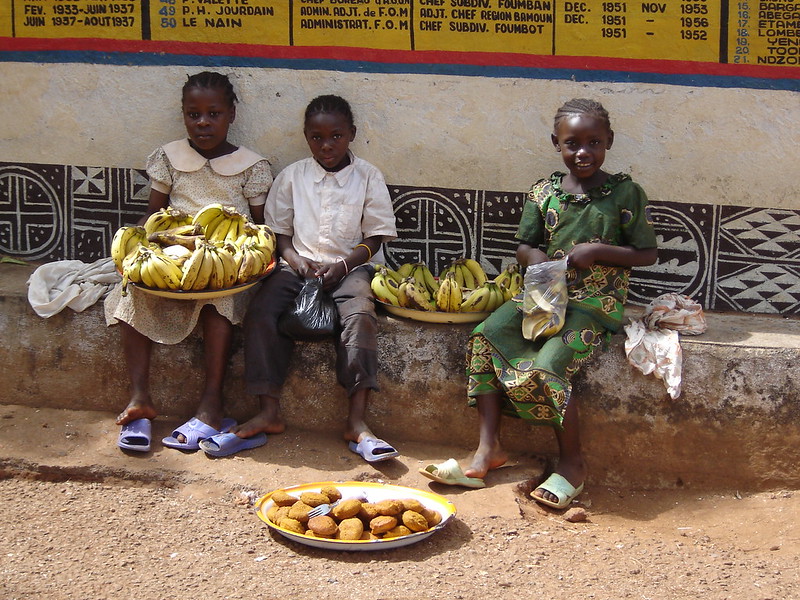
There is potential for growth in Cameroon’s agriculture industry. Although Cameroon is Africa’s fourth-largest cocoa producer, the country imports more than $800 million worth of cereal, flour and fish to feed its people and meet demands in production.
The subsistence agriculture industry employs more than 50 percent of Cameroonians, which requires hard labor without machinery. Cameroon President Paul Biya emphasized the need for a more productive and modern agriculture industry that would benefit small and medium-sized farms. The World Bank, Nestle and the IFC have made various efforts to develop the Cameroonian agriculture sector.
World Bank Project
The World Bank created the Agriculture Investment and Market Development Project to improve the productivity of subsistence crops such as cassava, maize and sorghum. The project began in 2014, costs $166 million and closes on July 2021. The areas of focus range from improving seed quality and public infrastructure to enhancing agricultural technology and distribution systems. Commercial farming is rare. This is why the World Bank is helping create a dominant industry that departs from the old, inefficient and arduous ways of subsistence farming.
Various targets under the project are complete. Yields in cassava, maize and sorghum have all increased. Maize yields have already surpassed the set target while cassava and sorghum are just below their targeted yields. The project has implemented more than 86 sub-projects out of the target goal of 100. More than 15,000 clients have adopted improved agricultural technology that the project introduced, and there are more than 139,000 direct project beneficiaries out of the goal of 150,000. The project also distributed more than 16 million cassava seeds. Although the project ends in July 2021, it met many of its targets. The project benefited Cameroon’s agriculture industry and will continue to do so thanks to the World Bank and its partners.
A Win-Win Scenario
Due to Cameroon’s position as a trade hub off the coast of Africa, companies are seeing opportunities in the growing agriculture industry. Tiger Brands bought Cameroonian company Chococam in 2008 and afterward saw “excellent growth in operating income, driven by strong volume growth and tight cost management.” Nestle produces its Maggi stock cubes in Cameroon but wants more inputs from local farmers. Nestle views it as a win-win scenario, as it gives Nestle a competitive advantage and also helps local farmers and rural development. Nestle also wants to create a starch similar to cornstarch from Cameroon’s cassava plant. It currently imports cornstarch from Europe.
The insurance industry is also developing Cameroon’s agriculture industry and helping farmers insure their crops. International Finance Corporation (IFC) partners ACTIVA Assurance and AXA Cameroon are two insurance companies that provided index insurance to nearly 8,000 cotton growers. Index insurance helps farmers during climatic shocks, such as floods that are common in the country. The goal of IFC and its partners is to provide 135,000 agricultural index insurance contracts by the end of 2020. This will enable 700,000 farm households to offset yield reductions during natural disasters.
Future of the Industry
Companies and NGOs aided Cameroon’s growing agriculture industry either directly or indirectly. Progress is ongoing, but more the industry requires more to develop and help those in poverty. About 90 percent of the poor reside in rural areas, where the main source of income comes from subsistence farming. Thanks to the World Bank, Nestle, Tiger Brands and various NGOs and nonprofits, Cameroon is seeing positive growth in agriculture development.
– Lucas Schmidt
Photo: Flickr
