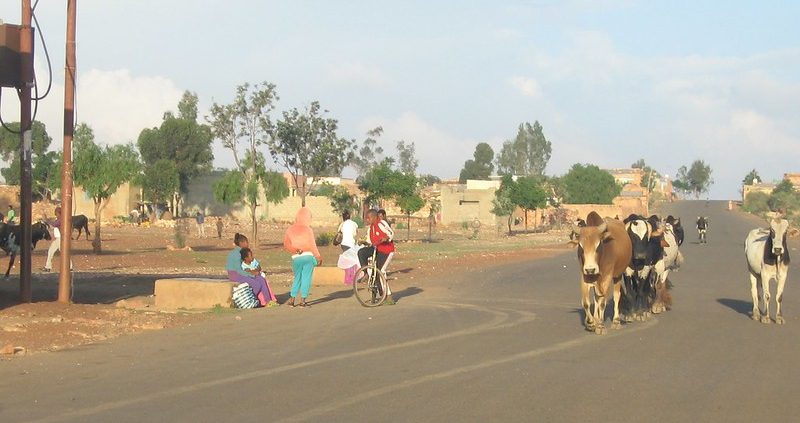
 Eritrea is a small country with a population of approximately 3.6 million, located in the Horn of Africa and divided into six administrative regions. Sudan, Ethiopia and Djibouti border Eritrea, which has an arid and semi-arid climate with limited and erratic rainfall. Agriculture contributes to around 25% of GDP and provides employment for almost all rural households, with 70 to 80% of the population depending on farming and livestock for income and food production.
Food Insecurity in Eritrea
Because Eritrea relies heavily on unpredictable rainfall for agricultural production, the country remains one of Africa’s most food-insecure nations. The Eritrea Food Security Strategy reports that Eritrea produces only 60% of its national food requirements during favorable rainfall years. However, during drought years, production can fall to 20 to 25% of national food needs.
As a result, an estimated 66% of Eritreans, around 2.36 million people, cannot obtain sufficient food and essential goods to maintain a healthy standard of living. Approximately 37% of the population, or 1.31 million people, live below the food poverty line. Around half of all households require food assistance in usual years, and that figure rises to 80% during years of poor harvests.
Food insecurity in Eritrea has particularly severe consequences for children. The Global Nutrition Report estimates that 52.5% of children under five suffer from stunting, significantly above the African regional average of 30.7%. The Eritrea Food Security Strategy also found that 44% of children are underweight, while malnutrition causes anemia in nearly 50% of children.
Eritrea’s Human Development Index score of 0.503 places the country firmly in the low human development category.
Projects Combatting Food Insecurity
Despite these challenges, a range of initiatives are working to strengthen Eritrea’s food security from the ground up. Eritrea’s Ministry of Agriculture launched the Small and Productive Farm Plot initiative, locally known as Nirqah, under the national framework “Safe and Nutritious Food for Everyone, Everywhere.”
The Small and Productive Farm Plot’s concept is that each participating household works and manages a 1,000-square-meter plot, roughly a quarter of an acre, growing cereals, pulses, vegetables and sweet potatoes. Farmers then use crop residues to support livestock. This model is adapted to Eritrea’s diverse agroecological zones, allowing households to cultivate multiple crops throughout the year.
The early results are encouraging. During the first phase across the Maekel, Anseba, Debub and Gash-Barka regions, more than 12,000 households participated. These households produced yields of up to 970 kg of wheat, 950 kg of maize, 730 kg of sorghum and 420 kg of barley per 1,000-square-meter plot.
To date, farmers have cultivated more than 33,000 plots under the program. In the Gala-Nefhi region alone, the program reached 4,421 plots, while introducing 1,641 modern beehives and distributing 40,000 village chickens. In Serejeka, 4,700 farmers took part in the Small and Productive Farm Plot program. Looking ahead, Eritrea’s Ministry of Agriculture has set a national production target for 2028 aimed at balancing output across cereals (50%), pulses (25%) and oil crops (25%).
Environmental Threats
Alongside long-term agricultural development, Eritrea has contended with environmental threats. In December 2024, the Food and Agriculture Organization (FAO) and the Ministry of Agriculture identified a serious escalation in desert locust activity along Eritrea’s Red Sea coastline. The locust outbreak threatened 50,000 hectares of cropland and 450,000 hectares of rangeland, land that supports the livelihoods of approximately 600,000 people.
More than 700,000 sheep and goats, as well as 200,000 cattle, faced losing access to their primary feed sources. The United Nations (U.N.) Central Emergency Response Fund (CERF) allocated $500,000 to FAO for a rapid response program. Between Jan. 16 and July 15, 2025, FAO worked alongside the Ministry of Agriculture and distributed 20,000 liters of Deltamethrin pesticide, 330 protective masks and 20 walkie-talkies to the ministry’s Plant Protection Unit.
By the end of the project, response teams had treated 21,450 hectares of infested land and safeguarded 38,770 tons of standing crops and 100,000 animals. Beyond treating infested farmland, the program directly reached 30,000 people, 55% of whom were women and girls. Radio broadcasts, community meetings and information sessions also reached another 600,000 people across five targeted regions.
The program trained more than 1,030 people, including 30 extension agents and 1,000 community volunteers, in locust monitoring, early detection and safe pesticide handling. Officials also reserved the remaining supplies for the 2025 locust season to strengthen future preparedness.
Water Infrastructure
Eritrea’s long-term investment in water infrastructure also underpins agricultural growth and food security. When Eritrea gained independence in 1993, the nation had approximately 130 dams, a figure that has since grown to 800. The expansion has enabled irrigation, reduced reliance on erratic rainfall and improved the stability of food production.
The dairy sector, constrained by fodder and water shortages resulting in a low-quality national herd, has historically underperformed. To combat this, Self Help Africa launched the DESIRA initiative, the Climate Smart Agriculture Research and Innovation Support for Dairy Value Chains program. This initiative works across the Debub, Anseba and Maekel Zobas districts and aims to improve dairy productivity and profitability, develop dairy value chains and increase national dairy consumption for nutritional benefits. The program expects to directly benefit 800 producer households, or around 4,000 people, along with approximately 50 academic and scientific staff.
Improving food insecurity in Eritrea also requires knowing where the needs are greatest. In 2025, the U.N. system in Eritrea supported the screening of 312,269 children ages 6 to 59 months for nutrition-related symptoms.
Looking Ahead
Food insecurity in Eritrea remains a challenge, shaped by decades of conflict, an unforgiving climate and limited resources. However, the projects taking shape across the country demonstrate how lasting solutions can emerge by building resilience from the ground up. These programs signal that Eritrea is taking meaningful steps toward a more food-secure future.
– Helen Turnbull
Helen is based in Cardiff, Wales and focuses on Good News for The Borgen Project.
Photo: Flickr

Rouble Nagi Transforming Indian Slums into Learning Centers
Currently active across more than 20 cities and 163 slums and villages throughout India, the foundation has painted and repaired more than 150,000 homes to date and reached an estimated 45,000 children through its learning programs. Her approach, built on transforming Indian slums into learning centers, targets communities that India’s formal education system has consistently failed to reach, bringing structured learning directly into the streets, alleyways and open spaces of urban slums.
Turning Art Into Education
One of the ways Nagi educates in these open-air classrooms is by incorporating art into explaining certain topics through murals and class participation. Transforming Indian slums into learning centers means using the surrounding environment to the community’s advantage, and for Nagi, art is the tool that makes that possible. Teachers are encouraged to use art-based learning to simplify concepts and engage students who might otherwise have no access to formal education.
A former student of Nagi named Mayur runs his own art classes and a small printing business. On weekends, he volunteers with Nagi’s foundation, hoping to give other children from the community the same opportunities he received. His story is a testament to what access to education, however unconventional, can produce. Nagi has noted that the murals specifically engage local people by sparking their curiosity, with follow-up surveys conducted by her foundation showing a measurable increase in parents actively enrolling children in the learning centers after mural installations in their neighborhoods, a concrete indicator that community attitudes toward informal education are shifting.
Across areas like Colaba, large murals and inspirational quotes cover the walls of shanties, transforming the visual landscape of neighborhoods. The learning centers are often painted with bright colors and illustrate topics the children will study, featuring plants and animals from their respective kingdoms.
The Rouble Nagi Art Foundation
The foundation’s work extends considerably beyond education. Operating under the banner of its Misaal Mumbai project, which began after a major slum painting initiative in Dharavi in 2018 and has since expanded into a national program called Misaal India, the RNAF works across themes of women’s empowerment, youth employment, sanitation, hygiene and waste management, in addition to its core educational mission. The foundation employs local residents and art college volunteers in the creation of its murals, giving community members a sense of ownership over the work being produced in their own neighborhoods.
In 2025, the foundation established two new education centers and two additional women’s skill centers in Mumbai, while in Kashmir it upgraded existing skill centers, supplied new school benches and learning materials, and set up digital classrooms in Madrasa institutions in Pulwama and Tangdhar, giving students access to computer literacy for the first time. Plans are already in place to launch fully equipped digital classrooms in April 2026 in the remote border villages of Amrui and Jabri in Kupwara, near the Line of Control. The foundation’s government partners include the Government of Maharashtra, Thane Municipal Corporation, Vasai Virar Municipal Corporation and Pune Municipal Corporation, alongside corporate supporters including Bajaj Auto and ONGC.
Poverty, Exclusion and the Education Gap in India
In India, poverty and educational exclusion are deeply intertwined. Research consistently shows that children from the lowest income quintiles, those most concentrated in urban slums, are disproportionately likely to drop out before completing primary school or never to enroll at all. Families living in slums face compounding barriers: irregular income forces children into labor, frequent relocation due to eviction disrupts school attendance, and the direct cost of uniforms, books and transport places formal schooling beyond reach. It is precisely this population that Nagi’s model is designed to serve, by removing cost and distance as barriers entirely.
India has made significant strides in expanding access to schooling. By 2024, the country had sustained an enrollment rate of 98.1% for children in the 6 to 14 age group, signifying near-universal schooling at the primary level. Yet despite this progress, roughly 46 million children in the 6 to 17 age group remain out of school, representing approximately 17% of that population. Figures such as these make clear that initiatives like Nagi’s are not just inspiring stories but necessary interventions for communities that formal education systems have consistently failed to reach.
In 2010, India enacted the Right to Education Act, which mandates free and compulsory elementary education for all children ages 6 to 14 as a fundamental right under Article 21A of the Indian Constitution. In practice, however, significant gaps remain. According to the Deccan Herald, children of migrant workers, Scheduled Castes and Scheduled Tribes (SC & ST) communities, slum dwellers, construction workers and children with special needs are among those most likely to miss school entirely.
Looking Ahead
With the prize money, Rouble Nagi aims to expand the organization into new regions of India, including Jammu and Kashmir, where she grew up, with plans to broaden the curriculum to include computer skills. In a country where millions of children still fall through the cracks of a formal system, Nagi’s model of taking education directly to the streets offers a scalable, community-rooted alternative, and one that her $1 million prize may now help bring to an entirely new generation.
– Jamie Noone
Photo: Flickr
4 Projects Expanding Health Care Access in Madagascar
State of Health Care Access in Madagascar
Madagascar is the world’s fourth-largest island, located approximately 400 kilometers off the eastern coast of Africa in the Indian Ocean. The island has a population of around 31 million people, many of whom live in isolated rural communities with limited access to health care. Nearly half of Madagascar’s population lives more than five kilometers from a health care center, a distance that creates major barriers to care. Despite these challenges, mobile clinics and community health programs now extend essential services to remote populations.
Madagascar’s health care system operates on four tiers: the central level sets national policy, the regional level coordinates implementation, the district level oversees hospitals and primary health centers, and the community level relies on health workers.
Despite this structure, access to health care remains limited across the country. Only one doctor serves approximately 11,000 people, and the life expectancy stands at 62.9 years, below the global average of 71.4 years. Just 4.4% of Madagascar’s population is over 65, reflecting this shorter life expectancy.
Madagascar suffers recurring humanitarian crises, including droughts, cyclones and famine, which place additional strain on the health care system. Disease is also a heavy burden, as malaria placed 28.9 million people at risk in 2022. This disease caused 4.9 million cases and killed more than 12,500 people in 2021. Contracting malaria keeps adults from working and children from attending school, reducing household income and reinforcing cycles of poverty. Tuberculosis incidence remains high, ranging from about 220 to 233 cases per 100,000 people. Under-five mortality stands at 66 deaths per 1,000 live births, while neonatal mortality reaches 24.1 deaths per 1,000 live births.
Rural Challenges
These challenges hit people in remote regions hardest, where distance and poor infrastructure make accessing health care extremely difficult. Geography poses one of the biggest barriers to health care access in Madagascar. According to the United Nations Children’s Fund (UNICEF), some residents must travel at least two kilometers just to reach the nearest health center, and many communities sit much farther away. Nearly half the population lives more than five kilometers from a health care facility, and roughly 75% of local health centers lack reliable electricity. These barriers to effective health care contribute considerably to cycles of poverty.
This lack of basic maintenance limits health centers’ emergency and nighttime care. Mobile clinics and outreach programs offer an important solution, bringing health care directly to isolated communities and helping to close the gap in access.
Reaching Remote Communities in Madagascar
Medair, founded in 1989, has implemented the “Tanan-kavana ho an’ny Fahasalamana” (TKF) project in Bevaho, Mahatsinjo, Anandravy, Antokonala and Ivato. This project aims to reduce morbidity in remote rural areas of southeastern Madagascar and provides free health care, especially for mothers and children. The TKF project, co-funded by the European Union (EU), began in May 2025 and is due to run until July 2026. In 2022, Medair impacted 2,716,365 people through its health and nutrition programs. The initiative shows how outreach health care can significantly support rural communities.
UNICEF’s Improved Nutritional Outcomes Project, known as PARN, has hired nearly 11,000 community health workers across Madagascar to provide care to mothers and children under 5 years old. With funding from the World Bank, UNICEF is providing assistance to strengthen the health system in regions where PARN is being implemented.
ACCESS Program
Management Services for Health and the United States Agency for International Development (USAID) operated the Accessible Continuum of Care and Essential Services Sustained (ACCESS) program across 78 districts and 14 regions. This project worked to ensure that quality health care services were available and accessible to all communities. Efforts include improving maternal and child health, treating malaria, increasing access to reproductive health and family planning services, combatting malnutrition and ensuring access to safe water, hygiene and sanitation. From 2018 to 2025, ACCESS covered more than 16 million people and supported nearly 1,900 health facilities. Maternal mortality decreased from 130 to 65 per 100,000 live births from October 2019 to September 2024 and neonatal mortality decreased from 5 to 3 per 1,000 live births from January 2021 to September 2024.
In southeast Madagascar, Sustainable Environment, Education and Development (SEED) is building community-led, sustainable initiatives in rural areas such as Ambinanibe. Project Votsira’s community education program fills gaps in health knowledge by running biweekly sessions at the local health center, with topics shaped by community needs. Topics include malaria prevention, breastfeeding, childhood illnesses, sexually transmitted infections (STI) and HIV awareness and nutrition. Between July and October 2024, the sessions drew more than 700 attendees in Ambinanibe, reflecting strong community demand for health support. Alongside this, SEED’s Water, Sanitation and Hygiene (WASH) and Solar in Health Centers project is improving physical health care infrastructure by installing solar power, building five gender-segregated latrines and a menstrual hygiene management facility and introducing a clean rainwater harvesting system.
Looking Ahead
Madagascar continues to face significant challenges to health care access, driven by geography and recurring climate disasters. However, mobile clinics and community health workers expand access to lifesaving care for rural communities. As these initiatives grow, they hold the potential to reduce preventable illness and offer a pathway to greater economic stability and stronger rural communities across Madagascar.
– Helen Turnbull
Photo: Flickr
Updates on SDG 2 in China to Address Hunger
SDG 2 in China: A General Trend
China observes a low rate of hunger in most of their population and a general downward trend, where fewer people suffer from this issue. In 2000, around 20% of the population was undernourished, but in 2025 that number was less than 2.5% and it continues to decline; those who are malnourished are often located in rural, mountainous areas where they have limited access to infrastructure and government support.
Updates on SDG 2 in China
Hunger challenges in rural areas decrease China’s SDG rating and one can associate most of these issues with local climate.
Rural provinces Gansu and Qinghai observe the highest rates of hunger in China. Earthquakes, droughts and other unpredictable weather events make farming a challenge for people living in Gansu. The most famous earthquakes have reached 7.8-8.5 on the Richter scale and destroyed more than 20,000 square kilometers of land, leaving the people of Gansu struggling to find sufficient resources.
The people of Qinghai experience similar issues and their high altitude often poses agricultural obstacles. Farmers have several adaptive behaviors to ensure sufficient food supply despite environmental challenges. These strategies include adjusting crop planting time, modifying planting structure, using plastic coverings to protect crops, buying agricultural insurance and seeking other sources of food, such as animal meat, eggs or milk, which are easier to protect from environmental events.
The Good News
The vast majority of Chinese people do not have hunger concerns. In 2017, China launched a Rural Revitalization Strategy to combat hunger in rural regions. The policy focuses on developing rural regions and improving farming technology to allow the people living there independence and stability. Methods include: diversifying economic resources of the region beyond farming and handicrafts as well as developing online presence to advertise goods and invite commercial traffic. The policy has already helped more than a billion people and remains a vital source of relief.
Since the challenges in these areas are mainly environmental and not political, the Chinese government becomes a cooperative and powerful actor in this situation. The Chinese Communist Party continues to expand on its strategies to improve the lives of those in more rural regions.
Gansu has rich mineral resources, including coal, iron, copper and various rare Earth metals. The province also has major sources of renewable energy. Hydroelectricity provides most of the power in this area, meaning that the province has an environmentally stable source of energy.
Qinghai is sparsely populated and not heavily developed, but has many natural resources and tourist attractions that hold potential for revenue that could improve the lives of residents. High-quality honey has also become more sought after in recent years. In only the first four months of 2026, exports of honey have increased by more than 20%, largely exporting to countries such as Greece, Singapore and Poland.
China has an extensive railroad and bullet train system which helps transport people and goods over long distances. This can give people living in rural areas more autonomy and allow more connection and development. China could use its railroad system to transport freight and develop the areas and the high-speed bullet trains may function as efficient transportation for people in rural areas to commute or even move to the city to seek more lucrative opportunities as well as allow them to travel to different rural areas with possibly more fertile land.
Conclusion
Although hunger in China persists, solutions are available for people living in these regions. Continued development with maglev and using this technology to focus on rural revitalization can have major impacts on people living with limited access to major infrastructure. Leveraging valuable natural resources and tourist attractions may also increase revenue and improve living conditions.
– Amber Mantiply
Photo: Unsplash
3 Notable USAID Programs in Mongolia
The United States Agency for International Development’s (USAID) recent launch of the five-year Mongolia Strategic Framework in 2023 aims to facilitate the country’s economic growth. As stated in a GoGo Mongolia article, the framework’s primary goals are to improve how democracy functions in Mongolia, strengthen its independence and expand its economy—goals that directly address the root causes of poverty in the country. Here are three specific USAID programs in Mongolia operating under this framework:
1. BEST
One of the key USAID programs in Mongolia is called the Business Excellence for Sustainability and Transparency (BEST) Program. USAID created this program in 2019 to help the country’s smaller businesses grow. The BEST program received $15 million in USAID funding to teach business owners how to handle their money, market their products and fill out loan paperwork. USAID especially wanted to reach two groups: businesswomen and business owners living in Mongolia’s countryside.
By December 2024, a news release from the U.S. Embassy in Mongolia stated that 5,397 small businesses acquired loans totaling $100.4 million through the program. These loans helped create more than 4,000 jobs. Women-led businesses received more than half of all loan funding, benefiting 3,005 female entrepreneurs. Another $500,000 went to 176 rural businesses, helping them buy new equipment and hire more workers.
By helping small businesses access financing and expand operations, the BEST program creates income opportunities for Mongolians. Its focus on women-led enterprises and rural businesses is particularly important because these groups often face greater barriers to economic opportunity and financial services. The creation of more than 4,000 jobs demonstrates how the program can help impoverished families improve their financial stability.
2. MEG
Another of the USAID programs in Mongolia focuses on the country’s struggling energy sector. Mongolia relies heavily on old coal plants that cannot keep up with demand, forcing the government to buy power from Russia and China. Though the nation has plenty of sun and wind for clean energy, the coal industry has blocked progress. This has contributed to the rising air pollution in Mongolia’s capital, Ulaanbaatar. In 2022, USAID launched the Mongolia Energy Governance (MEG) activity in collaboration with Abt Global to fix these issues.
The program works with the government and energy companies to make the power sector more secure by encouraging private investment, developing contingency plans and adopting clean energy technology. So far, MEG has shown real results. The Abt Global 2024 report says 1,727 people have received direct help from the program, 40% being women. With MEG’s help, Mongolia strives to make all of its own electricity by 2030 and sell clean power to neighboring countries by 2040.
Reliable and affordable electricity is integral to poverty reduction. When power shortages occur, households and businesses face higher costs and fewer economic opportunities. By advocating for cleaner, more reliable energy sources, the MEG activity strengthens access to dependable electricity, minimizing disruptions to the economy and reducing pollution that disproportionately affects lower-income communities.
3. CRC
A third USAID program in Mongolia is the Climate Resilient Communities (CRC) project, which helped Mongolians prepare for climate-related disasters through improved disaster planning and climate-smart agriculture. Funded by USAID’s Bureau of Humanitarian Assistance, the project operated in Ulaanbaatar and the provinces of Dornod, Dundgobi, Dornogobi, Gobi-Altai and Uvs before ending early in March 2025 due to a U.S. government Stop Work Order.
Despite the early shutdown, the project directly benefited 65,666 people and supported 29 community-led disaster preparedness projects involving 4,217 participants, according to World Vision Mongolia. The project also helped herders grow their own animal feed through soil-free planting methods. Four herder groups received training and $201,576 in equipment, harvesting more than 40 tons of livestock feed that helped animals survive harsh winter conditions.
Climate disasters can push vulnerable families deeper into poverty by killing livestock and reducing agricultural production. Because many rural Mongolians depend on herding and farming for income, improving disaster preparedness can help protect households from economic setbacks. The CRC project preserved an important source of income and food for rural families, ensuring that they won’t be susceptible to poverty-causing weather conditions.
Why It Matters
These three programs demonstrate the benefit of a long-term effort like the Mongolia Strategic Framework. For Mongolia, a country facing challenges in jobs, energy and climate, this support makes a real difference. That is why USAID programs in Mongolia matter. They help the country build a more resilient future that can benefit the U.S., opening new markets for American products and maintaining a stronger standing for democracy in Asia. With continued funding, Mongolia can thrive.
– Melody Ruiz
Photo: Pixabay
Food Systems in Iran: Persisting Through Crisis
Iran, a nation with more than 85 million people, faces significant economic hurdles that impact its ability to maintain a stable food supply. Strengthening food systems in Iran remains a core priority for the state, especially as international sanctions and changing weather patterns place pressure on domestic production. Despite these hurdles, the country continues to implement strategies to enhance the resilience of its agricultural sectors and protect vulnerable populations.
Key Facts About Food Systems in Iran
While challenges clearly exist, the domestic agricultural sector maintains several key strengths:
Overcoming Economic and Climate Hurdles
In recent years, two major challenges to food systems in Iran have emerged: intensified international sanctions and severe drought. Unlike many other nations facing insecurity, Iran does not suffer from a physical food shortage. Store shelves across the country remain fully stocked with a wide variety of goods, but international sanctions have reduced foreign exchange earnings, leading to a 40% rise in food price inflation within a single year.
Such a sharp increase in costs places abundant food out of the financial reach of many families. These economic pressures caused staples like green lentils and vegetable oil to triple in cost. Additionally, water scarcity remains a critical threat as only 2.6% of the land is naturally suitable for agriculture. This makes a nation facing severe drought heavily dependent on irrigation. To ensure citizens have reliable access to food, the government balances domestic farming with necessary imports from abroad.
Government Support for Agriculture
To counter these challenges, the Iranian government provides significant support to the agricultural sector. Currently, the government pays more than 75% of the total cost of chemical fertilizers through subsidies. This financial aid helps farmers maintain output despite the rising costs of equipment and raw materials.
Furthermore, the government offers guaranteed purchase prices for strategic crops like wheat. By allocating energy and fuel at lower prices, the state also reduces the overall operational costs for rural producers. These actions encourage farmers to keep producing during difficult times.
Implementing the Food Voucher Program
One major solution to current challenges within food systems in Iran is the government-led food voucher program. This initiative provides targeted support for the purchase of essential commodities for low-income households. Additionally, earlier this year, officials also raised the monthly minimum wage by 60% to approximately 166 million rials to help families manage rising costs.
While inflation remains a challenge, these cash and non-cash initiatives increase consumer purchasing power and improve the equitable distribution of income. Data shows that these fiscal interventions are necessary to ensure that households can still afford necessities as prices fluctuate.
Looking Ahead
While challenges remain, government efforts drive progress within food systems in Iran. The nation clearly demonstrates its commitment to modernization by prioritizing innovation to increase self-sufficiency in the face of extreme international sanctions. Additionally, government programs like food vouchers and a higher minimum wage protect vulnerable families to ensure that everyone can afford the abundant supply.
– Nikki Rasoulian
Photo: Unsplash
Migration to Ecuador: An Untapped Economic Potential
Meanwhile, the UNHCR estimates that nearly 500,000 refugees, asylum seekers, or people in need of protection have remained in Ecuador in the hope of a better life. Most of these are irregular migrants from Colombia and Venezuela. These groups are at risk of marginalization due to stigmatization, discrimination and a lack of valid documentation—yet new data shows that a well-organized strategy for integrating refugees has immense potential to boost the country’s economic growth. However, since the outbreak of the pandemic in 2020 the country has been struggling with serious crime issues. Drug cartels and gang crime are causing an increasing exodus of young and productive Ecuadorian workers. The result: no economic growth and a rising poverty rate.
Emigration of Productive Labor
Ecuador, once known as the “Island of Peace,” attracted immigrants from around the world due to its comparatively low homicide rate. As the Center for Strategic and International Studies reported, Ecuador’s homicide rate in 2019 stood at 6.7 per 100,000 inhabitants, making it one of the lowest among Latin American countries.
During the pandemic, the situation shifted dramatically: Lockdowns forced businesses to close, tourism declined and oil exports fell. Ecuador’s central bank reported a 7.8% decrease in gross domestic product (GDP), while unemployment rose rapidly. Three out of 10 workers lost the jobs they held before the pandemic; half of them remained unemployed. The homicide rate jumped to 50.91 per 100,000 inhabitants in 2025.
As a result, income levels in Ecuador have changed: according to the National Institute of Statistics and Census (INEC), income poverty rose from 25% in 2019 to nearly 33% in 2020—1.4 million people fell into income poverty.
At the time, an undesirable but already well-researched phenomenon plagued the country: the positive correlation between poverty and crime. In other words: rising poverty leads to a higher risk of violence and crime, which, according to Ecuador’s Ombudsman’s Office (DPE), has resulted in the displacement of more than 300,000 Ecuadorians in recent years. Demographically speaking, most of them are young men of working age. A paper by the Inter-American Development Bank (IDB) calculated the direct cost as an average of 3.44% of the GDP annually. Indirectly, the exploding crime rates slow down economic growth.
Ecuador as a Host Country
Ecuador serves as a transit and entry country for groups from Africa, Cuba and Haiti. The country has, for decades already, been experiencing an influx of refugees from countries plagued by armed conflict and violence. Nonetheless, two main groups mark migration to Ecuador:
Migrants from Colombia who have fled an armed conflict between guerrilla groups and the government that has been ongoing for more than 50 years. There are an estimated 130,000 to 200,000 Colombians living in Ecuador; according to the UNHCR, 94% of the more than 80,000 recognized refugees are Colombians.
In addition, Ecuador is home to Venezuelans who fled the humanitarian crisis under the Maduro regime. Around 440,000 migrants have applied for asylum, but only a small number of Venezuelans in Ecuador have valid residency documents. For Venezuelans, it takes months or even years to obtain a document such as an ID card or a passport. These delays are due to very high financial barriers, political restrictions, and the general collapse of the Venezuelan bureaucracy.
Migrants in Ecuador Face Legal Obstacles and Discrimination
The status of undocumented refugees creates significant barriers and contributes to the marginalization of these groups. At the same time it opens the door to systemic discrimination, exposes them to the risk of crime and violence, and traps refugees in a cycle of poverty. Access to housing, healthcare, education or employment appears to be significantly more difficult. Although an estimated one-third of refugees in Ecuador hold a college degree, the vast majority end up in the informal sector, with some earning a per capita income of only about $175 or less.
People in host countries often stigmatize minorities. They frequently project the violence and poverty prevalent in refugees’ countries of origin onto those seeking protection, which hinders their cultural and socio-economic integration. In crisis and conflict situations, politicians exploit fear and uncertainty for propaganda against migrants, in the hope of achieving better election results by stoking fears of competition for jobs or a strain on public finances.
Migration to Ecuador Can Boost Economic Growth
However, contrary to all the clichés, propaganda, and hate campaigns, recent statistics from the Center for Global Development (CGD) show that Venezuelan migrants are underrepresented among those detained for criminal offenses in Ecuador. In 2025, Venezuelans made up 2.4% of Ecuador’s population but accounted for only 1% of all detainees. Studies even suggest that refugees are more likely to be victims of crimes committed by their hosts than the other way around, but most of these cases remain unreported due to lack of trust in Ecuador’s authorities.
Given the country’s precarious security and economic situation, the integration of migrants is a crucial factor for economic growth and the well-being of the Ecuadorian population. As the International Organization for Migration (IOM) notes, Venezuelan migrants contribute an estimated $900 million annually to the Ecuadorian economy—simply through their consumption of goods and services. A well-thought-out bureaucratic strategy and a liberalized refugee policy could benefit the country and generate additional resources to combat gang violence and crime.
Migration and Poverty
Humanitarian aid plays a crucial role in integrating migrants into Ecuador’s society. The situation in Colombia is a prime example of how vital financial support can be for the stabilization and integration of refugees: the country has taken in over 2 million Venezuelans. Through programs such as the “Humanitarian Cash Transfer” (HCT), which was funded by USAID’s Bureau for Humanitarian Assistance (BHA), households received $100 per month over a six-month period.
A study conducted by the International Monetary Fund (IMF) estimated the total cost of health care, education and other services for this period of assistance—assuming a total of 2 million refugees—at $1.3 billion. The IMF’s analysis highlights that host countries are under significant financial pressure. However, the study found a surprisingly positive impact on the countries’ productivity. Due to the growth of labor force and a better match between migrants’ human capital and available jobs, these countries are able to achieve meaningful productivity and growth gains in the medium term. The study estimates that GDP could grow by 2.5 to 4.5 percentage points by 2030. Furthermore the authors assume that the costs of integrating migrants and refugees would decrease if they gained access to the labor market due to increased economic activity and the expansion of the tax base.
Projects such as HIAS’s Economic Empowerment Program aim to educate Venezuelans about their economic opportunities and help them develop a greater awareness of their skills and how to apply those skills in a business setting. By offering training, mentoring programs and start-up capital, Venezuelans can be integrated into the labor market. In this way, refugees are provided with a sustainable livelihood—while simultaneously contributing to a net benefit for Ecuadorian society and economic growth.
Conclusion
Migration to Ecuador plays a major role in the country’s middle-term and long-term development. In order to boost economic growth, Ecuador must tackle its national crime rate explosion. Therefore, the country needs to break its cycle of poverty, especially amongst migrants from Venezuela and Colombia. Moreover, the Ecuadorian population should recognize the potential that refugees bring to their country. Foreign aid and assistance combined with a consistent socio-economic integration strategy can provide long-term solutions for downsizing poverty and minimizing the negative effects on Ecuador’s economy.
– Oliwia Kowalak
Photo: Unsplash
Innovations in Poverty Eradication in Tuvalu
Land Reclamation Efforts
One of the ways Tuvalu is tackling climate issues is through reclaiming land. As Tuvalu at its highest point is only 15 feet above sea level, many communities are at risk of coastal erosion because they are too low-lying and a sea level rise as low as 8 inches could make the country uninhabitable in 100 years. A measure to solve this problem organized by the national government and the United Nations Development Program (UNDP) is the Tuvalu Coastal Adaptation Project which began in June 2017.
The project aims to implement protections against coastal erosion and increasingly intense storm and wave activity. This will involve creating 7 hectares of new land designed to withstand storm surges and stay above forecast sea level rises until at least 2100. The project is set for completion in September 2026 and so far has already seen the construction of a 2,500 foot platform on the island of Fongafale to protect essential infrastructure and coastal homes. The new land can be used to relocate the most vulnerable residents and to provide government and community services on safe ground.
Improvements in Food Security
On the island of Nui, violent hurricanes make traditional crop farming difficult and food security very uncertain. Innovative solutions are essential to ensuring food security for the small community living there.
One of these innovations in poverty eradication in Tuvalu is the introduction of food cubes on the island, where people can plant crops in movable containers instead of in the vulnerable soil by the shore. The UNDP and International Organization for Migration (IOM) has implemented these and provided them to residents as part of the Climate Security in the Pacific Project.
The food cubes have proven to be especially effective and have provide much needed security for the crops of the 500 residents on the island of Nui. The cubes are simple to set up and are easy to move to a safer location more inland by the residents in the event of a storm. The cubes have also been successful on other Tuvaluan islands such as Nukulaelae and Funafuti where food security has also improved.
Fostering Connections to Global Institutions
Tuvalu is a very remote country, it is very reliant on aid from international institutions. With the impending risk of changing weather patterns exacerbating the poverty level in the country, Tuvalu is prioritizing forming connections with organizations that can assist with tackling climate poverty.
An example of this is the Tuvalu Second Climate and Disaster Resilience Development Policy Financing from the World Bank. While the previous initiatives have been for specific projects, this loan from the World Bank to the Tuvaluan government is to ensure the fiscal resilience of the country amidst the risks of changing weather.
The loan, as well as the strengthened ties between Tuvalu and the World Bank and other monetary organizations, provides much more financial security for Tuvaluan citizens and allows local entrepreneurs and business owners to contribute more to the island state’s economy.
Looking Ahead
These innovations in poverty eradication in Tuvalu, such as cultivating connections with international organizations, can help to ensure a safe and secure future for the country and its citizens.
– James Holder
Photo: Unsplash
Closing the Gender Wage Gap in Equatorial Guinea
A Wealth Gap Hidden in Plain Sight
Women hold only about 40% of positions in Equatorial Guinea’s total labor force, earning less than their male counterparts across sectors. Men overwhelmingly dominate the oil industry, which drives the country’s economy and commands significantly higher wages, leaving women concentrated in lower-paying agriculture and informal service work.
Informal social norms compound these structural barriers. According to the OECD’s 2023 Social Institutions and Gender Index (SIGI), 55% of the population believes men make better business executives than women, and another 55% agrees that when jobs are scarce, men should have more right to employment than women. These attitudes narrow women’s economic opportunities even where formal legal protections exist.
Education and Opportunity
The gender wage gap in Equatorial Guinea also reflects a persistent educational gap. Girls, particularly those from rural and lower-income households, face significant barriers to completing secondary school. A high rate of child marriage contributes directly: the OECD SIGI reports that 30% of women aged 20 to 24 were married or in a union before age 18, compared to a world average of 26% and a regional African average of 31%.
Early marriage interrupts schooling and limits women’s lifetime earning potential, funneling them into lower-paying sectors while men gain access to the higher-wage positions that oil wealth generates.
Gender-Based Violence as an Economic Barrier
Gender-based violence further restricts women’s economic participation. The OECD SIGI finds that 46% of women aged 15 to 49 have experienced intimate partner violence at some point in their lifetime, which is above the African regional average of 33%. In the past 12 months alone, 26% of women reported experiencing such violence, compared to a regional average of 17%.
Legal gaps reinforce the problem. Equatorial Guinea does not criminalize domestic violence, and its definition of rape does not rest on the absence of consent. These shortcomings leave many women without legal recourse and undermine their ability to remain safe, productive and economically active.
Agenda Igualdad: A Historic Turning Point
Significant progress is underway. In May 2024, Equatorial Guinea held its first-ever National Forum on Gender Equality, titled “Agenda Igualdad.” Prime Minister Manuela Roca Botey chaired the three-day forum, which the Ministry of Social Affairs and Gender Equality organized with United Nations support. Government officials, civil society organizations, women activists and UN representatives all participated, building a unified roadmap for change.
The forum produced the Djibloho Declaration, a concrete action plan committing the government to combating gender-based violence through education and improved data collection, protecting the rights of women with disabilities and strengthening women’s economic capacities in commerce. The declaration also calls for mainstreaming gender considerations into all national policies.
The United Nations Population Fund (UNFPA) played a central role, reaffirming the U.N.’s commitment to gender equality initiatives in the country. Just weeks after the forum, UNFPA led a five-day training workshop that equipped public officials with gender-based violence case management and victim referral skills.
Closing the Data Gap
One of the Djibloho Declaration’s most consequential commitments involves improving gender data collection, a critical step toward closing the gender wage gap in Equatorial Guinea. The OECD SIGI notes that a lack of gender-disaggregated data on social norms and economic outcomes currently prevents a comprehensive understanding of women’s rights and opportunities in practice.
Better data enables better policy, and better policy means a more equitable economic future. With the Agenda Igualdad framework now in place and UNFPA, UNICEF and civil society organizations working alongside the government, real momentum exists to close the gender wage gap in Equatorial Guinea for good.
– Amanda Draznin
Photo: Wikimedia Commons
Homelessness in Tokelau: Where No One Sleeps Without Shelter
Tokelau, a dependent territory of New Zealand, is one of the most remote places on earth. The secluded non-self-governing region in the South Pacific comprises three coastal atolls – three rings of sandy beaches and lush green foliage surrounding beautiful turquoise lagoons – and has a combined population of 2,700 residents.
How Community and Subsistence Make a Difference
Homelessness in Tokelau is a foreign concept due to each atoll’s strong sense of collective responsibility. This Polynesian cultural norm greatly dictates Tokelau’s land management and dwelling allocation.
Subsistence is a major pillar of the region’s economic lifestyle. Since the three islands have a joint area of 12 square kilometers, how the residents use their land is crucial to housing accessibility.
Tokelauans do not farm with the intent to mass-export or produce beyond basic means. The Government of Tokelau says that residents cultivate only one cash crop (coconuts) and take advantage of local fisheries instead of dedicating mass amounts of land to animal husbandry. Geo Factbook notes that industrial efforts remain small-scale and construct mostly traditional handicrafts.
In addition to the island group’s minimalist way of life, homelessness in Tokelau is avoided due to a social safeguard. According to Tokelau’s governing system, all three islands have a complex social structure that emphasizes the value of community and sharing, making it rare for someone to be left without access to shelter or communal resources.
In the territory, people do not see land as a commodity; individuals do not buy and sell land for profit. Instead, the culture’s familial and communal obligations take charge, creating a distribution system in which ownership of and access to land are chiefly determined by family and ancestral ties, and the portion excluded from that generational handoff is reserved for collective use.
Addressing Overcrowded Homes Without Sacrificing Community
The same generosity that extinguishes homelessness in Tokelau also causes overcrowding in households across all three islands. The Tokelau National Statistics Office’s “2016 Census of Populations and Dwellings,” the most recent one available, found that across the whole of Tokelau, the most common number of rooms per dwelling was three (around 27%), and 14.5% of dwellings had eight or more occupants. The cultural tradition of extended families and multiple generations living together in single homes leads to serious health risks and poor housing quality. The Tokelau Community Housing project aimed to solve this problem.
Researchers at the Wellington School of Medicine and the Wellington Tokelauan Association in New Zealand approached the territory’s overcrowding problem in a unique way: they designed housing that could accommodate large numbers of people per dwelling, rather than disrupting the complex social and cultural system that values community and sharing.
The Tokelau Community Housing project successfully constructed a single demonstration home that accommodated 11 occupants and stayed warm, dry and well-ventilated. The Tokelauan family that lived in the house during the research period responded positively, reporting they felt healthier and happier after just a couple of months
Concluding Thoughts
The demonstration home from the Tokelau Community Housing project was never mass-produced, and neither New Zealand nor Tokelau has stated that the research paper’s published findings have influenced their housing policies. Yet, the project proved that overcrowding is not an inevitable consequence of Tokelau’s way of life. Researchers showed that communities do not have to choose between homelessness and unhealthy living conditions.
– Mia Puleo
Photo: Flickr
3 Projects Combatting Food Insecurity in Eritrea
Food Insecurity in Eritrea
Because Eritrea relies heavily on unpredictable rainfall for agricultural production, the country remains one of Africa’s most food-insecure nations. The Eritrea Food Security Strategy reports that Eritrea produces only 60% of its national food requirements during favorable rainfall years. However, during drought years, production can fall to 20 to 25% of national food needs.
As a result, an estimated 66% of Eritreans, around 2.36 million people, cannot obtain sufficient food and essential goods to maintain a healthy standard of living. Approximately 37% of the population, or 1.31 million people, live below the food poverty line. Around half of all households require food assistance in usual years, and that figure rises to 80% during years of poor harvests.
Food insecurity in Eritrea has particularly severe consequences for children. The Global Nutrition Report estimates that 52.5% of children under five suffer from stunting, significantly above the African regional average of 30.7%. The Eritrea Food Security Strategy also found that 44% of children are underweight, while malnutrition causes anemia in nearly 50% of children.
Eritrea’s Human Development Index score of 0.503 places the country firmly in the low human development category.
Projects Combatting Food Insecurity
Despite these challenges, a range of initiatives are working to strengthen Eritrea’s food security from the ground up. Eritrea’s Ministry of Agriculture launched the Small and Productive Farm Plot initiative, locally known as Nirqah, under the national framework “Safe and Nutritious Food for Everyone, Everywhere.”
The Small and Productive Farm Plot’s concept is that each participating household works and manages a 1,000-square-meter plot, roughly a quarter of an acre, growing cereals, pulses, vegetables and sweet potatoes. Farmers then use crop residues to support livestock. This model is adapted to Eritrea’s diverse agroecological zones, allowing households to cultivate multiple crops throughout the year.
The early results are encouraging. During the first phase across the Maekel, Anseba, Debub and Gash-Barka regions, more than 12,000 households participated. These households produced yields of up to 970 kg of wheat, 950 kg of maize, 730 kg of sorghum and 420 kg of barley per 1,000-square-meter plot.
To date, farmers have cultivated more than 33,000 plots under the program. In the Gala-Nefhi region alone, the program reached 4,421 plots, while introducing 1,641 modern beehives and distributing 40,000 village chickens. In Serejeka, 4,700 farmers took part in the Small and Productive Farm Plot program. Looking ahead, Eritrea’s Ministry of Agriculture has set a national production target for 2028 aimed at balancing output across cereals (50%), pulses (25%) and oil crops (25%).
Environmental Threats
Alongside long-term agricultural development, Eritrea has contended with environmental threats. In December 2024, the Food and Agriculture Organization (FAO) and the Ministry of Agriculture identified a serious escalation in desert locust activity along Eritrea’s Red Sea coastline. The locust outbreak threatened 50,000 hectares of cropland and 450,000 hectares of rangeland, land that supports the livelihoods of approximately 600,000 people.
More than 700,000 sheep and goats, as well as 200,000 cattle, faced losing access to their primary feed sources. The United Nations (U.N.) Central Emergency Response Fund (CERF) allocated $500,000 to FAO for a rapid response program. Between Jan. 16 and July 15, 2025, FAO worked alongside the Ministry of Agriculture and distributed 20,000 liters of Deltamethrin pesticide, 330 protective masks and 20 walkie-talkies to the ministry’s Plant Protection Unit.
By the end of the project, response teams had treated 21,450 hectares of infested land and safeguarded 38,770 tons of standing crops and 100,000 animals. Beyond treating infested farmland, the program directly reached 30,000 people, 55% of whom were women and girls. Radio broadcasts, community meetings and information sessions also reached another 600,000 people across five targeted regions.
The program trained more than 1,030 people, including 30 extension agents and 1,000 community volunteers, in locust monitoring, early detection and safe pesticide handling. Officials also reserved the remaining supplies for the 2025 locust season to strengthen future preparedness.
Water Infrastructure
Eritrea’s long-term investment in water infrastructure also underpins agricultural growth and food security. When Eritrea gained independence in 1993, the nation had approximately 130 dams, a figure that has since grown to 800. The expansion has enabled irrigation, reduced reliance on erratic rainfall and improved the stability of food production.
The dairy sector, constrained by fodder and water shortages resulting in a low-quality national herd, has historically underperformed. To combat this, Self Help Africa launched the DESIRA initiative, the Climate Smart Agriculture Research and Innovation Support for Dairy Value Chains program. This initiative works across the Debub, Anseba and Maekel Zobas districts and aims to improve dairy productivity and profitability, develop dairy value chains and increase national dairy consumption for nutritional benefits. The program expects to directly benefit 800 producer households, or around 4,000 people, along with approximately 50 academic and scientific staff.
Improving food insecurity in Eritrea also requires knowing where the needs are greatest. In 2025, the U.N. system in Eritrea supported the screening of 312,269 children ages 6 to 59 months for nutrition-related symptoms.
Looking Ahead
Food insecurity in Eritrea remains a challenge, shaped by decades of conflict, an unforgiving climate and limited resources. However, the projects taking shape across the country demonstrate how lasting solutions can emerge by building resilience from the ground up. These programs signal that Eritrea is taking meaningful steps toward a more food-secure future.
– Helen Turnbull
Photo: Flickr