Indian Slums: Why People in India Won’t Be Slumming It Anymore
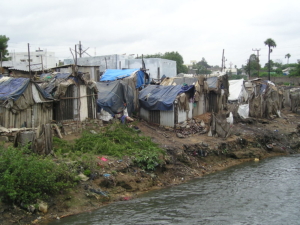 From “Slumdog Millionaire” to “Gully Boy,” Indian slums have been the iconic backdrop of several movies and the root of several inspiring rags-to-riches stories. However, a recent series of slum demolitions in New Delhi has left low-income residents displaced. The action has drawn criticism from United Nations (U.N.) human rights experts, who called it an “aggravated form of human rights violation.”
Three Makes a Pattern
The Delhi Development Authority (DDA), established to promote and construct large-scale affordable housing in Delhi, recently demolished Loni Road in northeast Delhi’s Gokalpuri locality. This marks a pattern, following two earlier demolitions of homes in areas such as Ashok Vihar, Wazirpur and Madrasi Camp. It demolished neighborhoods described as “illegally encroaching on government land,” like the Jailorwala Bagh JJ Cluster in Ashok Vihar on June 16.
Many slum structures were torn down, leaving many low-income wage workers displaced without a home. According to a piece in the Times of India, DDA did not inform the slum-dwellers about the demolitions. Another neighborhood in the DDA demolition list, Batla House, received some relief when residents approached the High Court. However, the public interest litigation filed by MLA Amanatullah Khan was dismissed. The petition argued that some targeted residents were not in the disputed zone.
The DDA initiated these demolition drives following High Court orders to resolve the flooding issues caused by the narrow drains that obstructed water flow during heavy rains.
Criticism and Future
U.N. experts have issued a warning to India to halt demolitions that disproportionately affect people living in poverty. Long-time residents of these areas are now forced to watch their homes being destroyed. According to the U.N. special rapporteur on the right to housing, India is leading the front in illegal home demolitions.
The U.N. experts, in their statement, pointed out that the demolitions are carried out without any investigation into the presence of these “illegal immigrants.” They added that concerns such as “national security” and motivations like the “anti-enforcement campaigns” are used to justify the actions. These “bulldozer drives” affect low-income household minorities and migrants who are not qualified for resettlement and cannot afford housing.
Dharavi, one of Asia’s largest slum clusters, is currently in the process of redevelopment, with its first list of slum households eligible for housing being released. Chief Minister Rekha Gupta on June 20 said that the Delhi government is considering studying Dharavi’s model for the redevelopment of 675 slum clusters in the national capital. Gupta asked the residents of Indian slums in Delhi to consider their safety and security when they build their homes near the railway line.
Innovation Amid Crisis
Being one of the fastest urbanizing countries in the world, India is estimated to have a huge growth in population. The U.N. has estimated a whopping 164 million addition to India’s population between 2015 and 2030 in urban areas.
Researchers are exploring ways to improve slum conditions amid India’s rapid urbanization. A scientific trial led by the Wellcome Trust-backed project is trying to solve the heat problem, especially as heat waves intensify every summer in places like Ahmedabad.
Roofs of Indian slums were painted with a reflective white coating to send the sun’s radiation back to the atmosphere. This one-year trial involving 400 households in Ahmedabad was started earlier this year and residents already see a difference in temperature and electricity bills.
Conclusion
Although steps are being taken, urban growth is outpacing the development of adequate housing, sanitation, clean water and waste management in many areas. The demolition drives are displacing poverty-stricken communities, depriving them of their means of livelihood, deepening divisions and violating human rights.
– Sahana Shastry
Sahana is based in Newtown Square, PA, USA and focuses on Global Health for The Borgen Project.
Photo: Flickr
