Digital Development in Mongolia
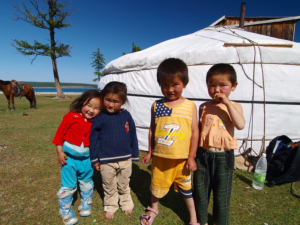 Most of Mongolia’s population resides in the country’s capital, Ulaanbaatar, which serves as a large urban area; the Asian country can be categorized into two different areas: urban and rural. In fact, one of the things Mongolia is most known for is its population of grazing livestock, due to the fact that about three-fourths of the country is made up of pastureland. As of 2025, the country has over 3.5 million citizens, spanning over three topographical zones.
Background
As late as 2018, 90% of the population in Mongolia had access to the internet, along with widespread 3G and 4G. In fact, in the last 10 years, the use of technology, particularly among younger citizens, has only increased. This statistic includes Mongolia’s more nomadic communities, who are a part of more rural, isolated areas, where civilians may not get the same speedy internet connection as soon as the more urban communities have.
While it is evident that Mongolia is not as technologically advanced as other countries are in this day and age, such as China or the U.S., the country is working to change that, especially when it comes to its more remote communities.
e-Mongolia
Teaming up with the e-Mongolia Initiative, a platform in Mongolia that works to deliver public services to every single area of the East Asian country, the Government’s Digital Nation Strategy is working to increase the overall digital literacy in Mongolia. As the e-Mongolia Initiative works to serve the most remote and nomadic areas of the country, the Mongolian government plans to help increase digital literacy within those specific communities.
In addition to the government’s plans for country-wide internet services, the Resident Coordinator’s Office (RCO), with UNDP and UNICEF are all partnering with the government for this project. With this collaboration, the UNDP, RCO, and UNICEF are hoping to help the specific areas of DarkhanUul, Khentii, Dornod, and Ulaanbaatar expand their digital literacy.
Digital Literacy
While the United Nations Sustainable Development Group (UNSDG) never states that Mongolia needs more digital literacy, it points out the positives that come with a more technologically advanced society.
The Head of the Government E-Services Department in the Darkhan-Uul Province, Soyolmma Namkhajav, stated, “We are happy to collaborate on this project to deliver faster and more accessible online public services to citizens.”
These partnerships work to improve digital literacy within the country, in order to improve the public online services that are already available throughout the country, particularly in nomadic areas. In addition to improving already available services, the government hopes to improve education with technology.
The UNSDG held an information training session for 60 teachers across thirty schools in Mongolia for a year in 2024. Citing one of the teachers who participated in the session, in addition to helping schools integrate technology into their students’ learning, education leaders are learning how to teach their students how to be safe when browsing the internet. In addition to serving schools, the government is hoping to make training and other valuable resources more accessible online for public servants and local communities.
The Future
Recently, the RCO has been mobilizing resources with the United Nations to help support the digital future in Mongolia, including the Ministry of Digital Development, Innovation, and Communications of Mongolia, which is persistent in making sure that this program focuses on national priorities and government ownership. Relevant governmental ministries are hoping to train at least 3,000 citizens, 1,500 women in particular, across three different regions, including Ulaanbaatar, to learn these important digital skills.
– Megan Akers
Megan is based inFredericktown, OH, USA and focuses on Technology and Solutions for The Borgen Project.
Photo: Flickr
