5 Facts About Hunger in Tuvalu
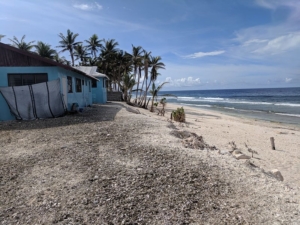 Tuvalu is a small island nation composed of nine islands in the western Pacific Ocean. Because of its history as a former British colony, many of its citizens speak English, even though the native language is Tuvaluan and the native people are Polynesian. Tuvalu is recognized as one of the world’s least developed countries, the fourth smallest independent nation globally and one of the most at risk due to climate change. One-third of the population lives in Funafuti, the main island that is also the most urban. The rest of the population lives a more traditional lifestyle with extended families. Hunger in Tuvalu has been a problem, a direct result of limited access to land or income, and more recently, the impact of climate change. Here are five facts about food and hunger in Tuvalu.
5 Facts About Food and Hunger in Tuvalu
- History: For most of Tuvalu’s history, a majority of the population consisted of subsistence farmers who lived off what they grew. Hunger in Tuvalu was a part of life, but there was little famine. Usually, a family could grow enough food to support themselves, and they supplemented their diets with fish caught in the ocean.
- Importing Food: As Tuvalu’s connection to the rest of the world has increased, it has begun to import more and more food. Now, 80% of food is imported, mostly from the nearby countries of Australia, Japan, New Zealand and Fiji. This reliance on imported goods has significantly altered the country’s approach to food security and nutrition.
- Farming and Fishing: Hunger has decreased due to imported food, but Tuvaluans still face challenges with food security. Before Tuvalu began importing most of its food, local farms and fishing provided food security, but now most fish caught are exported. Even so, many rely on their land or fishing to earn money as the majority of the population is engaged in crop cultivation (69%) and livestock farming (84%). Currently, 26.3% of the population lives below the poverty line.
- Changing Weather patterns: Changing weather patterns pose a major threat to food security because changing ecosystems can hurt people’s food supply. As coral in the ocean dies, fish — a crucial food supply — die as well. Additionally, seawater is slowly becoming acidic, making it an increasingly uninhabitable environment for sea life. More flooding due to rising sea levels and stronger tropical cyclones will also damage farmland and property.
- Health Concerns: Despite circumstances threatening food security, hunger in Tuvalu is not the country’s primary food-related problem. Imported foods, highly composed of fat and sugar to reduce spoilage, have increased obesity on the islands. The country ranks seventh in obesity, with an obesity rate of 51%.
Ongoing Efforts to Strengthen Food Security in Tuvalu
In recent years, various stakeholders have been working to address food insecurity in Tuvalu through collaborative initiatives aimed at improving agricultural resilience, promoting local food production and reducing dependence on imported goods.
Tuvalu’s Department of Agriculture, in partnership with the Taiwan International Cooperation and Development Fund, has worked on the development of government gardens. These initiatives introduced composting facilities, heat-tolerant crops and raised garden beds to improve local food production. Alongside these technical improvements, the government has promoted healthier diets by offering nutrition education and local recipes to encourage better use of homegrown produce. A particularly impactful initiative has been the Department of Agriculture’s push for home gardens, encouraging households to grow vegetables on their own land. These gardens not only help diversify diets and reduce food imports but also promote physical activity and mental well-being.
Another initiative to address food insecurity in Tuvalu is the one promoted by the NGO Live & Learn Environmental Education (LLEE) through its “Tuvalu Food Futures” project. The project has supported food garden development both in Funafuti and on outer islands like Nukufetau and Nukulaelae.
While Tuvalu continues to face challenges from the changing climate, economic limitations and a growing reliance on imported food, local and international efforts are helping to build a more food-secure future. By investing in sustainable agriculture, promoting homegrown solutions and reviving traditional practices, Tuvalu is taking important steps toward restoring resilience and self-sufficiency in the face of uncertainty.
– Seona Maskara
Photo: Flickr
