Migration to Ecuador: An Untapped Economic Potential
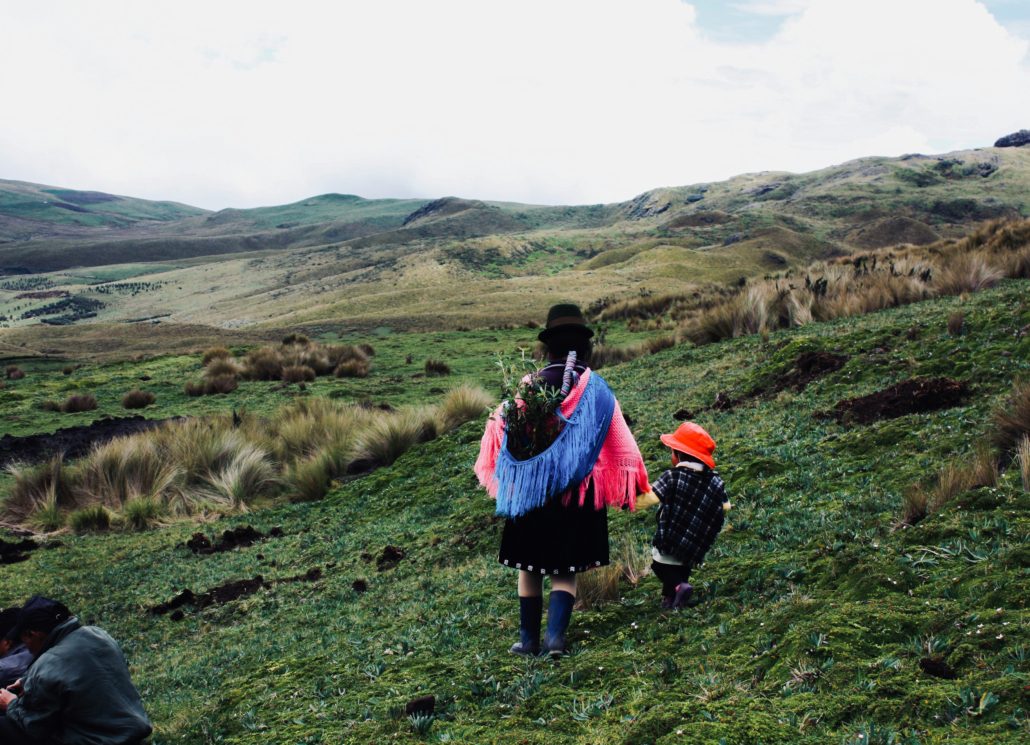 With a total population of approximately 18 million and an area of 276,841 square kilometers, Ecuador is one of the smallest countries on the South American continent. Due to its geographical location, it is also one of the largest host countries for hundreds of thousands of migrants. According to the United Nations High Commissioner for Refugees (UNHCR), migration to Ecuador is significant as more than 123,000 irregular migrants cross the Ecuadorian-Colombian border each year.
Meanwhile, the UNHCR estimates that nearly 500,000 refugees, asylum seekers, or people in need of protection have remained in Ecuador in the hope of a better life. Most of these are irregular migrants from Colombia and Venezuela. These groups are at risk of marginalization due to stigmatization, discrimination and a lack of valid documentation—yet new data shows that a well-organized strategy for integrating refugees has immense potential to boost the country’s economic growth. However, since the outbreak of the pandemic in 2020 the country has been struggling with serious crime issues. Drug cartels and gang crime are causing an increasing exodus of young and productive Ecuadorian workers. The result: no economic growth and a rising poverty rate.
Emigration of Productive Labor
Ecuador, once known as the “Island of Peace,” attracted immigrants from around the world due to its comparatively low homicide rate. As the Center for Strategic and International Studies reported, Ecuador’s homicide rate in 2019 stood at 6.7 per 100,000 inhabitants, making it one of the lowest among Latin American countries.
During the pandemic, the situation shifted dramatically: Lockdowns forced businesses to close, tourism declined and oil exports fell. Ecuador’s central bank reported a 7.8% decrease in gross domestic product (GDP), while unemployment rose rapidly. Three out of 10 workers lost the jobs they held before the pandemic; half of them remained unemployed. The homicide rate jumped to 50.91 per 100,000 inhabitants in 2025.
As a result, income levels in Ecuador have changed: according to the National Institute of Statistics and Census (INEC), income poverty rose from 25% in 2019 to nearly 33% in 2020—1.4 million people fell into income poverty.
At the time, an undesirable but already well-researched phenomenon plagued the country: the positive correlation between poverty and crime. In other words: rising poverty leads to a higher risk of violence and crime, which, according to Ecuador’s Ombudsman’s Office (DPE), has resulted in the displacement of more than 300,000 Ecuadorians in recent years. Demographically speaking, most of them are young men of working age. A paper by the Inter-American Development Bank (IDB) calculated the direct cost as an average of 3.44% of the GDP annually. Indirectly, the exploding crime rates slow down economic growth.
Ecuador as a Host Country
Ecuador serves as a transit and entry country for groups from Africa, Cuba and Haiti. The country has, for decades already, been experiencing an influx of refugees from countries plagued by armed conflict and violence. Nonetheless, two main groups mark migration to Ecuador:
Migrants from Colombia who have fled an armed conflict between guerrilla groups and the government that has been ongoing for more than 50 years. There are an estimated 130,000 to 200,000 Colombians living in Ecuador; according to the UNHCR, 94% of the more than 80,000 recognized refugees are Colombians.
In addition, Ecuador is home to Venezuelans who fled the humanitarian crisis under the Maduro regime. Around 440,000 migrants have applied for asylum, but only a small number of Venezuelans in Ecuador have valid residency documents. For Venezuelans, it takes months or even years to obtain a document such as an ID card or a passport. These delays are due to very high financial barriers, political restrictions, and the general collapse of the Venezuelan bureaucracy.
Migrants in Ecuador Face Legal Obstacles and Discrimination
The status of undocumented refugees creates significant barriers and contributes to the marginalization of these groups. At the same time it opens the door to systemic discrimination, exposes them to the risk of crime and violence, and traps refugees in a cycle of poverty. Access to housing, healthcare, education or employment appears to be significantly more difficult. Although an estimated one-third of refugees in Ecuador hold a college degree, the vast majority end up in the informal sector, with some earning a per capita income of only about $175 or less.
People in host countries often stigmatize minorities. They frequently project the violence and poverty prevalent in refugees’ countries of origin onto those seeking protection, which hinders their cultural and socio-economic integration. In crisis and conflict situations, politicians exploit fear and uncertainty for propaganda against migrants, in the hope of achieving better election results by stoking fears of competition for jobs or a strain on public finances.
Migration to Ecuador Can Boost Economic Growth
However, contrary to all the clichés, propaganda, and hate campaigns, recent statistics from the Center for Global Development (CGD) show that Venezuelan migrants are underrepresented among those detained for criminal offenses in Ecuador. In 2025, Venezuelans made up 2.4% of Ecuador’s population but accounted for only 1% of all detainees. Studies even suggest that refugees are more likely to be victims of crimes committed by their hosts than the other way around, but most of these cases remain unreported due to lack of trust in Ecuador’s authorities.
Given the country’s precarious security and economic situation, the integration of migrants is a crucial factor for economic growth and the well-being of the Ecuadorian population. As the International Organization for Migration (IOM) notes, Venezuelan migrants contribute an estimated $900 million annually to the Ecuadorian economy—simply through their consumption of goods and services. A well-thought-out bureaucratic strategy and a liberalized refugee policy could benefit the country and generate additional resources to combat gang violence and crime.
Migration and Poverty
Humanitarian aid plays a crucial role in integrating migrants into Ecuador’s society. The situation in Colombia is a prime example of how vital financial support can be for the stabilization and integration of refugees: the country has taken in over 2 million Venezuelans. Through programs such as the “Humanitarian Cash Transfer” (HCT), which was funded by USAID’s Bureau for Humanitarian Assistance (BHA), households received $100 per month over a six-month period.
A study conducted by the International Monetary Fund (IMF) estimated the total cost of health care, education and other services for this period of assistance—assuming a total of 2 million refugees—at $1.3 billion. The IMF’s analysis highlights that host countries are under significant financial pressure. However, the study found a surprisingly positive impact on the countries’ productivity. Due to the growth of labor force and a better match between migrants’ human capital and available jobs, these countries are able to achieve meaningful productivity and growth gains in the medium term. The study estimates that GDP could grow by 2.5 to 4.5 percentage points by 2030. Furthermore the authors assume that the costs of integrating migrants and refugees would decrease if they gained access to the labor market due to increased economic activity and the expansion of the tax base.
Projects such as HIAS’s Economic Empowerment Program aim to educate Venezuelans about their economic opportunities and help them develop a greater awareness of their skills and how to apply those skills in a business setting. By offering training, mentoring programs and start-up capital, Venezuelans can be integrated into the labor market. In this way, refugees are provided with a sustainable livelihood—while simultaneously contributing to a net benefit for Ecuadorian society and economic growth.
Conclusion
Migration to Ecuador plays a major role in the country’s middle-term and long-term development. In order to boost economic growth, Ecuador must tackle its national crime rate explosion. Therefore, the country needs to break its cycle of poverty, especially amongst migrants from Venezuela and Colombia. Moreover, the Ecuadorian population should recognize the potential that refugees bring to their country. Foreign aid and assistance combined with a consistent socio-economic integration strategy can provide long-term solutions for downsizing poverty and minimizing the negative effects on Ecuador’s economy.
– Oliwia Kowalak
Oliwia is based in Berlin, Germany and focuses on Good News for The Borgen Project.
Photo: Unsplash
