• Link to X
  • Link to Facebook
  • Link to Instagram
  • Link to TikTok
  • Link to Youtube
  • About
    • About Us
      • President
      • Board of Directors
      • Board of Advisors
      • Financials
      • Our Methodology
      • Success Tracker
      • Contact
  • Act Now
    • 30 Ways to Help
      • Email Congress
      • Call Congress
      • Volunteer
      • Courses & Certificates
      • Be a Donor
    • Internships
      • In-Office Internships
      • Remote Internships
    • Legislation
      • Politics 101
  • The Blog
  • The Podcast
  • Magazine
  • Donate
  • Click to open the search input field Click to open the search input field Search
  • Menu Menu

Tag Archive for: United Nations

Posts

Advocacy, Developing Countries, Global Poverty, Health

Africa Faces Climate Adaptation Costs

nigeria_climate
14 of the 20 most at risk nations of climate change distresses are African countries. These countries are considered as so susceptible due to the vulnerability of the population as well as the continent’s liability to extreme climate events.

Specifically, these African nations tend to experience extreme losses due to droughts, floods, fires, storms and landslides. Additionally, weak economies, governance, education and healthcare systems make it difficult to tackle or adapt to these problems.

Over 200 governments agree that global warming will exceed 2 degrees Celsius, causing much devastation and hardship, especially in Africa.

For instance, sea-level rise along Africa’s coastline is expected to be 10 percent higher than in the rest of the world, and in Guinea-Bissau, Mozambique and Gambia, up to 10 percent of the population would be at risk of floods each year by 2100.

The cost involved to address this looming danger amounts to billions.

According to the United Nations, adaptation costs faced by Africa range from $7 billion to $15 billion annually by 2020. Moreover, that amount could increase to $350 billion annually by 2070.

Some of the adaptation projects include developing drought-resistant crops, building early warning systems, investing in renewable energy sources, producing better drainage, building sea walls and prioritizing reforestation and desalinization.

According to the World Bank, there is a 40 percent chance of temperatures rising by 3.5 to 4 degrees Celsius if these types of climate change mitigation efforts are not stepped up.

Adaptation measures could, in fact, decrease the impacts of climate change in Africa.

Currently, projections for Africa are grim, even without the 2 degrees Celsius warming. Undernourished Africans are likely to increase by 25 percent to 90 percent, crop production will be reduced as arid areas are expected to increase by four percent, protein needs for over 60 percent of the communities would be jeopardized as fish will decline in African freshwater lakes and the necessary infrastructure for African communities to cope with climate impacts is inadequate. These effects will result in an increase of premature deaths, a rise in healthcare concerns and a decrease in food production.

The adaptation costs required to address the global temperature rise could reach four percent of Africa’s GDP by 2100. Therefore, additional funding is imperative if Africa is to move towards a climate-resilient life saving path. To meet this need, annual funds would need to grow at an average rate of 10 percent to 20 percent per year from 2011 to the 2020’s.

– Caressa Kruth

Sources: Thomson Reuters Foundation, The World Bank, CNN

December 12, 2013
https://borgenproject.org/wp-content/uploads/borgen-project-logo.svg 0 0 Borgen Project https://borgenproject.org/wp-content/uploads/borgen-project-logo.svg Borgen Project2013-12-12 23:55:132024-05-25 00:32:14Africa Faces Climate Adaptation Costs
United Nations

Kashmiri Lose Faith in UN

syed_ali_geelani
Speaking as the voice of the 26 confederated Kashmiri groups in the Hurriyat, Syed Ali Geelani directed a scorching criticism at the UN on November 3. He claimed the organization has “miserably failed to address core international concerns.” This loss of faith from one of the many significant stateless populations – which also includes Palestinians and Kurds – has resonance around the world.

It occurs at a time when the UN is facing difficult transitions into the post-2015 period and seeking structural evolution unwelcome to those nations which are accustomed to holding inordinate power with the current status quo. This state of affairs, while unfortunate, is an opportunity for the UN to showcase exactly how indispensable it is.

The debate over structural evolution is one of the premier examples of the difficulty and significance of the United Nations. Secretary-General Ban Ki-moon has expressed the belief that the new structure – which will emphasize streamlining the expansive body of UN subsidiaries and enable more efficient cooperation with third parties – will put the UN in a singularly influential position in global politics. If he succeeds, he will undoubtedly be proven correct. Financial watchdog groups have claimed for many years that the UN is too ineffective with resources to achieve the grand aims set by its ambitious Secretary-General.

And indeed, the UN has many failures to temper its successes, failures in implementation and conceptualization which can give the impression of incompetence. But what UN member states and representatives of stateless demographics like Mr. Geelani must keep in mind is that the sheer scope of the UN’s responsibility far exceeds what is asked of any other organization. The volume of factors weighing on any situation is so great that a period for learning must be accepted.

As time goes on, the UN has exhibited an ability to learn from mistakes and continue to raise the bar higher for itself. Mr. Ban has insistently focused his rhetoric and energy on the truly global concerns – human rights, pollution, food production and so on. If UN member states are to preserve a way of life with any semblance to their traditional activities, it behooves them to surrender a degree of sovereignty and resources to the organization best suited to addressing the problems which threaten those activities. Likewise, Mr. Geelani’s plea to Kashmiri to abandon the UN and boycott elections may resonate emotionally, but the best chance for his people, and for the Kurds, Palestinians and others, to achieving the legal right to a homeland is not to eschew the international forum, but to embrace it and utilize the publicity.


– Alex Pusateri

Sources: Fox News, The Nation, Care2, Business Insider

December 12, 2013
https://borgenproject.org/wp-content/uploads/borgen-project-logo.svg 0 0 Borgen Project https://borgenproject.org/wp-content/uploads/borgen-project-logo.svg Borgen Project2013-12-12 04:00:282024-05-25 00:31:47Kashmiri Lose Faith in UN
Activism, Global Poverty

Google Search Terms Reveal Today’s Sexism

With the advent of the Internet, education, science, and advanced technologies never before-imagined by the forefathers of the contemporary world, one issue remains devastatingly current–women are still viewed as the inferior species in society.

UN Women, one of the branches of the United Nations, teamed up with artist Christopher Hunt of Oglivy & Mather to produce an ad campaign to address the pervasiveness and current predominance of the deprecating attitudes towards women.

The graphics feature bleakly lit photographic portraits of women of different races and backgrounds. Superimposed over their mouths like a tied gag is the iconic Google search bar with a drop-down of popular search terms about women. The highly searched queries, done in September 2013, echo archaic sentiments from far beyond the Victorian ages: “women shouldn’t vote,” “women need to be controlled,” and “women need to be disciplined.”

The popular queries reveal the Internet age’s view on sexism in the stark black text, while corrective and forward-thinking sentiments such as “women cannot accept the way things are” are printed almost illegibly in white beneath each woman’s chin. The black, inhibiting text easily overweighs the white restorative text printed on the ads.

The Google search ads reveal a disturbing and bleak truth about the world’s progress in attitude, or lack thereof. In terms of global development, especially with the empowerment of women as one of the MDGs, the question begs to be asked: is enough being done by today’s leading international institutions to advocate the importance of women in the common interest of pluralism and peace?

– Malika Gumpangkum

Sources: Adweek, Design Taxi, Newsfeed
Photo: Times

October 24, 2013
https://borgenproject.org/wp-content/uploads/borgen-project-logo.svg 0 0 Borgen Project https://borgenproject.org/wp-content/uploads/borgen-project-logo.svg Borgen Project2013-10-24 15:27:542024-05-25 00:30:21Google Search Terms Reveal Today’s Sexism
Activism, Gender Equality, Global Poverty, Health, Human Trafficking, United Nations, Women and Female Empowerment

UN Women and the Fight for Equality

UN Women is an organization that was created in July 2010 by the United Nations General Assembly. The organization’s full name is the United Nations Entity for Gender Equality and the Empowerment of Women; its mission is to promote gender equality throughout the world and champion women from all walks of life.

Many women in the world face discrimination in the workplace, and receive fewer opportunities when it comes to career and educational advancement. UN Women sees this kind of gender discrimination happening all over the world, and makes it a part of its agenda to ensure that women have basic and equal human rights. Women are often denied access to health care, and even worse, they lack the political voice to change such conditions because of their stark under-representation in governmental decision making.

One of the major issues on the UN Women’s agenda is the end to violence against women. In a 2013 global review, published by the World Health Organization, it was reported that 35 percent of women in the world have experienced some kind of violence from an intimate partner. UN Women also focuses on the different aspects that are associated with violence against women: sex trafficking, child brides, rape, and sexual harassment in the work or education place.

Partnering with government agencies is an effective way that UN Women is able to take action against the various forms of discrimination against women. UN Women channels its efforts on implementing laws that will help protect women against threats like violence. It also advocates for policies that will open up more economic opportunities for women.

The wage gap between men and women is something that UN Women takes very seriously and seeks to bring to a close by implementing policies that argue for fairness in the workplace. A large part of the organization’s mission to empower women comes from its dedication to spread awareness in response to the AIDS epidemic. Women make up 54 percent of all people living in the world with HIV. UN Women has made it a job to spread awareness on the factors connected to the spread of HIV/AIDS. With the help of its partners, and resources UN Women has been able to broadcast the voice of women living with AIDS and it takes steps to help prevent the spread of the disease.

UN Women is gaining momentum and acquiring more support. Actress, Nicole Kidman, showed her support for the organization during an acceptance speech at the Variety Magazine Power of Women Awards event. Kidman encouraged her audience to see the desperate need for women’s equality in the world.

– Chante Owens

Sources: UN Women, Daily Mail

October 23, 2013
https://borgenproject.org/wp-content/uploads/borgen-project-logo.svg 0 0 Borgen Project https://borgenproject.org/wp-content/uploads/borgen-project-logo.svg Borgen Project2013-10-23 04:00:172024-05-25 00:29:29UN Women and the Fight for Equality
Global Poverty, United Nations

What are MDGs?

MDG Millennium Development Goals
Curious about this “MDG” phrase that keeps coming up in the global health and development world? MDG stands for Millennium Development Goals, eight poverty-addressing goals set by the United Nations in 2000. Delineating eight specific goals, 189 member states and 23 International Organizations, the MDGs should be met by 2015. Below is a summary of each of the goals.

1. Eradicating Extreme Poverty and Hunger

Of all the goals put forth by the MGD, the prospect of eradicating extreme poverty and hunger has seen the most progress. In fact, the target of halving the proportion of people whose income is less than $1.25 a day was met an impressive five years ahead of schedule. While this is a laudable achievement, the fact that globally, 384 million workers lived below this threshold in 2011 keeps our feet rooted in reality. Moreover, it is estimated that to this day 870 million people are undernourished. While there is work to do, it is important to point out successes where they are due.

2. Achieving Universal Primary Education

Arguably, the number one feature of a developed nation is an educated population. To be sure, equal opportunity to education does not solely benefit the recipient. In order for a state to develop on a technological and social level, it is of ample importance to maintain a strong education network. To date, more children than ever are receiving primary education. The UN reports that enrollment in primary education in developing regions reached 90 per cent in 2010, up from 82 percent in 1999. While progress occurs, estimates show that in 2011, 57 million children were out of school and globally, 123 million youth between the ages of 15 to 24 lacked basic reading and writing skills.

3. Promoting Gender Equality and Empowering Women

Regrettably, in many nations women are viewed as second to men. What is more, this is not a feature exclusive to underdeveloped nations; Australia’s new prime minister, Tony Abbot, has stated men are genetically programmed to rule over women. While this type of antiquated thinking is laughable and likely a result of poor education, it cannot go ignored. To this day, in many countries women do not receive the same opportunities as men. The UN reports that while “the world has achieved equality in primary education between girls and boys, only two out of 130 countries have achieved the target at all levels of education.” There is a lot more work to do in this sector.

4. Reducing Child Mortality Rates

For underdeveloped and developing nations, the child mortality rate is a strong indicator of development. In fact, children born into poverty are twice as likely to die by the age of five than their wealthier counterparts. According to the UN fact sheet, “despite population growth, the number of deaths in children under five worldwide declined from 12.4 million in 1990 to 6.6 in 2012, which translates into about 17,000 fewer children dying each day. This is principally due to greater access to medication, especially vaccines for infectious diseases such as measles.”

5. Improving Maternal Health

Similar to the child mortality rate, maternal health is another powerful indicator of a state’s development. With the goal of ameliorating the staggering rate of maternal mortality, the UN and NGOs focused resources toward antenatal care in developing regions. With an increase of 63 percent of this care, maternal mortality has been halved since 1990. While much progress has been made, the UN reports “the maternal mortality ratio in developing regions is still 15 times higher than in developed regions.”

6. Combating HIV/AIDS, Malaria, and other Diseases

Of the infectious diseases humanity has faced, the two most visible are HIV/AIDS and, to a much greater degree, malaria. Prima facie, it seems that HIV/AIDS rates are going up because more people are living with the disease. However, these are people that wouldn’t be alive were it not for greater access to treatment. With greater education and more comprehensive knowledge, however, transmission rates among young people have decreased dramatically.

Globally, malaria remains the number one killer of humans. With greater access to treatment, however, the estimated incidence of malaria has decreased by 17 percent since 2000. Along with strides in malarial treatment, the UN estimates that treatment for tuberculosis has saved up to 20 million lives between 1995 and 2011.

7. Ensuring Environmental Sustainability

While good news can be reported on each of the other MDGs, the environment is worse off now that it has ever been. According to UN estimates, global emissions of carbon dioxide have increased by more than 46 percent since 1990. Deforestation continues to spread like a cancer, polar ice caps continue to melt, and yet, politicians continue to deny the likelihood of climate change. Despite environmentalist detractors, initiatives have been launched to protect the environment. Since 1990, the rate of protected areas has increased by 58 percent.

For many, this area will be the most important aspect of policy-making moving forward. As far as the environment goes, once damage is done, the prospect of reversing it is fiction.

8. Developing a Global Partnership for Development

The number one goal of this area is to “develop further an open, rule-based, predictable, non-discriminatory trading and financial system.” Specifically, this means free trade at a global level. Yet, despite promising rhetoric, protectionist measures continue to effect global trade.

Yet while many aspects of this area remain obscured, there has been cooperation in ensuring the prospect of meeting each of the preceding goals. It is important to realize that this final goal is the least well defined of the goals and, thus, will be most difficult to measure. There is ample work to do, but there has been progress.

– Thomas Van Der List

Sources: United Nations, UNDP, World Health Organization
Photo: Photopin

October 2, 2013
https://borgenproject.org/wp-content/uploads/borgen-project-logo.svg 0 0 Borgen Project https://borgenproject.org/wp-content/uploads/borgen-project-logo.svg Borgen Project2013-10-02 20:44:442024-05-25 00:22:54What are MDGs?
Global Poverty

FLOW-AID – Maximizing ‘Crop Per Drop’

Flow_Aid
As the world population continues to shoot upwards, pressure increases on the environment and farmers across the globe to provide enough food and water to support the growing population. With droughts becoming more common, efficient methods of utilizing water in agriculture could make a significant impact in the access to food and water for the world.

The Farm Level Optimal Water Management Assistant for Irrigation Under Deficit, or FLOW-AID, brings researchers, engineers, and scientists together together to develop innovative new technologies to improve irrigation methods with the purpose of saving water. Their latest project maximizes water usage by decreasing the need for water use by up to 60 percent and simultaneously lessening fertilizer usage up to 30 percent.

FLOW-AID provides water-saving technology, which uses inexpensive wireless detectors that run on solar energy and give data to farmers about which areas of the crops need more or less water. This practice not only maximizes the efficiency of irrigation, but also improves plant health by producing the exact amount of water needed.

Farmers in Lebanon, Jordan, Turkey, Italy, Spain, and the Netherlands currently utilize FLOW-AID technology. These test countries were chosen partially based off the varying natures of their climates, to determine how to adapt FLOW-AID to meet the different environmental needs of varying regions. Developers of FLOW-AID state that the technology is prepared to handle even the dryer climate of many nations in Africa. They have also pledged to keep the cost of the technology low enough for developing countries to adopt.

According to the United Nations, over 780 million people exist without any access to clean water, and 2.5 billion lack properly sanitized water. The number or people suffering from hunger and undernourishment falls around 870 million people based off the United Nation’s data, mirror the number of people without access to water. With creative technology, such as FLOW-AID, the world could maximize its resources and gain access to more food and water, working to reduce the strains on society from the world’s burgeoning population.

– Allison Meade

Sources: Treehugger, Cespevi, United Nations
Photo: Gizmag

August 15, 2013
https://borgenproject.org/wp-content/uploads/borgen-project-logo.svg 0 0 Borgen Project https://borgenproject.org/wp-content/uploads/borgen-project-logo.svg Borgen Project2013-08-15 12:06:462024-05-25 00:16:45FLOW-AID – Maximizing ‘Crop Per Drop’
Foreign Aid, Refugees and Displaced Persons, United Nations

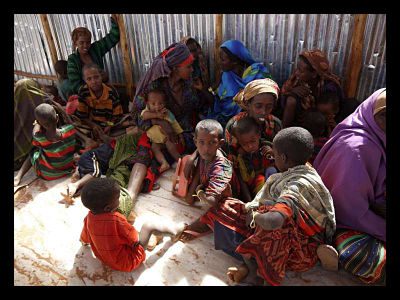
Refugees in Ethiopia Receive Monetary Relief

Somali_Refugees_Ethiopia
Somali refugees continue to arrive in Ethiopia in large droves due to poor growing conditions, food shortages, and continued conflict. While the situation is slowly improving, John Ging, Director of Operations in the Office for the Coordination of Humanitarian Affairs, urges continued attention to the crisis and says, “I call on the international community to invest now to build the resilience of Somalis and stop the cycle of crisis they have endured far too long.”

To that end, The United Nations World Food Program, UNHCR, European Commission Humanitarian Aid and Civil Protection, and the government of Ethiopia have partnered to launch an aid project that provides Somali refugees with monthly cash installments in addition to food aid. Currently, 12,000 refugees are receiving monetary relief and the project plans to extend cash aid to 13,000 more by October.

Monetary relief allows Somali refugees to round out their diet with fresh produce, proteins, and dairy from the local market, providing an important supplement to the basic grains and non-perishables received from aid agencies. It also gives the refugees an opportunity to inject money into the local economy. This economic boost is helpful to the communities supporting the large number of refugee settlements.

Currently the refugees who are part of the pilot cash program receive 100 Ethiopian Birr per month, or about $5.00. The organizations backing this program are optimistic that these cash transfers will greatly alleviate the most acute suffering and make the refugee situation less of a burden. Between Ethiopia, Kenya, and Yemen, there are over 1 million Somali refugees. The cash relief program gives refugees an opportunity to regain a little agency and make decisions about what groceries to purchase while also offering much needed hunger relief.

– Zoe Meroney

Sources: World Food Program, United Nations, All Africa
Photo: UNHCR

August 12, 2013
https://borgenproject.org/wp-content/uploads/borgen-project-logo.svg 0 0 Borgen Project https://borgenproject.org/wp-content/uploads/borgen-project-logo.svg Borgen Project2013-08-12 05:02:342024-06-11 01:49:27Refugees in Ethiopia Receive Monetary Relief
Children, Education

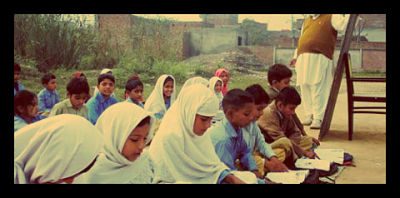
MDG 2: Achieve Universal Primary Education

education_opt-1
This is the second in a series of posts reviewing the UN’s Millennium Development Goals. The MDGs are a set of eight targets agreed upon by almost every country in the world, based on a shared commitment to the improvement of the social, economic, and political lives of all people. They are to be achieved by 2015 and, with two years to go, it’s time to see how far we’ve come and what is left to be done.

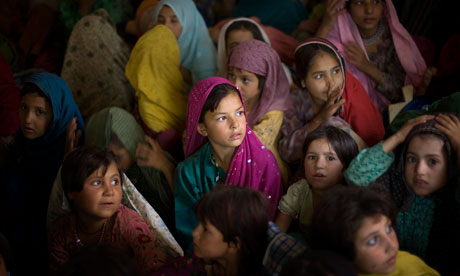
The second of these goals is to achieve universal primary education. All children, regardless of gender or socioeconomic background, deserve the opportunity to receive a high quality education. Because of concerted efforts to meet this goal, more children are attending primary school today than ever before, with 570 million children enrolled in school. From 1999 to 2006, the number of out-of-school children fell from 103 million to 73 million, and primary school enrollment in developing countries increased from 83% to 88%. Primary school enrollment continued increasing, reaching 90% by 2010. However, progress is slowing with the number of primary school aged children out of school falling by only 3 million between 2008 and 2011.

Despite significant progress, children in sub-Saharan Africa are the most likely not to attend primary school, with the net primary school enrollment ratio there increasing to only 71%. This leaves roughly 38 million children without a primary school education. On the other hand, 90% of Southern Asian children attend primary school. This represents excellent progress, although it still leaves 18 million children without the basic reading and math skills they would learn in school.

Inequities in access to primary education represent the main barrier to reaching the second MDG. The UN estimates that, without accelerated progress, 58 of the 86 countries that have yet to achieve universal primary education will not do so by the 2015 goal date. Despite progress in many areas, girls are still significantly more likely to drop out of school than boys are. Children from poorer households and from rural areas also have increased dropout rates.

It is important to note that enrollment numbers are not the only indicator of success or failure when it comes to MDG 2. There is no point in getting children to school if there are inadequate teachers or supplies, or if the learning environment is hostile. Therefore, it is vital to consider the quality of the education as well as the number of children attending school. We must ensure that teachers are trained and well equipped, and that children feel safe at school. Students that attend school on a regular basis should graduate with at least basic reading and math skills. They should also graduate on time, giving them a greater chance of attending secondary school.

Many countries have made significant progress using a variety of programs. Nine countries have increased primary school enrollment by eliminating school fees. These include Ghana, where public school enrollment in impoverished areas skyrocketed from 4.2 million to 5.4 million in 2004 alone, and Kenya, where primary school enrollment jumped by over a million students in just one year. However, abolishing school fees inevitably means less school funding, which presents challenges when it comes to providing adequate school buildings and well-trained teachers.

In Haiti, a $70,000 donation from famous soccer players Ronaldo and Zidene allowed for incredible improvements to schools in a severely impoverished area. UN agencies and NGOs partnered with the Haitian government to promote school attendance, conduct training for teachers, and provide 33 schools with necessary supplies. This positively changed the lives of 4,300 children by significantly improving the quality of their education.

Despite significant progress, 123 million youth, aged 15 to 24, still lack basic reading and writing skills. In a reflection of the persisting gender gap in primary education, 61% of these youth are female. Clearly, there is still work to be done. The UN provides several suggestions for continued efforts on this front. More funding, both from governments and from aid organizations, will be needed to achieve universal primary education by 2015. Annual aid dedicated to basic education in developing countries increased from $1.6 billion in 1999 to $5 billion in 2006, representing a step in the right direction. However, it is estimated that $11 billion will be needed annually to achieve universal primary education by 2015. These funds are needed to train teachers and to ensure that they have all the materials they need to do their job well.

In order to prevent unequal access to education based on socioeconomic status, school fees should be eliminated. At the very least, scholarships should be readily available for children from poorer families. Children should also be provided with free transportation to and from school if needed and with free meals and basic health services at school. Proper nutrition and health services will improve children’s overall well being, and these services would help reluctant children and families to see school as a worthwhile investment. An even more drastic step could be to entice low-income families with cash transfers conditional on their children’s school attendance. This could be especially useful in convincing families to educate their daughters, not just their sons.

A high quality primary school education can set children on the right track, giving them necessary skills to succeed in their personal lives and in the workplace. Primary school education has the power to break the cycle of poverty and to empower disenfranchised social groups. This makes the world’s progress towards universal primary education extremely exciting, and compels us to continue working towards this goal.

– Katie Fullerton

Sources: UN Fact Sheet, UN
Photo: Pakistan Today

August 6, 2013
https://borgenproject.org/wp-content/uploads/borgen-project-logo.svg 0 0 Borgen Project https://borgenproject.org/wp-content/uploads/borgen-project-logo.svg Borgen Project2013-08-06 04:58:262017-02-28 11:50:50MDG 2: Achieve Universal Primary Education
Food & Hunger, Food Aid, Food Security, Foreign Aid, United Nations

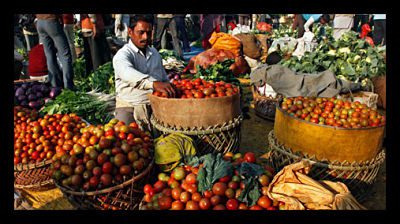
What Is Global Food Insecurity?

Global Food Insecurity
There really is no formula to defining global food insecurity. Still, many world health organizations use the term to point out deficiencies in global food security. To understand what something is, it sometimes helps to understand what it is not. This may just be the case with food insecurity. To understand food insecurity, that is, one must first define and understand food security and work backwards. If food security does not exist, then, by definition, you have food insecurity.

The World Food Summit of 1996 defined food security as existing “when all people at all times have access to sufficient, safe, nutritious food to maintain a healthy and active life.” This definition hinges on three qualifications: namely food availability, food access, and food use. Lacking one of these elements of food security, a population faces food insecurity, which can and does arise in an endless permutation of manners.


Global Food Insecurity: Failing Food Security Criteria


To establish food security, say, in a developing nation, food must first be available on a consistent basis. Some will argue that there is currently enough food in the world to feed everyone in the world. Nonetheless, people go hungry due to inconsistency in their daily intake of food. For example, one may go days without a meal. In this situation, a cornucopia of food, arriving two weeks later, does nothing to alleviate that person’s current hunger. As such, food security depends on food availability.

Second, the nation’s population must have access to the right kinds of food to sustain a healthy diet. Not only must a person have food available, that is, it must be the right kind of food. For example, a human cannot survive on rice alone. We need all different kinds of food to live healthy lives. The definition of healthy diet here also includes accommodations to particular dietary needs, such as avoiding certain foods or increasing intake of others.

Finally, food security requires appropriate use of food based on adequate knowledge of basic nutrition and care. In order to maintain a healthy diet, one must know how to eat the food that is available to him or her and portion that food out in a way that best serves the needs of his or her body. When USAID drops bags of food over Africa, for example, it will be helpful to also teach those receiving the aid how to ration the food. Basic sanitation and access to water are included in appropriate use to complete the qualifications of food security.

If even one of these three elements or qualifications is not met, it is easy to see how even a full plate of food, three times a day, may not be enough to maintain a healthy diet. Food security requires that the food is enough to satisfy the short, mid, and long-term needs of the human body and that the person consuming the food does so in an appropriate manner to maintain him or herself. Global food insecurity, or deficient food security from a worldwide perspective, exists in a world where even one person goes hungry.

Though great strides have been made in alleviating global hunger, the current level of food insecurity is unacceptable. Even in the United States, 1 out of 10 households were food insecure, hence the importance of food provision and education programs, like, local food banks. To learn more about food (in)security in the U.S., you can visit this site.

– Herman Watson

Sources: U.S. Food Aid and Security, World Health Organization, World Food Programme, Food and Agriculture Organization
Photo: Security and Sustainability Forum

August 5, 2013
https://borgenproject.org/wp-content/uploads/borgen-project-logo.svg 0 0 Borgen Project https://borgenproject.org/wp-content/uploads/borgen-project-logo.svg Borgen Project2013-08-05 11:35:562024-05-25 00:15:01What Is Global Food Insecurity?
Women and Female Empowerment

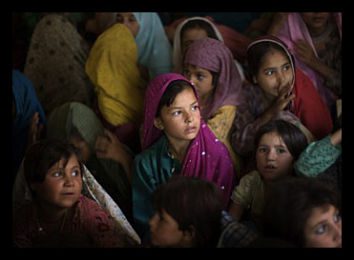
MDG 3: Promote Gender Equality and Empower Women

MDG 3
This is the third in a series of posts discussing the UN’s Millennium Development Goals. These are set of 8 interconnected goals agreed upon by most countries around the world based on a shared commitment to improving the political, social, and economic lives of all people. They are to be achieved by 2015 and, two years out from this deadline, it is important to celebrate all the progress we have made and to recognize the work we have left.

The third of the MDGs is to promote gender equality and embolden women. Education is the primary mode of empowerment, so the UN’s stated goal is to eliminate the gender disparity in primary and secondary education by 2005 and in all levels of education by 2015. The gender disparity in education is judged by statistics such as the ratio of girls to boys in all levels of education, literacy in women as compared to men, women working outside the agricultural sector, and female governmental leaders worldwide.

The gender gap in primary school has decreased substantially in recent years. In 1999, there were 16 million more girls than boys out of primary school. Over the next ten years, this number dropped dramatically to just 4 million. However, this still leaves significantly more educated boys than girls, a phenomenon that perpetuates gender inequality later in life.

According to the World Bank, equal percentages of girls and boys complete primary school in Latin America and East Asia. However, in all other developing regions, this ideal has not yet been achieved.

The significant gender gap in youth literacy rates has been shrinking in recent years. However, girls are still considerably less likely to graduate from primary school with basic literacy skills than boys. This is a concerning trend that often leads to the disempowerment of women, and perpetuation of a discriminating patriarchal societal structure.

In many countries, women have less access to stable jobs, education, economic assets, and governmental participation. They may not be allowed to work outside the home, forcing them to rely on men for their family’s income. And even when they do enter the job market, they tend to hold lower-paying positions with less job security and benefits. This represents an unacceptable inequity that must be addressed seriously. Not only does it devalue women’s work, it also means that men tend to have more influence on how the family’s money is spend, consistently minimizing women’s authority. Through extensive work toward MDG 3, women’s role in the workplace is improving, with 40% of wage-earning jobs in the non-agricultural sector held by women as of 2011.

The number of women in government is also on the rise, thanks in part to quota systems that require a certain percentage of leaders to be female. Worldwide, just over 20% of parliament members were female as of January 2013. While this still reflects a heavy bias towards men, it also represents incredible progress. In 1995, women held a meager 10% of parliamentary seats. This percentage has been steadily increasing, and progress will continue to be made if girls’ education is made an international priority.

The education of girls affects every facet of society as children grow into adults. While we have made significant progress towards gender equality, we clearly have work to do when girls do not graduate with the same basic skills that boys do and are not consistently presented with the same opportunities in the workplace and government. Educated girls become educated women that are empowered in their personal, social, political, and work lives. They demand to be treated respectfully, and are not constrained by their gender. They are strong women that can be leaders just as well as they can be wives. They are the women this world needs.

– Katie Fullerton

Sources: UN, UNDP, World Bank, UN Stats
Sources: The Guardian

August 5, 2013
https://borgenproject.org/wp-content/uploads/borgen-project-logo.svg 0 0 Borgen Project https://borgenproject.org/wp-content/uploads/borgen-project-logo.svg Borgen Project2013-08-05 05:02:062018-03-28 21:52:05MDG 3: Promote Gender Equality and Empower Women
Page 40 of 44«‹3839404142›»

Get Smarter

  • Global Poverty 101
  • Global Poverty… The Good News
  • Global Poverty & U.S. Jobs
  • Global Poverty and National Security
  • Innovative Solutions to Poverty
  • Global Poverty & Aid FAQ’s
Search Search

Take Action

  • Call Congress
  • Email Congress
  • Donate
  • 30 Ways to Help
  • Volunteer Ops
  • Internships
  • Courses & Certificates
  • The Podcast
Borgen Project

“The Borgen Project is an incredible nonprofit organization that is addressing poverty and hunger and working towards ending them.”

-The Huffington Post

Inside The Borgen Project

  • Contact
  • About
  • Financials
  • President
  • Board of Directors
  • Board of Advisors

International Links

  • UK Email Parliament
  • UK Donate
  • Canada Email Parliament

Get Smarter

  • Global Poverty 101
  • Global Poverty… The Good News
  • Global Poverty & U.S. Jobs
  • Global Poverty and National Security
  • Innovative Solutions to Poverty
  • Global Poverty & Aid FAQ’s

Ways to Help

  • Call Congress
  • Email Congress
  • Donate
  • 30 Ways to Help
  • Volunteer Ops
  • Internships
  • Courses & Certificates
  • The Podcast
Scroll to top Scroll to top Scroll to top