• Link to X
  • Link to Facebook
  • Link to Instagram
  • Link to TikTok
  • Link to Youtube
  • About
    • About Us
      • President
      • Board of Directors
      • Board of Advisors
      • Financials
      • Our Methodology
      • Success Tracker
      • Contact
  • Act Now
    • 30 Ways to Help
      • Email Congress
      • Call Congress
      • Volunteer
      • Courses & Certificates
      • Be a Donor
    • Internships
      • In-Office Internships
      • Remote Internships
    • Legislation
      • Politics 101
  • The Blog
  • The Podcast
  • Magazine
  • Donate
  • Click to open the search input field Click to open the search input field Search
  • Menu Menu

Tag Archive for: United Nations

Posts

Global Poverty

Syrian Civilians Need More Humanitarian Aid

Syrian_Civilians_Need_Aid
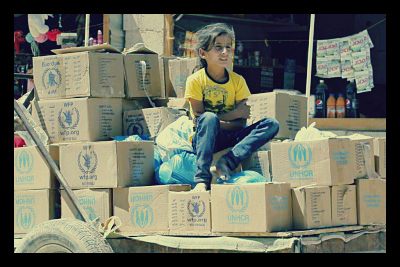
Although countries offered more than $2.4 billion to help Syrian civilians who are struggling due to the civil conflict, United Nations Secretary General Ban Ki-moon said this amount is simply not enough.

According to Ki-moon, “$6.5 billion was needed to provide medical care, food, water and shelter for Syrian refugees and civilians inside the country this year.”

On behalf of the United States, Secretary of State John Kerry pledged $380 million in new assistance. It is true that other countries have offered more than what the U.S. is willing to give this time around. However, the U.S. has provided $1.7 billion since the conflict emerged, making it Syria’s top donor.

Even if enough assistance is generated, there are barriers that reduce or prevent the flow of aid offered to Syrian civilians from reaching their hands. According to Kerry, no aid would be enough in the first place until the Syrian president discontinues “using starvation as a weapon of war.”

Another problem is in the past, not all donor nations actually provided the amount they originally promised. In 2013, only 70 percent of the aid offered by nations actually made it to Syrians. The remaining amount was not given.

Despite the efforts of providing humanitarian aid to Syrian civilians, more money is being spent to destroy the chemical weapons of Syria. According to an article published in The Atlantic, “The U.S. Army’s Chemical Materials Agency oversaw the destruction of just over 28,364 tons of chemical weapons – nearly 90 percent of the U.S. stockpile – for an estimated cost of $28 billion”.

The authors argue this strategy is worth the money and it will eliminate the possibility that terrorists would acquire the chemical weapons of Syria.

All of this is to suggest that the case of Syria is undoubtedly complicated. On one hand, not funding the destruction of chemical weapons may haunt the U.S. in the long run; on the other hand, according to the New York Times article, “the situation in Syria is worsening so rapidly that the humanitarian needs seems to outpace the resources promised.” Moreover, the article claims that roughly 6.5 million Syrians have been displaced and over 2.3 million became refugees in other countries.

Dealing with the political situation in Syria requires careful planning by the U.S. due to the polarized nature of the state. Perhaps the only solution to this mess is if more donors are willing to pledge a generous amount of money for humanitarian aid. In the meantime, there is no way to tell when the civil war in Syria will end.

– Juan Campos

Sources: New York Times, The Atlantic
Photo: VOA News

January 29, 2014
https://borgenproject.org/wp-content/uploads/borgen-project-logo.svg 0 0 Borgen Project https://borgenproject.org/wp-content/uploads/borgen-project-logo.svg Borgen Project2014-01-29 20:02:262015-02-12 09:57:47Syrian Civilians Need More Humanitarian Aid
Global Poverty, War and Violence

Mass Killings in Bangui

Mass_Killings_Bangui_central_african_republic_car
In recent days the year-long struggle in the Central African Republic has been brought to the attention of the United Nations. On December 5, the UN Security Council voted unanimously for French and African forces to “take all necessary measures” in dealing with the conflict. On December 10, a UN spokesperson announced that “more than half a million” people had been “displaced within CAR since the crisis began in December 2012.”

Rebels in the Central African Republic began making assaults against the government in December 2012 before overthrowing former President Francois Bozize in March. Though there was hope that the new leader who was put in place could quell some of the violence in the area, in recent months the violence has escalated into near civil-war conditions.

As it happens, the violence in this region is felt most acutely by those living in the capital city, Bangui. It has been estimated by the UN High Commissioner for Refugees that over 100,000 people living in Bangui have been displaced in the last year. These refugees have been living in dirty camps that leave the people residing in them vulnerable to infections and disease.

On November 25, UN Deputy Secretary-General Jan Eliasson explained that an estimated 1 out of every 3 people from the population of 4.6 million are in need of food, protection, health care, water sanitation and shelter. The UN had previously put forward a $195 million appeal to help in the nation, but it has not even been half-funded as of that date.

Moreover, some of the worst violence in the region has occurred near the northern border with Chad, prompting worries that fighting will spill over into that country. The recent bouts between Christian and Muslims have also raised concerns, with French Foreign Minister Laurent Fabius saying that the country “was on the verge of genocide.”

Mass killings in Bangui have, furthermore, sparked these concerns with the various reports coming out this month.  According to a United Nations report, 450 people were massacred within city in 3 days, while others fled for the refugee camps. Given the hatred that has been fostered in the country, it may be some time before the situation could be settled.

France hopes that it can have a positive impact on this nation it once colonized. French and African Union troops have entered the Central African Republic since the UN Security Council voted to take action within the nation. The troops are working to disarm the various militia groups, with the hope that a stable government could be established.

Though Africa, as a continent, looks to be on the upswing, there are still terrible conflicts happening in the Central African Republic. These conflicts need to be noticed, and with the work that the UN is doing, more people are learning about the situation. With luck, a new year could bring new hope for this beleaguered nation.

– Eric Gustafsson

Sources: United Nations, New York Times, PBS
Photo: AFP

January 29, 2014
https://borgenproject.org/wp-content/uploads/borgen-project-logo.svg 0 0 Borgen Project https://borgenproject.org/wp-content/uploads/borgen-project-logo.svg Borgen Project2014-01-29 04:00:492024-06-11 02:16:20Mass Killings in Bangui
Global Poverty, War and Violence

Iran ‘Not Likely’ Asked to Syrian Peace Talks

iran_syria_peace_talks
A UN spokesperson has confirmed that Iran was not invited to the first round of the Syrian peace talks due to take place in Switzerland.  As it stands, invitations to participate in peace talks are usually extended by the initiating countries. In this case, Russia and the United States have remained at odds about Iran’s role in the talks.

Syria has been facing an increasingly bleak humanitarian crisis as the civil war between Syrian President Bashar al-Assad and rebel forces. Since the violent outbreak in 2011, more than 100,000 Syrian civilians have been killed while millions more have sought refuge in neighboring countries to escape the escalating violence and increasing poverty. With no end of the civil war in sight, neighboring countries have expressed their concerns about taking refugees without more aid from other countries or action taken to end the violence.

The ultimate goal the United States hopes to reach in the peace talks involves transitioning president Bashar al-Assad out of power. The plan doesn’t say that al-Assad must leave, something which must come as a relief since al-Assad stated that while he will send a representative to the talks, he will not voluntarily leave office.

As it is, though the UN Secretary-General Ban Ki-moon is actually in favor of inviting Iran to the first round, the United States chose to offer Iran a role in the less official ‘second round’ talks. Iran immediately rejected this offer saying that, “suggesting such an arrangement would not respect the country’s honor,” which makes sense since Iran is Syria’s neighbor and ally. However, according to US Secretary of State, John Kerry, Iran opposes the proposed plan of a transitional Syrian government.

All in all, UN officials are hopeful that issues involving Iran’s participation can be resolved in a preliminary meeting between the initiating countries. Secretary of State John Kerry and Russian Foreign Minister Sergey Lavrov are scheduled to meet on January 13.

– Colleen Eckvahl

Sources: Al Jazeera, Washington Post
Photo: Noisy Room

January 26, 2014
https://borgenproject.org/wp-content/uploads/borgen-project-logo.svg 0 0 Borgen Project https://borgenproject.org/wp-content/uploads/borgen-project-logo.svg Borgen Project2014-01-26 18:41:092024-12-13 17:49:55Iran ‘Not Likely’ Asked to Syrian Peace Talks
Global Poverty

13 Quick Facts about the UN

UN flags
“We the Peoples of the United Nations determined to reaffirm faith in fundamental human rights, in the dignity and worth of the human person, in the equal rights of the men and women and of nations large and small,” the UN Charter.

Over 60 years ago an organization with a mission to bring peace to the world was born. Rightfully called the United Nations, this organization started with just a handful of nations, though now well over one hundred countries have signed up to accept the pledge of peace.

Here are some quick facts about the UN, present and past:

  1. 51 countries founded the UN in 1945.
  2. The UN’s mission is to maintain peace, security, develop friendly relations with other nations, promote social growth and advocate for human rights.
  3. New York City houses the UN’s headquarters. Three other main offices reside in Geneva, Nairobi and Vienna.
  4. The UN is comprised of six main sections: The General Assembly, The Security Council, The Economic and Social Council, the Secretariat and the United Nations Trustee Council.
  5. The original members of the UN were Russia, USA, France and the UK. These four along with the Republic of China hold five permanent seats on the Security Council.
  6. A few agencies established by the UN are the World Bank Group, the World Health Organization (WHO), The World Food Program, UNESCO and UNICEF.
  7. The current leaders of the UN are :
    • Secretary General Ban Ki-Moon (South Korea)
    • Deputy Secretary General Jan Eliasson (Sweden)
    • General Assembly President John William Ashe (Antigua and Barbuda)
    • Secretary Council President Gerald Araud (France)
  8. Each nation must sign the UN charter in order to join the United Nations. The Charter consists of two preambles and a series of articles.
  9. When war breaks out in a country, the UN sends peace keeping soldiers to help resolve the conflict. These soldiers are also called “Blue Helmets.”
  10. There are, currently, 183 member nations in the UN.
  11. The UN was initially established to prevent a repeat of World War II.
  12. The UN’s motto: It’s your world.
  13. Over 120,00 peacekeepers from the UN maintain civility on 4 continents.

– Amy Robinson

Sources: Wikipedia, Fun Trivia, United Nations, UNFPA
Photo: Flickr

January 24, 2014
https://borgenproject.org/wp-content/uploads/borgen-project-logo.svg 0 0 Borgen Project https://borgenproject.org/wp-content/uploads/borgen-project-logo.svg Borgen Project2014-01-24 12:14:072024-05-26 23:04:0913 Quick Facts about the UN
Global Poverty

Universal Health Coverage a Possible Post 2015 Goal

universal_health_coverage

What is Universal Health Coverage?


Universal Health Coverage (UHC) pools resources and finances to provide health care services to the world’s entire population by focusing on improving health care for citizens and reducing poverty caused by health care costs.  Universal Health Coverage can improve the health and economic well being of individuals and communities — especially those that are socially disadvantaged or vulnerable.

Universal Health Coverage is sometimes also referred to as “Universal Coverage” or “Social Health Protection.” Different countries may make different policy changes when implementing Universal Health Coverage, but it generally consists of three main principles:

  1. Reduced out of pocket spending: Three million people around the world pay out of pocket for healthcare. These people often forgo care due to their inability to pay for it. Universal Health Coverage seeks to reduce these direct payments from the individual to the provider.
  2. Repayment: Those who can afford it, contribute to pre-paid healthcare. This can come in the form of general taxes, payroll taxes, member contributions or charitable donations.
  3. Risk pooling: Universal Health Coverage works by pooling the financial risk so that the financial costs incurred when someone is sick or injured are spread throughout the entire system.

Moving Towards Universal Health Coverage (UHC)

Universal Health Coverage, as a goal of many countries, may become part of the post-2015 Millennial Goals sustainable development agenda. Universal Health Coverage, for the most part, means that all people who need health services will receive them when needed without undue financial hardship — this includes prevention, treatment, rehabilitation and palliative care.

The United Nations, World Bank Group and World Health Organization are all in favor of UHC and are pushing that it become part of the new development plan.

Moreover, the World Bank Group has a new goal of eliminating global poverty by 2030 which can only be met if all people have fair and accessible health care.  People should not have to live in poverty in order to pay for health care.

In December of 2013, the World Bank Group and World Health Organization released a report that outlined their findings on the Universal Health Coverage.  They suggest that those receiving both health coverage and financial protection should be covered.

The World Bank Group further supports Universal Health Coverage because it will ultimately improve health outcomes, reduce financial risk and improve equity. However, they point out that each country will have it’s own unique path to achieving this goal.

The World Bank recently studied all 22 countries that provide Universal Health Coverage in addition to the state of Massachusetts, who has had health coverage for six years. These studies provide tools and implementation plans that can be adopted by other countries and states.

To find more information on the World Bank study series go to: https://www.worldbank.org/en/topic/health/publication/universal-health-coverage-study-series

– Lisa Toole

Sources: UHC Forward, World Health Organization (WHO), World Bank Group, CNN
Photo: MSH

January 24, 2014
https://borgenproject.org/wp-content/uploads/borgen-project-logo.svg 0 0 Borgen Project https://borgenproject.org/wp-content/uploads/borgen-project-logo.svg Borgen Project2014-01-24 04:00:122024-05-26 23:06:01Universal Health Coverage a Possible Post 2015 Goal
Education, Global Poverty, Violence Against Women

Eradicating Violence Against Women in Schools

Eradicating Violence Against Women in Schools
It’s simple: violence against women exists in various personal and professional settings.  One in three women throughout the world will experience some sort of sexual violence in their lifetime.  It is an epidemic.  Such violence not only creates physical and emotional scars, but it impedes all forms of progress.  It keeps women from being equal participants in the workforce, and as a result, nations that do little to curtail violence against women are losing about $5 billion per year in healthcare costs and lost productivity.

This gendered violence is seen even greater in school settings, where gender discrimination leads young women to perform poorly or even drop out of school.  This leaves many young girls illiterate and impoverished.  Known to the United Nations Girls’ Education Initiative as “School-related gender-based violence” (SRBGV,) this form of violence against women affects millions of female students worldwide.  Such violence goes far beyond just physical violence, but includes all forms of gender bullying, and verbal harassment as well.

The U.N. recognizes the importance of eradicating violence against women in schools.  Partnering with Education International and the Global Education First Initiative, the U.N. Girls’ Education Initiative announced a Joint Statement on the International Day for the Elimination of Violence Against Women on November 25.  The Statement sees SRGBV as a “serious obstacle” to the U.N.’s Education for All and Millennium Development Goals.

“Too often, SRGBV remains undetected, unreported, and even overlooked in school, the very social institution where children are expected to be safe, protected, and empowered,” reads the U.N.’s joint statement. “Yet teachers, schools, and education systems are also fundamental in transforming practices, attitudes, and values.  Quality education for all can only be realized in safe and supportive learning environments.”

Addressing violence against women in school settings must be a priority for any global education initiative.  The U.N.’s joint statement on the International Day for the Elimination of Violence Against Women is hopefully an effective step in stopping this epidemic.

– Taylor Diamond

Sources: United Nations Girls’ Education Initiative, Think Progress, Thomas Reuters Initiative
Photo: Vintage 3D

January 13, 2014
https://borgenproject.org/wp-content/uploads/borgen-project-logo.svg 0 0 Borgen Project https://borgenproject.org/wp-content/uploads/borgen-project-logo.svg Borgen Project2014-01-13 22:22:052024-06-11 02:18:01Eradicating Violence Against Women in Schools
Global Poverty, Hunger, Inequality, United Nations

With, Without: How Greed Perpetuates Hunger

meat_greed
There is enough food in the world to feed everyone, but due to a variety of factors, global hunger persists. In fact, according to the United Nations’ Food and Agriculture Organization (FAO,) the world produces enough food for everyone to intake 2,700 calories a day, much more than the recommended 2,000.

Nevertheless, nearly a billion people go to bed hungry. The reason behind this is multifaceted. Astounding amounts of food are wasted due to poor transportation and storage infrastructure. Even more goes in the trash uneaten. A great deal of grain crops are used for bio-fuels and animal feedlots rather than starving people. Ultimately, it comes down to the fact hunger is caused by inequality.

How are people to combat this inequality? Countries such as Brazil and Ghana have shown success through raising their minimum wage, giving cash to poor people, and investing in small-scale farms. World hunger comes down to the fact that many people simply cannot afford food, with over a billion people living on $1 a day.

The history of poverty begins with globalization and colonialism. When land is privatized and controlled by the few, the majority of people are forced into selling their work for food. Land ownership in the hands of the few is the main cause that spurred income gaps throughout the world.

Colonies exploited the resources and land of their colonies and kept them saddled in debt by claiming ownership in order to maintain this advantage for the long run. Today, less than 25 percent of people use more than 80 percent of the world’s resources. This is a direct result of the economic repression that so many populations are under and have been under for hundreds of years.

Greed led to colonial powers gaining monopolies and establishing claims on resources that were not theirs. Greed led them to effectively enslaving their colonies under shackles of labor and heavy debt for land and resources that originally belonged to the colonies. Although there are many great NGOs and advocacy agencies that have brilliant ideas for solutions to global hunger, few acknowledge colonialism as the original foe, and lack of land ownership as the original problem.

Perhaps people can examine this complex issue more clearly if they perceive it as a parable. In a sun-drenched country, men live peaceful lives on their own farms. One day, a greedy man takes over, burning all their farms and forcing them to work for him. This man builds one massive farm, and exploits their labor and pushes growth, seeking to eat up the rest of the smaller farms in the land. In the end, he is the one who gets all the profits, while the rest barely survive.

This is not a story anyone wants to hear, but it is one that has been in action for centuries. Let us acknowledge this past and seek ways to start a new story.

– Jordan Schunk

Sources: Alternet, The Economist, The Guardian, Huffington Post

January 13, 2014
https://borgenproject.org/wp-content/uploads/borgen-project-logo.svg 0 0 Borgen Project https://borgenproject.org/wp-content/uploads/borgen-project-logo.svg Borgen Project2014-01-13 22:13:062024-05-26 23:02:40With, Without: How Greed Perpetuates Hunger
Advocacy, United Nations

United Nations Treaty Collection

To promote international progress and security, the United Nations creates a series of treaties among nations. The United Nations Treaty Collection (UNTC) is an online database providing full texts of United Nations Treaty Series, League of Nations Treaty Series and multilateral treaties filed by the Secretary-General of the U.N. (SGUN) and its latest status.

The database offers access to over 200,000 bilateral and multilateral treaties filed by the Secretariat. They are recorded in their authentic languages, along with translations into English and French. More than 550 major multilateral instruments cover a wide range of issues that catch global attention, such as human rights, disarmament, commodities, refugees, environment and crimes.

The UNTC offers multiple search criteria so that people can reach treaties by searching participants, subject terms, registration number, date of adoption or keywords.

Apart from treaties, the UNTC publishes information about annual treaty events organized by the Treaty Section of the U.N. The SGUN invites heads of states and governments to attend the event and identifies a series of treaties to be the focus of the event every September. The treaty events aim to advocate universal participation in the multilateral treaties deposited with the SGUN, raise global awareness of international challenges and encourage active engagement of member states in their resolution within the international legal framework.

Treaty training information is also available on the UNTC website. The U.N. hosts annual regional training seminars and workshops on treaty law and domestic implementation of treaty obligations in different countries. The U.N. currently offers member states technical assistance in connection with a range of legal matters. Such assistance includes providing advice, expertise, research, analysis and training.

– Liying Qian

Sources: Learn Stuff, United Nations Treaty Collection, Utrecht University Library
Photo: Wikipedia

January 8, 2014
https://borgenproject.org/wp-content/uploads/borgen-project-logo.svg 0 0 Borgen Project https://borgenproject.org/wp-content/uploads/borgen-project-logo.svg Borgen Project2014-01-08 16:49:332024-05-25 00:36:04United Nations Treaty Collection
Advocacy, Children, Developing Countries, Global Health, Global Poverty, Health, Human Rights, Poverty Reduction, United Nations

Child Labor: An Overview

Child_Labor_an_Overview
“Millions of children are victims of violence and exploitation. They are physically and emotionally vulnerable and they can be scarred for life by mental or emotional abuse. That is why children should always have the first claim on our attention and resources. They must be at the heart of our thinking on challenges we are addressing on a daily basis. We know what to do, and we know how to do it. The means are at hand, it is up to us to seize the opportunity and build a world that is fit for children,” remarked Ban Ki-moon, Secretarty-General of the United Nations on November 20, 2009, on the Twentieth Anniversary of the Convention on the Rights of the Child.

Just as Ban Ki-moon mentioned, children are not physically or mentally ready to enter the labor force. With the lack of physical abilities, the safety of the workplace cannot be ensured, for both the children and other employees. In fact, children are more likely to be abused and mistreated in an environment centering around child labor.

“Few human rights abuses are so widely condemned, yet so widely practiced. Let us make (child labor) a priority. Because a child in danger is a child that cannot wait,” stated Kofi Annan, Former UN Secretary-General. Around the world, more than 211 million children between the age of 5 and 14 are being forced to work. Among these children, 120 million children are working full time.

To eradicate child labor, people should first understand what leads to such situations. For example, poverty is the first and foremost reason of child labor.  Since many parents do not have the capability to support their household, children end up working to help support the family’s daily lives. Another reason for child labor is a poor education system.

When education is expensive or not readily available, impoverished parents do not see the benefit of learning and think that working is a better alternative. In the United States, there are many laws that prohibit child labor, however, in some countries, child labor laws exist, but are not enforced. Companies can thus take advantage of the cheap labor and further exploit it.

On the other hand, many organizations have been striving to put a stop to child labor by various programs. For example, the United Nations has been running campaigns to raise the awareness of child labor across various nations and airing them in global events such as the World Cup. Moreover, in order to raise the level of education in poverty stricken areas, the Red Cross and governments of third world countries have been recruiting teachers to volunteer in remote areas.

– Phong Pham

Sources: Child Labor Public Education Project, UN: Agencies Urge Greater Action, International Labor Rights Forum, UN: Child Labor
Photo: Addicting Info


Facts about Child Labor

December 26, 2013
https://borgenproject.org/wp-content/uploads/borgen-project-logo.svg 0 0 Borgen Project https://borgenproject.org/wp-content/uploads/borgen-project-logo.svg Borgen Project2013-12-26 04:00:472024-05-25 00:32:50Child Labor: An Overview
United Nations

UN Foundation: Connecting UN And The World

In the face of toughest global challenges, the United Nations Foundation (UN Foundation) links problems with solutions to foster global peace, prosperity, and justice. It connects people, ideas, and resources to help the United Nations (UN) solve the most intractable global problems, such as energy access, climate change, global health, women’s empowerment, population, hunger, and poverty eradication. In fact, it literally reflects its motto, “Connecting You with the United Nations.”

Established by entrepreneur and philanthropist Ted Turner in 1998, the UN Foundation has been an advocate for the UN and helped the UN address pressing and far-reaching international issues through partnerships, campaigns, and fundraising.

A worldwide partnership between the public and private sectors is indispensable and very significant. The UN Foundation has a wide range of dynamic and win-win partnerships with corporations, organizations, and influences around the world. Since the UN Foundation was founded, it has established more than 300 organizational partnerships with over 40 UN agencies and more than 100 governments.

A great example of its corporate partnership is the collaboration between NBA Cares and the UN Foundation campaign Nothing But Nets, a global grassroots campaign to save lives by preventing malaria, a leading killer of children in Africa. Not only does the message about malaria reach wide audiences via the platform provided by NBA Cares, but it also highlights the involvement of NBA Cares in the campaign. In this way, the UN Foundation offers its partners the ability to do good in the world while also promotes their corporate causes.

To strengthen the connection between the UN and influences, the UN Foundation supports the UN Department of Public Information (DPI) to run the UN Creative Community Outreach Initiative (CCOI), which acts as a liaison between the UN and top level content creators, such as directors, new media professionals, and writers. The initiative aims to inform people about the activities of the UN and its priority issues via TV, film, music, and new media.

Because of the approaching 2015 deadline of the Millennium Development Goals (MDGs), a blueprint accepted by all the world’s countries and leading development institutions, discussion over the Post-2015 Development Agenda has become one of the most important and influential conversations of this century. As a longstanding and strong supporter of the UN, the UN Foundation will convene informal meetings and workshops on thematic issues and facilitate global dialogues among developing country think tanks, thought leaders, civil society and private sector partners.

– Liying Qian

Sources: UN Foundation, UN Business, UN CCOI, UN Association
Photo: PR Web

December 25, 2013
https://borgenproject.org/wp-content/uploads/borgen-project-logo.svg 0 0 Borgen Project https://borgenproject.org/wp-content/uploads/borgen-project-logo.svg Borgen Project2013-12-25 04:00:362024-06-05 01:53:34UN Foundation: Connecting UN And The World
Page 39 of 44«‹3738394041›»

Get Smarter

  • Global Poverty 101
  • Global Poverty… The Good News
  • Global Poverty & U.S. Jobs
  • Global Poverty and National Security
  • Innovative Solutions to Poverty
  • Global Poverty & Aid FAQ’s
Search Search

Take Action

  • Call Congress
  • Email Congress
  • Donate
  • 30 Ways to Help
  • Volunteer Ops
  • Internships
  • Courses & Certificates
  • The Podcast
Borgen Project

“The Borgen Project is an incredible nonprofit organization that is addressing poverty and hunger and working towards ending them.”

-The Huffington Post

Inside The Borgen Project

  • Contact
  • About
  • Financials
  • President
  • Board of Directors
  • Board of Advisors

International Links

  • UK Email Parliament
  • UK Donate
  • Canada Email Parliament

Get Smarter

  • Global Poverty 101
  • Global Poverty… The Good News
  • Global Poverty & U.S. Jobs
  • Global Poverty and National Security
  • Innovative Solutions to Poverty
  • Global Poverty & Aid FAQ’s

Ways to Help

  • Call Congress
  • Email Congress
  • Donate
  • 30 Ways to Help
  • Volunteer Ops
  • Internships
  • Courses & Certificates
  • The Podcast
Scroll to top Scroll to top Scroll to top