• Link to X
  • Link to Facebook
  • Link to Instagram
  • Link to TikTok
  • Link to Youtube
  • About
    • About Us
      • President
      • Board of Directors
      • Board of Advisors
      • Financials
      • Our Methodology
      • Success Tracker
      • Contact
  • Act Now
    • 30 Ways to Help
      • Email Congress
      • Call Congress
      • Volunteer
      • Courses & Certificates
      • Be a Donor
    • Internships
      • In-Office Internships
      • Remote Internships
    • Legislation
      • Politics 101
  • The Blog
  • The Podcast
  • Magazine
  • Donate
  • Click to open the search input field Click to open the search input field Search
  • Menu Menu

Tag Archive for: United Nations

Posts

Global Poverty

Cashew Smuggling and the Funding Gap

Cote-d'Ivoire-cashew-smuggling
For arable countries in sub-Saharan Africa, the money made on agricultural exports is often invaluable. It can strengthen a government’s budget, benefit farmers who harvest the crops, and improve the overall the standard of living. When this source of money is removed, however, development can slow down for lack of funds.

In Cote d’Ivoire, the increasing importance of cashew exports is undermined by rampant smuggling. A United Nations panel estimated that in 2011, 150,000 tons of cashews were smuggled from Côte d’Ivoire, a trend that is unlikely to change unless foreign purchasers of the nuts crack down on smuggling practices.

Why do Ivorian cashew farmers smuggle cashews? Farmers are often unable to find desirable export prices on raw, unprocessed cashews, and instead sell to neighboring Ghana. Cashews are usually smuggled alongside cocoa, cotton, and coffee on an elaborate smuggling route through the northern and southern borders.

The export loss is staggering. The U.N. estimated that in 2011 alone Côte d’Ivoire lost US $130 million from its national economy and $3 million in fiscal revenue. The U.N. Panel asserted that the money gained from smuggling practices may be used by groups to purchase weaponry illegally, and stated that it was aware that the smuggling of cocoa to Ghana was in a number of cases escorted directly by Ivorian military forces.

Economists pinpoint the reason for low export prices as the low processing capacity for the six main nut processing factories. Less than one percent of the country’s cashews are processed, meaning shelled and sometimes roasted, in-country. Raw cashews net a lower market price. When farmers are unable to legally export their crop for the price they want, they turn to buyers in Ghana. Ultimately, this practice widens the funding gap for Ivorian infrastructure and development projects, growing obstacles to a more stable economy. Ultimately, for this country plagued with political instability and an unstable economy, the revenue created by legal cashew exports could help the country address its biggest challenges.

– Naomi Doraisamy

Source: African Development Bank Group, IRIN News, IRIN News
Photo: Jerry’s Nut House

July 4, 2013
https://borgenproject.org/wp-content/uploads/borgen-project-logo.svg 0 0 Borgen Project https://borgenproject.org/wp-content/uploads/borgen-project-logo.svg Borgen Project2013-07-04 05:17:252017-02-22 12:49:09Cashew Smuggling and the Funding Gap
Global Poverty

UN Honors Victories in Combating Poverty

UN Honors Victories in Combating Poverty

In 1990, Thailand had a poverty rate of 27 percent. That means more than one of every four citizens suffered from hunger and oppression.

Thailand is now one of 38 countries honored by the United Nations at a ceremony in Rome Wednesday. The celebration? All 38 of these countries have cut their nation’s hunger in half.

This is a significant improvement in meeting the United Nations Millennium Development goals, which plan to eradicate global poverty by 2015. The 8 major goals are listed below:

1.    Eradicate extreme hunger

2.    Universal Education

3.    Gender Equality

4.    Reduction of Child Mortality

5.    Maternal health improvement

6.    HIV/ AIDS/ Disease reduction

7.    Environment sustainability

8.    Global Development

The United Nations set deadlines countries must meet as they work to achieve these eight goals. Halving national hunger is an approaching deadline.

Countries shared different goals of having either the proportion of their hunger levels cut in half or the exact hunger levels cut in half. Notable nations that achieved set goals include Brazil, Chile, Vietnam and Nigeria.

UN Food and Agriculture Organization Director-General Graziano da Silva said that this success stems from the commitment of each nation to ending world hunger and poverty. This commitment has resulted in many achievements in combating poverty.

“FAO is proud to work with all our member nations, developed and developing, to reach our common vision of a hunger-free and sustainable world,” Graziano da Silva said.

– William Norris

Sources: Ecumenical News, United Nations Development Programme
Photo: Ecumenical News

June 21, 2013
https://borgenproject.org/wp-content/uploads/borgen-project-logo.svg 0 0 Borgen Project https://borgenproject.org/wp-content/uploads/borgen-project-logo.svg Borgen Project2013-06-21 10:38:412020-07-03 00:07:47UN Honors Victories in Combating Poverty
Global Poverty

The History of UNICEF

Unicef History
UNICEF is one of the biggest names in international aid and humanitarian work in the world today. It has won the Nobel Prize, the first to be awarded to an organization, and not an individual, as well as the Prince of Asturias award. Despite being highly active in fundraising, awareness, relief work and research, very few people know the origins of the organization.

Founded in 1946, UNICEF began with the specific mission of providing emergency food and healthcare to children in the countries that had been destroyed by World War II. Its original name was United Nations International Children’s Emergency Fund. It was later changed to the United Nation’s Children Fund after being officially adopted as a permanent branch of the UN in 1954.

Though its headquarters are in New York City, it operates in over 190 countries, focusing on the welfare of children in at-risk areas. Since 2006, the organization has concentrated on a few specific areas: child survival and development, basic education and gender equality, mitigating the effects of HIV/AIDS on children, child protection and policy advocacy, and partnerships. UNICEF has been a key player in global development work since its inception. UNICEF operates during emergencies in addition to supporting developing countries to provide children with basic resources and advocate for children’s rights.

UNICEF has significant star power, utilizing celebrities to raise awareness, thus making it a strong cultural force as well. Ambassadors for the organization have included Audrey Hepburn, Queen Rania of Jordan, Richard Attenborough, David Beckham, Jackie Chan, and many others. In 2006, the major football team FC Barcelona sponsored UNICEF, and wears the organization’s name and logo emblazoned on their shirts (a reversal in the usual sponsorship practices for football teams).

It has recently drawn criticism for its stance on international adoption. It came under fire when it was noted that during major disasters, it discouraged adoption agencies from allowing international adoption, offering incentives to keep children in their own countries. Many saw this as a short-sighted policy, which prompted UNICEF to issue a press release, stating: “The case of children separated from their families and communities during war or natural disasters merits special mention. Family tracing should be the first priority and inter-country adoption should only be envisaged for a child once these tracing efforts have proved fruitless, and stable in-country solutions are not available.”

UNICEF has repeatedly shown itself to be the highly influential and one of the most effective operations working towards protecting the rights of children worldwide.

– Farahnaz Mohammed

Source: UNICEF
Photo: UNICEF

June 17, 2013
https://borgenproject.org/wp-content/uploads/borgen-project-logo.svg 0 0 Borgen Project https://borgenproject.org/wp-content/uploads/borgen-project-logo.svg Borgen Project2013-06-17 07:32:442024-12-13 17:49:24The History of UNICEF
Advocacy, Global Poverty

The Evolution of the Millennium Development Goals

millenium-development-goals-end-poverty
With the deadline for the Millennium Development Goals set at the end of this year, the final results will be mixed. Some targets have been met, while others have fallen short. Regardless, having the development goals in place has undoubtedly led to tangible progress on all fronts.

A U.N. panel, co-chaired by British prime minister David Cameron and the presidents of Indonesia and Liberia, last week released a report outlining a set of new goals with a target of the year 2030. These goals are based on the original Millennium Development Goals, and are listed as follows:

  1. End poverty
  2. Empower girls and women and achieve gender equality
  3. Provide quality education and lifelong learning
  4. Ensure healthy lives
  5. Ensure food security and good nutrition
  6. Achieve universal access to water and sanitation
  7. Secure sustainable energy
  8. Create jobs, sustainable livelihoods, and equitable growth
  9. Manage natural resource assets sustainably
  10. Ensure good governance and effective institutions
  11. Ensure stable and peaceful societies
  12. Create a global enabling environment and catalyze long term finance

There are certain ‘absolute’ goals, including the elimination of poverty and universal access to water and sanitation. With the previous target of halving extreme poverty successfully reached ahead of schedule, the goal now is to eliminate that remaining 20% of the world living below the line.

One conspicuous absence from the goals is a specific commitment to addressing economic inequality. Even as extreme poverty is being reduced globally, the gap between the richest and poorest citizens of the world is widening. Consumption by the lowest billion amounts to 1% of global figures, while the richest billion account for 72%. With this gap constantly widening, it’s doubtful whether goals to eliminate poverty can ever truly be met. Wealth redistribution would an effective tool at addressing the poorest parts of society.

These revised development goals will be presented by the panel at the U.N. General Assembly in September, with the intention of agreeing on a clear yet ambitious framework and allowing time for its implementation by the beginning of 2016.

– David Wilson

Source: The Guardian,UN

June 16, 2013
https://borgenproject.org/wp-content/uploads/borgen-project-logo.svg 0 0 Borgen Project https://borgenproject.org/wp-content/uploads/borgen-project-logo.svg Borgen Project2013-06-16 11:14:162021-06-21 17:13:45The Evolution of the Millennium Development Goals
Global Poverty

The History of the World Food Programme

The History of the World Food Programme

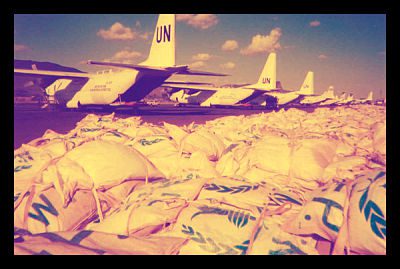
During international crises, the media often publishes striking images of planes unloading bags and bags of food to distribute to those in need, or air-dropping supplies. Often, these are from the World Food Programme, a branch of the United Nations that focuses entirely on providing food and easing malnutrition in at-risk and needy communities worldwide.

Formed in 1963, the WFP was initially started as a three-year experiment after the director of the U.S. Food for Peace Program spoke of the need for a larger, multilateral food assistance organization. Its success was such that after two years, it was expanded into the branch it is today. In 1994, it adopted a mission statement, a first for any U.N. organization, which established its focus as the following:

  • Use food aid to support economic and social development
  • Meet refugee and other emergency food needs, and the associated logistics support
  • Promote world food security in accordance with the recommendations of the United Nations and FAO.

The WFP’s programs are not limited to the direct distribution of food. It has expanded to provide food vouchers, implement food for work programs for the poorest members of society, buying food directly from developing countries to support local farmers, and providing food specifically to sufferers of HIV and TB (for whom proper nutrition is especially important.)

Like UNICEF, WFP has attracted significant attention, also in the celebrity sphere. Actress Drew Barrymore, an ambassador for the program, donated $1 million towards its efforts. Football stars Ronaldinho and Kaka, alongside names like Penelope Cruz, Rachel Weisz, and Sean Connery have also supported the WFP’s efforts.

The WFP’s impact is indisputable: in 2011, it provided close to 4 million tons of food to nearly 99 million people, alongside their other growing programs. They have one of the best track records for aid agencies in terms of cost-effectiveness, with their administration costs reported to be only around 7%. And they are funded entirely by donors and governments who provided an impressive 3.73 billion dollars in 2011.

– Farahnaz Mohammed

Source: World Food Programme
Photo: Wikipedia:World Food Programme

June 16, 2013
https://borgenproject.org/wp-content/uploads/borgen-project-logo.svg 0 0 Borgen Project https://borgenproject.org/wp-content/uploads/borgen-project-logo.svg Borgen Project2013-06-16 06:55:002021-06-21 17:19:54The History of the World Food Programme
Development

History of the UNFPA

History of the UNFPA
The UNFPA was originally introduced as the UN Fund for Population Activities. The fund began as a trust fund in July of 1967. Its administration was entrusted to the United Nations Development Program.  In 1972 the program was placed under the General Assembly’s authority and the UNDP Governing Council was named as its governing body. In 1987, the name was changed to the United Nations Population Fund.

The UNFPA has a unique role within the UN system. It is responsible for addressing population and development issues. They emphasize reproductive health and gender equality. Much of the fund’s construction stems from the ICPD Programme of Action as well as the Millennium Development Goals. The fund receives policy guidance from the General Assembly and the Economic and Social Council, also known as ECOSOC. The fund works closely with other developmental organizations such as the WHO, UNICEF, UNDP, and UNAIDS.

The UNFPA touts five main goals: achieving universal access to sexual and reproductive health, promoting reproductive rights, reducing maternal mortality, and accelerating progress on the ICPD agenda and MGD’s. Additionally, they advocate for human rights and gender equality. The UNFPA helps governments conduct countrywide censuses, population and development-related research, and analysis on topics such as migration, aging, climate change, and urbanization.

The UNFPA works with governments, other UN agencies, local communities, NGOs, foundations, and the private sector to raise awareness and mobilize support and resources to achieve its mission. In 2007, the UNFPA decentralized its operations and became a more field centered, efficient and strategic partner, executing real and important work on the ground.

In 2011, the UNFPA restructured again. The center of their plan was based on advancing the right to sexual and reproductive health by accelerating progress towards the MGD aimed at improving maternal health. They have recently placed their emphasis on reducing maternal deaths and achieving universal access to reproductive health, including family planning and access to family planning methods for women.  At this time, the UNFPA is striving to improve the lives of underserved populations, especially women and young people. They are working towards this through their expertise in population dynamics, human rights, and gender equality.

– Caitlin Zusy 

Source UNFPA

May 25, 2013
https://borgenproject.org/wp-content/uploads/borgen-project-logo.svg 0 0 Borgen Project https://borgenproject.org/wp-content/uploads/borgen-project-logo.svg Borgen Project2013-05-25 06:00:212020-06-21 22:33:24History of the UNFPA
Extreme Poverty

Extreme Poverty or Higher Aggregate Happiness

Extreme Poverty or Higher Aggregate Happiness
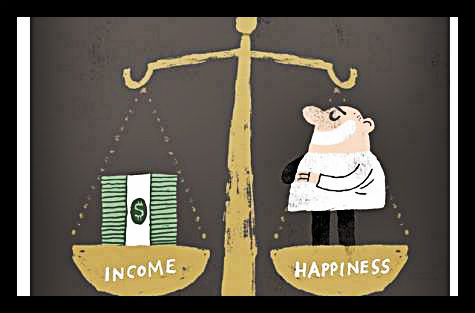
In a recent research analysis regarding the after-effects of eradicating extreme poverty, researchers found that the world’s well-being as a whole is much more important to focus on. During the past decade, the main focus of the U.N. and developed nations has been to eradicate extreme poverty, but now researchers are asking: what comes after the end of poverty? The argument is that many people will still be considered poor in comparison to those who are rich. Daniel Altman of Foreign Policy asserts that even if people move up from extreme poverty (living on less than 2 dollars a day), the more they are exposed to ads and a TV showing them how the “other half lives,” the more the income gap will yet remain.

Altman writes, “the link between income and happiness is strong in countries around the globe.” Thus, rising income maintains constant happiness which means that focusing on non-extreme poverty is just as important as focusing on eradicating extreme poverty. Basically, even if poor farmers and sweatshop workers’ lives were advanced “beyond the level of mere subsistence,” there needs to be a constant advancement of their lives in order to maintain consistent and constant well-being and happiness.

Although the aid industry has been successful in lifting small numbers of people out of poverty for a given time, there is a need for “big changes in living standards,” and that calls for the growth of the private sector and a change of political institutions. By following up on the Bill and Melinda Gates Foundation’s slogan that every human life has equal value, perhaps there is a need for a new slogan for the aid industry, argues Altman. Rather than it being the eradication of extreme poverty, perhaps it should be the building of higher aggregate happiness.

– Leen Abdallah

Source: SBS News
Photo: Google

May 18, 2013
https://borgenproject.org/wp-content/uploads/borgen-project-logo.svg 0 0 Borgen Project https://borgenproject.org/wp-content/uploads/borgen-project-logo.svg Borgen Project2013-05-18 04:46:582024-05-24 23:52:17Extreme Poverty or Higher Aggregate Happiness
Global Poverty

History of the UNHCR

History of the UNHCR
Over the 63-year history of the UNHCR, the staff, budget, legal framework, NGO network, geographic scope and expertise of the UN High Commissioner for Refugees has expanded. Despite the initially ambitious goal of solving all refugee problems in three years, the extended mandate of the UNHCR speaks to the consistent problem of refugees, internally displaced persons, asylum seekers, and stateless peoples.

WWII left around 400,000 people homeless refugees strewn across Europe. In 1950, the ambitious new global institution, the UN, created the UN High Commissioner for Refugees (UNHCR) under a three-year mandate to complete its work and then disband. With only 34 staff members and a $300,000 first-year budget, the UN quickly realized the magnitude of the problem far outweighed the resources of the body. A year after its inception, a legal foundation for assisting refugees was set up to establish a legal framework under which refugees can claim international rights. In recognition of the innovative humanitarianism the UNHCR performed, the new organization won the 1954 Nobel Peace Prize.

When the Soviets put down the Hungarian revolution in 1956, an outpouring of refugees into neighboring countries was a humanitarian emergency. The decolonization of Africa in the 1960s and pursuant demarcation of sovereign state boundaries “produced the first of that continent’s numerous refugee crises needing UNHCR intervention.” Through the 1970s and 1980s, the UNHCR advocated and assisted refugees in Asia and Latin America. In 1981 the UNHCR again won the Nobel Peace Prize for “assistance to refugees, with the citation noting the political obstacles facing the organization.”

When the Berlin Wall fell and proxy wars ended, governments previously ‘shored up’ by foreign assistance were weakened. This allowed the “proliferation of identity-based conflicts” causing new refugee problems. The 1990s brought the refugee emergencies full circle back to Africa and Europe with the wars in the Balkans. Throughout the 21st century, the UNHCR has been assisting refugees in the extremely sensitive crises of the Democratic Republic of the Congo and Somalia.

The UNHCR also expanded to assist internally displaced persons and stateless peoples—a politically divisive issue. Stateless peoples are frequently overlooked and denied basic human rights because they do not have citizenship. Fortunately, in some regions, regional agreements have strengthened the 1951 mandate.

As population movement becomes more complex so does the refugee situation. Approximately 150 million people live outside their country of birth. 10% of these people are refugees. This amounts to about 1 out of 400 people worldwide. Most often, refugees are created from violent conflict and recent research and practitioners’ experiences show humanitarian aid can no longer be considered independent of a conflict. Often, conflicting factions see the humanitarian body as supporting one side or the other making the aid workers and aid vulnerable to attack and manipulation.

Fortunately, the UNHCR has reflected the growing problem by growing size, scope, and depth of action. In 2012, the UNHCR had a budget of $3.59 billion and a staff of 7,685 based in the Geneva headquarters, 126 countries within which 135 main offices operate and 279 remote field offices function. Of the 43 million people uprooted worldwide, the UNHCR supports 33.9 million ‘people of concern.’ The two largest groups are internally displaced persons (14.7 million people) and refugees (10.5 million persons). The remaining group’s returnees (3.1 million), stateless people (3.5 million), asylum seekers (837,000) and ‘other’ (1.3 million).

– Katherine Zobre
Sources: UNHCR History , The State of the World’s Refugees 2000
Photo: UNHCR


May 15, 2013
https://borgenproject.org/wp-content/uploads/borgen-project-logo.svg 0 0 Borgen Project https://borgenproject.org/wp-content/uploads/borgen-project-logo.svg Borgen Project2013-05-15 04:28:122024-06-10 03:19:43History of the UNHCR
Advocacy, Global Poverty

Top 10 Global Poverty Blogs

impatient-optimists-blog-bill-gates
These top 10 global poverty blogs are some of the best of the best in addressing the issues, solutions, and concerns surrounding the global battle against extreme poverty.

1. The Borgen Project – Works with US Congressional leaders to improve the USAID response to the global poverty crisis; advocacy to secure crucial poverty-reducing legislation, mobilization and awareness campaigns making poverty a political priority. The blog addresses the impact of poverty from every angle, and highlights innovative and dynamic development successes.

2. The Impatient Optimist – The Bill & Melinda Gates Foundation blog features the work of the foundation’s grantees, partners, leadership, and staff, as well as other bloggers, to provide commentary and insight on the issues of poverty. Stories and updates from the people working every day to help alleviate poverty, help promote health, and to help every student in the United States realize his or her full potential through education.

3. The Huffington Post – The highly respected news agency developed their Impact blog with reputable contributors from around the world, renowned journalists, stories about celebrities and average people, domestic and global poverty concerns and innovations, and good-news-stories. Type in the search word “poverty” and find a vast archive of videos and articles covering poverty concerns.

4. The World Bank – “Working for a world free of poverty,” this blog is a forum for discussing development issues and provides open access to WB data. Open access to data is a key part of the WB’s commitment to sharing knowledge to improve people’s lives.  The Open Data Initiative believes that “statistics tell the story of people in developing countries, and can play an important part in helping to overcome poverty” – WB’s President, Robert Zoellick.

5. The United Nations Development Programme – Details the UNDP’s 6,000+ development projects and 8,000 outputs in 177 countries and territories worldwide; comprehensive, qualitative and timely information about how aid flows and its results. The blog is also part of the International Aid Transparency Initiative (IATI) to which UNDP is a signatory, advocating voluntary transparency aimed at making information about aid spending easier to access, understand and use.

6. The U.S. Department of State – Mission: to create a more secure, democratic, and prosperous world for the benefit of the American people and the international community. Blogs.state.gov offers up to the minute news coverage of U.S. foreign policy information; their blog offers the opportunity for participants to discuss important foreign policy issues with senior Department officials. Blog.usaid.gov shows exactly what America is doing around the world to help reduce poverty and improve development.

7. InterAction – An alliance organization of more than 180 U.S. based non-governmental organizations (NGOs), working around the world. InterAction serves as a convener, thought leader and voice of their member community. Their blog represents the collective mobilization of its members in: international development, humanitarian aid, accountability and policy creation.

8. ONE – Is a global mobilization of over three million people, unifying to fight “the absurdity of extreme poverty.” Co-founder Bono is part of the group’s influential leadership team, joined by other political and humanitarian experts from around the world. Their blog aims to educate and facilitate the general public in direct action for poverty reduction, and subsequent issues resulting from poverty.

9. Oxfam America – “Working together to end poverty and injustice,” Oxfam America is a global organization working to right the wrongs of poverty, hunger, and injustice and to develop long-term solutions for social change. The international Oxfam confederation works in more than 90 countries, and their blog is a comprehensive look at all political, economic, humanitarian angles of poverty issues.

10. Business Fights Poverty – The world’s largest network of business and development professionals, NGOs and academia all focused on fighting poverty through business. Their blog highlights how business can combat poverty, providing resources, methods and tools for business and thus economic development, showing impact and opportunities.

– Mary Purcell

Photo Source: Impatient Optimist

May 11, 2013
https://borgenproject.org/wp-content/uploads/borgen-project-logo.svg 0 0 Borgen Project https://borgenproject.org/wp-content/uploads/borgen-project-logo.svg Borgen Project2013-05-11 05:23:022024-12-13 17:49:19Top 10 Global Poverty Blogs
Development

Development in Africa According to the UN

africa economic development commodity industrialization un
A new report from the United Nations Economic Commission for Africa (ECA) and the African Union says the key to long-term development in Africa is commodity-based industrialization. The study collected data mostly from nine African countries and the continent’s five sub-regions. Those countries are Algeria, Cameroon, Egypt, Ethiopia, Ghana, Kenya, Nigeria, South Africa and Zambia.

The report urges African nations to take advantage of their abundance of natural resources by using a commodity-based industrialization strategy. Each nation should frame its own specific policy for commodity-based industrialization so that it can direct its own development.  This is necessary to address poverty and gender disparities, youth unemployment, and other challenges African nations faces. The report states that “massive industrialization based on commodities in Africa is imperative, possible, and beneficial.”

Instead of African nations shipping raw materials to foreign nations to make commodities which are of higher value, the report recommends adding value to raw materials locally. Not only does this increase the profit to African nations but also fosters diversification of technological capabilities, an expansion of an advantageous skills base, and deepened industrial infrastructures in individual countries.

Case studies were prepared for Algeria, Cameroon, Egypt, Ethiopia, Ghana, Kenya, Nigeria, South Africa and Zambia.

– Essee Oruma

Source: UN News Centre

May 9, 2013
https://borgenproject.org/wp-content/uploads/borgen-project-logo.svg 0 0 Borgen Project https://borgenproject.org/wp-content/uploads/borgen-project-logo.svg Borgen Project2013-05-09 07:00:592024-05-24 23:42:25Development in Africa According to the UN
Page 42 of 44«‹4041424344›»

Get Smarter

  • Global Poverty 101
  • Global Poverty… The Good News
  • Global Poverty & U.S. Jobs
  • Global Poverty and National Security
  • Innovative Solutions to Poverty
  • Global Poverty & Aid FAQ’s
Search Search

Take Action

  • Call Congress
  • Email Congress
  • Donate
  • 30 Ways to Help
  • Volunteer Ops
  • Internships
  • Courses & Certificates
  • The Podcast
Borgen Project

“The Borgen Project is an incredible nonprofit organization that is addressing poverty and hunger and working towards ending them.”

-The Huffington Post

Inside The Borgen Project

  • Contact
  • About
  • Financials
  • President
  • Board of Directors
  • Board of Advisors

International Links

  • UK Email Parliament
  • UK Donate
  • Canada Email Parliament

Get Smarter

  • Global Poverty 101
  • Global Poverty… The Good News
  • Global Poverty & U.S. Jobs
  • Global Poverty and National Security
  • Innovative Solutions to Poverty
  • Global Poverty & Aid FAQ’s

Ways to Help

  • Call Congress
  • Email Congress
  • Donate
  • 30 Ways to Help
  • Volunteer Ops
  • Internships
  • Courses & Certificates
  • The Podcast
Scroll to top Scroll to top Scroll to top