• Link to X
  • Link to Facebook
  • Link to Instagram
  • Link to TikTok
  • Link to Youtube
  • About
    • About Us
      • President
      • Board of Directors
      • Board of Advisors
      • Financials
      • Our Methodology
      • Success Tracker
      • Contact
  • Act Now
    • 30 Ways to Help
      • Email Congress
      • Call Congress
      • Volunteer
      • Courses & Certificates
      • Be a Donor
    • Internships
      • In-Office Internships
      • Remote Internships
    • Legislation
      • Politics 101
  • The Blog
  • The Podcast
  • Magazine
  • Donate
  • Click to open the search input field Click to open the search input field Search
  • Menu Menu

Tag Archive for: United Nations

Posts

Global Health, Global Poverty

New Initiatives to Combat Global Obesity

Olivier De Schutter, the U.N. Special Rapporteur on the Right to Food, recently stated that obesity has become a bigger threat to global health than tobacco use.

Believing that there should be stricter regulations on consuming unhealthy foods, De Schutter gave a speech during the World Health Organization’s (WHO) annual summit and expressed concern that the world has not been actively tackling the issue of obesity. The WHO established the Global Strategy on Diet, Physical Activity and Health 10 years ago, but the global obesity epidemic is still expanding. Diabetes, heart disease and other obesity-induced health complications have become more prevalent as a result. To counter the growing issue of global obesity, De Schutter declared, “a bold framework convention on adequate diets must now be agreed.”

Many international groups agree with De Schutter’s comments. Though the Food and Drink Federation has stated that the food industry is making clear efforts to provide healthier meal options, organizations like Consumer International and the World Obesity Federation are demanding the adoption of compulsory guidelines for the food and drink industry to follow. In 2005, the number of global deaths caused by obesity and being overweight was 2.6 million. The same figure had risen to 3.4 million by 2010.

The proposed rules include reducing the levels of sodium, saturated fat and sugar in various foods. Artificial trans-fats were recommended to be completely removed from all food and drink products in the next five years. Organizations have also asked for improved meals in hospital and schools, stricter guidelines for food advertising and increased efforts to educate the public about healthy eating. Governments could help control the global obesity issue as well by introducing taxes, changing licensing controls, funding new research projects and reviewing the prices of different food items.

If implemented, these new guidelines would be at the “highest level of global agreement.” In contrast to the current practice of “opting out” of imposed regulations on the food industry, governments would be required to enforce them. Dr. Ian Campbell, the founder of the United Kingdom’s National Obesity Forum, says that the proposed recommendations are within reason. “The inescapable fact is obesity is killing on a massive scale and only action from governments to tackle head-on the fundamental causes of obesity will lead to any meaningful decreases.”

Obesity has long been linked to poverty. The majority of overweight and obese people can be found in developing rather than developed countries. North Africa, the Middle East and Latin America have nearly the same percentage of obese people as Europe does.

Currently, people living far below the poverty line rely on cheap, processed foods that are high in fats and sugars. Compared to diets rich in fresh fruits and vegetables, these unhealthy meals have high energy content per dollar spent, making them more convenient and accessible to the poor. In South Africa, a typical healthy meal costs approximately 69 percent more than an unhealthy one. For households living in extreme poverty, pursuing a healthy diet could take away up to 30 percent of the total income.

Placing taxes on unhealthy foods could help combat the problem. Collective action is crucial. “If obesity was an infectious disease,” stated World Obesity Federation’s Dr. Tim Lobstein, “we would have seen billions of dollars being invested in bringing it under control.”

– Kristy Liao

Sources: BBC, Huffington Post, Time
Photo: Earth Times

June 4, 2014
https://borgenproject.org/wp-content/uploads/borgen-project-logo.svg 0 0 Borgen Project https://borgenproject.org/wp-content/uploads/borgen-project-logo.svg Borgen Project2014-06-04 13:33:192024-05-26 23:36:43New Initiatives to Combat Global Obesity
Children

Yemen’s Progress in Ending Child Marriage

In Yemen, 52% of girls are married before the age of 18. This nightmare is far from fantastical dreams of love and marriage, meeting ‘Prince Charming’ and living ‘happily ever after.’ Rather, many Yemeni girls are forced to marry men double their age.

Prior to recent progress, Yemen had no legal minimum age for the marriage of its citizens. In 1999, parliament abolished a former law that made marriage before the age of 15 illegal, and in 2009, attempts to reinstate a legal marriage age failed. Both of the aforementioned incidents occurred when legal groups cited “religious grounds,” arguing that a minimum marriage age would be contrary to Islamic law. However, Abdulwahab al-Anisi, who currently serves as the secretary general of Yemen’s largest Islamist party, has voiced his party’s willingness support the new law.

The average age of child brides in rural Yemen is 12 to 13-years-old, and the death of brides as young as 8-years-old have been reported after their wedding night or child birth. This is the horrific reality for young brides forced into child marriage, many of whom are unlikely to have knowledge of intercourse prior to their wedding night.

However, new constitutional proposals address gender equality and women’s rights, as well as the suggestion to make marriage before the age of 18 illegal for both genders. The proposed Child’s Rights Law was submitted to Prime Minister Mohammad Basindawa on April 27 and would require the verification of age for both the man and the woman when filing for a marriage license.

The draft also suggests punishment for perpetrators of forced child marriage, providing criminal penalties of two months to one year in prison. Any persons who draw up a marriage contract with the knowledge that one or more persons is under the age of 18 could face fines of up to $1,860. Prison sentences and fines are also suggested for witnesses, parents, or guardians who know that at least one person filing for the marriage license is under 18.

It will be long and difficult process to change a practice with such deep roots and serious social implications, but Belkis Willie, a Human Rights Watch (HRW) researcher, believes that, “a law setting an age and criminalizing is a first step, and then a few high profile criminal cases against parents and spouses will be key.”

Organizations such as HRW are urging the Yemeni government to expedite the passing of this law, which would help protect thousands of girls who are victims of early and forced marriage. Forced marriage, in turn, often results in girls being prevented from completing their education and makes them more vulnerable to marital rape and domestic abuse.

“The prime minister should provide strong leadership to get the minimum age for marriage and the child rights law on the books,” said Nadim Houry, deputy Middle East and North Africa director for HRW. “There’s no excuse for further delays in passing this desperately needed legislation.”

– Madisson Barnett

Sources: The New York Times, Human Rights Watch (1), Human Rights Watch (2)
Photo: BBC

May 3, 2014
https://borgenproject.org/wp-content/uploads/borgen-project-logo.svg 0 0 Borgen Project https://borgenproject.org/wp-content/uploads/borgen-project-logo.svg Borgen Project2014-05-03 03:00:062024-12-13 17:53:52Yemen’s Progress in Ending Child Marriage
Developing Countries, Development, United Nations

Bringing Clean Energy to Developing Countries

In 2011, UN Secretary-General Ban Ki-moon launched an initiative called Sustainable Energy for All. There are three primary objectives: (1) universal access to modern energy services, (2) doubling the rate of improvement in global energy efficiency and (3) doubling the share of renewable energy in the global energy mix. The UN established these goals in the hopes of achieving worldwide sustainable energy access by 2030.

Three billion people currently lack access to affordable energy services for basic uses like cooking and heating. Another one billion people rely on erratic power grids. Sustainable Energy for All is an international effort to decrease the scope of this energy access issue. Introducing clean energy would reduce global emissions, improve the lives of the poor and support ongoing development goals. Additionally, embracing clean energy would help keep the average rise of global temperatures in check.

However, renewable energy has just recently become economically comparable to traditional fuels, and bringing clean energy services to rural and remote communities is a challenge. At the current rate of progress, the UN’s objectives under Sustainable Energy for All will likely not be achieved by the desired date. In fact, the International Energy Agency calculates that around 1 billion people will still not have access to electricity in 2030.

Energy inequality is especially significant for women and girls living in poor or secluded areas. Many risk their safety by spending hours a week collecting firewood far away from home. Conventional kerosene lamps and cooking fires contribute to a number of health issues, such as heart disease and breathing issues. To combat the problem, nations like the United States, China and Vietnam have proposed expanding electricity grids. However, the logistics of doing so would be difficult; it is especially expensive for rural communities with low populations.

Luckily, clean energy technologies are becoming more affordable, making them stronger contenders with conventional power sources. However, reaching universal access to energy services would cost $48 billion. Approximately $37 billion is already spent annually on kerosene and traditional cooking fuels, such as charcoal. On the other hand, the clean energy industry is maturing – now constituting $250 billion of the global economy.

A new wave of clean energy entrepreneurs has emerged as a result. SunFarmer, based in the United States, is one of several non-profit organizations that helps bring reliable and affordable solar electricity to hospitals and schools in remote developing areas. The market for solar-powered products (such as televisions, radios and even water pumps) is growing as well. As part of the Sustainable Energy for All campaign, the UN created the Energy Access Practitioner Network in 2011. The Network facilitates the delivery of energy services to developing countries and supports the implementation of new renewable technologies.

In order to fully integrate clean energy services into the developing world, government subsidies for charcoal and kerosene should first be eliminated or decreased. Additionally, tariffs on imports for clean energy products should be abolished; more than 30 countries currently impose taxes on imported products like solar lanterns and clean stoves. Once these policies are addressed, clean energy technologies could have a much better chance of reaching the developing world.

— Kristy Liao

Sources: Huffington Post, Nature, Sustainable Energy, UN Foundation
Photo: United Nations


Follow The Borgen Project on Twitter.


April 30, 2014
https://borgenproject.org/wp-content/uploads/borgen-project-logo.svg 0 0 Borgen Project https://borgenproject.org/wp-content/uploads/borgen-project-logo.svg Borgen Project2014-04-30 04:00:542024-05-26 23:30:01Bringing Clean Energy to Developing Countries
Advocacy, Global Poverty, Human Rights, United Nations

The Universal Declaration of Human Rights

Upon the founding of the United Nations, there was much discussion of the purpose of the organization. The founding years in the late 1940s were immediately following the horrors of World War II, and the representatives UN had made it a priority to set the world on a new path of peace. One of the mission documents for the attempted new world order was the Universal Declaration of Human Rights. The document put forward some great ideals for the rest of the Twentieth Century, but there is still much work that has to be done to meet the goals of the Declaration.

The first sentence of the document describes “the inherent dignity and of the equal and inalienable rights of all members of the human family.” That sentence gives a great amount of hope for the UN and its mission, yet for a reader over 65 years later, we see how far things still have to go. We see in a number of developing nations how women are still discriminated against, as well as religious and ethnic discrimination. The feelings after World War II might have given a sense of optimism, that those horrors would never come again, but that is one claim that the UN has yet to achieve.

The Declaration contains a pledge by the UN member nations that “in co-operation with the United Nations, the promotion of universal respect for and observance of human rights and fundamental freedoms.” This statement, as part of a founding document for the UN, stands out when considering the situation in Syria. The UN has worked for the past three years to alleviate the plight of Syrians, yet there has been criticism from some of its own members. This pledge in the Declaration shows the need and responsibility the UN has to help in a situation of humanitarian plight.

Article three of the Declaration reads “Everyone has the right to life, liberty and the security of person.” Out of the many instances where this principle has not been upheld, the recent anniversary of the Rwandan genocide is one of the most egregious examples. The genocide of 1994 resulted in the death of almost a million Rwandans. The UN unfortunately did little to stop the killings, and after 20 years the genocide is still a large black mark on the international community.

Overall the Universal Declaration of Human Rights put forwards what we would all hope would be the best for the international community. It gives an idea of what the UN stands for, and while there have been a number of instances when the league has not held up to their lofty standards, the UN has carried out countless missions to help the impoverished. Hopefully they will learn from their slip-ups, however, and do more to accomplish their stated mission.

– Eric Gustafsson

Sources: UN, Youth for Human Rights
Photo: Encyclopædia Britannica

April 26, 2014
https://borgenproject.org/wp-content/uploads/borgen-project-logo.svg 0 0 Borgen Project https://borgenproject.org/wp-content/uploads/borgen-project-logo.svg Borgen Project2014-04-26 15:35:592024-05-26 23:27:01The Universal Declaration of Human Rights
Global Poverty, United Nations, War and Violence

Central African Republic Peacekeeping Efforts

With violence in the Central African Republic continuing, and complaints of little effectiveness towards the forces from the West coming in, the United Nations Security Council voted unanimously on April 10 to send in 12,000 peacekeeping troops.

Currently France is holding its 2,000 peacekeeping troops in the nation until the UN force is ready. The hope is that this influx will bring some stability to a struggling nation torn by religious and ethnic violence.

Help from neighboring African nations has been offered, and there are currently 5,000 African Union troops in the nation. However, troops from Chad were recalled earlier in April as reports spread that they were shooting civilians in the capital of Bangui.

Reports like those of the Chadian peacekeepers are troubling and continue to raise questions over who incoming peacekeepers should support. When the efforts began at the end of 2013, the concern was over Muslim militia killing Christians in the region. However, once the peacekeepers came in, retaliatory killings by Christian “anti-balaka” militia resulted in migrations by Muslims and perilous refugee camps set up in the capital of Bangui.

To the credit of the United Nations, they appear to be taking a pro-active response to these complaints. The arrival of more troops meets a pressing need as there had been many complaints over the lack of troops and their reluctance to enter the more dangerous regions of the nation. Hopefully a troop influx will meet victims’ needs.

In the weeks before the vote by the UNSC violence appeared to be escalating in the region. In the days before the vote at least 30 people died in attacks by the anti-balaka militia. UN estimates that were published in the lead-up to the vote estimated that a quarter of the population was “in desperate need of aid.”

The violence in the Central African Republic has gotten little of the media attention that conflicts in Ukraine and Syria have gotten, yet it is a burgeoning problem in a region of growing importance. The peacekeeping announcement is a step in the right direction for the international community. Organizations like the Borgen Project advocate for assistance in regions of turmoil like the Central African Republic is currently dealing with.

While this mission may be meant to encourage peace in the region, it may be some time before that goal is achieved. The work in nations like the Democratic Republic of the Congo shows how difficult that peace efforts in out-of-the way posts are for the West. The efforts will be monitored and followed by the members of the Borgen Project, in the hope that the citizens of the CAR will live better lives soon.

-Eric Gustafsson

Sources: The Week, Reuters, New York Times
Photo: ISN

April 21, 2014
https://borgenproject.org/wp-content/uploads/borgen-project-logo.svg 0 0 Borgen Project https://borgenproject.org/wp-content/uploads/borgen-project-logo.svg Borgen Project2014-04-21 13:27:182024-05-26 23:27:12Central African Republic Peacekeeping Efforts
Foreign Aid, Global Poverty, United Nations

Rwandan Genocide: Lessons Learned, 20 Years Later

rwandan_genocide_20_years_later_child_opt
It was only twenty years ago that the now infamous “Genocide Fax” was sent, a detailed letter to the United Nations headquarters in New York explaining the brewing events leading up to the mass slaughter that we now know as the Rwandan Genocide.

The letter, sent by the then-Force Commander of the UN peacekeeping mission for Rwanda (UNAMIR), General Romeo Dallaire, explained that ethnic Hutu extremists were stockpiling weapons and distributing them to the militias. An informant had also revealed to him that “he has been ordered to register all Tutsi in Kigali” in preparation “for their extermination.” These harrowing discoveries prompted Dallaire to contact UN headquarters, convinced that it was necessary to act. The final line of the letter read, ‘Peux ce que veux. Allons-y,’ translating to ‘Where there is a will there is a way. Let’s go.’

The UN however, decided against acting. Then-Head of UN Peacekeeping Operations, Kofi Annan, instructed Dallaire to essentially do nothing, as “unanticipated repercussions” could ensue.

The repercussions that Dallaire anticipated did ensue, following the tragic plane attack that killed then-President Habyarimana just three months later.

Then came the horrifying Rwandan genocide that claimed nearly one million lives in less than 100 days.

Twenty years later the nation has far surpassed anyone’s expectations. Due to an onslaught of foreign aid and a revitalized Rwandan pride, the country has built itself back and shows no signs of stopping.

Under the leadership of President Paul Kagame, more than one million Rwandans have lifted themselves out of poverty and nearly all children attend school. Investment has nearly tripled since 2005 and economic opportunities abound. Malaria deaths have fallen more than 85 percent, and nine out of every 10 Rwandans claim that they “trust in the leadership of their country.” The transformations that Rwanda has made are far from over, as the country aims to be a middle-income nation by 2020.

These achievements prove just how much can be accomplished in the face of adversity. The Rwandan people have lifted their country out of despair and created a beacon of hope to all of those who still suffer under the dark cloud of genocide.

Not only that, but they have taught us a valuable lesson.

We have a responsibility as human beings to protect each other from such mass atrocities. Unfortunately, the United Nations learned this in a painful way. However, they have now been at the forefront of putting a stop to genocides in countries such as Libya, Kenya and the Democratic Republic of the Congo.

Twenty years later we remember all of those who lost their lives in the Rwandan genocide, and we thank them for the valuable lesson that we now must put into practice.

– Mollie O’Brien

Sources: The Guardian, The Huffington Post
Photo: Global Solutions

April 10, 2014
https://borgenproject.org/wp-content/uploads/borgen-project-logo.svg 0 0 Borgen Project https://borgenproject.org/wp-content/uploads/borgen-project-logo.svg Borgen Project2014-04-10 10:34:262019-12-11 13:21:53Rwandan Genocide: Lessons Learned, 20 Years Later
Human Rights, United Nations

For North Korea, It’s Still 1940

North Korea and the United Nations go head to head on matters of human rights. In a resolution passed on March 28, the UN Human Rights Council in Geneva condemned North Korea for “systematic, widespread and gross human rights violations, including crimes against humanity, that continue to be committed in the country.”

The resolution came shortly following a Human Rights Council Commission of Inquiry conducted earlier in the month, and received acceptance by 30 nations, against six opposing and 11 abstaining.

Many of the human rights violations allegedly occurring in North Korea are unparalleled in a world modernized by the 1948 UN Declaration of Human Rights. A great number of people are detained in prison camps for crimes they did not commit. Their guilt, it seems, is declared by association with family members or close friends of those who allegedly committed political crimes. The Commission report provided evidence for circumstances of rape, murder and torture within the prison labor camps.

North Korean officials did not appreciate the Commission and resolution results. So Se Pyong, North Korea’s UN envoy, claimed the UN Human Rights Council had politically confronted North Korea, putting the nation on the defensive. When UN Human Rights investigators asserted North Korean Supreme Leader Kim Jong Un be tried for crimes devastatingly akin to those committed under Nazi rule, the country’s ambassador told the Council to “mind your own business.”

Despite the horrendous situation the investigative Commission has shown, many activists are pleased that the results have led to such strong support for the UN resolution.  Rather than stopping at investigations of nuclear proliferation and weapons development, the United Nations will now be putting Security Council and General Assembly staff to work on bringing justice to North Korea.

At this point, some world powers are wary of the extent that can be done regarding the issue. At most, North Korea could be taken to the International Criminal Court by UNSC, yet China and Russia, both veto powers, voted against the March resolution. However, an increase in investigation could possibly turn the tide. Human rights may not yet be completely universal, but for now the world is making progress.

– Jaclyn Stutz

Sources: Al Jazeera, Amnesty International, Human Rights Watch, Reuters
Photo: Yahoo

April 5, 2014
https://borgenproject.org/wp-content/uploads/borgen-project-logo.svg 0 0 Borgen Project https://borgenproject.org/wp-content/uploads/borgen-project-logo.svg Borgen Project2014-04-05 04:00:082024-05-26 23:24:00For North Korea, It’s Still 1940
Development, Global Poverty, Poverty Reduction, United Nations

World Poverty on the Decline

world poverty
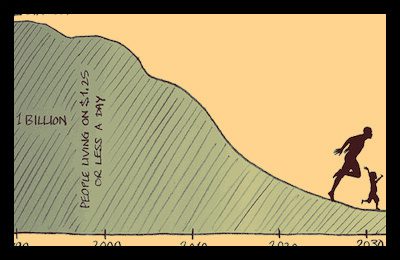
Despite the ever-pressing need to lend aid to the global community, as of recently, world poverty has been declining-presumably from a convergence of factors such as foreign aid, economic stabilization and increased development. As a result of increased investment in education, health, housing and facilitated access to water, living conditions around the globe have undergone improvement, further contributing to the decline in world poverty. According to a development report by the United Nations, the decline of poverty in the developing world was surpassing predictions.

The UN reported that “The world is witnessing an epochal ‘global re-balancing’ with higher growth in at least 40 poor countries helping lift hundreds of millions out of poverty and into a new ‘global middle class.’ Never in history have the living conditions and prospects of so many people changed so dramatically and so fast.” Furthermore, shortly after the release of the UN report, Oxford University conducted a study supporting the UN’s findings.

According to Oxford University’s poverty and human development initiative, poverty in many regions of the world is no longer as acute. According this initiative, acute poverty in the poorest countries could become eliminated within the short time frame of 20 years. Among the countries that could experience the eradication of severe poverty are Nepal, Bangladesh, Ghana, Tanzania and Bolivia.

Furthermore, the method of gauging poverty has also changed. Sabine Alkire and Maria Emma Santos of the UN engendered the Multidimensional Poverty Index (MPI) in 2010 to provide a more compressive measure of poverty. The MPI measures poverty along ten dimensions, such as nutrition, child morality, schooling, cooking fuel, water, sanitation, electricity and infrastructure. Unlike older measures of poverty that overlook critical indicators of poverty such as nutrition and health, the MPI is a far more thorough assessment.

Despite the economic crises of 2008 and 2009 that had catapulted the global economy into a recession, the world’s poorest nations are still able to rapidly approach the achievement of Millennium Development Goals. According to estimates by the World Bank, the global poverty rate is projected to fall below 15 percent by 2015, implying that other consequences of poverty such as hunger and death are also projected to decline significantly.

– Phoebe Pradhan

Sources: The Guardian, UN
Photo: Dreambook

March 5, 2014
https://borgenproject.org/wp-content/uploads/borgen-project-logo.svg 0 0 Borgen Project https://borgenproject.org/wp-content/uploads/borgen-project-logo.svg Borgen Project2014-03-05 10:23:112024-06-05 01:57:13World Poverty on the Decline
Global Poverty

Africa’s Sahel Region in Need

Africa's Sahel region
In February 2014, the UN pleaded with aid organizations to meet a $2 billion challenge in order to face a food crisis in Africa’s Sahel region that could affect over 20 million people.

Africa’s Sahel region divides the Sahara Desert from the Sudanian Savanna, spanning the width of the African continent, and has, in recent years, been damaged by a process known as desertification. Desertification is caused by poor agricultural practices and natural soil erosion. Additionally, a combination of population growth, drought, and conflict has put the already vulnerable region at risk.

Of the 20 million food insecure inhabitants, 5 million are children at risk of acute malnutrition. Already, nearly 577,000 children die each year of malnutrition in the Sahel.

UN officials are especially concerned about the Sahel because, in 2013, donors only offered about 60% of the requested $1.7 billion. They argue that another shortfall would prove catastrophic for many of the region’s most vulnerable.

The requested $2 billion would fund a three-year development plan that includes the countries of Burkina Faso, Cameroon, Chad, Gambia, Mali, Mauritania, Niger, Nigeria and Senegal. The UN seeks to work with the governments of the Sahel in conjunction with international aid organizations to address the root causes of conflict and famine in the region in order to make the Sahel more food secure.

This is the first multi-year plan for the Sahel, and it represents a shift in the way the UN deals with food security issues.

In September of 2013, the UN Humanitarian Coordinator for the Sahel, Robert Piper, said of the situation, “Business as usual doesn’t cut it . . . One of the problems we have today is that governments tend to want to fund food and nutrition . . .They are much more reluctant to fund, say, agriculture or water and sanitation inputs.”

Piper argued for the development of long-term solutions as the only option for the people of the Sahel.

Many of the food insecure are those who have been displaced by conflict.  Violence in the Central African Republic, Sudan and Nigeria has lead to more than 730,000 refugees spilling into the region and some 495,000 displaced internally.

Without a plan to resolve these conflicts and care for the refugees, the continuing costs and caseload will become too great for the UN, Piper claimed.

– Chase Colton

Sources: UN News Centre, New York Times, BBC, UNOCHA Sahel, UNOCHA Piper
Photo: Reuters

February 15, 2014
https://borgenproject.org/wp-content/uploads/borgen-project-logo.svg 0 0 Borgen Project https://borgenproject.org/wp-content/uploads/borgen-project-logo.svg Borgen Project2014-02-15 04:00:502024-06-11 02:27:06Africa’s Sahel Region in Need
Global Poverty

U.N. Geneva II Communique In, Bashar al- Assad Out

UN_Geneva_Summit_Syria_Peace_Talk
Syria has been in a horrific war for the past three years, but maybe just maybe it will all come to end through what is being called the Geneva II Communique.

The UN, U.S. and Russia, have been trying to convince parities of the Syrian conflict to attend The Geneva II Communique for months. Last week both sides to the Syrian conflict finally agreed to sit down and figure out a solution to end the bloodshed in Syria. The conflicting parties are meeting with United Nations officials and speaking only through a mediator.

“After nearly three painful years of conflict and suffering in Syria, today is a day of fragile but real hope.” These are the words of United Nations Secretary General Ban Ki- moon, hoping resolution is in sight.

So far, agreement to release women and children from the war torn town of Homs has been reached. The UN is also requesting the release of the remainder of the citizens, including men. Humanitarian aid will also be sent in to the starving citizens once an agreement is made to do so. There are also talks about the release of the detainees and prisoners being held on each opposing side.

The UN is trying to implement the Geneva I communique aka as (transitional government) which was written in June of the 2013. According to BBC, the communique translates to the following:

  • Establishment of a transitional governing body with full executive powers that could include members of the government and the opposition, and should be formed on the basis of mutual consent.
  • Participation of all groups and segments of society in Syria in a meaningful national dialogue process.
  • Review of the constitutional order and the legal system.
  • Fair and free multi-party elections for the new institutions and offices that have been established.
  • Full representation of women in all aspects of the transition.

U.S. Secretary of State John Kerry believes a government transition is the only thing left to do or else Syria “heads closer to an abyss.”

“Bashar al-Assad will not be part of that transition government,” states Kerry. There is no way, no way possible in the imagination, that the man, who has led the brutal response to his own people, could regain the legitimacy to govern.”

The Syrian war started three long years ago when rebel groups began protesting against the inhumane leadership of the Syrian government and shouted for Al -Assad to be overthrown. The protesting then turned to bloodshed between these groups and war broke out.  Thus far, over 100,000 people have been killed and over 9 million people have fled their homes for shelter in neighboring countries.

Millions of people are still residing in the city; being held in turmoil. The citizens are literally starving to death with no access to food. Some have even gotten to the point of eating grass and weeds because no food is available. Medical supplies and medicine are also running out for the citizens. All people can do is wait to either die or be saved. By whom, no one knows.

An agreement between these opposing parties must come to an end quickly with imminent improvement of the lives of the Syrian people the first and only priority.<

– Amy Robinson

Sources: United Nations, United Nations, BBC, BBC, BBC, BBC
Photo: The Guardian

February 10, 2014
https://borgenproject.org/wp-content/uploads/borgen-project-logo.svg 0 0 Borgen Project https://borgenproject.org/wp-content/uploads/borgen-project-logo.svg Borgen Project2014-02-10 21:17:102024-06-11 02:23:57U.N. Geneva II Communique In, Bashar al- Assad Out
Page 38 of 44«‹3637383940›»

Get Smarter

  • Global Poverty 101
  • Global Poverty… The Good News
  • Global Poverty & U.S. Jobs
  • Global Poverty and National Security
  • Innovative Solutions to Poverty
  • Global Poverty & Aid FAQ’s
Search Search

Take Action

  • Call Congress
  • Email Congress
  • Donate
  • 30 Ways to Help
  • Volunteer Ops
  • Internships
  • Courses & Certificates
  • The Podcast
Borgen Project

“The Borgen Project is an incredible nonprofit organization that is addressing poverty and hunger and working towards ending them.”

-The Huffington Post

Inside The Borgen Project

  • Contact
  • About
  • Financials
  • President
  • Board of Directors
  • Board of Advisors

International Links

  • UK Email Parliament
  • UK Donate
  • Canada Email Parliament

Get Smarter

  • Global Poverty 101
  • Global Poverty… The Good News
  • Global Poverty & U.S. Jobs
  • Global Poverty and National Security
  • Innovative Solutions to Poverty
  • Global Poverty & Aid FAQ’s

Ways to Help

  • Call Congress
  • Email Congress
  • Donate
  • 30 Ways to Help
  • Volunteer Ops
  • Internships
  • Courses & Certificates
  • The Podcast
Scroll to top Scroll to top Scroll to top