• Link to X
  • Link to Facebook
  • Link to Instagram
  • Link to TikTok
  • Link to Youtube
  • About
    • About Us
      • President
      • Board of Directors
      • Board of Advisors
      • Financials
      • Our Methodology
      • Success Tracker
      • Contact
  • Act Now
    • 30 Ways to Help
      • Email Congress
      • Call Congress
      • Volunteer
      • Courses & Certificates
      • Be a Donor
    • Internships
      • In-Office Internships
      • Remote Internships
    • Legislation
      • Politics 101
  • The Blog
  • The Podcast
  • Magazine
  • Donate
  • Click to open the search input field Click to open the search input field Search
  • Menu Menu

Tag Archive for: United Nations

Posts

Gender Equality, Global Poverty, Women's Empowerment

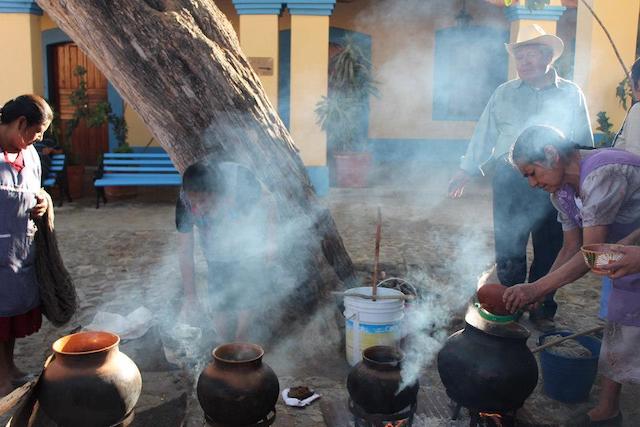
Female Weaving Co-op in Mexico Promotes Equality

 Female Weaving Co-op in Mexico
Female weaving co-ops began to proliferate in Mexico in the late 20th century, especially in the country’s most impoverished areas. Indigenous Mexican women living in these areas found it imperative to collectivize to navigate an oppressive socio-political landscape. Vida Nueva is one example of a co-op that grew out of this context. This female weaving co-op promotes gender equality in Mexico in ways that people never before imagined.

How This Female Weaving Co-op Promotes Gender Equality in Mexico

Oaxaca is the second-poorest state in Mexico, with historically low GDP growth relative to the national average. In Oaxaca, 28 percent of the population lives in extreme poverty, a statistic due mainly to income disparities between rural and urban centers and the region’s low manufacturing capacity. In the small township of Teotitlán del Valle, Zapotec women feel social and economic marginalization the hardest, because they must contend with a communal infrastructure that favors men and limits their participation in municipal government. Until the 1990s, women could not pursue education or obtain a drivers’ license.

Today, many Zapotec women are still illiterate and bound to male intermediaries so they may engage meaningfully with the economy. This is especially the case regarding the textile industry, their principal export. Under these conditions, even their own reproductive health can present a source of ignorance.

Weaving Cooperatives as a Means of Social Change

The establishment of weaving cooperatives has benefitted Zapotec communities like Teotitlán in confronting the onset of globalization and neoliberal economics in Mexico. This phenomenon has proven to be damning to rural indigenous communities throughout the country. However, the biggest impact changes in textile production have been in improving gender relations in otherwise patriarchal contexts.

Since Zapotec women began weaving, their stake in local politics has increased, as well as their lobbying ability. Exposure to new markets through access to technology and travel has led to instances of financial and ideological independence. They have placed new importance on education and female empowerment, reshaping social norms to value female labor and domestic contributions at home.

Vida Nueva

Vida Nueva (New Life in Spanish) is an all-female weaving cooperative changing the social geography for women in Teotitlán for the better. The group comprises of solteras or unmarried women, widows and the wives of migrants, who banded together in an attempt to circumvent merchant control over their products. When starting, the women struggled to sell their rugs independently due to a language barrier (most do not speak any Spanish), stigmas against indigenous Mexicans in the city, exploitative bureaucracy and male backlash within their community.

A chance encounter with Flor Cervantes, a social justice promoter in Oaxaca with over eight years of self-esteem workshops under her guidance, gave Vida Nueva the architecture to develop into what it is now. Under Cervantes’ guidance, the women learned about their bodies, their business potential and how best to advocate for themselves. With this knowledge, Vida Nueva began to expand. It eventually gained recognition from the United Nations and the licensure to sell its goods worldwide. Through education and cooperative production, Vida Nueva regained control over the production and sale of its work.

While Vida Nueva’s biggest impact on gender equality in Mexico is qualitative, concrete change also exists. By 2004, nearly 15 percent of households in Teotitlán participated in textile cooperatives. This is a considerable increase since Vida Nueva’s inception in 1996.

According to the New York Times’ measure last year, the textile industry involves almost all of Teotitlán’s 5,500 residents in some way. Since the early 2000s, higher volumes of female co-op members received invitations to attend community assemblies. Now, it is commonplace for whole collectives to receive written invitations. This serves as evidence that a once-rigis, patriarchal local government is finding women to be more valued assets.

Giving Back

At no point in becoming independent artisans did the women of Vida Nueva compromise their practice. They continue to use the natural dyes (made from pomegranate, marigolds, pulverized insects, etc.) and the arduous weaving techniques that predated colonization. Vida Nueva is a community-driven project with a localized vision. Every year, the collective sponsors a new initiative to improve the quality of life in Teotitlán for all residents. Since starting, the group has championed recycling and forestation efforts, senior care services and feminism.

– Elena Robidoux
Photo: Taken by Elena Robidoux

November 30, 2019
https://borgenproject.org/wp-content/uploads/borgen-project-logo.svg 0 0 Kim Thelwell https://borgenproject.org/wp-content/uploads/borgen-project-logo.svg Kim Thelwell2019-11-30 07:30:172024-05-29 23:13:48Female Weaving Co-op in Mexico Promotes Equality
Global Poverty, Poverty Reduction, Sustainable Development Goals, United Nations

The United Nations and Global Poverty Reduction

United Nations and Global Poverty Reduction
Since its establishment in 1945, the United Nations has had the responsibility of maintaining peace and stability across the globe. This governmental body is at the center of global disputes, such as the ongoing conflicts in Syria and Brexit. It can also exercise diplomatic abilities when it comes to enforcing economic sanctions against some of the world’s less democratic actors. The U.N. has fashioned a multitude of agencies and programs with the sole intention of bringing billions out of poverty and on the path to more sustainable and secure lives.

As a Nobel Prize-winning organization, the United Nations became the world’s first far-reaching diplomatic body. With the powers outlined in its charter, the United Nations is in a unique position to confront many of the world’s 21st-century woes. From global security to health emergencies, the U.N. has the ability to assist in a plethora of international issues.

Beyond Global Conflict

While vital in resolving global conflict, the United Nations and global poverty reduction are not solely peace-keeping endeavors. On December 22, 1992, through resolution 47/196, the U.N. reaffirmed its commitment to global poverty reduction and declared Oct. 17 the International Day for the Eradication of Poverty. According to its website, “On that day, over 100,000 people gathered at the Trocadéro in Paris, where the Universal Declaration of Human Rights was signed in 1948, to honor the victims of extreme poverty, violence and hunger.”

While there is much optimism that one can find in the fight to end global poverty, such as the reduction of the global poverty rate by more than half since 2000., the U.N. is aware that to combat poverty, there is a need for global strategies, outreach and funds.

The Division for Social Policy and Development

The United Nations has developed programs within the organization with the primary functions of establishing the goals and parameters that will hopefully lead society down a path of complete poverty eradication. For example, the Division for Social Policy and Development (DSPD) acts as the primary arbitrator of programs that directly assist participating nations with policy initiatives that will put them on the road to being more secure, free and developed. It does this by improving standards of living and quality of life for billions of people through health and education outreach, economic development and an impassioned commitment to promoting security and harmonious societies.

The 2030 Agenda for Sustainable Development

As a part of its commitment to poverty elimination and overall sustainability, the U.N. unveiled an ambitious plan. In September 2015, the U.N. began the 2030 Agenda for Sustainable Development. This daring strategy tackles issues that people universally share and provides a valuable road map to reaching their outlined goals. It includes 17 sustainable development goals (SDGs), as well as 169 global targets that the world intends to meet by 2030. This plan is different from past attempts because of its creative approaches and sheer scale. The United Nations and global poverty reduction efforts include goals to not only tackle the climate crisis but also boost renewable energies, ensure sustainable water and build resilient infrastructures.

As ambitious as this plan may seem, the United Nations sees no reason why it is not achievable. The size of the plan is equitable to the scale of the problem. Of the world’s population, 10 percent of the world or 700 million people still live in extreme poverty. Further, those in extreme poverty are living on $1.90 a day.

The United Nations is aware that while economic prosperity is vital to providing better circumstances, other factors play indirect roles. For example, the U.N. sees the current climate crisis as a clear impediment to achieving its development goals.

Impact of Climate Change

A U.N. report makes it starkly clear that the impacts of climate change and inequality are only exacerbating the already immense issues of hunger and could potentially undermine its goal of ending poverty by 2030. It also notes that the pace of poverty reduction began to slow down in 2018. This will dampen the U.N.’s ability to reach the SDGs and hinder resilience toward deprivation, political unrest and natural disasters.

While the United Nations is confident that it will meet its goals, it will undoubtedly meet new challenges. This was evident when The Borgen Project spoke to Aliyya Noor, a Communications Associate at the United Nations’ Food and Agriculture Representative Office in Islamabad, Pakistan. For Noor, the path out of extreme poverty in Pakistan comes from within the global community through foreign aid.

When The Borgen Project questioned Noor about what the most pressing reason to donate to foreign aid is, she responded, “to eliminate global poverty, the disparity between immense wealth and extreme poverty is increasing day by day.” Noor believes the United Nations’ all-encompassing approach has the best chance of dealing with the multitude of issues the world faces today. “We can, and should, have more than one ball in the air at a time. Many of these problems support each other, so if we tackle one, we’ll have a good chance against the others.”

The United Nations’ Future Work

The United Nations and global poverty reduction efforts are not perfect, and some critics have even argued its ineffectiveness. However, it has made great strides in many areas of poverty reduction and global development. If the decline in overall global woes is any indication, the U.N.’s leadership in these areas appears to be working. The benefits extend to everyone, not just the nations and organizations involved.

When the Borgen Project asked Noor if she felt optimistic about the progress, she responded, “We could be doing more, of course. But, when you see the impact our people and programs can have on lives, you can’t help but feel optimistic.”

 – Connor Dobson
Photo: Wikimedia Commons
November 22, 2019
https://borgenproject.org/wp-content/uploads/borgen-project-logo.svg 0 0 Jennifer Philipp https://borgenproject.org/wp-content/uploads/borgen-project-logo.svg Jennifer Philipp2019-11-22 14:30:232024-05-29 23:13:46The United Nations and Global Poverty Reduction
Global Poverty

Top 10 Interesting Facts About Franklin Roosevelt

Top 10 Interesting Facts About Franklin Roosevelt
Born in February 1882, Franklin Delano Roosevelt, commonly referred to as FDR, served as the 32nd President of the United States from 1933 until his death in 1945. Roosevelt claimed the presidency at the height of the Great Depression and worked to alleviate the horrid lifestyles of millions across the nation. The following are the top 10 interesting facts about Franklin Roosevelt.

Top 10 Interesting Facts About Franklin Roosevelt

  1. Franklin Roosevelt was the only president in American history to have served more than two terms. In November 1944, the American people elected Roosevelt to his fourth term as president. In 1951, Congress passed the 22nd Amendment, constraining the presidential term to a limit of two terms.
  2. In 1921, Franklin Roosevelt atypically contracted polio, a disease that leaves the victim paralyzed. FDR subsequently removed himself from the political landscape and instead focused on his rehabilitation. Roosevelt exercised constantly, even when surrounded by loved ones and incorporated his family into his daily regimens. Roosevelt did not convey shame due to his inability to walk and the people elected him to the governorship of New York in 1928, before becoming president in 1932.
  3. In 1934, as part of his New Deal, Roosevelt enacted the Reciprocal Trade Agreements Act (RTAA), which was to decrease global poverty and reduce international tensions. The RTAA significantly changed the U.S. trade policy. It gave the president the power to increase or decrease tariffs by up to 50 percent of the amount previously set in 1930. Because of the RTAA, Roosevelt was able to conduct trade agreements with 19 nations (many of which developing countries). Even after Roosevelt left office, the RTAA served as a precedent to the General Agreement on Tariffs and Trade (GATT) that has paved the way for trade liberalization across the world.
  4. FDR proposed the Judicial Procedures Reform Bill of 1937 which targeted elderly Supreme Court Justices. For every justice over the age of 70 who had served 10 or more years, Roosevelt wanted to appoint up to six new justices. The goal of this proposition was to ensure that others did not strike down elements of his New Deal. His bill ultimately failed and the Supreme Court went on to deem a significant amount of his plans as unconstitutional.
  5. FDR was a proponent to the notion that the U.S. had a role to fulfill in international relations due to its status as a global power. He adhered to a concept named big stick diplomacy, which refers to the idea that a nation should use diplomacy but have a contingency plan (often involving the military) if things go wrong. Roosevelt also followed a good neighbor policy towards Latin American countries and removed the Platt Amendment which took away Cuban sovereignty.
  6. People widely regard FDR as a humanitarian because of his efforts to help Americans during the Great Depression. However, many people fail to note that FDR signed an executive order mandating the internment of Japanese-Americans shortly after the 1941 attack on Pearl Harbor. Many Japanese-Americans faced atrocious working conditions and unfair treatment from the guards at the camps. People deemed this unconstitutional in 1944. In 1988, the Reagan Administration issued $20,000 and a formal apology to the surviving Japanese-Americans who had to enter internment camps.
  7. While Roosevelt’s predecessor Hebert Hoover took the approach of non-governmental intervention when concerning the Great Depression, FDR vocalized his determined plan for the nation. From 1933 to 1944, Roosevelt gave a series of speeches conveyed through the radio (because it was the most popular medium of communication) called fireside chats. During these chats, he gave the American people information on the New Deal, the economy and unemployment during the Great Depression, as well as information about military progress during World War II. FDR’s fireside chats helped to heighten public support for his programs during the Great Depression.
  8. In February 1933, shortly after FDR became president, he suffered an assassination attempt. Giuseppe Zangara, a disgruntled worker, had a hatred for the wealthy and blamed FDR for making it difficult to make a living. Zangara did not succeed in killing Roosevelt but did hit five people. Mayor Anton Cermak sustained the most serious injury which ultimately led to his death three weeks later. Roosevelt maintained composure and conveyed to the world that he was a fit president amidst the chaos. FDR went on to implement policies that would directly attack the roots of the escalating economic and social problems across both the U.S. and the world.
  9. FDR was fundamental in the creation of the United Nations even though he died before its official implementation. Roosevelt coined the term to represent the 26 nations that fought to defeat the Axis Powers in World War II. From August to October 1944, Roosevelt and prominent leaders from the U.K., France, China and Russia worked to create a plan that would ensure peace in the world. This comprised of peacekeeping missions and efforts to foster effective international relations. The United Nations officially established on October 24, 1945, six months after Roosevelt’s death.
  10. FDR dedicated himself to free trade, believing that it would significantly enhance global economics and politics. In 1941, Roosevelt and Winston Churchill drafted the Atlantic Charter that outlined these beliefs. Roosevelt stated that global superpowers must work to adopt policies that would aid the growth of all nations, not just westernized ones. In 1944, at the Bretton Woods Conference, these ideas were integral to the formation of the International Monetary Fund (IMF) and the World Bank. The United States did not adopt the Bretton Woods Agreements Act and enter the IMF until after Roosevelt’s death.

Franklin Delano Roosevelt was a pioneer for a more egalitarian society that did not solely serve capitalist interests. Through the institution of various programs and legislation of the New Deal, Roosevelt championed the rights of the poor and working class. While Roosevelt did conduct some questionable acts and faced concrete political barriers, his legacy revolves around his tireless efforts to make America better for all. As evidenced in the top 10 interesting facts about Franklin Roosevelt, his idea that “we cannot be content, no matter how high that general standard of living may be, if some fraction of our people — whether it be one-third or one-fifth or one-tenth — is ill-fed, ill-clothed, ill-housed, and insecure” still holds true today.

– Jai Shah
Photo: Flickr

November 20, 2019
https://borgenproject.org/wp-content/uploads/borgen-project-logo.svg 0 0 Jennifer Philipp https://borgenproject.org/wp-content/uploads/borgen-project-logo.svg Jennifer Philipp2019-11-20 03:30:022020-01-18 13:18:27Top 10 Interesting Facts About Franklin Roosevelt
Advocacy, Global Poverty, Nonprofit Organizations and NGOs

What are Non-Governmental Organizations?

NGOsNon-governmental organizations (NGOs) are nonprofit associations founded by citizens, which function independently of the government. NGOs, also known as civil societies, are organized on “community, national, or international levels” to help developing nations in their humanitarian, health care, educational, social, environmental and social issues. These citizen-run groups perform various services and humanitarian functions by advocating citizen concerns to governments, overlooking policies and encouraging political participation by providing information to the public.

History of Non-Governmental Organizations

Non-governmental organizations started emerging during the 18th century. The Anti-Slavery Society, formed in 1839, is the first international NGO. This organization had a profound impact on society, and it stimulated the founding of many other NGOs since opening its doors. Of note, many civil societies began to form as a result of wars. For example, the Red Cross formed after the Franco-Italian war in the 1860s, Save the Children began after World War I and Oxfam and CARE started after World War II. The term non-governmental organization emerged after the Second World War when the United Nations wanted to differentiate between “intergovernmental specialized agencies and private organizations.”

NGOs engage in many different forms throughout communities in the sense that they are a “complex mishmash of alliances and rivalries.” Some have a charitable status, while others focus on business or environment-related issues. Other non-governmental organizations have religious, political, or other interests concerning a particular issue.

The World Bank identifies two broad types of non-governmental organizations: operational and advocacy.

Operational NGOs

An operational non-governmental organization is a group of citizens that focus on designing and implementing development projects and advocacy. NGOs promote and defend particular causes, and operational NGOs fall into two categories: relief and development-oriented organizations. They are classified on whether or not they “stress service delivery or participation.”

An example of an operational NGO is the International Medicine Corps (IMC) in Afghanistan. The IMC installed a vaccination campaign against measles. They trained about 170 Afghani’s how to vaccinate children between the ages of 6 and 12, and conducted a two-week-long “vaccination campaign.” These efforts assisted 95 percent of children in the capital of Kabul.

Advocacy NGOs

Advocacy non-governmental organizations use lobbying, press work and activist events. This is in order to raise awareness, acceptance and knowledge on the specific cause they are promoting or defending. An example of an advocacy NGO is America’s Development Foundation (ADF). This NGO provides advocacy training and technical assistance in efforts to “increase citizen participation in democratic processes.”

Non-Governmental Organization Funding

Since non-governmental organizations are nonprofit organizations, they rely on membership dues, private donations, the sales of goods and services and grants. These funds cover funding projects, operations, salaries and other overhead costs. NGOs have very large budgets that reach millions, even billions, of dollars because of heavy dependence on government funding.

Another chunk of NGO funding belongs to the individual, private donors. A few of these donors are affluent individuals, such as Ted Turner who donated $1 billion to the United Nations. Most nonprofits, however, depend on multiple small donations from people to raise money.

Overall, non-governmental organizations function to build support for a certain cause whether it is economic, political or social. In addition, NGOs tend to bring people together, especially advocacy NGOs.

– Isabella Gonzalez Montilla
Photo: Pixabay

November 17, 2019
https://borgenproject.org/wp-content/uploads/borgen-project-logo.svg 0 0 Lynsey Alexander https://borgenproject.org/wp-content/uploads/borgen-project-logo.svg Lynsey Alexander2019-11-17 01:30:402024-05-29 23:13:41What are Non-Governmental Organizations?
Child Labor, Global Poverty, Poverty Reduction

Eritrea’s Efforts Toward Safer Child Labor Laws

safer child labor laws
Eritrea is a country in Africa founded in 1993. It is a fairly new country but has already faced many problems regarding poverty and its impact on the people who call Eritrea home. The poverty rate is roughly 50 percent of its 4.475 million inhabitants. Even before primary school, children often must start working due to the unfortunate circumstances that poverty created. A 2008 study showed that legislation already existed for safer child labor laws, but a 2016 study revealed Eritrea’s government offered very little implementation of these laws. With countless amounts of children in Eritrea’s workforce, the problem is less the actual laws in place, but the enforcement of these laws. Fortunately, Eritrea recently made big steps in furthering legislation for a safer workforce in 2019. Here is an overview of Eritrea’s progression toward safer child labor laws.

Eritrea’s Initial Legislative State

In 2008, the Bureau of International Labor Affairs conducted a study painting a clear picture of the state of child labor in Eritrea. Children in rural Eritrea often work labor-intensive jobs like working in fields, carrying water or collecting wood. Children in urban Eritrea can work as vendors selling cigarettes, gum or newspapers. At this time, there are some child labor laws in place to increase protection and safety. There is a minimum work age of 14. Children aged 14-18 have a daily work limit of 7 hours a day and they can only work between 6 a.m. and 6 p.m. Children under 18 cannot work in hazardous environments. These laws seemed like a positive start for Eritrean children.

The True Picture

In 2016, shocking evidence revealed the scope of the child labor issue in Eritrea. The U.N. released a full-detailed inquiry that determined Eritrea’s government was responsible for not only encouraging child labor, but participating in extrajudicial killings, tortures and sexual slavery. The Eritrean army, the National Security Agency, the president and the police force were all huge factors in worsening child labor conditions. This investigation did not change any legislation and was a major step back in Eritrea’s governmental support toward safer child labor laws.

Recent Progress

On June 3rd, 2019, Eritrea’s government ratified eight important conventions formed by the International Labor Organization (ILO). The ratifications exemplify huge progress for the country because it shows signs that there will be better enforcement of safer child labor laws from now on. ILO’s conventions include prohibition and elimination of the worst forms of child labor. Eritrea’s goal is to eliminate forced labor and end all forms of child labor by 2025. With the government’s agreement to these eight ratifications, that goal is actually within reach. The future lives of millions of children who live in Eritrea will soon change for the better.

The progression of Eritrea’s government toward safer child labor laws from 2008-2019 has been a struggle. While Eritrea’s government initially appeared to show interest in creating a safer working environment for its children, further research proved how little it really enforced legislation. This year witnessed exceptional progress, lighting the way for a brighter future in safer child labor laws.

– Kat Fries
Photo: Pixabay

November 7, 2019
https://borgenproject.org/wp-content/uploads/borgen-project-logo.svg 0 0 Lynsey Alexander https://borgenproject.org/wp-content/uploads/borgen-project-logo.svg Lynsey Alexander2019-11-07 23:12:542020-01-18 14:02:39Eritrea’s Efforts Toward Safer Child Labor Laws
Developing Countries, Development, Education, Global Poverty, Health

Sustainable Land Management Practices

Sustainable Land Management Practices

Roughly 2 billion people across the globe rely on agriculture to make a living. However, due to unprecedented amounts of soil degradation (nearly a quarter of the world’s productive land is degraded), the livelihoods of farmers around the world are being threatened. Out of which, 40 percent of these degraded areas are located in extremely impoverished areas.  The UN-supported project “Sustainable Land Management Practices to Address Land Degradation and Mitigate Effects of Drought” (SLM Project) is attempting to teach farmers around the world sustainable farming practices that will reverse soil degradation and increase productivity.

The Problem

As previously mentioned, many small subsistence farmers are unknowingly contributing to the degradation of their own soil. This not only leads to less productivity for their farms, endangering their livelihoods but also contributes to deforestation which has massive effects on our whole environment. In the Philippines, the past 100 years has seen a near 50 percent drop in their forest cover and a massive spike in degraded lands, affecting around 33 million Filipinos. The farmers who are contributing to soil degradation and poor land health should not be blamed for their practices. Instead, we should follow the lead of the SLM Project and attempt to teach farmers sustainable farming practices that will protect their soil.

The Solution

Partnering with the Philippino Government’s Bureau of Soils and Water Management, the SLM Project has undergone the task of teaching countless Filipino farmers tactics to reverse soil degradation. Rosita Adalim, a Filipino farmer from the Bukidnon Province, is a perfect example of SLM’s preferred solution to the soil degradation problem. According to her, “Seminars on SLM helped improve my farming practices. I learned to adapt contour farming to prevent soil erosion especially in slope lands similar to my farm, which also restores soil fertility.”

After she was taught the science of soil degradation, Rosita became a “farmer-cooperator” or a local farmer taught by the SLM project who spreads the information she learned to the farmers in her community. Farmers like Lorenzo Caca have claimed that implementing the sustainable farming practices taught to him by the SLM project has led to his farm yield doubling.

These success stories make it clear that the SLM project has discovered a successful approach to protecting soil fertility while benefiting local farmers

The Implications

Reports from the United Nations’ Convention to Combat Desertification have concluded that “Land restoration is the cheapest solution to climate change and biodiversity loss.”  The World Wildlife Fund claims that increased soil erosion and degradation will likely lead to increased pollution, increased vulnerability to flooding and a myriad of other negative effects. There is considerable evidence that the declining productivity of farms due to soil degradation is also exacerbating poverty for subsistence farmers around the world.

If the global community follows the SLM Project’s lead, it will empower hundreds of millions of farmers by teaching them Sustainable Farming Practices. This will not only curtail soil degradation and increase food production, but these practices will likely lead to millions of impoverished farmers seeing improvements in their living conditions.

– Myles McBride Roach
Photo: Flickr


November 6, 2019
https://borgenproject.org/wp-content/uploads/borgen-project-logo.svg 0 0 Kim Thelwell https://borgenproject.org/wp-content/uploads/borgen-project-logo.svg Kim Thelwell2019-11-06 06:51:212020-01-18 14:07:42Sustainable Land Management Practices
Global Poverty, Sustainable Development Goals, United Nations

A Look at the 5 UNDP Goals Reached in 2018

UNDP GoalsIn 2018, the United Nations Development Programme implemented a new strategic plan to help developing countries achieve the Sustainable Development Goals. The plan included fast-tracking towards Agenda 2030 by alleviating poverty, accelerating structural modifications and building resilience to crises. For example, in Fiji, one of the UNDP’s goals included alleviating poverty, which can be achieved by a surge of innovation that allows the locals to connect to services. This allowed the locals to shape the governance of the future. Many other similar goals succeded in 2018.

Here are the five UNDP goals reached in 2018.

5 UNDP Goals Reached in 2018

  1. Poverty: The UNDP succeeded at helping half of the countries in the world prioritize poverty reduction by aligning it with national and local interests. The global development network also helped 4 million people affected by poverty or crises to attain employment and improve their livelihoods. Of note, 20 million more people can now make use of financial services.
  2. Governance: The UNDP supported 56 counties to carry out fair electoral processes through digital means. The aim was to fight corruption and increase the likelihood of civic engagement. In fact, in 2018, 21 million people across the globe became newly registered to vote and 89 countries partnered with UNDP to reform discriminatory laws. For example, to tackle corruption in the Philippines, the UNDP and Google together created “DevelopmentLIVE” to give citizens the chance to livestream the monitoring activities for infrastructure projects that relate to the Sustainable Development Goals.
  3. Resilience: Conflict and crises often worsen poverty and inequality — this is why the UNDP invested more than $1 billion to improve resilience to shocks and crises in 2018. Thanks to this commitment 3 million people living in 12 different countries resumed accessing basic needs such as housing and energy. In 2018, the UNDP also partnered with the local municipalities in Turkey, funded by the EU Facility Projects, to be able to respond quickly and efficiently to shocks, such as the wave of Syrian refugees. This partnership launched the “UNDP Turkey Resilience Project in response to the Syria Crisis (TRP)” that prioritizes livelihoods through economic and social resilience.
  4. Environment: Oftentimes, the ones who are most affected by environmental disasters are those living in extreme poverty. Thus, UNDP goals included helping countries to protect the most vulnerable communities. Of note, 256 million tons of carbon emissions have been cut thanks to UNDP efforts. In addition, in 2018, the Swedish Environmental Protection Agency and the UNDP worked together to encourage governments to incorporate the environment aspect into the framework of human rights for the mining sector.
  5. Energy: UNDP goals redirected countries from using fossil fuels towards renewable and affordable sources of energy. The organization provided around $1 billion in grants to 110 countries towards progressing this goal by increasing the percentage of clean energy usage in each countries’ national energy mix. For instance, Indonesian farmers worked on the Biochar project with the UNDP to develop bio-charcoal. This enabled female farmers to develop bio-charcoal home industries to boost their incomes and improve their living standards.

The UNDP aims to complete its agenda and reach the Sustainable Development Goals by 2030, which is why it has built labs in more than 60 countries to accelerate the process.

– Nergis Sefer
Photo: Flickr

October 23, 2019
https://borgenproject.org/wp-content/uploads/borgen-project-logo.svg 0 0 Jennifer Philipp https://borgenproject.org/wp-content/uploads/borgen-project-logo.svg Jennifer Philipp2019-10-23 13:27:102024-06-07 05:07:58A Look at the 5 UNDP Goals Reached in 2018
Children, Development, Global Poverty, Health, NGOs

10 Health Costs of the Syrian Civil War

Health Costs of The Syrian Civil War
The Syrian civil war, which began in 2011, has led to a monumental refugee crisis, hundreds of thousands of deaths, the rise of the Islamic State of Iraq and Syria (ISIS) and destabilization in the Middle East. Yet another devastating effect of the war is the health consequences for people still living in Syria. Civilian doctors and nurses in active war zones face significant challenges not encountered in peacetime. These include a massive amount of trauma victims, shortages of medical equipment and personnel, infectious disease epidemics and breaches in medical neutrality. Here are 10 health costs of the Syrian civil war for the Syrian people.

10 Health Costs of the Syrian Civil War

  1. Because of the war, Syrian life expectancy has plummeted by 20 years from 75.9 years in 2010 to 55.7 years through the end of 2014. The quality of life in Syria has also worsened. As of 2016, 80 percent of Syrians are living in poverty. Moreover, 12 million people depend on assistance from humanitarian organizations.
  2. The civil war devastated Syria’s health care infrastructure, which compared to those in other middle-income countries prior to the war. By 2015, however, Syria’s health care capabilities weakened in all sectors due to the destruction of hospitals and clinics. The country faced a shortage of health care providers and medical supplies and fear gripped the country.
  3. The Syrian Government has deliberately cut vital services, such as water, phone lines, sewage treatment and garbage collection in conflict areas; because of this government blockade, millions of Syrian citizens must rely on outside medical resources from places like Jordan, Lebanon and Turkey. In 2012, the Assad regime declared providing medical aid in areas opposition forces controlled a criminal offense, which violates the Geneva Convention. By the following year, 70 percent of health workers had fled the country. This exodus of doctors worsens health outcomes and further strains doctors and surgeons who have remained.
  4. The unavailability of important medications presents another health cost of the civil war. Due to economic sanctions, fuel shortages and the unavailability of hard currency, conflict areas face a severe shortage of life-saving medications, such as some for noncommunicable diseases. Commonly used medicines, such as insulin, oxygen and anesthetic medications, are not available. Patients who rely on inhaled-medications or long-term supplemental oxygen often go without it.
  5. A lack of crucial medications has led to increased disease transmission of illnesses, such as tuberculosis. Furthermore, the conditions Syrians live in, for instance, the “tens of thousands of people currently imprisoned across the country… offer a perfect breeding ground for drug-resistant TB.”  Indeed, the majority of consultations at out-patient facilities for children under 5 were for infectious diseases like acute respiratory tract infections and watery diarrhea. According to data from Médecins Sans Frontières-Operational Centre Amsterdam  (MSF-OCA), the largest contributor to civilian mortality was an infection.
  6. In addition to combatant deaths, the civil war has caused over 100,000 civilian deaths. According to the Violation Documentation Center (VDC), cited in a 2018 Lancet Global Health study, 101,453 Syrian civilians in opposition-controlled areas died between March 18, 2011, and Dec 31, 2016. Thus, of the 143,630 conflict-related violent deaths during that period, civilians accounted for 70.6 percent of deaths in these areas while opposition combatants constituted 42,177 deaths or 29.4 percent of deaths.
  7. Of the total civilian fatalities, the proportion of children who died rose from 8.9 percent in 2011 to 19.0 percent in 2013 to 23.3 percent in 2016. As the civil war went on, aerial bombing and shelling were disproportionately responsible for civilian deaths and were the primary cause of direct death for women and children between 2011 and 2016. Thus, the “increased reliance on the aerial bombing by the Syrian Government and international partners” is one reason for the increasing proportion of children killed during the civil war according to The Lancet Global Health report. In Tal-Abyad’s pediatric IPD (2013-2014) and in Kobane Basement IPD (2015–2016), mortality rates were highest among children that were less than 6 months old. For children under a year old, the most common causes of death were malnutrition, diarrhea and lower respiratory tract infections.
  8. The challenges doctors and clinicians face are great, but health care providers are implementing unique strategies that emerged in previously war-torn areas to meet the needs of Syrian citizens. The United Nations (the U.N.) and World Health Organizations (WHO) are actively coordinating with and international NGOs to provide aid. The Syrian-led and Syrian diaspora–led NGOs are promoting Syrian health care and aiding medical personnel in Syria as well. For instance, aid groups developed an underground hospital network in Syria, which has served hundreds of thousands of civilians. These hospitals were “established in basements, farmhouses, deserted buildings, mosques, churches, factories, and even natural caves.”
  9. Since 2013, the Médecins Sans Frontières-Operational Centre Amsterdam (MSF-OCA) has been providing health care to Syrians in the districts of Tal-Abyad in Ar-Raqqa Governorate and Kobane in Aleppo Governorate, which are located in northern Syria close to the Turkish border. The health care MSF-OCA provided included out-patient and in-patient care, vaccinations and nutritional monitoring.
  10. New technologies have enabled health officials to assist in providing aid from far away. For instance, telemedicine allows health officials to make remote diagnosis and treatment of patients in war zones and areas under siege. One organization that has used this tool is the Syrian American Medical Society, which “provides remote online coverage to nine major ICUs in besieged or hard-to-access cities in Syria via video cameras, Skype, and satellite Internet connections.” Distance learning empowers under-trained doctors in Syria to learn about disaster medicine and the trauma of war from board-certified critical care specialists in the United States.

Conditions on the ground in Syria make it more difficult for Syrian citizens to receive vital medical aid from health care workers. Many people and organizations are working diligently to help injured and sick Syrians, however. These 10 health costs of the Syrian civil war illuminate some of the consequences of war that are perhaps not as storied as the refugee crisis. While aiding refugees is an undoubtedly worthy goal for international NGOs and governments, policymaker’s and NGOs’ agendas should include recognizing and alleviating the harm to those still living in Syria.

– Sarah Frazer
Photo: Flickr

October 8, 2019
https://borgenproject.org/wp-content/uploads/borgen-project-logo.svg 0 0 Kim Thelwell https://borgenproject.org/wp-content/uploads/borgen-project-logo.svg Kim Thelwell2019-10-08 01:30:502019-12-04 13:47:5710 Health Costs of the Syrian Civil War
Global Poverty

The Economics of Global Access to Medicine


The UN’s 2016 High-Panel report on global access to medicine opens with an inspiring message: “Never in the past has our knowledge of science been so profound and the possibilities to treat all manner of diseases so great.” It is hard to debate that recent advancements in targeted cancer therapy and HIV drug development indicate a bright future for the Rx world. The potential for positive change may go unrealized, however, if access to medicine remains limited. To serve the 3.5 billion people without basic medical services, along with the 100 million who find themselves in extreme poverty because of high medical costs, governments and organizations have to confront the complex economic forces undermining global access to medicine. This article will discuss two such forces and consider how international actors have responded.

Too Big to Heal?

Economic orthodoxy holds that the equilibrium of a product’s supply and demand will determine its price, but medication prices do not adhere to this rule. This is because firms in the pharmaceutical industry possess the key to market distortion. Monopoly power or the ability for firms with outsized market shares to raise prices without experiencing a corresponding drop in sales. Pharmaceutical companies tend to obtain monopoly power for several reasons, such as:

  1. High entry costs, especially those associated with research and development. This excludes smaller, potentially disruptive firms from the market.
  2. The continuation of company consolidation. In the past 20 years, a group of 60 different pharmaceutical companies shrank to a mere 10.
  3. Large profits. Profits are huge, with the 10 highest-earning companies netting a 20 percent profit margin on average. This allows these companies to fortify their already-large market share. Most importantly, once a company patents a drug, it holds exclusive title to the production and distribution of that drug for 20-25 years.

During that period, no lower-priced, generic substitutes can enter the market. Equipped with this uncontested control, these companies can charge high prices for their products, as those who need them will have no other choice but to bear the cost. Yet some, especially individuals in poorer countries dealing with diseases like Hepatitis C and cancer, simply cannot afford these costs.

There are many individuals and corporations who are attempting to solve this problem, however. For example, GlaxoSmithKline (GSK), a pharmaceutical company based in London, England, is trying to put an end to exorbitant prices for prescription drugs in low-income countries. In March 2016, it announced that it would not seek patent protection for its drugs in 50 of the world’s poorest countries. By doing this, the company opened the path for smaller companies to bring lower-priced, generic versions of their drugs to the market. So far, the approach has been effective, earning GSK the top spot in the 2018 Access to Medicine Index. The positive publicity it receives from the ranking will hopefully motivate other companies to follow suit.

R&D Incentives

While the economics of monopoly power generates the problem of overpricing, the incentives of research and development make it such that many medicines needed in low-income countries go underproduced. As mentioned above, patents spell large rewards, but it costs $800 million on average for a company to obtain one and to bring a drug to the market. This pressures companies to develop the drugs that are most likely to produce a substantial financial return. Additionally, as the UN High-Panel notes in its report, this means that widespread, treatable diseases can oftentimes go unaddressed. For example, antimicrobial-resistant viruses and parasites threaten to kill as many as 10 million people annually by 2050, yet drug companies worldwide have developed virtually no new antibiotics in the past 25 years. In the absence of this innovation, however, public-private R&D partnerships have proven to be a successful substitute. The Global Fund is an example as it has saved 27 million people that malaria, HIV/AIDS and tuberculosis threatened by raising money from both public and private sources and collaborating with domestic task forces and commissions.

A Reconceptualization

Economic barriers to improve global access to medicine remain, but more and more people are starting to conceptualize the problem as an ethical one rather than an economic one. However, ensuring access to health care and maintaining market efficiency are not mutually exclusive. For example, cost-efficient drug production techniques are necessary to disseminate medicines at reduced prices. But other times “policy incoherencies,” as the UN High-Panel report calls them, force decision-makers to choose between the promotion of economic innovation and the provision of public health. Thanks to leading companies like GlaxoSmithKline and compassionate organizations like the Global Fund, the international community is starting to opt for the latter.

– James Delegal
Photo: Flickr

September 24, 2019
https://borgenproject.org/wp-content/uploads/borgen-project-logo.svg 0 0 Kim Thelwell https://borgenproject.org/wp-content/uploads/borgen-project-logo.svg Kim Thelwell2019-09-24 09:33:022024-05-29 23:11:03The Economics of Global Access to Medicine
Global Poverty, Malaria

Efforts to Fight Disease in the DRC

Fight Disease in the DRC
With 80 million hectares of arable land and over 1,100 precious metals and minerals, the Democratic Republic of the Congo has quickly established itself as a large exporter in the lucrative diamond industry. Despite this, the DRC ranks 176th out of 189 nations on the UN’s Human Development Index and over 60 percent of the 77 million DRC residents live on less than $2 a day. Internal and external war, coupled with political inefficacy and economic exploitation, has hindered the country’s ability to combat poverty and improve health outcomes. Listed below are some of the most deadly diseases that are currently affecting individuals in the DRC and the different strategies that governments and NGOs have taken to fight disease in the DRC.

3 Deadly Diseases Currently Affecting Individuals in the DRC

  1. Malaria

The DRC has the second-highest number of malaria cases in the world, reporting 15.3 million of the WHO-estimated 219 million malaria cases in 2017. Of the more than 400 Congolese children that die every day, almost half of them die due to malaria, with 19 percent of fatalities under 5 years attributed to the disease. However, some are making to reduce malaria’s negative impact.  For example, the distribution of nearly 40 million insecticide-treated mosquito nets, or ITNs, has helped lower the incidence rate by 40 percent since 2010, with a 34 percent decrease in the mortality rate for children under 5. The DRC government procured and distributed the nets with international partners such as the Department for International Development, Global Fund and World Bank. In addition, the President’s Malaria Initiative, a program implemented in 2005 by President Bush and carried out by USAID, has distributed more than 17 million nets. UNICEF has also been a major contributor in the efforts to fight malaria and recently distributed 3 million ITNs in the DRC’s Kasaï Province. However, the country requires more work, as malaria remains its most frequent cause of death.

  1. HIV/AIDS

Among its efforts to fight disease in the DRC, the country has made significant progress recently in its fight against HIV/AIDS. As a cause of death, it has decreased significantly since 2007, and since 2010, there are 39 percent fewer total HIV infections.

This particular case illuminates the potential positive impact of American foreign aid. The DRC Ministry of Health started a partnership with the CDC in 2002, combining efforts to fight HIV/AIDS. PEPFAR, signed into U.S. law in 2003 to combat AIDS worldwide, has invested over $512 million since 2004, which has helped to fund antiretroviral treatment for 159,776 people. In 2017, it funded the provision of HIV testing services for 1.2 million people.

The country is also addressing mother-to-child transmissions. In the DRC, approximately 15 to 20 percent of mothers with HIV pass the virus onto their child. The strategy to end mother-to-child transmissions involves expanding coverage for HIV-positive pregnant women, diagnosing infants with HIV earlier and preventing new infections via antiretroviral drug treatment. UNAID, The Global Fund and the DRC Ministry of Health have undertaken significant work to accomplish these objectives and their efforts have resulted in the coverage of 70 percent of HIV-positive pregnant women.  However, much work remains to cover the remaining 30 percent of pregnant HIV-positive women.

Overall, there is still a lot of necessary work to undergo in the fight against HIV/AIDS in the DRC and around the world.  In total, UNAIDS estimated that HIV/AIDS was the cause of 17,000 deaths in the DRC in 2018.  While this is a decrease from previous years, it shows that the DRC still has a long way to go in order to fully control the spread of the disease.  Additionally, there must be more global funding. The U.N. announced on July 2019 that annual global funding for fighting HIV/AIDS decreased in 2018 by almost $1 billion.

  1. Ebola

Since 2018, the DRC has undergone one of the world’s largest Ebola outbreaks. On July 17, 2019, WHO declared the outbreak an international health emergency. Since August 2018, more than 2,500 cases have occurred, with over 1,800 deaths.

However, the country is making efforts to prevent the transmission and spread of Ebola in the DRC.  Recently, more than 110,000 Congolese received an experimental Ebola vaccine from Merck & Co. The vaccine is called rVSV-ZEBOV, and studies have shown the vaccine to have a 97.5 percent efficacy rate.  This vaccine provides hope that people will be able to control Ebola breakouts in the near future.

While there have been attempts to fight disease in the DRC in recent years, such as malaria, HIV/AIDS and Ebola, each disease remains a major issue. In the coming years, the country must continue its efforts.

– Drew Mekhail
Photo: Flickr

September 23, 2019
https://borgenproject.org/wp-content/uploads/borgen-project-logo.svg 0 0 Kim Thelwell https://borgenproject.org/wp-content/uploads/borgen-project-logo.svg Kim Thelwell2019-09-23 07:44:072024-05-29 23:11:02Efforts to Fight Disease in the DRC
Page 19 of 44«‹1718192021›»

Get Smarter

  • Global Poverty 101
  • Global Poverty… The Good News
  • Global Poverty & U.S. Jobs
  • Global Poverty and National Security
  • Innovative Solutions to Poverty
  • Global Poverty & Aid FAQ’s
Search Search

Take Action

  • Call Congress
  • Email Congress
  • Donate
  • 30 Ways to Help
  • Volunteer Ops
  • Internships
  • Courses & Certificates
  • The Podcast
Borgen Project

“The Borgen Project is an incredible nonprofit organization that is addressing poverty and hunger and working towards ending them.”

-The Huffington Post

Inside The Borgen Project

  • Contact
  • About
  • Financials
  • President
  • Board of Directors
  • Board of Advisors

International Links

  • UK Email Parliament
  • UK Donate
  • Canada Email Parliament

Get Smarter

  • Global Poverty 101
  • Global Poverty… The Good News
  • Global Poverty & U.S. Jobs
  • Global Poverty and National Security
  • Innovative Solutions to Poverty
  • Global Poverty & Aid FAQ’s

Ways to Help

  • Call Congress
  • Email Congress
  • Donate
  • 30 Ways to Help
  • Volunteer Ops
  • Internships
  • Courses & Certificates
  • The Podcast
Scroll to top Scroll to top Scroll to top
