• Link to X
  • Link to Facebook
  • Link to Instagram
  • Link to TikTok
  • Link to Youtube
  • About
    • About Us
      • President
      • Board of Directors
      • Board of Advisors
      • Financials
      • Our Methodology
      • Success Tracker
      • Contact
  • Act Now
    • 30 Ways to Help
      • Email Congress
      • Call Congress
      • Volunteer
      • Courses & Certificates
      • Be a Donor
    • Internships
      • In-Office Internships
      • Remote Internships
    • Legislation
      • Politics 101
  • The Blog
  • The Podcast
  • Magazine
  • Donate
  • Click to open the search input field Click to open the search input field Search
  • Menu Menu

Tag Archive for: United Nations

Posts

Global Poverty

An Exploration of Senator Kamala Harris’ Foreign Policy

Kamala Harris's foreign policy

With such a broad field of candidates in the Democratic Primary, twenty in all, it is difficult to identify and to process the political positions of the various candidates. Senator Kamala Harris (D-CA) has spoken on her positions on many topics including a $15 minimum wage and tax-cuts to the middle class. One issue that has not yet been discussed at length is Senator Kamala Harris’ foreign policy platform. Like many of the candidates vying for the Democratic nomination, Harris does not have any direct foreign policy experience. As a former district attorney of San Francisco and later the attorney general of California, Harris holds strong experience and policy stances in regards to domestic policy. Harris currently holds opinions on the following issues: U.S. and Israel Relations, the Trans-Pacific Partnership, direct U.S. involvement abroad, and North Korea.

U.S. and Israel Relations

Harris is a long-time supporter of strong relations between the U.S. and Israel, a topic that has become contentious within the Democratic Party. In 2017, Harris cosponsored a Senate resolution that challenged an earlier resolution from the U.N. Security Council which called for an end to the expansion of Israeli settlements into the West Bank region. This particular Senate resolution stated that it felt that the U.N. resolution condemned the state of Israel as a whole and not just the actions of Prime Minister Netanyahu’s government. In the past, Harris has stated that she believes in a two-state solution to the Israel-Palestine conflict and that she supports U.S. backed discussion between the two states. It is too early to tell, but Kamala Harris’s foreign policy platform will likely include a continuation of her support for a two-state solution with an emphasis on a continued relationship between the U.S. and Israel.

The Trans-Pacific Partnership

Senator Harris, along with senators from both parties, opposed the Trans-Pacific Partnership (TPP). The TPP was introduced at the end of Obama’s presidency in 2016 and was promptly withdrawn by President Trump in Jan. 2017. The deal would have connected the U.S. in a formal trade agreement with Canada, Mexico, Peru, Chile, Japan, Vietnam, Brunei, Malaysia, Singapore, Australia, and New Zealand. The agreement had the potential to increase U.S. trade and investment abroad. Harris’ own reasons for voting against the TPP include her belief that the agreement was not as apparent as it should have been to garner the full support and trust of the U.S. and that she found its intended changes to invalidate “California’s landmark climate change and environmental laws.” It is currently unclear if Harris intends to advocate for a re-entry of the U.S. into the TPP under revised conditions.

Direct Involvement Abroad: Syria and Yemen

In February of 2019, Harris voted against a Senate resolution proposed by Senate Majority Leader Mitch McConnell that admonished President Trump’s removal of U.S. troops from Syria. Senator Harris did not publically explain her vote but may have been motivated by a desire to remove U.S. troops from Syria or a reluctance to be associated with a military presence that had not been authorized by Congress. Harris has also been vocal in her disapproval of U.S. support of a Saudi-led intervention in Yemen stating that she “believes we must reassert our constitutional authority to authorize war and conduct oversight.”

North Korea

Senator Harris has not made any direct statements regarding her planned approach to the rising tensions between the U.S. and North Korea but has declared that she disapproves of President Trump’s current approach to the situation. Along with eighteen other senators, Harris signed a letter to President Trump in 2018 stating that he did not have the legal authority to declare a strike on North Korea. From such a statement alongside her other positions in regard to U.S. foreign involvement in conflict abroad, Senator Harris’ foreign policy platform will likely include an emphasis on the power of Congress.

Though it is still early in the Democratic primary and many of the candidates have not yet discussed their foreign policy platforms, the above descriptions of the history of Senator Harris’ foreign policy positions will certainly guide the debates to follow.

– Anne Pietrow
Photo: Flickr
July 21, 2019
https://borgenproject.org/wp-content/uploads/borgen-project-logo.svg 0 0 Kim Thelwell https://borgenproject.org/wp-content/uploads/borgen-project-logo.svg Kim Thelwell2019-07-21 05:50:382024-05-29 23:09:55An Exploration of Senator Kamala Harris’ Foreign Policy
Activism, Global Poverty

5 Ways Anyone Can Help Fight Global Poverty

Help Fight Global Poverty
Poverty is an issue that does not always have a single, clear-cut solution. This leads to a myriad of action plans across the world that seek to address the root causes of poverty. The average person usually experiences these measures through the filters of government officials and media, which makes poverty reduction seem inaccessible to the everyday citizen. However, anyone can help alleviate poverty, not just politicians or public figures. Here are four ways to help fight global poverty.

Use Passions and Education

Poverty is a daunting topic and one cannot learn all its facets in one sitting. The easiest way to begin expanding one’s knowledge about poverty is to start somewhere familiar. Consider any relevant interests or hobbies. For example, sports lovers could type “sports and poverty” into a favorite search engine and learn about issues that impact their interests. Starting off with a topic that is familiar makes it easier to digest new information and keep one’s interest before diving into more specific topics as the individual gains more knowledge.

Finding poverty-related information relevant to one’s interests by discovering articles, videos and social media pages is a great way to educate oneself. Knowledge is a powerful tool to help fight global poverty.

Support Ethical Brands

Fashion lovers will find that the fashion industry is a significant contributor to poverty around the world. In particular, companies produce fast fashion in hazardous sweatshops. Companies make articles so that they wear out within a few wears and harmful chemicals, such as lead, often contaminates them.

Fast fashion companies like Zara and H&M design clothing so that it is outdated within one week thanks to the rise of micro-seasons. Rather than releasing designs corresponding to the traditional seasons, these companies put out 52 clothing collections each year. Some companies get new clothing shipments in their stores twice a week, while others list upwards of 400 items on their websites per week.

Companies can produce this clothing quickly and cheaply due to the usage of low-quality materials and not paying workers a living wage. Estimates determine that informal workers, often women and children, sew 20 to 60 percent of fast fashion garments in their own homes. Globally, 40 million people are garment workers, and 85 percent of those are women. Children usually add details like sequins and beading, which machines can apply easily, in order to cut equipment costs.

To stop supporting fast fashion brands and help fight global poverty, there are a few steps everyone can take. Websites and apps like Ecoture and Good On You provide ratings of brands’ ethics and practices, while also providing a one-stop-shop for ethical brands. Ethical brands like Organic Basics, Kowtow, People Tree and HARA are just a few of the highly ranked clothing companies out there. Thrifting is also a great way to stop creating a demand for fast fashion while not breaking the bank.

Support the Sustainable Development Goals

The Sustainable Development Goals are a set of 17 goals set forth by the United Nations in 2015. They aim to support economic growth and to resolve global issues such as poverty, hunger, lack of access to water and inequality by 2030. These goals are for countries and governments, but individuals can support progress toward the Sustainable Development Goals as well.

In June 2019, Forbes indicated that millennials, unlike older generations, have distinct consumption habits and preferences that are conducive to achieving various Sustainable Development Goals. Millennials are more likely to be conscious of ethical brands, are more ethnically diverse and are financially, socially and health-conscious. Others often think of them as more educated and technology-based than previous generations as well. Other generations can advance Sustainable Development Goals by adopting similar habits, like becoming more financially conscious through impact investing which allows individuals to put their money into socially responsible investments (SRIs).

Get Involved

Individuals can maximize their efforts by involving themselves with a larger group. A great way to help fight poverty is by finding a cause or nonprofit to support. Many organizations help fight global poverty even if that is not their main goal. Organizations dedicated to women’s empowerment, providing access to clean water, child welfare or improving access to education are all causes that decrease poverty rates. Pick a favorite organization and donate some time or money to them on a regular basis. Great resources to start with are The Borgen Project, Days for Girls and Equality Now.

Mobilize

Another way to help fight global poverty is to multiply efforts by contacting local leaders and encouraging others to do the same. People know this as mobilizing and it is a great way to create change. Congressional leaders and their staff receive letters, emails and calls from constituents every week and the more they see a particular issue or piece of legislation come up, the more likely they are to support it. The Borgen Project details more ways to get involved and connect with Congressional leaders.

These five points are a great way for anyone to help fight global poverty and encourage others to join the cause. Together everyone can make the difference that eliminates poverty for good.

– Shania Kennedy
Photo: Pixabay

July 20, 2019
https://borgenproject.org/wp-content/uploads/borgen-project-logo.svg 0 0 Kim Thelwell https://borgenproject.org/wp-content/uploads/borgen-project-logo.svg Kim Thelwell2019-07-20 15:08:172024-06-06 00:26:235 Ways Anyone Can Help Fight Global Poverty
Global Poverty, United Nations

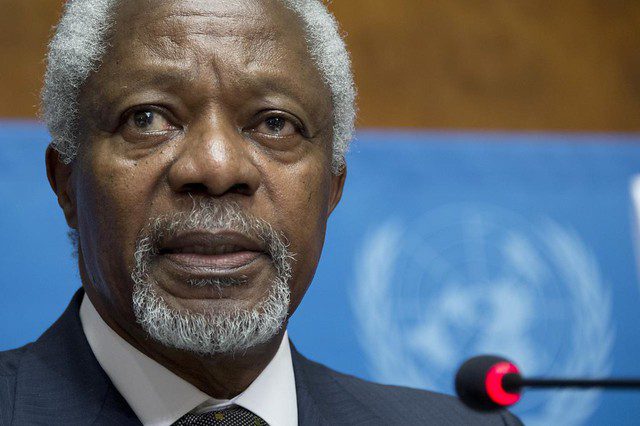
Top 12 Kofi Annan Quotes Everyone Should Know

Kofi Annan QuotesBorn into an aristocratic family in Ghana in 1939, Kofi Annan’s experience with advocacy began at a young age. His education taught him early that suffering anywhere was an issue of global concern. By the time he graduated in 1957, Ghana had achieved independence from Britain, igniting his passion for international relations. That would follow him into a lifetime of civil service, beginning at the United Nations in 1962. He served in a number of capacities during his time at the U.N., including Peacekeeping Operations during the Rwandan genocide. He eventually filled the role of Secretary-General of the United Nations Security Council in 1997. Kofi Annan was a gifted speaker who left an impression on many people worldwide.

Top 12 Kofi Annan Quotes

  1. “We are not only all responsible for each other’s security. We are also, in some measure, responsible for each other’s welfare. Global solidarity is both necessary and possible. It is necessary because without a measure of solidarity no society can be truly stable, and no one’s prosperity truly secure.”
  2. “Education is, quite simply, peace-building by another name. It is the most effective form of defense spending there is.”
  3. “What governments and people don’t realize is that sometimes the collective interest – the international interest – is also the national interest.”
  4. “Today’s real borders are not between nations, but between powerful and powerless, free and fettered, privileged and humiliated. Today, no walls can separate humanitarian or human rights crises in one part of the world from national security crises in another.”
  5. “I have always believed that on important issues, the leaders must lead. Where the leaders fail to lead, and people are really concerned about it, the people will take the lead and make the leaders follow.”
  6. “Open markets offer the only realistic hope of pulling billions of people in developing countries out of abject poverty, while sustaining prosperity in the industrialized world.”
  7. “We may have different religions, different languages, different colored skin, but we all belong to one human race.”
  8. “We have the means and the capacity to deal with our problems, if only we can find the political will.”
  9. “If one is going to err, one should err on the side of liberty and freedom.”
  10. “You are never too young to lead and you should never doubt your capacity to triumph where others have not.”
  11. “In the 21st century, I believe the mission of the United Nations will be defined by a new, more profound awareness of the sanctity and dignity of every human life, regardless of race or religion.”
  12. “The world is not ours to keep. We hold it in trust for future generations.”

Themes of Kofi Annan Quotes

These top 12 quotes by Kofi Annan focus on themes of peace, global stability, leadership and advocacy. These are themes that defined Annan’s career and legacy. In December of 2001, Annan was awarded the Nobel Peace Prize, alongside the United Nations, for his work towards ending the HIV/AIDS crisis. This was a landmark achievement in his career and a massive step in combating the epidemic.

Kofi Annan’s Legacy

His retirement from the United Nations by no means signaled an end to his commitment to civil service and advocacy. Annan went on to continue promoting a more peaceful and stable world through work with multiple organizations in his home country, even contributing to peace efforts in Syria’s civil war.

On August 18, 2018, the world lost Kofi Annan to illness. But his legacy lives on, not only in these top Kofi Annan quotes, but in the continued impact of his actions and words on the world of advocacy and peace.

Photo: Flickr

July 19, 2019
https://borgenproject.org/wp-content/uploads/borgen-project-logo.svg 0 0 Kim Thelwell https://borgenproject.org/wp-content/uploads/borgen-project-logo.svg Kim Thelwell2019-07-19 08:26:052019-07-19 08:26:05Top 12 Kofi Annan Quotes Everyone Should Know
Education, Global Poverty

Improving Girls’ Education in Papua New Guinea

Girls' Education in Papua New Guinea
Papua New Guinea (PNG) encompasses the eastern half of New Guinea and its offshore islands, sharing the globe’s second-largest island with Papua and West Papua. The country supports a diverse populace and variety of languages; 8.2 million Papua New Guineans speak 820 distinct languages, giving rise to various local communities and rich cultural histories. But PNG faces a number of challenges including stifling economic conditions and persisting gender inequalities. These two factors, along with others, contribute to low rates of girls’ education in Papua New Guinea.

The Gender Gap

Only 73 percent of primary school-aged and 30 percent of secondary-aged girls attend school in PNG. One can understand these strikingly low numbers in light of the country’s broader educational context; many schools lack quality equipment and while very few teachers receive adequate training, almost all manage overstuffed classrooms, according to Professor Ravinder Rena of the Papua New Guinea University of Technology. As a result, total net enrollment rates for primary and secondary school sit at 76 percent and 33 percent.

Still, Papua New Guinean boys are much more likely to enroll in school than their female counterparts. According to the U.N.’s Gender Parity Index, PNG’s most recent ratio of girls to boys in school was .91 for primary education and .76 for secondary education. This gender gap undermines Papua New Guinean girls’ access to crucial literacy, numeracy and social skills. In turn, the bulk of the country’s economic opportunities, especially in the formal sector, go to men.

Reasons for the Gap

For PNG women, economic disparities exacerbate other debilitating gender inequities. Tragically, a majority of PNG women fall victim to rape or sexual assault during their lifetime and the country’s police forces neglect most of their cases. Moreover, traditional, gender-based expectations often mean scant autonomy for females in PNG, where almost a quarter of all girls marry before the age of 18.

This subjugation of women directly relates to girls’ education in Papua New Guinea. As Carolyn Benson, Professor of International and Comparative Education at Columbia University, argues, “The need to move away from home to enroll in schools partially explains lagging rates of female enrollment, as many families fear their female children will become more vulnerable to sexual assault by moving away.”

The need to be at school, in the midst of potentially predatory teachers and male classmates, discourages families from allowing female children to pursue an education. Finally, norms encouraging and/or enforcing early marriage lead to the rigidification of traditional views that disvalue female education. Thus, girls’ education in Papua New Guinea is caught in a vicious cycle since the gap between female and male rates of enrollment contributes to the continuation of oppressive gender relations, which in turn makes the task of getting girls in school even more difficult.

The Solutions on the Table

Many are challenging this vicious cycle. Indeed, girls’ education in Papua New Guinea is a central focus in a number of recent policy initiatives.

One example is the PNG government’s decision to join the United Nations’ campaign to end violence in schools. In so doing, the PNG government will raise awareness around violence against its school attendees and encourage schools to take protective measures. If adequately resourced, these measures may make families feel better about sending their girls to school.

Another initiative is the PNG government’s comprehensive National Education Plan (NEP), which passed in 2015. The NEP has six major goals, including the improvement of teaching quality and the strengthening of local school systems. If the government reaches the former goal, it will probably experience an uptick in overall school enrollment. If it reaches the latter, female enrollment rates will likely receive a special boost, since local schools represent a safer choice for PNG families choosing where to send their daughters. The most exciting feature of the NEP is that gender equality is a cross-cutting theme throughout, meaning that the NEP will implement gender equality into each of its six goals.

Evidence suggests that rates of girls’ education in Papua New Guinea will continue to rise considering that the net rate of female primary enrollment rose six points from 2012 to 2016. If the government’s recent policies are successful and if international organizations continue to help along the way, those rising rates of enrollment will be met with better, safer schools. Thanks to the help of many, the path to gender equality in Papua New Guinea is finally coming into view and it starts with girls’ education.

– James Delegal
Photo: Flickr

July 17, 2019
https://borgenproject.org/wp-content/uploads/borgen-project-logo.svg 0 0 Kim Thelwell https://borgenproject.org/wp-content/uploads/borgen-project-logo.svg Kim Thelwell2019-07-17 07:20:202024-05-29 23:00:38Improving Girls’ Education in Papua New Guinea
Children, Education, Global Poverty

Efforts to Help Children Receive An Education in Venezuela

Education in Venezuela

Since 2015, approximately 4 million people have fled Venezuela. For those who have not left the country, food, water and jobs are scarce in the wake of a collapsed economy and hyperinflation. Perhaps the most victimized of the population are children who are unable to find basic access to education in Venezuela.

Why Are Children Not Attending School?

As Venezuelans struggle to afford basic necessities for survival, many children in Venezuela have stopped attending school. For families facing severe hunger, the extra cost of school supplies and uniforms is a price they often cannot afford. Students are unable to perform at school without proper nutrition or clothing. Many parents decide that their children should stay home where they have a chance at a meal.

More than 3 million of the country’s 8 million students have dropped out of school. Some of these students have emigrated with their parents, while others have quit to work and adopt caretaker roles within the family. As Venezuelans face widespread malnutrition, the educational needs of the children in Venezuela remain secondary. It is estimated that 1.1 million children will remain in need of basic education in 2019.

Although education was a hallmark of President Maduro’s campaign, the government can no longer afford to supply schools with proper maintenance and lunches. Public education previously provided a food bonus with a healthy lunch for students. That food program no longer functions, and students cannot rely on meals. In addition, with prices doubling every other month, the transportation system has failed, and both schools and parents struggle to afford bus fares for students.

School Closures without Teachers

Because of low enrollment, hundreds of schools have closed, and thousands of teachers have left their jobs. According to the Venezuelan Teacher’s Association, 176,000 of the country’s 860,000 registered teachers have quit. With wages amounting to about $8 a month, instructors of both private and public schools can no longer afford to work.

Many struggling schools only operate three days a week. Additionally, students from various grade levels are often combined into one class. These schools are desperate to keep the children in Venezuela from dropping out and missing years of formative education under harsh circumstances. Due to the teacher shortage affecting Venezuelan schools, parents are taking on teaching roles, despite a lack of experience or education. Parents believe that any schooling is better than none. As Maria Carmona, a mother-turned-teacher says, “Our children must learn, so I became their teacher.”

Efforts to Help Children Receive An Education in Venezuela

Nonprofit organizations, such as Cuatro Por Venezuela Foundation and Pasión Petare, offer places of refuge and free meals for students. Cuatro Por Venezuela Foundation has provided school supplies for more than 350 families and sent 58,000 pounds of food. Pasión Petare uses soccer to motivate children to stay in school and provides a daily meal for 2,000 students.

Catholic relief organizations like Fe y Alegria and Caritas also raise money to provide food and school supplies. Fe y Alegria provides free education to 170 schools across the country and has implemented a food program for school children. The organization also began a campaign called “A Notebook for Fe Y Alegria,” which raises funds to provide school supplies that most families can no longer afford.

Because President Maduro recently conceded to requests for foreign aid, there are more opportunities for organizations such as the U.N. and Red Cross to offer assistance for Venezuelan schools. UNICEF has partnered with Fe y Alegria and reached more than 100,000 people through radio communication with information on how to help children continue their education. UNICEF and its partner organizations have also provided educational kits for 150,000 children and supply food and water for children in schools. This motivates children and parents to send their children to school.

The Venezuelan government continues to deny problems with their country’s education system. If not for the herculean efforts of international relief organizations, private charities and hands-on assistance from parents and local volunteers, hope would not remain for school children in Venezuela. Children face a bleak future and are vulnerable to exploitation without education. With less than 2 percent of all humanitarian aid allotted to education, it is vital to continue calling for assistance amid the rising crisis. As Susana Raffalli, an advisor to Caritas and renowned nutrition expert, says, “We need our children back in school, because that’s one of the few care and nutrition spaces left.”

– Christina Laucello
Photo: Flickr

July 17, 2019
https://borgenproject.org/wp-content/uploads/borgen-project-logo.svg 0 0 Lynsey Alexander https://borgenproject.org/wp-content/uploads/borgen-project-logo.svg Lynsey Alexander2019-07-17 01:30:542024-05-29 23:09:44Efforts to Help Children Receive An Education in Venezuela
Aid, Global Poverty, Hunger, Philanthropy, United Nations

High Tide, High Hopes: Flooding in Afghanistan

Flooding in AfghanistanAfter suffering through an extreme drought for months, Afghanistan now faces a new crisis: severe flash floods. As many as 112,000 people have been affected by the flooding in Afghanistan and entire homes or villages have been swept away. In light of both droughts and conflict, the U.N. has estimated that 6.3 million people will need humanitarian assistance in Afghanistan in 2019. The country has faced extreme adversity and is in desperate need of crucial and life-saving aid.

Drought and Flooding

The extreme drought the country has been facing has made it more difficult for the soil to absorb water, which makes flooding more likely. The El Niño weather phenomenon is also largely responsible for the extreme amounts of rainfall experienced by Afghanistan. Some forecasters have predicted that due to this chaotic weather pattern, rainfall could increase by 40 to 50 percent through May. These chaotic changes in weather have had disastrous effects on Afghanistan and its neighbors. Although the rain has stopped, many in Afghanistan fear that even worse flooding is yet to come. The region is often hit by flash floods due to its rocky terrain, but many claim this is the worst flooding the country has seen in years.

Humanitarian Aid

The International Federation of the Red Cross requested an emergency appeal of 7 million Swiss francs, which they mean to use to support up to 650,000 people affected by the flooding in Afghanistan who need immediate relief. The IFRC wants to use this money to support the Afghan Red Crescent Society, in providing shelter, health care, water and sanitation to those affected by both extreme drought and flooding. Recently, USAID with support of the Department of Defense airlifted over 200 metric tons of relief items regions in Afghanistan. The U.S. also announced that they would be providing an additional $61 million in aid relief funds to provide food assistance, hygiene and safe water.

World Disaster Report

Every year the IFRC conducts a World Disaster Report in order to provide more insight into the causes and effects of disaster situations. The IFRC, in partnership with ARC, launched a campaign last year to research natural disasters in Afghanistan. The report’s findings found that not enough money was being invested in risk prevention and a majority of financial aid was being spent after disasters rather than before. It concluded that building resilience and preparedness within communities before disaster strikes is one of the most important factors in reducing the effects of natural disasters.

Extreme drought and severe flooding in Afghanistan have left its people in a state of emergency. The flooding has also begun to hit Afghanistan’s neighbors, Iran and Pakistan, and is causing the same kind of destruction and displacement. Thousands have been displaced and even more are in need of immediate humanitarian assistance. Both U.N. organizations and IFRC are providing crucial aid to combat the aftermath of the flooding in Afghanistan.

– Olivia Halliburton
Photo: Flickr

July 2, 2019
https://borgenproject.org/wp-content/uploads/borgen-project-logo.svg 0 0 Kim Thelwell https://borgenproject.org/wp-content/uploads/borgen-project-logo.svg Kim Thelwell2019-07-02 07:30:102024-05-29 22:59:30High Tide, High Hopes: Flooding in Afghanistan
Global Poverty, Women's Empowerment

Women’s Empowerment in Developing Countries

Women's Empowerment in Developing CountriesThe fight against global poverty starts by investing in women.

Under the Millennium Development Goals, the world has made progress toward gender equality and women’s empowerment through equal access to primary education. However, discrimination against women still happens in every part of the world.

Current statistics show only 24 percent of women sit in national parliaments internationally. Only 13 percent of women are agricultural landholders, and over 19 percent of women from ages 15 to 49 have experienced physical and sexual violence. If this is not enough reason to treat women as equals in developing nations, consider that women make up a disproportionate 70 percent of the world’s poor.

Interventions by the United Nations, World Bank and USAID are pushing women’s empowerment projects. However, more can be done. The health and education levels of women and girls in developing countries continue to trail behind men and boys due to a lack of investment.

Economic Opportunities for Women’s Empowerment in Developing Countries

One of the most important ways to promote peace and stability is to provide economic opportunities to empower women. Through economic partnerships between public and private sectors that enable women to be part of a nation’s growing economy, research has shown a ripple effect against poverty that will extend across families and societies.

According to the International Monetary Fund, Rwanda’s pro-women empowerment reforms after the 1994 genocide have contributed immensely to the country’s recent economic success. Between 2000 and 2015 average income in Rwanda more than doubled, outpacing the average development of sub-Saharan Africa. These reforms require a 30 percent quota for women in decision-making positions, including 24 out of 80 seats reserved for women in the Lower House of Parliament. Rwanda’s women parliament members are also focused on ensuring that their girls are being educated so that they are able to lead economically.

Educational Opportunities for Women’s Empowerment in Developing Countries

Empowerment aims to move persons from oppressed powerlessness to positions of power. Education is a vital component in empowering women in developing countries. Through the provision of confidence, knowledge and skills, women can rebuild impoverished communities. Studies by the World Bank have shown that across 18 of 20 countries with the highest levels of child marriage, girls have no access to education.

Educating adolescent girls about their rights has been a critical factor in increasing the age of marriage in developing countries such as Indonesia and Sri Lanka.

In Indonesia, the International Center for Research in Women has worked on making public spaces safer for women by creating women empowerment programs. The programs advocate for safer spaces and a workplace integrated with men and boys.

In Sri Lanka, the World Bank had been raising awareness to reduce the stigma of HIV and AIDS. Because of this, women can obtain the help that they need and decrease infant mortality associated with early child marriage.

Technological Opportunities for Women’s Empowerment

Worldwide, 200 million more men have internet access than women. Women are also 21 percent less likely to own a mobile phone, a key resource in developing countries where phones provide security, mobile health care and facilitate money transfers.

Technology has great potential in closing the gender gap and empowering women in developing countries. Educating girls in STEM and IT will help women and girls pursue opportunities in these fields. For instance, in Egypt, women have developed an application called HarrassMap. The application maps out areas of high sexual assault and allows women to feel secure within their communities.

Poverty Alleviation through Women Empowerment

By empowering women to participate in growth opportunities, developing countries will accelerate their economic and social development. Working women invest 90 percent of their earnings back to their families, leading to greater health and education for their children. This, in turn, creates a cycle that sustainably alleviates poverty.

– Monique Santoso
Photo: Flickr

June 27, 2019
https://borgenproject.org/wp-content/uploads/borgen-project-logo.svg 0 0 Kim Thelwell https://borgenproject.org/wp-content/uploads/borgen-project-logo.svg Kim Thelwell2019-06-27 13:20:512024-05-28 00:03:27Women’s Empowerment in Developing Countries
Gender Equality, Global Poverty, Sanitation, Women and Female Empowerment

Addressing Gender Equality in India

Addressing Gender Equality in IndiaIt’s clear that improvements are immensely needed in order to bridge the gap in gender equality in India. The country ranked 130 out of 168 for the Gender Development Index. Fortunately, the United Nations Women Executive Director, Phumzile Mlambo-Ngcuka, attended the #WeSeeEqual summit in Mumbai on Feb. 18 to address issues of addressing gender equality in India, the Middle East and Africa as well as potential solutions.
Puberty and Hygiene

Many adolescent girls in India are not educated about how their body changes during puberty or the importance of having adequate hygienic methods. Discussing the topic of menstruation is taboo, which leads to many misconceptions. According to a report conducted by the Dasra Foundation, 71 percent of girls had no knowledge about menstruation until their first period. It was also discovered in this report that 70 percent of the mothers surveyed believed menstruation was “dirty,” which further perpetuates shame felt by young girls when puberty starts.

Young girls and women who menstruate are also treated differently, one cultural tradition that remained until recently was that women who have reached menstruation age were not allowed to visit temples. Poor sanitary facilities in schools and other public areas is also a pressing issue. However, at the #WeSeeEqual summit, U.N. Women and Procter & Gamble (P&G), an American multinational consumer goods corporation, teamed up and pledged to educate more than 23 million adolescent girls over the next three years on puberty and hygiene in India, the Middle East and Africa.

Women-Owned Businesses

Although the economy in India is impressive, it could improve even more if women were more involved in the workforce. Only about 26 percent of women in India work. There are many social and religious constraints preventing more women from working, including household chores and motherly duties, which are normally placed on women. More than 70 percent of home-makers in India stated that they would prefer at least part-time work if given the chance.

If the employment rate of women were raised to the same level of employment for men, about 240 million more women would be included in the workforce. This would also mean that the world’s biggest economy would be 27 percent richer. P&G revealed at the #WeSeeEqual summit that it would aim to spend $100 million on working with women-owned businesses and improving female education in India, Middle East and Africa over the next three years. At this summit, P&G and U.N. Women also committed to using their voices to spark conversation and motivate change.

Looking Ahead

It’s important for organizations to use their resources and power to encourage equality in areas of the world that need it the most. U.N. Women and P&G addressed gender equality in India in an impactful way by discussing important issues, such as women in the workforce and adolescent girls being educated about menstruation and proper hygienic methods. Summits like #WeSeeEqual encourage change and help address important issues and potential solutions that will hopefully improve the situation around the world.

– Maddison Hines
Photo: Flickr

May 22, 2019
https://borgenproject.org/wp-content/uploads/borgen-project-logo.svg 0 0 Kim Thelwell https://borgenproject.org/wp-content/uploads/borgen-project-logo.svg Kim Thelwell2019-05-22 01:30:162024-06-06 00:15:32Addressing Gender Equality in India
Global Poverty

Sustainable Irrigation Methods

sustainable irrigationIrrigation is as important to farming as seeds are. Irrigation, especially sustainable irrigation, is an oftentimes taken for granted by the general population in the United States where the average shower last over 8 minutes, using roughly 17 gallons of water at an estimated 2 gallons a minute. Being clean is important for many reasons but so is sustainability. In farming, especially in countries where water is not abundant, there are a few sustainable irrigation methods to choose from where less water is wasted.
Water Sources for Farmers

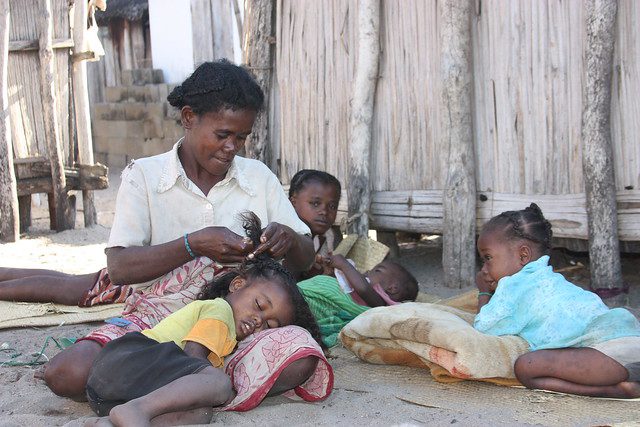
Many rural farmers around the world get their water from surface water. Surface water is water that has yet to reach the water-table underground. It can be found in naturally occurring pounds, streams and rivers or collected in basins, reservoirs or man-made ponds for later use. This is for those lucky enough to be near a body of freshwater or who have learned to collect water during their rainy seasons.

Groundwater is another important source for farmers to get their water. This water is underground and, therefore, can more difficult to use. A well must be dug down to the water table or a pump installed to get the water back to the surface for use. Digging a well uses a lot of energy, time and money. Finding ways to do this more efficiently is one way the United Nations is supporting sustainable irrigation methods.

Sustainable Irrigation Methods

Each of these sustainable irrigation methods has its upsides and downsides. The main drawback of using a more efficient method is often the time or money needed. For example, it is cheap to redirect a stream or direct groundwater already collected into a field where furrows are dug. The water runs along these furrows flooding the field for a short time without damaging the seeds or crops. This method is known as flood or furrow irrigation. However, this uses a lot more water than might be necessary.

Installing a sprinkler system to collected groundwater or pumping it up from underground is a better sustainable irrigation technique than flood irrigation. The water can be directed and controlled, which cuts back on water usage. However, these pumps cost money upfront, plus there are funds needed for upkeep. Fuel and parts must be taken into consideration when purchasing any farming equipment. Luckily the United Nations is working with groups around the world to supply solar and mechanical pumps to rural farming villages. The mechanical pumps look like bikes or “Stairmasters.”

The best sustainable irrigation technique by far is drip irrigation. Drip irrigation is a system of pumps and tubes. The tubes are either suspended above the soil or planted alongside the roots of the plant. A predetermined amount of water is then pumped through the tubes and released through tiny holes poked in the tubes. These systems come in a variety of complex options. This is also a technique promoted by the United Nations, specifically solar-powered drip systems.

A Sustainable Future

Sustainable irrigation methods are essential to farmers all over the world. There are several methods to choose from depending on the resources available to the farmers in any given region. What is important is ensuring a water supply so that farmer is arid regions can continue to grow and profit off of their crops.

– Nicholas Anthony DeMarco

Photo: Flickr

May 6, 2019
https://borgenproject.org/wp-content/uploads/borgen-project-logo.svg 0 0 Kim Thelwell https://borgenproject.org/wp-content/uploads/borgen-project-logo.svg Kim Thelwell2019-05-06 01:30:122024-06-04 01:08:32Sustainable Irrigation Methods
Global Poverty

Cyclone Idai Survivors Helped by Humanitarians

Cyclone Idai SurvivorsCyclone Idai has wreaked havoc upon Zimbabwe, Mozambique and Malawi, leaving destruction in its wake. Survivors suffer from disease, hunger and mental health problems. Humanitarian organizations and governments are joining together to try and help people affected by the disaster.

Background

Cyclone Idai and the resulting floodwaters destroyed infrastructure, homes and crops. As the crisis comes into focus, it is clear that it could take some time for the region to recover.

The death toll between the three countries is over 750 people and rising as government and aid workers assess the damage. An estimated 1.85 million people have been affected and 36,000 homes destroyed in Mozambique alone. Rescue workers have been scrambling to save people stranded by floodwater.

Cyclone Idai is one of the top three deadliest tropical cyclones ever to affect the Southern Hemisphere. Many climbed trees to escape the rising floodwater, with rescue workers lifting 634 survivors out of trees. Others fell into the crocodile-infested waters as they became too exhausted to hold on.

Displaced people are migrating toward the port city of Beira, Mozambique and to makeshift camps to escape areas engulfed by water. The close grouping of people in the camps has created new concerns for aid workers. Disease, hunger and mental health problems threaten these survivors.

Disease Among Survivors

The International Federation of the Red Cross and Red Crescent Societies (IFRC) has reported cases of malaria infections and cholera among Cyclone Idai survivors. Jana Sweeny, a spokesperson for the IFRC, told Earther: “In disasters like this one–one where there is a lack of clean water and sanitation, and potential overcrowding–outbreaks of waterborne diseases are common.”

The standing floodwater is a breeding ground for mosquitoes that may carry malaria. Cholera, a waterborne bacteria, could also infect the floodwaters.

Humanitarian Efforts

At least 16 different humanitarian organizations, several governments and the United Nations are contributing to help Cyclone Idai survivors. The United States government pledged the assistance of its military. IFRC Secretary General Elhadj As Sy said at press conference in Geneva: “We are seeing tremendous collaboration and partnership from National Red Cross and Red Crescent Societies from all over the world, and from our international and United Nations partners.”

The United Nations has unloaded 22 metric tons of food supplies, and 40 more are on the way. U.N. organizations have been active in the region, initially in rescue operations, then as aid distributors. The U.N. Central Emergency Fund has allocated $20 million to provide aid to more than 400,000 people.

The IFRC is appealing for over $30 million for disaster relief. They have been delivering Emergency Response Units, which include equipment and teams that can provide sanitation and water purification for 20,000 people per unit. The IFRC is also deploying a field hospital that will be able to administer medical care for at least 150,000 people.

The IFRC has set up an online portal for connecting displaced children with their distraught parents. Cyclone Idai has left many children unaccompanied as they were either separated from their parents or orphaned.  Save the Children is also working to help these child Cyclone Idai survivors.

There is difficulty distributing aid as some of the affected areas are remote. Helicopters are the only safe mode of distribution since the cyclone destroyed roads and communications infrastructure.

The damage done by Cyclone Idai on Southeastern Africa will not be fully realized until some time has passed. But for now, the global humanitarian community is helping the region recover from this disaster.

– Peter S. Mayer
Photo: Flickr

April 30, 2019
https://borgenproject.org/wp-content/uploads/borgen-project-logo.svg 0 0 Kim Thelwell https://borgenproject.org/wp-content/uploads/borgen-project-logo.svg Kim Thelwell2019-04-30 01:30:542024-05-29 22:59:35Cyclone Idai Survivors Helped by Humanitarians
Page 21 of 44«‹1920212223›»

Get Smarter

  • Global Poverty 101
  • Global Poverty… The Good News
  • Global Poverty & U.S. Jobs
  • Global Poverty and National Security
  • Innovative Solutions to Poverty
  • Global Poverty & Aid FAQ’s
Search Search

Take Action

  • Call Congress
  • Email Congress
  • Donate
  • 30 Ways to Help
  • Volunteer Ops
  • Internships
  • Courses & Certificates
  • The Podcast
Borgen Project

“The Borgen Project is an incredible nonprofit organization that is addressing poverty and hunger and working towards ending them.”

-The Huffington Post

Inside The Borgen Project

  • Contact
  • About
  • Financials
  • President
  • Board of Directors
  • Board of Advisors

International Links

  • UK Email Parliament
  • UK Donate
  • Canada Email Parliament

Get Smarter

  • Global Poverty 101
  • Global Poverty… The Good News
  • Global Poverty & U.S. Jobs
  • Global Poverty and National Security
  • Innovative Solutions to Poverty
  • Global Poverty & Aid FAQ’s

Ways to Help

  • Call Congress
  • Email Congress
  • Donate
  • 30 Ways to Help
  • Volunteer Ops
  • Internships
  • Courses & Certificates
  • The Podcast
Scroll to top Scroll to top Scroll to top