• Link to X
  • Link to Facebook
  • Link to Instagram
  • Link to TikTok
  • Link to Youtube
  • About
    • About Us
      • President
      • Board of Directors
      • Board of Advisors
      • Financials
      • Our Methodology
      • Success Tracker
      • Contact
  • Act Now
    • 30 Ways to Help
      • Email Congress
      • Call Congress
      • Volunteer
      • Courses & Certificates
      • Be a Donor
    • Internships
      • In-Office Internships
      • Remote Internships
    • Legislation
      • Politics 101
  • The Blog
  • The Podcast
  • Magazine
  • Donate
  • Click to open the search input field Click to open the search input field Search
  • Menu Menu

Tag Archive for: Technology

Posts

Global Poverty

USAID Funds Innovation in Agriculture

World map
This past week, USAID, the Swedish government, Duke Energy Corporation, the Overseas Private Investment Corporation and more teamed up to fund organizations with agriculture and clean energy related innovations. The partners challenged organizations to invent new technologies that could implement clean energy and agriculture solutions in developing countries. Of the 475 applicants, 12 organizations were chosen and awarded $13 million in funding to implement their ideas into the developing world.

These technologies aim to help farmers increase production of crops by improving current irrigation, mechanization, agro-processing and storage systems. Among the winners were International Development Enterprised (iDE), The Earth Institute at Columbia University, Camco Advisory Services, Motivo Engineering, African Bamboo, Promethean Power Systems, University of Georgia Research Foundation and more.

The African Bamboo, for example, is an invention by Heartland Global that aims to make Bamboo, a common resource in Ethiopia, easier to process and utilize for construction and furnishing. Another innovation aims to improve the refrigeration and production of dairy products in Kenya. SunDanzer Refrigeration will use a battery-powered, portable refrigeration system to form “milk packs” that will remain chilled when being transported.

The announcement of the winners took place at the Development Exchange in Washington, D.C. All 12 chosen organizations had the opportunity to discuss their plans and the impact of their innovations. The event included speeches by USAID Administrator Rajiv Shah who stated that the event “demonstrates how we can harness ingenuity and entrepreneurship to generate and scale real solutions in our fight to end extreme poverty.”

– Lienna Feleke-Eshete

Sources: All Africa, Power Agriculture
December 29, 2013
https://borgenproject.org/wp-content/uploads/borgen-project-logo.svg 0 0 Borgen Project https://borgenproject.org/wp-content/uploads/borgen-project-logo.svg Borgen Project2013-12-29 07:59:422017-03-20 13:12:30USAID Funds Innovation in Agriculture
Development, Global Poverty, Technology

GIS: The Universal Language of Development

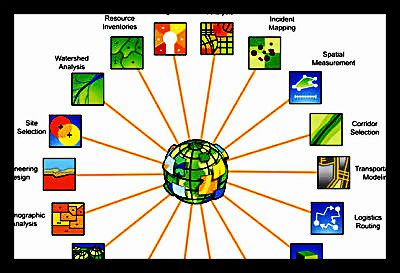
GIS_map
If a picture is worth a thousand words, a custom-tailored map which can be manipulated to display the interactions between multiple selected variables must be worth entire books. Geographic Information Systems (GIS) provides this power to the user who understand the language of the software, and this power is especially important to development and aid organizations seeking to maximize their impact.

Unlike conventional cartography, GIS software can exploit social, economic, political, and environmental data to create an image which can then be layered onto the topographic landscape in any way the user desires. The relations between layers, and between data within layers, can then be presented to the viewer in a way that draws attention to the important facts.

This differs fundamentally from the report by presenting information visually, without losing depth in the way that a chart or graph flattens the ethnographic depth of the actual survey informing it.

Geospatial analysis has been used primarily for military purposes in the past, but that situation is already evolving. USAID is deploying geo-analysts in almost every program to give its staff the most useful information possible, going so far as to institute its own geospatial arm, to ensure the best possible use of the existing technology. The United Nations is on a similar path.

A software which was once esoteric and difficult to manage – akin to prototypical PC operating systems – has been streamlined and aestheticized so that with less than a year’s training, anyone can masterfully manage multiple databases with thousands of streams of data into coherent maps.

As with any form of communication and representation, there is a danger of misrepresentation and error. Factors can be ignored or manipulated to produce maps that do not mirror reality, or that fail to bring attention to critical factors. Even if the map is sound, it can still be misused by those with ulterior motives or simple incompetence.

As with all analysis, GIS relies entirely on a substrate of reliable data from which to extrapolate conclusions. Unlike polls, however, GIS data does not require a ‘boots on the ground’ approach – though this can be useful. For many applications, remote sensing, satellite imagery, and tomography are sufficient, meaning that, in many situations, the difficulties of other analytical approaches are evaded.

What is more, with cloud computing becoming nearly universal, a global GIS network, shared by all development agencies, would perpetuate a system whereby an up-to-date cartographic representation of reality would be accessible to those seeking to capitalize on its wealth of information, thereby bridging the gap between those who are able and willing to help – but lack an idea of where to begin or what needs doing – and those who require assistance. GIS transcends language barriers, enabling global cooperation and understanding to tackle pressing issues. In that way, GIS is becoming the universal language of development.

– Alex Pusateri
Sources: Directions Mag, Esri

December 1, 2013
https://borgenproject.org/wp-content/uploads/borgen-project-logo.svg 0 0 Borgen Project https://borgenproject.org/wp-content/uploads/borgen-project-logo.svg Borgen Project2013-12-01 04:30:512017-03-20 13:10:09GIS: The Universal Language of Development
Global Poverty, Technology

Simplified Global Trend Statistics: Gapminder

A web service that specializes in providing time series of development activity statistics for all the world’s countries, Gapminder is a modern museum which allows for a simple overview of overall progress among nations.

It was first formulated in Sweden in 2006 to complement the Trendalyzer software, which is the platform that puts statistics to animated images. In 2007, Google bought Trendalyzer from the Gapminder development team; they soon followed suit and joined Google in California.

Gapminder is free to use and easy to navigate. The Gapminder World section provides not only data for comparing countries; there are sections for U.S. interstate and provinces of China and India versus the rest of the world analyses. Some of the data available goes back as far as the year 1800. Data providers which supplied the information at hand are only a click away; all statistics are verified and official.

A total of 260 countries and territories are covered by Gapminder. Although they all have varying degrees of completion (based upon available data), the minds behind the website have pledged to have no less than two indicators (or categories, one of the two being population) filled in for each separate entity.

The graphs feature anything from birth/death, unemployment, aid provided rates (all conveniently categorized by age), new and fatal cases of cancer among male and female subgroups, number of people living in extreme poverty, amount of women taking birth control, and hundreds more. On the front page, a handful of links for the most important trends are conveniently placed.

The creative, minimalistic design of the charts instills a sense of clarity and order; this is especially beneficial for simplifying numerical stats. Rather than going through official records and having to fumble with digits and percentages, one can easily open it all in one place.

In an attempt to “fight devastating ignorance with fact-based worldviews everyone can understand,” Gapminder is a comprehensive website, accessible to and widely used by teachers and corporations alike. Statistics gain shape for making up a unique overview of the past two centuries. The platform leaves room for free exploration – browsing the website, one feels invited, even compelled, to look up data at random.

Focusing on a specific topic? Gapminder has a whole section of videos, some of which present curious statistical shifts while others are case studies from outside sources explaining certain phenomena.

The website itself is no longer updated on a regular basis; the blog has but a couple scarce posts since 2011, the news section is outdated, and no major changes to the platform itself have been made recently. But the innovative system is not forgotten. Gapminder has released an offline version of its web-based library; a program is available for swift download which puts Gapminder World right on the user’s desktop.

Visualization is the main strategy of Gapminder – trends that don’t seem out of the ordinary on paper will ‘pop out’ in the graphs, saving the user time while providing a fresh perspective on worldwide occurrences. An intelligent take on unifying data, Gapminder is an invaluable tool for studying causal relationships between global factors and understanding social trends.

– Natalia Isaeva

Sources: Gap Minder, Singularity Hub
Photo: Ann Michaelson

October 25, 2013
https://borgenproject.org/wp-content/uploads/borgen-project-logo.svg 0 0 Borgen Project https://borgenproject.org/wp-content/uploads/borgen-project-logo.svg Borgen Project2013-10-25 08:58:162024-05-25 00:28:29Simplified Global Trend Statistics: Gapminder
Developing Countries, Global Poverty, Technology

biNu Maximizes Cell Phone Abilities

cell_phones_third_world
Australian start-up biNu may be pioneering revolutionary cell phone technology. By minimizing the required bandwidth and memory capacity of the user’s phone, biNu brings smart-phone level applications to ‘dumb’ phone users for little to no cost, and emphasizes reliability in weak or spotty networks, which cover a majority not only of the developing world, but the planet as a whole.

$7.5 million in funding from Eric Schmidt and others, and a UN ‘My World Innovation’ Award later, it seems the technology is working.

biNu dramatically widens two data streams currently existing in stunted forms. One of these is headed into the developing world. At least 4 million users in the developing world access the biNu cloud every month, utilizing hundreds of millions of webpages. Phones that were previously only usable to make calls are now empowered with the apps of corporations, governments, NGOs, and more, bringing an unprecedented level of information and communication to poor regions.

This stream is also significant for its profitability – for both biNu and others. Gary Lentell and Dave Turner, biNu’s founders, know first-hand how volatile the tech start-up world can be, having already lost all $75 million they made with their previous business, Sabela Media; biNu’s ability to bring new markets into touch with marketers means it stands to make a profit as the middle man.

But the companies who can present ads to these new markets may be the ones who profit most dramatically – if they can capitalize on the face-time as efficiently as Google has. In this way, biNu is for software what the cell phone was for hardware: a lead forward in terms of inter-connectedness.

The second data stream is headed out of the developing world, to NGOs and research institutions who now have direct access to the people they are trying to help. This second stream has already been dramatically influential, enabling over 100,000 responses to a UN survey which utilized the software.

As more NGOs become aware of biNu’s potential, its ability to make direction connections between aid givers and aid receivers will proliferate and create a more seamless development community – a community which currently suffers greatly from a major divide between those who have the resources and desire to help, and those who require help.

Lentell has repeatedly stated his interests lie dominantly in creating a solid, profitable business – not in helping people, which is only a perk. While many CEOs who express such sentiment earn derision for not being in touch with economic reality, NGOs and the developing world should be grateful to have such a practical mentality heading biNu.

Too many start-ups with the revolutionary potential of biNu sputter and die because of overly idealistic leadership. BiNu’s best chance to bridge the Digital Divide is to focus on itself and its profitability, continue to pursue the best technology and the most reliable investments, and allow its users to dictate how biNu is applied to the developing world.

– Alex Pusateri

Sources: Venture Beat, The Next Web, BINU, BINU: How It Works, INC

October 24, 2013
https://borgenproject.org/wp-content/uploads/borgen-project-logo.svg 0 0 Borgen Project https://borgenproject.org/wp-content/uploads/borgen-project-logo.svg Borgen Project2013-10-24 17:57:152017-11-30 10:50:15biNu Maximizes Cell Phone Abilities
Activism, Education, Global Poverty

3 Things That Will Help End Poverty

technology_global_poverty
When on the search for a solution to global poverty, activists and politicians come up with various elaborate plans, incentives and government legislations. Often these solutions are built with three very simple ideas that create substantial change to those living in poverty:

1. Education

Constant and good education can change lives. While those in the developing world take it for granted, there are people who live in poverty due to their lack of education. This lack of education is normally a result of the lack of the opportunity or circumstances that require them to work rather than study. The cycle of poverty is such that living in poverty requires the next generation to work to help support the family. The younger children are rarely given a chance to complete their education. The connection between education and poverty, or rather the ability to rise out of poverty, is extremely evident. An education guarantees a job that is better paying, allowing the next generation to continue to be educated instead of working. This breaks the cycle of poverty that rears its ugly head in so many parts of the world.

2. Small Local Businesses

Opportunities for jobs increase with the support and growth of small local businesses. Local businesses don’t only create opportunities; they also bring supplies and resources into a community that would greatly benefit from it. These small businesses range from medical supplies or care facilities to agricultural and technological support. Additionally, such businesses continue to beget more businesses, making the economy flourish and the citizens of the community thrive and follow by example.

3. Technology

Technology can substantially help improve the conditions of the poor. For those working in agrarian communities, advanced technology can yield better crops; technology can help improve education. Internet access can change the face of communications, and mobile phones greatly reduce the damages of natural disasters due to the immediate news they can provide. Access to electricity or any kind of power, would also help bring amenities to those living in poverty that many people take for granted. Finally, technology will significantly improve health care standards in places where it is scarce. The Posner Center for International Development does just this: various organizations come together, come up with ideas that will benefit developing areas in the world, and help bring about these additions that will significantly improve living conditions.

– Aalekhya Malladi

Sources: NY Times, Denver Post
Photo: Foreign Policy

October 24, 2013
https://borgenproject.org/wp-content/uploads/borgen-project-logo.svg 0 0 Borgen Project https://borgenproject.org/wp-content/uploads/borgen-project-logo.svg Borgen Project2013-10-24 17:47:512024-05-25 00:30:283 Things That Will Help End Poverty
Global Poverty, Technology, Water

WADI: The New Portable Clean Water Method

Throughout the world, there have been several innovations to generate new portable clean water in developing nations. The latest of these innovations is WADI, a water purification system started by the Australian corporation Helioz.

According to Helioz’ research team, WADI is an easy to use, cost effective UV measurement device for solar water disinfection (SODIS). In short, WADI is a solar powered water disinfection system that operates “without the use of chemicals, batteries or filters”. Because of its pure use, WADI guarantees its users with safe, chemical-free drinking water.

The WADI device is simple and easy to use. A user simply fills in a PET bottle with water from any source, puts the WADI device on instead of the regular bottle cap, and exposes the bottle to sunlight and UV rays until the water in the bottle registers as clean on the device. If the water is still contaminated, the device will show a sad face to the user.

If the water has been purified, the device will register a smiley face on it’s small LCD screen. However, the device does face some challenges. Although the device shows serious advancement towards clean water around the world, it also has setbacks in areas where water sources and sunlight are scarce.

In areas where sunlight is scarce, the cleaning process might take up anywhere from 45 minutes to two days longer than normal. As a result people who are in desperate need for water resort to drinking contaminated, more accessible water, researchers say.

However, the self sufficient water purification system promises to take the world by storm. The project is expected to launch in developing nations in January 2014. Currently, Helioz is working on a funding campaign for the device.

The campaign will allow the company to create a further study on the effects the device has on remote villages such as Odisha, India. The study will also help the company customize their product depending on the area it is being used in.

Projects such as WADI show great promise towards completing worldwide water purification. However, only time, and user responses will tell if the project is a success.

– Stephanie Olaya

Sources: Tree Hugger, Helioz
Photo: INiTS

October 24, 2013
https://borgenproject.org/wp-content/uploads/borgen-project-logo.svg 0 0 Borgen Project https://borgenproject.org/wp-content/uploads/borgen-project-logo.svg Borgen Project2013-10-24 04:52:502024-05-25 00:29:20WADI: The New Portable Clean Water Method
Global Poverty, Health, Technology

Jamii Bora Bank and its Fight Against Poverty

jamii_bora_bank
What is the Jamii Bora Bank? Originally known as the Jamii Bora Trust, the Jamii Bora Bank (JBB) was founded in 1999 by a group of Kenyan families in order to serve the needs of citizens looking to escape poverty.

Beginning as a charitable trust, the organization currently specializes in micro finance services for an estimated 300,000 Kenyans with 150,000 new customers acquired in 2013 alone. JBB is not simply a bank; the institution has become an established resource in fighting Kenya’s poverty level over the last decade. The poverty gap around the world has grown dramatically worldwide and Kenya is no exception.

In the past 2 years, JBB has raised its capital by over 1 billion Kenyan shillings and shifted the focus on poverty aid. Initiatives include affordable housing, vast infrastructure improvement, and increased employment. Available banking methods have evolved to provide individuals with the financial tools necessary to gain middle income living through personal, mortgage, small and medium enterprise and agricultural banking.

Bank members are allowed to borrow over twice the amount of funds within their saving accounts which can then be applied to a variety of debts including school bills, healthcare costs, housing payments, and business startups.

Technology has played an important role in the bank’s growth within the last year. Newly implemented programs suggest that lack of access to technology directly correlates to poverty levels, as well. In response, the first ATM debit cards were released to customers by JBB earlier this year. Mobile banking has also become available within the last few months and the addition of Western Union services have enabled Kenyans to connect to the outside world with ease.

The institution has designed an innovative reward program for its citizens. Similar to referral programs favored by U.S. banks, employees, and customers are financially rewarded for successfully referring a friend to enroll in banking services. However, JBB offers rewards for the duration of the new account. In theory, if Customer A convinces Customer B to enroll in services, and Customer B maintains an account for 10 years, Customer A will receive monetary rewards for 10 years.

Jamii Bora also contains a component solely devoted to public health with special focus on issues such as HIV/AIDS, maternal health, child and newborn wellness, and primary/secondary care. Health insurance is available to members and includes maternal care, HIV/AIDS patient inclusion, and inpatient care without any form of co-payment.

The plan is needed in a country where nearly 34,000 children die from malaria annually and an estimated 360,000 are prescribed antiretroviral medications for HIV/AIDS treatment, according to USAID.

The bank continues to strive to reach its goal of 6 million members by 2018. It hopes to expand its current network across the continent, essentially allowing many developing African nations to gain a foothold in the current technology-centric world. Its innovative programs may one day allow millions of Kenyans and their neighbors to escape their current state of poverty.

– Jasmine D. Smith

Sources: Jamii Bora Bank, Health Market Innovations, USAID
Photo: West fm

October 17, 2013
https://borgenproject.org/wp-content/uploads/borgen-project-logo.svg 0 0 Borgen Project https://borgenproject.org/wp-content/uploads/borgen-project-logo.svg Borgen Project2013-10-17 13:31:452024-06-11 02:03:17Jamii Bora Bank and its Fight Against Poverty
Global Poverty, Technology

Villgro Addresses Rural Agricultural Needs

Many farmers in rural India are unaware of the newest innovations in agriculture. There are many possible causes for this, including lack of marketing, lack of access to information regarding advancements, and a farmer’s financial inability to buy new products. According to the National Council of Applied Economic Research, only 40-45 percent of farmers know about these new technologies, and fewer than that have the financial ability to access the new advancements.

Without the ability to access or buy these products, farmers continue to use obsolete technology, which is not only inefficient, but also more expensive, due to repairs and replacements. Over time, lack of access to the best technology will keep the rural farmers from improving their financial situation.

Villgro Innovation Marketing, recognizing that Indian rural farmers need information about, and access to, the most recent technology, has decided to address the situation.

It has developed a “low cost distribution method” that will send salespeople to rural locations to inform farmers of technologies that could significantly increase their crop yield and, in turn, their annual revenue. In the long term, this could help farmers rise out of relative poverty. Additionally, because Villgro hires salespeople to visit various villages and rural areas, it also offers employment opportunities to the surrounding area.

By addressing the needs of poor rural farmers, organizations such as Villgro give them the chance to overcome poverty. Moreover, the improved economic status of rural farmers would, in turn, advance the regional and national economy of India. Villgro, therefore, has the potential not only to change the lives of individual farmers, but to help a wider community as well.

– Aalekhya Malladi

Sources: Unitus Seed Fund, Villgro
Photo: Baltimore Sun

October 14, 2013
https://borgenproject.org/wp-content/uploads/borgen-project-logo.svg 0 0 Borgen Project https://borgenproject.org/wp-content/uploads/borgen-project-logo.svg Borgen Project2013-10-14 04:00:222024-05-25 00:25:12Villgro Addresses Rural Agricultural Needs
Development, Health

10 New Health Innovations for Developing Countries

health_care_innovations
The need for new, inexpensive medical innovations in the third world is staggering. These devices must be easy to transport, operate, and most importantly, be affordable, or else they will remain available only to the wealthy. These ten new health care innovations for developing countries will be ready to distribute by 2015 and have the potential to save 1.2 million people.

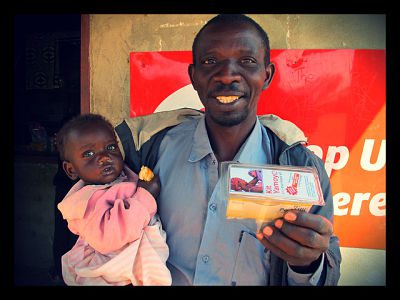
1. Kit Yamoyo: This medical kit contains anti-diarrheal medicine that is packaged to fit over Coca-Cola bottles.

2. Anti-Shock Garment: The cloth is wrapped around the lower body to alleviate excessive bleeding after childbirth. The garment also prevents blood from leaving the vital organs until the mother can be transported to a healthcare facility.

3. Chlorhexidine: An antiseptic that averts dangerous infections that result from cutting the umbilical cord on a newborn baby.

4. Rotovac: The vaccine prevents rotavirus related diarrhea.

5. The Backpack-PLUS: It provides health workers with the tools to deliver a baby properly.

6. Helping Babies Breathe: Although not technically an invention, the program trains one million “birth attendants” to keep babies breathing after they are born, despite the birthing conditions.

7. Bubble CPAP: This airway device forces oxygen down babies’ lungs to save them from severe respiratory diseases.

8. Phone Oximeter: The mobile phone-based monitoring system is able to report blood oxygen levels for healthcare workers in areas without proper health facilities. The device assists in the diagnosis and treatment of pre-eclampsia and pneumonia.

9. Sayana Press: A contraceptive that comes packaged and pre-filled with a one dose injection system called Uniject.

10. Magnesium sulfate: Reportedly a highly effective treatment for severe pre-eclampsia and eclampsia as well as pregnancy-related conditions.

Another innovation that deserves honorable mention is the winner of a competition funded by Boehringer Ingelheim and organized by HITLAB. The winning device is a wireless pill bottle that benefits people living with diabetes. The pill bottle, in addition to storing medicine, provides data transmission, measuring medicine and sending patient reminders.

These innovations will be vital in the fight against poverty and disease in developing countries.

– Mary Penn

Sources: Business Standard, Boehringer Ingelheim
Photo: Flickr

October 9, 2013
https://borgenproject.org/wp-content/uploads/borgen-project-logo.svg 0 0 Borgen Project https://borgenproject.org/wp-content/uploads/borgen-project-logo.svg Borgen Project2013-10-09 11:29:472024-12-13 17:49:4210 New Health Innovations for Developing Countries
Extreme Poverty, Food & Hunger, Food Aid, Global Poverty, Technology

Why Technology Won’t Solve World Hunger

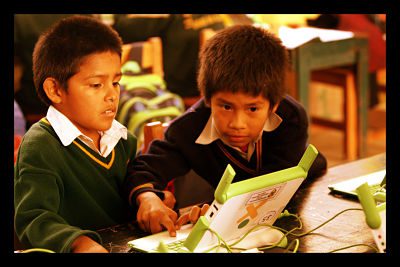
Technology Won't Solve World Hunger Kids Using Laptop
Ideas for ending world hunger are the subject of deep contention and intrigue. Conversations about how best to go about ending hunger are held among regular people far removed from the international, sociopolitical arena or non-profit sector, as well as among leaders in national governments and conferring minds within the United Nations.

Duncan Green in The Guardian recently reminded the world of the stark contrasts between those who can afford to eat and the nearly 900 million who sleep on empty stomachs. Progressive efforts underway in Ghana and Brazil have seen initiatives such as cash transfers to the impoverished and an increase in minimum wage. These programs have made strides, but in nations like India that are growing exponentially, the government must address the issue.

Of the myriad of ways to eradicate hunger, is technology perhaps a truly viable option at this point? If so, are the contributions made by technology being overlooked as a way to finally solve world hunger, or is technology simply a tool in this case?

Josette Sheeran, blogging for The Huffington Post, seems to think that technology is something of a cure-all for world hunger. She talks of the electronic vouchers used in Palestinian territories that give people greater access to food. The World Food Programme (WFP) is responsible for that, and other projects, such as the one in the Philippines that uses texting to feed workers. People participate in work projects and can collect their payment at participating food shops.

The WFP also uses social media with their WeFeedBack initiative that lets the user online select a favorite food and using a special calculator, can see based on its cost how many children would be fed with it. The calculated amount is what WFP encourages the user to donate.

Not long ago, a lab-grown burger patty was cooked and eaten in view of the public, touted as a way to help save both planet and people. A report from The Atlantic posits that the world already produces enough food to feed a growing global population and that new technology won’t necessarily solve the hunger crisis. Three-dimensional food printers are also a new tech tool being developed, but the report makes the case that in-house food printers won’t be an appliance in every kitchen because regular people cannot figure out the technology.

Why, then, would these technologies work in the emergent world? And, even if labs in emergent nations were capable of mass producing meat, consumption would be limited to the middle class and upper classes.

Sarah Sloat for Pacific Standard cites a 2012 paper by CUNY law student Rebecca Bratspies that says food production has grown inversely proportional to the hungry. Better food distribution will help solve hunger more than technological developments. The feeling, then, is that even with the massive amount of resources available to solve the world hunger crisis, the solutions are not dependent upon increased production.

Technology in food production has proven to increase production, but access is still contingent upon how food is distributed and how easily available it is to those who need it. Getting there may not be an issue of widespread production, but rather individual nations doing what they can to feed citizens.

– David Smith

Sources: The Guardian, The Atlantic
Photo: Huffington Post

October 2, 2013
https://borgenproject.org/wp-content/uploads/borgen-project-logo.svg 0 0 Borgen Project https://borgenproject.org/wp-content/uploads/borgen-project-logo.svg Borgen Project2013-10-02 20:43:142017-02-21 12:51:45Why Technology Won’t Solve World Hunger
Page 27 of 29«‹2526272829›»

Get Smarter

  • Global Poverty 101
  • Global Poverty… The Good News
  • Global Poverty & U.S. Jobs
  • Global Poverty and National Security
  • Innovative Solutions to Poverty
  • Global Poverty & Aid FAQ’s
Search Search

Take Action

  • Call Congress
  • Email Congress
  • Donate
  • 30 Ways to Help
  • Volunteer Ops
  • Internships
  • Courses & Certificates
  • The Podcast
Borgen Project

“The Borgen Project is an incredible nonprofit organization that is addressing poverty and hunger and working towards ending them.”

-The Huffington Post

Inside The Borgen Project

  • Contact
  • About
  • Financials
  • President
  • Board of Directors
  • Board of Advisors

International Links

  • UK Email Parliament
  • UK Donate
  • Canada Email Parliament

Get Smarter

  • Global Poverty 101
  • Global Poverty… The Good News
  • Global Poverty & U.S. Jobs
  • Global Poverty and National Security
  • Innovative Solutions to Poverty
  • Global Poverty & Aid FAQ’s

Ways to Help

  • Call Congress
  • Email Congress
  • Donate
  • 30 Ways to Help
  • Volunteer Ops
  • Internships
  • Courses & Certificates
  • The Podcast
Scroll to top Scroll to top Scroll to top