• Link to X
  • Link to Facebook
  • Link to Instagram
  • Link to TikTok
  • Link to Youtube
  • About
    • About Us
      • President
      • Board of Directors
      • Board of Advisors
      • Financials
      • Our Methodology
      • Success Tracker
      • Contact
  • Act Now
    • 30 Ways to Help
      • Email Congress
      • Call Congress
      • Volunteer
      • Courses & Certificates
      • Be a Donor
    • Internships
      • In-Office Internships
      • Remote Internships
    • Legislation
      • Politics 101
  • The Blog
  • The Podcast
  • Magazine
  • Donate
  • Click to open the search input field Click to open the search input field Search
  • Menu Menu

Tag Archive for: Refugees

Posts

Global Poverty, Human Rights, Refugees and Displaced Persons, Volunteer

How to Help Refugees and Displaced Populations

Help_Aid_Refugees
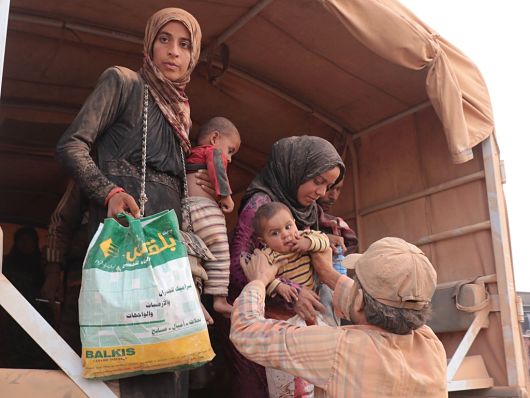
The surge of refugees fleeing conflict across the globe reached record numbers and drew widespread attention in 2015. The UNHCR reports that forcibly displaced populations are estimated to have reached nearly 60 million — up 15 million from 2012. Conflicts in Syria, Afghanistan and more than a dozen other regions have all contributed to the climbing numbers.

Forced displacement is rarely short-lived. In the same report, the UNHCR states that on average, refugees will remain displaced for 17 years. For some it will be shorter, others much longer, and for all it will be life-changing. Addressing what the UNHCR calls “A World At War” and what is repeatedly called a “refugee crisis” by the media will also not be short-lived.

Even as articles become dated and tales of flight and hardship are told and retold, the need for aid and compassion has not diminished. For those farther away from the conflict and displacement, here are five ways to help displaced populations and refugees:

1. Contribute to educational opportunities for refugees, displaced populations and populations affected by conflict.

  • Save the Children supports rebuilding and maintaining schools in Syria and neighboring countries. In addition to providing education and health services, the organization strives to create spaces for children to experience a sense of normalcy and achieve their full potential despite the conflict.
  • The Karam Foundation focuses on innovative education projects for Syrian children in Syria and Turkey. Dedicated to “help people help themselves,” the U.S.-based nonprofit allows donors to contribute to specific education projects through its website.

2. Support an organization that is providing aid on the ground.

  • Hand in Hand for Syria is working on the ground to provide emergency aid for Syria. The organization hopes this strategy will prevent people from fleeing and fill the void created by shattered infrastructure, especially health services.
  • The International Rescue Committee is responding to the climbing numbers of refugees on multiple fronts from the Middle East to the Mediterranean and even with resettlement programs in the United States.

3. Help to improve refugee living situations.

  • Shelter Box provides emergency shelter and essential supplies to help displaced populations. The organization is currently active in Syria, Lebanon and Iraqi Kurdistan to name a few.
  • Oxfam America provides clean water, sanitation and other vital supplies to combat poverty, hunger and social injustice. Active in Syria, Jordan and Lebanon, the organization also helps connect refugee families with medical and legal services.

4. Support medical services for displaced populations.

  • Medical Teams International sends teams of volunteer medical professionals and provides medical supplies to people in need. Long term, the organization supports health initiatives and collaborates to ensure its impact is sustainable.
  • Doctors Without Borders is a well-regarded organization that provides medical care to populations who need it most, including those fleeing their homes. Doctors Without Borders sets up hospitals for refugees and provides essential maternal and pediatric care for displaced populations.

5. Volunteer locally as part of a global effort.

  • You could become an online volunteer for UNHCR. The program connects volunteers online with organizations seeking to maximize the impact of their development work. Volunteers can connect with organizations based on their skills, preferred development topics or regions of interest.
  • Consider volunteering through an International Rescue Committee local office. The IRC operates 26 offices throughout the United States supported by volunteers who mentor refugees and assist them with their transition.

– Cara Kuhlman

Sources: Doctors Without Borders, Hand in Hand for Syria, The International Rescue Committee, Karam Foundation, Medical Teams International, NY Times 1, NY Times 2, Public Radio International (PRI), Save the Children, United Nations High Commissioner of Refugees (UNHCR), United Nations Volunteers (UNV)

Photo: Flickr

March 7, 2016
https://borgenproject.org/wp-content/uploads/borgen-project-logo.svg 0 0 Kim Thelwell https://borgenproject.org/wp-content/uploads/borgen-project-logo.svg Kim Thelwell2016-03-07 01:30:372024-12-13 18:05:41How to Help Refugees and Displaced Populations
Charity, Global Poverty, Refugees and Displaced Persons

Helping Refugees Settle in the United States

Helping Refugees Settle
For the 500 refugees that arrive in San Antonio each year, the transition can be difficult. After fleeing violence and persecution at home, refugees face a new set of challenges when trying to settle in the United States, including language barriers, unfamiliar cultures, discrimination and unemployment. Programs helping refugees settle in the U.S. are central to facilitating a successful, new start for refugees.

Catholic Charities of the Archdiocese of San Antonio (CCOASA) offers a comprehensive program helping refugees settle and achieve economic self-sufficiency and cultural integration in San Antonio. When refugees arrive at San Antonio International Airport in central Texas, Catholic Charities volunteers are there to help.

The program begins as soon as refugees touch down. After their reception at the airport, volunteers assist refugees with housing, food, clothing and supplemental financial assistance. From there, they can receive a number of orientation courses covering topics such as American culture and laws, safety, healthcare, childcare, banking and employment.

The majority of CCOASA’s work, however, continues long after arrival. In addition to offering ESL and other courses through its Refugee Services Education Program, the organization provides ongoing case management services to identify and address each refugee’s unique obstacles to employment, community integration and cultural adjustment.

CCOASA’s Refugee Employment Services Program helps refugees join the workforce by linking them with potential employers based on specialized skills and level of employability. The organization also works to help refugees adjust to American work culture once they are employed.

For the children of refugees, the organization offers after-school tutoring and family services to help children acclimate to the American public school system. CCOASA’s School Impact Program helps 200 children per year integrate into educational life.

With support from the Department of Health and Human Services’ Office of Refugee Resettlement (ORR), CCOASA is just one of the hundreds of organizations helping refugees settle in the U.S. The office partners with private organizations in major cities across the country to take on this work.

Through ORR, refugees can also take advantage of numerous federal grants in order to buy homes, start businesses, go to college and develop careers. The office even provides opportunities for refugees to take part in sustainable community farming programs.

Helping refugees settle into a new life in the United States is challenging but, luckily, there are support systems in place to make the process easier. You can find opportunities to help in your own community here.

– Ron Minard

Sources: HHS, Borgen Project, CCAOSA, Immigration Policy
Photo: Washington Post

February 28, 2016
https://borgenproject.org/wp-content/uploads/borgen-project-logo.svg 0 0 Borgen Project https://borgenproject.org/wp-content/uploads/borgen-project-logo.svg Borgen Project2016-02-28 01:30:312024-12-13 18:05:36Helping Refugees Settle in the United States
Global Poverty, Migration

How People Become Refugees in Europe

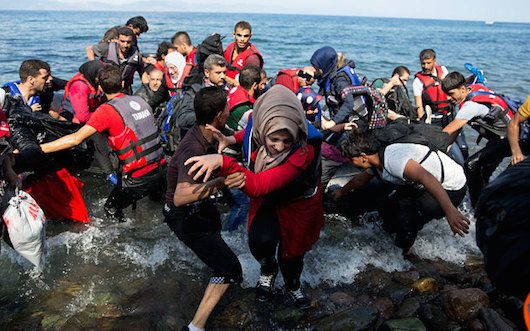
Refugees in EuropeLast year, there was a record high of 220,000 refugees in Europe seeking asylum. According to The Guardian, more than 900,000 people have sought refuge by sea to Greece or Italy due to civil unrest.

Syrians made up the largest part of this group, having fled their home country because of the 4-and-a-half year civil war that has taken the lives of over 200,000 Syrians, according to the New York Times.

The reasons why people become refugees are not hard to conjure – war, religious or social conflict, violence – but how these refugees secure their safety can be a long, stressful process.

The first step in seeking refuge is often finding a place that allows one to be close to their families, but far enough away from any threat of violence. According to The Guardian, it is almost impossible for Syrians to be granted legal access into other Arab countries.

This leaves places like Jordan, Turkey and Lebanon as places to escape, though refugee families in the Middle East no longer receive financial assistance from the UN due to funding shortcomings. These countries do not offer secure legal statuses to refugees either, which can prevent them from having the right to work.

These stipulations explain why so many refugees are traveling to Europe for refugee or asylum status by boat. According to the Guardian, more and more Syrians who become refugees in Europe are using the Balkan route – traveling by sea from Turkey to Greece and then walking through Macedonia and Serbia to reach European Union (EU) territories.

https://www.youtube.com/watch?v=ZHQ88y-A6iw

Open Society Foundations, an American organization whose mission statement is to “build vibrant and tolerant democracies whose governments are accountable to their citizens” works with the Common European Asylum System (CEAS) that works to guarantee that international law protects the rights of refugees in its member states.

According to Open Society Foundations, if an asylum seeker or refugee is traveling through several EU countries, the CEAS allows one EU country to send that person to the first EU country they have reached, as long as that country maintains the rights of asylum seekers.

Unfortunately, only a small portion of asylum seekers are monitored this way, and the systems in Greece, Hungary and Italy have tried to block transfers of citizens with court orders. Some people who become refugees end up back in the south where their journey began.

Groups like Open Society Foundations are crucial in helping refugees and asylum seekers partake in legal movement for work and family without violating any human rights.

Because of the large influx of refugees in Europe, Open Society Foundations find it vital to develop effective policy proposals that will lead to a progressive and successful European asylum system.

Revisions under the European Agenda on Migration state that immediate action will be taken by the EU in order to prevent further deaths and improve conditions for those seeking refuge in Europe. This includes increased funding to Frontex and Europol, two organizations that focus on border control and defense of the EU, respectively.

– Kelsey Lay

Sources: European Commission, Open Society Foundations, The Guardian 1, The Guardian 2, The New York Times
Photo: The Telegraph

February 4, 2016
https://borgenproject.org/wp-content/uploads/borgen-project-logo.svg 0 0 Borgen Project https://borgenproject.org/wp-content/uploads/borgen-project-logo.svg Borgen Project2016-02-04 01:30:182024-12-13 18:05:35How People Become Refugees in Europe
Global Poverty

4 Steps for Refugee Resettlement in the US

Refugee Resettlement Process
The U.S. first opened its doors to refugees in 1948 following World War II, when over 200,000 Europeans fled from Nazi persecution. The 1948 Displaced Persons Act granted these refugees permanent residence and the right to employment in the U.S. Later, the Refugee Act of 1980 standardized the process of refugee resettlement in the U.S. by defining official refugee status and becoming the legal framework for today’s U.S. Refugee Admissions Program.

Refugee Resettlement Process


Qualifying as a Refugee

U.S. Citizenship and Immigration Services (USCIS) defines refugees as “people who have been persecuted or fear they will be persecuted on account of race, religion, nationality, and/or membership in a particular social group or political opinion.” In the past, this has included people fleeing Nazi persecution or Communist regimes.

Today, thousands are fleeing Central America to avoid escalating violence as well as Syria to avoid what has been referred to as “the worst humanitarian crisis of our time.” The process by which refugees can enter the U.S. can only begin if a person is considered an official refugee under U.S. immigration law. If a person qualifies as a refugee, they must then be admitted to the U.S. Resettlement Program (USRP).

Being admitted to the U.S. Resettlement Program (USRP)

If a person qualifies as a refugee, they must then be admitted to the U.S. Resettlement Program (USRP) through a referral from the U.N. Refugee Agency (UNHCR), a U.S. Embassy, the U.S. Department of State or a family member already in the U.S. seeking to reunite. Nine Resettlement Support Centers (RSCs) around the world receive these referrals and assemble eligible applications for further consideration.

These centers are largely faith-based nonprofit organizations approved by the U.S. government to ensure utmost security when recommending an applicant for resettlement. Part of the application process requires a security screening (handled by the Department of Homeland Security and USCIS) and a health screening to ensure that applicants with a security concern or an infectious disease do not enter the U.S.

This process, on average, takes between 18 and 24 months.

Refugee Resettlement in the U.S.

If all is cleared, a refugee is paired with a sponsorship program, such as Sponsors Organized to Assist Refugees (SOAR) or Immigrant Connect, which provide new immigrants with counseling, translation and interpretation services, cultural orientation, English tutoring, financial stability during their transition to the U.S. and job search help.

Organizations like SOAR depend on community involvement in sponsoring or co-sponsoring a refugee and donating necessities such as clothing, bedding, lamps, dishes, diapers and toiletries. Volunteers help new immigrants navigate the public transit system, pick up their social security cards, obtain health services, and register for school. Refugees do not pay out of pocket for the initial cost of transitioning to the US.

Many sponsors receive grants from non-profit organizations that enable them to cover the first month’s rent and food for refugees so that newcomers may focus their energy on assimilating into the American way of life. Refugees are placed in the U.S. primarily according to connections they may have in a particular state.

A State Department spokesperson, speaking about refugees resettling in the U.S., explains, “We try very hard to get refugees close to people that they know because we think that they have a better chance of success if they have [a] support network when they first arrive, aside from just the volunteers.” Other factors include easy access to healthcare depending on personal medical conditions, fluency in English, and job prospects.

Assimilation and building a new life

After the initial chaos and novelty of entering a new country subsides, new immigrants seek to build a new life. They must acquire the appropriate credentials sanctioned by U.S. standards to continue in a field such as medicine or teaching. As a result, many immigrants find themselves at first in low-skilled jobs.

Though refugees do not pay out of pocket for any of their costs at the time of their resettlement, they must begin repaying their travel loan 6 months after arrival.

Though they receive up to three month’s rent, they do not enter subsidized housing, and therefore must find a job shortly after resettling in the U.S. In addition, U.S. agencies, such as Catholic Charities USA, are set up to help refugees apply for jobs and find education and training for their trade.

Just like any American citizen, they are free to relocate as they wish. Local organizations are set up in many cities to continue giving support to refugees.

– Mary Furth

Sources: Refugees, State.gov, UWB, USCIS, US News
Photo: Googgle Images
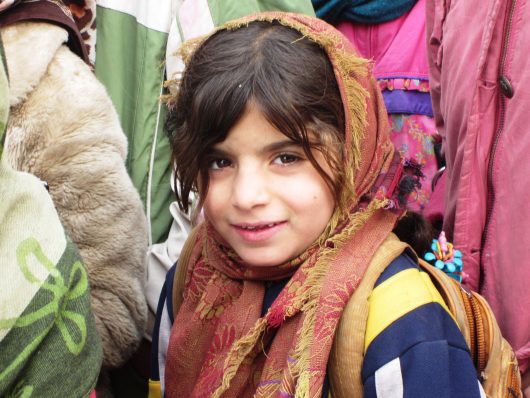
January 28, 2016
https://borgenproject.org/wp-content/uploads/borgen-project-logo.svg 0 0 Borgen Project https://borgenproject.org/wp-content/uploads/borgen-project-logo.svg Borgen Project2016-01-28 01:30:172024-05-27 09:28:484 Steps for Refugee Resettlement in the US
Charity, Global Poverty, Refugees and Displaced Persons

Alan Rickman’s Last Role: Raising Funds for Refugees

British film star Alan Rickman narrated a charity video relating to the aid of refugees shortly before his cancer-related death on Jan. 14.

The 30-second video was created in collaboration with nonprofit OneClickGiving and features a tortoise eating a strawberry.

Throughout the video, Rickman explained that by watching and sharing, viewers have an opportunity to make a difference.

“The more viewers the video gets, the more advertising revenue YouTube will give us,” he said within the voiceover. “All you need to do is watch and share.”

The video, titled “This Tortoise Could Save a Life,” has received well over three million views on YouTube since it was uploaded, with the money raised from each view going to the Refugee Council and Save the Children charities.

Save the Children works worldwide to improve the lives of child refugees through aid and support, and the Refugee Council works to help refugees seek safety and rebuild their lives within the United Kingdom.

“It is an innovative project for an extremely important cause,” OneClickCharity founder Oliver Phillips said in a press release. “Our charities are two of the most effective at helping refugees, who desperately need your support.”

The refugee crisis has become a growing global concern as the number of displaced individuals worldwide continues to grow. According to the UN Refugee Agency, there were 19.5 million refugees worldwide at the end of 2014. That’s 2.9 million more than in 2013. Just over half of those refugees, or 51 percent, were under 18 years old, the highest amount of child refugees in more than a decade.

Phillips recently told the BBC that the charity believes it was one of the last recordings the late actor made.

“I’m so grateful that with all this going on he still agreed to give us his time, it’s really amazing,” he said. “It would not have been the same without him. All the views we’ve got are accountable to him.”

Alan Rickman, best known for his roles in Harry Potter and Die Hard, worked with a variety of charities throughout his lifetime. According to BBC Radio, the well-known actor was the president of the International Performer’s Aid Trust, which focuses on poverty alleviation throughout the world’s toughest conditions.

The link to the YouTube video is as follows, titled This Tortoise Could Save a Life — Ft. Alan Rickman: https://www.youtube.com/watch?v=HkiMz-e2ZcE

– Lauren Lewis

Sources: Youtube, TFN, Look to the Stars, Arts.Mic, Mashable, ABC, BBC, Save the Children, Refugee Council, BBC Radio, One Click Giving
Photo: Flickr

January 23, 2016
https://borgenproject.org/wp-content/uploads/borgen-project-logo.svg 0 0 Borgen Project https://borgenproject.org/wp-content/uploads/borgen-project-logo.svg Borgen Project2016-01-23 01:30:162024-12-13 17:54:10Alan Rickman’s Last Role: Raising Funds for Refugees
Disease, Global Poverty, Refugees and Displaced Persons, United Nations

Syrian Conflict: Typhoid Outbreak Among Palestinian Refugees

typhoid_outbreak
The United Nations (U.N.) is calling for access to Yarmouk, a Palestinian refugee camp in the outskirts of Damascus, due to the increasing evidence of a typhoid outbreak. As of Sept. 20, a total of 90 cases has been reported.

The UN Relief and Works Agency (UNRWA) discovered the outbreak in August among Palestinian refugees outside Syria’s capital after conducting more than 500 medical exams.

The agency was able to gain access to one of the areas affected and established a mobile health point, which provides limited health care, water, sanitation and hygiene supplies, according to a UNRWA spokesperson.

Before the Syrian war began in 2011, there were 160,000 Palestinians in the Yarmouk camp, many of which were employed.

In late March of 2015 when the Islamic State entered the camp, there were 18,000 refugees. Since then, several thousand have fled and the U.N. has no access to the camp. ISIL left days later, but they still have a heavy presence on the al-Nursa Front.

Access has been blocked by the government as a result of clashes with rebels in December 2012. In addition, the government controls the entrance to the camp and sets limits on food, medicine and other humanitarian supplies that enter, claims the Jafra Foundation.

The organization adds that people are trapped inside with very little resources and estimates that there are about 5,000 to 8,000 people left within Yarmouk.

Other affected areas of the typhoid outbreak are Yalda, Babila and Beit Saham.

UNRWA’s $15 million Syria Crisis Program has only gotten 30.8 percent of the fund it needs for this year. The current situation is so dire that 95 percent of Palestinian refugees depend on UNRWA for their daily need of water, food and health care.

Additional help in priority intervention includes cash assistance, which can help up to 470,000 Palestinian refugees. There is still additional funding needed for critical non-food items such as blankets, mattresses and hygiene kits.

Typhoid is a life-threatening illness caused by bacteria in Salmonella typhi and spread by eating contaminated food and drinking contaminated water, according to the U.S. Centers for Disease Control and Prevention.

The disease can be treated with antibiotics but can be fatal in some cases. UNRWA is administering antibiotics, giving out water purifying tablets and educating the population.

– Paula Acevedo

Sources: Aljazeera, Associated Press, U.N. News Centre
Photo: Wikimedia

October 17, 2015
https://borgenproject.org/wp-content/uploads/borgen-project-logo.svg 0 0 Borgen Project https://borgenproject.org/wp-content/uploads/borgen-project-logo.svg Borgen Project2015-10-17 01:30:472024-06-11 02:48:16Syrian Conflict: Typhoid Outbreak Among Palestinian Refugees
Advocacy, Global Poverty, Refugees and Displaced Persons

Former Vietnamese Refugees Reach Out to Fleeing Syrians

Vietnamese_Refugees
As Syria’s civil war worsens, thousands of Syrians are compelled to abandon their lives and relocate to other countries. Their journeys often include the daunting task of crossing oceans in small vessels that are barely sea-worthy. However, safety does not always await them on the other side.

The mass exodus from Syria has caused no small amount of strife among political leaders as they discuss how to accommodate so many refugees.

Working citizens eye the situation warily, anticipating the incoming Syrians as a threat to their livelihoods. Settling in can be very difficult for refugees when their new community is unwelcoming. Such situations can result in refugees living in squalor and becoming a burden to their new country.

The U.S. agreed to take in 10,000 Syrians in the upcoming year, but the Vietnamese American population has decided that more can be done to ensure the newcomers receive a hospitable welcome. After all, only a few short decades separate the Vietnamese from their own experience as refugees.

When the Vietnam War ended in 1975, roughly 125,000 Vietnamese refugees entered the U.S. by boat, much like the Syrians. If they were lucky, they found housing and a source of income. The unlucky spent years in refugee camps or searched the country for separated loved ones.

Now, as they see their own history playing out before their eyes, Vietnamese Americans strive to generate compassion for the fleeing Syrians.

In California, home to the largest population of former Vietnamese refugees, individuals have organized a 4-mile walk-a-thon to raise money for refugee accommodation. A Twitter campaign has also been established to allow U.S. citizens to voice their support for the Syrian refugees.

Other ways that U.S. citizens can assist in the accommodation and acculturalization of refugees are by volunteering at local resettlement agencies, donating funds and household items, becoming an English tutor and spreading the word about refugee aid.

“I want to see what we can do to help the Syrians because that is us,” says Tom Q. Nguyen, who lost his mother and sister when his family fled Vietnam in the 80’s.

Nguyen and fellow campaigners hope that their efforts will inspire others to take part as well. Perhaps the actions of these former Vietnamese refugees mark a new outlook on refugee accommodation.

According to the UNHCR’s 2015 report, nearly 60 million forcibly displaced persons exist in the world today. Half of these are victims of the turmoil in Syria, Afghanistan and Somalia, and all are in need of a new home.

– Sarah Prellwitz

Sources: Migration Policy 1, Migration Policy 2, NY Daily News, Rescue
Photo: Google Image

October 8, 2015
https://borgenproject.org/wp-content/uploads/borgen-project-logo.svg 0 0 Borgen Project https://borgenproject.org/wp-content/uploads/borgen-project-logo.svg Borgen Project2015-10-08 05:33:082024-05-27 09:28:10Former Vietnamese Refugees Reach Out to Fleeing Syrians
Global Poverty, Refugees and Displaced Persons

Bayern Munich Donates $1 Million to Refugees

soccer
The 2013 UEFA Champions League winner, FC Bayern Munich, is donating $1.11 million to refugees in Germany who arrived via Hungary and Austria. There is a training camp set up to supply food and enroll refugees in German classes. Bayern Munich will also donate soccer equipment to the incoming refugees.

Germany has taken 20,000 refugees in Munich alone and plans on taking 800,000 asylum seekers before the year is over. In 2014, the entire European Union took 626,000 refugees.

There are many aspects about Germany that makes it attractive for refugees. Germany has the strongest economy in Europe and is one of the safest countries in the world. Refugees in Germany get to enjoy a strong human rights record and free education for their children.

The police force in Germany asked Germans to stop donating items for the incoming refugees because the volume of aid they were taking in became overwhelming.

Germany estimates that each refugee costs about $14,500, which means 800,000 refugees will cost $11 billion this year. There will be $6.7 billion set aside in 2016 for refugees agreed to by the government.

Bayern Munich’s example is just a small package of what Germany is offering to refugees. The entire community has been involved in aiding refugees. Industries are going to provide job opportunities for refugees in Germany and there will be recruitment at refugee centers.

On September 12, Bayern Munich walked out with one German child and one refugee child to symbolize integration and to encourage Germany.

– Donald Gering

Sources: Al Jazeera 1, Al Jazeera 2, The Guardian, The Independent, UNHCR
Photo: PBS

September 30, 2015
https://borgenproject.org/wp-content/uploads/borgen-project-logo.svg 0 0 Borgen Project https://borgenproject.org/wp-content/uploads/borgen-project-logo.svg Borgen Project2015-09-30 01:15:222024-12-13 18:05:04Bayern Munich Donates $1 Million to Refugees
Global Poverty, Nonprofit Organizations and NGOs, Refugees and Displaced Persons

German Organization Connects Individuals with Refugees

Today in Germany hundreds of thousands of refugees arrive each year, looking for asylum and safety. Many are from primarily Islamic nations.

The massive influx of people has strained local officials— finding adequate housing for everyone is a challenge.

Many cities have put massive amounts of refugees in old schools or re-purposed shipping containers. Often, the refugees are not welcome in their new neighborhoods due to religious tension. According to National Public Radio, “The western German city of Schwerte even proposed placing 21 refugees in a barracks on the grounds of a Nazi-era concentration camp.”

Berlin Residents Mareike Geiling and Jonas Kakoschke believe that refugees deserve a more humane treatment than mass, impersonal accommodations. This prompted them to create the organization Refugees Welcome— a website that matches refugees looking for asylum with people in Germany and Austria willing to open their homes to these people in need.

“We don’t like the idea of putting these people into one place where many, many people live,” explained Geiling to NPR.

“Many asylum-seekers have to stay there for years … doing nothing, because they are not allowed to do anything. They are not allowed to work, they are not allowed to have German classes sometimes and sometimes it’s not a city, it’s a village and there’s nothing to do and so you get depressed after years and stuff like this,” said Kakoschke.

Kakoschke and Geiling are a couple living in Berlin, and they were the first to open their doors to a refugee in need. The couple matched with a thirty-nine year old Muslim man from Mali, who had recently applied for asylum and is waiting for a working permit. For this reason, Kakoschke and Geiling raise money to cover their new roommates cost of rent and utilities.

NPR reports that the Malian man is afraid to give his name for safety reasons, but said “It surprised me a lot because … the people here don’t want to see people like us in their land.”

Before Kakoschke and Geiling opened their doors to him, the roommate was homeless. “Sometimes I’d take the bus from different sector to different sector at nighttime until, you know, 2:30” in the morning, he says. Then he’d “get out and sleep for 20 minutes and go back on the train again sometimes and go back in the mosque and pray there for 30 minutes and sleep there for one hour.”

Refugees Welcome has been very successful so far on a small scale. The website has matched 122 refugees to welcoming German and Austrian flatmates.

Refugees Welcome reports, “Through Refugees Welcome people have moved in to 80 homes in Augsburg, Berlin, Bonn, Darmstadt, Dortmund, Dresden, Frankfurt, Hamburg, Hanover, Konstanz, Leipzig, Marburg, Munich, Munster, Norderstedt, Offenburg and Wolfratshausen. Through Refugees Welcome Austria (our Austrian sister-organisation) people have moved in to 44 places in Eisenstadt, Knittelfeld, Salzburg and Vienna. The new flatmates are from Afghanistan, Algeria, Bangladesh, Burkina Faso, Cameroon, Gambia, Ghana, Kenya, Liberia, Mali, Niger, Nigeria, Iraq, Iran, Pakistan, Russia, Senegal, Somalia, Sri Lanka, Syria and Tunisia.”

– Aaron Andree

Sources: NPR, Refugees-Welcome
Photo: thegaurdian

September 29, 2015
https://borgenproject.org/wp-content/uploads/borgen-project-logo.svg 0 0 Borgen Project https://borgenproject.org/wp-content/uploads/borgen-project-logo.svg Borgen Project2015-09-29 11:04:592024-05-24 23:42:49German Organization Connects Individuals with Refugees
Aid, Refugees and Displaced Persons

Should We be Accepting Refugees in America?

Accepting_Refugees_in America
As Europe continues to struggle with a steady stream of refugees from Syria, Iraq and beyond, the United States is still debating a proper policy response to the crisis. It begs the question – what are the implications for accepting refugees in America on a large scale?

White House discussions regarding U.S. refugee policy have been held in recent weeks, but it still seems that the Obama administration is far from making a concrete decision.

President Obama has stated that the U.S. will accept around 10,000 Syrian refugees over the next year, but more longstanding U.S. involvement has yet to be confirmed.

In a recent op-ed for the New York Times, director of migration and refugee services of the United States Conference of Catholic Bishops William Canny laid out some key ways that genuine U.S. involvement could greatly aid Syrian refugees.

“In addition, the United States can resettle a much larger number of the 4 million Syrian refugees than the 1,600 we have to date,” Canny says. “The U.S. refugee program could absorb as many as 100,000 Syrian refugees if the political will to do so existed. Security checks are in place to ensure that those resettled are not a threat to us.”

According to the UN, 7.6 million Syrians have been internally displaced since the beginning of the conflict in 2011, and an additional 4.1 million have been displaced outside of the country altogether. The need for increased U.S. response is growing rapidly.

“A robust U.S. commitment to the resettlement of Syrian refugees would encourage other reluctant nations, especially those in Europe, to accept more and to keep their doors open until this horrific conflict can be ended,” Canny continues. “It also would show that the United States is not indifferent to human suffering and remains, as always, a beacon of hope to the world.”

– Alexander Jones

Sources: New York Times, US News, Washington Post
Photo: Google Images

September 20, 2015
https://borgenproject.org/wp-content/uploads/borgen-project-logo.svg 0 0 Borgen Project https://borgenproject.org/wp-content/uploads/borgen-project-logo.svg Borgen Project2015-09-20 14:17:122024-12-13 18:05:07Should We be Accepting Refugees in America?
Page 26 of 32«‹2425262728›»

Get Smarter

  • Global Poverty 101
  • Global Poverty… The Good News
  • Global Poverty & U.S. Jobs
  • Global Poverty and National Security
  • Innovative Solutions to Poverty
  • Global Poverty & Aid FAQ’s
Search Search

Take Action

  • Call Congress
  • Email Congress
  • Donate
  • 30 Ways to Help
  • Volunteer Ops
  • Internships
  • Courses & Certificates
  • The Podcast
Borgen Project

“The Borgen Project is an incredible nonprofit organization that is addressing poverty and hunger and working towards ending them.”

-The Huffington Post

Inside The Borgen Project

  • Contact
  • About
  • Financials
  • President
  • Board of Directors
  • Board of Advisors

International Links

  • UK Email Parliament
  • UK Donate
  • Canada Email Parliament

Get Smarter

  • Global Poverty 101
  • Global Poverty… The Good News
  • Global Poverty & U.S. Jobs
  • Global Poverty and National Security
  • Innovative Solutions to Poverty
  • Global Poverty & Aid FAQ’s

Ways to Help

  • Call Congress
  • Email Congress
  • Donate
  • 30 Ways to Help
  • Volunteer Ops
  • Internships
  • Courses & Certificates
  • The Podcast
Scroll to top Scroll to top Scroll to top