• Link to X
  • Link to Facebook
  • Link to Instagram
  • Link to TikTok
  • Link to Youtube
  • About
    • About Us
      • President
      • Board of Directors
      • Board of Advisors
      • Financials
      • Our Methodology
      • Success Tracker
      • Contact
  • Act Now
    • 30 Ways to Help
      • Email Congress
      • Call Congress
      • Volunteer
      • Courses & Certificates
      • Be a Donor
    • Internships
      • In-Office Internships
      • Remote Internships
    • Legislation
      • Politics 101
  • The Blog
  • The Podcast
  • Magazine
  • Donate
  • Click to open the search input field Click to open the search input field Search
  • Menu Menu

Tag Archive for: Nigeria

Posts

Global Poverty

New Smart Mall in Nigeria to Boost Local Economy

aba mega mall
Aba is the capital city of Abia State in Nigeria and is regarded as a strategic trading hub in the southern part of the country. Potentially having the biggest smart mall in Nigeria, the community of Aba will not only change the way of traditional trade but also benefit local economic development.

According to Paul Obanua, CEO of Greenfield Asset Management, which is currently planning on building Aba Mega Mall,  the project will influence and encourage privately funded infrastructural development in Nigeria and Africa in the following years.

Obanua is a 43-year-old Nigerian businessman managing Greenfield Assents Nigeria Limited, which is a company with the mission of renewing sub-Saharan African cities, regenerating communities and empowering lives.

“In our quest to achieve this (mission), one of the opportunities we identified is in the area of infrastructure development, especially retail infrastructure,” said Obanua during an interview with FORBES.

The traditional way of retail trade in Africa is an open market retail system. In Nigeria, Lagos has only four standard malls for a population of more than 20 million. Rapid urbanization and quickly increased youth demography enlarge the demand for a new shopping experience.

In Aba, a major industrial and commercial center in Nigeria, the current major shopping center is the Ariaria market that was built in the 1970s. Nowadays, there are 120,000 shops in that market, which exceeded their original capacity of 20,000 shops. Thus, a new retail infrastructure is really in need.

The planned smart mall community — Aba Mega Mall — will include 100,000 square meters of retail space for shopping, which can only partially satisfy the real demand of more than 500,000 square meters of retail space. It will also have other infrastructures, such as a multiplex movie theater, bank, transportation system and a dock for wholesales.

With a projected investment of $300 million, Aba Mega Mall is expected to be one of the biggest investments by Greenfield Assets Nigeria Limited.

Recently, there are 1,000 units finished during the first phase. Right after May 26, 2015, when it was commissioned, the commercial activities commenced.

Subsequently, the second phase has started and will include more advanced infrastructural construction, such as a luxury mall, 6-Screen Cinema, 100-room boutique hotel, 10-megawatt Independent Power Supply and the first Dry Port in the South-East of Nigeria with a fully automated 30,000 square meters for commercial activities.

“We are going to have the Special Economic Zone, which will be an integrated city of business parks that will consist of manufacturing concerns, like automotive manufacturing, steel fabrication, leather works, petrochemical industries, Agri-business and ICT Park,” said Obanua, representing the investment Greenfield Assets.

According to Obanua, the development of Aba Mega Mall will drive economic growth in the city and the nation. With the support of the infrastructure of Aba Mega Mall, Aba has the potential to develop into one of the biggest commercial hubs worldwide due to the volume of its trade and industry.

Moreover, the development of the mall will nurture industries such as the leather industry. The world-class trading environment in the Aba Mega Mall will offer the leather industry with sufficient facilities.

Most importantly, Aba Mega Mall will be likely to create employment opportunities in excess of more than 10,000 direct and indirect jobs. Thus, building potentially the “biggest mall” is definitely an efficient way to alleviate poverty and develop the local economy in the city or the nation.

– Shengyu Wang

Sources: Forbes, Greenfield Assets, Aba Mega Mall
Photo: blogspot

September 29, 2015
https://borgenproject.org/wp-content/uploads/borgen-project-logo.svg 0 0 Borgen Project https://borgenproject.org/wp-content/uploads/borgen-project-logo.svg Borgen Project2015-09-29 01:36:422020-06-29 14:45:37New Smart Mall in Nigeria to Boost Local Economy
Activism, Development, Global Poverty

Richest Man in Africa Combats Poverty Through Agriculture

Richest_Man_in_Africa
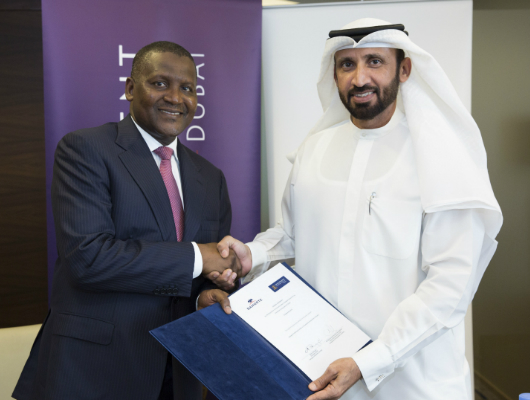
Aliko Dangote, a Nigerian billionaire, is nominated as Africa’s richest man on the FORBES World’s Billionaires list. He takes advantage of the advanced natural condition in Nigeria, such as plenty of agricultural land to develop the economy of commercial agriculture in Nigeria.

Aliko Dangote created the Dangote Group, a conglomerate mainly offering agricultural products, such as cement, sugar, salt and flour. Commercial agriculture has become one of the most important branches of Africa’s economy.

In recent years, Dangote keep investing in the land in Africa to expand his agricultural business and to create profits in Nigeria.

“I can remember that when I was in primary school, I would go and buy cartons of sweets (sugar boxes) and I would start selling them just to make money. I was so interested in business, even at that time,” said Dangote.

From 1997 to 2015, Dangote developed the Dangote Group from a small trading firm into a multi-trillion Naira conglomerate with international operations located in Benin, Ghana, Nigeria, and Togo.

Agricultural commodities are the main products in the Dangote Group. It has covered food processing, cement manufacturing and freight. Moreover, it dominates the sugar market in Nigeria and becomes the major supplier to domestic soft drink companies, breweries and confectioners.

In addition, Dangote Group also owns salt factories and flour mills; it imports rice, fish, pasta, cement and fertilizer and exports cotton, cashew nuts, cocoa, sesame seed and ginger to several countries.

With the current achievement, Dangote is still expanding his Agricultural business in Africa lands. Recently, Dangote invested $500 million in cement plants in Ethiopia and is building other plants in Kenya, Niger and Congo.

Moreover, Dangote intends to invest in Malawi, one of the poorest countries in the world. The majority of people in Malawi earn less than $1 per day. Foreign donors and Tobacco exports constitute the main national income. Before this investment, he has built a South African cement manufacturer, Sephaku Cement, and a cement plant in Zambia.

“His visit to Malawi will inspire both private and public sectors on how he has succeeded in his businesses”, said Joseph Mwanamvekha, Malawi’s Minister of Industry and Trade.

Facing the success of an agricultural business, Dangote said that, “Let me tell you this and I want to really emphasize it … nothing is going to help Nigeria like Nigerians bringing back their money. If you give me $5 billion today, I will invest everything here in Nigeria. Let us put our heads together and work.”

As the richest man in Africa, Dangote combats poverty in Nigeria by developing the economy of commercial agriculture.

– Shengyu Wang

Sources: Forbes, Forbes 2
Photo: Google Images

September 27, 2015
https://borgenproject.org/wp-content/uploads/borgen-project-logo.svg 0 0 Borgen Project https://borgenproject.org/wp-content/uploads/borgen-project-logo.svg Borgen Project2015-09-27 01:30:172020-06-29 17:50:53Richest Man in Africa Combats Poverty Through Agriculture
Global Poverty, Women

NEMA Issues Delivery Kits to Displaced Pregnant Women

NEMA
Nigeria’s National Emergency Management Agency (NEMA), issued 410 delivery kits to internally displaced pregnant women housed at camps in Maiduguri, Borno State. Among the delivery kits were a wax print and infant feeding bottles along with a mattress, a blanket and a net for the expected newborns.

The kits also included a baby bag, diapers, a basket, a towel, baby soap, and supplements for the mother such as milk and cocoa drink. The supplies come at a vital time since some of these women are due to give birth in late August or September.

The north-eastern Nigerian Borno State has been the worst affected in the conflict against the Boko Haram insurgency which began in 2009. Sani-Sidi, NEMA’s director general, says insurgent attacks have displaced many people, leading to the creation of 23 IDP camps in Borno State.

“In all the camps in the state, 60 percent of the IDPs are women and children classified as vulnerable and needing more support,” he said. “As a result, 410 pregnant women were selected [to receive delivery kits] out of 1,980 identified pregnant women in 13 female IDP camps in Maiduguri.”

Aid from NEMA comes a month after a July donation by Deluxe Childbirth Services coordinated in partnership with U.S. Agency for International Development (USAID), the United Nations Population Fund, and two USAID projects – THE Expanded Social Marketing Project in Nigeria and the Targeted States High Impact Project.

During this donation, UNFPA’s Ratidzai Ndhlovu underlined an expected high in births among Nigerian IDPs, stating that there would be an expected 60,000 births by the end of 2015.

According to UNICEF, a Nigerian woman’s chances of death during pregnancy and childbirth are 1 in 13. Additionally, newborn Nigerian mortalities, which occur among the first week of life, make up about one-fourth of total deaths of children under five years of age.

A majority of these deaths arise from complications during birthing or pregnancy, which serves to highlight the importance of maternal and newborn health care access, especially within vulnerable and displaced populations.

– Jaime Longoria

Sources: Premium Times 1, Premium Times 2, UNICEF

September 23, 2015
https://borgenproject.org/wp-content/uploads/borgen-project-logo.svg 0 0 Borgen Project https://borgenproject.org/wp-content/uploads/borgen-project-logo.svg Borgen Project2015-09-23 05:14:242024-05-27 09:25:17NEMA Issues Delivery Kits to Displaced Pregnant Women
Global Poverty

Nigerian Philanthropist Fights Against Africa’s Energy Poverty

energy_poverty
West Africa has the highest levels of energy poverty in the world. The shortage of electricity has been a big barrier to the economic development and people’s wellbeing in Africa.

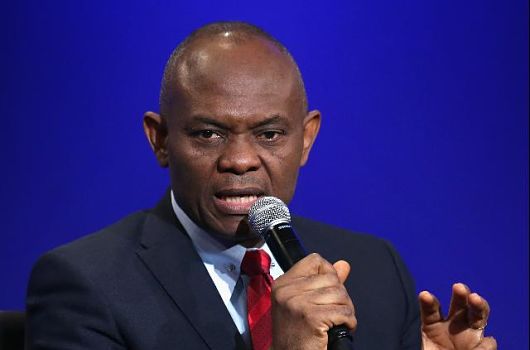
Tony Elumelu, a Nigerian-born business leader and philanthropist, makes the call for ending energy poverty in Africa and takes action to alleviate it.

Ranking 26th on the Forbes Lists of Africa’s 50 Richest in 2014, Tony Elumelu is one of Africa’s most revered business leaders. As the Chairman of Heirs Holdings, the United Bank for Africa (UBA) and Transnational Corporation of Nigeria (Transcorp), Elumelu fortune’s is estimated at $1 billion.

Approaching the latter period of his business career, Elumelu makes more effort on philanthropy. After retiring from UBA in July 2010, he founded the Tony Elumelu Foundation, intending to foster Africa’s economy by enhancing the competitiveness of the African private sector.

At the same time, Tony Elumelu has also been a significant member of many non-profit organizations, such as World Economic Forum’s Regional Agenda Council on Africa, the Nigeria Leadership Initiative and the Infant Jesus Academy in Delta State, Nigeria.

On 30 June 2015, Elumelu participated in African Energy Leaders Group (AELG) Summit. It was launched by Côte d’Ivoire President Alassane Ouattara in Abidjan with top-level political and business leaders, intended to make concrete plans for sustainable energy access in Africa.

According to Ivorian Prime Minister Daniel Kablan Duncan, in order to expedite the implementation of sustainable projects, the West African sub-group of the AELG intends to gather public and private sectors to mobilize finance. As a co-founder of AELG, Elumelu pledged to donate $150,000 over the next three years for its secretarial work.

Elumelu previously contributed to the fight against energy poverty before the Summit. In 2013, Tony Elumelu pledged to contribute $2.5 billion in President Barack Obama’s Power Africa Initiative to support Africa’s power sector.

During the same year, Transcorp, where Elumelu served as Chairman, acquired the 600 MW Ughelli plant in Delta State. It is one of Nigeria’s largest gas-powered generating plants and will generate 1,000 MW by the end of 2015.

The discussion between Transcorp and General Electric has been ongoing, and Transcorp is likely to add another 1,000 MW soon after they reach the first quota.

“Providing access to electricity for schools, hospitals, businesses and industries is the single most impactful intervention that can be made to transform the continent,” said Elumelu during the Summit. “It has tremendous implications for job creation, health, food security, education, technological advancement and overall economic development.”

– Shengyu Wang

Sources: Forbes, Sustainable Energy for All
Photo: Forbes

September 2, 2015
https://borgenproject.org/wp-content/uploads/borgen-project-logo.svg 0 0 Borgen Project https://borgenproject.org/wp-content/uploads/borgen-project-logo.svg Borgen Project2015-09-02 01:30:352020-07-01 12:08:17Nigerian Philanthropist Fights Against Africa’s Energy Poverty
Technology

Five Countries on the Rise

countries
As our world becomes increasingly globalized, formerly developing nations are gaining access to new technology and experiences that have allowed them to jump leaps and bounds in the matter of a few years. This rapid evolution of a country’s standing has led to massive changes in the global community as a whole, but several countries stand out above the rest as strong contenders in the globalized market. Five countries on the rise can be found below:

1. Turkey

Over the past year, Turkey experienced a growth rate of over 11 percent, one that surpasses even that of China. This nation has been able to foster its manufacturing and democratic systems gently even as the nations around it fell to the pressure of the global community’s demands. Turkey’s focus on exports has increased job availability overall and has drastically reduced poverty in the nation. Turkey has realized that the key to success is to focus on the happiness of its people, and with increased employment opportunity and decreased poverty, Turkey has set itself up to become a major world power.

2. Mexico

According to a recent Brookings Metropolitan Policy release, Mexico City is one of the most economically vibrant cities in the world. The 12th largest economy in the world has become a hub for business, and through promotion of entrepreneurial spirit, it has experienced income and employment growth. All of this growth is steady because much of Mexico’s export profits come from the United States, which provides a steady dollar currency. Once a hub for crime and poverty, Mexico is quickly becoming a contender for one of the world’s strongest and happiest nations.

3. Democratic Republic of the Congo

For several decades, people have associated the Congo with horrible war, poverty, disease and death, but with the promise of a more stable government, things are beginning to look up for the Congolese people. Much of the war that takes place in the Congo is over its bountiful mineral fields, which provide vital minerals that are used in almost every electronic device today. Major companies buy their products from war-torn regions without realizing what their needs are doing to the people within, but with the recent increase in more conscientious shopping, companies are beginning to watch what they use. The promise of a stable government means a decrease in war, an increase in legislation, an increase in local miners getting mineral profits and an overall decrease in poverty throughout the DRC.

4. India

While India has been on the rise for quite a few years now, it continues to grow and develop, and with the second highest population in the world, it has set itself up to become one of the world’s new superpowers. India’s main asset is its tech abilities and manufacturing. Several companies have plants in India that create their products for export, and with the massive amount of manpower that India can provide, they find no issues arising. India’s poverty rates continue to decline and their education rates continue to increase and will continue to do so with the use of the U.N. Standard Development Goals, essentially creating a brighter future today.

5. Nigeria

Nigeria has long been thought of as the most developed country in Africa and has been cited in several speeches and talks by citizens and politicians as such. With the strong technology boom coming in from the West as well as the investment in Africa by foreign NGOs, Nigeria has set itself up to become the strongest nation in Africa. With a more stable government and a more united public it will become a force to be reckoned with in the global community.

While several nations, such as China and the United States, have long enjoyed the relaxation and innovation that comes with life on the top, it appears as though they need to slide over and make some room because these five countries are ready to join them.

– Sumita Tellakat

Sources: The Atlantic, CS Monitor
Photo: CS Monitor

August 22, 2015
https://borgenproject.org/wp-content/uploads/borgen-project-logo.svg 0 0 Borgen Project https://borgenproject.org/wp-content/uploads/borgen-project-logo.svg Borgen Project2015-08-22 01:30:122020-07-02 10:24:13Five Countries on the Rise
Global Poverty

Nigeria Oil and Gas Trade and Investment Forum Speakers

oil_and_gas
It’s no secret that two major resources that the world depends heavily upon are oil and gas, but in limited supply, they must be managed as work is put in to find more eco-friendly solutions. In the two-day conference, the Nigeria Oil and Gas Trade and Investment Forum organized by the Federal Ministry of Industry, Trade, and Investment will welcome thousands of representatives from different energy corporations to network and do business as well as listen to top-tier speakers from different firms based in Nigeria.

This forum will offer its delegates the opportunity to study new products and solutions that will further their companies, speak with global executives, hear from Nigerian dignitaries, and discuss the relevance of the Free Trade Zone to investment possibilities.

Here is this year’s speaker lineup:

Thomas Sule

Chief information officer and chief corporate services officer of Oando PLC. Prior to this position, Sule was the chief operating officer of the Helios Tower in Nigeria. His background on Bloomburg Business indicates that “Mr. Sule was focusing on strengthening HTN’s position as a leader in the industry and providing direction and leadership toward the achievement of the organizations, mission, strategy, and its annual goals and objectives.” Sule also has backgrounds in re-engineering initiatives as well as business processes and practice.

Adeolu Olufemi Adeyemi

As representative of GM Capital Projects and Shell Petroleum Development Company, Adeyemi’s main focus is on how technology can be used differently to improve efficiency. With the rise in mobile connectivity throughout the world, many successful companies are developing and using technology to raise their bottom-line profits.

Augustine Igwegbe

As CEO and MD for Ingwetin Glo Ltd and Former Regional IT Business, Igwegbe joined Shell Upstream International in 1988. “As the Shell regional Technology Manager for EP Africa, Mr. Igwegbe led IT department that managed one of the biggest private communication networks in Africa.” With his 28 years of experience and a B.Sc in Computer Science along with a background in banking, manufacturing and consulting, he hopes to introduce new business requirements regarding the delivery of IT services.

Ademola Agboola

Agboola is head of IT at one of Nigeria’s leading exploration and product companies, Pan Ocean Oil Corporation. Established in 1973, this is a joint venture with the Nigeria National Petroleum Company (NNPC). “Pan Ocean is a trailblazer in the bid to achieve the gas flare out objective of the Federal Government. Since 1984, Pan Ocean went ahead with its initiative on gas utilization despite the challenges of an under developed Nigeria Gas Market.” The core values of Pan Ocean are Integrity, Resilience, Safety and Security, Fairness, Excellence, Team Spirit, and Appreciation.

Rufus Ehikioya

Ehikioya is applications Analyst from Chevron Nigeria. Chevron is an established corporation worldwide that’s working toward sustainable economic progress and worldwide human development. “In the months that followed the creation of ChevronTexaco, the new company found itself looking for resources in ever-more-difficult environments.” Chevron is currently working with several different academic institutions in pursuit of renewable energy technology which is becoming increasingly accepted in the developing world.

Adepeju Adekunle

Adekunle is head of IT Projects at limited liability company Nigeria NLG Limited, producers and exporters of Liquefied Natural Gas. One of the current objectives of Nigeria NLG as of late has been to eliminate gas flaring, and thus far has brought down the amount of flares from over 65 percent to less than 25 percent. This company is owned by Shell, the NNPC representing the Federal Government of Nigeria, total NLG and Eni.

Adesina Odukoya

Odukoya is the director of IT Operations for sub-Saharan Africa GE Oil and Gas. GE Oil and Gas has approximately 45,000 employees worldwide and seven global research centers. “Total global natural gas demand may have risen by approximately 2.7 percent since the year 2000 but global LNG demand has grown by 7.6 percent per year over the same period, indicating an almost threefold increase in demand for LNG.” And since around 85 percent of offshore rigs use GE’s drilling system, the rise in demand works for the benefit of bases around the globe. With so many employees dependent on this kind of demand, GE Oil and Gas seeks to continue to expand, and will even be providing new technologies for a Trans-Anatolian Natural Gas Pipeline Project in the near future.

– Anna Brailow

Sources: Bloomberg, Chevron, GE Oil and Gas, IT News Africa, Nigeria Oil and Gas Invest, Nigeria LNG Limited, Enterprise Mobility, Panocean Oil Nigeria, SMI
Photo: Global Village Extra

August 16, 2015
https://borgenproject.org/wp-content/uploads/borgen-project-logo.svg 0 0 Borgen Project https://borgenproject.org/wp-content/uploads/borgen-project-logo.svg Borgen Project2015-08-16 01:30:262024-06-05 03:46:40Nigeria Oil and Gas Trade and Investment Forum Speakers
Global Poverty

Young Entrepreneurs from Nigeria Boost Local Economies

entrepreneurs
The following businesses were created by young entrepreneurs in Nigeria:

House of Dabira

In 2011, at the age of 18, Inioluwa Ajayi founded the House of Dabira. Based in Ibadan, the House of Dabira designs high-quality, custom-made clothing.

Since the company’s beginning, Ajayi has been in multiple fashion shows. She has also won various awards, including Entrepreneur of the Year at the 2014 Oyo Students Entrepreneurship Awards.

Ajayi is now 21 and has graduated from the University of Ibadan with a law degree. She has around four to six clients each month and hopes to expand in the future.

“We plan to significantly grow our client base both within and outside Africa by creating signature collections for top retailers, opening House of Dabira stores in key cities across the continent, listing on e-commerce shopping sites like Jumia … and creating a diffusion line, Da’ara, to produce more affordable outfits,” she explained to How We Made it in Africa.

Ajayi also hopes to donate part of her profits to help fight domestic violence. “Finally, we plan to grow the House of Dabira Campaign against domestic violence by investing five percent of all profit into supporting victims of domestic violence, leading multimedia campaigns to eradicate the scourge and creating projects to teach young girls about design,” she said.

Kenny Palm Oil

Ndilemeni Kenechukwu is a 22-year-old electrical engineering student who founded Kenny Palms Nigeria, which packages and sells various forms of palm oil.

Kenechukwu became interested in entrepreneurship when he was 13 years old and read the book Rich Dad Poor Dad by Robert Kiyosaki, an American businessman and investor.

The company began in 2013. Today, it employs 12 people. “There is increasing demand for hygienic and low-cholesterol, edible palm oil due to the upsurge of heart-related ailments, disease prevention awareness and the most recent Ebola outbreak,” said Kenechukwu.

Kenechukwu has high hopes for his company’s future; by 2035, he hopes to be the leading producer of palm oil in Africa. He is currently investing his profits so he can expand production.

Greenville Organic Foods

Kavode Yussuf is a 21-year-old and is head of Greenville Organic Foods in Alimosho, near Lagos, Nigeria. The company processes the West African cassava root and turns it into garri, a popular, tapioca-like food.

The company began in Dec. 2014 and is making around $600 per month. Greenville Organic Foods employs two people and provides cassava farmers with a stable income, something that they were not previously receiving.

“Farmers must sell off their cassava within two weeks of harvesting,” said Yussuf. “This makes cassava farmers anxious and this anxiety makes buyers price down the cassava. So our coming on board gives some farmers the assurance that there is a market for their product.”

Yussuf hopes to raise enough money to build a production plant; as of now, due to lack of funding, production and packaging are outsourced.

“It will cut our production cost,” he said. “We will [be able to] employ more people, make more profits and, best of all, we will be in direct control of the quality of our products.”

– Margaret Mary Anderson

Sources: How We Made it in Africa, Anzisha Prize
Photo: How We Made it in Africa

August 15, 2015
https://borgenproject.org/wp-content/uploads/borgen-project-logo.svg 0 0 Borgen Project https://borgenproject.org/wp-content/uploads/borgen-project-logo.svg Borgen Project2015-08-15 01:30:072020-03-27 13:49:19Young Entrepreneurs from Nigeria Boost Local Economies
Global Poverty

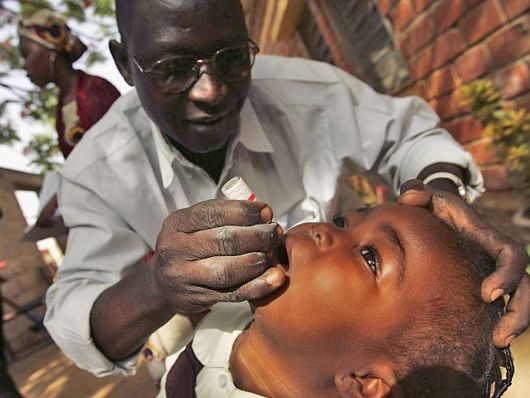
5 Answers to Your Questions About Polio Eradication in Nigeria

polio_eradication_in_nigeria

1. Is Nigeria “polio-free?”

Not yet. Global health organizations have not documented a case of polio in Nigeria–one of three nations that have never fully eradicated polio–since July 24, 2014. However, the World Health Organization (WHO) will not declare Nigeria “polio-free” until the West African nation reaches a full year with no new cases.

2. Is it probable that polio will permanently be eradicated in Nigeria?

That depends on whom you ask. On one hand, polio eradication in Nigeria has almost been successful, and recent media coverage seems hopeful that no new cases will appear in the twenty-some days before the WHO’s approval. Eradication of polio on the entire contiguous continent of Africa also seems plausible, as officials declared in June 2015 that the outbreaks in Equatorial Guinea, Ethiopia and Kenya are no longer health threats. This could mean that worldwide efforts to eradicate polio from Africa have improved since the outbreaks began in 2013.

However, some health officials warn that the world should not be too quick to celebrate. Hamid Jafari, the polio chief at the WHO, warned that the virus is very difficult to detect.

“We are not yet certain that the wild poliovirus is gone from the African continent,” said Jafari, “there are areas in the African region in the northeast of Nigeria, Lake Chad, the north of Cameroon where the situation is uncertain security-wise. We may have undetected transmission of poliovirus there.”

3. Why is polio so difficult to detect in Nigeria?

There are a variety of health and political concerns that have made the nation difficult to vaccinate since the early 2000s. From the medical perspective, people often spread the virus without showing any symptoms. Only one in 200 polio cases cause paralysis.

In short, the fact that health officials have not reported any cases does not mean that people in Nigeria are not infected.

Additionally, some areas in Nigeria–like the locations that Jafari referenced above–are near impossible for vaccination teams to reach because of the control of Islamic militant groups. Boko Haram, one of the most “lethal and resilient” jihadist groups in the history of Nigeria, has repeatedly denounced efforts to eradicate polio, claiming that vaccinations are a ploy by the West to sterilize Muslim children.

4. Is religious opposition to vaccinations in Nigeria the source of the problem?

Not really. Boko Haram’s skepticism and violence toward polio vaccination campaigns are based more on its opposition to Western culture than the specific religious beliefs of Islam. Boko Haram is a loose translation of “Western education is forbidden.” Present in Nigeria since 2002 and active in military operations since 2009, Boko Haram is a group of roughly 9,000 men (according to CIA estimates) that seeks to establish the Islamic State in Nigeria by purging the nation of Western influence.

Analysts say that governmental effort to reduce Nigeria’s chronic poverty and construct an education system that is inclusive of local Muslims is the only way to eliminate the threat of Boko Haram. However, the violent actions of jihadist groups against vaccination campaigns are not representative of the entire Islamic community in Nigeria.

Although resistant to vaccination efforts initially, Muslim leaders were actively involved and very influential in vaccination campaigns in the years before 2012, often citing moral principles as justification.

“We don’t care if it’s something that will affect you and your family alone. But [if] you don’t comply with us, you allow your child to go—he’s going to spread it to 200 other innocent children around the vicinity,” said Nigeria’s top-ranking Muslim and the “polio point man” for the region of Kano, Wada Mohamed Aliyu.

5. What outside assistance do foreign organizations provide to Nigeria?

National and local municipalities and organizations in Nigeria play a role in polio detection and prevention as well as immunization, but many global actors have greatly contributed to efforts in order to eradicate the virus. The Global Polio Eradication Initiative (GPEI), spearheaded by the World Health Organization, Rotary International, UNICEF, the United States Center for Disease Control and Prevention, and the Bill & Melinda Gates Foundation, have worked with Nigerian groups to lower the global incidence of polio by 99% since 1988. The GPEI and its associated organizations have not only financially funded eradication efforts but have also actively been strategic partners that have provided technical and political support to Nigeria. Gavi, the vaccine alliance, has also been a major player in facilitating the implementation of inactive polio vaccines, which work in tandem with oral polio vaccines to secure a polio-free world.

– Paulina Menichiello

Sources: NPR 1, NPR 2 , BBC, NPR 3, NPR 4, Polio Eradication
Photo: Monitor Healthcare

July 27, 2015
https://borgenproject.org/wp-content/uploads/borgen-project-logo.svg 0 0 Borgen Project https://borgenproject.org/wp-content/uploads/borgen-project-logo.svg Borgen Project2015-07-27 15:12:012024-05-24 23:42:315 Answers to Your Questions About Polio Eradication in Nigeria
Education, Global Poverty

Boko Haram’s Threat to Education in Nigeria

Boko_Haram’s_Threat
Nigeria has recently overtaken South Africa as the largest economy on its continent. In spite of its upward trajectory Nigeria still has much further to go. Boko Haram, an Islamist militant organization, has for years terrorized Nigerians by attacking officials, civilians and public institutions. Since 2009 Boko Haram has killed more than ten thousand people and displaced 1.5 million.

The organization was founded by Mohammed Yusef in 2002 in Maiduguri, in the northeastern state of Borno, to transform Nigeria into an Islamic state ruled through sharia law. Back then however, its goals did not include violent insurgency. Rather the group sought to galvanize Nigeria’s northern Muslim population against the alleged corruption in the southern government and to challenge the regional economic disparities between the Christian South and Muslim north.

When Boko Haram protested a motorbike helmet law in 2009 they became targets of armed police brutality which then sparked revolts in many of the Northern provinces. This led to military suppression of the protests, which killed 800 and led to the capture and eventual extrajudicial killing of Yusef and other sect leaders. From there, the violence began and the grouped splintered under its fragmented leadership.

Today, the elusive Abubaker Shekau leads Boko Haram’s insurgency against the Nigerian government in Borno. Shekau holds almost superhuman status; allegedly killed at least three times by the Nigerian military, videos of the enigmatic leader still continue to surface. According to The Council on Foreign Relations, “Nigerian officials and many experts are convinced that Shekau has become a brand adopted by leaders of different factions of Boko Haram, and that the men in the videos are actually look-alikes.”
Last year Shekau’s organization claimed responsibility for the kidnappings of 200 girls from a public secondary school in Chibok, Borno State, in north east Nigeria. Smaller attacks on other schools and universities preceded this tragedy and highlight one of Boko Haram’s most common targets: education. The name ‘Boko Haram’ roughly translates to ‘Western Education is Forbidden.’

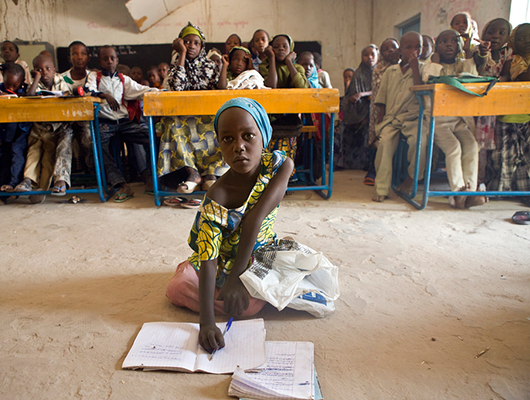
Through strong arm tactics, Boko Haram has made education in northeastern Nigeria all but impossible. In the wake of the kidnappings, most secondary schools in Borno have closed. This move is particularly advantageous for Boko Haram. Closing schools leaves boys more vulnerable to its recruitment methods and perpetuates poverty. Likewise, out of school girls are more likely to be married as teens. In total, 10 million children out of a population of 160 million are not attending school. This figure represents the largest number of out of school children in the world.

However, Boko Haram is not entirely responsible for the dismal state of education. The Nigerian government has done little to improve its country’s education system. Although it is the largest economy on the continent, Nigeria spends less on education than almost every other African country. Common practice dictates that government spending on education should represent 6 percent of a country’s GDP and 20 percent of its budget. In comparison, Nigeria spends only 1.5 percent of its GDP and 6 percent of its budget on education. Despite meager spending, Nigeria’s budget could allow for three times its investment in education.

With nearly a third of the population between the ages of 10 and 24, a stronger spending in education could radically improve life in Nigeria. However, with schools closing throughout the country, the Nigeria must also focus on rooting out Boko Haram and providing better security for its students. If done in tandem, Nigeria will experience the undeniable benefits of an widespread effective education system.

– Andrew Logan

Sources: Al Jazeera 1, Al Jazeera 2, The Brookings Institute, Council on Foreign Relations, The Economist, The Guardian
Photo: Flickr

July 24, 2015
https://borgenproject.org/wp-content/uploads/borgen-project-logo.svg 0 0 Borgen Project https://borgenproject.org/wp-content/uploads/borgen-project-logo.svg Borgen Project2015-07-24 19:11:362020-07-06 14:37:20Boko Haram’s Threat to Education in Nigeria
Global Poverty, Health, Technology

Cancer Seeing Glasses Developed by Nigerian Scientist

cancer_seeing_glasses

Dr. Samuel Achilefu, a Nigerian born scientist, has developed glasses that can see cancer cells. For this new technology, Dr. Achilefu was awarded the 2014 St. Louis Award.

This award is given to a recipient who has made outstanding contributions to the profession of chemistry and has demonstrated potential to further the profession.

Dr. Achilefu, a professor of radiology and biomedical engineering, and his team developed glasses that contain imaging technology. The glasses are intended to help surgeons view cancer cells while operating, instead of operating “in the dark.”

The project began in 2012 when Dr. Achilefu and his team received a $2.8 million grant from the National Institutes of Health. Before the grant, the team received limited funding from the Department of Defense’s Breast Cancer Research Program.

The glasses were in the development stage for years, testing the technology on mice, rats and rabbits to confirm the effectiveness of the glasses.

In order to see the infected cells, two steps must be followed.

First, the surgeons must inject a small quantity of an infrared fluorescent marker into the patient’s bloodstream. The marker, also known as a tracer, contains peptides that are able to locate the cancer cells, and buries itself inside.

The tracer lasts about four hours. As it moves through the patient’s body, it will clear away from non-cancerous tissue.

By wearing the glasses, the surgeon can inspect the tumors under an infrared light that reacts with the dye. The combination of the tracer and infrared light causes the tumor to glow from within and allows the surgeon to see the infected cells.

This technology was first tested on humans at the Washington University School of Medicine in June 2015. Four patients with breast cancer and over two-dozen patients with melanoma or liver cancer have been operated on using the goggles.

Ryan Fields, a surgical oncologist who is collaborating with Dr. Achilefu says, “[the glasses] allow us to see the cells in real time, which is critical. Because the marker has not been FDA approved, doctors are currently using a different, somewhat inferior marker that also reacts with infrared light.”

Julie Margenthaler, a breast cancer surgeon, explains that many breast cancer patients must go back for second operations because the human eye cannot see the extent of the infected cells alone.

“Imagine what it would mean if these glasses eliminated the need for follow-up surgery and the associated pain, inconvenience, and anxiety”.

The Food and Drug Administration are still reviewing the cancer seeing glasses and the tracer developed by Dr. Achilefu and his co-researchers. But, if the glasses are approved, the removal of cancerous cells has been changed forever. And most importantly, patients will receive the care in order to treat their cancer.

– Kerri Szulak

Sources: IT News Africa, Premium Times, St. Louis Section of American Chemical Society
Photo: Pax Nigerian

July 24, 2015
https://borgenproject.org/wp-content/uploads/borgen-project-logo.svg 0 0 Borgen Project https://borgenproject.org/wp-content/uploads/borgen-project-logo.svg Borgen Project2015-07-24 08:46:412024-06-04 01:17:40Cancer Seeing Glasses Developed by Nigerian Scientist
Page 7 of 13«‹56789›»

Get Smarter

  • Global Poverty 101
  • Global Poverty… The Good News
  • Global Poverty & U.S. Jobs
  • Global Poverty and National Security
  • Innovative Solutions to Poverty
  • Global Poverty & Aid FAQ’s
Search Search

Take Action

  • Call Congress
  • Email Congress
  • Donate
  • 30 Ways to Help
  • Volunteer Ops
  • Internships
  • Courses & Certificates
  • The Podcast
Borgen Project

“The Borgen Project is an incredible nonprofit organization that is addressing poverty and hunger and working towards ending them.”

-The Huffington Post

Inside The Borgen Project

  • Contact
  • About
  • Financials
  • President
  • Board of Directors
  • Board of Advisors

International Links

  • UK Email Parliament
  • UK Donate
  • Canada Email Parliament

Get Smarter

  • Global Poverty 101
  • Global Poverty… The Good News
  • Global Poverty & U.S. Jobs
  • Global Poverty and National Security
  • Innovative Solutions to Poverty
  • Global Poverty & Aid FAQ’s

Ways to Help

  • Call Congress
  • Email Congress
  • Donate
  • 30 Ways to Help
  • Volunteer Ops
  • Internships
  • Courses & Certificates
  • The Podcast
Scroll to top Scroll to top Scroll to top