• Link to X
  • Link to Facebook
  • Link to Instagram
  • Link to TikTok
  • Link to Youtube
  • About
    • About Us
      • President
      • Board of Directors
      • Board of Advisors
      • Financials
      • Our Methodology
      • Success Tracker
      • Contact
  • Act Now
    • 30 Ways to Help
      • Email Congress
      • Call Congress
      • Volunteer
      • Courses & Certificates
      • Be a Donor
    • Internships
      • In-Office Internships
      • Remote Internships
    • Legislation
      • Politics 101
  • The Blog
  • The Podcast
  • Magazine
  • Donate
  • Click to open the search input field Click to open the search input field Search
  • Menu Menu

Tag Archive for: Nigeria

Posts

Global Poverty

Taking Steps to Eliminate River Blindness

Taking Steps to Eliminate River Blindness
The Carter Center in Atlanta is working to make the eradication of river blindness a worldwide goal for the World Health Organization (WHO), as the WHO determines which diseases will appear on the world health agendas.

River blindness is caused by a parasite that is spread through the bites of black flies. The flies breed in and near fast flowing rivers, which is where the disease gets its name. The larvae of the parasite causes skin irritation, itching and a range of eye diseases, including blindness in the worst cases.

People in 36 countries are at risk for contracting river blindness. About 99% of the 17.7 million cases of larvae infection are from Africa. Nigeria is the most endemic country in Africa, with reportedly half of the world’s cases.

That is why Nigerian businessman Sir Emeka Offor gave the Carter Center $10 million to aid to eliminate river blindness in his home country. This is on top of the quarter million he donated several years back. This is a huge turning point in dealing with the disease.

The Carter Center has been working with the Nigerian Health Ministry for twenty years. The program uses community-based health education and administers the only drug that can treat river blindness, Mectizan. In fact, the company that makes Mectizan made a commitment to donate the drug until every case of river blindness is solved. The donation from Sir Offor means that the Carter Center can reach more people, especially those in difficult areas to reach. Coverage will increase, meaning that the Carter Center will be closer to reaching their goal of eliminating river blindness by 2020. In 2014, 7 million Nigerians were treated.

The Carter Center has already been successful in Latin America. Colombia was the first country to be declared free of river blindness in 2013, with Ecuador following  in 2014. Both Guatemala and Mexico are currently going through the verification process to be declared river blindness-free by the WHO. The only areas left to treat are hard-to-reach areas of the Amazon in Venezuela and Brazil.

If the Carter Center can prove with this latest donation that their program is successful in the most plagued country, Nigeria, on top of their success in Latin America, then the WHO will be more likely to join the movement and target river blindness as a disease to fight.

– Katherine Hewitt

Sources: AP News, Carter Center 1, Carter Center 2, Inside Philanthropy
Photo: GHIF

July 6, 2015
https://borgenproject.org/wp-content/uploads/borgen-project-logo.svg 0 0 Borgen Project https://borgenproject.org/wp-content/uploads/borgen-project-logo.svg Borgen Project2015-07-06 08:03:132024-06-05 03:46:35Taking Steps to Eliminate River Blindness
Global Poverty, Technology

The Debate on GMOs in Nigeria

The Debate on GMOs in Nigeria

A small study conducted seven years ago showed that a majority of Nigerian scientists had low awareness about genetically modified organisms (GMOs) and their harmful effects. But today, with the help of the Internet and the explosion of social media in Nigeria, people are even more aware.

And with this awareness comes resentment and resistance.

By becoming educated about genetically modified plants, opponents have pointed out their damage to biodiversity. Native plants have become sparse compared to the genetically modified plants that seem to grow with ease.

Opponents have also raised the question over whether consuming genetically modified plants has negative health consequences.

Although Nigerian scientists and GMO supporters reassure that genetically modified food is safe for the consumer, the critics counter that developed countries do not consider GMOs to be safe. By taking into account that developed countries have even stronger risk assessment and regulatory systems, there are still many critics in Nigeria.

GMOs have been coined “the Monsanto Poison” in Nigeria because of the Monsanto Company’s role in Agent Orange. This herbicide was used during the Vietnam War by the United States and has had lasting effects on the health of veterans. Agent Orange was strategically used to deplete vegetation cover and as a way to force starvation on the population. This has caused Nigerians to have a generally negative view of GMOs.

However, there are still some scientists and proponents in Nigeria that would like to expand the use of genetically modified plants. By being able to modify the plants, scientists are able to better understand their biology and physiology.

Genetic engineering has also improved crops such as cotton, soybeans, tomatoes, coffee and bananas. Plants can also be modified to have a higher protein content and higher oil yield. This could all improve the nutrition of those that consume them.

Scientists in support of GMOs in Nigeria also note that GMO technology could be a solution to the challenges that face global food production. Climate change, population growth and competition for land have all affected how food is produced and its quantity.

The debate over the safety of genetically modified organisms has been developing for over 40 years. However, if this technology can be scientifically proven to be safe for consumers, GMOs could feed the world’s hungry. The approval of GMOs in Nigeria would not only be a huge success for science, but also for those in need of food.

GMOs could be the key to solving food shortages, but only time will tell if GMOs are deemed safe for consumers.

– Kerri Szulak

Sources: Genetic Literacy Project, Risk Science Center
Photo: biodiverseed

July 3, 2015
https://borgenproject.org/wp-content/uploads/borgen-project-logo.svg 0 0 Borgen Project https://borgenproject.org/wp-content/uploads/borgen-project-logo.svg Borgen Project2015-07-03 12:10:452020-07-14 08:18:06The Debate on GMOs in Nigeria
Technology

The New Blackberry Makes its Way to Africa

blackberry

In Nigeria and South Africa, Blackberry has launched its latest smartphone, the Blackberry Leap. According to the company, this smartphone offers more than a day’s battery life, even with heavy use.

This latest version of the phone has switched out its old keyboard to feature a new touchscreen, much like the Apple iPhone. The new touchscreen keyboard features error correction and multilingual support.

Many may question why a consumer would buy this phone when there are much more popular phones like iPhone, Android and Samsung.

The Blackberry, jokingly referred to as the “Crackberry,” was once the must-have device for executives. It was the first smartphone that allowed easy and constant access to email and the Internet. The easy-to-use QWERTY keyboard allowed executives to respond to emails without being tied to a computer.

But with the emergence of the Apple iPhone, it quickly lost its dominance as the number one smartphone in the market.

Would you buy an unpopular smartphone? The answer from consumers in Africa is… yes.

Over the past four years, the Blackberry Curve has been the most popular smartphone in South Africa. A recent survey conducted by Vodacom in South Africa found that Blackberries make up 23 percent of the smartphone market. In Nigeria, Blackberries make up 40 percent of the smartphone market.

But why have Blackberry phones become so popular in African countries?

The first reason is that Blackberries are a status symbol; they were once the phones used by top executives. People strive to achieve the same success associated with the phones.

Additionally, an attractive feature of this phone is its low-cost data bundles. In fact, Users can send messages for free using the Blackberry Messenger (BBM). This makes the phones well-suited for less capable mobile networks.

And lastly, Blackberries are able to stay updated without the purchase of a new smartphone. In developing countries, phones are upgraded less frequently. Before the introduction of the Blackberry Leap, the most up-to-date Blackberry in South Africa was 3 years old.

There is still room for growth for Blackberry in African countries. In a poll conducted by GeoPoll, 17 percent of people reported that they would buy a Blackberry as their next phone.

It is predicted to keep its number one spot in Africa as the most popular smartphone brand partly because of its popularity with students.

The Blackberry brand has transitioned from being known as the phone for high power executives to the most popular, affordable phone used in developing countries. Of course, affordability is an important aspect when purchasing a smartphone. Blackberry has allowed consumers in developing countries to afford a smartphone without sacrificing technology, mobile network service or various communication abilities.

– Kerri Szulak

Sources: Inside Blackberry, IT News Africa, The Conversation
Photo: TechLoy

July 1, 2015
https://borgenproject.org/wp-content/uploads/borgen-project-logo.svg 0 0 Borgen Project https://borgenproject.org/wp-content/uploads/borgen-project-logo.svg Borgen Project2015-07-01 09:00:372021-12-13 07:17:58The New Blackberry Makes its Way to Africa
Global Poverty, Health

Maternal Mortality in Nigeria

maternal_mortality_nigeria
Nigeria is second only to India in terms of the number of maternal deaths it experiences, and along with five other countries—India, Pakistan, The Democratic Republic of the Congo, China and Ethiopia—Nigeria is part of a group which makes up more than 50 percent of the maternal mortalities that occur in the world.

The Maternal Mortality Rate (MMR) in Nigeria was 560 per 100,000 live births in 2013. As UNICEF states, Nigeria loses 145 women to maternal mortality each day. This high level of maternal mortality is also linked to Nigeria’s high rate of deaths for children under 5—newborns account for a quarter of the under-five deaths which occur in the country.

There are many reasons why maternal mortality in Nigeria is so high, including a lack of access to healthcare, rampant poverty, substandard health care and the prevalence of child marriage.

Urban women have more of an opportunity to receive healthcare than rural women do. As stated in a Global One report about Nigeria, women in urban areas have over twice as many deliveries taking place in public and private health facilitates than women in rural areas. This is because women in rural areas are normally not able to afford the transport to the hospitals in urban areas, and have to settle for midwives or traditional birth attendants—or no help at all—when giving birth. Many of these traditional birth attendants do not have the skills and training necessary for delivering a baby—for example, many are not able to perform C-sections—and for treating complications that can occur during birth.

Rural women do not have the money to travel to hospitals to receive better care. Nigeria has a high poverty rate, with a 2010 report stating that 64.4 percent of the population lived in extreme poverty and 83.9 percent of the population lived in moderate to extreme poverty. The fact that many people cannot afford the healthcare that they need contributes to Nigeria’s high MMR.

Even if women in Nigeria are able to have access to a hospital, they sometimes still end up suffering. This is because some hospitals in Nigeria have substandard care. For example, Global One’s report states that substandard birth techniques in government hospitals in North-Central Nigeria, including poor C-section procedures, accounted for 40 percent of all fistula injuries suffered by women in Nigeria.

A fistula, according to the World Health Organization, is a hole in the birth canal. Fistulas are directly connected to obstructed labor, a problem that contributes to high levels of maternal mortality. Even if women survive labor, many of them still have to live with the fistula. Approximately two million women live with an untreated obstetric fistula in Sub-Saharan Africa and in Asia, and women with fistulas suffer incontinence, social segregation and health issues.

Fistulas are more common in women who give birth at a young age. These women’s bodies are not ready for childbirth, leading to many health problems, including obstetric fistulas. Nigeria has an extremely high rate of child marriage—43 percent of girls get married before the age of eighteen—and many of those girls are not given the option of whether or not they want to get pregnant. Contraceptive use is slowly becoming more widespread and acceptable, but in 2008, only 10 percent of women used contraceptives.

Since contraceptive use is still stigmatized, many brides under the age of 18 are forced to give birth, and their bodies are very vulnerable to complications, therefore contributing to a high maternal mortality rate. Nigeria also has a high fertility rate—five children per woman in 2014—which also impacts the MMR.

If Nigeria wants to reduce its high levels of maternal mortality, it has to make sure that access to healthcare is more widespread. It also needs to improve the quality of healthcare available, reduce the number of child marriages and de-stigmatize contraceptive use.

– Ashrita Rau

Sources: UNICEF, WHO 1 WHO 2, WHO 3, WHO 3, Global One Girls not Brides, IRIN News CIA World Factbook
Photo: Healthy Newborn Network

June 23, 2015
https://borgenproject.org/wp-content/uploads/borgen-project-logo.svg 0 0 Borgen Project https://borgenproject.org/wp-content/uploads/borgen-project-logo.svg Borgen Project2015-06-23 10:56:152024-05-27 09:25:17Maternal Mortality in Nigeria
Global Poverty

Energy Poverty in Nigeria

energy_poverty
Nigeria’s crude oil reserves are currently estimated at 35 billion barrels; its natural gas reserves an estimated 185 trillion cubic feet. Though import levels have since dropped dramatically, in March 2007 the United States imported 41,767 barrels of Nigerian crude oil and petroleum products.

Despite this, 44 percent of Nigerian households have no access to electricity.

Indeed, even in Nigerian homes with electricity, the quality of service provided is often intermittent while growing increasingly unaffordable. In an op-ed in the International New York Times, published August 8, 2014, author Adewale Maja-Pearce explained that in February 2014 his monthly bill jumped from $30 per month to nearly $185 per month, despite the fact that he was receiving roughly three hours per day of power. This price increase occurs at a time when 92.4 percent of Nigerians live on less than $2 per day, and 70.8 percent live on less than one dollar per day.

The problem of energy poverty is not exclusive to Nigeria. According to the International Energy Agency, “over 1.3 billion people are without access to electricity and 2.6 billion are without clean cooking facilities. More than 95% of these people are in sub-Saharan Africa or developing Asia and 84% are in rural areas.”

Though the problem is not unique to Nigeria, it does bring to light the global inequality behind the phenomenon of energy poverty despite Nigeria’s status as a major energy exporter. It is seemingly paradoxical for a nation which began exporting large amounts of liquid petroleum gas through Chevron in 1997 to have a per capita liquid petroleum gas usage rate of 0.4 kilograms per second, one of the lowest in the region.

Addressing energy poverty is a key point in the fight against global poverty. Greater access to alternative energy sources will reduce unnecessary deaths, such as the 95,300 Nigerian deaths which occur annually from smoke created by the use of solid biomass fuels. It will enhance the financial capabilities of those nations currently struggling to provide power to businesses. This, in turn, will expand the global community of consumers.

Regardless, the importance of treating energy exporters as nations, and not simply as trade partners, remains a primary challenge moving forward in the fight against global inequality.

– Andrew Michaels

Sources: NY Times, CAI, UNICEF EIA, International Association for Energy Economics, Journal of Public Administration and Policy Research 3.2 International New York Times
Photo: Vanguard

May 21, 2015
https://borgenproject.org/wp-content/uploads/borgen-project-logo.svg 0 0 Borgen Project https://borgenproject.org/wp-content/uploads/borgen-project-logo.svg Borgen Project2015-05-21 08:00:222024-12-13 17:51:23Energy Poverty in Nigeria
Global Poverty, Health

Poverty-Induced Self-Medication

The connection between health and poverty is not a new one. The lack of access to healthcare, overcrowded healthcare facilities and the sometimes high costs of medications are major barriers for the poor to take appropriate steps to treat any health problems. Often, people turn to self-medication as an alternative to the expense of consulting a physician.

Paul J. Gertler, professor at the University of California Berkeley’s School of Public Health, said for the Washington Post, “Delaying medical care is a characteristic of poverty. For people living close to the edge, taking off a day to visit a doctor or staying home sick is literally taking food out of their mouths.”

It is no wonder that people facing such circumstances seek healthcare where they can get it cheaply. Sometimes this means going to a spiritual or traditional healer or taking the advice of family or friends. However, it can mean sharing medication, self-medicating or not completing a full-dose of a prescription so that it can be saved for another rainy day. These practices can be more dangerous than they seem.

Self-medicating can of course lead to using an incorrect medication, unsuitable for the medical condition, but it can also lead to overuse or underuse of the correct medication. A study based in a Nigerian community hospital concludes that a whopping 85 percent of the patients practiced self-medication and used an array of analgesics and anti-malarials either alone or in combination. According to Leadership, a local Nigerian newspaper, 75 percent of the populace rely on self-medication. This allows the market to flood with counterfeit drugs, low quality alternatives and charlatans selling ineffective herbal remedies.

From a public health point of view, incorrect usage of medication is a major cause of the rise in drug resistant infections. When patients do not complete a full dosage of antibiotics or use anti-malarials to treat unrelated infections, the disease-causing organisms have the chance to evolve to become resistant to these medications. Such resistant organisms then become untreatable and the resistant infection spreads among the population. Furthermore, the longer it takes to cure an infection due to use of incorrect medication, the higher the chances of an infection spreading.

The incorrect use of anti-malarials led to treatment failure and resistance to mainstay drugs like Chloroquine. This led to a shift in treatment policies worldwide and treatment with Artemisin Combination Therapy (ACT) began. Now, malarial infections resistant to ACT are spreading across Southeast Asia much faster than expected and can soon spread rapidly across the world if not contained. This story is frighteningly similar for a whole range of infections.

As science struggles to keep up with the evolution of drug resistance, policy can do its part. Increasing awareness and education about the disease causing organisms and the dangers of self-medicating is one approach. Improving infrastructure, the accessibility of healthcare facilities, resources at existing healthcare facilities and subsidies for medications will go a long way toward weaning the population away from self-medication.

There is another angle to this problem. In a survey in a district of Bangladesh, 100,000 doses of antibiotics were dispensed without a prescription. In Manila, Philippines, 66 percent of antibiotics were dispensed without a prescription. Heavily regulating pharmacies and preventing the sale of medication without a prescription can cut off one of the sources of self-medication.

More avenues will have to be explored to provide adequate healthcare and make good health a fulfilled right for each individual person so that the global population benefits.

– Mithila Rajagopal

Sources: Annals of Ibadan Post-Graduate Medicine, Devex, Journal of the American Board of Family Medicine, Leadership, Malaria Journal, Washington Post
Photo: Flickr

May 2, 2015
https://borgenproject.org/wp-content/uploads/borgen-project-logo.svg 0 0 Borgen Project https://borgenproject.org/wp-content/uploads/borgen-project-logo.svg Borgen Project2015-05-02 04:00:452024-12-13 17:51:22Poverty-Induced Self-Medication
Global Poverty

Poverty in Lagos, Nigeria

Lagos_Nigeria_Slums

Lagos has often been called the world’s next ‘mega-city’ due to its increasing urban population growth and economic development. As of this year, the population of Lagos is expected to reach 25 million and it is certainly showing no signs of slowing down. In recent years, Lagos has witnessed a surge in commercial business and industry, resulting in an increase of wealth to the country as well as a fortunate group of Nigerians and foreign investors. Yet, despite the influx of national growth, many Nigerians are still living in substandard conditions and are subjected to malnutrition, poverty and economic instability.

According to The World Data Bank statistics, 62 percent of Nigerians live on less than $1.25 per day. Extreme poverty remains high in rural parts of Nigeria, where political instability, low access to education and inadequate healthcare are contributing factors of the nation’s high rate of poverty.

Surprisingly, a study conducted by the Oxford Poverty and Human Development Initiative, or the OPHI, found that 22.1 percent of Nigeria’s urban population is vulnerable to poverty while only 14.4 percent of the rural population is vulnerable.

The population most affected by high poverty rates is always children. In Nigeria, 43.2 percent of the population are children ages 0-14. With the average woman birthing at least five children, it becomes difficult for large families to sustain themselves with the few resources they are provided.

Lagos, Nigeria is faced with the issues of increasing population and competition for the nation’s resources. The World Bank estimates the country’s GDP at $521.8 billion and the Nigerian economy depends largely on oil exports, agriculture and a growing technological sector. But what of those living below the international standards of poverty in Lagos?

According to the OPHI, 20 percent of the Lagos population are vulnerable to poverty, and the intensity of economic deprivation in Lagos stands at 41.1 percent.

In Lagos, two out of three residents live in the city’s notorious slums—settlements built to accommodate the overcrowded communities. Many families and individuals who inhabit these slums came to Lagos from other regions of Nigeria with the hope of escaping the rural poverty, deprivation and political instability of their home states. However, the Lagos city center has offered little solace.

The Ajegunle district, located in the heart of Lagos, is home to some three million Nigerians who live in poorly built structures with little to no infrastructure and poor standards of living. Many of its residents lack access to clean water and proper sanitation; families often do not have sufficient resources to send children to school.

Poor access to water and improper water sanitation has also been credited as a leading cause of economic disparity in Lagos. Local fisherman rely on the region’s water sources to provide fish for them to sell at markets and feed their families. The frequently contaminated water does not yield very many fish, causing many families to go hungry.

There is a large gap that exists between the wealthy and poor in Lagos. While the wealthy continue to climb the economic ladder, many of their poor compatriots remain at the bottom. Yet, in the wake of Nigeria’s recent presidential election of Muhammadu Buhari, some Nigerians remain hopeful that democracy will open doors for improving Nigeria’s future.

– Candice Hughes

Sources: CIA World Factbook, Fortune, IRIN, University of Oxford, The World Bank
Photo: Nairaland Forum

April 15, 2015
https://borgenproject.org/wp-content/uploads/borgen-project-logo.svg 0 0 Borgen Project https://borgenproject.org/wp-content/uploads/borgen-project-logo.svg Borgen Project2015-04-15 12:00:452024-05-27 09:23:43Poverty in Lagos, Nigeria
Global Poverty

Nigeria’s Struggle with Overpopulation

Nigeria Overpopulation
Home to about 170 million people, Nigeria is the world’s sixth largest country in terms of population and also one of the fastest growing. In 1950, its population was less than 40 million, meaning it has multiplied several times over in recent decades. With a population growth rate of two to three percent every year, Nigeria’s population is expected to continue to skyrocket.

By 2050, Nigeria’s population is expected to surpass that of the U.S. and could exceed 400 million. By 2100, it is forecasted to exceed one billion and could potentially surpass China; all living in a country about the size of Texas.

The effects of overpopulation are already acute. Lagos is currently one of the largest cities in the world with an estimated population of about 21 million. Since many people live in slums and the government has few resources to conduct an adequate census, the real population is unknown.

Most residents of cities like Lagos live in severely overcrowded slums. Many houses and apartments consist of just one room to house entire families. More than 50 people can share a bathroom, sink and living space. Youth unemployment in urban areas is around 50 percent. This has fueled an increase in crime which is rampant in many cities. This high level of youth unemployment has also helped fuel the rise of militant groups like Boko Haram.

Nigeria’s fertility rate is approximately 5.5 children per woman. The Nigerian government has made some effort to address the problem, but to no avail. It has made contraceptives free but many still do not have access to them and, in a religious society like Nigeria, their use is often frowned upon. Several government campaigns have aimed at encouraging people to have smaller families, but these have failed as well and are at odds with Nigerian cultural values.

Many societies in Nigeria have long valued large families as a sign of prestige and many cultures practice polygamous lifestyles. In some Nigerian villages, families with fewer than eleven children are considered small and incomplete.

This problem is very common in the developing world, where impoverished families view having more children as a plus as they can help the family earn money and do chores. Given high rates of child mortality, many feel the need to have larger families as a safe guard in case some children do not make it to adulthood.

Many other African countries are also experiencing population booms. Sub-Saharan Africa is the world’s fastest growing region in terms of population. Currently home to slightly fewer than a billion people and accounting for about twelve percent of the population, by 2100 it is expected to have more than four billion people and account for one-third.

Many fear this rise in population growth will fuel poverty, hunger and civil strife. But the problems will be particularly acute in Nigeria. While some view this increase in population as a potential for more economic growth and status as a global hegemon, many others fear the population boom will cause the country to collapse. The rise in population is likely to place greater strain on Nigeria’s already strained infrastructure and services and increase poverty, unemployment and political instability.

While Nigeria’s population boom certainly has potential benefits it also poses a serious threat if it is not brought under control and many feel the government is not doing as much as it could or should. If Nigeria were to collapse because of its population boom, it would be a disaster for the entire African continent given the country’s economic and political weight. Poverty and overpopulation are intertwined with one another and it is impossible to tackle one without tackling the other.

– Matt Lesso

Sources: NPR, The New York Times, This Day Live, U.N., The Washington Post

April 14, 2015
https://borgenproject.org/wp-content/uploads/borgen-project-logo.svg 0 0 Borgen Project https://borgenproject.org/wp-content/uploads/borgen-project-logo.svg Borgen Project2015-04-14 16:00:442024-12-13 17:51:22Nigeria’s Struggle with Overpopulation
Global Poverty

How USAID Helps the World’s Poor

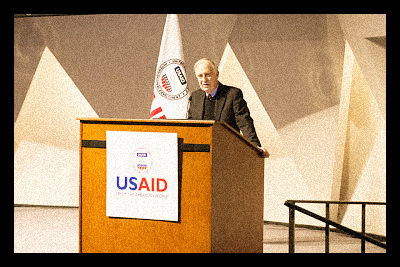
USAIDOver the years, The United States Agency for International Development, or USAID, has supplied 46 million people with food and protected 1.5 million children from preventable diseases. They hold 87 missions around the world, and are partnered with 3,500 companies and organizations. However, they only use one percent of the federal budget. Regardless of the minimal support from the government, USAID continues to create better living conditions for the world’s poor. Four recent developments are taking place in Afghanistan, Nigeria, Manila and Mozambique.

USAID has funded $62 million on Tetra Tech, a company focused on engineering and program management. Tetra Tech will focus on helping to develop the government system in Afghanistan. According to Business Wire, the company will “strengthen the linkages between the central government and provincial levels for strategic planning, budgeting and service delivery.” With this investment, the state will better develop communication to help citizens.

In Nigeria, USAID is helping farmers increase cocoa production to compensate for the fall in oil prices. Cocoa is a key export for Nigeria, and with the education to grow more effectively, it will support and diversify the economy. AllAfrica has recognized Mathew Burton, Director of Economic Growth and Environment for USAID, who believes “there are obviously opportunities for Nigeria to explore in the development of her cocoa sector.” With the search for investors to further help boost production, this can be a tremendous help for Nigeria’s economy and development.

After the multiple natural disasters the Philippines has endured, USAID has announced a partnership with the “Education Governance Effectiveness Project, which will help elementary public schools in the target provinces get back on track towards improving learning outcomes.” The mission is focused on helping students in grade school to help implement a solid learning foundation for their future education. Since education correlates to the rate of poverty, this will be a stepping stone for the country’s further development.

Feed the Future is the U.S. government’s initiative to end world hunger. USAID is assisting in helping farmers in Mozambique use “more productive agriculture technologies, improving nutrition and health, and connecting farmers to markets.” This initiative not only helps decrease starvation, but also increase the economy by selling goods in markets. USAID has educated farmers on proper agricultural techniques and partnered with the Government of Mozambique.

The progress USAID has made gives more reason to why they deserve better funding from the government. With consistent efforts to make better living conditions for the world’s poor, they are a beacon of hope to ending world poverty. The more USAID works to create plans across the globe, the less we will see famine and disease in poor countries.

– Kimberly Quitzon

Sources: USAID 1, USAID 2, Business Wire, All Africa, Feed The Future
Photo: Flickr

April 3, 2015
https://borgenproject.org/wp-content/uploads/borgen-project-logo.svg 0 0 Borgen Project https://borgenproject.org/wp-content/uploads/borgen-project-logo.svg Borgen Project2015-04-03 12:00:132024-06-05 01:58:26How USAID Helps the World’s Poor
Global Poverty

Drug Counterfeiting in Nigeria

Drug_CounterfeitingIf administering public health projects in an environment complicated by security, economic and cultural issues is not presenting a sufficient challenge, drug counterfeiting can take the problem to a new level. In 2006, the World Health Organization reported that every year 280 billion dollars is lost due to counterfeiting. This does not take into account the hazards to human life caused by potentially harmful or completely ineffective fake drugs. An estimated 100,000 deaths yearly are caused due to the counterfeit drug trade in Africa alone. Counterfeiting affects all pharmaceuticals ranging from vaccines and antibiotics to anti-diabetic and anti-cholesterol medication.

Drug counterfeiting is not just a developing world problem. In 2005, the U.S. Attorney’s Office of Missouri indicted three businesses for a 42 million dollar conspiracy to sell counterfeit, smuggled and misbranded Lipitor, a mainstream cholesterol lowering drug. The FDA had to recall 18 million Lipitor tablets which is one of its largest recalls related to counterfeiting.

In Nigeria, this is a particularly big problem. This Day Live reports that in 1989, over 150 children died due to diethylene glycol present in fake paracetamol syrup. The problem reached such a high level, that sale of Nigerian-manufactured products was banned in other African countries. The National Agency for Food and Drug Administration and Control Nigeria, or NAFDAC, website continues to be filled with reports on recent impounding and destruction of fake drugs and public alert notification on drug recalls. A report on March 5 on the destruction of N500 million, approximately 2.5 million dollars, worth of fake drugs in Anambra state, was immediately followed by a March 6 report on the impounding of N270 million in counterfeit medication.

NAFDAC is employing many strategies to curb the problem including control at points of entry, inspecting manufacturing plants in producing countries and employing foreign analysts to certify drugs before exportation from India, China and Egypt. Under the leadership of the late Prof. Dora Akunyili, NAFDAC came down hard on counterfeiters and corrupt officers. Due to NAFDAC’s efforts, the incidence of fake drugs has dropped by 90 percent since 2001 and the ban on Nigerian-manufactured drugs has been lifted.

Yet the problem persists. The New York Times reports that in 2008, 84 children died after consuming fake teething mixture in Nigeria. In a recent interview with CNBC Africa, Dr. Bell Ihua, COO of NOIPolls, says 18 percent of Nigerians believe they have been a victim of fake pharmaceuticals. A whopping 70 percent worry that counterfeiting is rampant. This means that 70 percent of people actually worry that a drug they are consuming could be fake. A large proportion of victims only know they have consumed fake drugs when they have an adverse reaction.

Public awareness is a large obstacle. High illiteracy and low exposure makes it hard for the public to be on their guard. NAFDAC broadcasts short messages and jingles on the radio to educate and warn the public. Novel solutions are now slowly entering the field. Ashifi Gogo, a Ghana based enterprise, allows customers to scratch off labels inside the pill box and text the code to get a verification of drug quality. Of course, the system is not foolproof as counterfeiters can make fake labels. More campaigns and programs to educate the public will aid this effort. The involvement of community leaders can bring this down to the grassroots level where such programs really need to create an impact.

– Mithila Rajagopal

Sources: Africa Renewal, CNBC Africa, FDA, NAFDAC, New York Times, ThisDayLive, WHO 1, WHO 2, WHO 3

Photo: Code Wit

March 16, 2015
https://borgenproject.org/wp-content/uploads/borgen-project-logo.svg 0 0 Borgen Project https://borgenproject.org/wp-content/uploads/borgen-project-logo.svg Borgen Project2015-03-16 12:00:122024-05-27 09:23:26Drug Counterfeiting in Nigeria
Page 8 of 13«‹678910›»

Get Smarter

  • Global Poverty 101
  • Global Poverty… The Good News
  • Global Poverty & U.S. Jobs
  • Global Poverty and National Security
  • Innovative Solutions to Poverty
  • Global Poverty & Aid FAQ’s
Search Search

Take Action

  • Call Congress
  • Email Congress
  • Donate
  • 30 Ways to Help
  • Volunteer Ops
  • Internships
  • Courses & Certificates
  • The Podcast
Borgen Project

“The Borgen Project is an incredible nonprofit organization that is addressing poverty and hunger and working towards ending them.”

-The Huffington Post

Inside The Borgen Project

  • Contact
  • About
  • Financials
  • President
  • Board of Directors
  • Board of Advisors

International Links

  • UK Email Parliament
  • UK Donate
  • Canada Email Parliament

Get Smarter

  • Global Poverty 101
  • Global Poverty… The Good News
  • Global Poverty & U.S. Jobs
  • Global Poverty and National Security
  • Innovative Solutions to Poverty
  • Global Poverty & Aid FAQ’s

Ways to Help

  • Call Congress
  • Email Congress
  • Donate
  • 30 Ways to Help
  • Volunteer Ops
  • Internships
  • Courses & Certificates
  • The Podcast
Scroll to top Scroll to top Scroll to top